The short answer to how to handle aggressive drivers while cycling: be visible early, leave the conflict path before it closes, and never confront anyone. Almost every bad encounter I have seen on the road ended badly for the rider who tried to win the argument rather than the rider who kept their distance.
That takes a bit of preparation. Give yourself ten minutes before you roll out and work through the gear, the route and the reporting options below, then use the seven steps in order when a driver closes in.
Table of Contents
- What You Need
- Step-by-Step: How to Handle Aggressive Drivers While Cycling
- Step 1: Reduce the chance of a conflict
- Step 2: Notice early warning signs
- Step 3: Make yourself predictable and visible
- Step 4: Create distance and choose an escape option
- Step 5: Communicate once, calmly, and only when safe
- Step 6: If the behavior continues, get help and document it
- Step 7: Review the ride afterward
- Common Mistakes
- Frequently Asked Questions
- Should a cyclist confront or argue with an aggressive driver?
- What should I do if a driver passes too close while I am riding?
- Can I legally record a driver who endangered me while cycling?
- How can cycling groups reduce the risk of provoking drivers?
- When should a cyclist call police after a dangerous driving incident?
- What if an aggressive driver follows me after the encounter?
- Conclusion
What You Need
Most of this is cheap and lives in a bag by the back door. The point is not to look armored, it is to give drivers more chances to see you before everything else goes wrong.
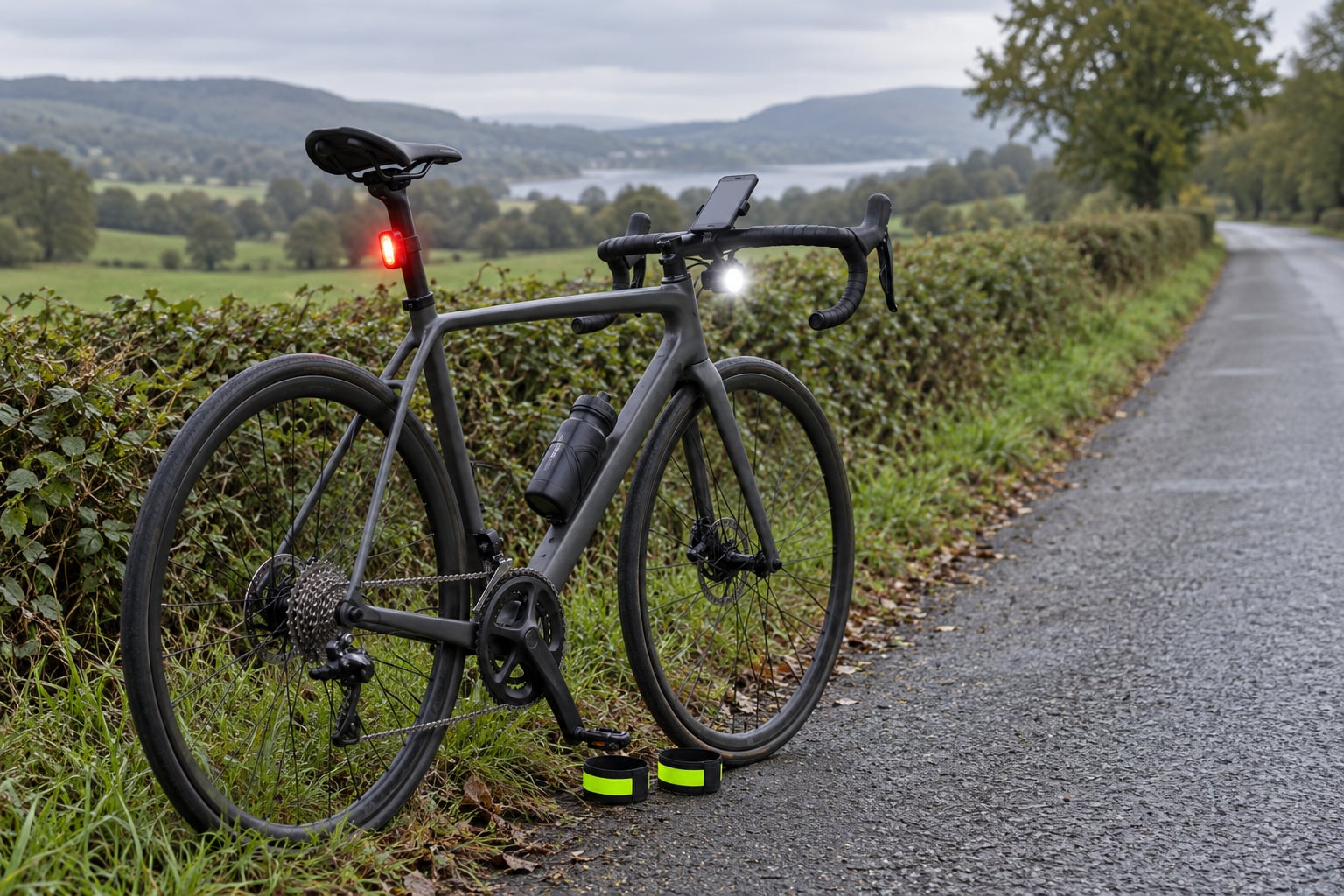
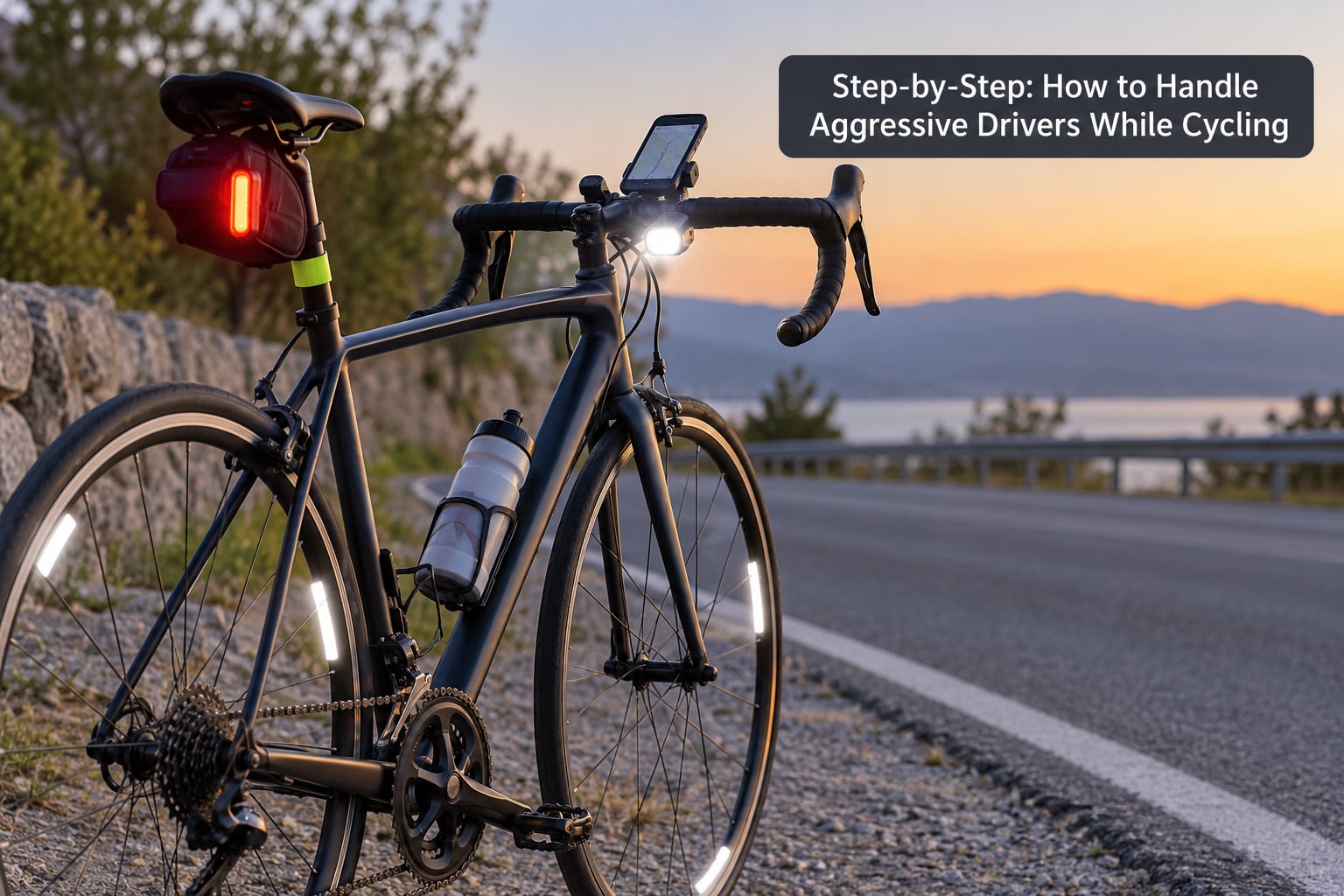
- Lights that work in daylight. A white front light and a red rear light, both steady or flashing, are the single biggest upgrade. Riders seen early get passed with room; riders noticed late get squeezed.
- Bright or reflective clothing. Fluorescent yellows and white or pale clothing read better than dark jerseys in daylight, and reflective ankle bands or a vest handle the dusk and night shift.
- A charged phone in a handlebar mount. Not for filming while moving, but so you can call for help, take a photo of a vehicle once you are stopped safely, or check a report form later.
- A front and rear camera if you ride regular routes. A visible camera changes how some drivers behave, and footage is the only evidence that helps after the fact. Keep the memory card formatted and the timestamp correct.
- A route with escape options. Know where the side streets, gas stations and bus stops are along the way. An escape route you have already seen is worth more than one you discover at speed.
- A rough idea of the local rules. Minimum passing distances, where you are allowed to ride and who to report to differ by country and state. Check your own area rather than assuming, since this guide is not legal advice.
Step-by-Step: How to Handle Aggressive Drivers While Cycling
Step 1: Reduce the chance of a conflict
You cannot control other people’s behavior, but you control how often you put yourself in front of them. Riding a wide arterial with a shoulder during rush hour is a different day from riding the same road at seven in the morning, and route choice is the cheapest safety gear there is.
Split the ride into parts: the fast, open sections where you can hold a steady line, and the slow, narrow parts with parked cars, blind junctions and no escape. On the fast sections, groups should spread out rather than ride two abreast, because a pair of cyclists invites a driver to go around and a driver going around is where the close passes start.
Step 2: Notice early warning signs
An aggressive driver usually announces themselves before the pass. Watch the mirror rather than the road straight ahead, and look for a vehicle that closes fast from behind, drifts toward your line more than once, sounds the horn, brakes late, or keeps pulling level without any intention of moving across.
Failure to yield matters just as much as a squeeze. A car that reaches a junction beside you and then accelerates through your space is telling you it did not see you, and that is a visibility problem you can still fix by moving and signaling.
Not every close pass is aimed at you. Road narrowing, blind bends and oncoming traffic push drivers across the line without any hostility behind it. The trick is reading intent rather than guessing, and intent usually shows up in the second or third attempt, not the first.
Step 3: Make yourself predictable and visible
Hold a steady position a reasonable distance from the curb, far enough out that a driver has to move into the lane to pass you. That single habit removes most squeeze passes, because the gap was never there to squeeze into. It also means drivers who pass you normally have a clean out.
Stay out of the blind spot beside a van or truck, keep out of the door zone next to parked cars, and check over your shoulder before drifting across a lane. Signal your turns and stops clearly, and make eye contact where it is safe to do so, since a driver who has acknowledged you is a driver who knows you are there.
None of this means stepping into danger to be seen. Being visible in the sense of being in the driver’s way is a different, much riskier idea.
Step 4: Create distance and choose an escape option
This is where handling aggressive drivers actually happens. Slowing down, moving further from the vehicle, or peeling off at the next safe place costs you almost nothing and gives the situation time to end. Matching a driver’s speed to prove a point is the one move that reliably makes things worse.
Pick the escape before you need it: the wide shoulder, the side street, the lay-by, the gas station forecourt. Use it without announcement and without looking back. Once you have left the conflict path, stay out of it, even if the vehicle passes again further down the road.
Step 5: Communicate once, calmly, and only when safe
A short, neutral signal sometimes ends an encounter faster than silence, and it only works when the gap is comfortable and you are not merging. A wave, a raised open hand, a thumbs up or a flat palm meaning back off are all readable at road speed without needing words.
Verbal communication is riskier. A raised voice at close range with a driver who is already angry is how a near miss becomes a fight. Riders who use a calm, friendly line, such as thanking a driver who gave you room, tend to get a better result than riders who tell someone what the law is, and riders who say nothing at all are hard to argue with.
Say it once. If it has not worked, you are done talking. Distance is the next move.
Step 6: If the behavior continues, get help and document it
Get to a populated place or a shop, not somewhere remote. Sit down, breathe, and let the adrenaline drop before you decide what to do next. If you are in immediate danger, that is the moment to call emergency services and give your location first, because knowing how to handle aggressive drivers while cycling stops working the moment things turn physical.
From there, write down what happened while it is fresh: time, place, vehicle color, make, model and partial plate, direction of travel, and what the driver did. Save any footage you have, keep the memory card, and note whether other cyclists saw it. Dashcam clips and named witnesses both carry weight in a report.
Then use the reporting route that exists where you live, whether that is an online police portal, a local non-emergency line, or a cycling organization that handles incidents for members. A short, factual report gets further than an angry one, and a sequence of documented passes on the same stretch of road carries more weight than a single incident.
Step 7: Review the ride afterward
Adrenaline from a close pass takes an hour or more to fade and it wrecks the rest of the ride if you sit on it. Do something ordinary and physical, keep your cadence up, and let the ride finish. Talking it through with a riding partner helps more than most people expect.
Be honest about the contributing conditions without taking the blame for someone else’s behavior. Was it dark, was there no shoulder, were you wearing a dark jersey, did you not check the blind spot? Fix the parts you control, and accept the rest. A bad encounter is not evidence that you did something wrong.
Common Mistakes
Almost every counterproductive response falls into one of these six buckets.
- Returning the aggression. Shouting back, copying the gesture or deliberately staying in front of the vehicle to block it gives the driver a reason to keep engaging. Correction: one calm signal if the gap is safe, then disengage.
- Chasing or following. Trying to catch up and deliver your point puts you behind a vehicle that has already shown how it treats people on a bike. Correction: keep riding your line and let them go.
- Filming while moving. A camera held one-handed at speed is a handling and balance risk, and it pulls your eyes off traffic. Correction: if it is worth recording, pull over first.
- Sudden, unpredictable movements. Cutting across a lane to prove a point or drifting into the path of a passing car invites a collision that nobody involved wanted. Correction: hold a steady, visible line.
- Arguing at the roadside. Standing next to a car with the driver leaning out the window puts you on their terms. Correction: get back on the bike, get the details, report it later.
- Assuming every driver is hostile. Reading malice into a narrow-road pass leaves you tense and unpredictable on the stretches where most encounters actually occur. Correction: treat each one as data, and look for patterns before you build a story.
Frequently Asked Questions
Should a cyclist confront or argue with an aggressive driver?
No. Confrontation changes the terms of the encounter from a near miss to a face-to-face standoff, and you are the vulnerable party in every version of it. Most riders who argue report that nothing was resolved and that they left the exchange more shaken than the driver did. One calm gesture or a short thank you works when the gap is safe, otherwise disengage, ride on and report it later if it was serious.
What should I do if a driver passes too close while I am riding?
Stay steady, hold your line, do not swerve into their path and do not speed up. Signal once if it is safe, maybe a flat palm or a short wave, then continue your ride. The adrenaline will spike and your instinct will be to look back, so keep your eyes ahead and count to twenty instead. Record the details and the vehicle once you are stopped somewhere safe, not while you are moving.
Can I legally record a driver who endangered me while cycling?
In many places, yes, but the rules differ by country and state and some restrict recording in certain private spaces or between private individuals. The safe and common approach is to record from your own bike or helmet camera while you are riding normally, with no confrontation and no attempt to follow the driver. Check your local law before you rely on footage, and treat this as general information rather than legal advice.
How can cycling groups reduce the risk of provoking drivers?
Ride single file through narrow and urban sections, even if the rules would allow riding two abreast. Keep gaps short enough that the group reads as one vehicle, and have a designated person at the back watching mirrors and calling hazards back. Put the least confident rider near the front, where traffic is lightest, and agree before the ride that nobody engages with a driver, however tempting it looks.
When should a cyclist call police after a dangerous driving incident?
Call emergency services straight away if there is an immediate risk of injury, if the driver is following you, or if you feel unsafe where you are stopped. Otherwise report it later through the non-emergency or online reporting channel in your area. Reports rarely produce instant action, but a clear record with time, place, vehicle details and footage is what makes a pattern visible and what supports any later complaint.
What if an aggressive driver follows me after the encounter?
Treat it as a safety event rather than a confrontation. Get into a lit, populated place, a shop or a gas station, and call emergency services if the vehicle keeps following or approaches you. Do not try to lead them somewhere, do not stop in a lay-by to wait, and tell someone your route if they are gone. Keeping moving toward people and calling for help beats any clever plan you could make on your own.
Conclusion
Start with the first action, not the last one: be visible before the driver reaches you, hold a steady position out in the lane, and pick an escape route before you need it. When the encounter escalates, distance beats words every time, so slow down, move away and leave.
Then handle it afterward, once you are stopped somewhere safe: write the details down while they are fresh, keep any footage, and report it through the channel where you live. If the danger is immediate or a driver follows you, get to people and call emergency services. That is the honest version of how to handle aggressive drivers while cycling, and it works on far more rides than the alternatives.