How to wash cycling kit properly comes down to four things: wash it in cool water on a gentle cycle with a mild liquid detergent, turn it inside out, and let it air dry away from direct sun. Do that after every ride and a jersey or set of bib shorts lasts years instead of a season. The whole job takes about fifteen minutes of attention, most of it waiting.
Technical fabrics are not everyday clothes. A jersey pulls sweat off your skin through raised fibres, a rain jacket relies on a surface coating that sheds water, and a chamois pad is foam that has to keep its shape. Hot water, softener and a tumble dryer undo all three, and they do it slowly enough that you usually blame the garment rather than the wash.
So the plan below covers supplies first, then the full routine, then the ten mistakes that shorten a kit’s life fastest. If you read one thing, read the step-by-step section and the mistakes list. Everything else is detail.
Table of Contents
- What You Need
- Essential
- Optional but useful
- How to Wash Cycling Kit: Step-by-Step
- How to Pretreat Sweat and Sunscreen Stains
- How to Wash Cycling Kit Without Damaging Fabrics
- How to Dry Cycling Clothes
- Common Mistakes
- Frequently Asked Questions
- Can I wash cycling clothes in the washing machine?
- What temperature should I wash cycling kit at?
- Why does my cycling kit still smell after washing?
- Can I tumble dry cycling clothes?
- How often should I wash my cycling kit?
- Can you use fabric softener on cycling clothes?
- Conclusion
What You Need
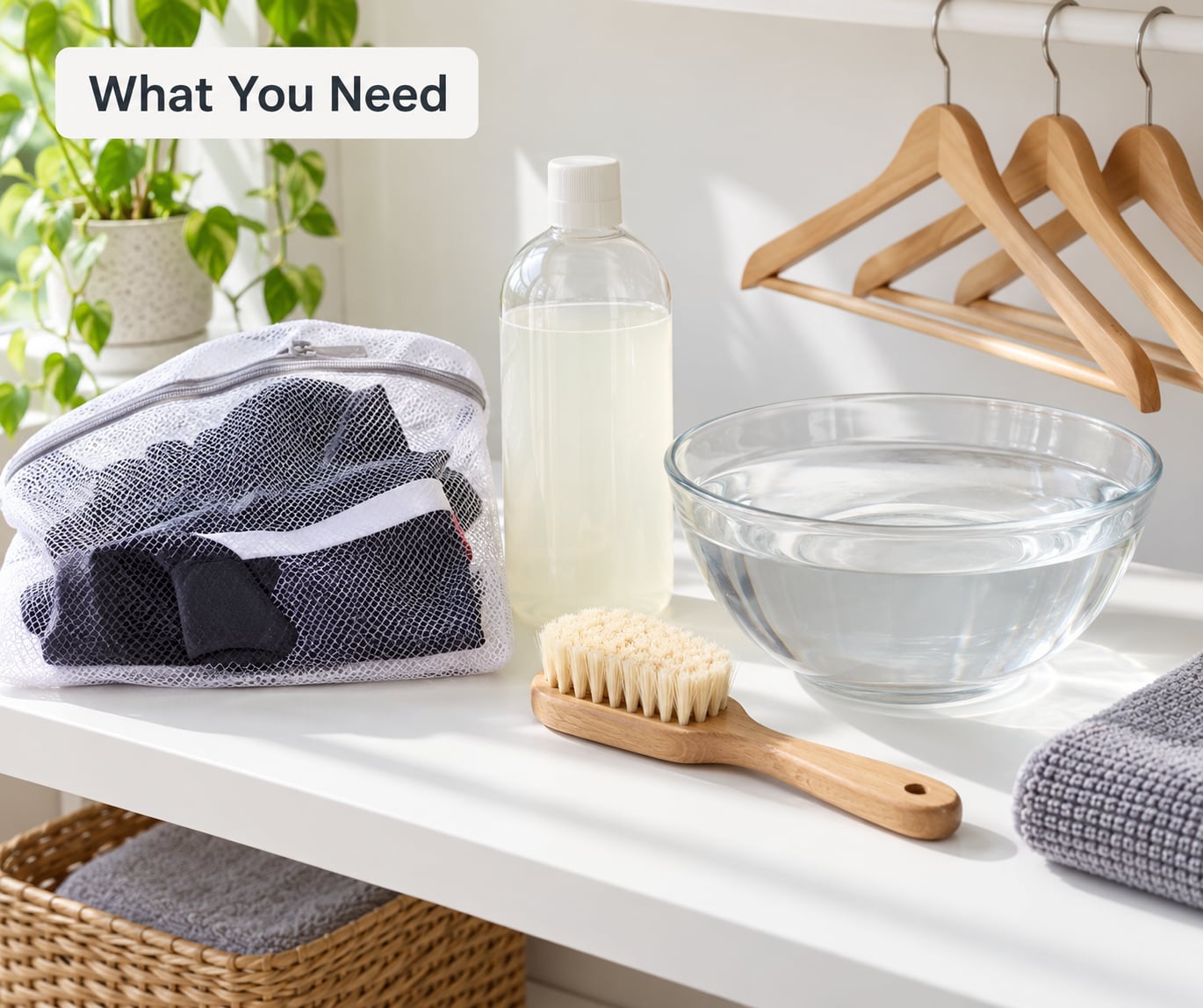
The list is short, and only three items are genuinely essential. Everything else is a nice-to-have that saves effort rather than results.
Essential
- Cool water and a washing machine with a gentle or delicate cycle. Any modern machine has one. If yours does not, hand washing in a basin works fine.
- Mild liquid detergent. A small bottle of non-bio liquid laundry detergent is enough. Sports detergent with enzymes or a protein remover helps more on stubborn sweat, but it is not essential.
- A place to hang dry kit. A shower rail, drying rack, or hangers on a shaded line. This is the step most riders skip and it is the one that causes the musty smell.
Optional but useful
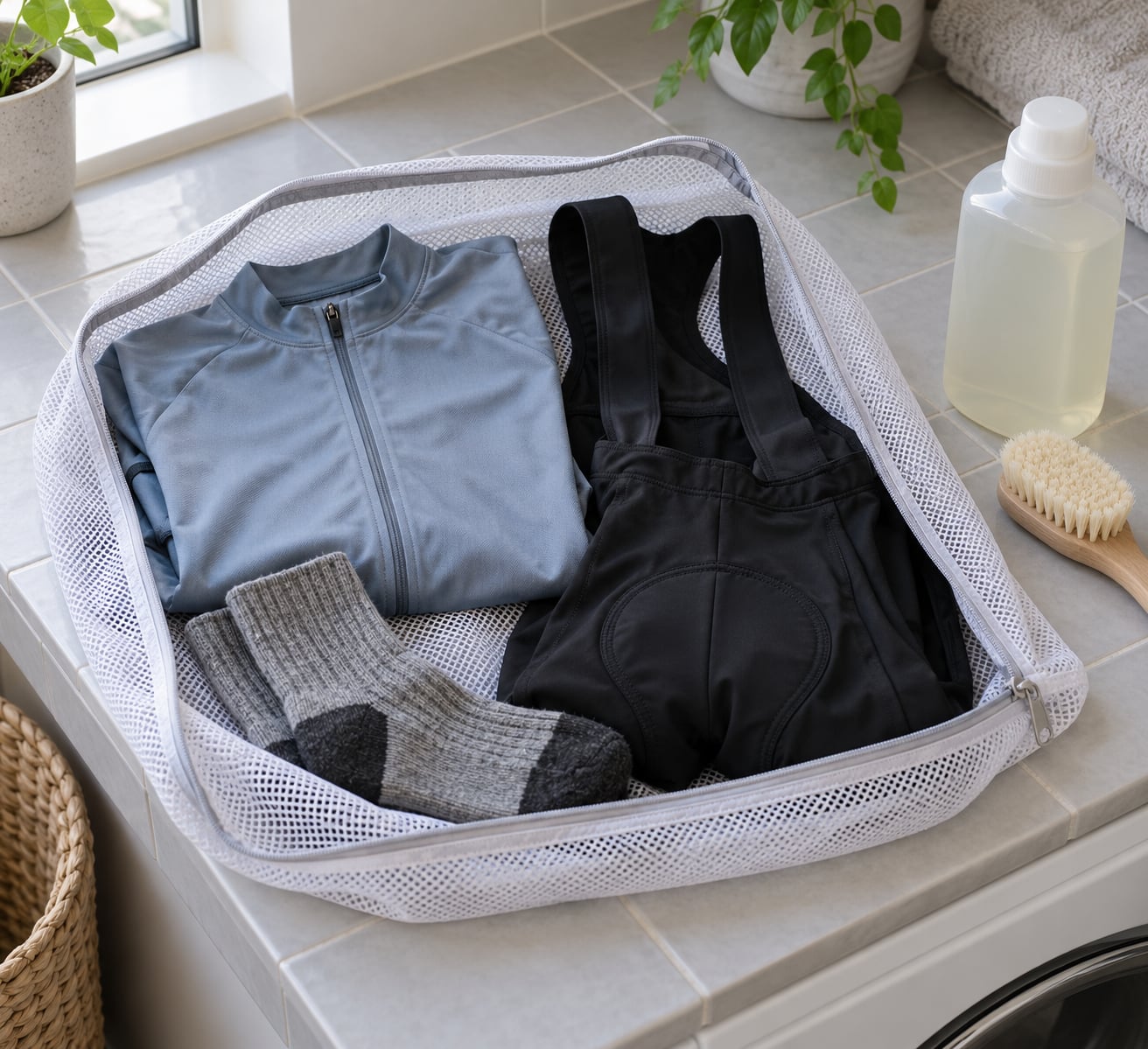
- A mesh wash bag, useful for bib shorts, socks, and gloves so zippers and velcro do not catch on the drum.
- A soft-bristled toothbrush or bottle brush for the chamois area, cuffs, and zipper teeth.
- White vinegar, for the smell problem that a normal wash does not fix.
- Spray-on water repellent, for a jacket whose water repellency has worn off.
- A wool-specific detergent if you own merino base layers.
How to Wash Cycling Kit: Step-by-Step
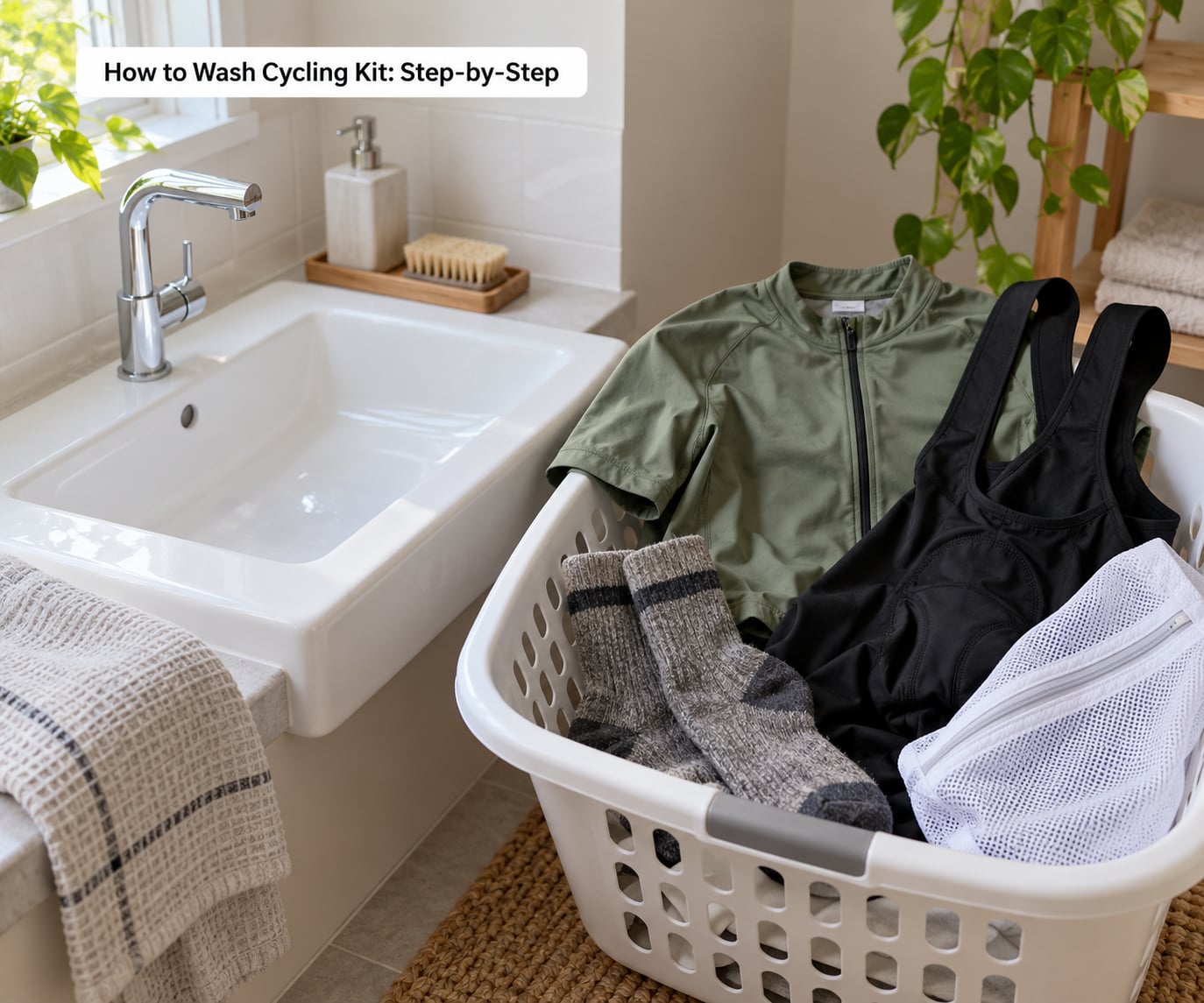
The whole routine is six moves: read the label, sort the load, deal with stains before they set, wash cool and gently, dry in shade, and put it away dry. Work through them in that order and the results are easy to see.
How to Pretreat Sweat and Sunscreen Stains
Turn the garment inside out and look at the places that take the worst abuse: the seat area of bib shorts, under the arms, collar, and the hem where sweat dries. Whiteish, chalky discolouration on dark bibs is dried sweat, and it comes off far more easily before it has been through the machine.
Put a small drop of detergent straight on the mark, rub it in gently with your fingers, and leave it for five to ten minutes. No scrubbing brush on technical fabric. Aggressive scrubbing mats down the raised fibres that make the fabric wicking in the first place, and that damage does not wash out.
For sunscreen marks, a drop of mild dish soap on a damp cloth works, dabbed rather than scrubbed. Chain oil and grease want the opposite treatment: warm water and a drop of detergent worked in with a toothbrush, then a rinse before the garment ever goes near the drum.
Velcro and zippers get closed or covered before washing. Fasteners left open pick up on everything else in the load, and that abrasion is what makes a jersey look tired long before the fabric wears out.
How to Wash Cycling Kit Without Damaging Fabrics
Load no more than half the drum. Kit needs to move, and a packed drum is what turns a gentle cycle into a beating. Everything inside out, zips closed, mesh bag on the small stuff, one small dose of liquid detergent, no softener, no bleach, no powder.
Set the machine to 30C (86F) on a gentle or delicate cycle with a low spin, roughly 800 to 1000 rpm. High spin cycles twist elastane fibres and stretch jersey collars and bib leg grippers over time. If you only remember one setting, remember gentle and low.
Cold water on its own is not the answer either. Detergent needs warmth to dissolve properly, and under-dissolved detergent leaves a film in the fabric that traps odour and slowly clogs the wicking fibres. 30C is the balance point that fabric makers write on the label anyway.
Hand washing works just as well for one or two garments. Fill a basin or use the shower with lukewarm water, add a small amount of mild detergent, submerge the kit, and leave it for ten minutes. Gently swish, rub the chamois area and collars a little, then rinse until the water runs clear. Squeeze, do not wring. Wringing twists the elastane.
Different garments want slightly different handling, so here is the short version:
| Garment | Temperature | Cycle | Drying |
|---|---|---|---|
| Jersey | 30C (86F) | Gentle, inside out | Hang in shade, shoulders reshaped |
| Bib shorts | 30C (86F) | Gentle, mesh bag | Hang, chamois flat, no folding into a ball |
| Rain jacket | 30C (86F) | Gentle, no softener ever | Hang on a wide hanger, re-proof afterwards |
| Merino base layer | 30-40C | Gentle or hand wash | Flat dry or hang, away from sun |
| Gloves, socks, hat | 30C (86F) | Gentle, mesh bag | Flat dry on a towel |
That per-garment table is the answer to the most common search on this topic. Bib shorts and jerseys can both go in a machine, and both come out fine, as long as the cycle is gentle and the detergent is not doing anything aggressive.
How to Dry Cycling Clothes
Hang everything, out of sunlight, with the shoulders and waistband pulled gently back into shape. Reshaping while damp is what keeps a jersey from growing baggy and bib shorts from sagging.
To speed things up, roll the garment in a dry towel and press to draw out water, then hang it. Do not rub. On a humid day a jersey takes a few hours and a wool base layer can take most of a day, so plan the wash for the evening and wear it in the morning.
Tumble dryers are the enemy here. Heat above roughly 40C damages elastane, warps seams, and shrinks merino. If you have no choice and need it dry in an hour, use the cool or air-fresh setting for a short run, then finish it on a rack.
How do you know it is dry? Hold the fabric up to a window or a lamp. Cool synthetic feels slightly damp long after it looks ready, and it is that last trace of moisture that starts bacteria in a closed locker. Put kit away only when there is no coolness in the seam.
Common Mistakes
Almost all ruined cycling kit can be traced to one of these ten. Each has a straightforward fix, and most of them cost nothing.
| Mistake | Fix |
|---|---|
| Leaving kit unwashed in a jersey bag until the next ride | Wash it the moment you get home, before sweat dries into the fabric |
| Hot washes at 40-60C | 30C (86F) on a gentle cycle, enough warmth for detergent to dissolve |
| Fabric softener or fabric conditioner | Skip it. Softener coats fibres and blocks the wicking channels that move sweat |
| Bleach or chlorine-based products | Use none. They attack elastane and fade fluoro colours fast |
| Washing powder detergent | Liquid dissolves fully and leaves no residue in technical fabric |
| A full drum and a long soak | Half load, wash promptly. Abandoned soaks weaken fibres and encourage fading |
| Maximum spin speed | Low spin around 800-1000 rpm to protect elastane and seam tape |
| Tumble drying | Hang dry in shade, reshape while damp, use a towel to blot |
| Drying in direct sun | Shade only. Sun fades bright colours and can stiffen fabric |
| Storing kit while still damp | Dry fully before the locker. That is where the musty smell comes from |
Three habits sit above the rest. Riders on BikeHub keep repeating the same point: washing kit the moment you get home, before sweat has dried, does more for odour than any detergent you can buy. The same threads describe bib shorts that went threadbare in the seat area, and the fix was always the same, rinse them immediately rather than leaving them damp in a bag.
Second, deal with odour as a ladder rather than a single step. Wash on the day, pre-soak if the smell is already there, add white vinegar to the wash water for stubborn polyester stink as BikeForums riders do, move to an enzyme or deodorising detergent if that is not enough, and as a last resort seal damp kit in a plastic bag and leave it in the freezer overnight. Cold does not kill bacteria outright, but it stops them multiplying and gives the wash time to work properly.
Third, the expensive sports detergent debate. A dissenting view on BikeHub is worth repeating honestly: one rider washed kit with ordinary powder for twenty years with no shrinkage, fading, or stretching. A mild non-bio liquid is the baseline. Pay more only if you wash heavily soiled kit often or fight persistent odours.
A few bits of kit sit outside the jersey-and-bibs routine. Helmet liners come out by hand or in a bath with wool detergent, never in a tumble dryer or over a heater, and the shell gets a wipe with a damp cloth. SingletrackWorld riders wash muddy kit at 30C on a gentle cycle with liquid soap and report no lasting problems, which is reassuring for anyone who rides in winter mud.
Shoes and gloves get the same soft treatment. Knock the dirt off outdoors, brush the uppers with a soft brush, wash laces and insoles in a sink of lukewarm water and mild detergent, and dry everything at room temperature with newspaper or paper inside the shoes to hold shape. Cycling shoes glued with adhesive do not like soaking, so keep the water off the bond line.
Travelling adds its own problem. In a hotel, hand wash in the shower with a small amount of detergent and hang over the rail. In a laundromat, use the same machine method as at home, skip the tumble dryer, and ask for half a dose of detergent if the machine only dispenses heavily.
Rain jackets need a little extra attention. Washing wears the water-repellent finish down over time, which is normal. Test it by pouring a little water on the shoulder: if it beads into droplets, the finish still works; if it soaks in and spreads, the garment needs re-proofing. Spray the repellent from roughly 15cm away, let it soak in for a couple of minutes, then tumble low or heat gently to activate it. Never add softener to the wash, because it is the main reason a treated jacket goes wet in a downpour.
How often should things be washed? Bib shorts and base layers after every ride, without exceptions. Jerseys and socks every two or three rides is enough for most people, more often after a hot or hilly day. Jackets need washing when they are visibly dirty or start to smell, which for many riders is once a season.
Frequently Asked Questions
Can I wash cycling clothes in the washing machine?
Yes. Jerseys, bib shorts, base layers, gloves, and socks all handle a normal domestic machine, provided you wash them inside out on a gentle or delicate cycle at 30C (86F) with a small dose of mild liquid detergent. Skip fabric softener and keep the spin low, around 800 to 1000 rpm. Do not wash a helmet or a pair of sunglasses in the machine.
What temperature should I wash cycling kit at?
30C (86F) is the number to use. It is warm enough for detergent to dissolve properly, and cool enough to protect elastane, seams, and printed graphics. Colder water leaves undissolved detergent sitting in the fibres, which blocks wicking and holds onto odour. Hotter water shrinks merino, damages padding, and is more likely to fade bright colours.
Why does my cycling kit still smell after washing?
Usually because sweat dried into the fabric before it was washed, or because it went back into the locker still damp. Try washing the same day, pre-soaking soiled areas in warm water with detergent, then adding white vinegar to the wash water for stubborn polyester odour. If it persists, move to an enzyme or deodorising detergent, and as a last resort seal damp kit in a bag and freeze it overnight.
Can I tumble dry cycling clothes?
Avoid it if you can. Heat damages elastane, warps seams, and shrinks merino base layers, and none of that reverses. Air dry in shade, reshape the garment while it is still damp, and roll it in a towel to remove water faster. If you genuinely need it dry within the hour, run the cool or air-fresh setting briefly and finish it on a rack.
How often should I wash my cycling kit?
Bib shorts and base layers after every ride, because they sit against skin and stay damp. Jerseys and socks every two or three rides, or sooner after a hot, hilly day or a dirty one. Waterproof jackets only when they are dirty or start to smell, often once a season. If you own enough kit to rotate, wearing it twice before washing is reasonable.
Can you use fabric softener on cycling clothes?
No. Softener and fabric conditioner coat the fibres with a film that blocks the raised channels technical fabrics use to move sweat, so wicking and breathability drop permanently. The same coating makes a rain jacket soak through instead of shedding water. Use a mild non-bio liquid detergent instead, and skip anything with softener or added fragrance.
Conclusion
The reliable version is simple. Wash kit the day you ride it, inside out, at 30C (86F) on a gentle cycle with a small amount of mild liquid detergent, half load at most. Never use softener, bleach, or powder, and never put cycling kit in a tumble dryer.
If you do only one thing differently, start washing kit the moment you get home instead of leaving it in a bag for a day. That habit, plus hanging everything dry in shade, removes most smells and keeps the fabric working. Above all, read the care label on the garment in front of you, because brands differ and the label always wins.
Last updated October 2026.