Cyclists wear padded shorts because the padded insert inside them, called a chamois, sits between your skin and the saddle and manages the contact that makes riding painful. It reduces friction, spreads pressure across your sit bones, wicks sweat away from your skin and takes the sting out of high-frequency road vibration. That comfort is what lets most riders stay in the saddle well past an hour.
It is not padding for the sake of padding. A jersey cut alone leaves you sliding on a saddle for three hours, and your skin paying for it. The short does the same job as the saddle, except it moves with you.
Table of Contents
- Why Cyclists Wear Padded Shorts
- What Is the Padding in Cycling Shorts?
- How Does Cycling Short Padding Help on Long Rides?
- Friction and chafing
- Pressure distribution
- Moisture and temperature
- Road shock and vibration
- Staying in the saddle
- The underwear question
- Why Does the Chamois Shape Matter?
- Multi-density construction
- Anatomy and gender differences
- Seams matter
- Foam versus gel
- Are Padded Shorts Necessary for Every Ride?
- How Should Cycling Shorts Fit?
- The in-store fit test
- Signs of a good fit
- Other fit details
- How Do You Choose Padded Shorts for Road Cycling?
- How Do You Care for Cycling Shorts?
- Frequently Asked Questions
- What is a chamois in cycling shorts?
- Are you supposed to wear underwear with bike shorts?
- What are bib shorts?
- Do padded cycling shorts help with saddle soreness?
- Why not wear a padded saddle instead of padded shorts?
Why Cyclists Wear Padded Shorts
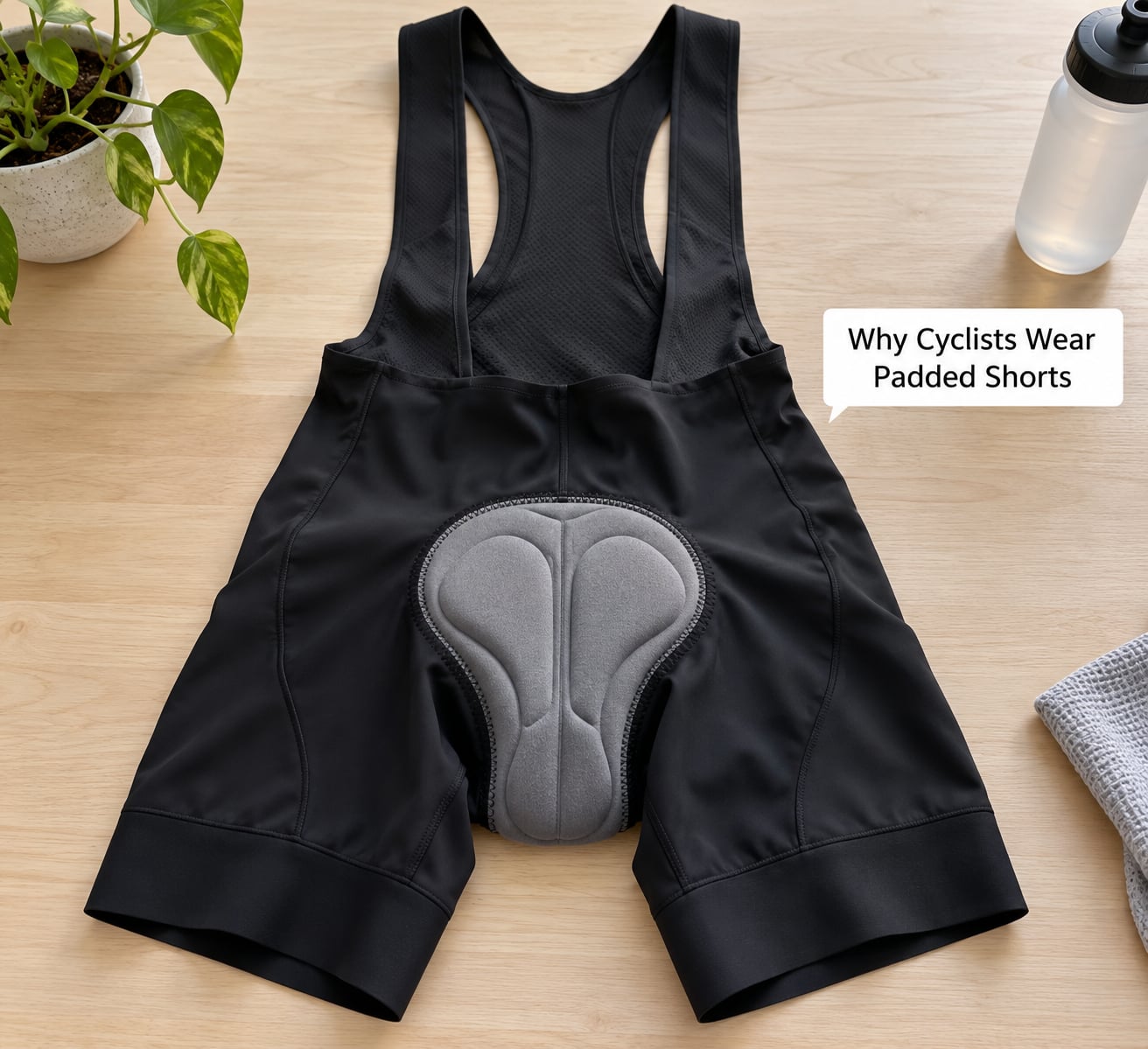
The short answer, in five parts:
- Less friction. Skin rubbing on fabric repeatedly is what produces chafing. The chamois is a smooth, wicking surface, so the rubbing happens between two engineered layers instead of between your skin and cotton.
- Pressure spread out. Your weight concentrates on two sit bones. A shaped pad spreads that load over a wider, softer area, which removes the hard pressure points that build into raw spots and numbness.
- Moisture pulled away. Microfiber pulls sweat off your skin and into the pad, which is the difference between cooling and staying wet and cold for hours.
- Less road shock. Small, fast vibrations from the tyre and road surface get absorbed before they reach your soft tissue.
- The pad stays put. A snug, stretchy short holds the chamois exactly where your body puts it while you pedal, so it stops sliding around and bunching up.
Nobody buys a good pair and loves them immediately. The first ten minutes feel strange, like sitting on a small cushion. Then it disappears and you stop noticing you are sitting at all.
What Is the Padding in Cycling Shorts?
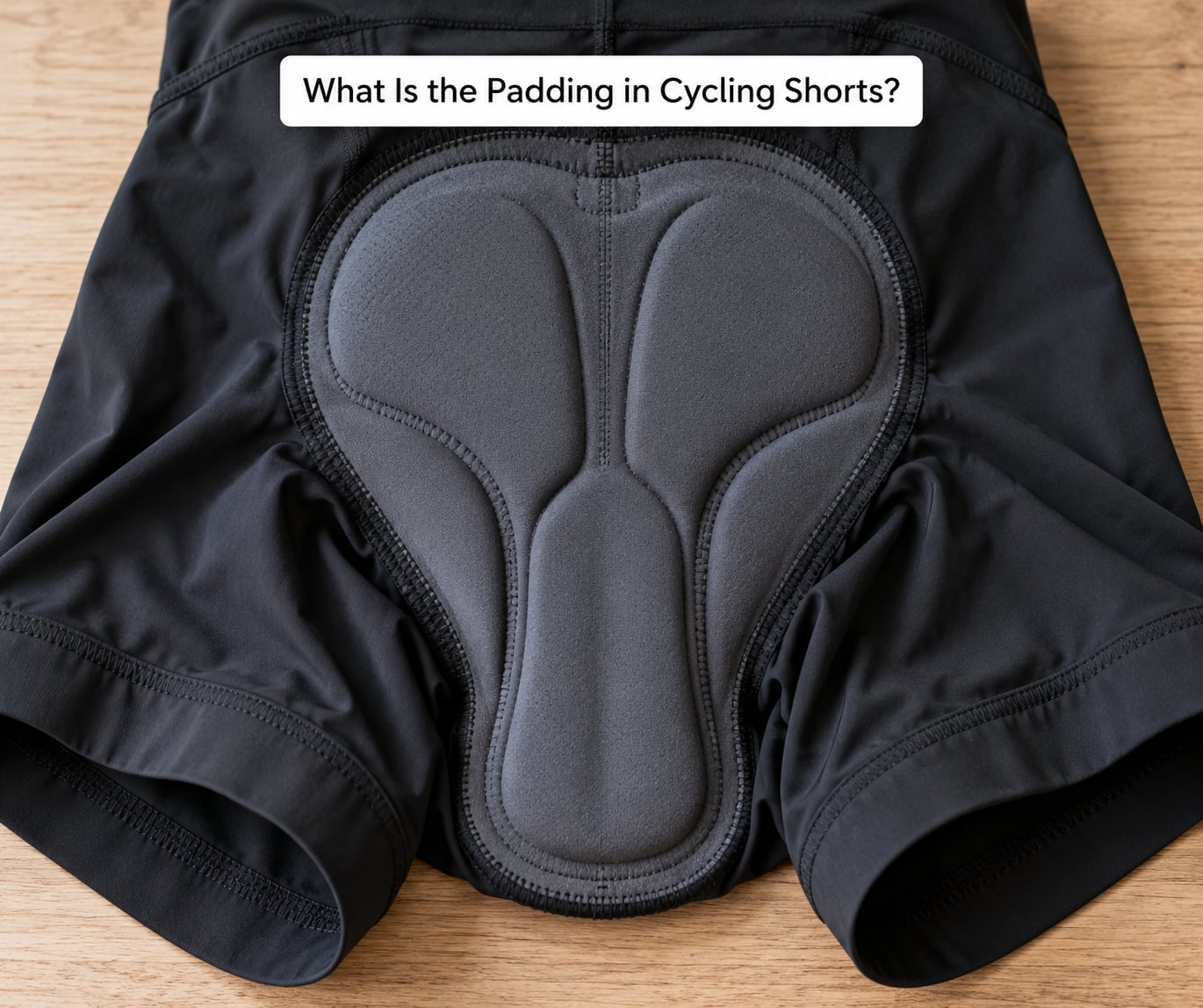
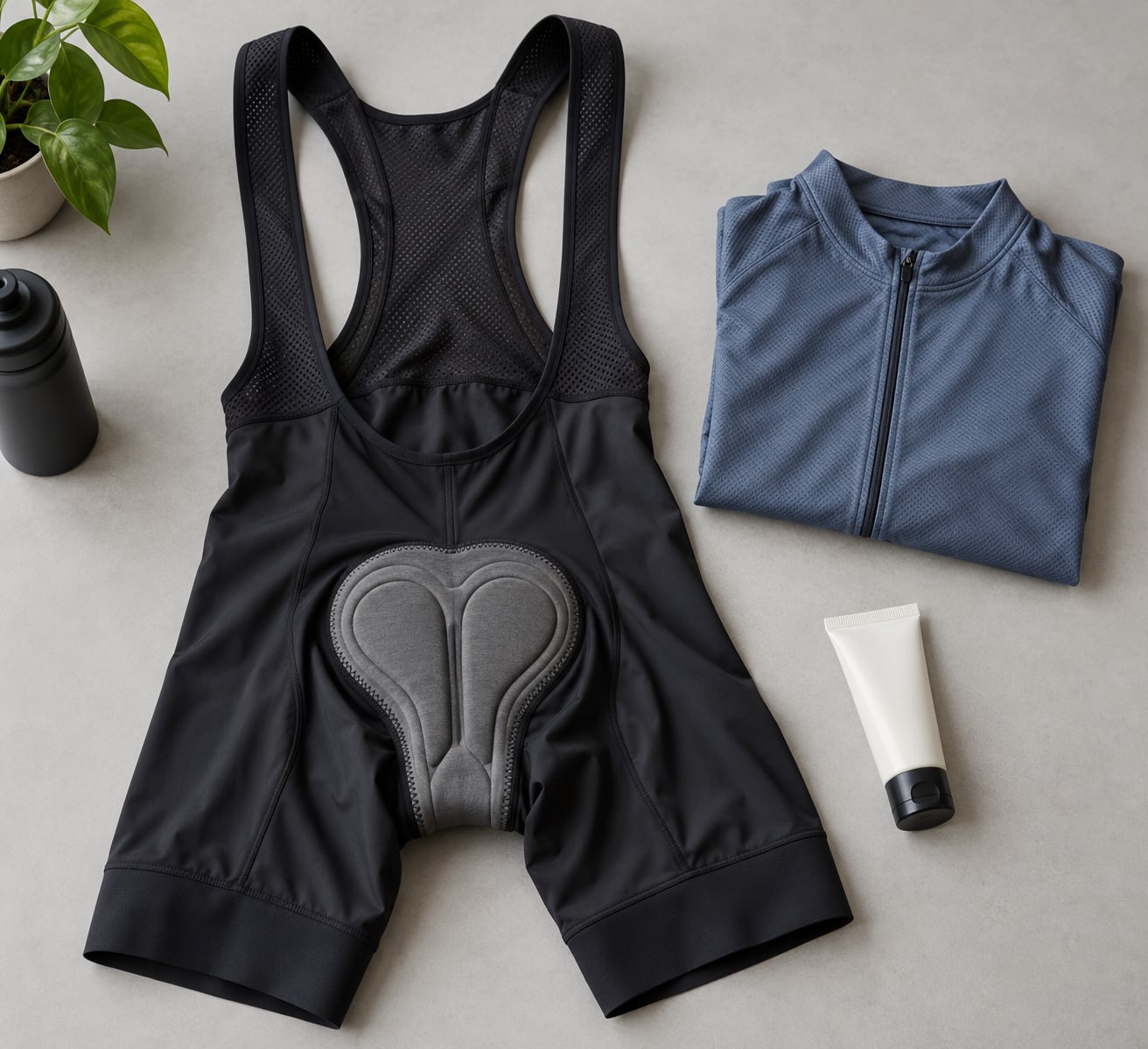
A chamois is the sewn-in panel that covers the seat area of cycling shorts. Most riders say it the way it sounds, “shammy.” It is not leather any more, despite the word originally describing a soft goatskin or sheepskin. Modern pads are multi-density foam, sometimes with a gel insert, bonded to a smooth microfiber face fabric and attached to the short with flatlock stitching.
The panel has a recognisable shape. There is a narrow nose that runs down the centre, a wider rear section that covers the sit bones, and two small wings that riders call the “ears.” Between the nose and the rear section, many designs leave a channel or a cutout over the perineum so the sensitive nerves there are not compressed directly.
It is worth saying what padding cannot do. It will not rescue a saddle that is the wrong width for you, a saddle tilted at the wrong angle, or a bike whose fit is bad enough that you rock side to side. If a pad feels wrong, the problem is often the bike or the short, not the pad.
How Does Cycling Short Padding Help on Long Rides?
Friction and chafing
The damage on a long ride comes from repeated low-level rubbing, not from one hard knock. Every pedal stroke moves your body slightly, and every one of those small movements drags fabric across skin. Chamois cream reduces that coefficient of friction the same way it reduces friction between two surfaces, and it makes a real difference on hot, long, or multi-day rides.
Pressure distribution
Body weight lands on a small area of contact. Over an hour that becomes uncomfortable; over four it becomes a problem. The pad spreads the load, and its rear section is built around the shape of the sit bones so the pressure has somewhere to go besides a single hard edge of saddle.
Moisture and temperature
Wet skin against a saddle feels colder than dry skin, and damp skin rubs worse than dry skin. Wicking fabric moves the moisture off your body and into the pad where it can dry. Indoor and spin riders feel this most, since there is no airflow to help and sweat builds in minutes.
Road shock and vibration
Road shock is the fast, small-amplitude vibration coming through the saddle, mostly from tyre and surface irregularity rather than big potholes. Soft tissue absorbs a lot of that, and over hours it accumulates as tingling, numbness, or the sore backside that riders describe after a long climbing block. The pad takes the edge off it.
Staying in the saddle
Out of the saddle you get relief, but you also stop pedalling and burn more energy. Most riders describe a loop of standing briefly, feeling good for a while, then needing to sit down again. Comfort is what turns that loop into staying seated, and staying seated is where efficiency comes from.
The underwear question
Wear nothing underneath. Cotton underwear adds waistband seams, leg seams and a second fabric layer, and every one of those becomes a rubbing point inside a system built specifically to eliminate them. The chamois and the short are designed as two layers of one system. Experienced riders call underwear under bibs a cardinal sin, and new riders learn it the hard way, usually on a hot day.
Why Does the Chamois Shape Matter?
A pad is not a slab of foam. Thickness placed in the wrong spot makes things worse, because it shifts the pressure somewhere else. That is the single most common complaint from people who try a cheap pair and decide padded shorts are a gimmick.
Multi-density construction
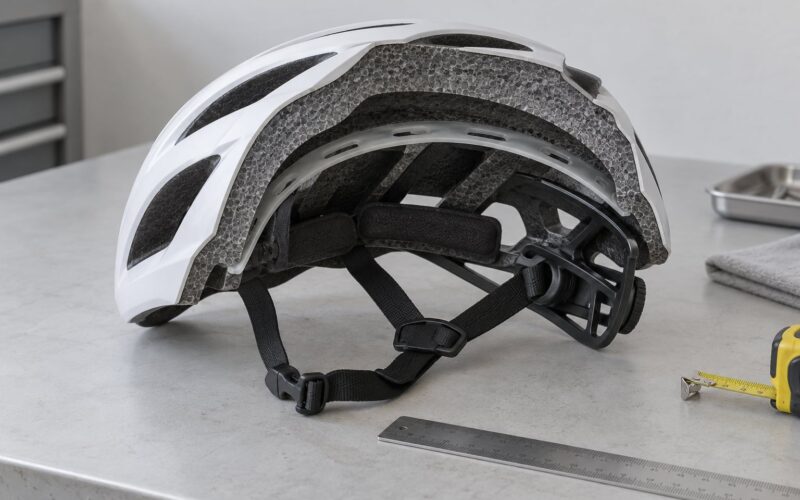
Better pads use different foam densities in different zones. Softer foam under the perineum, firmer support under the sit bones, and thin or open sections where you do not want bulk. A uniform thin pad does nothing much; a uniform thick pad creates new pressure points. The thickness you can feel is not the thickness that matters.
Anatomy and gender differences
Men’s pads typically run long and narrow down the centre with a channel or cutout over the perineum. Women’s pads are usually shorter, wider across the rear section, and take more account of a wider sit bone spacing, with the padding sitting a little further back. Either way the pad should cover your actual contact points, not some average rider’s.
Seams matter
Flatlock seams sit flat against the skin. Raised or overlocked seams under the rear section are a common source of hot spots. If a pad feels fine for the first half hour and then goes wrong, look at the seam line before you blame the foam.
Foam versus gel
| Pad type | How it feels | Best suited to |
|---|---|---|
| Thin wicking foam | Almost unnoticeable, dries quickly | Commutes, short spins, indoor under baggy shorts |
| Medium multi-density foam | Noticeable at first, then quiet | Everyday road training, most rides under two hours |
| Thick multi-density or foam and gel | Firm, takes a few rides to appreciate | Long distances, centuries, multi-day events |
Thicker is not better. On a short ride, a heavy pad just gets hot and bunches as you move. Most riders settle on a medium multi-density pad for everything and keep a thicker pair for the days that earn it.
Are Padded Shorts Necessary for Every Ride?
Honestly, no. For a twenty-minute spin to the shop or a slow loop around the park, normal shorts are fine. The padding has nothing to work on at that length.
Padded shorts earn their place once you are spending real time in the saddle. That covers most road rides, gravel days, long climbs, centuries, multi-day tours, and most indoor trainer sessions. Commuters benefit mostly from the wicking and the lack of a waistband seam, even on shorter trips, because they ride in real clothes over the top.
There is a genuine minority position here. Mountain bikers who move around on the bike, stand on the pedals and shift their weight constantly often prefer a looser short with a removable padded liner, or no padding at all. The argument is that on technical ground a shifting pad creates its own problems. For those riders a liner is the compromise.
Spinners and indoor riders are a special case. They get the moisture benefit more than anyone, but they also sweat heavily on a fixed bike in a hot room, so a thinner, fast-drying pad often works better than a long-distance one.
How Should Cycling Shorts Fit?
Fit beats thickness, every time. A well-fitted thin pad outperforms a badly fitted thick one, and a bad fit is the usual reason people conclude that padded shorts do nothing.
The in-store fit test
- Stand up over the pedals with the shorts on, which is how you actually ride rather than sitting back in a relaxed position.
- Lean forward into a normal riding position.
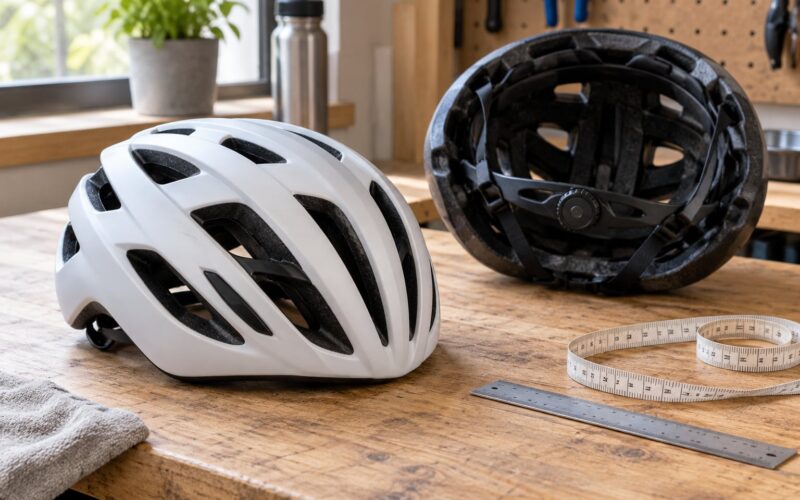
- The pad ears should sit just past the saddle ears, so your weight lands on the wide rear section.
- The pad nose should cover the saddle nose, with no bare saddle in front.
- Take a short ride in them before committing if the shop allows it.
Signs of a good fit
| Good fit | Bad fit |
|---|---|
| No fabric bunching between you and the saddle | Bulky folds of pad appearing under you |
| Hem stays put without a hard elastic grip | Legs rolling up, or a band cutting into your thigh |
| No numbness after an hour | Front-of-pad pressure and tingling within 30 minutes |
| Full range of movement at the hip and knee | Restrictive feel, or binding when you stand |
| Dry, flat seams under the sit bones | Rub marks or hot spots forming mid-ride |
About compression, since it comes up constantly. The stretch in the fabric holds the pad against you and reduces flapping, which most riders notice as a feeling of support. That is worth having. It is not a medical benefit, and a short that feels like a tourniquet is a sizing problem, not a feature.
Other fit details
Look for a wide, flat waistband or, better, bib straps that skip the waist entirely. Leg grippers should be silicone or a gentle elastic wide band, never a narrow elastic ring. Inseam length should suit your height so the pad sits where your body puts it. And if a pair causes numbness, treat that as a fit or bike-fit problem to solve, not something to push through.
How Do You Choose Padded Shorts for Road Cycling?
Start with the style, then the pad, then the fit.
| Style | Best for | Key consideration |
|---|---|---|
| Bib shorts | Road racing, long rides, anything past an hour | Straps keep the pad exactly in place; no waistband to roll or dig in |
| Waist shorts | Casual riders, commuting, riders who dislike straps | Cheaper, easier to size, but the waistband can creep and shift the pad |
| Padded liner | Mountain biking, worn under baggy shorts | Removable and washable; the outer short stays dry longer |
For the pad, match thickness to your longest regular ride. Medium multi-density covers most road riding and doubles as a liner. Save the thick foam-and-gel pads for centuries and touring days, where the comfort over hours is the whole point.
Then check the details that outlast a trend: flatlock seams, silicone leg grippers, a microfiber face fabric, and a brand whose sizing you already know. Riders tend to cycle through several pairs before finding one that matches their sit bones, so if a brand fits you, buy a second pair rather than re-learning sizing on a new label.
Have chamois cream in your jersey pocket. Applied before a long, hot or multi-day ride it noticeably reduces friction, and riders who regularly go beyond 40 miles in summer treat it as standard kit rather than a luxury.
How Do You Care for Cycling Shorts?
A good pad has a long life if you treat it like a piece of technical kit rather than a T-shirt.
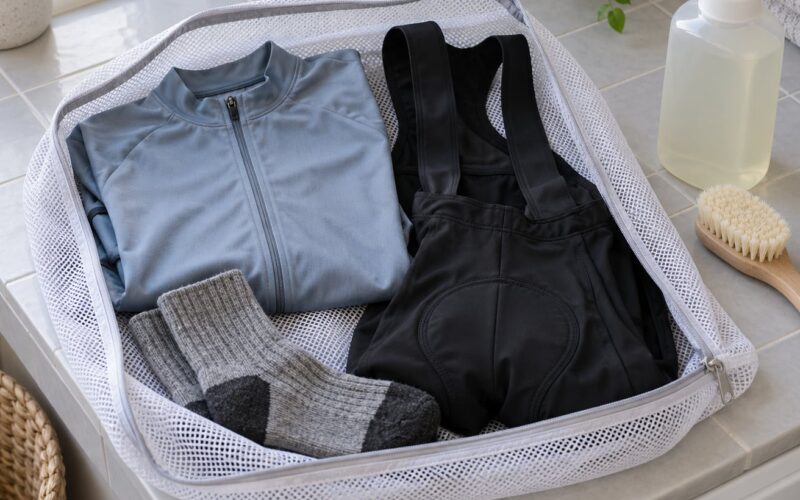
- Wash cold, right away. Sweat, body oils and sunscreen degrade foam and elastic faster than anything else. Rinse or wash the shorts the same day if you can.
- Skip fabric softener and bleach. Softener leaves a film that stops the fabric wicking and reduces how the pad recovers. Chlorine bleach eats spandex.
- Use a mild detergent. Bike-specific washes exist for a reason, but a gentle non-bio detergent is fine.
- Air dry, inside out. A tumble dryer is the fastest way to destroy a pad. Hang them or lay them flat, away from direct sun.
Store them folded or hung rather than crammed in a ball, and change out of damp shorts immediately after a ride. Bacteria and yeast thrive in a warm wet chamois, and that is where most of the bad smell comes from.
Replace the shorts when the pad has lost its shape, the seams have started to fray, or the foam feels hard and flat. That usually shows up as saddle soreness returning out of nowhere on a ride that used to be fine.
Frequently Asked Questions
What is a chamois in cycling shorts?
A chamois is the padded panel sewn into the seat area of cycling shorts, usually shaped from multi-density foam with an optional gel insert and covered in wicking microfiber. It is pronounced ‘shammy’, and despite the name it is no longer made of sheep or goatskin. It sits between your skin and the saddle to spread pressure across your sit bones, reduce friction and pull sweat away from your body.
Are you supposed to wear underwear with bike shorts?
No. Underwear adds waistband seams, leg seams and an extra fabric layer, and every one of those becomes a rubbing point inside a system designed to eliminate them. Cycling shorts work as two engineered layers: the chamois against your skin, then the stretchy outer short holding it in place. Add underwear and you reintroduce exactly the chafing the pad exists to prevent.
What are bib shorts?
Bib shorts are cycling shorts with straps instead of a waistband, so the garment hangs from your shoulders and the chamois sits undisturbed. Because nothing can roll, slip or bunch, they stay comfortable for longer and suit long road rides best. They do take longer to put on, and sizing has to be right in the body rather than adjustable at the waist.
Do padded cycling shorts help with saddle soreness?
They help a great deal, but only when the saddle is the right width and angle for you and the shorts fit properly. A chamois spreads pressure and reduces friction, so it treats the soreness caused by long, steady contact. It cannot fix a saddle that is too narrow, tilted wrong, or a bike that makes you rock side to side. Persistent numbness is worth having checked out.
Why not wear a padded saddle instead of padded shorts?
Because a padded saddle is fixed in place while your body moves over it. The sit bones sink into the saddle padding and then the padding pushes back through that same narrow area, so the contact point does not spread out. A chamois moves with you, spreads the load over a shaped area, and its covering absorbs sweat and friction. Padded saddles are really aimed at hybrid and casual riders sitting upright.
If you only take one thing from this: buy a pair that fits your sit bones before you worry about how thick the pad is. Get them fitted while standing in the saddle, wear them with nothing underneath, and the awkward first ride turns into the reason you stop thinking about your backside at all.