An on bike nutrition strategy for endurance rides comes down to three numbers you set before you roll out: carbohydrate, fluid, and sodium per hour. For most road cyclists, that works out to somewhere between 30 and 90 grams of carbs, 400 to 800 millilitres of fluid, and 300 to 700 milligrams of sodium every hour, matched to how long and how hard the ride is. Get those three numbers into a plan you have practised, and a century stops being a survival test. Leave them to hunger and thirst cues, and the last two hours decide whether you finish at all.
That is the honest version of the advice, and it is less complicated than most cycling nutrition pages make it sound. The hard part was never the theory. It is doing the boring work of testing it on a Sunday ride so the plan already works when you’re tired, hungry, and 70 miles from home.
Table of Contents
- What Should You Eat on Long Rides?
- How Do You Build an On Bike Nutrition Strategy?
- 1. Estimate the ride by duration, not by distance
- 2. Measure your sweat rate once
- 3. Pick fuel you already eat
- 4. Set your per-hour numbers
- 5. Set a timer, then start early
- 6. Work out your carry capacity
- 7. Adjust for the day
- How Often Should You Eat on a Century Ride?
- How Much Should You Drink While Cycling?
- What Electrolytes Do You Need on a Long Ride?
- How Do You Practice Nutrition Before an Event?
- Test the specific product, in the specific amount
- Test the concentration
- Test the timing and the timer
- Train your gut for higher intake
- Test caffeine, if you use it
- Test packaging and palate fatigue
- Plan the resupply
- What Should You Do if You Miss Fueling or Feel Low on Energy?
- If you feel the energy drop
- If you bonk properly
- If you feel nauseous
- If you feel bloated or cramped
- Frequently Asked Questions
- Can I eat just energy bars on an endurance ride?
- How much water should I drink during a long road ride?
- Are gels better than food for a century?
- Do I need electrolytes if the weather is cool?
- What should I do if I feel bonked during a ride?
- How much caffeine is safe on a long ride?
- Conclusion: Start With One Simple Fueling Plan
What Should You Eat on Long Rides?
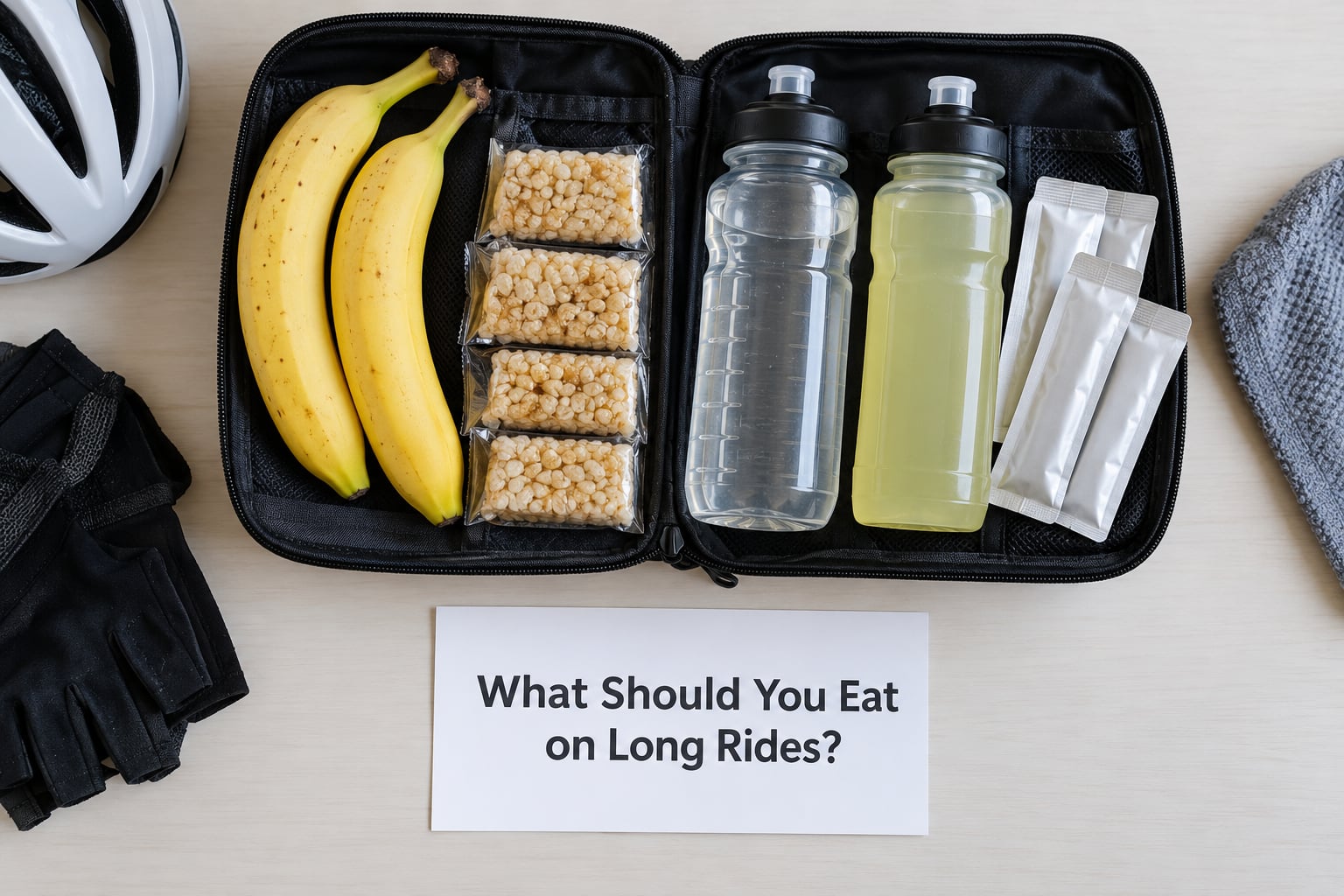
Carbohydrate is the fuel. Muscle glycogen and blood glucose supply nearly all of your riding energy, and both drain far faster than your body tells you they are low. A rider can feel perfectly fine for ninety minutes and then fall off a cliff, because hunger is a lagging signal, not a fuel gauge.
Fluid keeps you from overheating, and sodium is what lets you actually hold onto that fluid. Without enough salt in what you drink, your kidneys dump more water than you took in, and you end up heavier at the end of the ride than at the start. That is the trap behind the “drink as much as you can” advice, and it has ended more rides than dehydration ever has.
Protein has a small role on the bike and a bigger one afterwards. During a ride it slows gastric emptying, which is one reason a protein-heavy bar mid-climb sits badly. Fat is the same story: it is calorie-dense and fine before you start, but it slows digestion on the saddle, which is exactly when you do not want that.
| Fuel source | What it does on the bike | When it matters most |
|---|---|---|
| Carbohydrate (gels, chews, drink mix, real food) | Replaces the glycogen your muscles burn; supports pace and alertness | Every ride past 90 minutes, and any ride with sustained effort |
| Fluid | Offsets sweat loss, supports blood volume and cooling | Any ride in warmth, wind, or long hours; more in heat and humidity |
| Sodium | Retains fluid, supports nerve and muscle function, curbs cramping | Hot rides, heavy sweaters, riders using thyroid medication or diuretics |
| Protein | Little on-bike effect; aids muscle repair afterwards | Within roughly an hour after the ride, plus the evening meal |
| Fat | Slows gastric emptying when taken in large amounts | Mostly in the pre-ride meal, not in the bottle |
| Caffeine | Reduces perceived effort and can raise power output | Later in long climbs or when fatigue, not in the final hour of an event |
Carbohydrate sources split into glucose-based and fructose-based. Your gut absorbs glucose through one set of transporters and fructose through another, and each set tops out at a fairly modest rate on its own. That is why a single-source gel strategy runs you out of road at around 60 grams an hour, and why combining a glucose product with a fructose one — fruit, honey, sucrose, or a blended drink mix — pushes the usable ceiling toward 90 to 120 grams an hour.
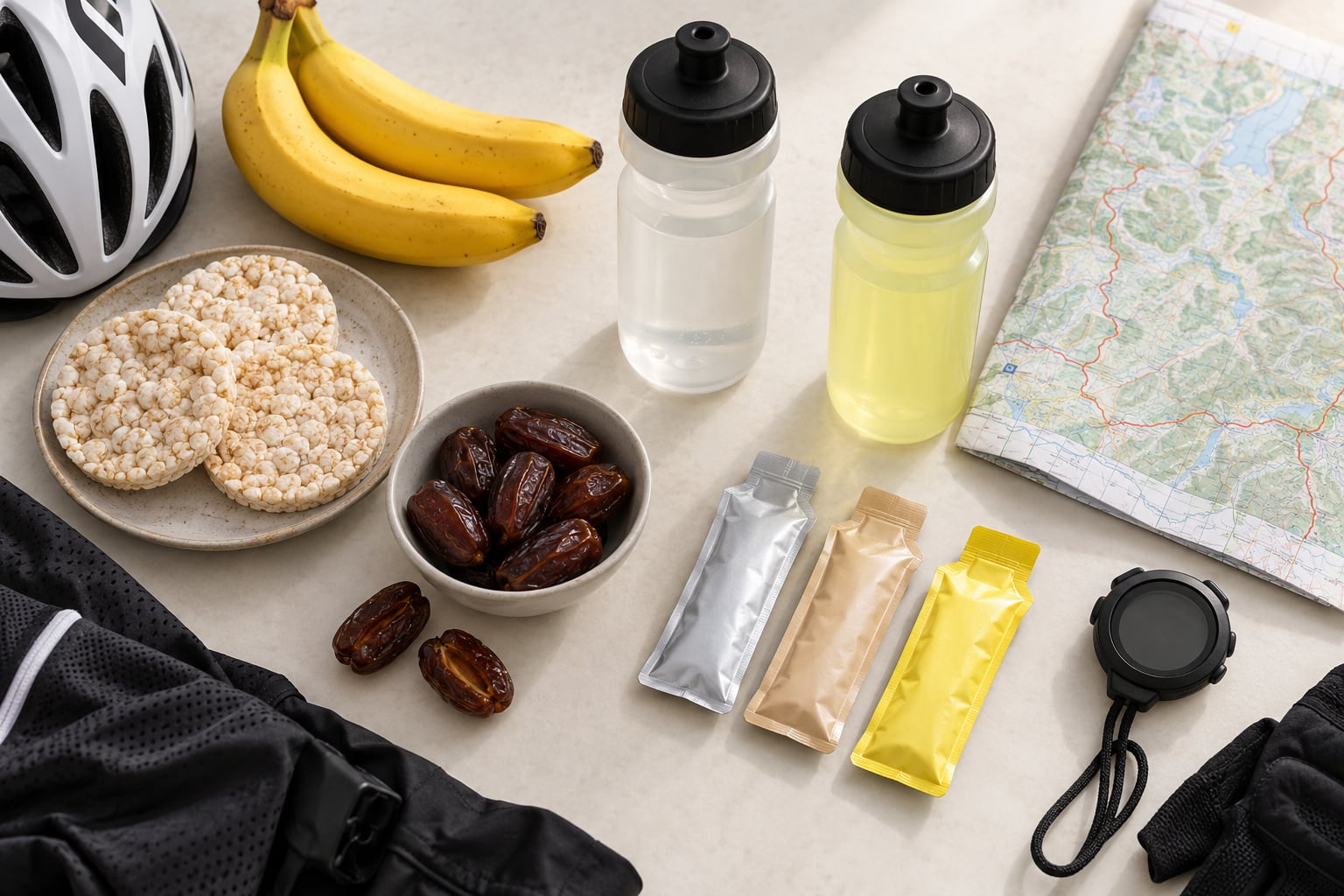
Real food works as well as gels for most riders, and often better. Half a banana, a few dates, rice cakes with honey, pretzels, and plain boiled sweets all deliver carbohydrate without the artificial sweetness that wears riders out. Riders on r/cycling report running roughly 40 grams an hour on long rides built from dates, bananas, and drink mix, and racers on r/Velo describe a gel every 20 minutes as the bare minimum to reach about 60 grams an hour. Both figures work. The one that gets you through your ride is the one you can actually keep eating in hour four.
How Do You Build an On Bike Nutrition Strategy?
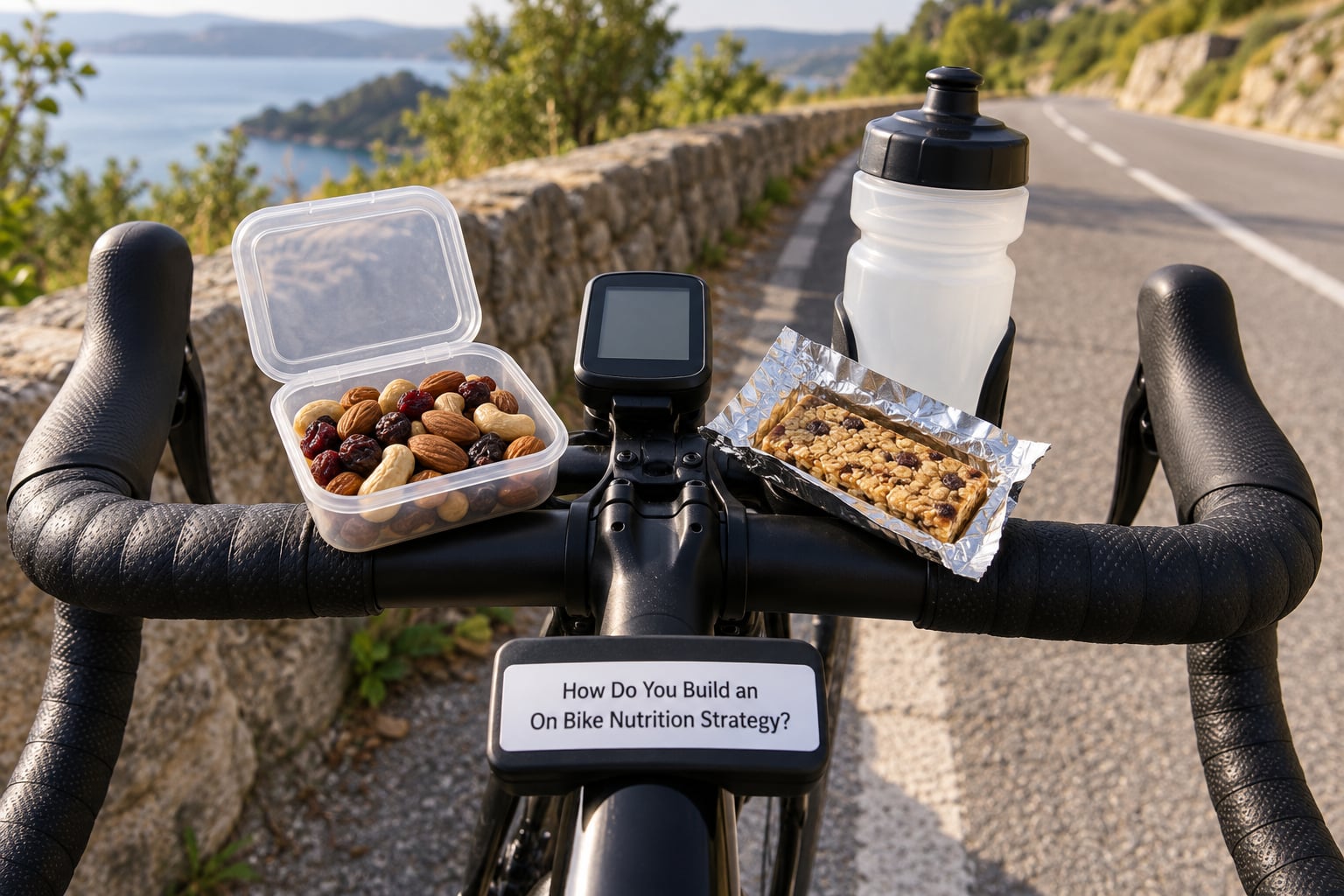
Build the plan in this order. Each step depends on the one before it, and skipping ahead is where most riders end up carrying food they never eat.
1. Estimate the ride by duration, not by distance
Nutrition scales with time and effort, not kilometres. A flat 100 miles at an easy pace and a hilly 60 miles at tempo are completely different fuelling problems, and so is a nine-hour double century. Write down your expected hours, not your expected miles.
2. Measure your sweat rate once
Weigh yourself without kit in the morning, ride a set hour at typical effort while drinking nothing, then weigh yourself again. The difference in kilograms is roughly your fluid loss in litres. So does a rider losing 1.5 kg an hour need to drink about 1.5 litres an hour, with a margin. Do it in summer heat if you can — sweat rates in January are misleadingly low.
3. Pick fuel you already eat
Nothing new on event day. Choose two or three carbohydrate sources you have eaten at least a few times in training: a drink mix at 5 to 8 percent concentration, a gel or chew for quick hits, and one real food you genuinely enjoy.
4. Set your per-hour numbers
Start from the duration table below and adjust for intensity and how you respond. Steep climbs and cold weather push carb use up and fluid needs down; heat and an easy pace do the opposite.
| Ride duration | Carbohydrate per hour | Fluid per hour | Sodium per hour |
|---|---|---|---|
| Under 90 minutes | None to 30 g — water is usually enough | Thirst, 300-500 ml | Not usually needed |
| 90 minutes to 3 hours | 30-60 g | 400-700 ml | 300-500 mg |
| 3 to 5 hours (century territory) | 60-90 g | 500-800 ml | 500-700 mg |
| 5 to 8 hours (double century, ultra) | 90-120 g, glucose plus fructose | 600-900 ml, weighted to sweat rate | 700 mg and up for heavy sweaters |
These are general training ranges rather than medical prescriptions. Sweat rate, body size, medications, and conditions like kidney or heart disease all change what is right for you, and a doctor or registered dietitian can work through the specifics for your situation.
5. Set a timer, then start early
Set your watch to buzz every 15 to 20 minutes. Take something at the first buzz, even if you feel fine, because the first hour is where most riders quietly under-fuel and then spend the rest of the ride in a deficit they cannot recover from.
6. Work out your carry capacity
A typical jersey pocket holds a soft flask or a 150 to 200 ml bottle, one gel, and maybe a couple of chews. For a five-hour ride you need top-ups from a support car, a loop past a shop, or a drop bag. Riders on r/Surlybikefans describe first grand fondos built around roughly 250 calories and 30 to 60 grams of carbs an hour, which is realistic to carry if you resupply once or twice.
7. Adjust for the day
Heat and humidity raise fluid needs and sweat sodium concentration. Altitude raises carbohydrate use and lowers thirst, so drink by plan rather than by urge at altitude. A tailwind day that feels easy on the bike still needs the same intake; the hours are what count.
How Often Should You Eat on a Century Ride?
Start in the first 30 minutes, then take in carbohydrate every 15 to 20 minutes whether or not you feel hungry. The reason is simple: your glycogen is falling steadily from the first hour, and hunger is a lagging signal. Riders on r/bicycling and r/trainerroad often describe starting intake 30 to 60 minutes in, then wondering why the ride fell apart at hour three.
Here is how that looks on a five to seven hour century at 70 grams an hour and about 700 millilitres of fluid per hour. The aim is a flat, boring rhythm, not a series of decisions.
| Time on the bike | Intake | Example |
|---|---|---|
| 0:00-0:20 | About 25 g carbs, first bottle of mix | Half a bottle of 6% drink mix, start eating immediately |
| 0:20-0:40 | About 25 g | One gel with a few sips of water |
| Every 20 min after that | About 25 g | Rotate: gel, chew, half a banana, dates |
| Hourly | Top up 250-350 ml of mix, take a sodium source if due | Full bottle swap, eat something salty |
| Final 90 min | Same rate, keep sipping | Switch to whatever still tastes acceptable |
Take gels with water. Concentrated gel eaten on a dry stomach is a common route to nausea ninety minutes into a ride, and one rider writing about ultra-distance events described severe gut pain from a heavily concentrated maltodextrin mix taken without enough fluid alongside it.
How Much Should You Drink While Cycling?
Most riders need between 400 and 800 millilitres of fluid per hour in ordinary conditions, and considerably more in heat. The number that beats that range is your own sweat rate from the weighing test, and even then most riders should drink a bit less than they lose rather than trying to break even exactly. Staying slightly behind is safer than trying to stay level.
Drinking to thirst works fine for most riders on cool, moderate rides. It stops working on two occasions: when you are older than about 60, where thirst blunts, and when you are riding hard in heat with a dry mouth that reads as thirst but is actually sweat loss you have not replaced. In those cases, drink to the plan instead.
Watch your weight. If you are lighter than you started, you are under-drinking. If you are heavier at the stop, you have been drinking too much, and the added water dilutes your blood sodium — a condition called hyponatremia. It looks like nausea, headache, and confusion, and it is more dangerous than dehydration, which is why chasing a litre a litre is not a good idea. Riders on r/IronmanTriathlon describe drinking a little over a litre an hour in an attempt to stay ahead of the deficit, then feeling sick anyway.
Heat, illness, medications such as diuretics or some thyroid drugs, and any history of kidney or heart disease all change your needs. If you take regular medication, ask your prescriber how it interacts with long rides in heat before you plan a summer century.
What Electrolytes Do You Need on a Long Ride?
Sodium is the one that matters on the bike. It is the main electrolyte you lose in sweat, and it is what makes your kidneys hold water instead of dumping it. Potassium and chloride come along in most foods and drinks, and adding them separately rarely changes much for a healthy rider on a normal day.
Daily hydration and hot-weather endurance fuelling are different problems. On a cool two-hour ride, plain water is generally enough. Above that, in warm conditions, or for riders whose sweat is salty, a drink mix with sodium — or a tablet in an otherwise plain bottle — earns its place. A rough field test riders use is to wear a dark jersey and look for white salt stains around the chest and shoulders after a hard hour. Heavy marks mean you are on the salty end and should use the upper end of the sodium range.
Watch the concentration, not just the ingredients. A mix at 5 to 8 percent carbohydrate sits well for most riders; heavier mixes and undiluted gels are where hydration plans fall apart. Riders who blend their own often combine maltodextrin, fructose, sucrose, and electrolytes so they can carry one bottle instead of separate water, which is a solid approach if you have tested it.
Do not use sodium products to compensate for drinking more than you lose. If you are gaining weight, the fix is to drink less, not to add salt. Where you have a medical condition or take medication affecting fluid balance, get individual guidance from a doctor or pharmacist rather than working from a general range.
How Do You Practice Nutrition Before an Event?
Nutrition is trainable, and the training is unglamorous: repeat it on long weekend rides until the plan stops feeling like a plan. What to test, in order:
Test the specific product, in the specific amount
Half a gel is not a gel, and a mix you have never had at full concentration is a gamble. Test each item twice before you rely on it, at the rate you intend to use it.
Test the concentration
Start your drink mix at 5 to 8 percent. Too dilute and you are carrying water you do not need; too strong and your gut will tell you about it within an hour.
Test the timing and the timer
Practise with a watch that buzzes. Set the interval, keep it set, and keep eating even in the easy first hour — that is the habit that matters most on event day.
Train your gut for higher intake
Absorption capacity adapts with consistent practice. Raise your per-hour carbohydrate by about 15 grams a week during your long rides, and only progress a step once the current rate sits comfortably. Riders who jump straight to 90 grams an hour usually end up dropping fuel altogether, which is worse than the number they were chasing.
Test caffeine, if you use it
Caffeine is common on long rides and rarely discussed honestly. It reliably reduces perceived effort. Keep total intake modest, start with one small dose early rather than stacking doses, and avoid it in the final stretch of an event where you still need to eat and drink.
Test packaging and palate fatigue
Sweetness is the reason riders skip feeds. Rotate sweet and savoury options — dates, pretzels, rice cakes, plain water alongside gels — rather than eating six gels in a row. Do a full dress rehearsal in a jersey with the pockets you will race in, because packaging you cannot open one-handed at 70 km/h is not a plan.
Plan the resupply
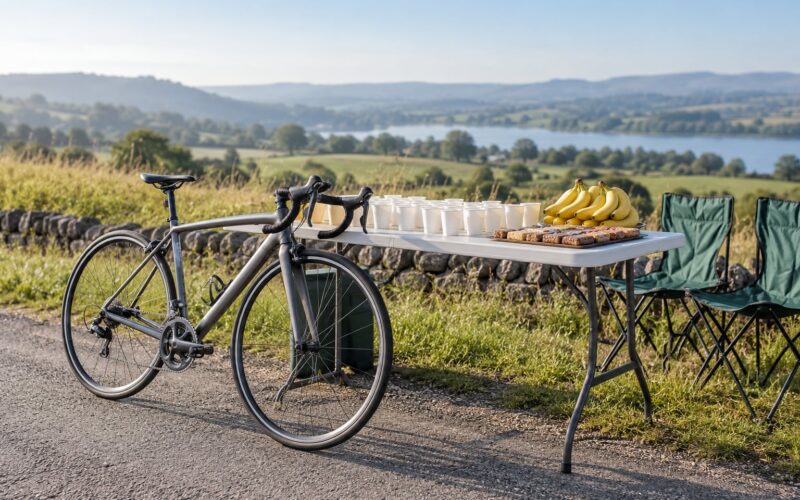
For a gran fondo or ultra event, write down where you will top up, what you can buy there, and your backup if a stop closes. Aid stations usually carry water, bananas, and salty things; knowing that in advance saves a fumbled search at kilometre 110.
What Should You Do if You Miss Fueling or Feel Low on Energy?
Most bad rides are not mysterious. They are under-fuelled rides that started with good intentions, and the fix in the moment is unglamorous: eat, drink, and slow down.
If you feel the energy drop
Take in 30 to 50 grams of carbohydrate now, drink 300 to 400 millilitres of fluid, and hold a steadier pace for 20 to 30 minutes. The tank refills slowly, not instantly. Power, heart rate, and cadence feel wrong for a while; expect it to take half an hour before anything changes.
If you bonk properly
Hard bonking usually means the tank is empty and intake alone will not fix it in the moment. Eat, drink, and turn home if you can, or stop somewhere safe. A rider who finishes an hour later on a tailwind is in far better shape than one who rides on empty and ends up on a kerb. Once a bonk happens, treat the rest of the day as a recovery ride, or go home.
If you feel nauseous
Stop eating solid food, keep sipping fluid, and let your pace drop. Common causes are gels on an empty stomach, too much fluid at once, and intake that outran your absorption. Nausea that will not settle with easier pacing is a signal to stop, not to push through.
If you feel bloated or cramped
Cramping usually means sodium and fluid are behind, so address both rather than pushing through. Bloating often points at drink concentration, carbonation, or a large bolus of food taken at once — sip steadily instead of chugging.
| What you feel | Likely cause | What to change |
|---|---|---|
| Sudden power drop, heavy legs, shaky | Under-fuelled, or intake stopped early | 30-50 g carbs now, ease pace 20-30 min, eat again on schedule |
| Nausea 60-90 min in | Gel without water, or too much volume at once | Fluid only for 20 min, then small sips of food with each sip |
| Full, uncomfortable bloating | Concentrated mix, fizzy drink, big bolus | Dilute the mix to 5%, drink steadily, avoid carbonation |
| Cramping in a climb | Fluid and sodium behind, or pace too high | Sip and take a sodium source, back off the intensity |
| Dizziness, headache, confusion, weight gain | Overdrinking; diluted blood sodium | Stop drinking, eat food with sodium, stop riding if symptoms continue |
| Relief needed urgently mid-ride | Gut motility and intake, common at high carb rates | Expect it as a normal part of long rides; use a toilet stop and keep the plan |
Whatever the symptom, do not keep pushing through severe symptoms. Chest pain, confusion, fainting, vomiting that will not stop, or an inability to keep fluids down need a stop and a call for help, not another 20 kilometres. Athletes with diagnosed digestive conditions, including SIBO or IMO, low-FODMAP needs, or vegan riders with gut sensitivity, should build their plan with a registered dietitian rather than adapting a generic one.
Frequently Asked Questions
Can I eat just energy bars on an endurance ride?
Yes, as long as the numbers add up. Most bars deliver 20 to 30 grams of carbohydrate, so hitting 60 grams an hour from bars alone means eating two every 20 minutes, which is a lot of chewing and a lot of fat and fibre slowing your digestion. Many riders mix: drink carbohydrate from a bottle where it is easy to swallow, and use bars or chews for the rest. Test the brand you plan to use, because a bar that works at hour one can sit badly at hour five.
How much water should I drink during a long road ride?
Most riders land between 400 and 800 millilitres an hour in ordinary conditions, and more in heat. Your own sweat rate, measured by weighing yourself before and after an hour of riding, beats any generic figure. Drink slightly less than you lose rather than trying to stay level, and check your weight at the end: lighter means you under-drunk, heavier means you over-drank, which dilutes blood sodium and causes hyponatremia.
Are gels better than food for a century?
No, and for plenty of riders real food works better. Gels are convenient, low in fibre, and easy to take quickly, which is why racers rely on them. But sweetness is what causes palate fatigue and skipped feeds. Dates, half a banana, rice cakes, pretzels, and plain sweets deliver the same carbohydrate with none of the flavour fatigue. A mixed approach usually beats any single source over five to seven hours.
Do I need electrolytes if the weather is cool?
On a cool two-hour ride, water is usually enough for a healthy rider. Electrolytes earn their place once rides run past three hours, in warm conditions, or for anyone who sweats heavily or takes medication affecting fluid balance. A simple field test is to look for white salt stains on a dark jersey after a hard hour. If they are obvious, use a drink mix with sodium and stay at the upper end of the usual range.
What should I do if I feel bonked during a ride?
Take 30 to 50 grams of carbohydrate, drink 300 to 400 millilitres of fluid, and hold a steadier pace for 20 to 30 minutes, because the tank refills slowly rather than instantly. If symptoms do not ease, stop somewhere safe and get home rather than grinding on. A rider who finishes an hour later with something left is in far better shape than one who rides to the end empty and ends up needing a lift.
How much caffeine is safe on a long ride?
There is no single right number, and responses vary a lot, so treat caffeine as a training tool you test rather than a fixed target. One modest dose early in a long ride tends to work better than several later ones, since caffeine masks fatigue without replacing the fuel you still need to take in. Keep total intake moderate, avoid it near the end of an event, and check with a doctor if you take medication or have any heart or blood pressure condition.
Conclusion: Start With One Simple Fueling Plan
Pick one carbohydrate source you already eat and enjoy, write down a per-hour number for carbs, fluid, and sodium based on how long the ride will take, and set a timer to go off every 15 to 20 minutes. Eat at the first buzz, not when hunger shows up, and carry enough water and food to reach your first resupply point.
Then run it on a long training ride, note what you managed to eat, and adjust. Riders who spend a season refining one simple plan finish centuries comfortably, and it keeps working in 2026 and every year after, because the plan gets better rather than more complicated.