Renting a bike while traveling is simpler than it sounds: pick a channel that matches your trip, book it before you land, then adjust the bike to your own measurements at pickup. If you only want a few hours on a city bike, a bike-share pass is enough. For a week of long road rides, reserve from a shop or a dedicated rental company weeks ahead.
The parts that trip people up are rarely the rental itself. They are the saddle height nobody sets, the pedals nobody swaps, the damage nobody photographed, and the bill nobody expected at return. Those four traps sit in roughly the same places in every city, and this guide walks past all of them.
This guide was updated for 2026 and reflects what riders on r/bicycling, r/cycling, r/bikemechanics and the MTBR forums actually report after renting abroad.
Table of Contents
- What You Need
- Step-by-Step: How to Rent a Bike While Traveling
- Choose the Right Rental Option
- Reserve Ahead and Confirm the Details
- What to Bring and Confirm When You Rent a Bike While Traveling
- Inspect and Test the Bike
- Plan the Route Before You Ride
- Ride, Lock, and Return the Bike
- Common Mistakes
- Frequently Asked Questions
- How much does it usually cost to rent a bike while traveling?
- Do I need to reserve a rental bike before arriving in a new city?
- Can I rent a road bike instead of a city or hybrid bike?
- What should I do if the rental bike has damage or breaks down?
- Do rental bikes usually come with helmets and locks?
- Is it better to use a bike-share program or rent from a shop?
- Conclusion
What You Need
You need three things ready before you arrive: a payment method the shop accepts, a piece of photo identification, and your own measurements written down. Most rentals require a card on file for a deposit, a passport or driver’s licence, and enough proof that you can ride. Some shops require a credit card in the renter’s own name, which rules out borrowing a card on the fly.
Write down three numbers from the bike you ride at home: saddle height, saddle-to-handlebar reach, and handlebar height. Riders on r/bicycling consistently recommend giving a shop those three numbers in advance, because they are the minimum a mechanic needs to set up a stranger’s bike. A phone photo of your own bike’s setup helps more than you would think.
| Item | Usually provided | What to do |
|---|---|---|
| Helmet | Sometimes, on request | Bring your own or ask in advance |
| Lock | Often, a basic cable or U-lock | Check the key works before leaving |
| Lights | Varies widely | Ask, or carry your own |
| Flat kit and pump | Sometimes, on request | Ask whether staff will help with a repair |
| Clipless pedals | Rarely by default | Bring yours and ask for a swap |
| Saddle | Sometimes an upgrade | Ask if a different width is available |
| Computer mount | Most modern frames | Check your Garmin or Wahoo mount fits |
Wear the clothes you will actually ride in, and bring a second pair of socks. Riding in jeans on a rental bike is a quick way to ruin a holiday morning. Flat pedals with straps are safer than slip-on pedals if you are not confident, and if you do ride clipless, bring the cleats and pedals in your carry-on.
Kit and shoes matter more than any accessory. Shoes that lace up wrong, a helmet that fits differently than yours, and a chamois you have never used are all avoidable misery with your own gear packed.
Step-by-Step: How to Rent a Bike While Traveling
The process takes about twenty minutes at the counter if you have prepared, and considerably longer if you have not. Work through it in this order.
Choose the Right Rental Option
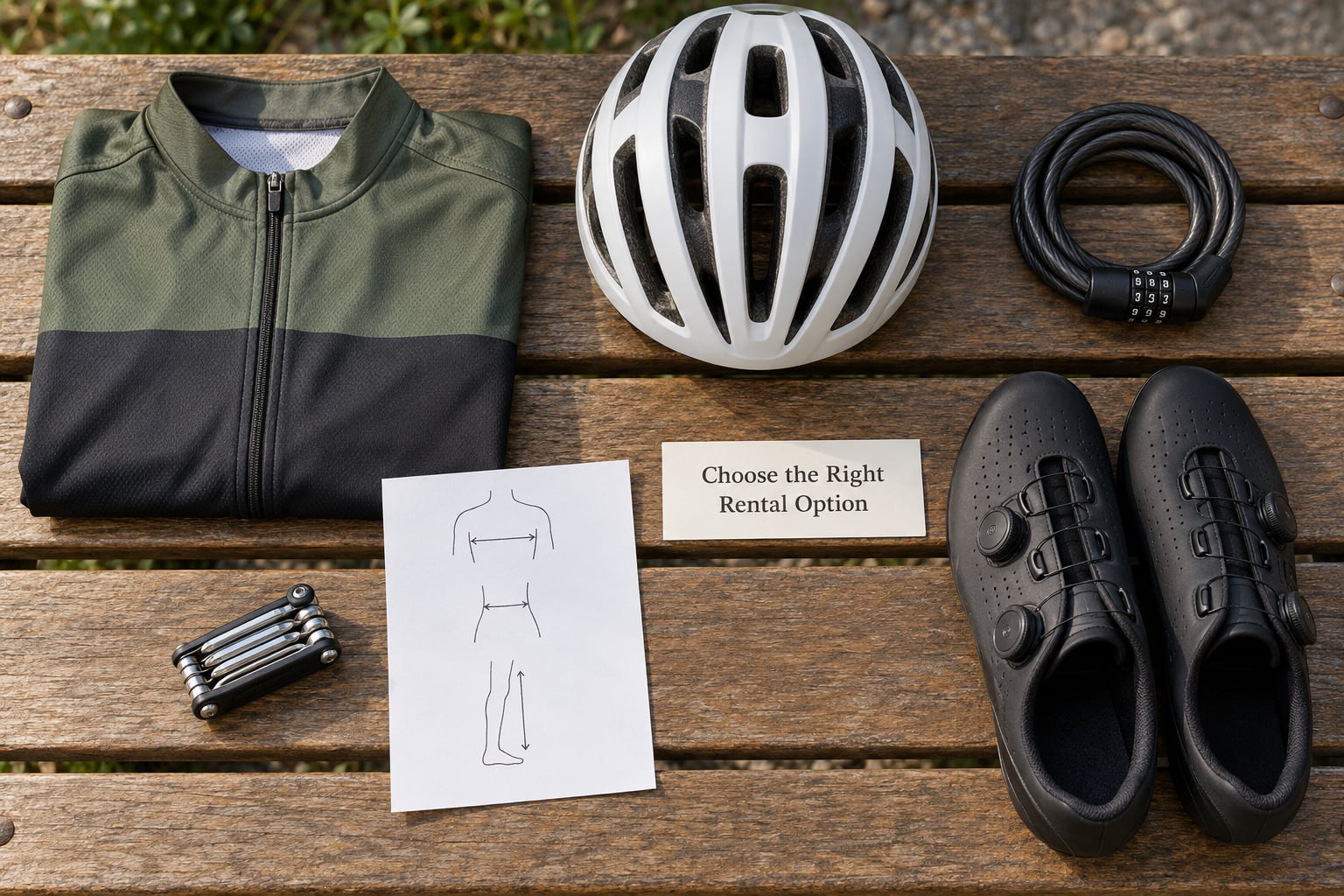
A bike shop is the best all-round choice for road riders and anyone who wants help with fit. A demo bike from a shop that does not rent is usually a better machine at a higher rate, and not every shop will lend one. A dedicated rental company is worth it for one-way drop-offs and a bigger fleet. Bike share suits a short urban ride. A tour operator bundles the bike into a packaged trip. Peer-to-peer rentals exist but carry the most risk.
| Option | Best for | Main drawback |
|---|---|---|
| Bike shop rental | Road and gravel riders wanting fit help | Small fleet, first come first served at busy weekends |
| Demo bike | Riders who care about the machine | Higher rate, limited availability |
| Dedicated rental company | Multi-day trips and one-way returns | Rates climb with duration |
| Bike share | Short urban rides and layover days | Fixed frame sizes, no fitting help |
| Tour operator package | Guided multi-day touring | Fixed dates, limited flexibility |
| Peer-to-peer | Longer stays in one place | Condition and support vary wildly |
Bike share deserves a note. Dock-based systems in American cities such as Citi Bike, Capital Bikeshare and BCycle, plus Lime’s docked and app-based bikes, work well for a two-hour loop or an airport-to-hotel transfer. They do not fit you, they cannot be reserved, and peak hours can leave the docks empty where you want to start. Renters report frustration with sizing for children, which rules bike share out for most families.
If you want help finding a shop, run the store locators for Trek, Specialized or REI at your destination, then call. Riders who do exactly this get a better bike than the generic listing suggests.
Reserve Ahead and Confirm the Details
You should reserve a rental bike before arriving, especially for a road or gravel bike at a weekend destination. Most shops hold a small fleet, and first-come, first-served pickup on a busy Saturday regularly means riding nothing. Booking ahead also lets you state your fit requirements and pedal type before the bike is pulled.
Ask these eight questions on the call:
- Do you have a bike in my size and the type I asked for, on my dates?
- Is the rate per 24-hour period or per calendar day?
- What is the deposit amount, and when is it released?
- What does the damage waiver cover, and what am I personally liable for?
- Will you swap pedals to clipless, and can I bring my own saddle?
- Are there mileage limits or distance surcharges?
- What is the late-return fee, and is there a grace period?
- What are your hours on the day I arrive, and is the pickup at the shop or the hotel?
The billing question catches people out. Some shops bill in rolling 24-hour periods, others count calendar days, which means a bike picked up at 5pm and returned at 9am the next morning can cost two days. On long rentals, ask about mileage caps too; some contracts charge per mile past a daily allowance.
Keep the confirmation email. Photograph the rental agreement before you sign it.
What to Bring and Confirm When You Rent a Bike While Traveling
Confirm the bike’s fit and equipment before you leave the shop, and expect to spend ten minutes on it. Frame size is the starting point; everything else is adjustment. The single most common complaint on rental forums is a saddle that is too low or too high, and a bar that sits far wider than the bike you know.
Check saddle height first, then handlebar height, then reach. Sit on the bike and if your knees rock noticeably at the bottom of the pedal stroke, the saddle is too low. Gravel and adventure bikes often come with flared or wide bars that strain the shoulders of a narrower rider, and no adjustment fixes that, so ask for a narrower bar when you book.
Then work through the rest: squeeze both brake levers hard and confirm they bite before the bar touches your knuckles, shift through every gear in both directions, spin the wheels for a rubbing or wobble, check tire pressure, and look at the pedals and crank bolts. Try mounting your computer on the stem and confirm the out-front mount fits your Garmin or Wahoo.
If you are riding with kids, confirm the child seat or trailer is available and that it fits the frame before you sign. Riders on r/cycling who travel with families usually conclude that logistics beat heroics on a family trip.
Riders on r/cycling who rented in France report that fit information was built into the online booking and that adjustments on request were routine. That is the standard worth asking for everywhere.
Inspect and Test the Bike
Give the bike five minutes before you roll out of the shop. This is a safety check and a documentation step at the same time.
- Spin both wheels and look for wobble, rubbing, or a cracked rim.
- Squeeze both brakes and confirm firm bite and no pull to one side.
- Shift through the full range and watch for hesitation or chain drop.
- Check tire pressure by feel or gauge, and look at tread and sidewalls.
- Check that the quick releases or thru-axles are properly secured and the handlebar is tight.
- Look at the chain, cassette, and pedal threads for wear.
Before you leave, take timestamped photos of the whole bike, both sides, the drivetrain, the wheels, the saddle, and any existing scratches, dings, or rust. Riders report being charged for damage they did not cause, and photos are the only reliable answer. Make sure the shop notes existing damage on the agreement too.
Ask where repairs are handled. If you plan a long ride into a remote area, find out whether the shop supports you on the road and whether towing is covered, or plan to learn a few repairs yourself. The riders on r/bikepacking who regret renting are usually the ones who could not fix a loose spoke or a slipped chain.
Plan the Route Before You Ride
Plan the route before you ride, because rental-failure stories rarely come from the bike. They come from a road closed for a festival, a headwind on an exposed climb, or a language barrier at the wrong junction.
Download the route offline in RideWithGPS, Komoot, or your navigation app of choice, since mobile data fails in valleys and abroad. Check traffic rules for the country, especially whether you ride on the right or the left. Note where you can refill water, where you can stop for food, and the emergency number, which is 112 across much of Europe and 911 in North America.
Read the weather for the hour you plan to ride rather than the whole day. Morning coastal winds can turn a flat route into a fight, and an afternoon thunderstorm in the mountains is a reason to ride earlier or not at all. On unfamiliar terrain, start with a short loop to learn how the bike brakes and shifts before committing to anything long.
Ride, Lock, and Return the Bike
Track your rental duration in your phone the moment you collect the bike. If the deal is billed in 24-hour windows, knowing your drop-off deadline removes all the stress from the last day. Note the fuel or charge level if it is an e-bike, and photograph it at pickup.
Lock the bike properly every time you stop. Use the supplied lock correctly, and never leave a rental bike unlocked outside a cafe, even briefly. If the lock is a cable only, ask for a U-lock, and remember that a rental company usually recovers the bike by tracking it, which can add fees to your bill.
On return, hand the bike to a staff member if anyone is there and ask for a quick check with them. Return it early rather than late where you can, and keep the drop-off receipt. If the shop charges by distance and you went further than planned, expect to discuss it at the counter, which is another argument for photographing the agreement at pickup.
Common Mistakes
Most rental problems come from a small number of avoidable errors. Here they are, with the fix for each.
- Booking without confirming the bike type. A shop with one road bike and a rack of hybrids cannot deliver a gravel bike on a Saturday. Name the bike type, the size, and the accessories when you reserve.
- Skipping the fit check. Ten minutes of adjustment prevents a hundred miles of knee pain. Set saddle height, handlebar height, and reach before you leave the shop.
- Failing to document pre-existing damage. Take timestamped photos of every panel and wheel, and ask the shop to write existing marks onto the agreement.
- Not asking how time is billed. Rolling 24-hour days and calendar days produce very different bills for the same trip. Confirm it before you sign.
- Riding past the rental terms. Mileage caps, distance surcharges, and cross-border restrictions are in the agreement. Read that section, not just the price list.
- Returning late. Late fees often apply in increments, and some shops extend the day at the full rate. Put the drop-off time in your calendar with a reminder an hour ahead.
- Assuming the helmet and lock come with it. Ask in advance and bring your own if the answer is vague.
- Ignoring noise and vague shifting. Rentals are used hard and creak, as riders on the MTBR forums note. Loose drivetrain parts and bad cables are worth fixing or swapping before you ride out.
Frequently Asked Questions
How much does it usually cost to rent a bike while traveling?
Rates depend mostly on rental type and duration. Bike-share day passes are the cheapest option for short urban rides, while hourly and daily shop rentals sit in the middle. Dedicated rental companies and premium demo bikes cost more per day, but weekly and monthly rates usually drop sharply because the shop has amortized the bike. Specialized gear such as e-bikes, cargo bikes, and child seats add a daily surcharge. Ask for the total, including the damage waiver, before you book rather than comparing headline rates.
Do I need to reserve a rental bike before arriving in a new city?
Reserve whenever you want a specific bike. Shop fleets are small, and on a busy weekend first-come, first-served pickup regularly leaves nothing to ride. Reserving also lets you state your frame size, pedal type, and fit requirements before the bike is pulled from the rack. Bike-share needs no reservation, but you cannot pick a size or guarantee a bike at a given dock. If you are flexible about the model and the shop is quiet midweek, walking in works fine.
Can I rent a road bike instead of a city or hybrid bike?
Yes, at shops that keep a performance fleet. Ask specifically for a road or gravel bike when you book, because a shop with a mostly hybrid fleet cannot promise one, even if you reserve. Expect a higher rate than a city bike, and be ready to adjust the saddle height and reach since rental bikes sit at one setting. Bring your own pedals if you ride clipless. On long rides, also ask whether the shop supports roadside repairs in your planned area.
What should I do if the rental bike has damage or breaks down?
Photograph the problem before moving the bike, then call the shop immediately and describe exactly what happened. If the damage came from a crash, a police report helps you enormously with any claim. Do not ride a bike with a compromised wheel, brake, or steering, and do not attempt a roadside repair on a cracked rim or a loose brake cable. Ask the shop about towing or a swap before you fix anything yourself, since unauthorized repairs can create liability.
Do rental bikes usually come with helmets and locks?
Locks are usually included and keys normally work, so test one before you ride away. Helmets are less consistent: some shops include them, some charge a small daily fee, and many do not stock them at all. Ask about both when you reserve rather than at the counter. Lights are the item most often missing, particularly on rental bikes kept for daytime city use. If you plan to ride at dusk or commute back to a hotel, bring your own or confirm lights in advance.
Is it better to use a bike-share program or rent from a shop?
Use bike-share for short urban rides, airport transfers, and layover days where you want flexibility without thinking about a return time. Rent from a shop when you care about fit, plan a long ride, need clipless pedals, or want a specific bike type. Bike-share bikes come in fixed frame sizes with no adjustment, docks can empty at peak hours, and sizing for children is a common frustration. Shop rentals cost more and take more paperwork but adapt to you.
Conclusion
Start by picking your channel, then make one phone call before you fly: confirm the bike type, the billing window, the deposit, the damage waiver, and whether they will swap your pedals. Send your saddle height, reach, and handlebar height in that same message. Those two small actions prevent nearly every bad rental story riders report.