Bike tour nutrition for consecutive days comes down to one habit: replace the carbohydrate you burn while you ride, eat enough real food around it to fill the rest, and drink to the conditions. Aim for roughly 60 to 90 g of carbohydrate per hour in the saddle, several thousand calories across the whole day, and enough fluid and sodium to match your sweat loss.
What makes a tour different from one long ride is that your digestion, your appetite and your tolerance for the same bars and gels all decay as the days stack up. Riders who nail day 1 routinely fall apart on day 4, and almost always because they under-ate rather than because they lacked sports nutrition products.
This is general information about endurance riding nutrition, not personal medical advice. If you have a condition, take medication, are pregnant, or have a history of disordered eating, talk to a doctor or a registered dietitian before planning a multi-day tour.
Table of Contents
- What Should You Eat During a Multi-Day Bike Tour?
- Daily Energy and Macronutrient Targets
- How Should Carbohydrates Change Between Tour Days?
- Bike Tour Nutrition for Consecutive Days: A Practical Eating Rhythm
- What Foods Are Easy to Carry and Eat While Cycling?
- How Can You Stay Hydrated on Long Ride Days?
- How Do You Refuel Without Upsetting Your Stomach?
- What Should You Eat After Consecutive Days of Riding?
- How Should You Pack and Store Food for a Bike Tour?
- How Can You Test a Multi-Day Nutrition Plan Before the Tour?
- Frequently Asked Questions
- Can I eat while riding a bike?
- How many calories should I eat during a multi-day cycling tour?
- Should cyclists use energy gels, drinks, or real food?
- Is intermittent fasting compatible with consecutive-day bike touring?
- When should persistent fatigue or weight loss during a bike tour prompt medical advice?
- Start With One Rehearsed Day
What Should You Eat During a Multi-Day Bike Tour?
Eat mostly carbohydrate, spread protein across every meal, keep some fat for energy density, drink regularly, and choose food that survives a warm pannier and a long saddle day.
Carbohydrate is the currency you spend in the pedals. Muscle and liver glycogen carry you through a stage, and once it is low you get the heavy, flat feeling riders call the bonk. Most tours also burn more than you think: stage racers have been measured at 6,000 to 8,600 kcal a day in research by Westerterp and colleagues, and a self-supported rider on a long hilly day can easily land well below that. Under-eating is the most common failure on consecutive days, and it shows up as slow legs, poor sleep and steady weight loss.
Protein matters more than most riders expect, and not just after riding. Spreading it across breakfast, lunch and dinner helps protect muscle through long days better than one enormous dinner. A practical range for endurance riders is 1.2 to 2.2 g per kg of bodyweight per day.
Fat is what makes touring food feel worth eating. Nuts, cheese, chocolate and olive oil are energy-dense, which matters when you are carrying weight for several days, but they slow gastric emptying. Keep rich, high-fat meals away from the hours right before and during a hard climbing day.
Fiber has a similar catch. Whole grains, beans and raw vegetables are excellent off the bike and poor in it. Your gut moves blood to working muscles and handles a steady drip of drink, which is not the same as digesting a large high-fiber meal while climbing.
Daily Energy and Macronutrient Targets
Use these as planning ranges, not prescriptions. The honest way to calibrate them is your own body weight across the tour, not a spreadsheet.
| Target | Riding day (5+ hours in the saddle) | Short or recovery day (under 3 hours) |
|---|---|---|
| Total energy | Roughly 3,500 to 5,500 kcal, more on climbing-heavy days | Roughly 2,500 to 3,500 kcal |
| Carbohydrate on the bike | 60 to 90 g per hour | 30 to 60 g per hour |
| Carbohydrate across the day | About 7 to 10 g per kg of bodyweight | About 4 to 6 g per kg |
| Protein | 1.4 to 2.0 g per kg, split across three or more meals | 1.4 to 1.8 g per kg |
| Fat | Around 20 to 30 percent of energy | Around 25 to 35 percent of energy |
| Fluid | Roughly 500 to 750 ml per hour, adjusted to sweat rate and heat | Drink to thirst |
| Sodium | Around 500 to 1,000 mg per hour on warm days | Normal meals, plus extra if you sweat heavily |
Watch your weight. Weigh yourself each morning in the same conditions, wearing the same light clothing. A drop of more than about 1 percent of body weight over a few days is a clear signal you are under-eating, and it should be fixed the same morning rather than on day five. A gain of a similar size usually means you are over-fuelling or holding extra fluid.
Do not use rigid calculations that ignore your body, your health or the demands of the event. These figures came from fit racing riders and from general endurance guidance, and they are a starting point to adjust with evidence from your own scale and your own appetite.
How Should Carbohydrates Change Between Tour Days?
Carbohydrate needs rise with the day’s work and fall with it, so the biggest lever is matching intake to tomorrow’s ride rather than riding a flat target every day.
Before riding, eat a carbohydrate-rich meal two to four hours out: porridge, toast with jam, oats, rice cakes with honey, or fruit. Reddit riders on r/Velo describe porridge as their standard long-day breakfast for good reason, because it releases energy slowly and sits well. If you start at dawn, eat a smaller version of the same meal and take the rest of your carbohydrates on the bike instead.
During riding, start taking carbohydrate in the first hour, not when you get hungry. Split it between food and drink so you are not swallowing a gel every twenty minutes. Blending glucose with fructose, which most modern drink mixes and chews do, lifts the amount you can absorb from roughly 60 g to around 90 g per hour because the two sugars use different transport routes in the gut.
After riding, refuel within a couple of hours. Muscle glycogen resynthesis runs fastest in that window, roughly three times faster than it does later in the day. Aim for carbohydrate in the ratio of about 3 g for every 1 g of protein, plus fluid and sodium, then eat a normal dinner a few hours later.
Once fatigue accumulates, the shift is not about eating more total food. It is about protecting digestion. On day 4 or 5 your gut is more sensitive, your appetite is lower and your legs are heavier, so smaller feeds spread more widely through the day usually beat the big meals that worked on day 1.
Bike Tour Nutrition for Consecutive Days: A Practical Eating Rhythm
A repeatable rhythm matters more than a perfect plan, because it survives bad weather, flat tyre days and restaurants that only have pasta.
- Breakfast: 2 to 3 hours before rolling, a carbohydrate base with 20 to 30 g of protein. Oatmeal, rice cakes, or bread and jam with cheese. Riders who cannot eat before an early start can shift most of that carbohydrate into bottles and bars for the first hour.
- Mid-ride fueling: one item every 30 to 40 minutes, starting in the first hour. Alternate types rather than repeating one flavor: a bar, then chews, then a gel with water.
- Lunch: the biggest solid meal of the day, eaten off the bike if at all possible. Sandwiches, wraps, pasta, rice, potatoes, fruit. Keep it lower in fat and fiber than dinner.
- Afternoon: a top-up of 30 to 60 g of carbohydrate while the pace is moderate. This is where you quietly gain or lose the day’s calorie balance.
- Dinner: a normal, generous meal with carbohydrate, protein and plenty of salt. This is the meal that fills tomorrow’s glycogen. Riders with no kitchen can assemble it from a bakery, a supermarket deli and a can of beans.
- Recovery window: something with carbohydrate and protein within a couple of hours of finishing, then finish eating early enough to sleep.
Long distances reward the same rhythm; they just need more of it. A hundred-mile day might mean 10 to 12 feeding points rather than six.
What Foods Are Easy to Carry and Eat While Cycling?
Choose food that is high in carbohydrate, survives heat, has low fat and fiber, and is something you have eaten before.
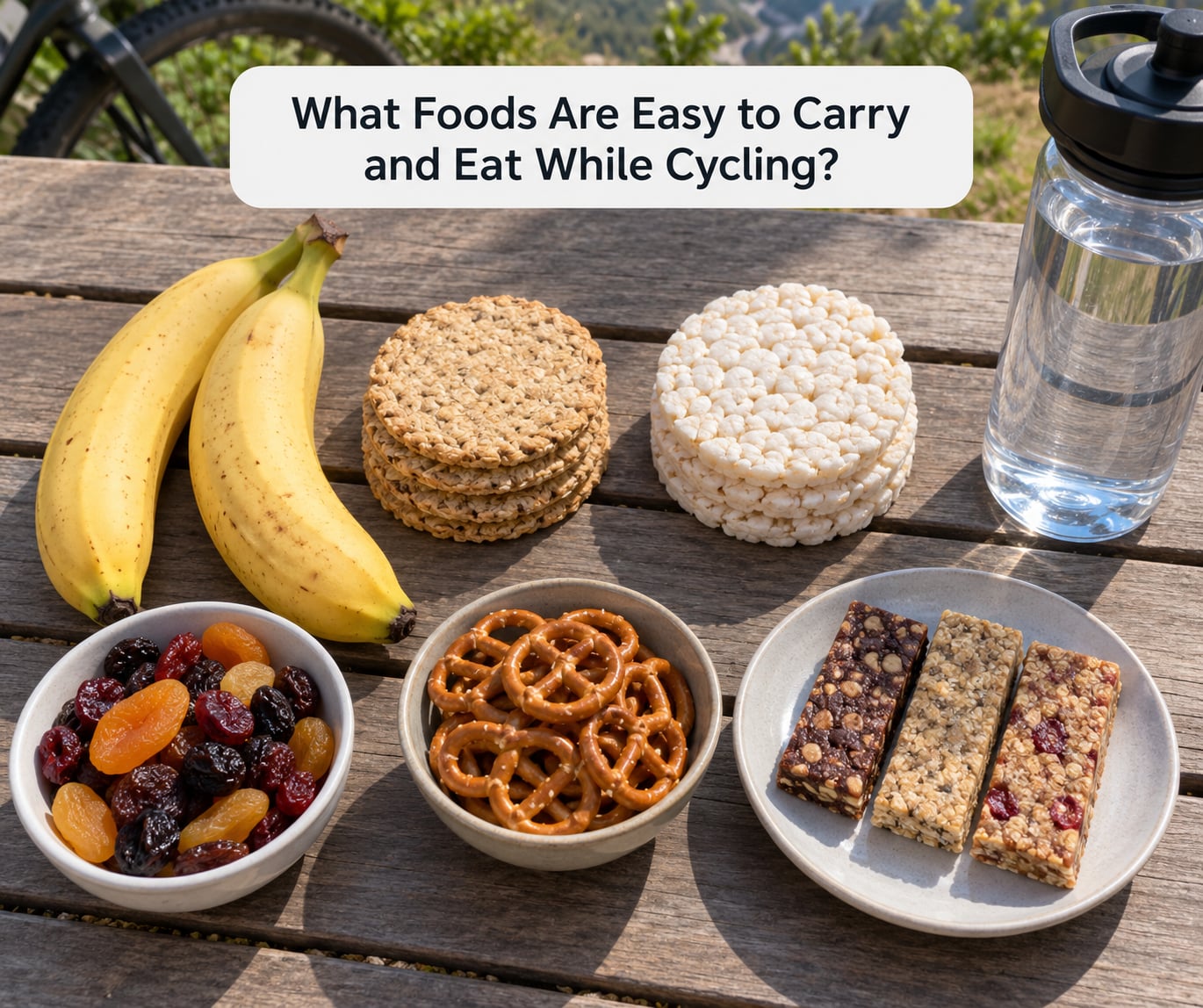
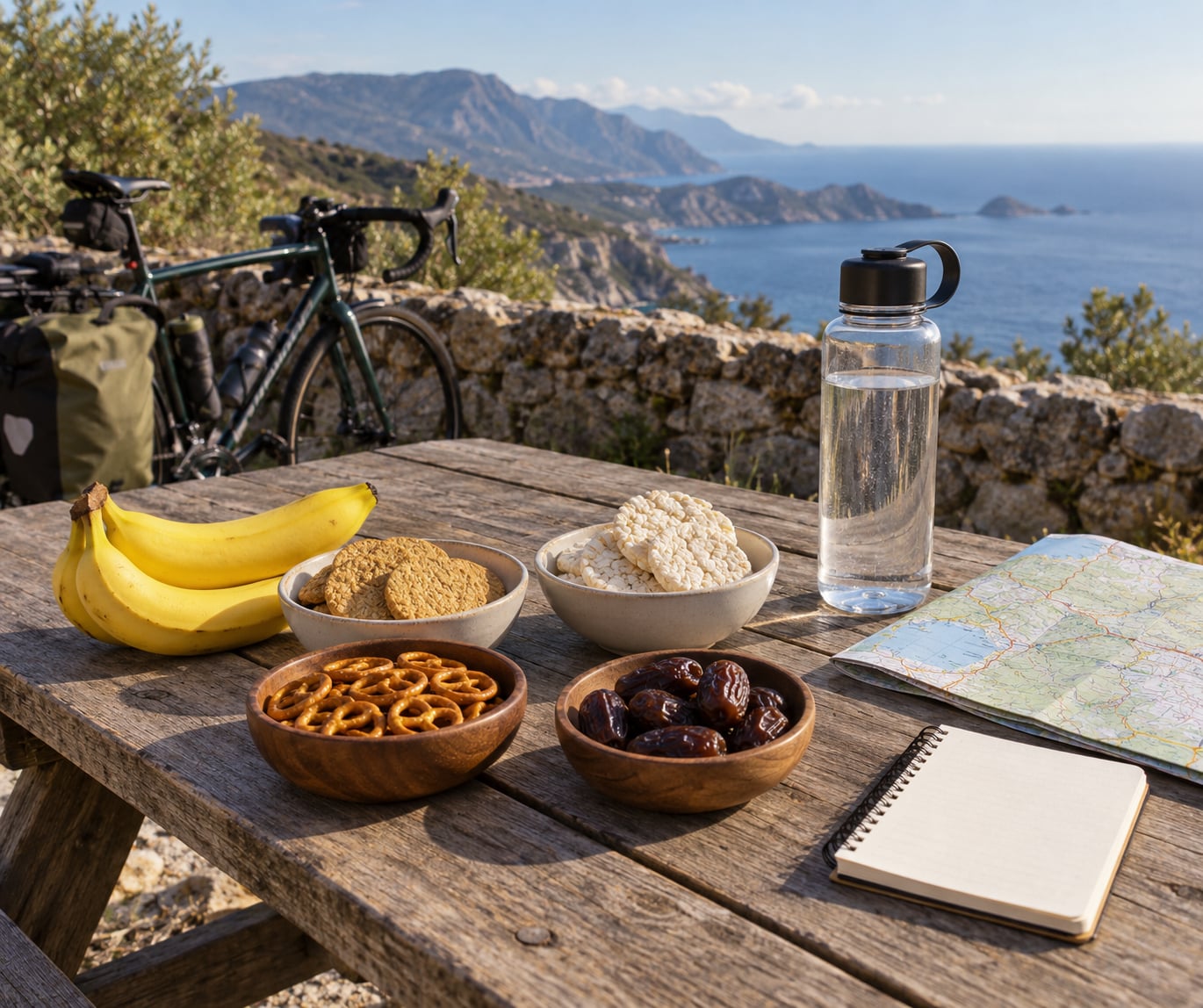
Bananas are the benchmark. They are cheap, they carry about 25 g of carbohydrate, they need no wrapper and they cause almost no gut trouble. Research on 24-hour mountain bike racers found bananas were eaten by 86.5 percent of riders, energy bars by 50 percent, apples and cheese by about 43 percent.
Rice cakes and pretzels sit next to them as low-fat, high-carbohydrate options that keep for weeks. Oatcakes and dense cereal bars add fat and fiber, which is fine in moderation and a problem when you are drinking a lot of fluid. Dried fruit and dates deliver quick sugar and fiber together, so portions are small and best used on climbs rather than steady pacing.
Energy gels are almost pure carbohydrate, light to carry and shelf-stable, but flavour fatigue is real. Riders on the MTBR forums describe getting through an entire day on 200 to 300 calories an hour of food, which many cannot actually absorb comfortably in one sitting. The same community threads repeatedly point to flavor fatigue after day 3 as the thing that ends tours early.
Carb drink mix is the most underestimated item on this list, because it carries carbohydrate without adding chewing or volume. Two to three scoops in a 24 oz bottle is a common strength riders report. It also fixes the low-energy, low-appetite day better than more solid food.
Finally, test everything twice before the tour. Gut reactions to a specific product usually show up within an hour of use, so a rehearsal ride tells you quickly whether a bar sits right.
How Can You Stay Hydrated on Long Ride Days?
Plan a fluid and sodium range, then adjust it every day to your sweat rate and the weather, because a fixed volume is wrong on a hot stage and wasteful on a cold one.
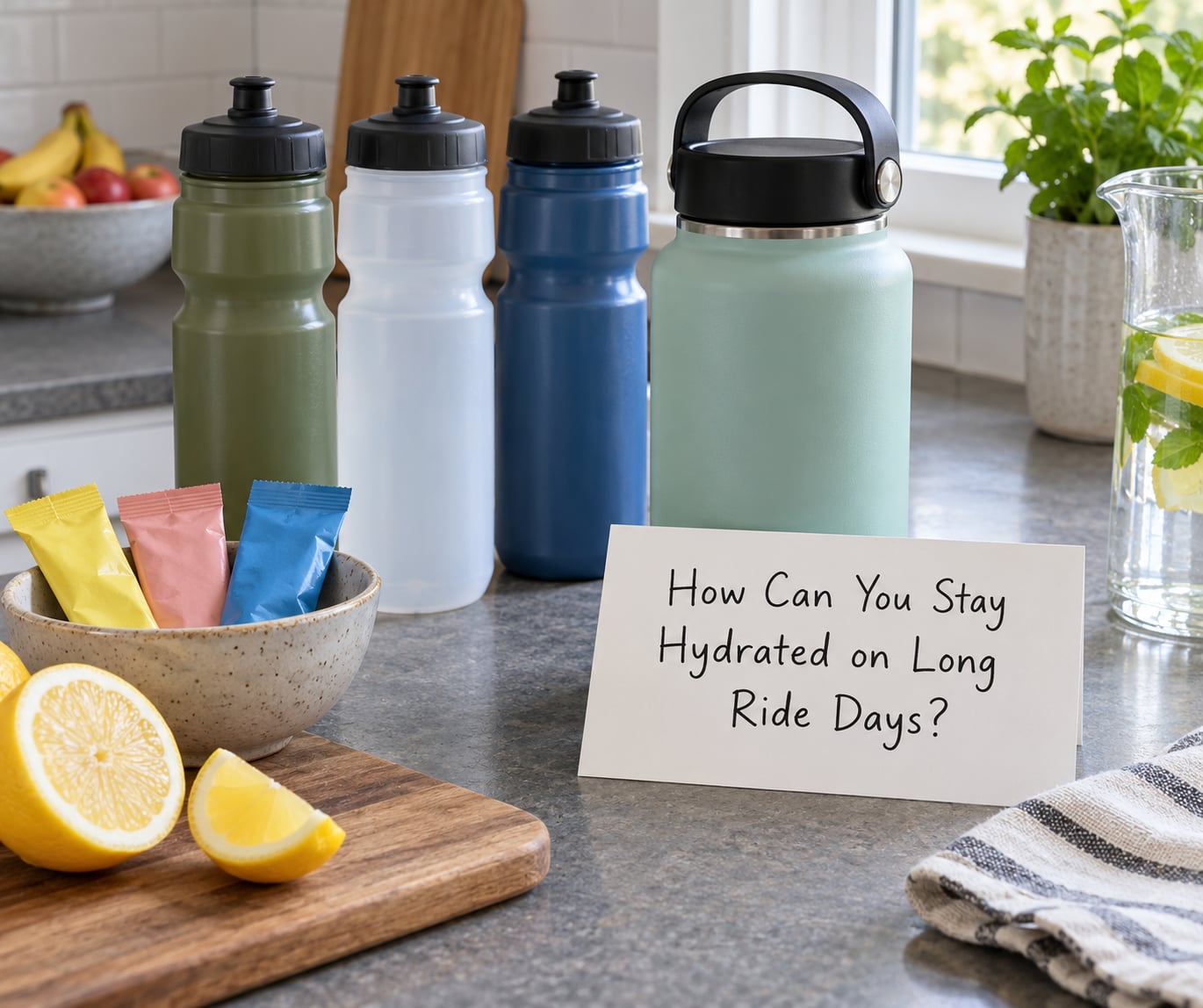
A useful planning range is 500 to 750 ml of fluid per hour, adjusted up in heat and altitude and down when it is cold. You do not need to drink the full amount every hour; you need to arrive at the evening stop not far below your starting weight. Rehydrating roughly 500 ml of fluid for every 0.5 kg of body weight lost is a practical recovery rule of thumb.
Sodium matters more across consecutive days than most riders expect. A range of 500 to 1,000 mg per hour on warm days helps you retain fluid and drink more willingly, and eating normally salted meals in the evening often covers the rest. Crackers, pretzels, broth, cheese and salted nuts all do the same job without costing extra.
Three conditions raise your needs sharply: heat and humidity, a high sweat rate that leaves your jersey soaked, and altitude. Wearing a helmet and a winter layer hides fluid loss from view on cold days even though it is happening, which is why weighing yourself before and after a ride is more useful than thirst.
One safety note that matters. Drinking far more than you lose can dilute your blood sodium and cause hyponatremia, which is dangerous. Do not force fluid to hit a number on a cool day. If anyone on the tour develops confusion, a severe headache, repeated vomiting, unusual fatigue or swelling, stop and seek medical help right away rather than treating it as ordinary dehydration.
How Do You Refuel Without Upsetting Your Stomach?
Eat small and often, keep liquid calories separate from solid food when your gut is struggling, and back off fat and fiber before the hard part of the day.
Most riding stomach problems come from volume, not ingredients. Your gut can oxidize roughly 60 g of glucose per hour on its own, and blending glucose with fructose lifts that to about 90 g, or around 1.75 g per minute. Take in more than that at once and the excess sits.
Five practical changes do most of the work. Feed every 30 to 40 minutes instead of every two hours. Move some carbohydrate into your bottles, which leaves more stomach volume for air and easier riding. Drop fried food, large nut portions and heavy cream off the menu on climbing days. Choose white bread over wholegrain, and peeled fruit over skin. After a genuinely hard hour, back the intensity off for 10 to 15 minutes and let your blood flow back to your gut before eating.
Persistent vomiting or severe abdominal pain is not a fueling problem. Stop riding and get medical help.
What Should You Eat After Consecutive Days of Riding?
Eat a normal balanced plate with carbohydrate, protein, fluid and salt, as soon as you can after finishing.
Think of it as a third riding meal rather than a treat. Aim for roughly three times as much carbohydrate as protein in the recovery snack, then have dinner. That combination tops up glycogen in the fast part of the replenishment window and gives muscle tissue the amino acids it needs to repair overnight. Add 500 ml or so of fluid with sodium if you lost weight on the ride.
After four or five days, appetite sometimes arrives late. For riders who feel hungry but have no energy, or who simply cannot face a full plate, a small liquid carbohydrate option plus a protein source is easier than a meal. A fruit smoothie with oats and yogurt, or a bottle of drink mix with a protein shake, gets most of the benefit in far less volume.
Persistent fatigue, unexplained weight loss, a racing heart at rest, repeated injuries or feeling cold all the time can point at iron deficiency, low energy availability or something else that a snack cannot fix. Those deserve a registered dietitian and, in some cases, blood tests through your doctor.
How Should You Pack and Store Food for a Bike Tour?
Plan shelf-stable meals for the days you need them, buy fresh food whenever you pass a town, and keep perishable items cold.
A practical budget is 700 g to 1 kg of dry food per riding day for a self-supported tour, split between ride food, meals and snacks. That is roughly two to three days of carrying for most pannier setups, which keeps the load manageable and gives you flexibility to eat more in towns where food is better.
Label everything with the day it is meant for and eat oldest first. Pack nuts, seeds, oats, rice, pasta, dried fruit, bars and shelf-stable milk powder flat and at the top of the bag so nothing breaks. Keep a separate small kit for the saddle: bars and gels you do not need to dig through a pannier for.
Treat perishables seriously, because consecutive warm days are where food poisoning actually happens. US Department of Agriculture guidance: keep raw poultry and leftovers at or below 40 F (4 C) in a cooler with ice packs and cook poultry to 165 F (74 C), ground meats to 160 F (71 C), and whole cuts of meat and fish to 145 F (63 C). In a cooler, eat refrigerated perishable food within two days of purchase. A cooler keeps food cold; it does not make it shelf-stable, and a full cooler that stays above 40 F for more than two hours should be discarded.
Plan dinner for the nights you have no kitchen. A supermarket deli, a bakery, canned beans, cheese, nuts and fruit will build a better recovery meal than a gas station pastry, and most small towns have at least one of the three.
How Can You Test a Multi-Day Nutrition Plan Before the Tour?
Rehearse one full tour day, at a comparable duration, one to two weeks out, and fix the problems then.
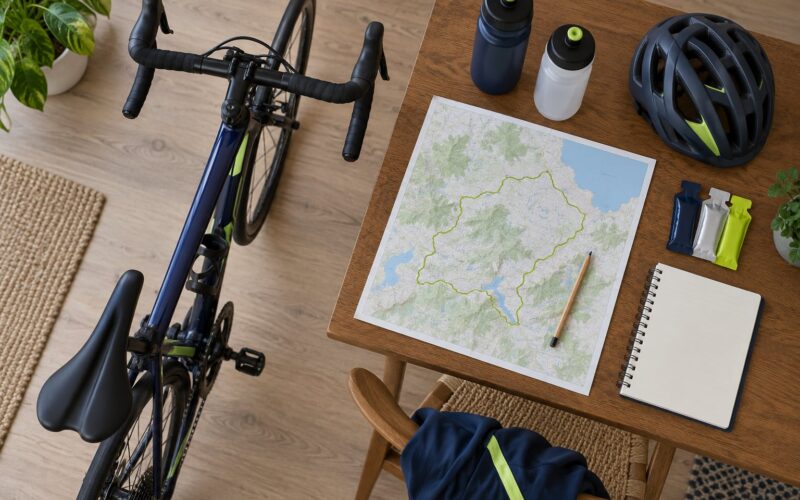
Pick a weekend ride of similar length to your longest tour day. Eat your intended breakfast, carry your intended kit, use your bottles at the intended strength, and take your lunch at a real stop rather than at the kitchen table. Most riders discover within 90 minutes that they packed too much, too much of the same thing, or too little.
Write down three things afterward: how your energy felt by hour, what your stomach did, and what you would rather not eat again. Then repeat the ride with adjustments. Repeat it twice and you have a tested kit.
Avoid restrictive diets in the fortnight before a tour. Cutting carbs or fasting to make up for winter weight leaves you under-fuelled when you need reserves most, and the first three days of a tour are the worst time to experiment.
If you want a structured approach, work up to it: a normal diet with extra carbohydrate for the three days before, plus gut training in the four to six weeks ahead, where you practice fueling during long rides until the gut tolerates it. Gut tolerance is trainable, but only through repetition under realistic conditions.
Frequently Asked Questions
Can I eat while riding a bike?
Yes. Eating on the bike is normal on long rides and essential on multi-day tours. Most riders take small items that need little chewing, such as bananas, energy bars, chews, gels, or rice cakes, and pair them with drink mix. Aim for a feed every 30 to 40 minutes starting in the first hour, not only when you feel hungry. Spread it across food and drink so you are not swallowing one dense item every few kilometres.
How many calories should I eat during a multi-day cycling tour?
Plan roughly 3,500 to 5,500 kcal on a long riding day, more on a climbing-heavy stage, and about 2,500 to 3,500 on a short recovery day. Stage racers have been measured burning 6,000 to 8,600 kcal a day, which shows how much most recreational riders under-eat. Weigh yourself each morning; losing more than about 1 percent of your body weight over several days means you are short of fuel.
Should cyclists use energy gels, drinks, or real food?
Use all three, because each solves a different problem. Gel or drink mix supplies light, shelf-stable carbohydrate that costs little to carry. Real food such as bananas, sandwiches, rice cakes, and dates gives you sodium, protein, and fibre, and keeps you from getting sick of sweet by day four. Practical touring kits lean on both. Test every product twice on a rehearsal ride before you rely on it mid-tour.
Is intermittent fasting compatible with consecutive-day bike touring?
Generally not, especially if the rides are long or you are not already used to training that way. Fasting leaves you starting each day with lower glycogen and no fuel during the first hours of riding, which is when consecutive-day fatigue hurts most. Long-duration riders already report under-eating and losing weight on tour. If you prefer time-restricted eating, eat normally through the riding day and shift the fast to the evening while touring.
When should persistent fatigue or weight loss during a bike tour prompt medical advice?
See a doctor if fatigue builds steadily despite eating enough, if you lose more than a few percent of your body weight and it does not recover, if your heart rate stays high at rest, or if you get repeated colds, injuries, feeling cold or mood changes. These can point to iron deficiency, low energy availability or illness, which accumulate over days and cannot be corrected by eating one more bar. A registered dietitian can also review your whole plan.
Start With One Rehearsed Day
Most tour nutrition problems come down to a plan that was never tested. Pick a daily rhythm and stick to it, pack two fuel options you genuinely like rather than eight you tolerate, drink to the day’s conditions instead of a fixed number, and weigh yourself each morning so you catch a shortfall on day 2 instead of day 5.
Then rehearse one full day on your bike, at your intended duration, a couple of weeks before you leave. That single ride will tell you more than any guideline, including this one.