A century is a single 100-mile (160 km) bicycle ride, and most first-timers finish in somewhere around six to eight hours in the saddle. Knowing what to expect at your first century ride in advance — the pace, the food, the soreness, the strange middle hours — takes most of the fear out of signing up. This guide walks through the whole day, from the week before to the walk in the door at home.
Table of Contents
- What Is a Century Ride?
- How Do You Know You Are Ready?
- How Should You Pace Your First Century?
- What Should You Eat and Drink on the Ride?
- What Happens at Aid Stations?
- How Should You Handle Hills and Headwinds?
- What Etiquette Does a Century Reward?
- How Do You Prepare the Week Before?
- What to Expect at Your First Century Ride on Race Morning
- What Can Go Wrong on a First Century?
- What Does Finishing Your First Century Feel Like?
- Frequently Asked Questions
- How long does it take to finish a first century ride?
- Do I need to ride 100 miles before my first century?
- How should I pace the first two hours?
- What should I bring if my bike has a mechanical problem?
- Can I stop at every aid station during my first century?
- Conclusion
What Is a Century Ride?
A century is 100 miles in a single day, almost always on the road. In European riding a metric century is 100 km instead, which is a completely different and much shorter day, so check which one you have signed up for before you start counting training miles.
Organized centuries run on a published schedule with a mass start, rest stops every 20 to 30 miles, a cut-off time, and usually a sag or support vehicle. Club and solo centuries are self-supported: you carry your own food, you navigate yourself, and nobody is waiting for you at mile 78.
Roughly 6 to 8 hours is the range most recreational riders land in. Fit riders on flat roads go considerably faster, and anyone with serious climbing can expect a longer day than the map suggests.
How Do You Know You Are Ready?
You do not need to have ridden 100 miles before. You need to have spent a few hours in the saddle recently without it falling apart.
| Where you are now | Riding most weeks | Longest ride recently | How ready that leaves you |
|---|---|---|---|
| New rider | Under 40 miles | Under 40 miles | Start with a metric century or a 50-mile organized ride first |
| Occasional rider | 60 to 100 miles | 45 to 60 miles | Realistic for a flat century with 8 to 12 weeks of build |
| Regular weekend rider | 100 to 150 miles | 65 to 85 miles | Ready for most organized centuries |
| Club or competitive rider | 150 miles plus | 100 miles | Comfortable, including hilly routes |
Terrain changes the answer more than most people expect. A flat century at sea level is a very different ask from a route with 6,000 feet of climbing, so look up the elevation gain on the event page before you commit to a date.
The build itself is simple. Riders on r/bicycling tend to agree on a gradual increase — roughly 10 percent more distance per week — and on getting a few progressively longer rides in the six to eight weeks before the event: a 60, then a 70, then an 85. Riders in the same threads who skipped that progression are the ones who describe the last 20 miles as a disaster.
How Should You Pace Your First Century?
Start slower than feels right. On your first hour on the bike, easy feels almost insultingly slow, and that feeling is the single biggest reason beginners run out of legs at mile 70.
Perceived exertion is the most reliable pace guide you have. Pick a level you could hold in conversation with a slightly out-of-breath voice, and check that you can still breathe through your nose on a climb. If you cannot talk in short sentences, you are riding too hard for the position you are in.
Organized events publish a cut-off time, usually somewhere around 9 to 10 hours after the start. Work backwards from it rather than forwards from your ego: divide the remaining miles by the hours left, add a margin for the big climb you know is coming, and stay under that number.
If you fall behind at mile 40, you have options. Extend your rest stops slightly, skip the slowest part of the group you are riding with, and eat more rather than more. You cannot make up an hour by digging, but you can usually claw back 20 minutes by riding steadily instead of coasting.
What Should You Eat and Drink on the Ride?
Eat from the first hour, not when you feel hungry. Hunger is a lagging signal, and riders who wait for it are the ones who bonk at mile 75. Most people land somewhere between 30 and 60 grams of carbohydrate an hour, taken in small sips and bites rather than in big meals.
| When | What to take in | Why |
|---|---|---|
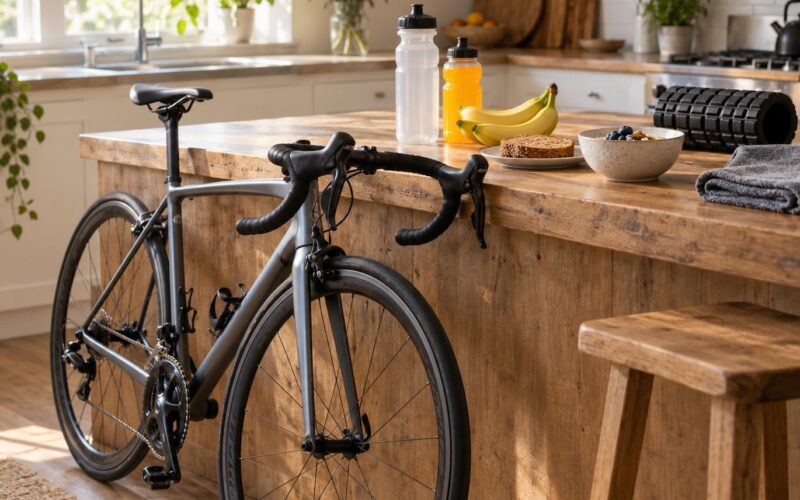
| Night before and morning of | Normal breakfast with carbohydrate, nothing exotic | Nothing new to digest on ride day |
| First 30 minutes | Water, then your first gel or bar | Blood sugar climbs then falls; fuel that early protects hour three |
| Every 30 to 45 minutes after | A carb source plus 8 to 12 oz of fluid | Keeps intake automatic instead of a decision |
| Rest stops | Refill both bottles, eat real food if it is offered | Easy calories plus sodium |
| Final 90 minutes | Coffee or a caffeinated gel, taken early | Good day for one, not for three |
Sip continuously rather than drinking a litre at the next station. If you are riding in heat and sweating heavily, an electrolyte drink or a salty snack helps with the cramps that riders in the r/cycling threads describe as coming out of nowhere.
If your stomach turns, switch to smaller and more frequent sips, drop solids for a few minutes, and get easier on the pedals. If the energy simply vanishes and your hands shake, you have likely under-fuelled: eat, drink, and ease the pace rather than trying to push through.
What Happens at Aid Stations?
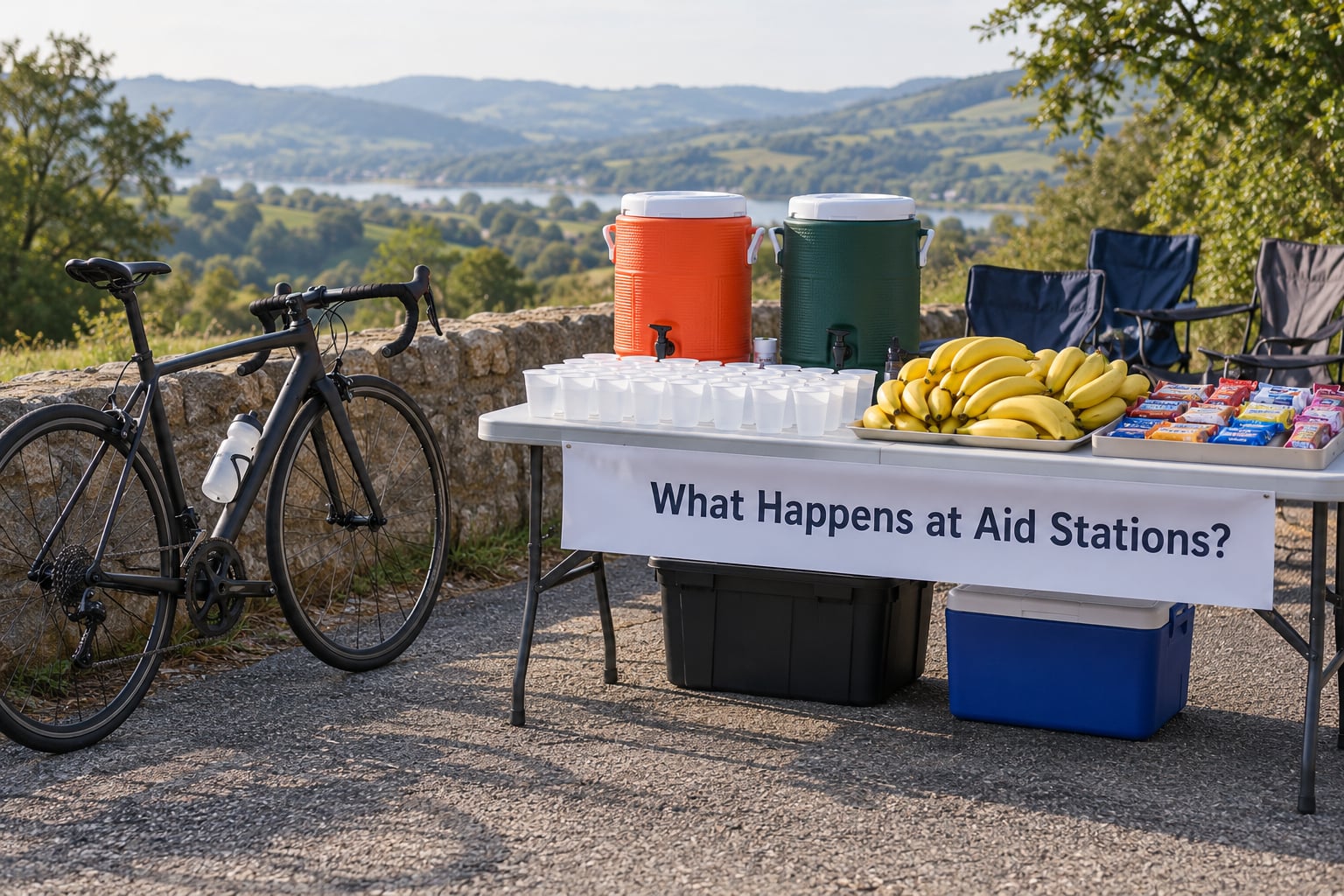
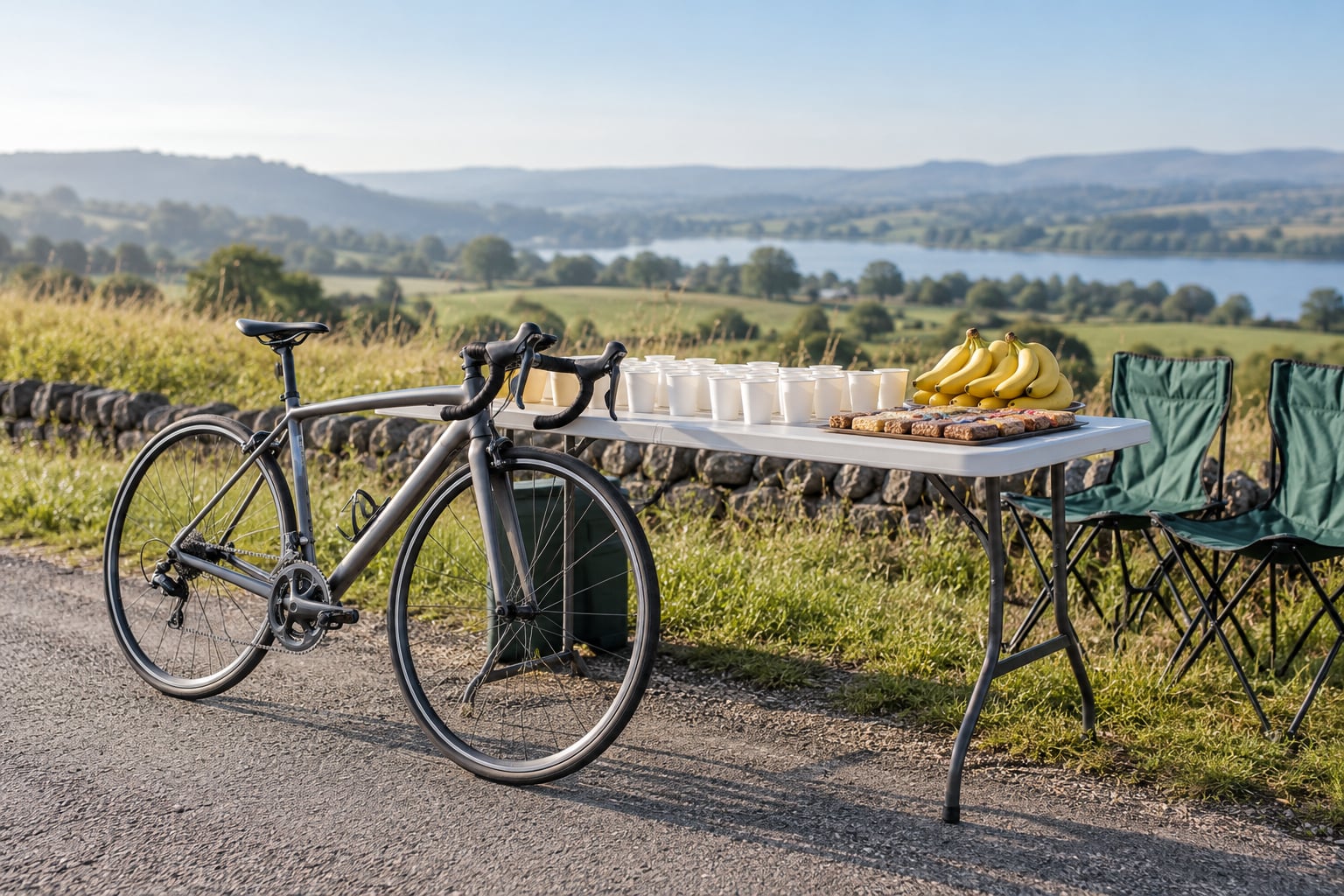
A typical rest stop is a table in a parking lot or a school car park with volunteers, water jugs, cut fruit, granola bars, and sometimes a portapotty at the far edge. Bikes are usually racked in rows, or just leaned wherever there is space.
Refill both bottles, drink a cup of water standing still for a minute, and eat something you have eaten before. Volunteers can tell you the distance to the next stop, whether the next climb has been marked, and whether the route has changed — all worth asking.
Ten minutes is a normal stop. An hour is how you lose a century. Leave at a time that gets you back on the road before the fast group comes through.
How Should You Handle Hills and Headwinds?
Shift to an easier gear before the road tilts, not halfway up it. A gear that feels like grinding at the bottom of a climb is one you should have left two minutes earlier.
Spin rather than mash. A comfortable cadence, somewhere around 80 rpm, is far more efficient than pushing a heavy gear at 50 and it costs your knees less over seven hours.
Stay seated when you can. Out of the saddle is a tool for the last surge, not a way to ride every climb. And if the grade gets away from you, put a foot down. Nobody in your group remembers who walked up a hill.
On an exposed descent, hold a line, keep both hands ready on the bars, and resist the urge to follow the rider in front into a corner they took too fast. Headwind out-and-back routes are the ones to watch on the forecast, not the hills.
What Etiquette Does a Century Reward?
Pull right to let faster riders pass, signal before moving across, and look over your shoulder before changing lanes. On a mass start, everyone is nervous and nobody can see you.
Keep a wheel’s length of space behind the rider in front. Side by side is for chat at a stop, not for riding.
Ask before someone drops into your line, and say something when a rider you are following pulls away from you — “thanks for the pull” costs nothing and makes the group ride better for everyone.
At rest stops, chat with people you have just met for a minute, then move on. Keep your kit together and clear your own rubbish.
Finally, follow the organiser’s rules. They built the event for a hundred miles of mixed ability, and their cut-offs, lane rules and rest stop spacing exist for a reason.
How Do You Prepare the Week Before?
Seven days out, here is the short list:
- Training — stop the volume drop now. Two easy rides, nothing hard.
- Sleep and food — eat normally. Nothing new, and no heroic carb-loading attempts you have not practised.
- Bike check — tyres, chain wear, brake pads, bolts, and a quick fit check on saddle height. A tune-up a month before is better than roadside tube changes on the day.
- Route review — look at the profile and mark the big climbs and the cut-off time.
- Weather — check the forecast again two days out. Heat changes the whole day.
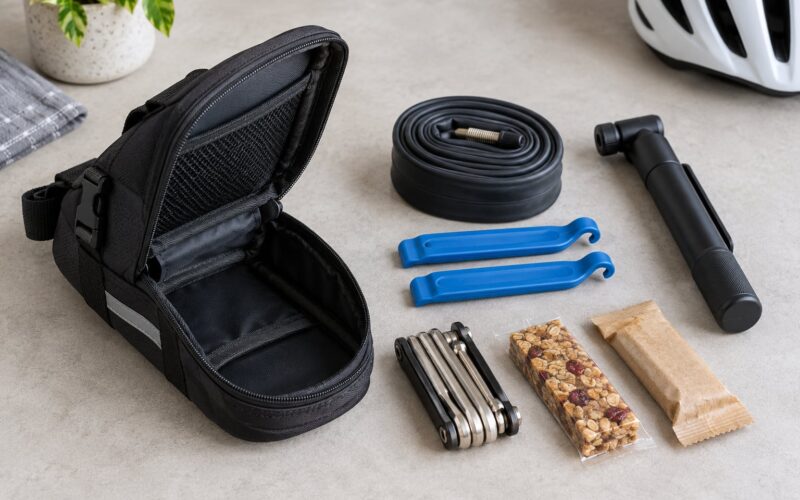
- Packing — two bottles, tubes, pump, multitool, cash, ID, the event email offline on your phone.
- Logistics — start time, parking, where someone can meet you at the finish.
What to Expect at Your First Century Ride on Race Morning
Check-in usually opens an hour or two before the start. You collect a bib, sign a waiver, get a wristband, and stash your stuff if the event provides bag drop. That is a good moment for a mechanical check — a quick spin of the wheels and a walk around the bike while it is still cool.
Then you wait. Riders are corralled by start time, and the corrals fill from the fastest groups backwards. Expect noise, a slow roll forward, and a fair bit of standing around. Have a snack and drink water before you roll out, because the first hour starts the moment the horn goes.
What Can Go Wrong on a First Century?
Mechanical. A flat at mile 50 is the most common bad day. Carry a spare tube, pump, and tire levers, and practise the change before the event so your hands know the moves. Most riders get back riding in under 15 minutes.
Crash. Get off the road, check yourself over, and do not get back on if you hit your head, feel dizzy, or have chest pain. A scrape you can clean later is not an emergency.
Missed a rest stop. Self-supported rides have no second chances. Slow down before a rest stop rather than blowing past it in a group.
Bonking. Blood sugar collapse — shaking hands, tunnel vision, sudden despair. Eat and drink immediately, stop riding hard, and it usually passes within 20 minutes.
Chafing and saddle pain. Anti-chafe cream applied before you leave, proper bib shorts, and stand out of the saddle periodically handle most of it.
Heat. Ride earlier if the forecast is nasty, fill every bottle, and consider whether a shorter distance is the smarter first target.
Stop and seek medical help for persistent pain, dizziness, difficulty breathing, confusion, chest pain, or anything that feels wrong and does not clear. At an organized event, the event staff and the emergency number on your bib are the fastest route to help. On a self-supported ride, call emergency services and give them your exact route location.
What Does Finishing Your First Century Feel Like?
Roughly 60 percent relief and 40 percent elation, and possibly a lot of crying at the food table. Riders who have done it describe the last 10 miles as the best part of the day, not the hardest.
Keep moving gently for a few minutes afterwards to bring the heart rate down, then eat properly within the hour — carbohydrate and protein together is the standard recovery pairing. Soak, stretch, and expect to sleep like you have never slept before.
The soreness arrives about a day later and takes three to five days to fade. Take the next day completely off, ride easy and short after that, and hold off on any hard session for about a week.
Frequently Asked Questions
How long does it take to finish a first century ride?
Most recreational riders finish their first century in six to eight hours in the saddle. Fit riders on flat terrain go faster, and routes with heavy climbing add an hour or more. Organized events usually publish a cut-off around nine to ten hours after the start, so check the event page when you sign up and pace yourself against that number rather than against the riders around you.
Do I need to ride 100 miles before my first century?
No. You need to have spent time in the saddle recently, not covered the distance. A rider whose longest ride is 45 to 60 miles can complete a flat century with eight to twelve weeks of steady training. Aim for two or three progressively longer rides in the final month, and remember that a hilly route needs more preparation than a flat one.
How should I pace the first two hours?
Ride easier than you think you should. Aim for an effort you could hold while talking in short sentences, shift to a comfortable gear on every climb, and stay under the group speed even when it feels slow. Most riders who blow up at mile 70 went out too hard in the first 20. Eat and drink from the first 30 minutes so the easy pace does not catch you behind later.
What should I bring if my bike has a mechanical problem?
Carry two spare tubes, a mini pump, tire levers, a multitool with a chain breaker, and a small amount of cash in case you have to buy something. Practise changing a tube at home before the event so the process is familiar. Tubeless riders carry plugs and a sealer injector instead. At an organized century the rest stops and support vehicle can often help, but self-supported riders need to be self-sufficient.
Can I stop at every aid station during my first century?
Yes, and you probably should, but keep each stop to about ten minutes. Rest stops on most centuries sit every 20 to 30 miles, so using them keeps you fed and watered without much time cost. Refill both bottles, drink a cup standing still, eat something familiar, and ask a volunteer how far the next stop is before you leave.
Conclusion
A first century is less dramatic and more ordinary than the build-up makes it feel. It is a long morning of steady riding, refilling bottles, eating on a schedule, and being slower on the climbs than you would like, and the riders who enjoy it are mostly the ones who started deliberately and stayed comfortable the whole way. Pick an event whose cut-off matches your current fitness, then build toward it with a few progressively longer weekend rides. That first long ride in the saddle is the whole job — everything on the day is just following through on it.