Pick a century ride if you want a flexible milestone day at your own pace, organized by a club or charity, with no results clock and no crowd at the start line. Pick a gran fondo if you want a mass start, timing, timed segments and a finish-line festival. Both are endurance events rather than races, and the distance on the entry listing matters less than the start format, the support and the elevation.
That confusion is genuine. On Reddit and BikeForums, riders regularly describe the two formats as interchangeable. BikeForums consensus is blunt about it: a gran fondo can be almost any mileage, while a century always means 100 miles. This guide sorts out where the two actually differ, where the names overlap, and how to choose.
Table of Contents
- Gran Fondo vs Century Ride at a Glance
- What Is the Difference Between a Gran Fondo and a Century Ride?
- Is a century ride 100 km or 100 miles?
- Distance, Time, and Terrain
- How do you read a route profile before registering?
- Gran Fondo vs Century Ride: Which Is Faster?
- Aid Stations, Food, and Bike Support
- Training Requirements for Each Format
- Which Experience Fits Your Goals?
- Which Should You Choose?
- Frequently Asked Questions
- How difficult is a century ride?
- Are gran fondos suitable for beginners?
- Is a gran fondo a race?
- How long does it take to train for a gran fondo?
- How long does a 100 mile ride take?
- Do you need a timing chip for a century ride?
- Conclusion
Gran Fondo vs Century Ride at a Glance
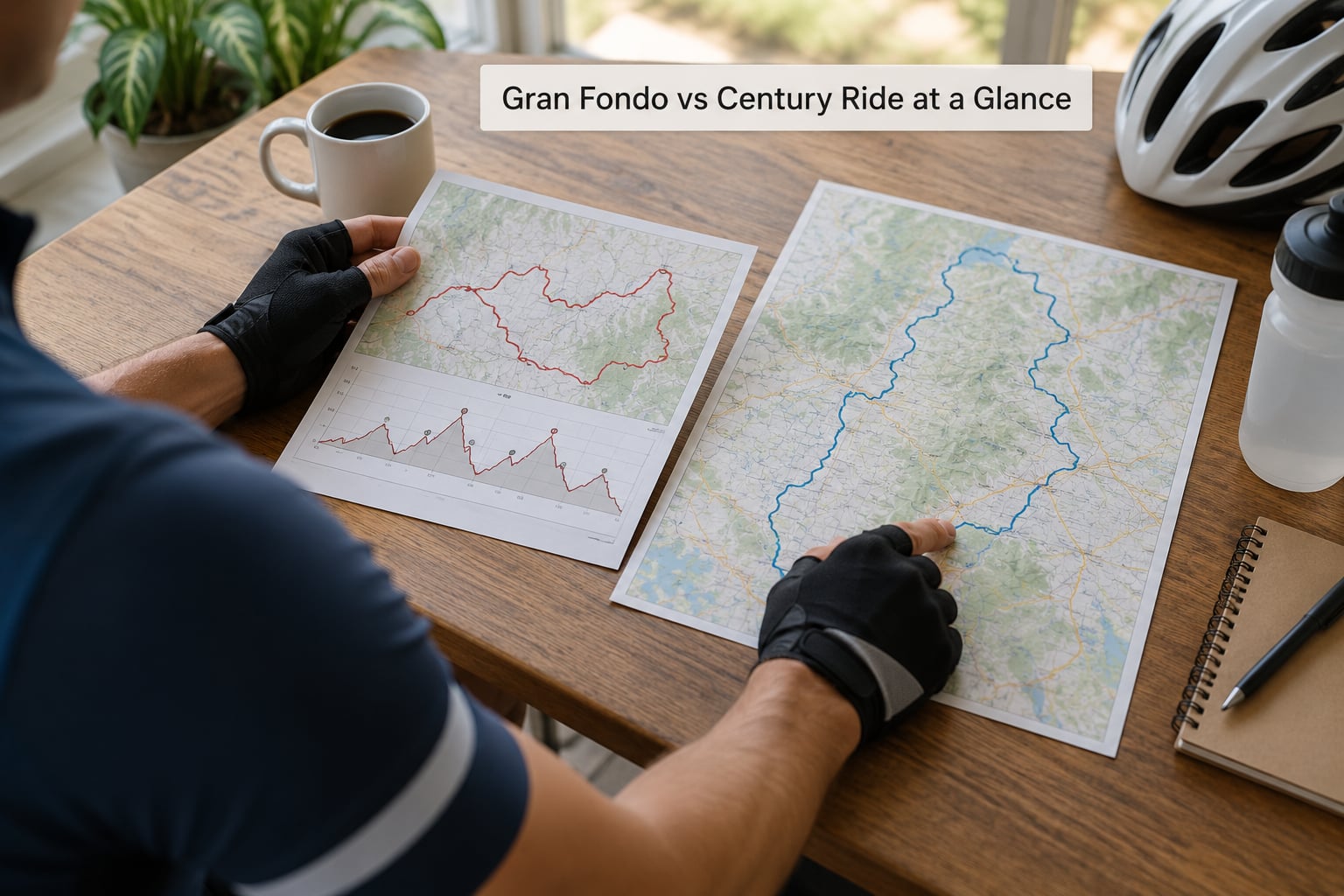
| Category | Century Ride | Gran Fondo |
|---|---|---|
| Typical distance | Exactly 100 miles (161 km) | Variable: often 80 to 160 km, sometimes 100+ miles |
| Start format | Self-selected, often small rolling groups or staggered start | Mass start with everyone rolling together, often by pace group |
| Timing | Usually untimed, no chip | Timing chip for overall results, plus timed segments |
| Cut-off times | Rare, and usually generous | Common, with sweepers picking up anyone past the limit |
| Support | Basic rest stops, maybe a sag vehicle | Feed zones every 15 to 30 miles, SAG wagon, police on some sections |
| Entry cost | Modest, often bundled with a club membership | Noticeably higher, with expo, timing and support built in |
| Atmosphere | Low-key club ride or charity fundraiser | Festival with food stands, music, a vendor expo and guest riders |
| Field size | Hundreds at most | Hundreds to thousands, sometimes more than 10,000 in Europe |
| Elevation range | Wide, from flat to very hilly | Wide, and frequently climbing-focused |
Read that table as a set of tendencies rather than rules. Organizers set their own standards, and the same ride can look different from one year to the next. Always check the event page before you sign up for anything.
What Is the Difference Between a Gran Fondo and a Century Ride?
A century ride is a single-distance event of exactly 100 miles, or 161 km. The distance is the entire point: it is a badge of honor, and most clubs run one on the same date each year so riders can compare times with the group they rode with last summer.
A gran fondo is an Italian-style mass-participation ride. The name translates roughly as grand tour, but it has drifted away from that original meaning. Gran fondo today means a big organized event where thousands of riders start together, ride a route chosen for its scenery and climbing, and get fed along the way. Some have a timing chip and timed segments. Many are explicitly not a race.
Here is where the naming gets slippery. Gran fondo distance is not standardized. You will find events at roughly 80 km, 100 km, 120 km, 160 km, and beyond. So can a gran fondo be shorter than a century? Yes, and quite a bit shorter. Gran Fondo Pacifico, for instance, runs about 49 miles and still draws plenty of beginner questions from riders wondering whether they can handle it.
The related European term is the sportive, or cyclosportif in Italian. On bike forums it comes up mostly when someone is confused by a European event listing that says sportive rather than gran fondo. Same family of event, different label.
Is a century ride 100 km or 100 miles?
100 miles, which is 161 km. The 100 km ride is called a metric century, and it is a genuinely different thing: a shorter, often faster day that many riders use as a stepping stone. This is the single most common mix-up on cycling forums, and it is worth settling before you pick an event.
There is a distance ladder that makes the whole thing clearer. A quarter century is 25 miles, a half century is 50, a metric century is 100 km, a full century is 100 miles, and a double century is 200 miles. Gran fondos slot into this ladder wherever the organizer decides, which is exactly why the label alone tells you almost nothing about difficulty.
Distance, Time, and Terrain
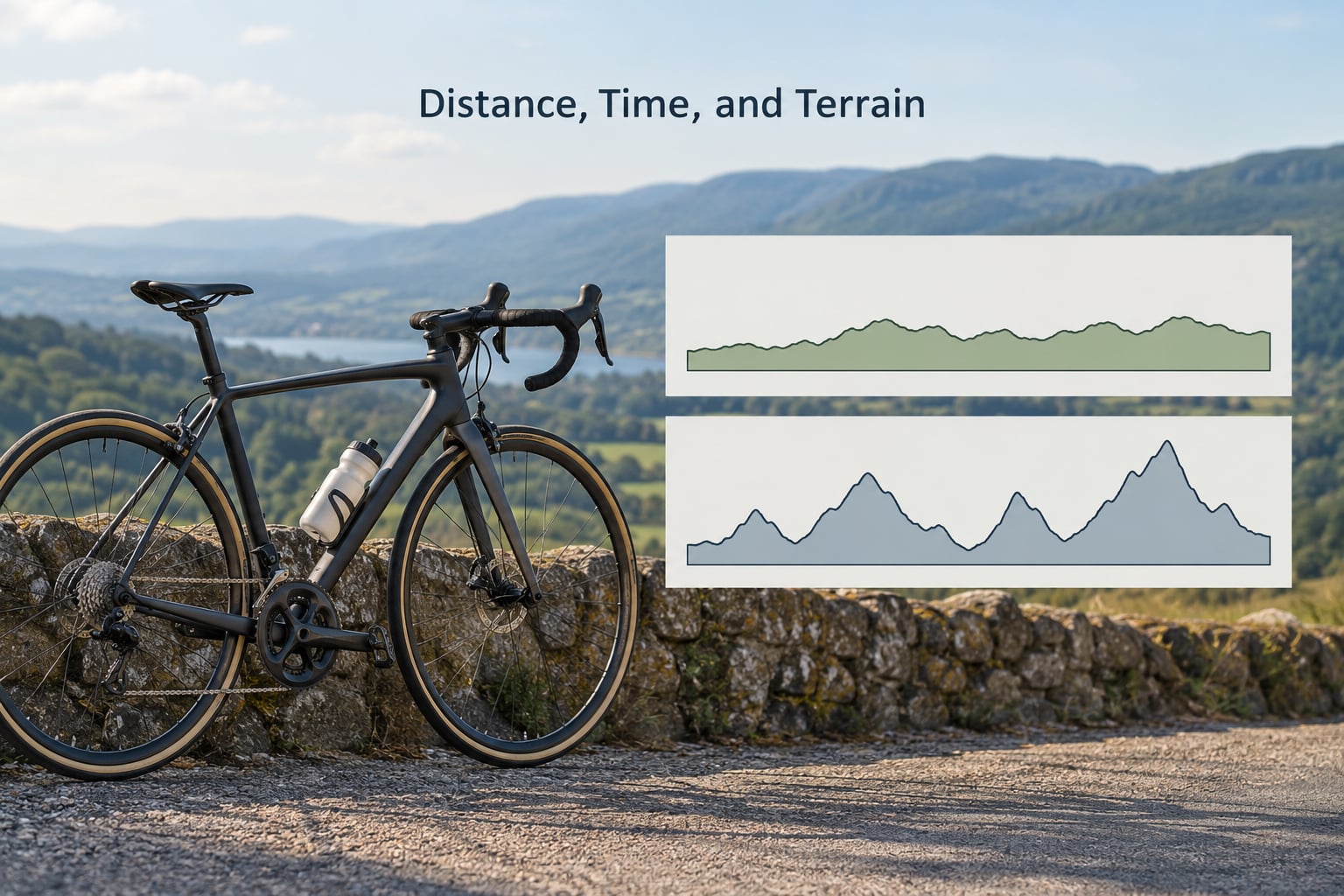
A century is 100 miles by definition, so distance is the one variable that is fixed. Gran fondo mileage is a choice, so you can find one that matches a century closely and another that runs well past it.
Time is where the formats separate. A century ridden by a fit recreational cyclist typically takes five to seven hours on the road. Anything under five hours is quick for a first-timer. Climbing-heavy courses push toward six, seven, or more. Gran fondo times vary more widely because the courses vary more widely, and because a timed event creates a spread: the leaders will be through hours before the back of the field.
Elevation is the number most riders should actually compare. A useful rule of thumb from the Bicycle School guidance is that around 5,000 feet of vertical gain reads as relatively easy, while 10,000 feet reads as hard. A flat 100-mile century in the plains is a completely different day from a 100-mile century in the Appalachians or the Rockies, and the gran fondo equivalent spread is wider still.
Weather adds a multiplier that neither format controls. A headwind on an exposed coastal route can add an hour or more to an otherwise easy ride. Rain and cold turn a feed zone into a place you want to leave quickly. A hot day changes your fluid plan entirely. When you compare two events, check whether one is later in the season, because an early-spring gran fondo and a July century are different sports.
How do you read a route profile before registering?
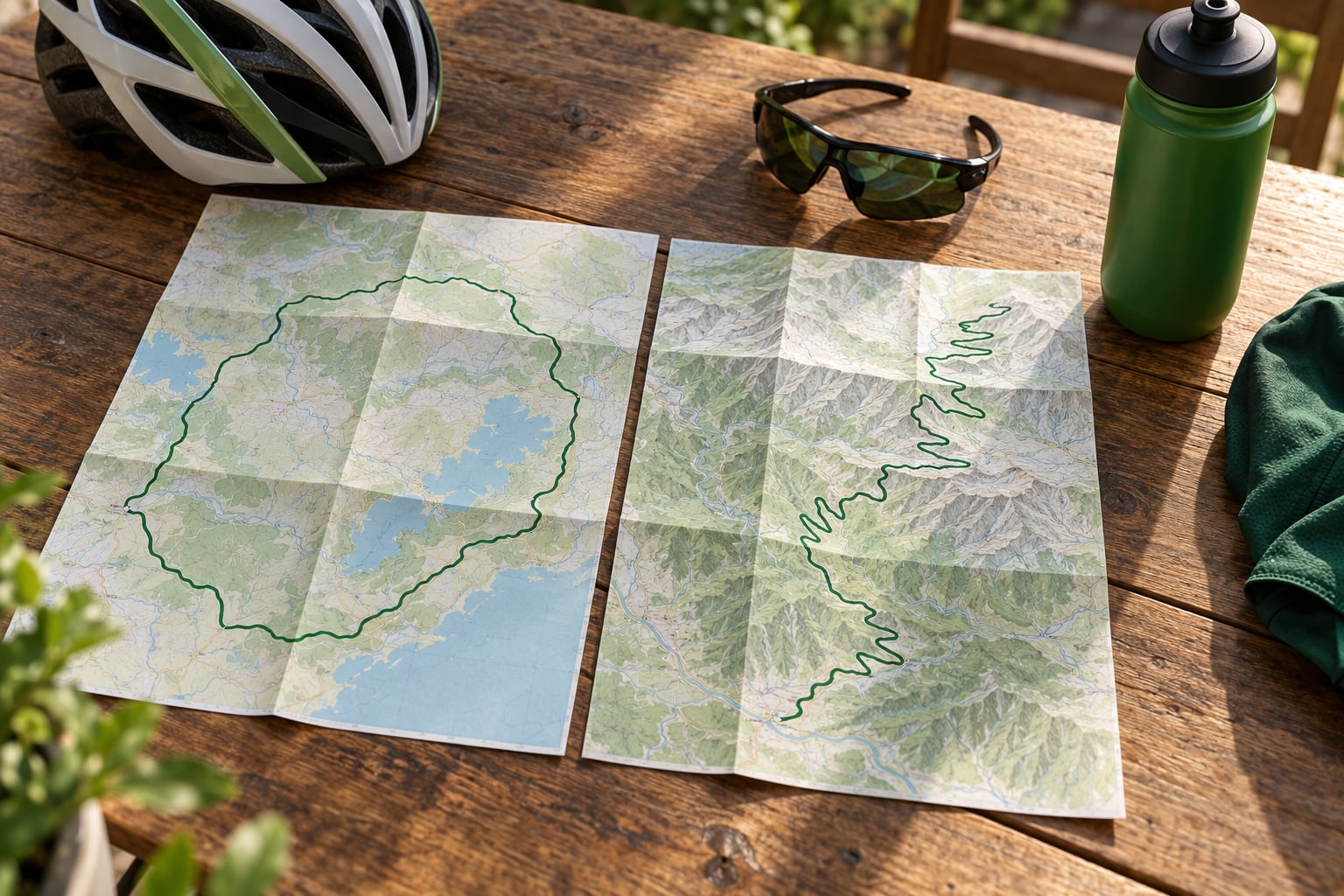
Look for the elevation total on the event page rather than eyeballing the map. Many organizers publish a route profile graphic or a top-tube sticker with the profile printed on it, which riders in one Gran Fondo guide specifically called out as something they wished had been clearer beforehand. Compare the profile’s total climb, then check the spacing of the feed zones against it, since a course with all its climbing after the halfway point deserves a different fueling plan.
Gran Fondo vs Century Ride: Which Is Faster?
A gran fondo asks you to be faster. A century lets you be as slow as you like. That is the short version, and it comes down to how the finish is measured.
On an untimed century there is no number attached to you. You can stop at a rest stop for twenty minutes, ride at a conversational pace on the flats, and nobody records it. That freedom is precisely why plenty of experienced riders still prefer centuries despite being far quicker than most of the field.
A gran fondo with a timing chip introduces a different kind of pressure, even though nobody is racing you. Timing segments reward steady, repeatable power rather than one heroic effort, which makes the event feel much more like a test than a celebration. The steadier, slightly harder effort also burns more fuel over the same hours, so the nutrition plan needs to match.
For a worked effort target, cycling coaches often suggest holding around 70 to 75 percent of functional threshold power, or roughly a 6 to 7 out of 10 on perceived exertion. On a century you would sit lower than that, maybe effort 4 to 5, because you are managing an unknown duration with no finish-line target.
One more wrinkle. Bicycle School advises keeping heart rate under roughly 130 on climbs before mile 70 of a century, and expecting an overall average speed in the low teens rather than the high teens. That advice assumes a long, self-paced day. Applying it to a timed gran fondo would leave you off the results sheet entirely.
Aid Stations, Food, and Bike Support
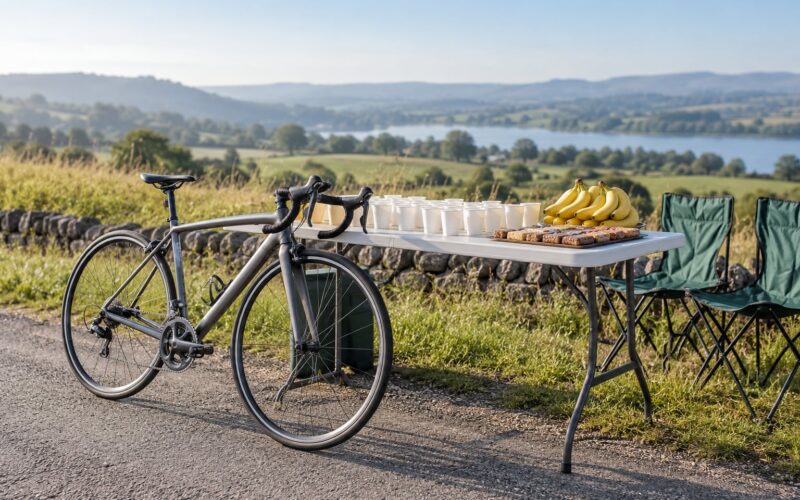
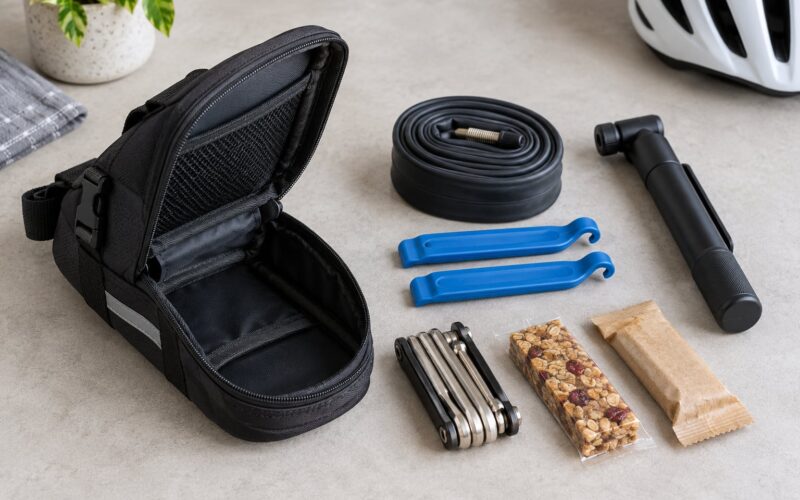
A century usually gives you very little. Most club centuries offer a rest stop every 25 to 35 miles with water, bananas and a sandwich, plus a support car that often follows behind the last rider and will collect you if you break. Beyond that, you are on your own. Most riders carry two bottles, spare tubes, tire levers, a multitool and enough food for the whole day because they do not trust the stop food.
That caution is shared by experienced riders. Forum complaints about century rest stop food being sugary or unusable for long-distance fueling are common enough that treating event food as a top-up rather than the plan is standard advice. Pack your own gels or bars and eat what you know.
A gran fondo supports you properly, and this is the single biggest practical difference. Feed zones typically appear every 15 to 30 miles with sports drink, fruit, sandwiches and a clothing drop option. Many events run a SAG wagon, a mechanic-supported van following the course, and in some cases police or traffic control on key sections. Larger European events can feel like a moving festival with music and crowds at the feed zones.
What support does not cover is mechanical failure in both formats. A flat 40 miles into either event means you fix it yourself unless you carry a tube and levers, which you should. The sweeper will not fix your bike, and being swept is not a ride you can un-do by finishing fast. Pack the same repair kit for either format.
The thing a gran fondo adds that a century almost never does is pressure. Cut-off times are common, and once you are past one, the sweepers load you onto a vehicle and your day is over. Fear of being swept is the most repeated concern in forum threads about these events, and it is a legitimate reason to train for the course rather than just the distance.
Training Requirements for Each Format
The base mileage requirement is similar. You need to be comfortable riding five to seven hours, and no amount of short high-intensity sessions substitutes for time in the saddle. Most coaches treat twelve weeks as a realistic minimum for a first long event, with a longer block if the event is early in your season.
Gran fondos add climbing and pacing work. When a course has 10,000 feet of gain, you need repeated practice riding up long grades at a controlled heart rate rather than racing every one of them. Timed sections also reward practicing steady power output, so riders who enjoy intervals get more value from a structured build phase.
Centuries add duration and endurance of a different kind. The risk is bonking in hour six, so practice fueling on your long weekend rides until eating every 30 to 40 minutes feels automatic. Muscle endurance matters more than peak power here. Back-to-back riding, where Saturday is long and Sunday is shorter, is the closest thing you can get to a dress rehearsal.
Recovery and sleep are worth planning too. Most experienced riders taper the week before, meaning two or three easy rides and no big efforts, because the event itself is the load. General guidance, not a medical plan: if you have a medical condition or a history with heart or joint problems, talk to a doctor before committing to a day this long, and stop if anything feels wrong on the day.
Food is the one habit both formats reward. Pick one long ride a month where you take nothing but what you planned to take. Discovering at mile 70 that you cannot eat a savory bar you have never tried is a bad way to find out.
Which Experience Fits Your Goals?
Match the format to what you actually want from the day rather than to the distance on the calendar.
- You want a milestone, nothing more. Choose a century. A club century gives you the 100-mile badge without any of the timing, cut-off or crowding pressure.
- You want a social day with your club. Choose a century. The smaller field means you ride with people you know and you choose your own start time.
- You want timed results and something to chase. Choose a gran fondo. The chip, the timed segments and the published results give you a number to improve next year.
- You want to test climbing. Choose a gran fondo with a serious elevation profile, but check the cut-off times first and pick a start group that matches your climbing ability.
- You are fundraising for a charity. Either works, though charity centuries tend to be relaxed and charity gran fondos give you an audience and a platform at the finish.
- You are brand new to long rides. Do not start with either at full length. Ride a metric century, or a short gran fondo, and build from there. Beginners do complete full centuries, so it is not out of reach, it is just not the first step.
- You want the festival atmosphere. Choose a gran fondo. The expo, the food, the music and the crowds are the whole point for many riders who never look at their time.
There is also a mid path many clubs use: a century organized with gran fondo trimmings. Some events borrow the mass start, the feed zones and the finish-line party without the timing. If that sounds right, look for it, because plenty of organizers have moved in that direction.
Which Should You Choose?
Choose a century ride when you want control. You pick the start time, you pick the pace, you stop when you want and nobody times you. It is the cheaper, calmer option and the better one for a club social ride, a charity day or a first 100-mile attempt.
Choose a gran fondo when you want structure and support. You get a designed route, feed zones, mechanical help, timing and results, in exchange for a bigger entry, a crowded start line and cut-off times that will end your day early if you are unprepared.
Now the cases where either is a poor choice. A century is a bad pick if you are chasing a personal best, because there is nothing to compare against, or if you want the spectacle of a big event weekend. A gran fondo is a bad pick if you are anxious about crowds, hate riding in a bunch with people braking unpredictably, or cannot handle the idea of being swept.
One last recommendation. Whatever you choose, look up the specific event before you register: exact distance, total elevation, cut-off rules, feed zone spacing, and whether the aid is included or sold separately. Standards vary by organizer, and the same event name can describe two very different days.
Frequently Asked Questions
How difficult is a century ride?
A century ride is 100 miles, usually five to seven hours in the saddle for a fit recreational rider. Difficulty depends more on elevation than distance: roughly 5,000 feet of gain reads as moderate, while 10,000 feet is a genuinely hard day. Train for time in the saddle and practice fueling before you register.
Are gran fondos suitable for beginners?
Only some of them. Gran fondo distance is not standardized, so short events exist as a starting point, and a rider finishing a first long ride within a couple of months of starting cycling is not unusual. Check the elevation profile and cut-off times first, and pick a start group that matches your pace rather than the fastest one.
Is a gran fondo a race?
No. A gran fondo is a mass-participation endurance ride, and most organizers say so explicitly. Timing chips and timed segments exist, but riders choose their own effort and are not competing for a placing. It sits somewhere between a club ride and a race, with more organization and less pressure than either a sportive ladder event or a plain group ride.
How long does it take to train for a gran fondo?
Twelve weeks is a realistic minimum for a first long event, assuming you already ride regularly. That block should hold one long endurance ride a week, building in distance, plus climbing practice if the course is hilly and practice fueling on every long ride. Add more weeks if the event falls early in your season or the course has heavy climbing.
How long does a 100 mile ride take?
Plan on five to seven hours for most riders, plus stops. A strong recreational cyclist on a flat course might finish in under five hours, which is fast for a first attempt. Headwinds, cold weather and 10,000 feet of climbing can each add significant time, so check the elevation profile and the weather before setting an expectation.
Do you need a timing chip for a century ride?
Almost never. Centuries are traditionally untimed, so there is no chip and no results list, which is a large part of why the format feels relaxed. Gran fondos are the opposite: they nearly always use timing chips for overall results and timed segments. Some organized centuries do offer optional timing for riders who want a recorded time.
Conclusion
Gran fondo vs century ride comes down to pace and pressure. A century gives you a 100-mile badge at whatever speed you like. A gran fondo gives you feed zones, timing, a mass start and a cut-off clock. Riders chasing a milestone or a social day should start with the century; riders chasing organized routing, real support and a recorded result should book the gran fondo.
Before you commit to either, check five things on the event page: exact distance, total elevation, cut-off rules, feed zone spacing, and what the entry includes. Those five numbers will tell you more than the name ever will.