How to choose tire width for endurance riding comes down to three things: how wide your frame and rim allow, what surface you actually ride on, and how the bike feels at your normal pressure. Start with the widest tire that clears your fork and frame with room to spare, then run it at the lowest pressure that still feels stable.
Most riders land between 30mm and 35mm. Modern endurance frames and rims handle that range comfortably, and the extra air volume over a narrow racing tire is what keeps your hands, back and backside comfortable over four hours or more.
Table of Contents
- What You Need Before You Compare Widths
- How to Choose Tire Width for Endurance Riding Step by Step
- Step 1: Check Your Bike and Rim Limits
- Step 2: Match Tire Width to Your Riding Position
- Step 3: Consider Terrain and Tire Construction
- Step 4: Test Before You Commit
- Common Mistakes That Cost Riders Comfort
- Frequently Asked Questions
- What tire width is best for endurance riding?
- How wide can I put tires on my road bike?
- Does a wider tire make long rides more comfortable?
- Should I run the same tire width on pavement and gravel?
- How do I know if my tire width is causing handling problems?
- Can I choose tire width based only on rider weight?
- Conclusion
What You Need Before You Compare Widths
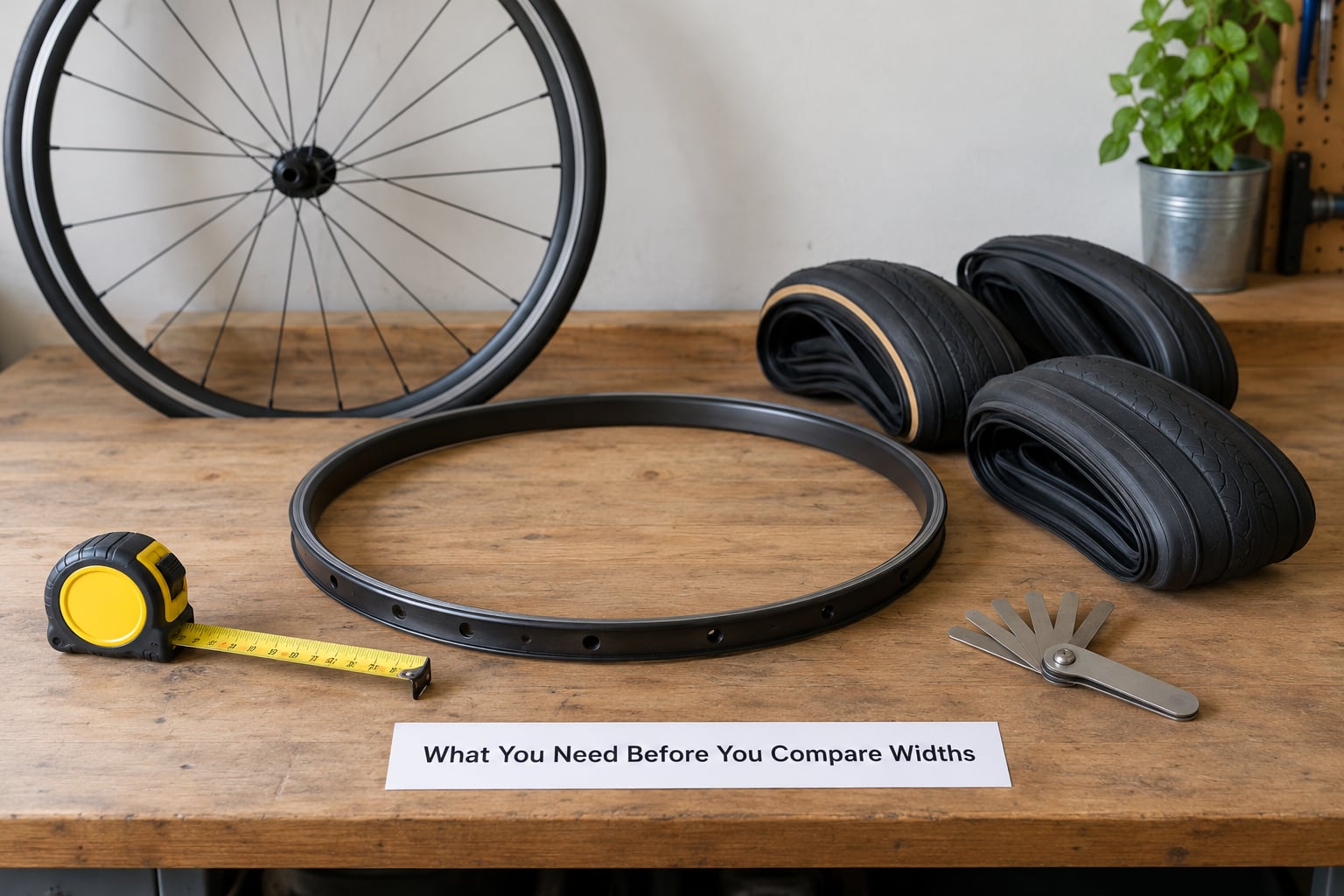
Width numbers on their own mean very little. A labeled 30mm tire can measure noticeably wider or narrower depending on the rim it sits on, so gather a few facts before you shop.
- Your current tire size — the printed width on the sidewall, plus the tire model, because casings differ.
- Rim internal width — the distance between the bead seats inside the rim, in millimetres. Wheel makers list this as external width minus a couple of millimetres, and rim brake rims are often 4mm wider at the braking surface than the internal measurement.
- Frame and fork clearance — the maximum size the manufacturer approves, usually printed near the seat tube or on the fork crown. Modern bikes commonly approve 32mm to 38mm.
- Rider and bike weight — you plus bike plus gear. This drives pressure, and pressure drives how wide a tire you need.
- Your typical terrain — smooth park roads, chip seal, patched tarmac, gravel sectors, or a mix of all four.
- Tire construction — supple casing versus reinforced, and whether your rims and tires are set up for tubeless or hookless.
Two of those deserve extra attention. Rim internal width is the number almost nobody checks, yet it decides the tire’s actual shape. And frame clearance is the one limit you cannot argue with or test around.
How to Choose Tire Width for Endurance Riding Step by Step
Step 1: Check Your Bike and Rim Limits
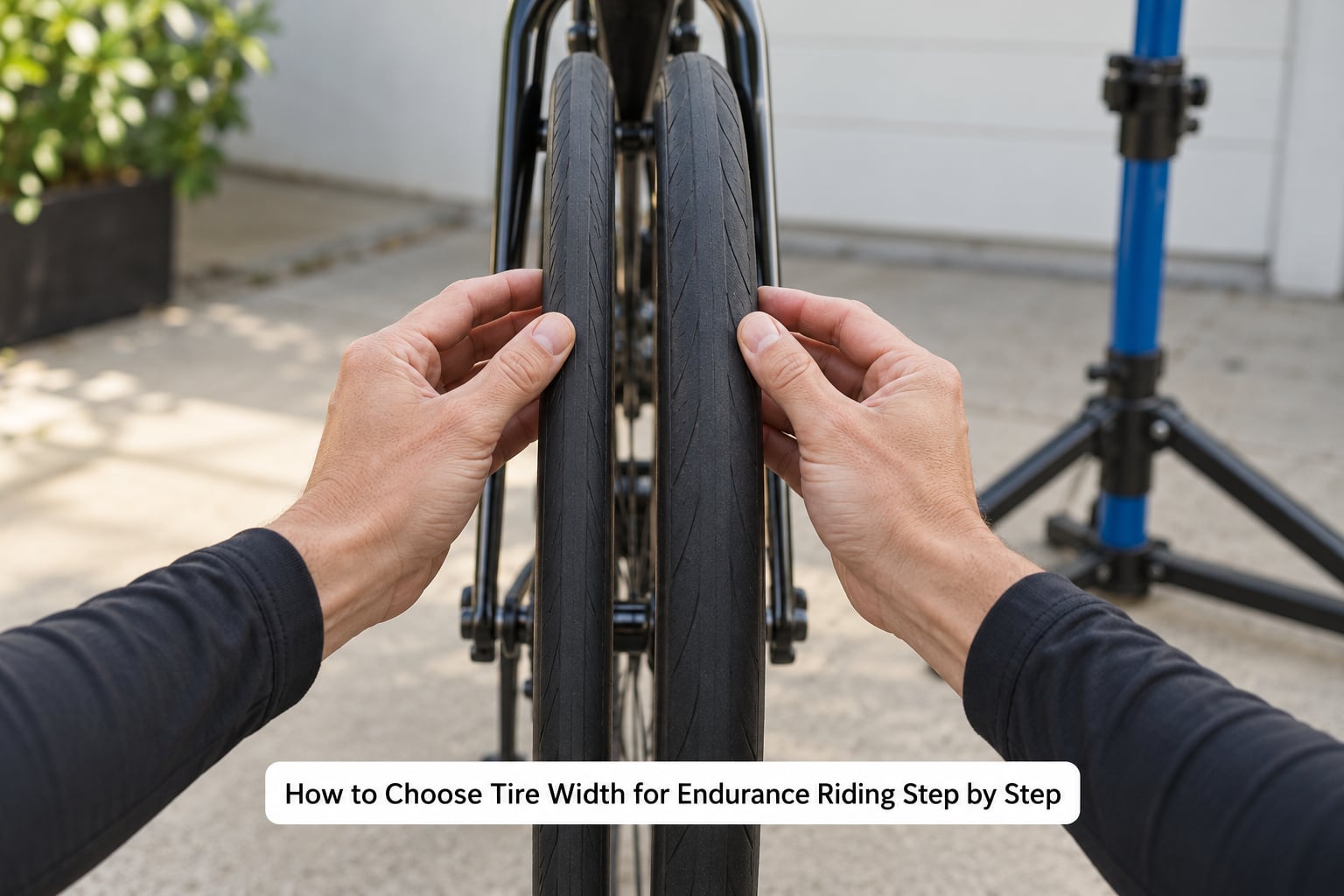
Find the maximum tire size approved for your frame and fork, then subtract a few millimetres for safety. You want visible clearance at the fork crown under load, because a tire that touches at full pressure can brush at a hard fork compression.
Next, measure the internal rim width. As a rough rule, a tire whose measured width sits around 70 to 75 percent of the rim’s internal width keeps a stable shape; go wider than that and the sidewalls bulge into a lightbulb profile that feels vague in corners. Narrower than that and the tire develops a crowned, pointy profile that skitters over rough tarmac.
So a 21mm internal rim, which is what many endurance bikes still ship with, really wants a tire around 28 to 30mm. On a 25mm internal rim, 32mm to 35mm makes more sense. Mounted on a wide rim, that same labeled tire will measure a couple of millimetres wider than the sidewall claims, which is exactly what catches people out.
Step 2: Match Tire Width to Your Riding Position
Wider tires run lower because they hold more air volume, and lower pressure means the casing deforms less on each surface defect. That deformation, sometimes called tire drop, is what you feel through the bars and saddle.
On smooth pavement a wider tire loses almost nothing and gains vibration damping. On broken surfaces the gain is dramatic, because the tire rolls over cracks instead of dropping into them. What you give up is sharpness: past a certain width, cornering feedback dulls and the bike feels slower to respond, especially out of the saddle.
So the honest answer to how wide you should go is: the widest tire you can run at a pressure that still feels planted. If your position is low and steady and you ride with your weight back, you can carry an extra few millimetres. Riders who sit up front and out of the drops usually find slightly narrower tires feel more direct.
Front and rear can differ. The front carries more of your weight through braking and steering and benefits most from grip and comfort, while the rear carries drive loads and tolerates a stiffer pressure. Running a slightly wider front than rear is a reasonable trick for rough roads, though mixed widths complicate wheel trueing and tire rotation.
Step 3: Consider Terrain and Tire Construction
Match the width to the worst surface you ride regularly, not the best one. Riders whose usual loop includes chip seal, patched tarmac or gravel sectors usually end up wider than theory suggests, because that rough surface is what erodes a day in the saddle.
Tread and casing matter as much as width. A slick file tread on smooth pavement is the fastest option, but it loses grip in wet paint lines and loose gravel. A shallow patterned tread gives up a little rolling efficiency on smooth roads and gains a lot of confidence when you have to pick a line across a wet or gritty surface. Reinforced or puncture-protective casings add sidewall and tread thickness, which can make a tire measure slightly wider and behave stiffer than the label suggests.
Casing suppleness is the other half of the equation. Riders on cycling forums consistently report that a supple casing at the same width and pressure feels noticeably smoother than a stiffer one, and that some of the perceived comfort gain people attribute to width actually comes from the casing.
One more choice changes the whole picture: tubeless versus tubes. Tubeless setups tolerate lower pressures before a tire threatens to pinch or blow off the rim, and hookless rims add a further margin because the tire is trapped between the bead hooks. If you can run tubeless safely, that flexibility is a good reason to move up in width.
Step 4: Test Before You Commit
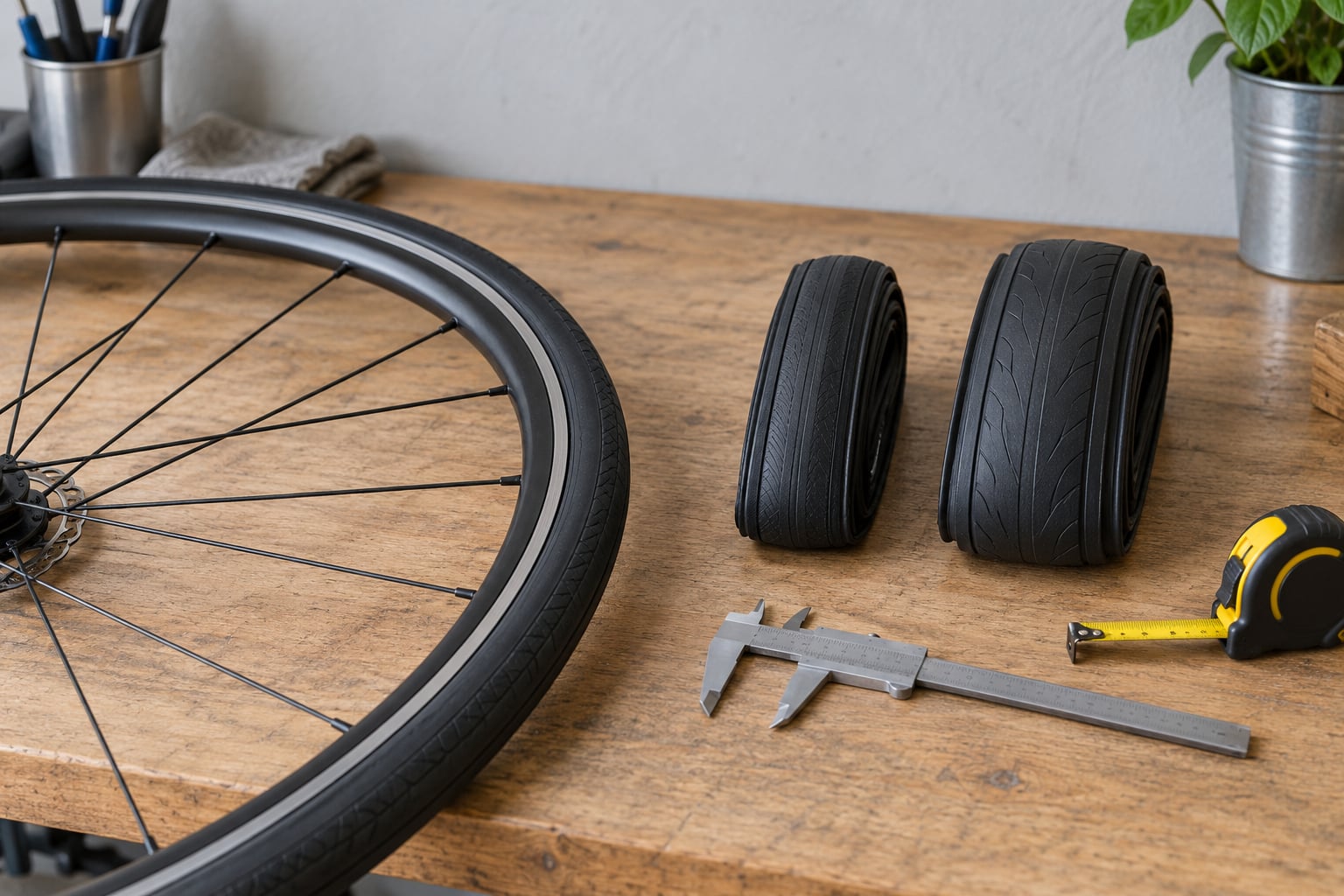
Buy two widths, or borrow one from a club mate, and run each on the same familiar route. Use the same pressure range for both so you are comparing the width, not the pressure.
On each ride, check four things: hand and saddle comfort over the first hour, confidence in a corner at moderate lean, how the bike tracks through rough patches, and whether you get a single small puncture that night. A tire that feels vague on smooth road but settled on rough road is doing exactly what you want for endurance riding.
Then watch the pressure cold, before you ride. If you lose more than a few psi overnight, or if the tire needs topping up before every ride, the casing is too stiff for the width and pressure you picked. Drop the pressure a little and retest.
Keep the width that you stop thinking about. That is usually the signal you have found the right one.
Common Mistakes That Cost Riders Comfort
Choosing by appearance. A wide tire on a narrow rim looks wrong because it bulges at the sidewall. Fix it by measuring, not by looking.
Ignoring frame clearance until the tire is on. Riders buy a wide tire, mount it, and discover it rubs the chainstay or bridge under load. Check the approved size first, and leave a few millimetres of margin.
Copying another rider’s pressure. Pressure follows rider weight, bike weight, tire width and rim width. Forum consensus agrees wider tires at lower pressures feel better, but the number that works for a 60kg rider on a 21mm rim will feel vague for an 85kg rider on the same rim.
Treating width as the only variable. A 32mm tire with a stiff casing can feel harsher than a 30mm with a supple one. Compare casings when you compare widths.
Going wider than your handling supports. If the bike feels vague, drifts in a slow corner, or you notice the front washing out on descents, step back down 2 to 4mm or add a few psi before you go wider again.
Forgetting that clearance is a combined limit. The tire, the rim width, the rim tape and the frame all have to agree. A rim built for 30mm tires will not safely take a 40mm even if the frame clears it.
A quick sanity check: if your bike will not confidently track a straight line over rough tarmac at your normal pressure, the width is wrong, regardless of what the tire chart recommends.
Frequently Asked Questions
What tire width is best for endurance riding?
For most endurance riders, 30mm to 35mm is the useful range. Wider tires run lower and damp road surface better over long hours. If your frame approves 32mm and your rim internal width is 21mm or wider, 32mm is the safe starting point. Add width only if rough surfaces are common on your routes.
How wide can I put tires on my road bike?
The frame and fork manufacturer usually prints a maximum approved size, often 32mm to 38mm on modern bikes. Stay a few millimetres under that number so the tire clears at full pressure and under fork compression. Your rim has its own limit too: a rim designed for 30mm tires should not be asked to hold 40mm.
Does a wider tire make long rides more comfortable?
Usually yes. The extra air volume lets you run lower pressure, and the casing deforms less over cracks and rough tarmac, so less vibration reaches your hands, back and saddle. The gain shows most on broken surfaces. On glass-smooth pavement the difference is small, and very wide tires can feel vague instead.
Should I run the same tire width on pavement and gravel?
You can, and many riders do. Pick the width that suits your rough-surface days, then run a higher pressure on smooth pavement and a lower one on gravel. If you ride mostly on pavement with occasional gravel sectors, a 32mm to 35mm setup with a light tread pattern covers both without changing wheels.
How do I know if my tire width is causing handling problems?
Signs include a vague or slow-turning feel in corners, front wheel drift on descents, and pressure that keeps dropping overnight. Drop back 2 to 4mm or add a few psi and ride the same route. If the bike feels planted again, the width was beyond what your position and pressure could support.
Can I choose tire width based only on rider weight?
No. Weight sets your pressure range, but rim internal width, frame clearance, terrain and riding position all matter. A lighter rider on a narrow rim still needs a tire width that suits the rim, and a heavier rider does not automatically need a wider tire. Use weight as one input alongside the physical limits of the bike.
Conclusion
Start by checking your frame, fork and rim limits, then pick the widest tire that fits with a few millimetres to spare. Match that width to the roughest surface you ride and to how steady your position is, not to a chart.
Once it is mounted, test two widths on the same route at the same pressure and keep the one you stop noticing. That habit of checking your bike rather than a recommendation is the whole answer to how to choose tire width for endurance riding, and it takes one weekend to settle.