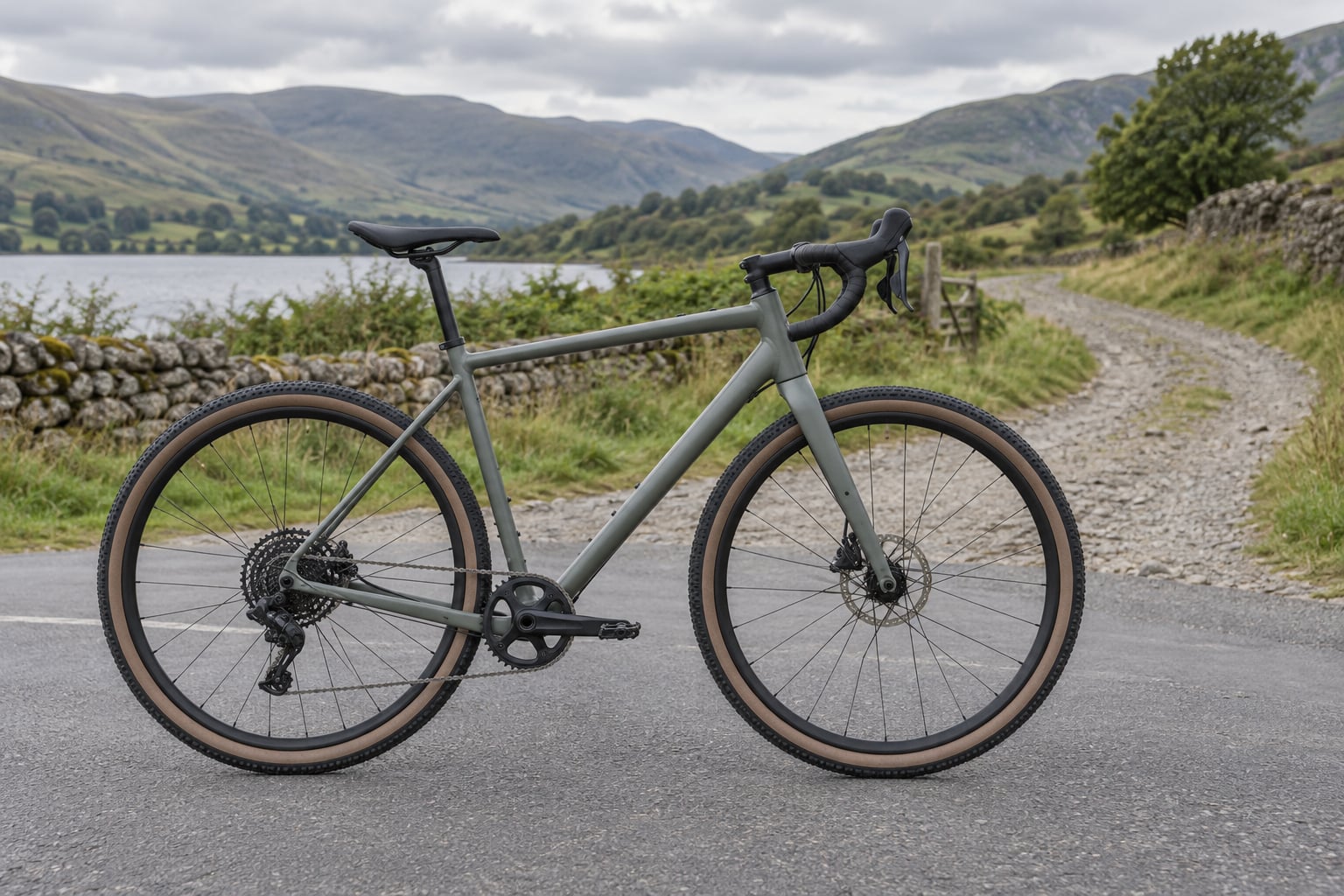
Yes, you can ride a gravel bike on the road, and plenty of riders do it as their only bike. It works well for commuting, long rides on rough asphalt, and even group rides where the pace stays moderate. The catch is that a stock gravel bike with knobbly tyres is slower than a road bike, so most riders fit faster tyres before they commit.
Here is the short version, and it is the same answer you will get in most bike shops:
- Speed: Slower out of the box. Wider tyres, heavier frames and lower tyre pressure all add rolling resistance and rotating weight.
- Comfort: Better than a road bike on broken surfaces. Wider tyres run at lower pressure and take the edge off potholes and patched asphalt.
- Gearing: Often worse for fast riding. A wide-range 1x drivetrain runs out of hard gears on descents and sprints, which is where riders say they start spinning.
I have run the same gravel frame on long tarmac loops for years, and the honest summary is that it is a comfortable, capable road bike that asks you to be a little less obsessed with average speed. This guide covers what actually changes, what the numbers look like, and when a different bike is the better buy. Last checked for 2026.
Table of Contents
- Can You Ride a Gravel Bike on the Road?
- How Does a Gravel Bike Feel on Pavement?
- What Tires Make a Gravel Bike Better for Road Riding?
- How Does Gravel Bike Geometry Affect Road Comfort?
- Can You Use Road Bike Gearing on a Gravel Bike?
- Are Gravel Bike Brakes Good on the Road?
- When Is a Gravel Bike Better Than a Road Bike?
- How to Set Up a Gravel Bike for Pavement
- Frequently Asked Questions
- How much slower is a gravel bike than a road bike on pavement?
- What are the best gravel tyres for riding on the road?
- Is a 40mm tyre enough for both road and gravel?
- Can you ride slick tyres on gravel?
- Why does my gravel bike brake rub after fitting road tyres?
- Can a gravel bike keep up on a fast group ride?
- Conclusion
Can You Ride a Gravel Bike on the Road?
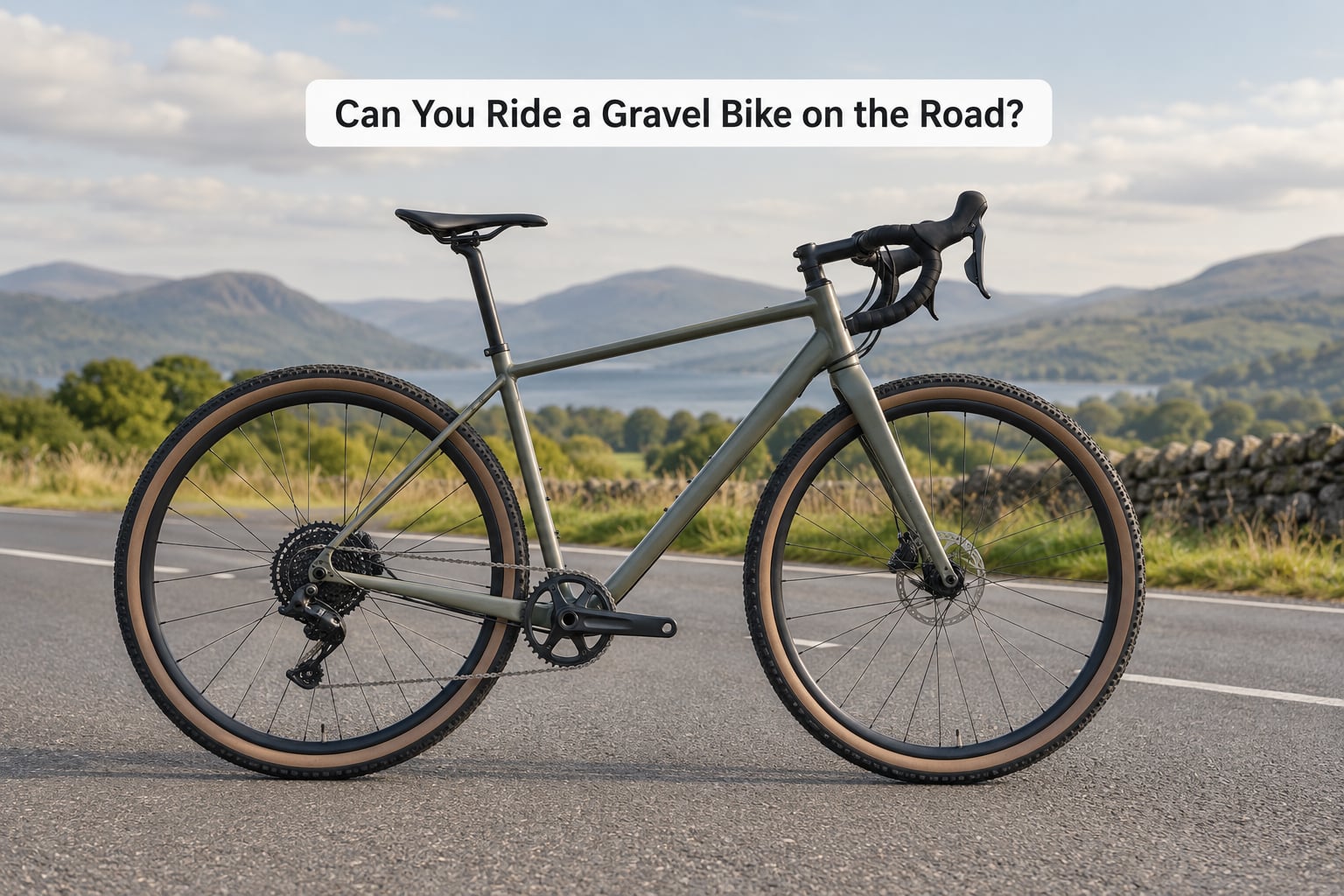
A gravel bike is a drop-bar bike built for mixed surfaces, and every part of that design still works on tarmac. Nothing about the category prevents road riding. The frame, brakes, drivetrain and position are all road-legal and road-proven.
What you are riding is a bike that traded some aerodynamic efficiency for grip and durability. Typical gravel bikes carry 40 to 50mm tyre clearance, relaxed geometry, wider handlebars and mounting points for racks, fenders and bags. A road bike has none of that room or stability.
So the answer is yes for anyone riding at a moderate pace on a bike built for mixed terrain. The answer becomes qualified only when the ride is a fast club loop, a race, or a criterium where group speed sits above 30 km/h.
How Does a Gravel Bike Feel on Pavement?
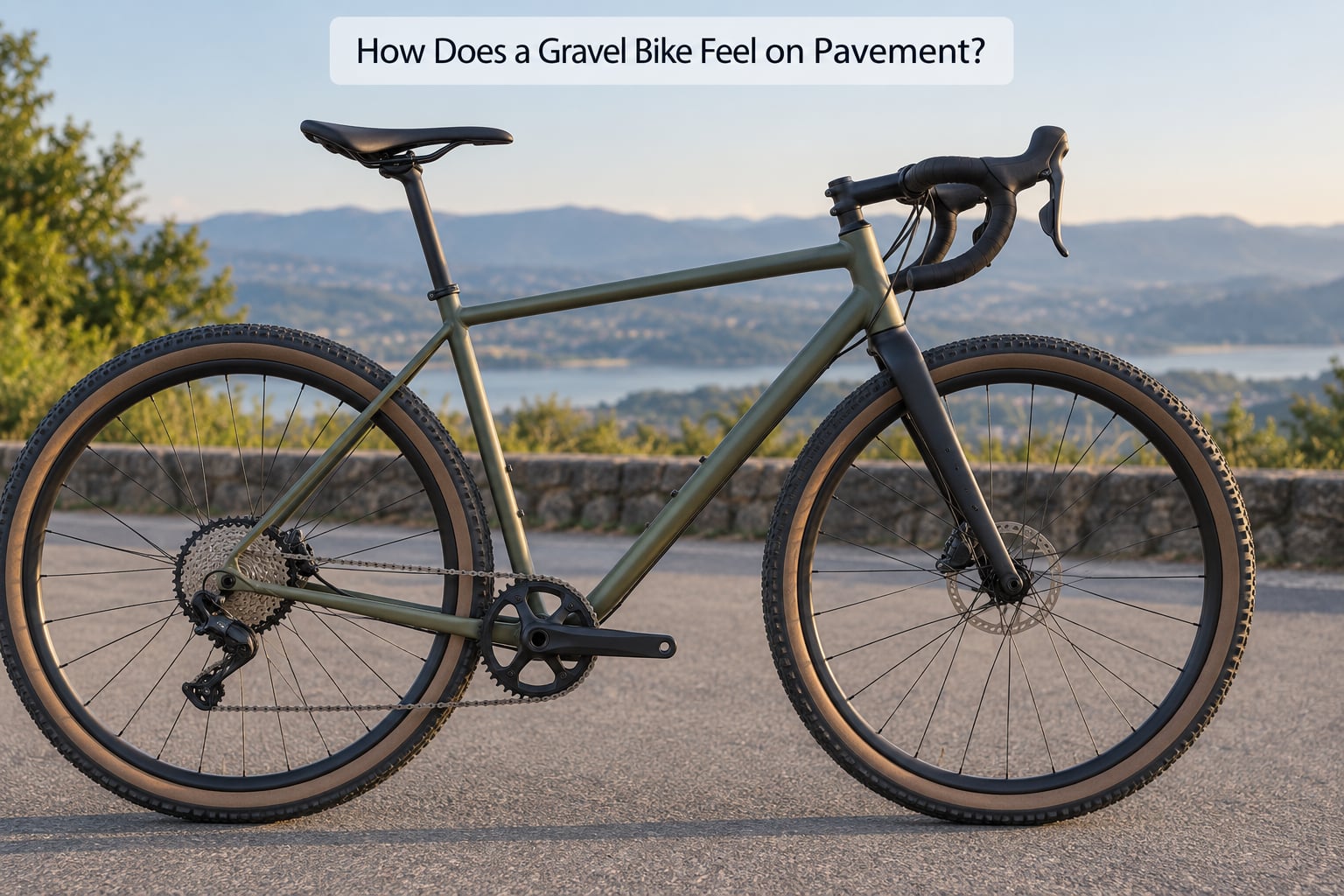
Gravel bikes feel calmer and heavier on the road than a race road bike. The longer wheelbase resists twitchiness at speed, the slacker head angle keeps the front end settled, and the lower bottom bracket drop removes a bit of steering sharpness. You will notice this most on descents, where the bike wants to go straight instead of reacting to every small input.
Acceleration is where the difference is most obvious. More mass in the wheels takes effort to spin up, and harder tyres deform more with each stroke. Braking is usually stronger than a road bike’s, since gravel frames run larger rotors and often hydraulic discs.
| What changes | What you feel on pavement | What to do about it |
|---|---|---|
| Tyre width | Slower acceleration, softer ride | Fit 35 to 42mm for road use |
| Tyre pressure | Wobbly or draggy if too soft on tarmac | Add 10 to 15 psi over gravel pressure |
| Wheelbase and head angle | Stable and calm, less agile | Nothing. This is a feature on rough roads |
| Handlebar width and flare | More control, more comfortable hands | Fine as-is for endurance riding |
| Stack and reach | More upright, less aero, easier to see | Adjust saddle height before bar position |
| Drivetrain | Large gaps, may spin out on descents | Consider a closer-ratio cassette or 2x |
| Rotors and mounts | Strong braking, extra weight | Nothing to change |
| Frame weight | Slower on climbs | Fit fast tyres; upgrade wheels before frame |
One rider on r/cycling described it neatly, saying a gravel bike with good road tyres is pretty much as fast as a road bike. His own numbers tell a more careful story: 25 to 27 km/h solo averages on a Trek Checkpoint SL5 with 32mm Continental GP5000 AS TR tyres, rising to 29.5 km/h on a road bike over the same kind of route.
That gap of roughly 2 to 4 km/h on a solo ride is the honest figure to hold on to. It matters on a long ride where it eats into your pace. On a commute or a Sunday wander, it barely registers.
What Tires Make a Gravel Bike Better for Road Riding?
Tyres are the single biggest lever. A gravel bike on 40mm knobbly tyres loses a lot of energy to tread blocks squirming on smooth tarmac; the same bike on 38 to 42mm semi-slicks gains back most of it. Riders on r/cycling regularly repeat the same line, that putting road tyres on a gravel bike gets you most of the way there.
| Tread type | Pavement speed | Comfort and grip | Best use |
|---|---|---|---|
| Slick | Fastest | Least puncture protection, poorest on loose gravel | Dry tarmac only |
| Semi-slick | Fast | Small shoulder knobs handle dust and hardpack | Mixed road and gravel |
| Full knobbly | Slowest | Best grip on loose or rooty surfaces | Gravel racing and rough roads |
Tread pattern matters less on tarmac than casing. A supple casing at a sensible pressure rolls faster and feels smoother than a stiff casing with a slick pattern, because the tyre deforms around bumps instead of bouncing off them. Panaracer SK is often praised on forums as fast on both surfaces, and the Schwalbe G-One RS Pro and Pirelli Cinturato Gravel H sit in a similar middle ground.
On pressure, add roughly 10 to 15 psi to what you run in the dirt. One commuter on a road.cc comment thread with about 50km of daily riding runs 38mm tubeless at higher-than-usual pressure for exactly this reason, finding lower settings felt draggy on pavement.
Watch for brake rub after a swap. Slick and semi-slick tyres are quieter and thinner at the shoulders, and a rotor that sat fine with knobbly tyres can start ticking on a climb. Re-centre the caliper, confirm the wheel sits flat in the dropouts, and check the rotor is not bent.
How Does Gravel Bike Geometry Affect Road Comfort?
Geometry is where most of the comfort advantage lives, and it also explains why a gravel bike will never feel quite like a race road bike on smooth tarmac.
Stack and reach do most of the talking. A gravel bike usually has more stack, meaning the handlebars sit higher, which gives you a clearer view of traffic and takes pressure off your hands and neck over long hours. Reach is often shorter for the same reason, giving you a more upright position than a race road bike.
The longer wheelbase and slacker head tube angle add stability. On a bad road surface, a twitchy front end is genuinely tiring, and a gravel bike settles into broken tarmac rather than fighting it.
Two side effects are worth naming. The upright position produces more aerodynamic drag at speed, and the lower bottom bracket drop removes some of the ground clearance for cornering, so lean angles need a little care at pace.
If the bike feels stretched or cramped on long pavement rides, adjust the saddle height and setback before touching the bars. Stack is not the comfort problem people expect; saddle position usually is.
Can You Use Road Bike Gearing on a Gravel Bike?
You can, and for fast road riding it is often the change that matters most after tyres. The issue is not that a gravel drivetrain cannot go fast. It is that most gravel setups prioritise climbing range, which leaves a large gap at the top.
That gap is why riders report spinning out. On a long descent or a sprint, a 1x setup with a 40 to 52 tooth cassette runs out of hard gears, so you spin at a silly cadence or coast. The fix depends on how you ride.
- Mostly road, moderate pace: Keep 1x. Emily Tillett on road.cc reports riding one gravel bike year-round on slick tyres with a 1x setup and never running out of gears on the club run.
- Fast group rides and sprints: Fit a closer-ratio cassette with smaller gaps, or move to 2x. More chainring options beat more range when you ride fast.
- Steep local climbing: Keep or widen the range. Gearing you can climb in beats gearing you can sprint in.
The number that predicts trouble is gear inches, which is chainring teeth divided by cog teeth. Roughly 60 gear inches covers most flat-out road riding; below about 50 you will be spinning comfortably on the flat. If your top gear sits near 50 and your rides are fast, you will feel it.
Are Gravel Bike Brakes Good on the Road?
Gravel bike brakes are among the best reasons to ride one on the road, and most riders are pleasantly surprised by them. Disc brakes are now standard across the category.
Hydraulic discs give excellent modulation, meaning you can feather the lever to a stop rather than needing a firm grab. They also lose very little performance in the rain, which matters on a winter commute. Mechanical discs are easier to service at home and have improved a lot, but they still need more hand effort than hydraulics on long descents.
Rotor size is the other lever. Larger rotors build more heat before fading, and gravel frames usually run 160 to 180mm rotors at the front versus a road bike’s more typical 140 to 160mm. Rotor choice also affects pad life: the aggressive metal pads common on gravel setups chew through road-oriented pads quickly.
One caution: wide gravel tyres on smooth tarmac in heavy rain give slightly less predictable braking than narrow slicks on a hot, dry road. Leave more margin, especially cornering in a straight line.
When Is a Gravel Bike Better Than a Road Bike?
A gravel bike wins on the road when the road is not very good, when you carry things, or when one bike has to do several jobs. It loses when the only goal is speed on smooth tarmac.
Choose gravel when: you ride rough urban roads full of potholes and patched asphalt; you commute with panniers or need rack and fender mounts; you want one bike for tarmac, towpaths and the odd gravel canal route; you ride through winter and value stability and durability; or you do long endurance rides where comfort matters more than average speed.
Choose a road or all-road bike when: your routes are smooth and you chase group pace; you race or do criteriums; you want the lowest possible weight; or you ride on the road more than around 80 percent of the time. An all-road or endurance road bike is the middle option, with wider clearance and mounts than a race bike but slimmer tyres and less weight than gravel.
That 80 percent threshold is a rider heuristic, not a rule, and it is close to what experienced riders say on forums. One summary from r/gravelcycling puts it directly: if you want to feel fast and go fast on the road, a gravel bike with road tyres will not do it.
How to Set Up a Gravel Bike for Pavement
Before a fast pavement ride on a gravel bike, work through this list in order.
- Fit the right tyres. Semi-slicks at 35 to 42mm are the usual choice for road-first riding. Keep knobbly tyres if the route includes loose gravel.
- Set pressure for tarmac. Add 10 to 15 psi over your gravel setting and check by feel. If the bike feels vague or wobbly in fast corners, it is too soft.
- Check saddle height and setback. Most fast-road discomfort on a gravel bike is fit, not frame. Make this adjustment before anything else.
- Lube the chain properly. Wet lube for commuting in winter, wax or dry lube for dry fast riding. A dry, skipping chain wastes more watts than any tyre choice.
- Verify the brakes. Spin the wheel, check for rub, and confirm the rotor is straight. Bleed or re-centre the calipers if it ticks.
- Inspect the drivetrain. Check chain wear, look for a bent hanger after rough rides, and make sure the cassette is clean.
- Run a short shakedown loop. Ten minutes of local riding catches rub, pressure and fit problems before you are 40km from home.
Frequently Asked Questions
How much slower is a gravel bike than a road bike on pavement?
With stock 40mm knobbly tyres, expect to lose real speed on smooth tarmac, particularly above 30 km/h. Riders commonly log 25 to 27 km/h solo averages on a gravel bike with road tyres, against 29.5 to 31 km/h on an equivalent road bike. Fitting semi-slick tyres and raising pressure closes much of the gap, though it never fully disappears on fast road rides.
What are the best gravel tyres for riding on the road?
Semi-slick tyres at 35 to 42mm are the most practical choice for pavement-first riding, because the small shoulder knobs still work on hardpack and dust while the centre rolls fast. Pair them with a supple casing and run 10 to 15 psi more pressure than you would on loose gravel. Full slicks are faster still but puny on anything but dry tarmac.
Is a 40mm tyre enough for both road and gravel?
For most riders, yes. A 40mm tyre is wide enough to handle gravel, hardpack and rough roads with real comfort while remaining rideable on tarmac at sensible pressures. Riders splitting time evenly between surfaces rarely need wider than 45mm. Going wider adds grip and comfort on rough ground but costs speed and weight on the road.
Can you ride slick tyres on gravel?
You can, on hardpack, smooth gravel and dry dirt roads. Slicks roll fast on everything hard but lose grip quickly on loose or deep gravel, and you will be picking up punctures far more often. Semi-slicks are the safer middle ground. If your routes are mostly pavement with short gravel links, a slick or semi-slick setup works well.
Why does my gravel bike brake rub after fitting road tyres?
Because the new tyres are narrower at the shoulders than the knobbly ones, and the rotor sits slightly closer to the pad. Check that the wheel is seated flat in the dropouts, straighten the rotor with a truing tool, and re-centre the caliper so both pads sit evenly. A small pad clearance adjustment usually fixes a ticking rotor.
Can a gravel bike keep up on a fast group ride?
It depends on your gearing and the pace. A gravel bike with a wide-range 1x drivetrain will run out of hard gears on fast descents and sprints, and riders report spinning at high cadence there. Riders with closer-ratio cassettes or a 2x setup keep up without drama. Above roughly 30 km/h on smooth tarmac, tyre choice matters more than the frame.
Conclusion
A gravel bike is a genuinely good road bike, provided you fit semi-slick tyres, set tarmac-appropriate pressure, and accept a small speed penalty on fast, smooth stretches. That trade is worth it for anyone who carries gear, rides rough roads, or wants one bike to cover tarmac, gravel and winter training.
Start with tyres, then check the saddle position, then look at gearing. If you ride smooth tarmac more than about 80 percent of the time and chase group speed, an all-road or endurance road bike is the better buy. Otherwise, the gravel bike you already own is probably faster than you are getting out of it.