A good recovery meal after a long ride does two jobs at once: it puts carbohydrates back into depleted muscles and supplies enough protein to help those muscles repair. Drink plenty of fluid with it, keep the cooking time under fifteen minutes, and eat to your appetite rather than to a rigid formula.
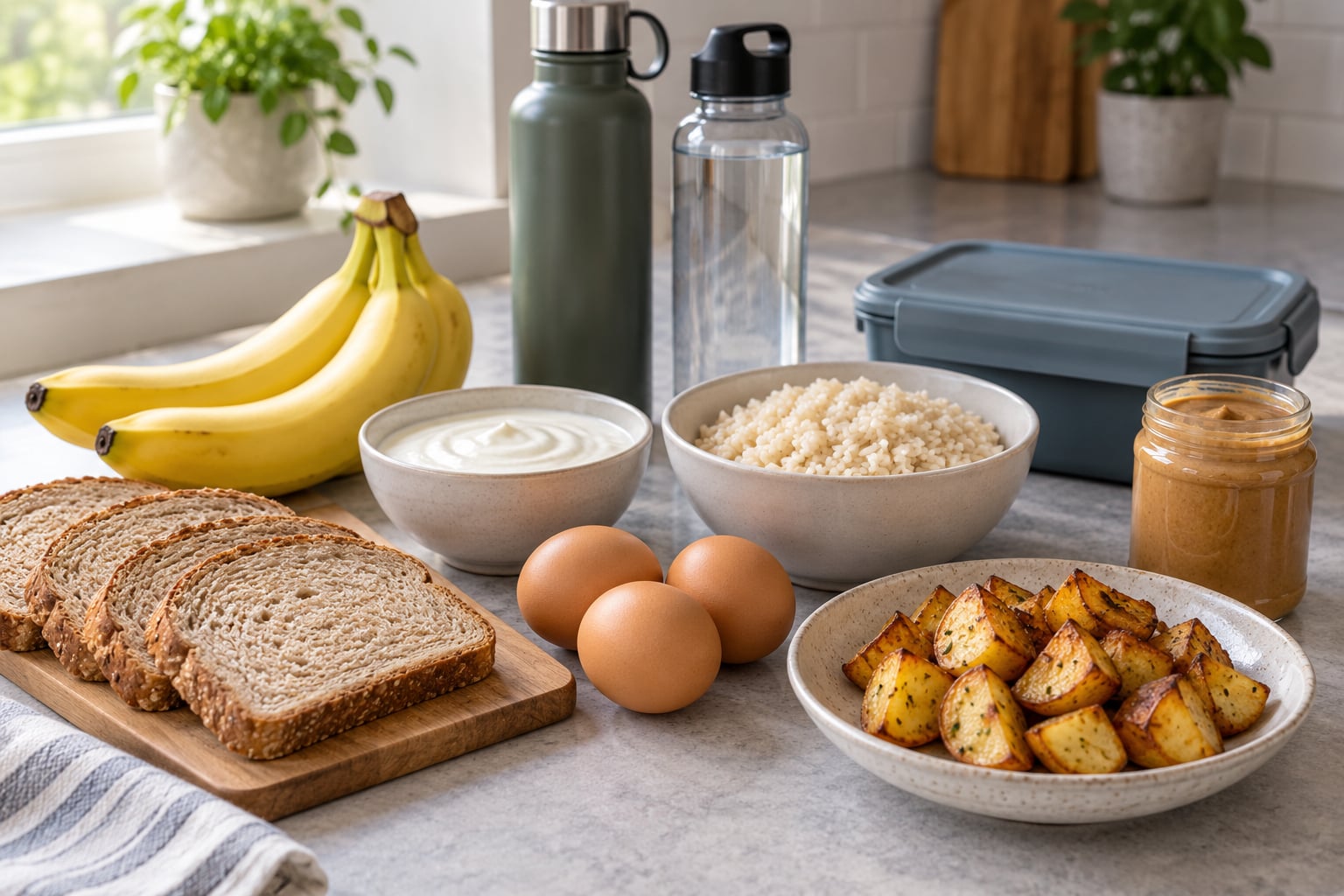
Riders get into trouble when they treat recovery food as a punishment or a science project. Most of us finish a century too tired to chop anything, so the meals below use eggs, rice, potatoes, yogurt, bread and nut butter — things most kitchens already have. Swap anything you dislike.
This guide covers the practical side: what to have on hand, how to assemble a plate in the time it takes to change out of your kit, and how to keep the food safe when it travels with you.
Table of Contents
- What You Need
- Quick carbohydrates
- Protein sources
- Drinks
- Container and timing
- Step-by-Step
- Choose Your Immediate Refuel
- Add Protein and Satisfying Foods
- Rehydrate With the Meal
- Make a Realistic Recovery Meal
- Common Mistakes
- Food Safety for Road-Ride Recovery
- Frequently Asked Questions
- How long should I wait to eat after a long ride?
- How much protein and carbohydrate do I need after a long ride?
- Do I need a commercial recovery drink if I eat a real meal?
- What can I eat after a long ride if I do not want dairy?
- What should I eat the night before a double or back-to-back ride?
- Conclusion
What You Need
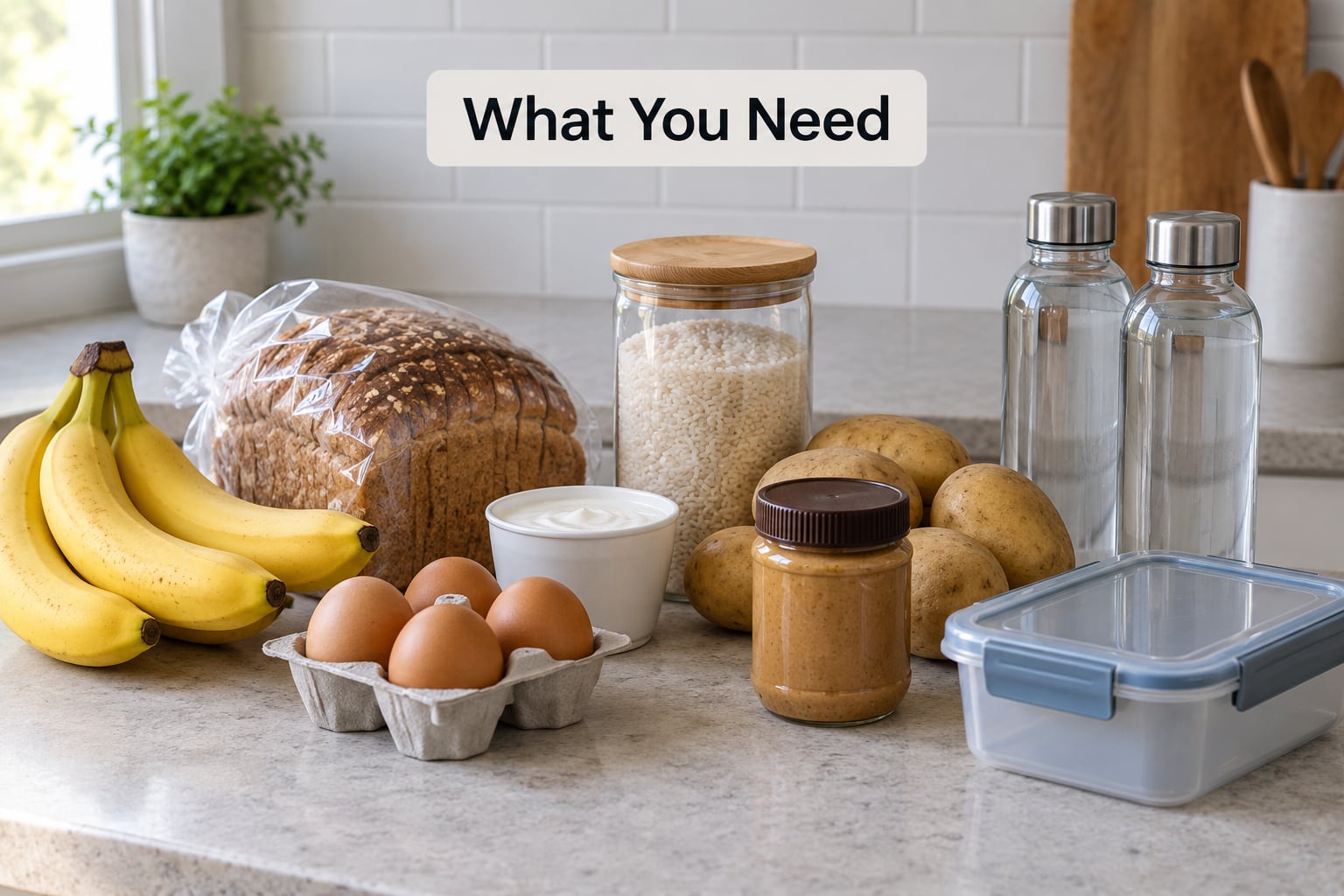
You need carbohydrate sources that digest quickly, a protein source, something to drink, and one container that survives a pannier. Specialty sports food is fine, but nothing on this list requires it.
Quick carbohydrates
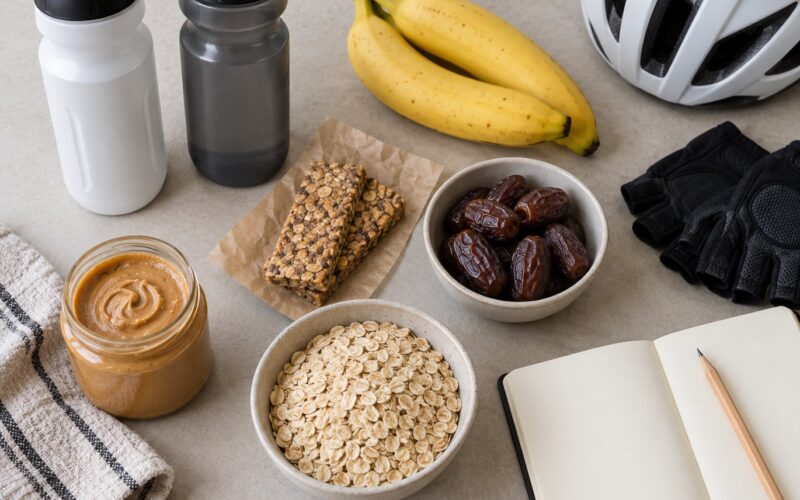
Bread, white rice, rolled oats, bananas, bagels, jam and honey cover most of the fast-carbohydrate end. Potatoes, sweet potatoes and pasta sit slightly slower, which suits a meal you eat over an hour rather than in five minutes.
Two bananas, a slice of bread with jam, or a cup of cooked rice all give you roughly 30 to 50 grams of carbohydrate per serving. Riders often underestimate how much carbohydrate a five-hour ride drains.
Protein sources
Eggs, Greek yogurt, milk, cheese, chicken, tuna, beans, lentils and tofu all work. Nut butter adds both protein and fat, which slows digestion slightly but keeps hunger away longer.
Aim for a portion the size of your palm. Three eggs, a large pot of yogurt, or a tuna sandwich roughly covers what a hard ride asks for.
Drinks
Plain water handles most rides. Add an electrolyte drink or a pinch of salt to water when you rode in heat, sweated heavily, or finished with dry mouth and dark urine. A glass of chocolate milk appears again and again as the homemade favourite in recovery threads on r/ladycyclists, and it works as a drinkable carbohydrate-plus-protein top-up while you make dinner.
Container and timing
Bring one leakproof container you can wash on the ride or the night before. Pack a second serving if you know you will not reach a kitchen for two hours. Riders who get home late with nothing in the house end up ordering takeaway, and grease-heavy meals after a long ride are the most common regret riders report.
Step-by-Step
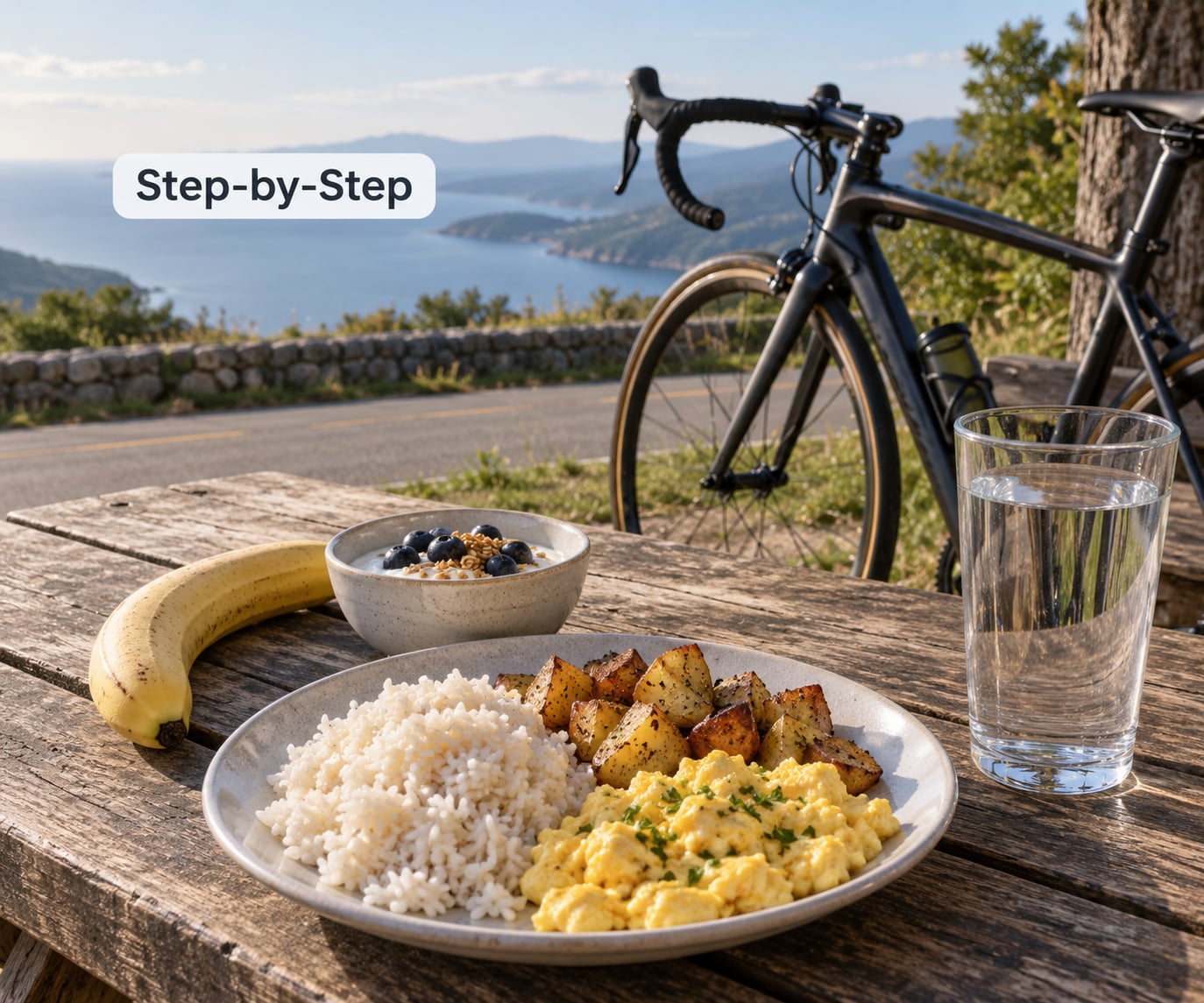
Build the meal in this order: drink, get carbohydrates in quickly, add protein, then eat a normal-sized plate when hunger arrives. The order matters because fluid alone fixes the thirst that suppresses your appetite.
Choose Your Immediate Refuel
Start with an easy carbohydrate within the first half hour. A banana, a handful of gummy bears, half a bagel or a bar works while you are still on the bike or sitting on a kerb removing your wheels.
During that same window, add 20 to 40 grams of protein. For an 80 kg rider, that is roughly three eggs, a large tub of Greek yogurt, or a scoop of protein powder blended with milk.
Then let appetite catch up. Cortisol rises during a hard effort and suppresses hunger signals, so many riders feel nothing for an hour or two and skip the meal entirely. Eat a small amount anyway, then eat properly once hunger returns.
Add Protein and Satisfying Foods
Carbohydrate alone refuels you but does little for muscle repair. Pairing the two works better, and everyday foods do the job without a shaker bottle.
- Eggs on toast with jam: about 20 grams of protein and 45 grams of carbohydrate
- Greek yogurt with banana and honey: roughly 20 grams of protein, 60 grams of carbohydrate
- Rice with scrambled eggs and a banana: easy to scale for several riders
- Peanut butter on a bagel with a glass of milk
- Tuna or bean salad in a sandwich, made the night before
Sweet potato shows up again and again as a favourite carbohydrate on gravel rides, and rice works just as well with a protein on top. A mixed grill platter with rice is the classic order in recovery threads on r/cycling, and nothing about the basic principle is different.
Rehydrate With the Meal
Drink steadily through the meal rather than gulping at the end. Replacing roughly 100 to 150 percent of your sweat loss over the following hours restores blood volume, and the easiest way to work out your own figure is to weigh yourself before and after a ride in normal kit: every kilogram lost represents roughly a litre of fluid.
Ordinary water is often enough after a cool-weather two-hour ride. Sodium matters more after hot days, doubles and centuries, or when you notice salt crust on your kit. Add an electrolyte drink, or salt food and a glass of water together.
You do not need a recovery drink if you are eating a proper meal within an hour. Riders on r/ladycyclists ask this repeatedly, and the honest answer is that food and fluid cover the same ground once a real plate is involved.
Make a Realistic Recovery Meal
Match the meal to how long you were out and where you are eating.
- After a one to two hour ride: eggs on toast and a banana with a large glass of water. No cooking required.
- After a three to four hour ride: a bowl of rice with fried eggs, a banana, and yogurt afterward. Roughly 80 grams of carbohydrate and 25 grams of protein.
- After a century: a full plate built on rice or potatoes, a palm-sized protein, cooked vegetables, and a second serving of carbohydrate. Keep fat moderate; greasy food sits badly after that much volume.
- Eating away from home: a sandwich with meat, cheese or nut butter, a bag of chips, a banana, and a bottle of electrolyte drink. Portable, no utensils.
- Riding again tomorrow: repeat the carbohydrate at dinner, add a protein portion, and keep a snack within reach all evening. Most of the refuelling happens at the second meal, not the first.
Common Mistakes
Riders repeat the same handful of errors. Each has a simple fix.
Relying only on a sports drink. A drink gives you fluid and carbohydrate but little protein, and it rarely contains enough carbohydrate on its own. Add real food within the hour.
Choosing a meal with almost no protein. Bread, pasta and potatoes alone refill glycogen but leave repair work undone. Add one clear protein source.
Waiting for hunger that never arrives. Hard efforts suppress appetite. Eat a small portion by the clock and let the main meal come later.
Overeating to compensate. Riders on r/cycling joke about fried chicken and ice cream after big rides, and the guilt cycle that follows is real. Match the size of the meal to the ride rather than to the effort spent mentally.
Delaying everything until nightfall. If you finish at midday and eat at eight, you spent most of the day without fuel. Eat a portion first, a proper meal second.
Skipping food and replacing it with alcohol. A beer after a century costs you fluid, adds no carbohydrate, and slows recovery. Have it after the meal, not instead of it.
Food Safety for Road-Ride Recovery
Recovery food is often eaten outdoors, in warmth, without a fridge, so handle it carefully. Wash your hands before preparing anything, and keep raw meat, poultry and fish separate from fruit and cooked food in your cooler.
Cook to the safe minimum internal temperatures: 165°F (74°C) for poultry, 160°F (71°C) for ground meat, and 145°F (63°C) for whole cuts of meat and fish. Carry an instant-read thermometer if you cook on the road.
Transport cold food with ice packs in an insulated container, and refrigerate anything perishable within two hours, or one hour when the day is above 90°F (32°C). Rice cooked in the morning is a common culprit, so cool it quickly and chill it rather than leaving it in a car boot until evening.
If in doubt about a container that has sat warm for hours, throw it out. The cost of a new sandwich is nothing next to a ruined afternoon.
Frequently Asked Questions
How long should I wait to eat after a long ride?
Aim to start eating within about 30 minutes and finish a normal meal within two hours. You do not need to hit an exact minute; the useful part is not leaving a five-hour ride empty until dinner. If hunger is absent, eat a small carbohydrate-plus-protein portion anyway and let the bigger meal come later.
How much protein and carbohydrate do I need after a long ride?
Most riders do well with 20 to 40 grams of protein and 60 to 90 grams of carbohydrate in the first hour, then a second similar serving at the next meal. Scale carbohydrate to your body weight and ride length: a three-hour ride needs more than an easy ninety-minute spin, and a century more again.
Do I need a commercial recovery drink if I eat a real meal?
Usually not. A recovery drink mainly delivers fluid, carbohydrate and a little protein quickly, and a plate of rice with eggs plus a large glass of water covers the same ground within the hour. Drinks earn their place when you have no kitchen, cannot eat solid food, or need a top-up mid-afternoon.
What can I eat after a long ride if I do not want dairy?
Skip yogurt, milk and chocolate milk and lean on eggs, tofu, beans, lentils, chicken, tuna, nut butter and soy or pea milk. A tofu scramble with rice, or peanut butter on a bagel with fortified soy milk, covers the same carbohydrate and protein targets without dairy.
What should I eat the night before a double or back-to-back ride?
Eat normally rather than loading up. A carbohydrate-rich dinner with a palm-sized protein portion sets you up, and keep breakfast familiar. On the day, eat a familiar carbohydrate meal within a few hours of the start, then repeat food during the ride at the rate that worked in training.
Conclusion
Start with fluid, then eat an easy carbohydrate-plus-protein meal within about half an hour. After that, size the plate to your hunger, the length of the ride and the weather, and repeat the carbohydrate at your next meal. Riders managing a medical condition, an injury or a specific weight goal should talk to a doctor or a registered dietitian rather than following a generic gram target.