Knowing how to eat enough calories as a cyclist comes down to one habit: knowing what you burned, then eating to match. Most riders who struggle with this aren’t lacking discipline, they’re carrying a normal appetite into a five-hour day in the saddle. This plan gives you a starting number, a pre-ride meal, an hourly fuel routine, and a way to check whether it worked on your next ride.
This is general information, not a personal prescription. If you’re managing diabetes, a weight condition, a history of disordered eating, or a health issue that affects appetite and digestion, your targets belong with a registered dietitian or your doctor.
Table of Contents
- What You Need
- Step-by-Step: Build Your Cycling Calorie Plan
- 1. Estimate Your Starting Calorie Needs
- 2. Eat a Supportive Meal Before Riding
- 3. Fuel Every Part of a Long Ride
- 4. Pair Food With Hydration
- 5. Refuel After the Ride
- 6. Check and Adjust for Your Next Ride
- Common Mistakes
- Frequently Asked Questions
- How many calories should a cyclist eat per day?
- How many calories does a professional cyclist burn?
- How many carbs per hour should I eat while cycling?
- How do I stop losing weight while cycling?
- How many grams of carbohydrate per kilogram of body weight do I need?
- Do I need to eat more on rest days after a big ride?
- Conclusion
What You Need
Before you plan a single snack, you need four pieces of information. None of them require an expensive gadget, and all four come from data you already have.
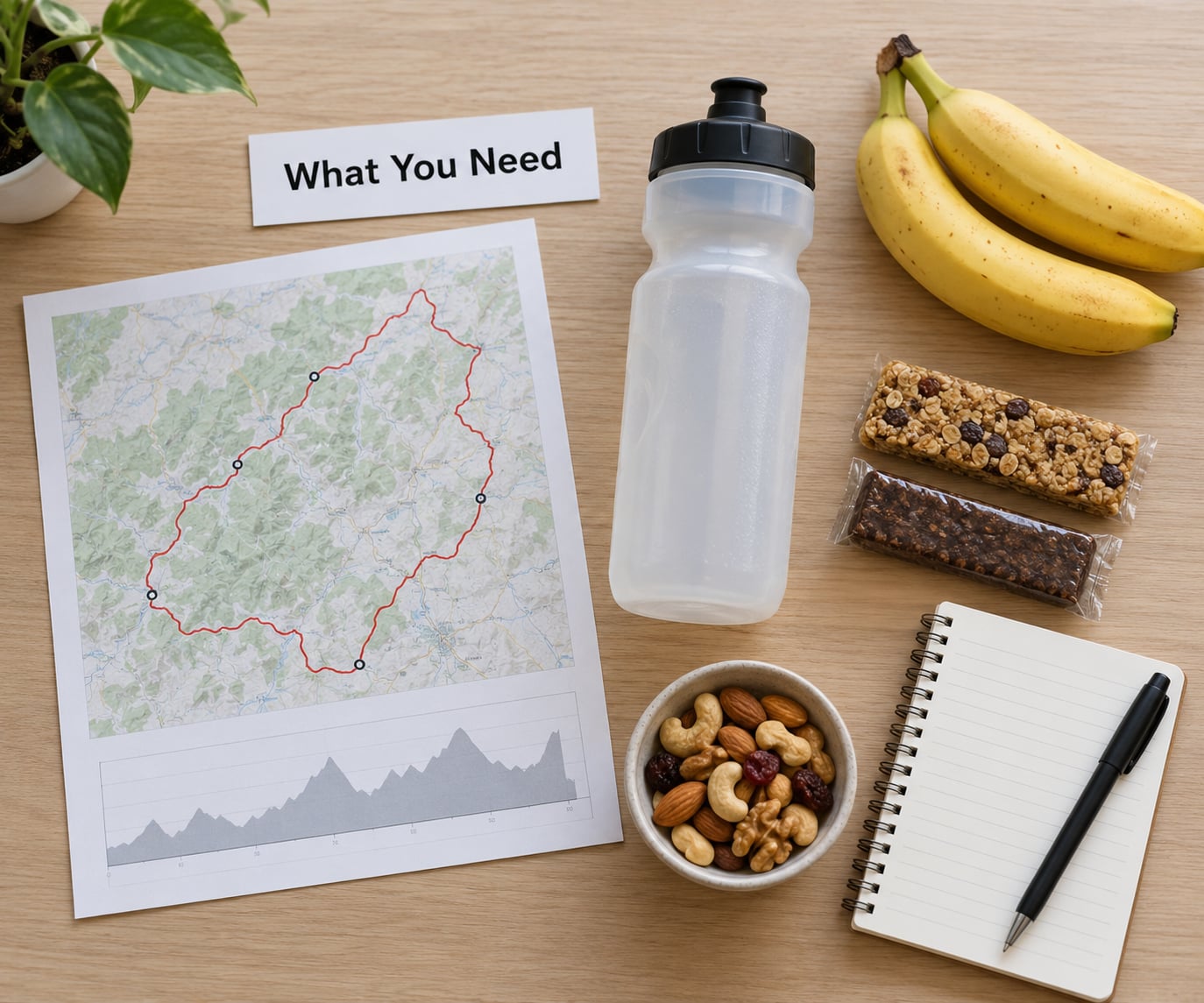
Ride duration. How long you’ll actually be out, door to door, not your planned ride time. The difference between a two-hour and a five-hour ride is roughly 1,500 kcal of extra demand, which is a bigger lever than anything you do with food choice.
Your body-weight trend. Weigh yourself the same way three or four mornings a week, ideally after the toilet and before food. A two-week drift of one or two percent tells you far more than a formula, because it reflects what you actually absorbed rather than what you intended to absorb.
Your usual meal pattern. Write down a normal weekday of eating for three days. Most riders are already eating close to their needs before training. That number is your baseline, and the ride sits on top of it.
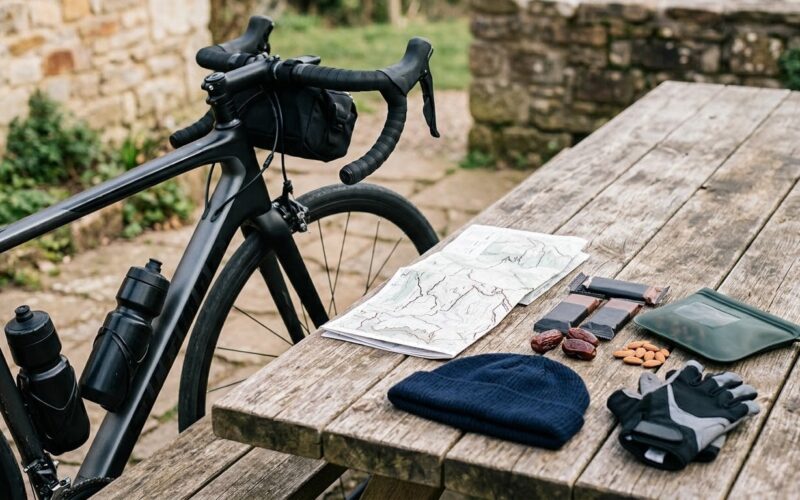
Portable food and a recording method. A phone note is genuinely enough. So are two bottles, a snack box that fits in a jersey pocket, and a habit of eating on a timer rather than on hunger.
Step-by-Step: Build Your Cycling Calorie Plan
1. Estimate Your Starting Calorie Needs
Start with maintenance calories you already meet on a normal non-riding day, then add the ride. A rough on-bike figure most riders land on is 500 to 750 kcal for a full hour of solid riding, 250 to 400 kcal for a gentle hour, and close to zero for a genuinely easy spin. Duration, body weight and average power all move that number, and no calculator will nail it for you.
Treat the estimate as a first guess only. Hunger during the ride, the energy crash in the second hour, a rising resting heart rate, poor sleep, and a downward weight trend are all more trustworthy signals than arithmetic. If you finish a long ride feeling like you worked hard and recovered normally, the number was adequate, whatever it said.
For a worked example, a 70 kg rider doing a five-hour Saturday ride at moderate effort lands near 2,800 kcal on the bike. Add roughly 2,300 kcal of ordinary eating on a non-riding day and the day calls for around 5,100 kcal. Pro riders eat in that band, though not because the numbers come naturally to everyone.
2. Eat a Supportive Meal Before Riding
Pre-ride fuel matters most when you’re riding early. A meal two to three hours ahead, built around carbohydrate with a little protein and modest fibre, gives you glycogen to start and keeps you from arriving hungry.
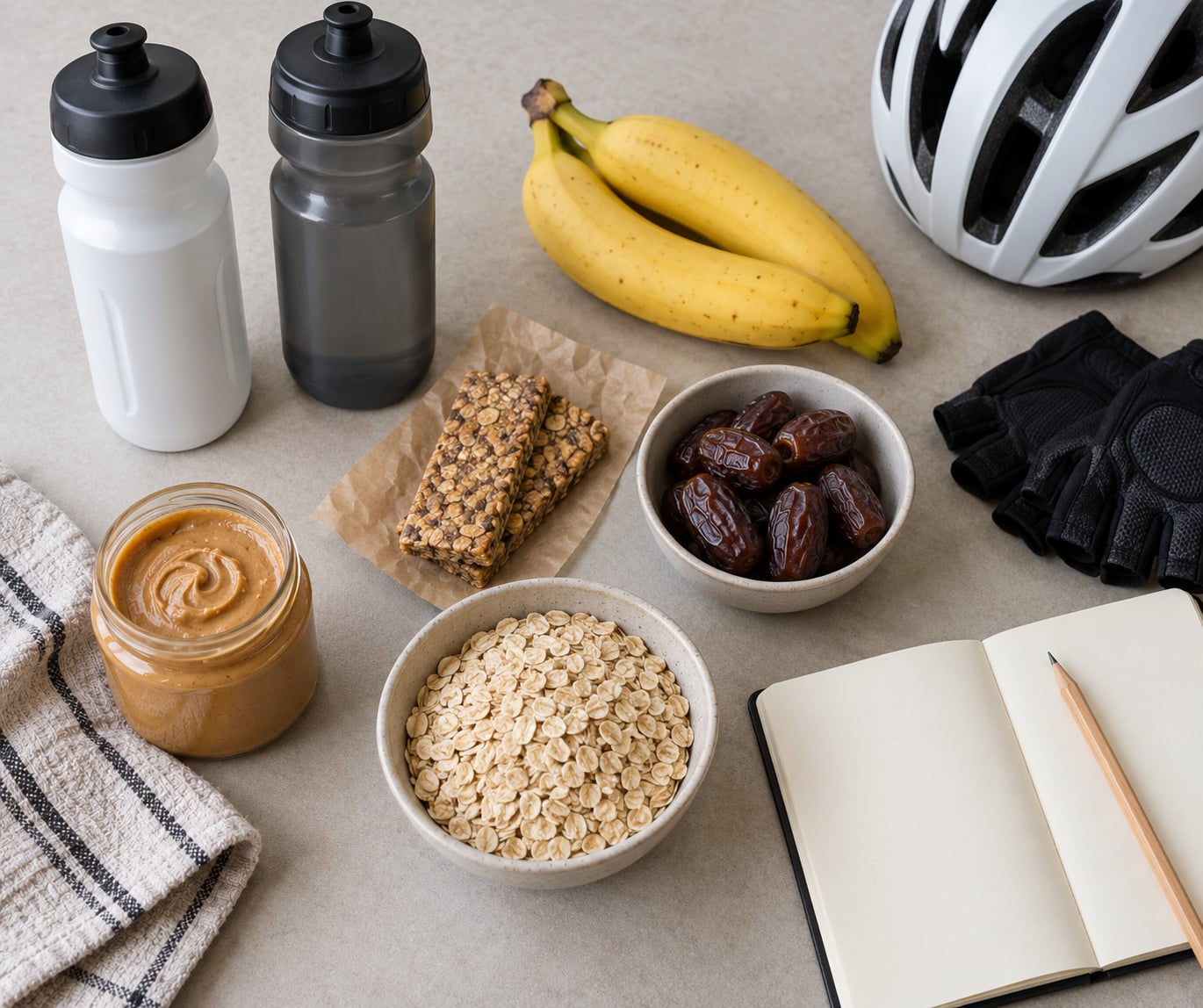
For a ride starting at 6 a.m., eat the night before rather than cramming at dawn: a larger dinner with rice, pasta or potatoes, plus a protein source. Riders who dislike eating before dawn often find a small snack 30 minutes before rolling, something like a banana with a handful of oats, works better than nothing.
For a midday or afternoon ride, a normal breakfast works. Keep it lower in fibre than you would eat on a rest morning if the ride is three hours or longer, because fibre plus water plus motion is a recipe for a heavy stomach.
3. Fuel Every Part of a Long Ride
Divide calories across hours rather than saving one large snack for the back half. Most riders under-fuel early, feel good for ninety minutes, then fade. A simple ladder by ride length gives you a defensible starting point.
Under 90 minutes: you don’t need fuel on the bike. Drink normally, eat normally.
90 minutes to 2.5 hours: aim for around 30 g of carbohydrate per hour, roughly 120 kcal. One banana, or a small handful of dried fruit, or half a bar works.
2.5 to 4 hours: build toward 60 g per hour, about 240 kcal. A bar or a couple of rice cakes with jam, plus drink mix at a modest concentration.
4 hours and beyond: 70 to 90 g per hour, or 280 to 360 kcal, is the working range for hard days. Most of it is easier to get from drink than from solid food at that density.
Texture matters more than most riders expect. Anything solid, greasy or fibrous tends to sit badly once you’re sweating and moving. Gels, drink mix, bananas, dates, pretzels, rice cakes and jam are the reliable options because they digest without much chewing or water. If whole food works for you, keep it to things you’ve eaten on a bike before.
Set the interval by the clock. Eat at the first half hour, then every 30 minutes. Hunger is a lagging signal, and riders who wait for it consistently finish rides short.
4. Pair Food With Hydration
Sipping on a schedule beats drinking to thirst. Ordinary water is fine for rides under two hours in mild weather. Past that, an isotonic-style drink with carbohydrate and a little sodium does two jobs at once: it replaces fluid and it contributes to your hourly carbohydrate total.
Mixing your own is cheap and works: roughly 30 to 60 g of carbohydrate per litre, with a pinch of salt. That single change often replaces a gel or two on a hot ride without feeling like a drink change at all.
Adjust for weather rather than for ego. In heat, add sodium and drink more often; in cold, dry air you may need surprisingly little fluid but will still lose some. Urine colour is a crude but serviceable check: pale straw suggests you’re keeping up, dark means drink more on the next ride.
5. Refuel After the Ride
The post-ride meal matters more than the thirty-minute window folklore suggests. What actually helps is a normal-sized meal within a couple of hours that contains carbohydrate and roughly 20 to 30 g of protein, plus fluids and salt.
That looks like rice with chicken, pasta with beans, bread with cheese, or a large bowl of oats with milk and banana. If you cannot eat a full meal within two hours, a recovery shake with carbohydrate and protein plus something easy to digest later is a reasonable stand-in.
Split it if the appetite is gone: a smaller recovery portion right after the ride, then a proper meal an hour or two later. Riders finishing five-hour rides often feel hollow and nauseous and assume they cannot eat; small portions and more time usually fix it.
6. Check and Adjust for Your Next Ride
After every long ride, run the same five-question check. It takes a minute and it is the whole feedback loop.
How was my energy? Steady through the middle hours means roughly right. A fade after two hours means you under-fuelled. Legs that feel hollow all ride suggests you under-ate the day before.
How was my stomach? No discomfort says keep the food as it was. Nausea or bloating usually points to too much fibre, too much at once, or new items on ride day.
What did I weigh this week? A flat trend means your average intake matches your average burn. A downward drift over three or four weeks, especially alongside fatigue, poor sleep and lost enthusiasm, is the signal to add 300 to 400 kcal and re-check.
Did I hit my hourly target? If not, fix the packing, not the willpower. Almost every missed hour is a logistics failure.
Am I relying on one rider’s worst day? Weight drift should be judged in weeks, not overnight. Water shifts of one to two kilos after a long hot ride mean nothing at all.
Change one thing per ride. If you increase both carbohydrate and hydration after a bad day and the next ride goes well, you will not know which change did it. Riders who adjust five variables at once usually abandon the whole approach in a fortnight.
Get individual help if you are losing weight despite a large intake, if your resting heart rate is elevated, if your menstrual cycle changes, if your mood flattens, or if food has become something you dread. Those are the points where a registered dietitian or doctor earns their fee.
Common Mistakes
Waiting until you’re hungry. Hunger arrives late, and by then your output is already dropping. Eating on a timer from the first half hour fixes most under-fuelling, and it removes a decision from the middle of a ride.
Living on sweet drinks. Drink mix alone rarely gets you to 70 g per hour without becoming unpalatable, and it leaves protein and fat missing from the day. Use it as one part of the fuel mix, not the whole thing.
Skipping breakfast on a long day. A five-hour ride started on empty is a two-hour ride with a bad ending. Move the fuel to the evening before rather than removing it.
Trying something new on ride day. Every untested food is a variable. Rehearse new gels, new bars and new drink mixes on a short ride first, ideally twice.
Chasing one daily number. Riders who try to hit 5,000 kcal on a Tuesday often eat well for three days and then quit. Eating more on big days and returning to something close to your baseline on easy days gets you the same weekly average with far less misery. Weekly balance beats daily perfection.
Eating only “clean” food. This is the most common trap for riders trying to gain weight. Vegetables, whole grains and lean protein fill the stomach without filling the tank. Energy-dense foods are a tool, and at 5,000 kcal a day they are a necessary one.
Judging the plan by one bad morning. One heavy, undigested breakfast means nothing about the whole week. Weigh trends across weeks before you rebuild the plan.
Frequently Asked Questions
How many calories should a cyclist eat per day?
Most riders need their normal non-riding intake plus what they burn on the bike. Add roughly 500 to 750 kcal for a hard hour of riding, 250 to 400 for an easy hour. A 70 kg recreational rider doing a five-hour ride often lands near 5,000 kcal for the day. Treat that as a starting estimate and adjust from your weight trend, energy and recovery rather than from the formula alone.
How many calories does a professional cyclist burn?
Grand Tour data from a 2015 Vuelta a Espana study measured about 5,415 kcal per day averaged across stages, with roughly 872 g of carbohydrate and 230 g of protein. Individual mountain stages ran far higher than that average. Research on six professional riders during a classics campaign found intake of 6,216 kcal against a burn of 5,184 kcal on race days, so even at that level many days ran a deficit.
How many carbs per hour should I eat while cycling?
Under 90 minutes you do not need fuel on the bike. From 90 minutes to 2.5 hours aim for about 30 g of carbohydrate per hour, around 120 kcal. Between 2.5 and 4 hours build toward 60 g per hour. Beyond 4 hours, hard days call for 70 to 90 g per hour. Drink mix and easily digested solid food both count toward the total.
How do I stop losing weight while cycling?
Add volume rather than trying to eat less of the same food. Increase your on-bike carbohydrate rate first, then add energy-dense everyday foods such as olive oil, nuts, peanut butter, cheese, dried fruit and full-fat dairy. Check your weight the same way three or four mornings a week and judge the trend across weeks. If weight keeps dropping despite a large intake, see a registered dietitian or doctor.
How many grams of carbohydrate per kilogram of body weight do I need?
A common recreational structure is 3 to 5 g per kilogram of body weight on rest days and light riding days, and 6 to 10 g per kilogram on days with one to three hours of training. Ultra-endurance and racing days push higher again. For a 70 kg rider that is roughly 210 to 350 g on an easy day and 420 to 700 g on a hard training day.
Do I need to eat more on rest days after a big ride?
Not more than a normal rest day, but you do need to return to a normal baseline rather than crash below it. Rest-day appetite often drops, which is exactly when weight drift sneaks in. Keep your usual meals and add carbohydrate-rich fluids and a larger portion at one meal. Balance the week as a whole rather than trying to make up a single big day.
Conclusion
Pick your next long ride and do three things: write down how many hours you will be out, build one pre-ride meal you already know sits well, and pack one familiar snack per hour as the framework to test. Then run the five-question check afterwards. Adjust one thing, ride again, and let your energy, comfort and weight trend tell you the rest. That loop is the whole plan, and it works far better than any single number.
Updated for 2026. Information here is general and not individual medical or dietetic advice.