Most endurance cyclists should aim for 1.6 to 2.0 grams of protein per kilogram of body weight per day. For a 70 kg rider, that works out to roughly 112 to 140 grams of protein a day, spread across ordinary meals. The figure is higher than the general adult recommendation of 0.8 g/kg because training breaks down muscle tissue that has to be rebuilt.
It is also a number that gets misquoted constantly. One source says 1.2 g/kg, another says 2.2 g/kg, and most riders have no idea which one applies to them. This guide sorts out the ranges, converts them into real gram totals for your body weight, and shows where protein fits around the bike.
Protein is general nutrition information, not a training plan. If you have a medical condition, an injury, a restricted diet, or a weight-loss goal that is stalling, a registered dietitian or your doctor can give advice specific to you.
Table of Contents
- How Much Protein Do Endurance Cyclists Need?
- Protein Needs for Endurance Cyclists: Start With Body Weight
- Why Protein Matters During Long Rides
- Should Protein Be Spread Throughout the Day?
- What Should You Eat Before, During, and After Cycling?
- Plant-Based and Dairy-Free Protein Sources
- Do Endurance Cyclists Need Protein Powders?
- Common Protein Mistakes for Cyclists
- How Training Load and Recovery Affect Protein Intake
- Frequently Asked Questions
- How much protein should I eat before a long ride?
- Is protein more important than carbohydrates for endurance cycling?
- Can I meet my protein needs without supplements?
- What is the best protein snack after a hard ride?
- Do vegetarian endurance cyclists need more protein?
- Should cyclists eat protein on rest days?
- Conclusion: Build a Simple Daily Protein Routine
How Much Protein Do Endurance Cyclists Need?
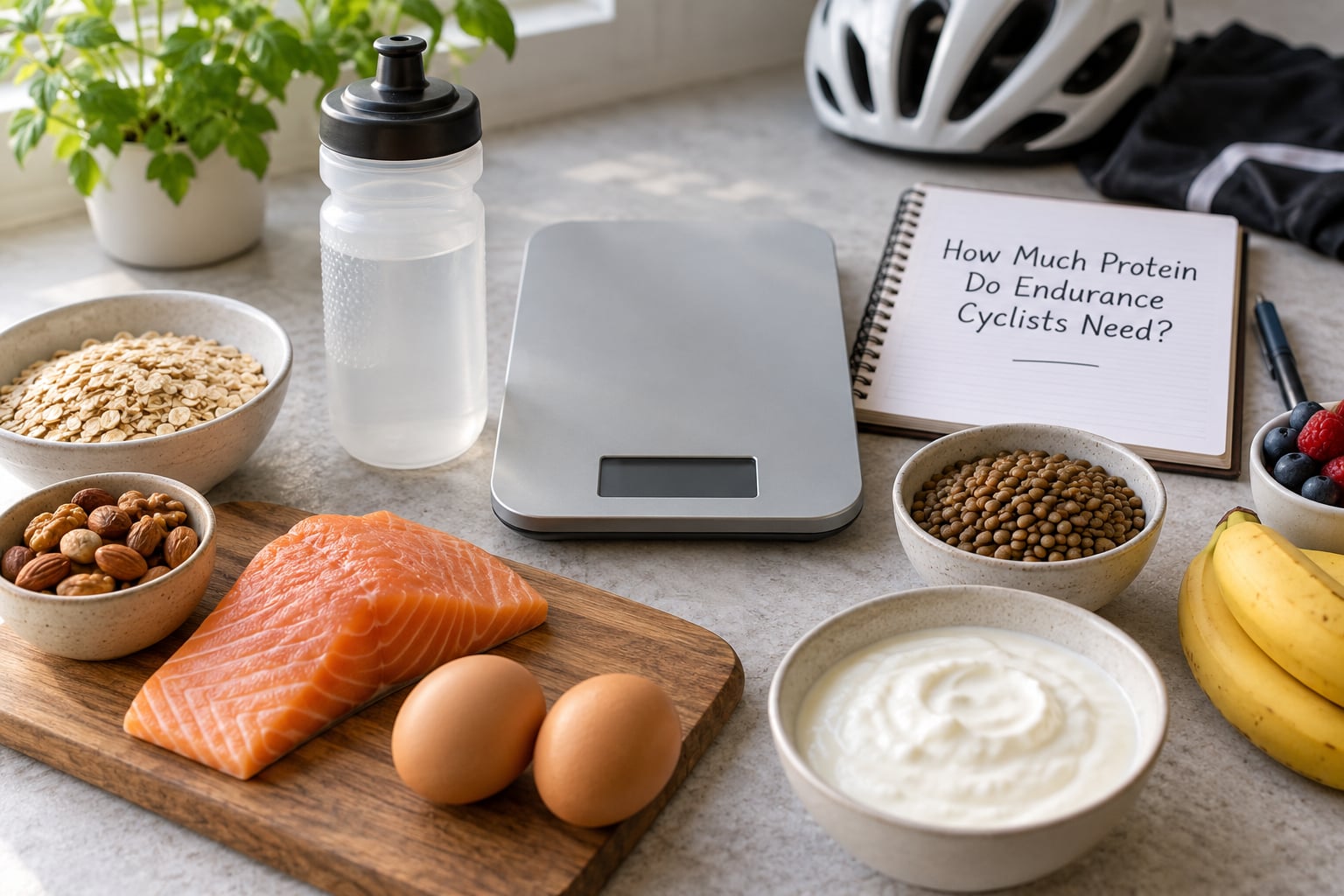
Endurance cyclists generally need 1.6 to 2.0 g/kg of protein per day, which is roughly double the 0.8 g/kg recommended for adults who are not training hard. Research using indicator amino acid oxidation, which measures how much of a supplied amino acid the body actually uses, puts endurance athletes 50 to 75 percent above the standard recommended dietary allowance.
Here is what that range looks like in real food. The table converts the recommendation into daily gram totals for common rider weights, with the low end for lighter training weeks and the high end for heavy blocks, back-to-back riding, or riders who also lift weights.
| Body weight | At 1.6 g/kg | At 1.8 g/kg | At 2.0 g/kg |
|---|---|---|---|
| 55 kg | 88 g | 99 g | 110 g |
| 60 kg | 96 g | 108 g | 120 g |
| 65 kg | 104 g | 117 g | 130 g |
| 70 kg | 112 g | 126 g | 140 g |
| 75 kg | 120 g | 135 g | 150 g |
| 80 kg | 128 g | 144 g | 160 g |
| 85 kg | 136 g | 153 g | 170 g |
| 90 kg | 144 g | 162 g | 180 g |
| 95 kg | 152 g | 171 g | 190 g |
Individual needs move around within that band. A rider in an off-season with easy miles and no structured training can sit nearer the lower end. A rider racing, riding long hours, or adding resistance sessions belongs nearer the top, and riders over 40 generally lean higher because they hold less muscle mass and show a blunted response to protein at each feeding.
Protein Needs for Endurance Cyclists: Start With Body Weight
To calculate your own starting target, multiply your weight in kilograms by 1.8. That mid-range figure is usually a sensible place to begin rather than jumping straight to either extreme.
The calculation assumes you are eating enough total calories to support your training, that you are not deliberately cutting weight, and that protein is coming from complete sources spread across the day. It also assumes the standard frame of reference, meaning you weigh yourself without shoes at the same time of day. None of these assumptions hold for everybody, which is why the range matters more than the exact number.
Convert to pounds first if that is how you think. A 154 lb rider is 70 kg, so the target lands at about 126 g per day. Round to something you can actually shop for rather than chasing a precise figure.
Why Protein Matters During Long Rides
Protein matters during long rides mainly because it arrives after the damage, not during the effort itself. Carbs fuel the ride; protein handles what the ride leaves behind.
The case for higher intake rests on four things. First, muscle repair: prolonged riding produces small amounts of muscle damage, and the amino acids from dietary protein are what drive muscle protein synthesis, the process that rebuilds it. Second, immune function: endurance athletes training hard report more upper respiratory symptoms, and adequate protein intake is one factor that shows up in immune support research.
Third, bone and tendon health. Weight-bearing and loaded tissue need consistent amino acid supply, and tendons in particular respond slowly, which is why keeping protein steady year-round matters more than any single post-ride dose. Fourth, satiety and appetite control, which becomes relevant for anyone deliberately managing body fat.
The contrast with carbohydrate is worth stating plainly. Protein digests more slowly and does not produce usable energy quickly, so it is a poor ride fuel. On a six-hour ride your energy comes from carbohydrate at roughly 60 to 90 g per hour, and protein plays a supporting role at best. Trying to use protein to fuel a long event is like filling the tank with engine oil.
Should Protein Be Spread Throughout the Day?
Yes. Dividing protein across three to five feedings of about 0.3 to 0.4 g/kg each works better than eating most of your protein in one large dinner.
Muscle protein synthesis responds to a threshold of essential amino acids, particularly leucine, rather than to the size of the meal. A single large serving gets absorbed slowly and mostly burned as fuel. A moderate serving every few hours keeps the signal turned on more consistently across the day.
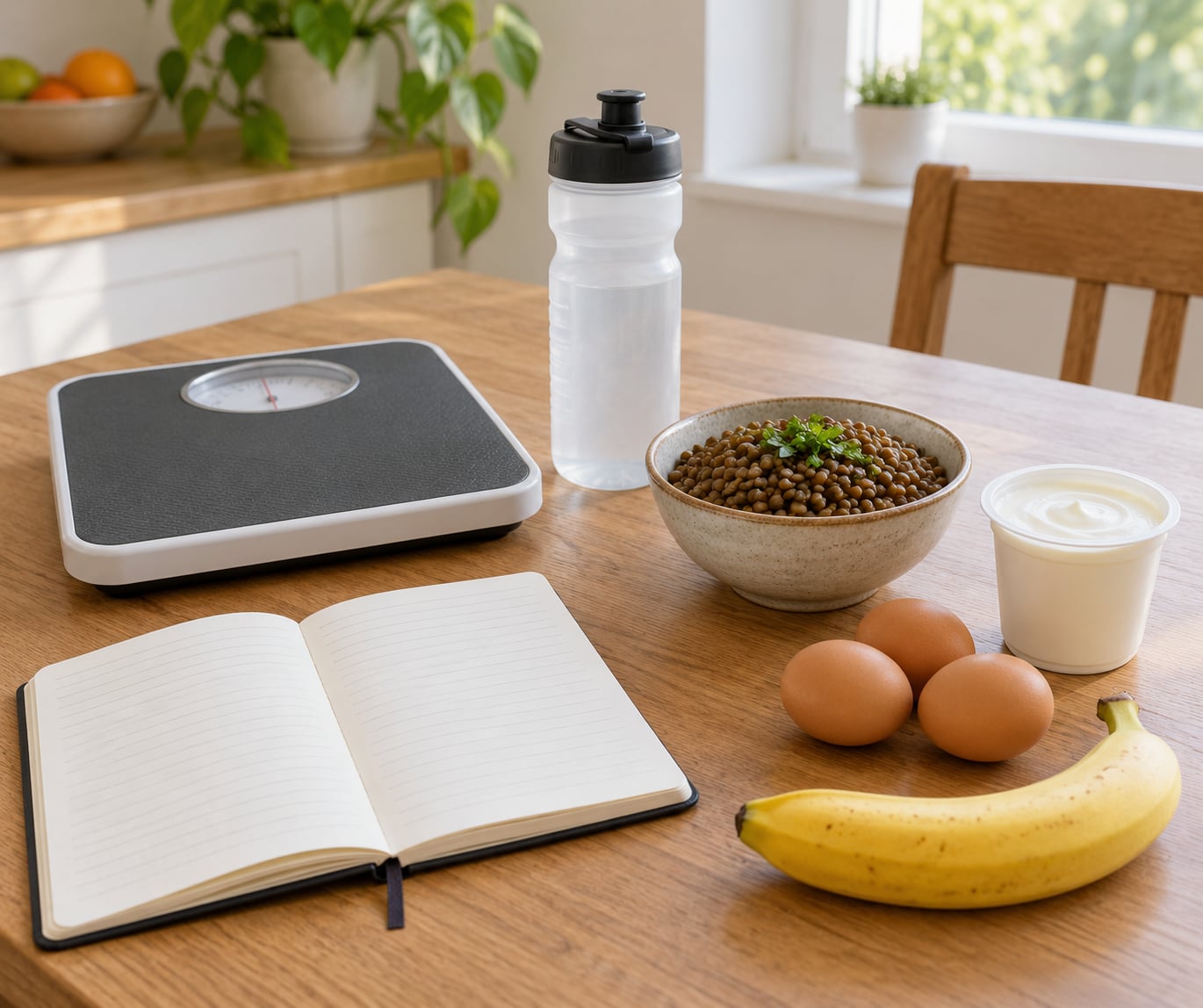
For a 70 kg rider, 0.3 to 0.4 g/kg is 21 to 28 grams of protein. That is a normal portion of food rather than a supplement scoop: a 150 g tub of Greek yogurt, three eggs with a slice of toast, a chicken breast the size of a paperback, or a bowl of lentils with rice.
| Feeding | Protein target for a 70 kg rider | Realistic example |
|---|---|---|
| Breakfast | 21-28 g | Greek yogurt with oats, berries and a spoon of seeds |
| Lunch | 21-28 g | Rice and beans with salsa, or eggs on rye |
| Snack | 15-25 g | Cottage cheese with tomato, or hummus and carrot sticks |
| Dinner | 30-40 g | Salmon, tofu and vegetables with potatoes |
That gives roughly 90 to 120 grams without snacks adding much, which is why a mid-afternoon snack matters more than it looks. You do not need a schedule to the minute. You do need protein at more or less every meal instead of once at the end of the day.
What Should You Eat Before, During, and After Cycling?
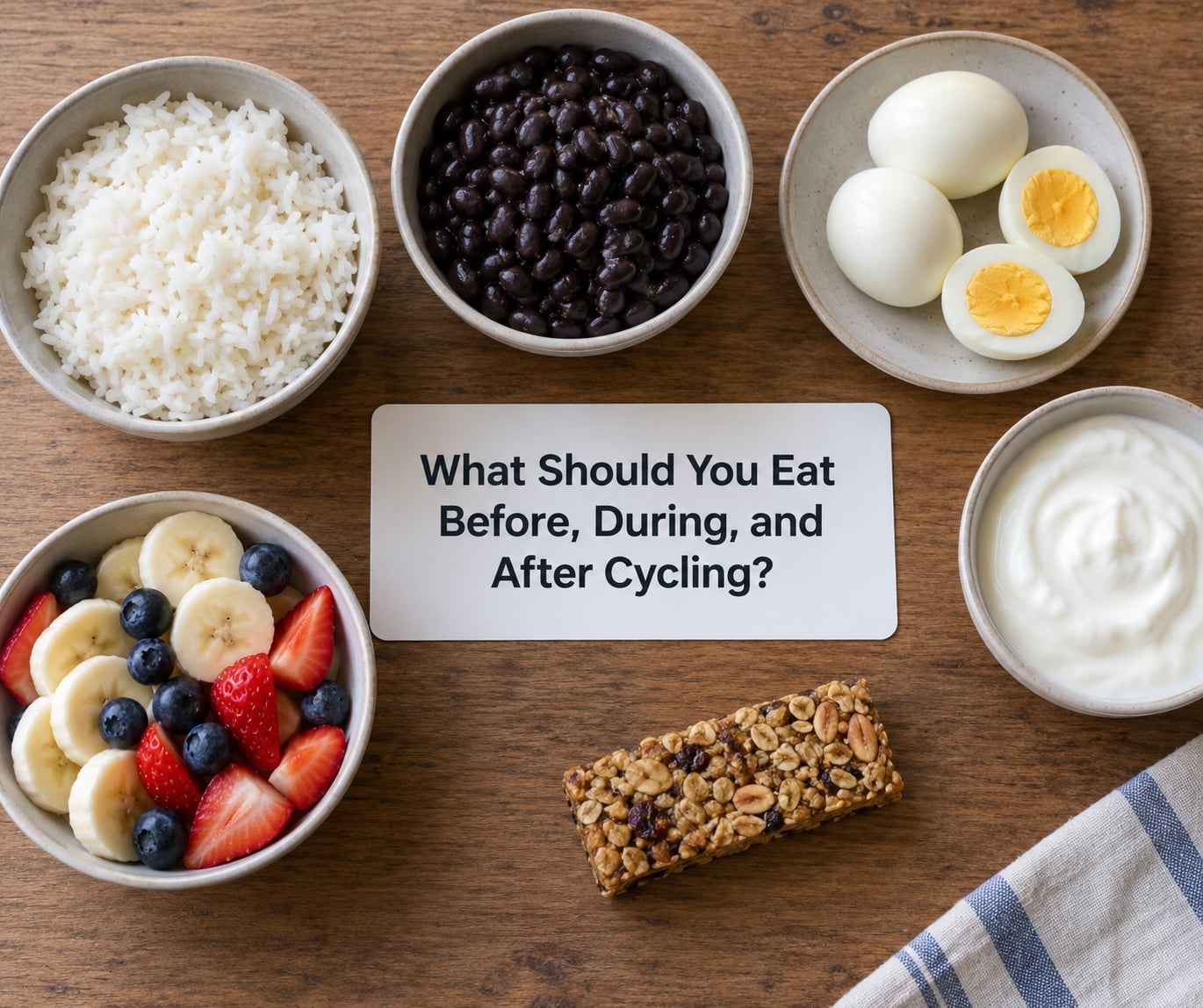
Eat familiar carbohydrate before riding, a moderate protein source with recovery food afterwards, and think of in-ride eating as a carbohydrate job with protein as a quiet extra.
| Stage | What to prioritise | Where protein fits | Portable examples |
|---|---|---|---|
| 2-4 hours before | Carbohydrate and low fibre if the ride is long | Keep it light, around 10-20 g | Rice cakes with honey, a banana and a boiled egg |
| During a long ride | 60-90 g carbohydrate per hour, plus fluids and sodium | Minor; bars and chews with some protein are fine | Real food sandwiches, banana slices, dates, energy bars |
| First 60-90 minutes after | Carbohydrate for glycogen, then a balanced meal | 20-40 g, roughly a 3:1 to 4:1 carbohydrate-to-protein ratio | Chocolate milk, Greek yogurt with oats, a protein bar with a banana |
| Evening of a big day | Carbohydrate plus 30-40 g protein | Main hit for the day | Stir fry with tofu and rice, eggs on toast |
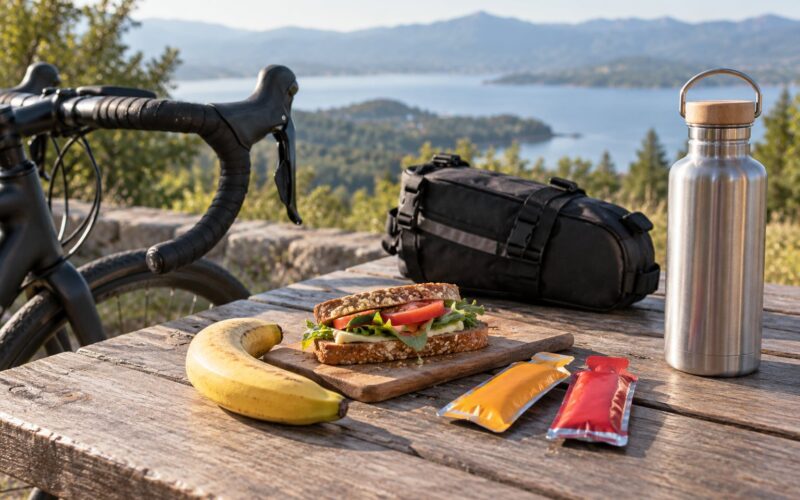
For rides under about ninety minutes, protein before the ride matters little and a normal breakfast is enough. For a five-hour ultra, the question of protein during the ride does come up, and the honest answer is that whole food works: cheese and cracker sandwiches, boiled potatoes with salt, meat pie, mixed nuts. Riders who pack real food tend to hold intake better in the back half of a long day, partly because they eat something they actually want at hour four.
Pairing carbohydrate with protein after a hard ride matters more than protein alone. Replenishing glycogen is the priority in that window, and adding protein to carbohydrate is a reasonable way to get both. Aim for roughly a 3:1 to 4:1 ratio rather than a protein shake on its own, which satisfies nothing.
Plant-Based and Dairy-Free Protein Sources
Plant-based and dairy-free riders can hit the same target without supplements, but they need to combine sources across the day rather than relying on one.
Most plant proteins are lower in leucine and missing one or more essential amino acids, so the practical rule is variety rather than volume. Legumes with grains works: rice and beans, lentils with wheat pasta, chickpeas and whole wheat pita. Soy and its derivatives, including tofu, tempeh, edamame and soy milk, are the notable exception as complete proteins in their own right.
| Food | Protein per typical serving | Best use |
|---|---|---|
| Tofu, firm | 20-25 g per 150 g | Base for stir fries, keeps shape when cooked |
| Tempeh | 20 g per 100 g | Grilled slices, adds texture to salads |
| Lentil soup | 15-18 g per large bowl | Cheap batch cook, easy to increase portions |
| Chickpeas | 14 g per cup | Salads, curries, blended into dips |
| Pea protein isolate | 25 g per scoop | Tasteless option to top up a short day |
| Peanuts and peanut butter | 7-8 g per tablespoon | Recovery sandwiches and pre-ride fuel |
| Oats and seeds | 6-8 g per half cup | Adds a few grams to breakfast and bars |
Dairy-free riders lose whey and Greek yogurt, which are among the easiest high-quality sources available. Almond, soy and oat milks vary a lot: check the label for grams of protein per cup, because some contain barely one gram. Fortified soy milk is the standout there.
Be honest about the arithmetic. Hitting 126 grams a day as a plant-based rider at 70 kg takes planning and larger volumes than an omnivore needs. Many vegan cyclists track intake for a week or two to calibrate portions, then stop counting because their eye for quantities becomes accurate.
Do Endurance Cyclists Need Protein Powders?
No. Most cyclists can hit the target from food, and a powder is a convenience product rather than a necessary one.
Food first is not just a purity argument. Whole foods come packaged with carbohydrate, fat, fibre, and micronutrients that a scoop of isolate does not, and preparing food you will actually eat repeatedly is harder than shaking a cup. Riders who buy powder before they have a food routine tend to end up with a shake plus a worse diet.
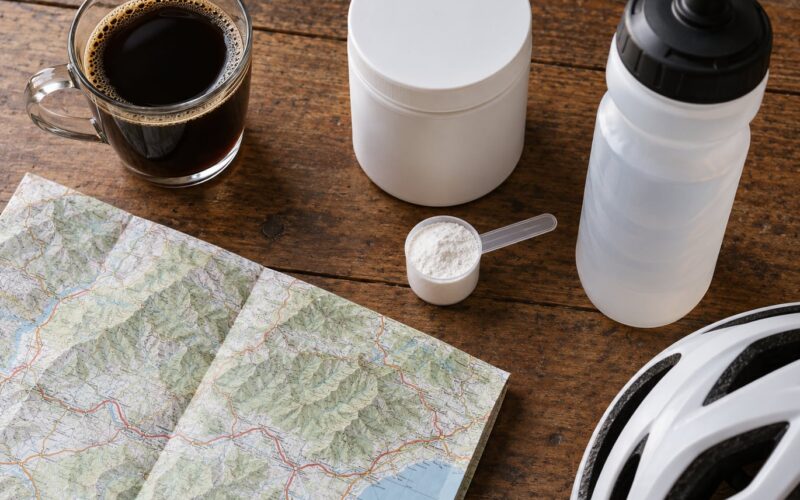
There are reasonable situations for one. A cyclist on a calorie-restricted plan may struggle to fit 130 grams of protein into 2,000 kcal, and whey isolate is about 120 kcal per 25 g serving, which is efficient. It is also useful on back-to-back race days, on long bikepacking trips, or when a rider genuinely cannot eat enough after a big effort.
If you do buy one, read the label for grams of protein per serving, the source, added sugars, and any third-party testing marks. Whey isolate and whey concentrate are complete proteins; plant blends work when the blend includes several sources rather than one. Treat allergy seriously and introduce any new product away from the day before an important event. Anyone pregnant, managing a kidney condition, or on a restricted therapeutic diet should ask a doctor before adding a supplement.
Collagen is a separate category, and it should not be counted toward your daily protein total. It is low in essential amino acids and does not contribute to muscle protein synthesis, which is why forum riders who added collagen and felt their totals were met were counting the wrong number. Some people take it for joint comfort during long blocks; that is a separate discussion from protein intake.
Common Protein Mistakes for Cyclists
Most protein problems in cycling are not about too little or too much. They are about timing, crowding out carbohydrate, and counting things that do not count.
- Eating almost none during the day and making up for it at dinner. One 60 g dinner is worse than four 25 g feedings for muscle protein synthesis. Fix: move 20 g to breakfast and 20 g to lunch before you worry about dinner.
- Letting protein displace carbohydrate. This is the most damaging mistake on the list. Hitting a protein target while cutting carbs leaves you slow on the bike. Fix: count carbohydrate grams per hour of training first, then fill the remainder with protein.
- Counting collagen toward the daily total. It is not a source of essential amino acids. Fix: ignore it for protein accounting and treat it as its own choice.
- Treating a protein shake as a recovery drink. Protein alone does not refill glycogen. Fix: pair it with carbohydrate, roughly 3:1 to 4:1.
- Chasing the high end of the range without training to justify it. 2.0 g/kg is for hard blocks. Fix: drop to around 1.6 g/kg in the off-season and stop thinking about it.
- Under-eating total calories while trying to hit the gram target. Restricting intake during heavy training creates low energy availability, which affects bone, hormones and recovery far more than the protein number does. Fix: eat enough, and take a dietitian into the conversation before a long weight-loss phase.
How Training Load and Recovery Affect Protein Intake
Your protein target should move with your training, because the requirement tracks how much tissue damage the week actually produced.
During a heavy block, back-to-back long rides, or a race week, most riders are better served near the top of the range. On a recovery week with one easy ride, the lower end is plenty. Riders over 40, and riders adding one or two resistance sessions a week, generally do better with 1.6 to 2.2 g/kg, since lifting adds a repair demand that riding alone does not.
Illness and reduced appetite are the situations most likely to break a routine. During a cold, appetite often drops while protein needs stay steady or rise, so keeping liquid and easy protein options around matters more than the exact number. Riders who cut calories deliberately for body fat need to protect protein intake while they do it, and never stack a large deficit on top of a high training week.
Five signs worth watching for point to under-eating protein: soreness that lingers for more than a few days after easy rides, sessions where your power fades earlier than expected, feeling unusually tired between blocks, getting sick more often than you used to, and a persistent hunger that never really settles. None of these proves anything on their own. If several arrive together, adjust protein and total calories for two weeks and see whether they move.
Frequently Asked Questions
How much protein should I eat before a long ride?
For rides under about 90 minutes, a normal breakfast with around 20 g of protein is plenty, and carbohydrate matters far more. For longer events, keep protein modest at 10-20 g and prioritise familiar carbohydrate you have eaten on training rides. Protein taken just before riding will not fuel you, because it digests slowly. Save the larger protein serving for the recovery meal afterwards.
Is protein more important than carbohydrates for endurance cycling?
No. Carbohydrate is the fuel you burn on the bike, at roughly 60-90 g per hour on long rides, and it cannot be replaced by protein. Protein supports muscle repair, immune function and satiety rather than power output. Getting this backwards is a common mistake that leaves riders under-fuelled. Protect your carbohydrate intake first, then meet the protein target with what calories remain.
Can I meet my protein needs without supplements?
Yes, if you eat three to five protein-containing meals most days and roughly 25 g of protein at each one. Powder is convenient rather than necessary, useful when calories are restricted or a race day runs long. If you do use one, check grams per serving and added sugars on the label. Collagen does not count toward the total, since it lacks the essential amino acids that drive muscle protein synthesis.
What is the best protein snack after a hard ride?
Greek yogurt with oats and fruit, chocolate milk, cottage cheese with tomato, or a protein bar eaten with a banana all work well. Aim for 20-40 g of protein alongside carbohydrate, roughly a 3:1 to 4:1 ratio, because glycogen replacement is the priority in that window. Ordinary food is fine. Liquid options are simply faster when your appetite is gone after a five-hour effort.
Do vegetarian endurance cyclists need more protein?
Most plant proteins are lower in leucine and missing one or more essential amino acids, so aim slightly higher and lean on variety. Some guidance suggests roughly 10 to 20 percent above the standard range, though the honest test is whether you hit your gram target consistently. Soy, tofu, tempeh, lentils, chickpeas and peanut butter cover it well when combined with grains across the day.
Should cyclists eat protein on rest days?
Yes, keep the target roughly steady. Muscle repair continues for 24 to 48 hours after a hard session, so a rest day is when much of the rebuilding happens. What can drop is the intensity of the requirement rather than the requirement itself, so an off-season rest week might sit at the lower end of the range. Keep protein at each meal and do not treat rest days as a licence to skip it.
Conclusion: Build a Simple Daily Protein Routine
Start with your body weight. Multiply it by 1.8 for a daily gram target, check it against the table above, and set up three to five feedings of roughly 25 g rather than one large dinner. That single arrangement does more than any supplement, powder, or timing scheme.
From there, adjust only as your training changes. Move toward the top of the range during heavy blocks, race weeks, and whenever you add lifting; settle near the bottom when the season is quiet. Keep carbohydrate first in your priorities, and if you are cutting weight while training hard, protect protein intake and talk it through with a registered dietitian. Anyone with a medical condition, an injury, or a restricted therapeutic diet should get individual advice from a doctor or registered dietitian before changing how they eat.