The short answer: you keep hands warm while cycling by blocking four separate heat losses at once, not by buying one very thick glove. That means a windproof outer layer, an insulating mid-layer over a dry liner, insulation on the handlebars themselves, and a warm enough core that your body does not cut circulation to your fingers.
Cold hands are also a safety problem. Numb fingers cannot feel a brake lever or find a gear shift reliably, and on an icy descent that is the difference between slowing down and not slowing down. Most riders can fix their cold hands in an afternoon and a cheap roll of neoprene.
Expect to spend about 30 minutes setting your kit up, plus one short test ride, before you commit to a long cold-weather route. Difficulty is low. The tricky part is that each fix solves a different loss, so you need all of them on a genuinely cold day.
Table of Contents
- What You Need
- Step-by-Step: How to Keep Hands Warm While Cycling
- 1. Dress Your Hands in the Right Layers
- 2. Choose Gloves That Fit the Weather
- 3. Protect Hands and Fingers from Wind
- 4. Warm Up Before Leaving the Garage
- 5. Use Hand Warmers and Grip Checks
- 6. Adjust Your Ride When Your Hands Stay Cold
- Common Mistakes
- Frequently Asked Questions
- How cold should it be before I wear winter cycling gloves?
- Are cycling gloves enough to keep my hands warm in winter?
- What is the best way to use hand warmers while cycling?
- Why do my hands get numb even when I am wearing gloves?
- Should I use fingerless gloves for cold-weather road riding?
- What should I do if my hands stay cold during a long ride?
- Conclusion
What You Need
Gather this before you roll out, and you can stop adjusting mid-ride and just ride.
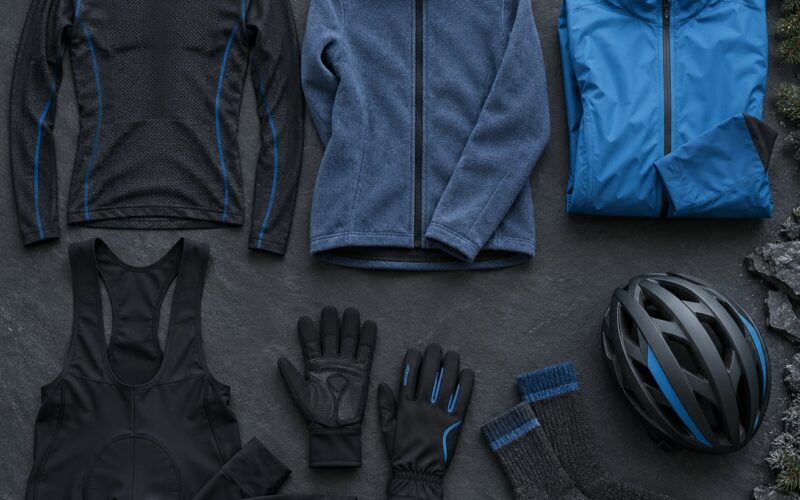
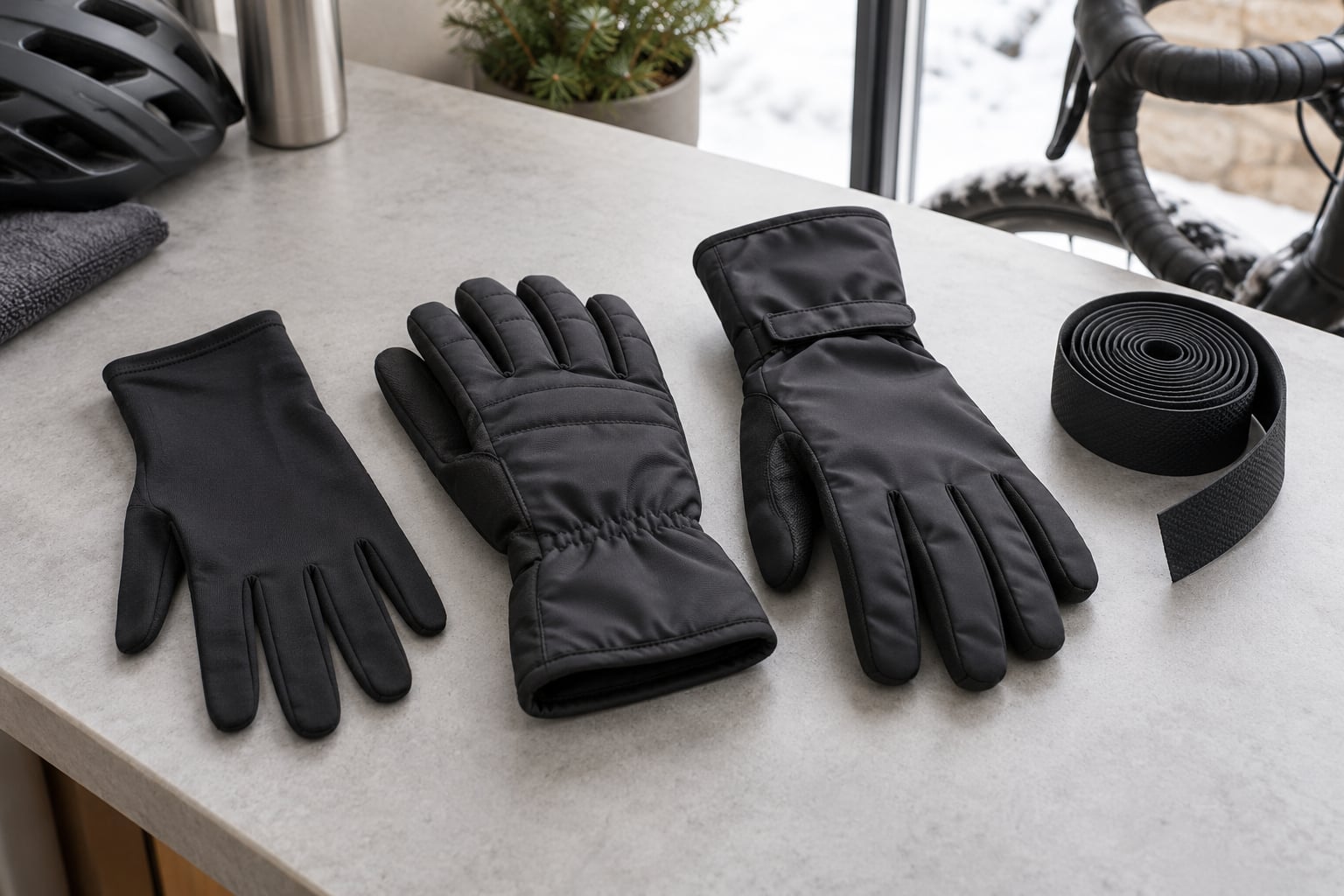
- A moisture-wicking liner glove. Thin, close-fitting, and mostly invisible once the outer glove is on. Merino or a synthetic wicking knit works. This is the layer that keeps your skin dry.
- An insulated mid-layer glove. Synthetic or down insulation in a five-finger or convertible design. This is your warmth layer.
- A windproof outer glove. Often the same glove as the mid-layer with a membrane shell, or a separate shell that goes over both. Long cuffs matter more here than the brand of the insulation.
- Handlebar insulation. Neoprene sheet, closed-cell foam, or a spare roll of bar tape. Riders on cold bikes report this single fix changes their hands more than a pricier glove.
- Hand warmers, optional. A pair of reusable or disposable warmers for the first 20 to 30 minutes, plus emergency stash in a jersey pocket.
- A spare pair of gloves. One saturated pair ends a ride’s warmth for good. Riders on multi-hour winter rides carry a second pair as standard.
- A simple check habit. Ask yourself at the first junction whether you can feel the brake lever texture without looking. If not, you are already too cold.
Step-by-Step: How to Keep Hands Warm While Cycling
Work through these six steps in order, and you will not need a fourth piece of gear. Each step covers a different way heat escapes, so skipping one leaves a gap you will feel within ten minutes of riding.
1. Dress Your Hands in the Right Layers
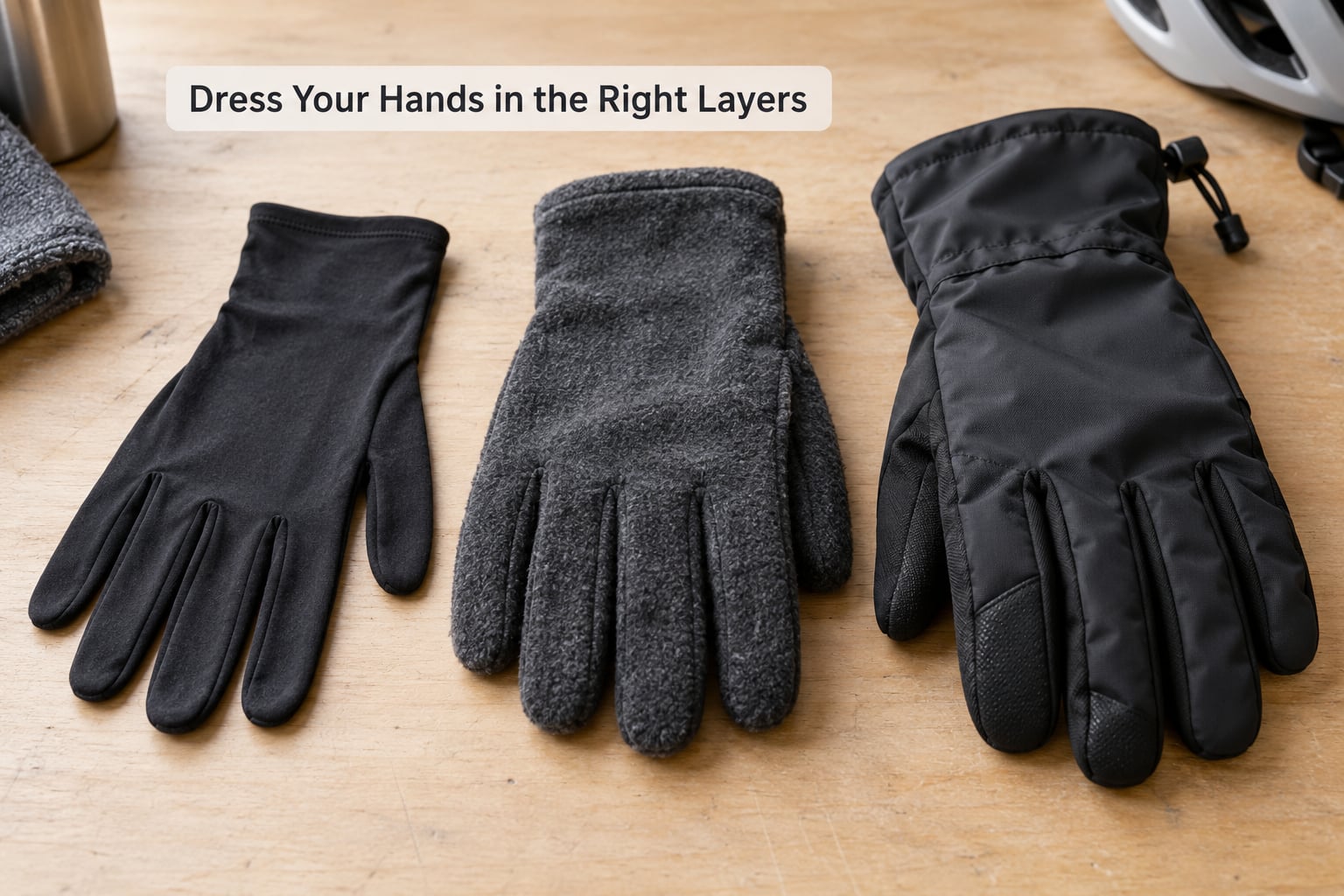
Three layers is the sweet spot for most winter road rides: a thin liner against the skin, an insulated glove, and a windproof shell over the top. Air trapped between layers is what actually insulates, so each layer should fit loosely enough to keep that air in place.
Two things to avoid. Cotton against the skin traps sweat and then cools you faster once you start working, and an oversized insulated glove bunches the palm so you lose bar feel and the lever gets harder to reach. If your glove seams pull when you close your fist, it is too big.
How to tell it worked: after 15 minutes at an easy pace, your palms feel warm and slightly damp rather than hot or dry, and you can feel the texture of the brake lever through the glove.
2. Choose Gloves That Fit the Weather
Match the glove to the temperature band, not to the calendar. Four categories cover almost every cold-weather ride.
- Lightweight windproof gloves for roughly 50 to 60°F on a flat commute. They block wind without adding bulk, so your hands stay dexterous on the controls.
- Insulated five-finger gloves for the 35 to 50°F range and most winter group rides. These keep full control of the hoods and the brake lever bite.
- Waterproof insulated gloves or convertible mitts below 35°F, especially in rain or wet snow. Convertible designs let you flip the mitt back over your fingers when you hit a technical descent.
- Bar mitts or pogies for genuinely cold days and long descents. You keep a light glove underneath and the mitt does the insulating. Forums describe these as the thing that finally solves cold hands on sub-20°F windy road days, and they also get in the way above roughly 35°F, so they are a cold-weather tool rather than an all-season one.
Fingerless gloves only work above about 50°F. Below that, exposed fingers are usually the first to go numb, and fingertips lose sensation before the palm feels cold at all.
3. Protect Hands and Fingers from Wind
Air movement, not air temperature, is what strips heat from a rider’s hands. A 35°F road ride at speed feels colder than a 35°F trail ride because the wind never stops.
Close the gaps first. A wrist gap under a jacket sleeve pulls air straight down into the glove, and that single opening can undo a very warm glove. So push the glove cuffs up under the jacket sleeves, then add a wrist gaiter or a long over-mitt cuff on the worst days.
Handlebar covers do the same job at the other end. Closed-cell neoprene mitts slip over the tops of your brake levers in under a minute and kill the wind chill over your knuckles. Riders also use a small neoprene or foam strip under the bar tape to break the conduction path between your palms and the metal.
Handlebar choice plays a role too. Carbon conducts roughly a fraction of the heat that aluminum does, which is one reason carbon bars feel warmer to hold on a cold day. Cheap oversized alloy bars are the worst case.
Test: on a fast descent, hold your hands in front of your torso between efforts. If you feel the temperature drop, your knuckles are exposed and need a cover.
4. Warm Up Before Leaving the Garage
Cold hands start tight. A minute of movement fixes more than any accessory.
- Arm circles, 15 in each direction, big enough to feel your shoulders move.
- Shake each hand loose for 30 seconds, like you are flicking water off your fingers.
- Open and close your hand 20 times, then rotate your wrists in both directions.
- Rub your palms together until you feel heat, then keep them together for a few seconds.
- Five minutes on the trainer if you have one, or a brisk walk around the block, to raise core temperature before you clip in.
Then put your gloves on last, after you have handled your keys, your phone, and your door. Cold fingers fumble with small fasteners longer than most riders admit, and dropping a phone on a wet road is its own bad morning.
5. Use Hand Warmers and Grip Checks
Hand warmers work best as a short bridge, not as a heat source for the whole ride. A chemical warmer gives useful heat for roughly 20 to 30 minutes, then fades. That makes it a good fit for the first part of a cold ride, or for a rider who warms up within 20 minutes and then stays comfortable in lighter layers.
Two ways to use them without a burn. Shove a warmer into the cuff of each glove so the heat sits over the wrist, where blood flow is strongest, rather than flat against the palm. Or keep one in your jersey pocket and hand it to yourself when you stop at a junction.
Do not wrap a warmer around the wrist or strap it tight over an artery. Constricting the wrist slows circulation, which works against the warmth you are trying to buy.
Then run a grip check before you pull away. Squeeze the brake lever hard enough to feel the bite, click through every gear on the derailleur, and work the shifters if you have them. If any of that takes more than a second of fumbling, your hands are not ready and your dexterity will be worse 40 minutes in.
6. Adjust Your Ride When Your Hands Stay Cold
Sometimes gear is not the answer and the ride itself is. Make these changes in order of how quickly they help.
- Add a layer. Usually the cheapest fix. A windproof shell over your glove, or a jacket you can close over the cuffs, takes minutes.
- Raise your cadence and shorten your efforts. Steady moderate effort generates far more body heat than sitting in the saddle struggling. Aim for a round, easy pedal stroke.
- Ride in a draft. Tuck behind another rider for a stretch to recover, then trade back out. Riders in a tight group routinely notice their hands recover within a few minutes.
- Refuel and drink something warm. Your hands are extremities. When your core starts to drop, your body pulls blood away from your fingers first, so a core that stays warm keeps hands alive.
- Stop at a sheltered spot and warm up properly. A sheltered wall out of the wind, hands warmed against a jumper, a warmer cracked open, five minutes of arm circles, then back on.
- Turn back. This is the one riders skip. Persistent numbness is a sign to shorten the ride or call it.
Watch for the red flags. Numbness that does not clear within a few minutes of stopping, skin that looks white or waxy, or a burning or aching pain in the fingers all point to real cold injury. Get warm gradually, do not rub the skin, and get medical advice. Riders with Raynaud’s phenomenon, where fingers go white and numb in response to cold, need a doctor rather than a thicker glove.
Common Mistakes
Wearing cotton next to your skin. Cotton holds sweat, and sweat evaporates and cools you. Replace it with merino or a synthetic wicking layer.
Buying gloves one size too big. Oversized gloves bunch the palm, lose bar feel, and make the brake lever harder to reach. Try them on and make a fist; if the seams pull, go down a size.
Leaving a wrist gap. Air slips down an exposed wrist and straight into the glove. Push the cuffs above your jacket sleeves or add a wrist warmer.
Overheating on the first 10 minutes. Too much kit produces damp hands, and damp hands get colder as soon as you ease off. Start slightly cool and add a layer after 15 minutes.
Ignoring numb fingers. Numbness is not toughness, it is reduced control of your brakes and gears. Warm up, change something, or head home.
Strapping a hand warmer over your wrist. Anything tight over the wrist slows circulation to the fingers. Slide the warmer into the glove cuff instead, where it heats the wrist area without squeezing it.
Leaving wet gloves to dry folded. Damp gloves lose their insulation and stay that way for the next ride. Open them flat, fingers spread, somewhere with moving air, and check them before packing.
Frequently Asked Questions
How cold should it be before I wear winter cycling gloves?
Most riders switch to insulated gloves around 45 to 50F, and to insulated waterproof gloves or mitts below 35F. Below 25F, add a windproof outer layer or handlebar covers, because wind chill at speed matters more than the air temperature. Adjust for effort: a hard descending ride at 40F can feel like a 30F ride at an easy pace.
Are cycling gloves enough to keep my hands warm in winter?
On most days, yes, if you use layers. A moisture-wicking liner plus an insulated glove plus a windproof outer glove covers everything down to around 20F for steady riding. Below that, gloves alone struggle, and you need insulation on the handlebars, handlebar covers over the brake levers, or bar mitts to keep your fingers responsive.
What is the best way to use hand warmers while cycling?
Use them as a short bridge for the first 20 to 30 minutes rather than expecting them to carry the ride. Slide one into the cuff of each glove so it warms the wrist without squeezing it, or keep them in a jersey pocket and crack one open at a stop. Never strap a warmer tightly over the wrist, since that restricts circulation.
Why do my hands get numb even when I am wearing gloves?
Two usual reasons. First, fingertips and the outer fingers lose blood flow first, so they go numb while your palms still feel fine. Second, your grip can be compressing nerves or restricting circulation. Loosen your grip, open the cuff, check the handlebar fit, and keep your core warm with steady effort and food. Persistent numbness needs a doctor.
Should I use fingerless gloves for cold-weather road riding?
Only above roughly 50F. Below that, exposed fingers are the first part of your hand to lose sensation, and the last part to recover. If you dislike the bulk of a winter glove, a convertible glove is the better answer: it looks like a normal glove, then flips into a mitt with a single movement over the brake hoods.
What should I do if my hands stay cold during a long ride?
Change one thing at a time so you know what worked. Add a windproof shell or close your cuffs first, then raise your cadence to raise body heat, then eat and drink something warm. Look for a sheltered stop to warm up for five minutes. If numbness persists or the skin turns white and waxy, warm up gradually and seek medical advice.
Conclusion
Start with one change: pick a layered, windproof glove setup, then take a short ride close to home in it. A 30-minute loop tells you whether your cuff gap, glove bulk, and handlebar are actually sorted, and you can adjust the kit before you commit to a long cold-weather route. Riders who fix their handlebars and layer properly usually stop thinking about their hands entirely, which is the whole point.