A century is a big day on the bike, and the hour after you roll off matters as much as the last climb. To recover after a century ride well, refuel within the hour, replace fluid and salt, move gently instead of sitting still, and protect tonight’s sleep. Most recreational riders feel ordinary again in two to four days, and a first-timer can take closer to a week.
Here is the plan I hand to club riders: the first hour, the rest of the day, the night, and the morning after. It is general information, not medical advice, so check with your own doctor if you have a heart condition, a history of heat illness, or anything else worth flagging.
Table of Contents
- What You Need
- Step-by-Step: Your 24-Hour Recovery Plan
- How to recover after a century ride in the first hour
- Rehydrate and start refueling
- Move gently and protect tired muscles
- Prioritize sleep and a normal meal schedule
- Check recovery before the next ride
- Mistakes riders make inside the first 24 hours
- Common Mistakes and Quick Fixes
- Frequently Asked Questions
- How long does it take to recover from a century ride?
- Should I ride again the day after a 100-mile ride?
- How many days should I wait before my next hard workout?
- Is it normal to feel sore after a century ride?
- Should I avoid caffeine while recovering from a long ride?
- When should post-century-ride symptoms prompt medical care?
- Conclusion: Start with the Basics
What You Need
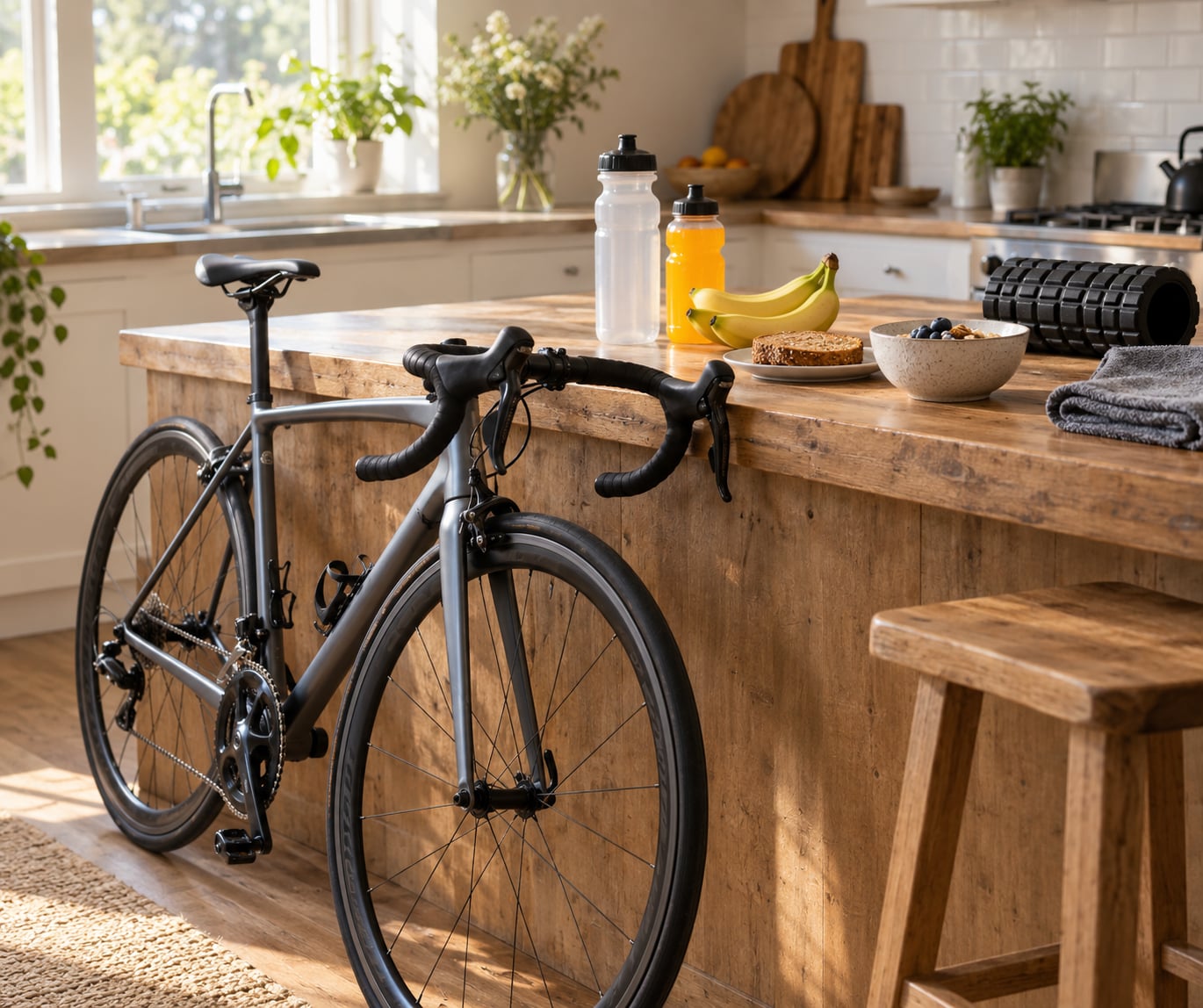
Most of the kit for recovery is already in your kitchen. The one thing riders routinely skip is planning the day after, so that comes first.
- Easy-to-digest carbohydrate and protein foods. Bananas, toast, oatmeal, rice, potatoes, bagels, and a palm-sized portion of chicken, eggs, or Greek yogurt. Solid food beats a shake when your stomach will take it.
- Water, plus electrolytes if you sweated hard. A bottle of water for steady drinking and a sports drink or electrolyte tablets for the sodium you lost on a hot day.
- A sleep-friendly space. A dark, cool room, a phone that is not going off at 1 a.m., and roughly eight hours of runway.
- Basic supplies. Clean dry clothes, a towel, a foam roller or tennis ball if you own one, and any medication you normally take.
- A calendar with the next hard session already blocked. Putting Tuesday’s interval workout in the calendar before you ride is the cheapest recovery tool there is, because it keeps you from scheduling over the recovery window.
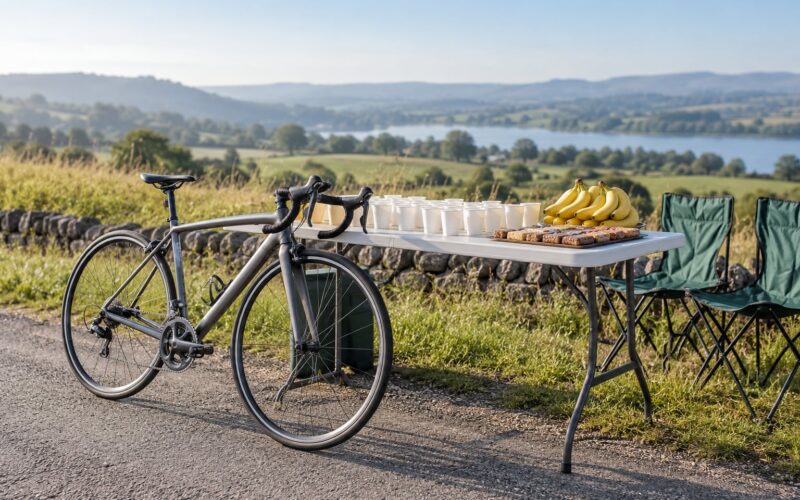
If you rode a supported event with a bag drop, most of this was handed back to you at the finish, which is a good argument for those events.
Step-by-Step: Your 24-Hour Recovery Plan
How to recover after a century ride in the first hour
The first hour is about three things: getting out of wet kit, starting to drink, and putting easy fuel in. Do not sit down the moment you stop if you can help it. Five or ten minutes of walking or very easy spinning gets blood moving back into your legs and generally feels better than the sofa.
- Change out of damp clothing and dry off properly, even if it is a quick change in a car park.
- Start drinking water straight away rather than waiting until you feel thirsty.
- Have a small easy meal if you are hungry enough, or a drink with carbohydrate and protein in it if you are not.
- Skip the regroup comparison. Riders who pile into a cafe and check their average speed tend to feel worse an hour later, not better.
You will know it worked when your mouth stops feeling like sandpaper and your legs feel heavy rather than painful. If you shake, feel dizzy, or cannot keep fluids down, that is not a tough day to push through. Get somewhere cool, get help, and seek medical care.
Rehydrate and start refueling
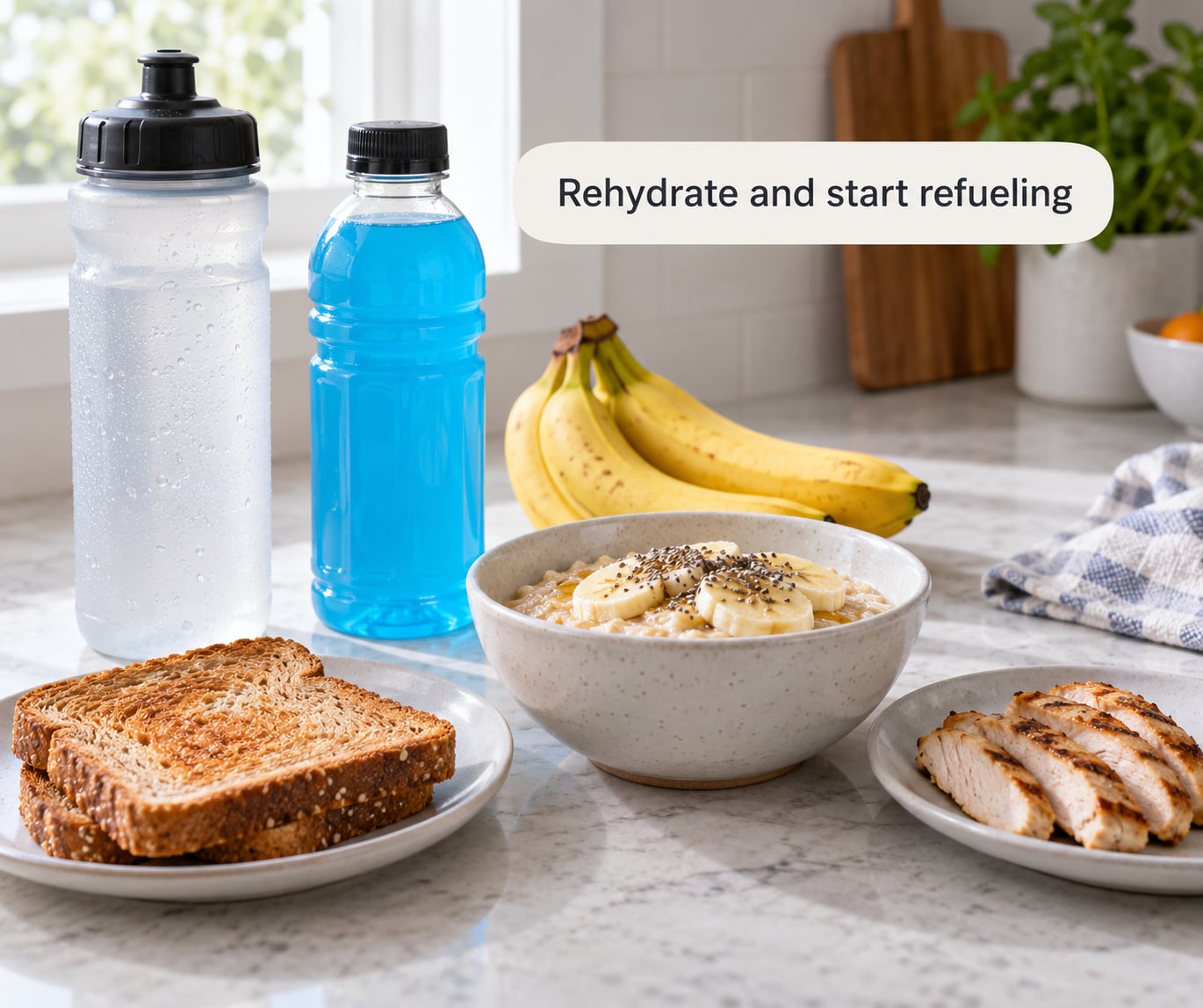
A century leaves most riders low on glycogen, the stored carbohydrate your muscles burn on the bike. Replacing it starts within 30 to 60 minutes, when the muscles are most receptive, and it keeps going through the evening.
For most riders, a sensible starting point is roughly 1 gram of carbohydrate per kilogram of bodyweight in that first post-ride meal, plus 25 to 30 grams of protein to support muscle repair. At 70 kg that is about 70 grams of carbohydrate, which is two large bananas and a slice of toast, not a heroic plate of pasta. Athletes with a bigger budget and a bigger appetite can go higher; riders with a smaller one can split it across two feedings.
A widely used sports nutrition shortcut is a carbohydrate-to-protein ratio around 4 to 1, which is why chocolate milk and home-mixed whey with dextrose show up so often in rider threads. It works, and it is fine. It is just one option, not a requirement.
Electrolytes come into their own when the day was hot or you sweated for many hours. Sodium is the one that matters most for replacing what you lost and helping you hold onto fluid. Riders on long summer centuries who add a modest amount to their water and food usually feel noticeably better by evening than riders who drank plain water all day.
Appetite often crashes a few hours in, especially if the day was hot. That is normal, and forcing a large meal tends to backfire. Small, frequent, boring options work better: rice, toast, crackers, soup, a banana. Liquid carbohydrate in a drink is easier still on an off appetite.
Move gently and protect tired muscles
Light movement usually feels better than lying down. A 20 to 40 minute easy spin at a conversational pace, or a long walk, keeps circulation moving without adding meaningful fatigue. Riders on bike forums have long argued this point, and most land on the same practical answer: an easy, short outing tomorrow rather than a rest day for its own sake.
Foam rolling your calves, hamstrings, quads, and lower back helps with the soreness you can see and touch. Use it before you sit down rather than after, and do not roll a joint. Warmth feels good on tight areas, and a cold shower knocks down the heat in your legs quickly.
Ordinary post-century soreness peaks around 24 to 72 hours and fades on its own. That is delayed onset muscle soreness, and it is not the same as damage. Stop and get medical advice if the pain is sharp and localised, if a joint is hot and swollen, if you cannot put weight on it, or if the discomfort came with chest pain, confusion, dark urine, or a fever.
Prioritize sleep and a normal meal schedule
Sleep is where a lot of the repair actually happens, and after a century it is the free recovery tool most riders neglect. Aim for seven to nine hours, keep the room cool, and finish dinner a couple of hours before bed so you are not lying down with a full stomach.
Drink something with the meal and through the evening, since a lot of riders come back from a long day mildly dehydrated without noticing. If you do not normally drink alcohol, this is a poor night to start. If you do drink, a small amount earlier is easier on sleep and hydration than a round at the finish line.
Caffeine is a judgement call. One coffee in the morning helps many people sleep less, which is the opposite of what you want. Keep it moderate and keep it early.
Check recovery before the next ride
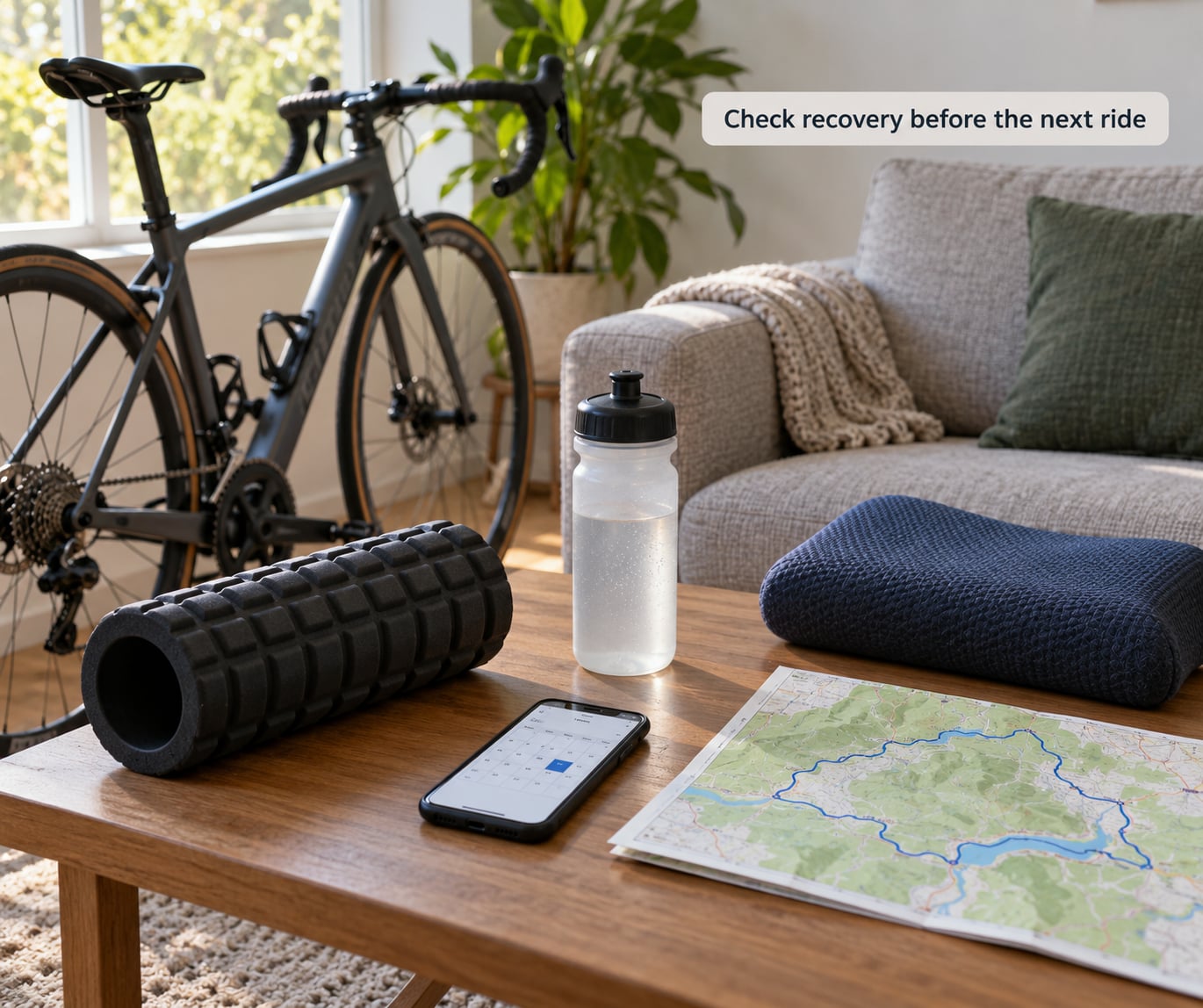
The morning after a century is a decision point, and it is easier to make with a checklist than with a feeling. Run through these five:
- Energy: do you want to get on the bike, or are you counting down the minutes until the ride is over?
- Soreness: is it the dull all-legs ache that eases with movement, or is something specific and sharp?
- Sleep: did you get a decent night, or were you up with your heart pounding?
- Motivation: do you want to ride, or is today the day the training block goes back to being a plan on paper?
- Function: can you walk downstairs normally and carry your bike without thinking about it?
If most of those answers are decent, an easy one to two hour ride at Zone 1 or Zone 2 is a reasonable call. Zone 2, by the way, means comfortable enough to hold a conversation, not a hard effort with a nice name. If energy is flat and the legs feel like sand, take the day off. One rest day costs far less than three weeks of training interrupted by illness or injury.
Give serious thought to the mental side too. The mood drop that lands a day or two after a big event is common and well documented among long-distance riders. Anticipation, big effort, and then nothing to train toward is a lot of emotional whiplash. Plan something small and pleasant for the following day that has nothing to do with a bike.
Riders coming off back-to-back centuries or a multi-day event should hold the same rules and expect a longer window, closer to a week.
Mistakes riders make inside the first 24 hours
Almost every bad recovery week I have seen starts with one of a handful of predictable errors.
- Booking a hard workout too soon. If Tuesday intervals are planned and you did a century on Sunday, move them. One easy day is not a waste.
- Training through symptoms that are not normal fatigue. Dizziness, fever, chest tightness, and a pounding heartbeat are stop signs.
- Living on a protein shake. Protein repairs, but carbohydrate is what refills the tank you ride on.
- Overeating once hunger returns. A big meal is satisfying, and it does not speed up repair.
- Skipping carbohydrates because the ride “wasn’t that hard.” A fast century still empties you out.
- Ignoring fluid and salt after a hot ride. The headache at 9 p.m. is usually hydration, not hunger.
- Measuring your recovery against the rider who left before you. You do not know their fuel, their pace, or their week.
Common Mistakes and Quick Fixes
If you take one correction from this section, take the first one. The rest of the mistakes are annoying. Rushing back to intensity is how riders end up injured three weeks later.
What that correction looks like in practice: treat the morning after as a genuine decision point rather than a formality. Answer the five questions, then choose. The easiest version of the plan is honest and boring, which is the point.
Adjust the rest of it to your day. Heat and a long duration mean more fluid and sodium and a longer window before hard effort. Cold weather means a warmer recovery meal and a slower start. A first century deserves a longer runway than a tenth. Whatever your normal response to a long ride is, track it for a few seasons, because that pattern is worth more than any generic timeline.
Frequently Asked Questions
How long does it take to recover from a century ride?
Most regular riders feel close to normal within two to four days, with soreness fading and energy returning by the third or fourth day. First-timers and riders coming off a very hard effort can take five to seven days. If you were flat or sick on the bike, expect the long end of that range and skip hard training until energy and appetite are back to normal.
Should I ride again the day after a 100-mile ride?
Usually yes, but keep it easy. A 60 to 90 minute spin at a conversational pace or a Zone 2 ride usually leaves riders feeling better than a full day on the sofa, and it keeps the habit and the circulation moving. Skip it if you are still sore to sit on, sleeping badly, or dreading the bike. One easy day now saves several poor weeks later.
How many days should I wait before my next hard workout?
For a regular rider, plan on two full days of easy activity before the next hard session, so a Sunday century usually means hard riding on Wednesday or Thursday. First-timers need closer to a week. A practical test is whether an easy ride feels genuinely easy by conversation pace and whether your resting heart rate and sleep have returned to normal.
Is it normal to feel sore after a century ride?
Yes. Delayed onset muscle soreness usually peaks between 24 and 72 hours and settles over the next few days, mostly in the legs, lower back, and hands. Light movement, foam rolling, and normal meals help it pass. Sharp pain in a specific spot, a hot swollen joint, or soreness that is worsening instead of easing is not ordinary fatigue and should be assessed by a clinician.
Should I avoid caffeine while recovering from a long ride?
You do not have to cut it out, but keep it moderate and early. Caffeine late in the day or in large amounts cuts into the deep sleep you need for muscle repair, and it can hide fatigue signals you would rather notice. Most riders do fine with one serving in the morning and none in the evening, especially on the night after a big effort.
When should post-century-ride symptoms prompt medical care?
Get medical help for chest pain, trouble breathing, fainting or severe dizziness, confusion, a racing or irregular heartbeat, dark or very little urine, a fever, vomiting that will not stop, or a hot swollen joint. Inability to urinate for many hours after a hot ride can signal a serious heat-related problem. When in doubt, seek care rather than waiting for the next ride.
Conclusion: Start with the Basics
Change out of your damp kit, start drinking, and eat a balanced meal with carbohydrate and protein. Then walk or spin easily, eat again at your normal times, and get seven to nine hours of sleep. Check how you feel in the morning before you book anything hard.
If any symptom feels more like an illness than ordinary tiredness, get medical care. Pushing through the warning signs costs far more than the ride you were protecting.