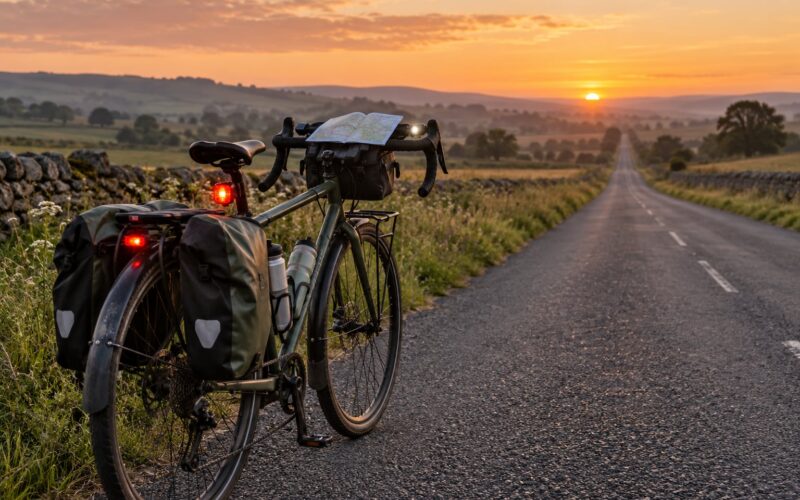
Most riders need 12 to 16 weeks of structured training to finish their first century, and anyone starting from a shorter base should plan on 20 weeks or more. The work is not about building marathon-level fitness; it is about teaching your body to sit steady for seven hours, eat on schedule, and stay comfortable past mile 60.
A century is 100 miles, or 160 km, in one day. Recreational riders usually finish somewhere between 6 and 9 hours depending on terrain, weather, and how much they actually want to suffer on the climbs.
If that sounds like a lot of hours on a bike, consider what most first-timers get wrong. They are not under-trained. They leave the start too fast, they forget to eat at mile 55 when nothing feels wrong yet, and they discover a numb hand or a raw patch of skin at hour four when it is far too late to do anything about it. Fitness is the easy part to fix in twelve weeks. Everything else has to be rehearsed.
Table of Contents
- What You Need Before Training Starts
- How to Train for a Century Ride: Step-by-Step
- Set a Realistic Century Goal
- Build a Base of Comfortable Miles
- Add Longer Rides Gradually
- Train Climbing and Steady Power
- Practice Nutrition, Hydration, and Bike Handling
- Taper and Execute the Century
- Common Century Training Mistakes
- Adding mileage too fast
- Training every long ride hard
- Showing up with untested nutrition
- Leaving the bike on the shelf for a week before the event
- Ignoring the mile 60-75 wall
- Overhauling the kit the week before
- How to Train for a Century Ride on Four Hours a Week
- Frequently Asked Questions
- How long do you need to train for a century ride?
- How far should my longest training ride be before a century?
- How difficult is a century ride compared with a marathon?
- What should I eat during a century ride?
- Do I need a power meter to train for a century ride?
- Should I ride 100 miles in training before my first century?
- Conclusion
What You Need Before Training Starts
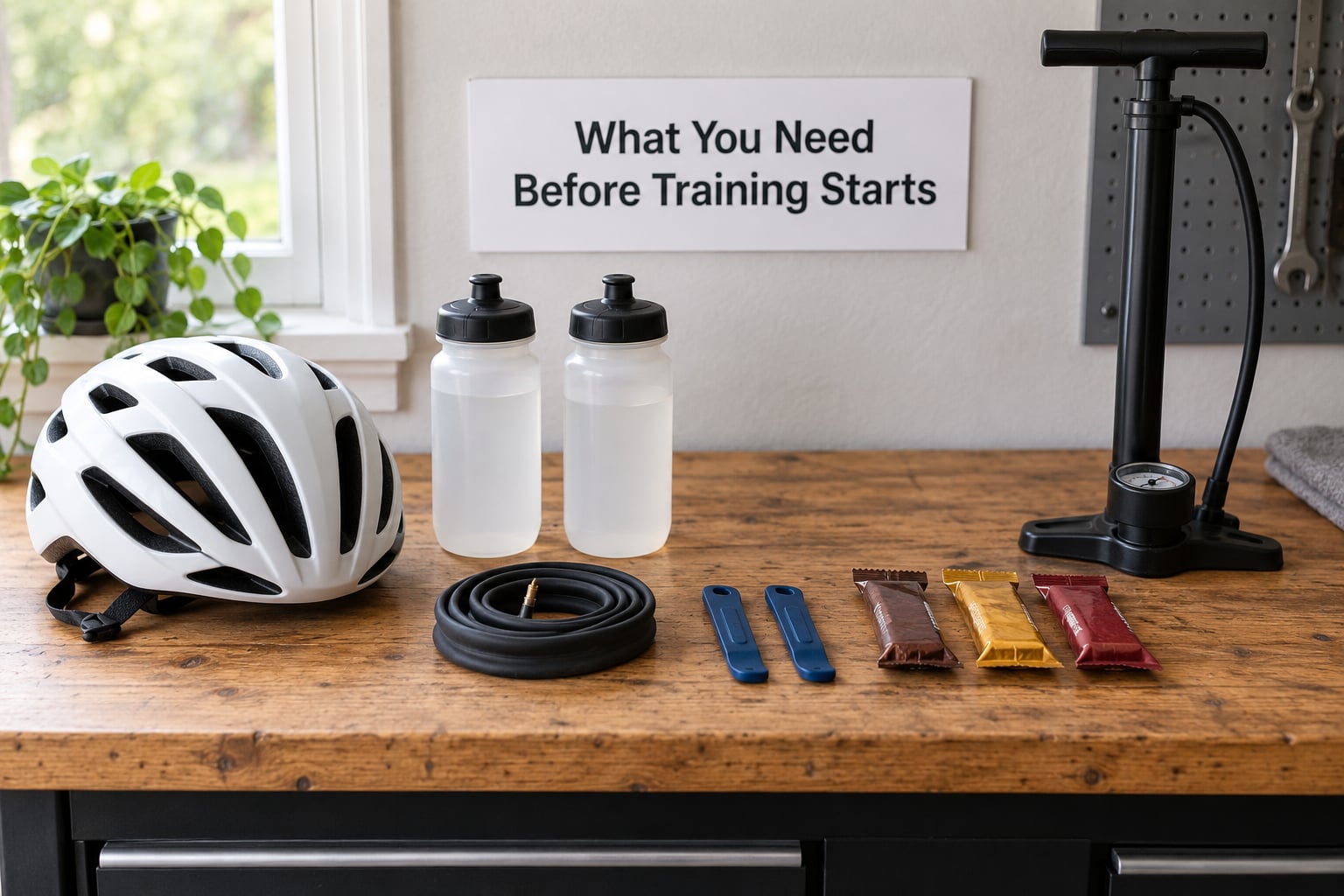
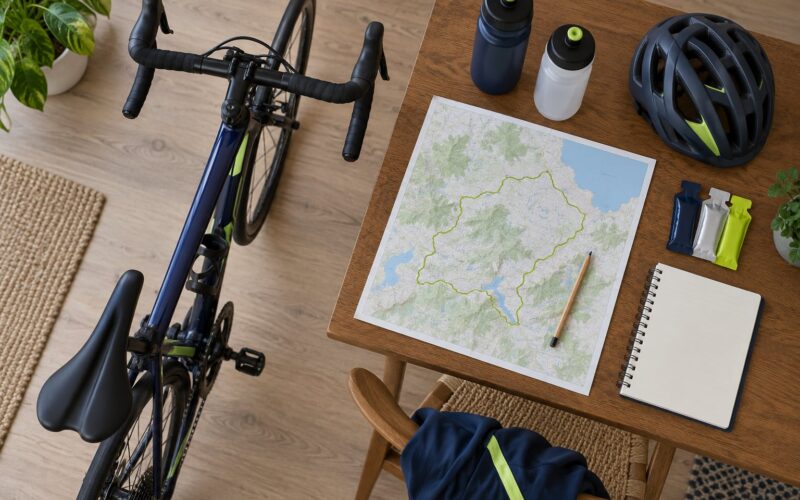
You need four things before week one, and none of them are expensive: a date, an honest read on your current fitness, a route with its terrain marked, and a way to log what you actually did.
Pick the date first. Work backwards from it. A twelve-week block is twelve weeks plus race week, so signing up for a ride fourteen weeks out leaves no slack for a sick week, a work trip, or a dropped tube on the longest ride. Sixteen to twenty weeks is safer for anyone who has not ridden consistently in the past year.
Measure your base honestly. The number that matters is your longest comfortable ride in the past three months, not your longest ride ever. Someone who rode 60 miles in a fit state two years ago and has done 10 miles a week since is a beginner again, and the plan below will reflect that.
| Longest comfortable ride right now | Weeks of structured training | Peak long ride before the event |
|---|---|---|
| Under 20 miles | 20-28 weeks, or ride a metric century first | 60-70 miles |
| 20-35 miles | 16-20 weeks | 70 miles |
| 35-50 miles | 12-16 weeks | 70-75 miles |
| 50 miles or more | 10-12 weeks | 75-80 miles |
Study the route. Elevation decides whether a century is a 6-hour ride or an 8-hour one. Pull the ride profile on a mapping tool and add up the total climb; a flat 100 miles and a route with 6,000 feet of ascent are not the same event.
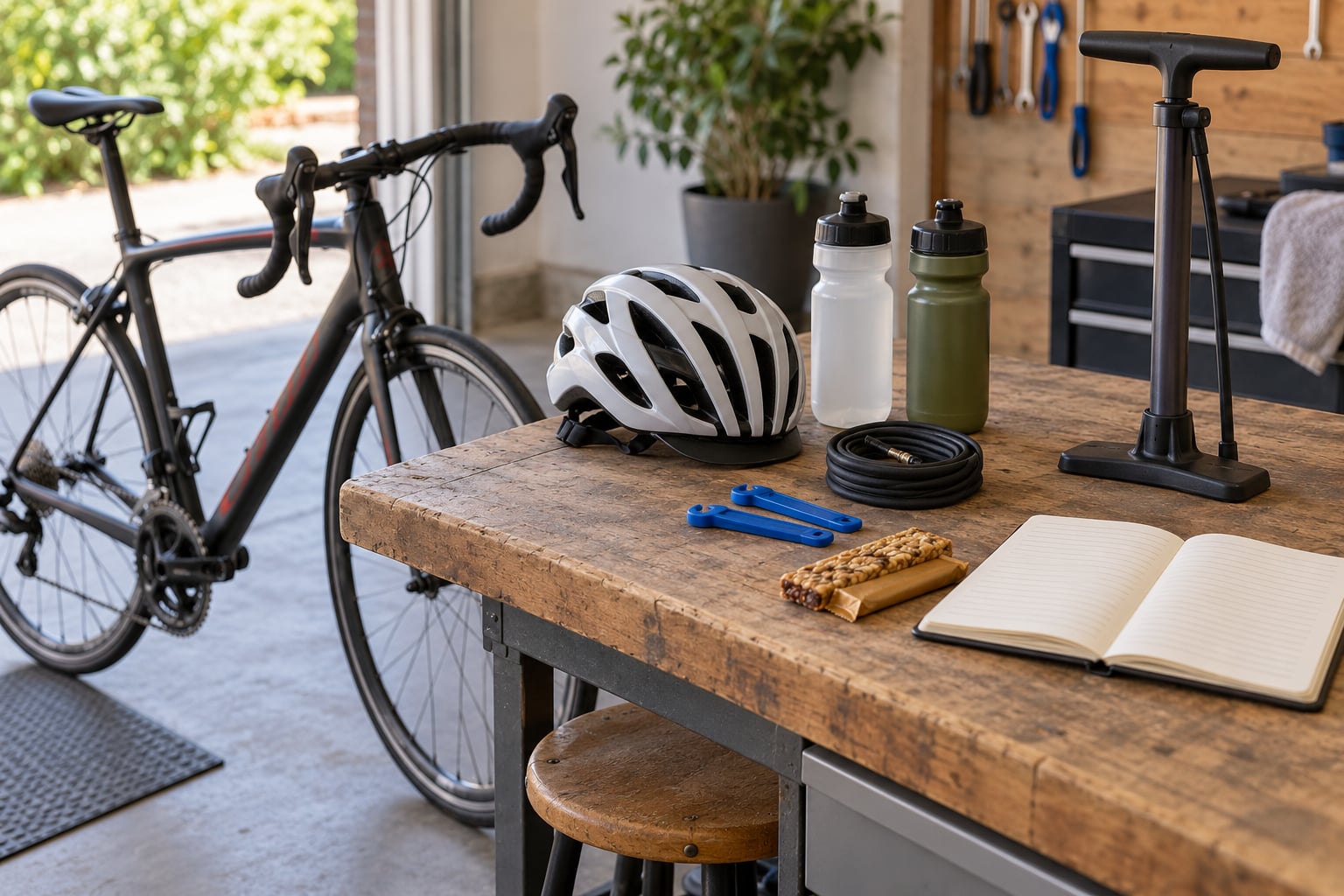
Get the kit honest. The essentials are a second tube, tire levers, a compact pump or CO2 inflator, a multi-tool with a chain breaker, spare brake pads, cash or a card for aid stations, and two bottles minimum. Add a rain shell, a spare base layer if the forecast is uncertain, and chamois cream. Most organized events have a feed and repair vehicle, but do not plan around one.
You also need a log. A phone spreadsheet or a free training app is fine. Write down the date, distance, duration, how hard it felt out of ten, and what you ate and drank. Six weeks in, that log will tell you more about your readiness than any single workout.
A coach is optional. A structured plan is not optional, and a plan you can actually follow for twelve weeks matters more than a fancy one.
How to Train for a Century Ride: Step-by-Step
Set a Realistic Century Goal
Set a target finish time that your current fitness can carry, then add the terrain and the weather on the day.
Start with the flat, fast time you could hold for four hours right now. A rider who manages 17 mph on a long flat weekend ride will finish a flat century near 7:30 including stops; one who manages 14 mph will land nearer 8:30. Add 30 to 60 minutes for climbing and another chunk for heat or headwind, and round up rather than down.
Be conservative on purpose. A target you hit with something in reserve is a good day. A target you miss at mile 80 turns a planned century into a bail-out, and bail-outs cost more than slow finishes do.
From that finish-time estimate, work backwards to a training length. If your honest longest ride is 35 miles, you need roughly twice that as a comfortable base before adding intensity, which means you are looking at 12 weeks minimum and probably 16.
Sign that target where you will see it. Riders who write their goal down tend to hit it far more often than riders who keep it in their heads.
Build a Base of Comfortable Miles
Weeks 1 to 4 are about volume, not speed. Ride 4 to 6 hours a week, mostly easy, and let the miles arrive gradually.
Easy means you can hold a full sentence of conversation. That is roughly Zone 2 for most riders, somewhere around 60-70% of max heart rate, or about 65-70% of your functional threshold power if you have a power meter. Nothing in the base phase should feel impressive.
Increase total weekly mileage by no more than 10-15% per week, and follow a 3-weeks-up, 1-week-down rhythm. Week 4 in the base phase should be roughly half your normal volume with the intensity stripped out. That recovery week is not wasted time; it is what lets weeks 5 through 12 happen.
A typical base week looks like this:
- Two easy weekday rides, 45-90 minutes each. One can double as your commute.
- One long weekend ride, starting at 45-50 miles and building toward 70 by the end of the base phase.
- One short tempo or hill session, 3 sets of 10 minutes at a hard-but-controlled effort, once the first two weeks of pure volume are behind you.
- Two strength sessions, 20-30 minutes of squats, lunges, dead bugs, and side planks, two or three days apart.
The sign you are progressing is simple: your easy pace gets faster without your heart rate climbing, and your legs feel ordinary on Monday after a Saturday long ride. If Monday hurts for three days, you added too much.
Add Longer Rides Gradually
Your long ride is the single most useful session in the plan because it trains the thing a century actually demands: sustained time in the saddle at low effort.
Build it in this progression, and cap it at 75-80% of event distance:
| Week | Phase | Long ride | Key addition |
|---|---|---|---|
| 1 | Base | 45 miles | Time on bike, easy pace |
| 2 | Base | 50 miles | Practice eating every 30 minutes |
| 3 | Base | 55 miles | First tempo block of the block |
| 4 | Base recovery | 40 miles | Reduced volume, no intensity |
| 5 | Build | 60 miles | Sweet spot 3 x 10 min |
| 6 | Build | 65 miles | Hill repeats, 5 x 4 min |
| 7 | Build | 70 miles | Sweet spot 3 x 15 min |
| 8 | Build recovery | 50 miles | Reduced volume, no intensity |
| 9 | Peak | 75 miles | Full fueling rehearsal |
| 10 | Peak | 80 miles | Full-distance dress rehearsal |
| 11 | Taper | 55 miles with pace | Volume down 30-40% |
| 12 | Race week | 30-40 miles | Volume down 40-50%, race day |
This is the 75% rule: your longest training ride should reach roughly 70-80 miles for a 100-mile century, reached two or three weeks before the event. There is no training benefit to riding 100 miles in training that does not transfer to event day, and plenty of cost: two days of recovery, a lot of food, and a psychological association between “long ride” and “suffering” that is hard to unlearn.
Keep long rides conversational. If you are riding with a group, match the slowest rider in the line. Being passed all morning does not build century fitness.
Do not make every weekend ride a test. Two or three of them should feel like work; the rest should feel like a pleasant way to spend a Saturday. Riders who make every long ride a suffer-fest usually arrive at the event tired rather than fresh.
Back-to-back riding has a place in a build phase: a two-hour Saturday followed by a three-to-four-hour Sunday adds training stress without adding much time out of your life. Keep it out of the base phase, and keep it out of the final two weeks.
The sign of progress here is your ability to hold the same pace for the last 30 minutes as you did in the first hour. That is the aerobic base doing its job.
Train Climbing and Steady Power
Most century routes have one or two decisive climbs, and they arrive early, when you are fresh and tempted to go hard.
Put a long steady climb into your mid-week ride once a week during weeks 5 to 8. Ride 30-45 minutes uphill at a controlled hard effort, roughly 75-85% of threshold, and resist the urge to redline up the steepest ramp. Sweet spot work on the flat, 3 sets of 10 to 15 minutes, builds the same thing and hurts far less.
Add cadence and handling practice on long rides. Spin at 85-95 rpm on the flat sections and drop to 70-75 when climbing. Make yourself stand every 20-30 minutes, change hand position every 15-20 minutes, and roll your shoulders back. Boring, repetitive micro-movements are what keep a back and a pair of hands working at hour five.
Hill repeats work too: five repeats of four minutes up a short climb at 90% effort with easy spinning recoveries. Use them once a week at most, and never in the same week as a 75-mile ride.
Riders training for a flat route can swap one weekly climb session for an hour of steady Zone 2 with a few short surges. The pattern of climbing matters less than the pattern of staying smooth for a long time.
Knee and cramping problems on long climbs are usually fit and fueling problems rather than knee problems. If your knees complain on steep ramps, drop your cadence, sit back, and check whether you are eating enough. Persistent pain is a reason to see a doctor, not to push through.
Practice Nutrition, Hydration, and Bike Handling
Turn your two longest training rides into full rehearsals. Everything you plan to do on event day should be tested at least twice before you do it for keeps.
Here are the numbers to train to:
| Target | Per hour | Practical options |
|---|---|---|
| Carbohydrate | 60-80 g, rising toward the upper end as rides get longer | Energy drink mix, gels, rice cakes, bananas, energy bars, boiled sweets |
| Fluid | 500-750 ml, more in heat | Two bottles plus a top-up at every stop |
| Sodium | 400-600 mg | Drink mix, electrolyte tablets, salty food |
Eat by the clock, not by hunger. Hunger lags badly, and by the time you feel empty your glycogen is already low. A simple rule: something every 30 minutes for the first two hours, then every 20 to 25 minutes.
Day before: eat normal meals, keep them carb-heavy rather than heavy in fat or fibre, and finish your last real food about three hours before bed. Morning of: breakfast you have eaten before, an hour or so before the start, plus a carb snack 20 minutes before roll-out. Loading for days is unnecessary and leaves most riders feeling heavy.
Drink on every approach to a bottle, not only when you are thirsty. In heat, plain water alone can be worse than a mix because it dilutes your sodium balance, which is a real and unpleasant problem on a 7-hour day.
Handle the bike as part of the rehearsal. In the week before a long ride, check tire pressure and tread, chain wear, brake pad thickness, and that every bottle cage is tight. On a long ride, practice taking a front wheel out and back in, and practice patching a tube in the shade of a barn door.
Wear the exact kit you plan to wear, including the saddle. Chamois cream applied before you leave and reapplied at a stop saves a lot of misery. Nothing new goes on event day; a new saddle at mile 70 is a story you do not need to tell.
Taper and Execute the Century
The final two weeks are where most riders waste their fitness by staying busy out of nerves. Cut volume, keep a little intensity, and sleep.
Week 11: reduce total volume by 30-40% while keeping one short hard session, so your legs do not go flat. Keep the long ride at 55 miles with a little pace work in it.
Week 12: 40-50% off your normal volume. Two short rides, one with a few accelerations, and nothing hard after the first three days. Long rides that week add nothing.
Keep eating the same amounts on your short rides. Cutting food intake with volume leaves you light on race morning.
On event day, hold back for the first 30 to 50 miles. Aim for an effort of 5 or 6 out of 10, roughly Zone 2, and let the group peel away. Almost everyone who blows up at mile 70 was simply too fast at mile 20.
Break the ride into chunks by mile band: settle by mile 30, stay smooth to mile 60, hold effort when the legs go at mile 75, and let the last 25 miles be whatever is left. Draft behind a partner when the road allows; riders consistently report that drafting cuts perceived effort far more than any other single change they make on a long day.
At aid stations, keep moving. Ten minutes standing still on a century is often how a rider cramps at mile 65.
Have a bail-out plan before roll-out. Know where the feed stations are, what number to call for road assistance, and the point at which you will turn back. Turning back at mile 70 with legs intact is a decision, not a failure. Riders who plan to finish no matter what tend to be the ones riding home in a support vehicle.
Common Century Training Mistakes
Adding mileage too fast
The single most common training error, and the easiest to avoid. Going from 20 to 60 miles a week in one step guarantees a bad fortnight at best. Hold weekly increases to 10-15%, take a reduced week every fourth week, and remember that fitness builds slowly while recovery does not.
Training every long ride hard
A hard weekend ride should be hard. Three of them in a row is a three-week fitness phase, not a training week. Keep most long rides conversational, keep the hard work for mid-week sessions where you can recover afterwards, and treat the weekend as the thing you are training toward.
Showing up with untested nutrition
Bonking around mile 60 to 70 is the most reported first-century failure, and it is almost entirely a preparation failure rather than a fitness one. Whatever you plan to eat on event day, you need to have eaten on at least two long training rides. Nothing new on the day, including a brand-new energy drink you found in a pocket.
Leaving the bike on the shelf for a week before the event
A week off the bike before a 100-mile ride costs far more fitness than most riders expect. Keep riding, just less. Taper the volume and hold a little intensity, which is exactly what the two weeks before are for.
Ignoring the mile 60-75 wall
Riders report the low point consistently between mile 60 and 75: legs heavy, boredom real, and quitting looking reasonable. Plan for it. Break that section into ten-mile chunks, eat deliberately, change position, and tell the people at the start with you that you are still riding.
Overhauling the kit the week before
A new saddle, saddlebags, or handlebar tape on the eve of a century is a self-inflicted risk. Fit changes need weeks of riding to settle. Sort any changes in week 8 or 9 so you know how you feel in them.
How to Train for a Century Ride on Four Hours a Week
Most people training for a century do not have twelve hours a week. If you have under four, the plan shrinks but does not disappear.
- Two rides, not five. One 2.5-hour easy mid-week ride and one long ride on alternate weekends. Long rides matter more than weekday volume for this specific goal.
- Commute for free miles. A 40-minute ride each way replaces two weekday sessions that you would otherwise skip.
- Use a trainer in bad weather. An hour of steady Zone 2 on a turbo trainer counts. Outdoors is better, but the trainer is better than nothing.
- Drop the dedicated intensity sessions to one every two weeks and keep them short, such as 3 x 8 minutes.
- Extend the block to 20 weeks rather than compressing it into 12. The three-weeks-up, one-week-down rhythm still applies.
- Enter a metric century (100 km) first if you have less than a 30-mile base. It is the standard stepping stone and it is not a lesser achievement.
Frequently Asked Questions
How long do you need to train for a century ride?
Most riders need 12 to 16 weeks of structured training. If your longest comfortable ride is under 20 miles, plan on 20 to 28 weeks or ride a metric century first. The determining factor is not raw fitness but time in the saddle: you need enough weeks to reach a 70 to 80 mile peak long ride, rehearse your fuelling, and then taper properly without skipping steps.
How far should my longest training ride be before a century?
Aim for 70 to 80 miles, reached two or three weeks before the event. This is the 75% rule: your longest training ride should equal roughly three quarters of the century distance. Riding 100 miles in training adds little that a 75-mile ride has not already taught you, and it costs two days of recovery plus a strong mental association with suffering.
How difficult is a century ride compared with a marathon?
A century is harder in duration and repetitive strain, easier in intensity. A marathon finishes in about three hours; a century takes most recreational riders 6 to 9. The marathon is a harder cardiovascular effort, but the century demands more on the saddle, hands, and lower back. Riders with a solid running base usually handle the pacing, and the fueling side of the day is a new skill for everyone.
What should I eat during a century ride?
Target 60 to 80 g of carbohydrate per hour, rising toward the upper end as the ride goes on, with 500 to 750 ml of fluid and 400 to 600 mg of sodium per hour. Eat by the clock rather than by hunger, something every 20 to 30 minutes. Test the exact products you plan to use on at least two long training rides before event day.
Do I need a power meter to train for a century ride?
No. A heart rate monitor or nothing at all is enough, provided you know what easy feels like and hold to it. A power meter does make pacing and long-term progress easier to judge, but it is a tool, not a requirement. Most of the critical skills for a century, namely fuelling, comfort, and patience, cannot be measured by watts.
Should I ride 100 miles in training before my first century?
No. Ride to 70 to 80 miles and stop there. The extra 20 to 30 miles buys very little for a single-day event and costs real recovery time. If your longest ride is still under 40 miles three weeks out, reduce your pace target instead of adding distance, and consider a support vehicle or a paceline on the day.
Conclusion
Knowing how to train for a century comes down to four things: build weekly miles gradually, keep most riding genuinely easy, rehearse your fuelling and your kit on long training rides, and taper without skipping it.
Start with the first three actions this week. Pick the date and count back sixteen weeks. Write down your longest comfortable ride from the last three months and set your training length from that. Then ride three easy hours this weekend and write it in your log.
Everything else, the long rides, the fuelling numbers, the pacing plan, the taper, comes after that and is a matter of being consistent for a few months.