Functional Threshold Power is the highest average wattage you can hold for about an hour, and an FTP test protocol is simply a structured way of finding it: one maximal effort of a set length, one number recorded, one multiplier applied. This guide walks through the three protocols most riders actually use, how to prepare, pace and convert the result, and what to do when your indoor number and your road number disagree.
The honest headline first: FTP is an estimate, not a laboratory measurement. A venous blood draw and a controlled ramp protocol in a lab will tell you something closer to your lactate threshold. What an FTP test gives you is repeatable, cheap, and good enough to set training zones with. That is a trade most riders should happily make.
Everything below assumes you have a crank-arm power meter or a smart trainer that reports power. If you do not, skip to the heart rate section, because there is a workable alternative that is less precise.
Table of Contents
- What Does FTP Mean for Cyclists?
- Which FTP Test Is Best for Your Cycling Goals?
- FTP Test Protocol for Cyclists: Step by Step
- How to Prepare for the FTP Test Protocol
- What Is the Best Warm-Up Before an FTP Test?
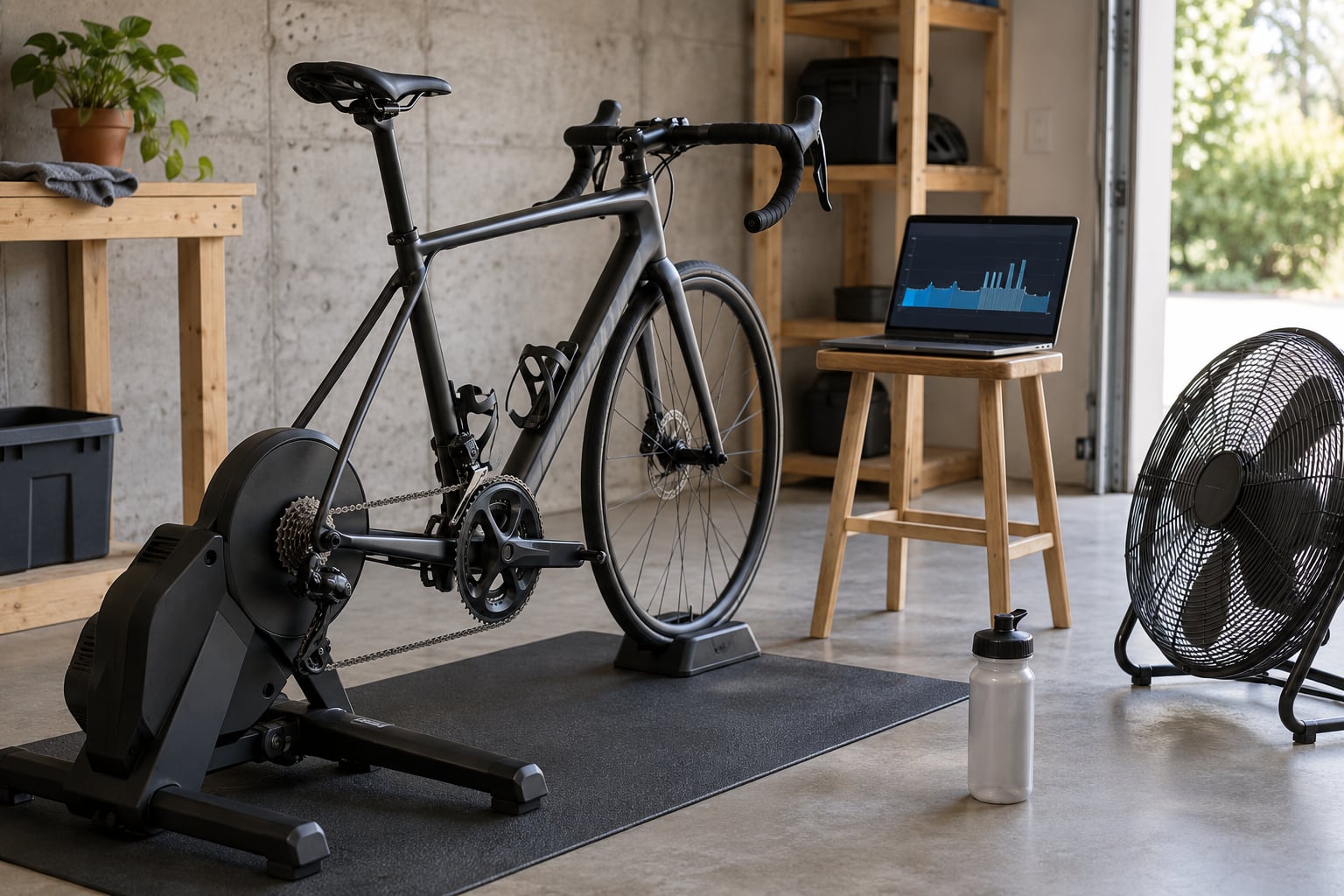
- How to Run a 20-Minute FTP Test on an Indoor Trainer
- How to Run a Step (Ramp) FTP Test Indoors
- How to Test FTP Outdoors Safely
- How to Calculate Your FTP from Test Results
- How to Use FTP to Set Training Zones
- What Heart Rate Numbers Should You Use?
- How Often Should Cyclists Retest FTP?
- Common FTP Testing Mistakes to Avoid
- Frequently Asked Questions
- How do I do a cycling FTP test at home?
- Is FTP the same as VO2 max?
- Which is better, a ramp test or a 20-minute FTP test?
- Why is my FTP different on the trainer than on the road?
- What if my FTP number comes out lower than I expected?
- Do I need a power meter to know my FTP?
- Conclusion
What Does FTP Mean for Cyclists?
Functional Threshold Power, usually shortened to FTP, is the highest average power output, measured in watts, a cyclist can sustain for roughly one hour. It is the point where your body produces and clears lactate at the same rate, and where effort becomes genuinely unrecoverable without rest.
That definition matters because FTP is not the same thing as three other numbers riders mix up constantly.
- Maximal power is what you can produce for a few seconds, usually around 110-130% of FTP. It comes from fast-twitch fibres and fades quickly.
- VO2 max is the ceiling on how much oxygen your body can deliver and use, expressed in millilitres per kilogram per minute. A power test cannot measure it directly, though it gives a rough estimate.
- Lactate threshold is a physiological point, often expressed in watts too but measured in a lab. FTP is the field version of it, and it is usually a little lower.
- Critical power comes from a different model of the rider, treating power as a function of time. A three-minute and a twenty-minute test give you two points, and the curve through them defines critical power.
Riders also get a number without knowing what kind of fitness it describes. A rider with 250 watts of FTP and a rider with 300 who cannot sit at 250 for twenty minutes are not the same shape. Comparing raw watts across body sizes is why the useful second number is watts per kilogram, or W/kg.
Which FTP Test Is Best for Your Cycling Goals?
Pick the protocol you can repeat without thinking about it, because repeatability matters more than theoretical accuracy. A slightly less accurate test done every six weeks on the same setup will serve your training better than the most accurate one you attempt twice.
| Protocol | Duration | Multiplier | Difficulty | Equipment | Main limitation | Best for |
|---|---|---|---|---|---|---|
| 20-minute test | 20 min maximal | 95% of average power | High | Trainer with power, or road with power meter | Pacing is hard; blowing up early ruins the result | Riders with steady pacing and a repeatable setup |
| Ramp test | 8-20 min stepped | 75% of best one-minute power | Low | Erg-mode trainer | Needs good calibration; seated or standing changes the number | First-time testers and anyone who struggles to pace |
| 2 x 8-minute test | 2 x 8 min, 5-10 min easy between | 90% of the average of both efforts | High | Trainer with power | Second effort depends on the first; two bad days in one | Riders who want a harder, more specific number |
| 60-minute time trial | 60 min maximal | 100% of average power | Very high | Anything with a power meter | Brutal; rarely repeatable on a real life schedule | Riders with a long uninterrupted block available |
| Outdoor field test | 20-30 min | 95% of average power | Medium | Power meter, head unit, safe route | Hills, wind, heat and traffic all distort the average | Riders with no trainer at all |
My rule is simple. First test ever, pick the ramp test. Second and third tests, if the numbers keep moving around, the ramp test is telling you something about consistency rather than fitness. Once you can sit on the edge of redline for twenty minutes without either exploding or sandbagging, switch to the 20-minute test and stay there.
One warning about the 8-minute test: credible sources disagree on its multiplier. Some say 90% of the average of both efforts, others quote 95% in one paragraph and 90% in another. I use 90% of the combined average, and I would rather state one consistent number than pretend the sources agree.
FTP Test Protocol for Cyclists: Step by Step
This is the sequence that makes a result repeatable. Follow it in the same order every time, including the boring parts.
- Choose the test day at least 48 hours out. No hard sessions, no racing, no long ride the day before.
- Check the equipment. Charge the sensor batteries, tighten the crank arm to the correct torque, and confirm the head unit is recording to the right sensors.
- Calibrate. On a smart trainer that measures power, run a spin-down calibration warm and unloaded. On a crank meter, verify it against a known-good source if your software offers that, and check for a zero offset.
- Set up the bike. Saddle height, saddle to bar drop and the tyre pressure you actually ride at. A protocol is not comparable to another one run on a different position.
- Warm up for 15-20 minutes using the structure below.
- Run the protocol exactly as written, no openers, no early sprint, no testing the legs first.
- Cool down for 10-15 minutes at easy cadence before getting off the bike.
- Save the file and write down the conditions: date, ambient temperature, whether a fan was running, the protocol and multiplier used, and how the effort felt.
How to Prepare for the FTP Test Protocol
The 48 hours before matters more than most riders expect. Legs carry glycogen, not motivation, and a test run on tired legs measures your last hard session rather than your fitness.
- 48 hours out: no intervals, no race, no hill repeats. Easy spinning or nothing at all.
- The day before: normal easy ride, 30-60 minutes at zone 1-2. Eat normally rather than trying anything new.
- 3-4 hours before: a normal carb-containing meal. Pasta, rice, oats, bread, potatoes all work. This is normal fuelling, not a special diet.
- Hydration: drink normally through the previous day, and drink water in the two hours before the test. Room temperature is a fine target.
- Sleep: a short night shows up in the number. If you slept four hours, reschedule.
- Clothing and setup: whatever you normally train in, fan pointed at you, water within reach.
Then do the thing nobody tells you to do. Run one practice test at about 85% effort, several days before, so your body learns the shape of the protocol. Riders routinely report that their first test is the invalid one, not because they are weak but because nobody can pace an effort they have never felt before. If you are returning from injury, a long layoff, or illness, a practice run and a conversation with your doctor or physio come before any hard test.
What Is the Best Warm-Up Before an FTP Test?
A 15-20 minute warm-up is the right length. Its job is to raise your temperature, get blood moving, and open the lungs without spending the glycogen the test needs.
- Minutes 0-5: easy spinning at zone 1, around 50-60% of FTP, building cadence gradually from whatever your resting spin cadence is to your normal training cadence.
- Minutes 5-8: three or four short drills. Cadence work, a few out-of-the-saddle accelerations of 5-10 seconds at moderate power, some one-legged pedalling if you use it in training.
- Minutes 8-14: three progressive efforts, roughly 20 seconds, 1 minute and 2 minutes, with equal or longer easy recoveries between them. Top effort at about 90% of FTP.
- Minutes 14-20: easy spinning, mostly seated, letting heart rate come back down. Finish with two or three pedal strokes at a higher cadence to settle the legs.
If you only have ten minutes, keep the structure and drop the drills and the middle effort. The test should leave you feeling loose and slightly warm, not like you have already done the work. A warm-up that leaves you fatigued gives you a number that is low for reasons that have nothing to do with fitness.
How to Run a 20-Minute FTP Test on an Indoor Trainer
The 20-minute test is the one most riders picture when they hear the words FTP test protocol. It is short, brutal and easy to do badly.
Set the trainer in erg mode, or ride outdoors on a flat road if your power meter is accurate. Cadence sits in the 85-95 rpm range, which is the recommendation that comes up most often in coaching material and matches what most riders can hold under load.
Start at exactly 100% of the target effort. No opener, no three minutes building. If you feel you have too much left at five minutes, that is normal and it is correct.
Pace the whole twenty minutes as evenly as you can. The classic failure is a strong first eight minutes and a collapse in the last five, which produces a number well below your actual ability. Forum riders describe the ideal finish as just hanging on, which is a useful marker even though it is not a measurement.
Then cool down for 10-15 minutes. Once the session is saved, note the average power over the twenty-minute window. Multiply that by 0.95.
One diagnostic worth building in: watch the last five minutes after the test. If you could clearly have gone much harder and finished faster, the number understates you. If you had nothing left and were shaking, the number is honest. Neither of those is a failure of effort, they are information about the protocol you chose.
How to Run a Step (Ramp) FTP Test Indoors
The ramp test climbs in steps until you fail, and it removes almost all of the pacing problem. That is why it suits beginners and why it is the protocol I would hand to anyone doing their first test.
- Warm up for 15-20 minutes as above, then run a short spin-down calibration so the trainer knows the current resistance.
- Set an increment. 5 watts per minute is gentle and gives a long test. 20 watts per minute is a hard, short, aggressive test. Most riders land between 10 and 20.
- No opener. The ramp begins where it begins. An all-out start has nowhere to go after the first minute and usually produces a low result.
- Stay seated until you physically cannot hold the last step any more. Standing is permitted only for the final failed stage, and only if that is your normal habit.
- Keep cadence steady. Let the trainer lower resistance as you fatigue rather than dropping to 60 rpm. A cadence collapse in erg mode makes the trainer get loud and hot, and some riders find the seat or cranks slip if it goes far enough.
- The test ends when you can no longer complete a step. Find your best one-minute average power from the data afterwards, not your fastest-looking moment from memory.
Multiply that best one-minute average by 0.75. That is your estimated FTP.
Does the ramp test overestimate FTP? Not by design, but it has two known sources of variance. The first is standing versus seated: standing generates more power for the same effort, so a standing ramp test reads higher than a seated one on the same rider. The second is calibration. A badly calibrated trainer can shift the result by enough to move you into a different zone.
On the discrepancy question that comes up constantly on r/cycling and r/Velo: one rider reports a ramp result of 238 watts and a completely different number a month later on the road, and asks which to believe. The answer is usually that you changed the protocol, the position or the power source. A ramp result and a 20-minute result are two different measurements, and comparing them directly is like comparing a sprint to a time trial. Pick one and stay with it, or accept a conversion offset and apply it consistently.
How to Test FTP Outdoors Safely
A field test works, and it is the only option for riders with no trainer. The trade is less control.
Choose a flat, low-traffic route you have ridden before, ideally out and back so the return is the same surface and gradient as the outbound leg. Avoid a route with a long climb, because an average power over 20 minutes with a hill is not comparable to a flat 20 minutes.
Carry water, run a head unit that shows live average power for the effort window, and start with the plan to hold a steady number rather than a feeling. Wind is the biggest single variable on a road: a tailwind segment and a headwind segment in the same test can swing the average by 15-20 watts, which is a whole zone.
Safety rules for a maximal effort in traffic are not negotiable. Pick a time of day with low volume, ride with a partner if you can, and stop the test if conditions turn bad. A test you abandoned halfway is worth more than a number you got in a dangerous situation.
Then use the outdoor result conservatively. If the day was hot, windy, or you rode the week after a block rather than the week after an easy one, note it next to the number. When in doubt, take the lower of your indoor and outdoor estimates and build your zones from that.
How to Calculate Your FTP from Test Results
The calculation is one multiplication. The hard part is knowing which result to multiply.
| Test | Result to use | Multiplier | Worked example |
|---|---|---|---|
| 20-minute test | Average power over the full 20 minutes | 0.95 | 268 W average gives 255 W FTP |
| 2 x 8-minute test | Average of the two 8-minute efforts | 0.90 | 290 W average gives 261 W FTP |
| Ramp test | Best one-minute average power | 0.75 | 320 W best minute gives 240 W FTP |
| 60-minute time trial | Average power over the hour | 1.00 | 250 W average is 250 W FTP |
Average power and peak power are not interchangeable. The multiplier always applies to the average over the specified window. Using your best one-minute power from a 20-minute test will inflate the estimate badly, because peak power and sustainable power are different physiological quantities.
Most riders will get slightly different numbers from different protocols. One community reviewer published his own cross-validation for exactly this reason, with a ramp result of 229 watts, Xert at 242, a TrainerRoad AI estimate of 246, a lab-style MLSS figure of 249, and critical power at 239. Five methods, ten or twenty watts of spread, one rider. That is the honest size of the uncertainty you are working with.
How to Use FTP to Set Training Zones
This is where the number earns its keep, and it is the step most riders skip. A test you never convert into training targets was just an expensive workout.
| Zone | Name | Percent of FTP | What it does |
|---|---|---|---|
| Z1 | Recovery | Under 55% | Keeps circulation up, clears fatigue |
| Z2 | Endurance / aerobic base | 56-75% | Builds mitochondria, longest time here |
| Z3 | Tempo | 76-90% | Longer efforts just below threshold |
| Z4 | Threshold | 91-105% | Raising the number you just measured |
| Z5 | VO2 max | 106-120% | 3-8 minute efforts, hard and unrecoverable |
| Z6 | Anaerobic | 121-150% | Short, sharp, sparingly |
| Z7 | Neuromuscular | Above 150% | Seconds, not minutes |
Treat these percentages as starting points, not laws. Adjust them using breathing, heart rate, how you recover afterwards and how the next day’s ride feels. A zone that leaves you wrecked for two days is a zone set too high.
It also helps to know whether your number is plausible before you build eight weeks of training on it. Amateur cyclists commonly sit between 1.5 and 2.5 W/kg, with experienced riders reaching 3.0-4.5 W/kg.
| Rider level | Typical FTP | For a 75 kg rider | For an 85 kg rider |
|---|---|---|---|
| New or returning rider | 1.2-1.8 W/kg | 90-135 W | 102-153 W |
| Regular club rider | 1.8-2.5 W/kg | 135-188 W | 153-213 W |
| Experienced amateur | 2.5-3.2 W/kg | 188-240 W | 213-272 W |
| Racing-level rider | 3.2-4.0 W/kg | 240-300 W | 272-340 W |
| Elite | 4.0 W/kg and above | 300 W and up | 340 W and up |
So is 240 a good FTP? For a 75 kg rider, that is about 3.2 W/kg, which puts them at the experienced amateur level and comfortably into the upper part of the club-riding range. For an 85 kg rider it is a strong club number. Weight is why the W/kg column matters more than the watts.
Age matters less than people think once you account for training history. The rider asking about a good FTP at 55 will usually find that the rider who has trained consistently for five years beats the 35-year-old who has not, and consistent training is the whole variable.
What Heart Rate Numbers Should You Use?
Heart rate is the useful second opinion on a power test, and the wrong primary one. It lags power at the start of a maximal effort, which is physiology, not a broken strap.
Your heart rate rises and falls on a delay of several seconds to tens of seconds behind what you are doing. In the first minutes of a 20-minute test, your heart rate can be 15-20 beats below where it settles. The average heart rate you read straight off your head unit is therefore not a valid threshold number, and anyone who sets their threshold HR from a test start is setting it too low.
The best estimate comes from the final few minutes of the effort, once heart rate has caught up and stabilised. Some riders also use the last two minutes of the ramp test, but the noisy final steps make that harder to read.
Use it this way. Set your training zones from power, then note what your heart rate actually did at each zone during real rides over the following weeks. If zone 2 at 70% of FTP puts you at 155 beats per minute, that is your zone 2. Heart rate is a lagging, individual, affected-by-heat-and-stress measurement, which is exactly why it belongs as a check rather than the source of truth.
How Often Should Cyclists Retest FTP?
Every four to six weeks is the most common recommendation and the one I would follow. Long enough for real fitness change to show up, short enough that a stale number never drives your training for a season.
A test is worth scheduling when your zones have stopped feeling right, when a training block finishes, when you move to a new power meter or trainer, or when you are peaking for an event and want current numbers.
There are equally good reasons not to test. Do not test when you are ill, when you are still sore from a hard block, when you have had two or three poor nights, or in the middle of a taper where a low number will only worry you. Forum riders describe the most common ruined number as the one taken too soon after hard training, and the fix is simply to wait a week.
Retesting too often has its own cost. Small measurement noise becomes a story about your fitness, and a rider who drops 10 watts between two tests often concludes something has gone badly wrong when nothing has. Unless conditions were identical, treat changes under about 3% as noise.
Common FTP Testing Mistakes to Avoid
Most bad FTP numbers are not fitness problems. They come from the protocol, the setup, or the day.
- Testing while fatigued. A test three days after hard intervals measures recovery, not fitness. This is the single most common cause of a disappointing number.
- Starting too hard. Openers feel good and ruin both the 20-minute and the ramp test. Start at target, not above it.
- Changing position mid-effort. Standing on a ramp test after being seated inflates the result. Decide your position before you start and hold it.
- Skipping calibration. A smart trainer without a spin-down calibration, or a crank meter with a drifted zero offset, produces a number that means nothing. Calibrate every session.
- Letting cadence collapse in erg mode. As fatigue builds, riders drop to 60 rpm or lower, the trainer gets hot and loud, and some people experience equipment slipping. Let resistance come down and keep the cadence up.
- Comparing numbers across protocols. A ramp result and a 20-minute result are not the same measurement. Convert both to FTP before you compare them.
- Using peak power where average power belongs. The multipliers apply to a windowed average, not to your best moment.
- Not recording conditions. Temperature, wind, hydration, fan, sleep and the previous day’s session all change the result. A number with no notes is not a data point.
- Testing once and never again. A single result is a rumour. The trend across four or five tests on the same setup is the actual measurement.
Frequently Asked Questions
How do I do a cycling FTP test at home?
You need a power source, a warm-up, one maximal effort and a cool-down. Set up your smart trainer in erg mode or use a road bike with a crank-arm power meter, calibrate, warm up for 15-20 minutes, then run your chosen protocol: a 20-minute all-out effort, a stepped ramp test, or two 8-minute efforts with recovery between. Sit at 85-95 rpm, save the file, and multiply your windowed average power by the multiplier for that protocol.
Is FTP the same as VO2 max?
No. VO2 max measures how much oxygen your body can deliver and use, and it is read in millilitres per kilogram per minute. FTP measures sustainable power output in watts. A power test estimates VO2 max rather than measuring it. They sit on different parts of the performance curve, and improving one does not automatically improve the other.
Which is better, a ramp test or a 20-minute FTP test?
The ramp test is easier to pace and better for a first attempt, because the load rises gradually and there is no judgement call about how hard to start. The 20-minute test is more repeatable for experienced riders and needs less equipment, since it works on any accurate power source. If you are new to testing, start with the ramp test. If you can already sit at a hard effort for twenty minutes, the 20-minute test is the better long-term choice.
Why is my FTP different on the trainer than on the road?
Usually one of four things: a different protocol was used on each, position changed between seated and standing, the trainer was not calibrated, or the wind and gradient on your outdoor route swung the average. Compare like with like by converting both results with the correct multiplier for each protocol. If they still disagree by more than about 5%, recheck calibration and ride the same route in similar conditions before trusting either number.
What if my FTP number comes out lower than I expected?
Check the conditions first rather than the rider. Test when fresh, after 48 hours without hard sessions, and record temperature, fan use and sleep. Confirm the calibration and that you used the right result, since peak power instead of windowed average power corrupts the calculation. If all of that checks out, a low number is usually a pacing failure rather than a fitness ceiling, and the fix is one practice test before the next attempt.
Do I need a power meter to know my FTP?
You can estimate it, but less precisely. Riding a known 20-minute effort with a heart-rate monitor and applying a threshold heart rate back to that effort gives a workable number, and heart rate from the final minutes of the test works better than from the start. It will drift with heat, stress and caffeine, so treat it as a starting point for zones and revisit once you have a meter.
Conclusion
Do one thing this week: run a practice test at about 85% effort on the protocol you intend to use, so that when you do it for real you already know what the effort feels like.
Then pick one protocol, test when you are genuinely fresh, calibrate first, and write down the conditions alongside the number. Convert it with the right multiplier, sanity-check it against your watts per kilogram, and set conservative zones from it. Hold those zones for six weeks of training before you add load or test again. The riders who get the most out of FTP testing are the ones who repeat the same protocol and read the trend, not the ones who find the biggest single number.