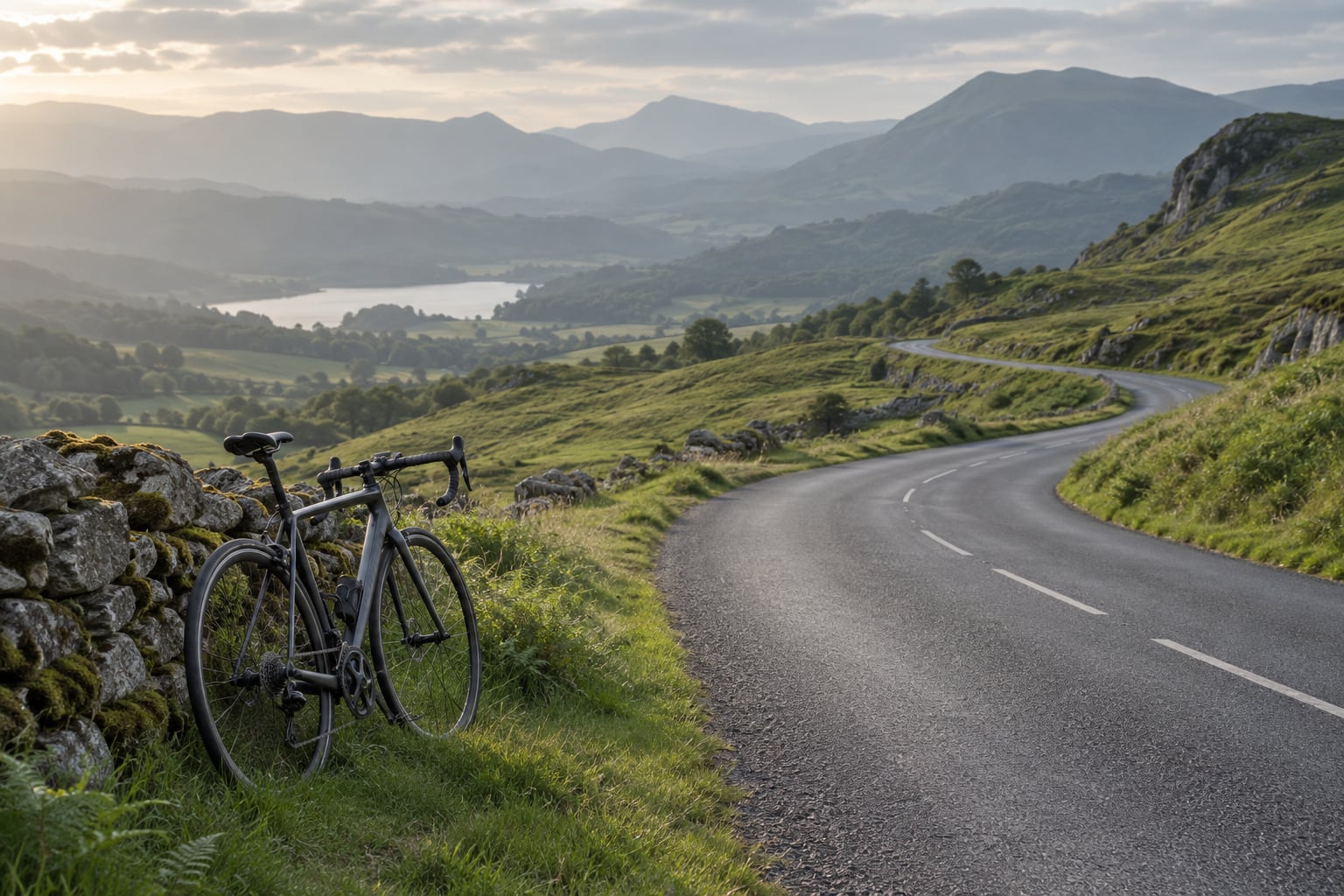
You overcome fear of descending by building two things at once: real bike-handling skill and familiarity with the sensation of gravity doing its work. Tension, a tight grip, short vision and late braking are what actually make descents dangerous, and every one of them is a habit you can retrain on flat ground first. Most riders who get comfortable with descents did it through graded repetition, not through one brave plunge down a mountain road.
It also helps to know where the fear comes from. For some riders it is heights, for others it is one crash they never fully got over. Either way, the response in the body is the same, and the plan below addresses both the physical skills and the nervous habit.
Table of Contents
- What You Need
- A bike that fits your hands and your brakes
- A helmet, and a route you can bail out of
- Basic handling you already own
- A patient partner, or a coach
- How to Overcome Fear of Descending Step by Step
- How to overcome fear of descending safely
- Build bike control away from steep hills
- Choose a deliberately easy first descent
- Use a repeatable riding position and braking routine
- Repeat exposure without rehearsing the panic
- Use breathing and mental focus to manage fear
- Descend safely in a group
- Common Mistakes
- If the front wheel starts to wobble
- Frequently Asked Questions
- Should beginners avoid descending altogether?
- What is the easiest road for a first cycling descent?
- How do I stop being scared every time I approach a hill?
- What gear should I use on a steep descent?
- Is it normal to shake or feel anxious while descending?
- When should I get help from a cycling coach or doctor?
- Start This Week
What You Need
Before you ride a descent, four things have to be right. Get these sorted and half the fear quietly disappears on its own.
A bike that fits your hands and your brakes
On a descent you cannot take a hand off the bars, so the levers have to be reachable without shifting your weight. A bike fitter can adjust lever reach, or you can move the levers inward along the bar tape and check the change yourself. If you are gripping the bar at the very end of the drops and your knuckles are white, the levers are too far away.
Shoes matter for the same reason. Pedals that hold your foot in place mean you can put weight on the pedals without thinking about it, which is how you stabilise the bike through a rough patch.
A helmet, and a route you can bail out of
A properly fitted helmet is non-negotiable, and so is a first route with somewhere to stop. Pick something short. If you can pull over at any point and walk to a cafe, your body knows it has an exit, and that alone lowers your pulse.
Basic handling you already own
You need three skills before the hill does anything interesting: riding one-handed briefly while signalling, threshold braking in a straight line, and turning a bike while pedalling. If those feel shaky in a parking lot, they will feel worse at speed.
A patient partner, or a coach
Riding with someone better than you is the fastest route to confidence, because you borrow their line and their calm. Pick someone who will slow down rather than someone who will talk you into going faster. A one-off session with a qualified coach is worth it if there is nobody local to ride with.
One thing to be clear about: do not force yourself onto a fast, blind mountain road before the flat-ground work is comfortable. A bad early descent is the single most common reason riders end up back on the fear list for years.
How to Overcome Fear of Descending Step by Step
How to overcome fear of descending safely
Five habits carry almost all of the safety on a descent. Everything below is built on them.
Look a long way ahead. The most-repeated piece of advice on cycling forums is also the most useful: your eyes should be on the corner you are entering, not the road surface directly in front of the wheel. Riders who stare at the tarmac ten feet ahead report that the world appears to move terrifyingly fast, because they have no lead time to prepare. Look where you want to be in fifteen seconds and the speed settles on its own.
Relax the grip and drop your elbows. A death grip transmits tension straight back through the bars, and a tense bike is an unstable bike. Elbows soft, hands light on the hooks or the drops, shoulders down. If you can wiggle your fingers at speed, the pressure is right.
Control speed before the corner, never in it. Brake in a straight line, then stop braking once the bike is leaned. Braking while turning is the classic cause of speed wobble, which is the one thing that turns a manageable descent into a white-knuckle emergency.
Keep a pedal ready. On a steep grade, weight on the pedals keeps the front wheel planted and keeps you from rocking forward onto the bars. Drop the outside pedal in a corner and let the bike lean underneath you rather than throwing your body at the turn.
Brake smoothly and in small doses. Feather both levers alternately with light, frequent pressure rather than one long squeeze. Small inputs are easy to release; a hard grab is not.
Build bike control away from steep hills
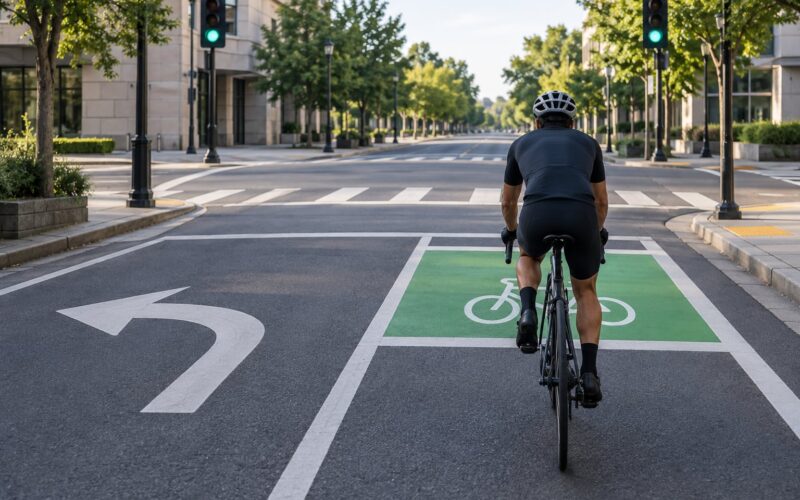
This is where the real work happens, and you can do every drill on flat pavement. Use a quiet car park or a smooth, low-traffic lane.
Balanced cornering drill. Ride in a wide oval at a steady effort and check that you can ride out of the curve without crossing the centre line. Add speed only when the oval feels boring. You have learned it when the bike leans on its own and your body stays quiet over it.
Threshold braking. Pick a straight line and squeeze each lever separately to the point the wheel is about to lock, then release. Do it slowly at first. The goal is a hands that know the difference between firm and locked.
Braking in a line. Follow painted markings or a seam in the tarmac while braking progressively, staying on the line the whole way. This teaches you that slowing down and staying on line can happen together.
Gear selection. Roll down a gentle slope at a comfortable cadence and shift through the block, up and down, without looking at your feet. Many riders are scared because they are spinning out in too hard a gear, which makes every tiny correction feel violent.
Side to side. Ride slowly with both hands on the bars and shift your weight gently from one foot to the other. It feels strange and it matters on loose surfaces.
Choose a deliberately easy first descent
Look for a gradient in the four to six percent range, ideally with one or two gentle curves so you practise reading the road. Broad road space matters more than distance: you want room to move across the lane and room to stop.
Check the runout at the bottom. A descent that ends at an intersection you have to cross fast is the wrong first one. So is one with an unfamiliar junction, a blind apex, or gravel washed onto the tarmac. And do one descent, not five. Repeat the same short stretch several times in one session rather than covering new road each time, because familiarity is the thing you are actually building.
Use a repeatable riding position and braking routine
Riders with descending confidence almost all run the same short routine before they roll. Write it on your bars and use it until it becomes automatic.
- Squeeze both levers hard, one at a time, and confirm each bites before you set off.
- Run a thumb pressure check across the tyres and look for cuts or debris in the tread.
- Spin the wheels to check they are not rubbing.
- Pick a gear that lets you hold roughly 80 rpm on the slope.
- Set a target speed you are confident to hold, usually one you could stop from comfortably.
- Settle your hands on the hoods or drops with elbows bent and relaxed.
- Brake progressively before the tightest part of the turn, then release completely.
That last line is the one that matters. Braking before the corner is what keeps the bike quiet through it.
Repeat exposure without rehearsing the panic
Fear of descending fades through repetition, but it fades faster when the repetition is structured rather than random.
Return to the same manageable route several times. After each run, write one line: what felt controllable. Not what went well in some objective sense, just what your body did not fight. That single note is the whole exercise.
Change one thing at a time between runs, never several at once. Try a slightly higher target speed, or a curve you previously stopped short of, or a wet surface later in the day. If you change speed, corners, surface and gear together you will have no idea which one upset you.
Advance only after several calm, confident repetitions. Three is usually enough of a signal, and if a run feels shaky, simply repeat the last comfortable one. That is not going backwards. It is the mechanism working.
Watch for catastrophic thinking, the mental rehearsal of the crash that might happen. It is the single thing that keeps riders stuck. When the thought arrives, name it and move to a fact you can check: how far to the next corner, what gear you are in, how the surface looks. Facts are shorter than predictions.
Use breathing and mental focus to manage fear
Try a simple pattern on the bike: inhale for four counts, exhale for six. The longer exhale is what slows your heart rate, and it is awkward at first, so practise it off the bike too.
Then give yourself one visible target, one short instruction, one focus point. A marked turnout three corners down. The words “brake before the corner”. Eyes on the apex. One instruction at a time, because panic crowds out everything else.
Coaches who work on this often use a desensitisation exercise: sit on the stationary bike and watch video of a descent at your own pace, repeatedly, with the soundtrack. Riders report that the ride itself stops feeling like an event once the visuals have stopped being unfamiliar. There is evidence that gradual, repeated exposure to a stressor does desensitise the nervous system response, which is the entire basis of the exposure work above.
There is a line worth knowing. Ordinary caution is a useful signal that slows you down. Panic is different: shaking that spreads, vision narrowing, loss of control of the brake lever. If you are there, stop. Pull over, sit down, breathe, and ride home. Then look at the plan above and start at step one again.
Descend safely in a group
Groups change descending almost completely, because other people’s speed becomes your speed whether you chose it or not.
Choose your position deliberately. Following a rider’s wheel close behind gives you their line and their braking points, which is why riders say it accelerates learning, but you inherit every wobble and every late brake they make. Riding beside a confident partner, a wheel back, gives you a reference point without the pressure of a tail.
Keep at least two seconds of space on the flat and more on the descent. Never match speed by instinct. Call your braking, call debris, call a car. Nobody should be pressured into riding faster than they can safely handle, and saying so out loud before the descent is far easier than trying to hold back on the way down.
Afterward, tell your group partners what you can currently manage, so next time they plan the route with you rather than around you.
Common Mistakes
Gripping the bars too hard. Tension is the loop: you grip harder, the bike feels less stable, you grip harder. Loosen deliberately, drop the elbows, and check you can wiggle your fingers.
Staring at the road immediately ahead. Short vision makes speed look far worse than it is and removes your time to plan. Aim at the corner, not the tarmac.
Braking suddenly inside the turn. This loads the front wheel unevenly and is the most common trigger for speed wobble. Brake in a straight line before the corner, then release.
Riding a gear that is too hard. Spinning out on a steep grade means every small wobble demands a big pedal correction. Pick a gear that keeps your legs turning calmly.
Choosing a remote mountain descent too soon. Distance and remoteness do not help. Start close to home, on a road you can reach on foot, and repeat it.
Treating fear as a character flaw. It is a learned response, and it responds to practice. Riders who describe it as weakness tend to be the ones who keep forcing it and keep failing.
Riding straight after a crash without rebuilding. Give yourself a staged return: flat rides first, then small hills, then a repeat of the descent where it happened. Skipping stages is why some riders never get the descent back.
If the front wheel starts to wobble
Speed wobble is worth its own drill because it is a top fear trigger and almost never explained in how-to articles. Most cases come from over-braking in a corner, weight too far forward, or a grip too tight. The recovery is: stop braking entirely and release the grip, soften the arms and elbows, let the bike settle under you, and gently steer into the wobble rather than fighting it. Never yank the bars. Practise this on a quiet straight descent so it is familiar before you need it.
Frequently Asked Questions
Should beginners avoid descending altogether?
No. Avoiding descents keeps the fear untouched and blocks the practice that fixes it. Instead, start with flat-ground cornering and braking drills, then ride a short, low-traffic descent of four to six percent that you could walk away from. Repeat that same stretch several times before you try anything steeper. Progressing early is what turns nerves into a bad experience worth remembering.
What is the easiest road for a first cycling descent?
Look for a short stretch with a gentle gradient around four to six percent, wide lanes, one or two easy curves, and a flat or very gentle runout at the bottom. Avoid blind apexes, gravel washed onto the tarmac, junctions you must cross, and anywhere the road drops away out of sight. Familiarity beats difficulty here, so a road you have already ridden up is the ideal first descent.
How do I stop being scared every time I approach a hill?
Repetition is the mechanism, but structured repetition works far better than random riding. Return to the same manageable route, write down what felt controllable after each run, and change only one variable at a time, such as a slightly higher target speed. Advance after several calm repetitions. Rehearsing the crash in your head keeps the fear alive, so replace those predictions with facts you can check on the road.
What gear should I use on a steep descent?
Choose a gear that lets you keep roughly 80 rpm without grinding, so your feet stay light and ready to add support. A gear that is too hard makes you spin out, and every tiny wobble then demands a large pedal correction. Keep a light pedal touch on the pedals, drop the outside pedal through corners, and stay seated on steep, uneven sections so the front wheel is not unloaded.
Is it normal to shake or feel anxious while descending?
Yes. A racing heart, gripping hands and elevated breathing are a normal stress response to a new and fast situation, and plenty of experienced riders still feel it on unfamiliar roads. The response fades with familiar, controlled exposure. If the shaking spreads to the point that you lose control of the bars or the brake lever, pull over and stop, breathe slowly, and restart your progression a step earlier.
When should I get help from a cycling coach or doctor?
A qualified coach is worth booking if you have nobody local to ride with, if your fear has not shifted after several weeks of graded practice, or if you keep skipping the same stage. A doctor is worth speaking to if the anxiety is affecting the rest of your life, comes with panic attacks, or arrives in situations unrelated to cycling. Fear of specific speeds after a crash is common; anxiety that spreads wider is a different matter.
Start This Week
Pick one thing and do it before you read anything else about descending: ride the flat-ground drills until cornering and threshold braking feel boring. That is the foundation everything else stands on, and it takes one session in a car park.
Then choose a short descent close to home and ride it twice, writing down what felt controllable after each one. That is how to overcome fear of descending in practice, not in theory.