The best way to avoid cramps while cycling is to build your mileage gradually, drink and eat on a steady rhythm instead of in bursts, and ride at a pace your current fitness supports. Most ride-ending cramps show up when a rider asks more of their legs than the last few weeks of training prepared them for.
That is the short version, and it is slightly different from what most riders expect. Nobody cramp because they forgot a drink. They cramp because a muscle that has been working for ninety minutes on a hot day, at a gradient far steeper than last Saturday, loses the normal control it had on an easy spin.
A cycling cramp has a medical name, exercise-associated muscle cramp, or EAMC. It is an involuntary, sustained contraction that most often hits the calf, hamstring, quad or inner thigh, and it stops the pedal stroke until it releases. Research has not settled on one mechanism, and the honest answer is that it looks like a mix: fatigue in the muscle, changes in how the nervous system signals contraction, and sometimes a genuine fluid or sodium deficit on top.
Riders notice one thing consistently in the research and in the forums: having cramped before is the strongest predictor of cramping again. That is worth saying out loud, because it means the plan below is about changing what your body can tolerate week to week, not about chasing a drink mix.
This is general training and nutrition information, not medical advice. Persistent, severe or unusual cramps need a doctor, and anything about your own health is a conversation for a physician or a registered dietitian.
Table of Contents
- What You Need
- How to Avoid Cramps While Cycling Step by Step
- 1. Start With a Reasonable Pre-Ride Plan
- 2. Hydrate Before You Start
- 3. Replace Fluids and Electrolytes During the Ride
- 4. Fuel Early and Consistently
- 5. Match Your Pace to the Route
- 6. Check Your Position and Bike Setup
- 7. Cool Down and Recover Afterward
- Common Mistakes
- Frequently Asked Questions
- Do I need electrolyte drinks to avoid cycling cramps?
- How much water should I drink during a long ride?
- Can cycling cramps happen even when I am hydrated?
- Are salt tablets necessary for preventing cramps?
- What should I do if I get a cramp while riding?
- When should I see a doctor about recurring cycling cramps?
- A Simple First Step for Your Next Ride
What You Need
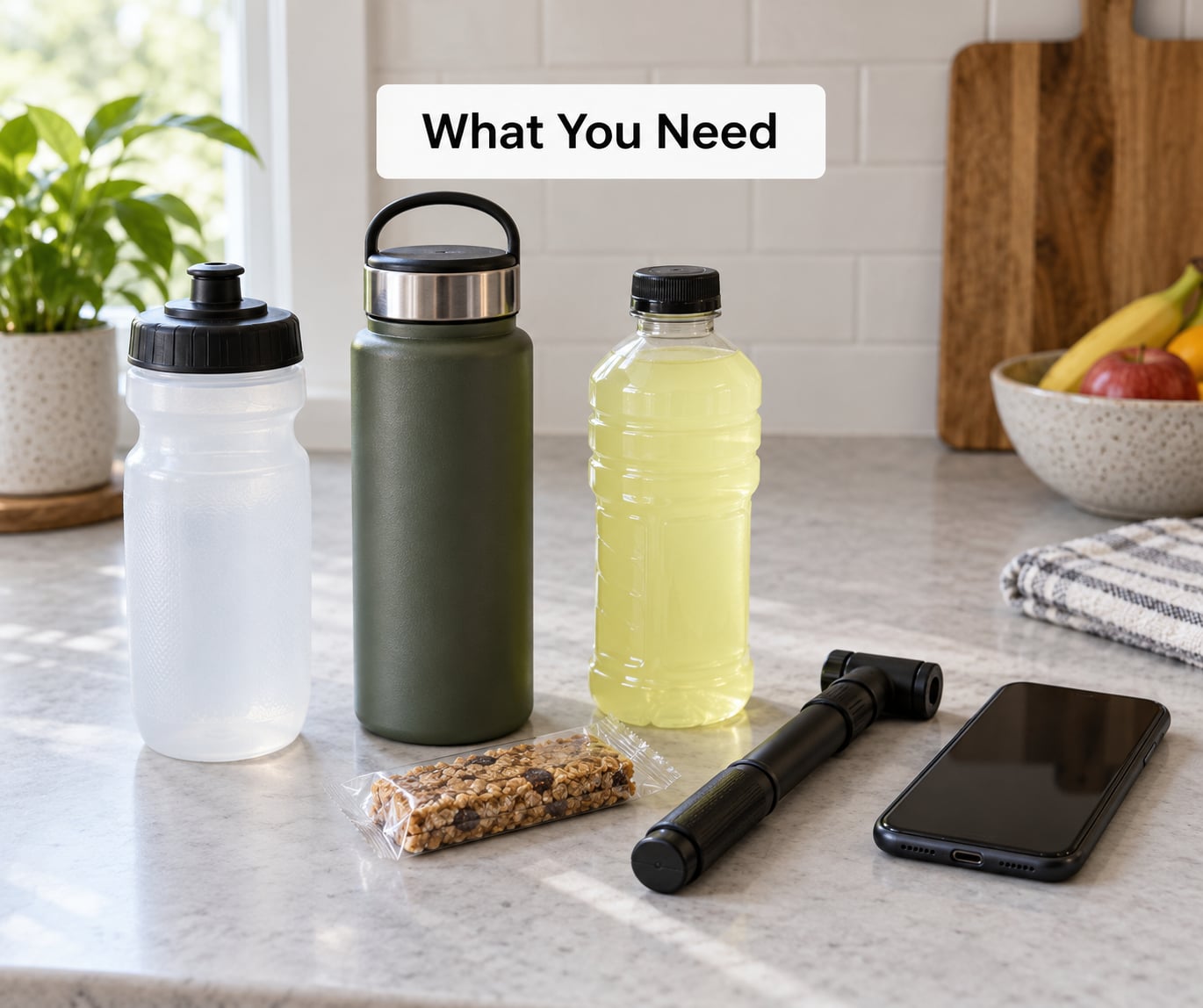
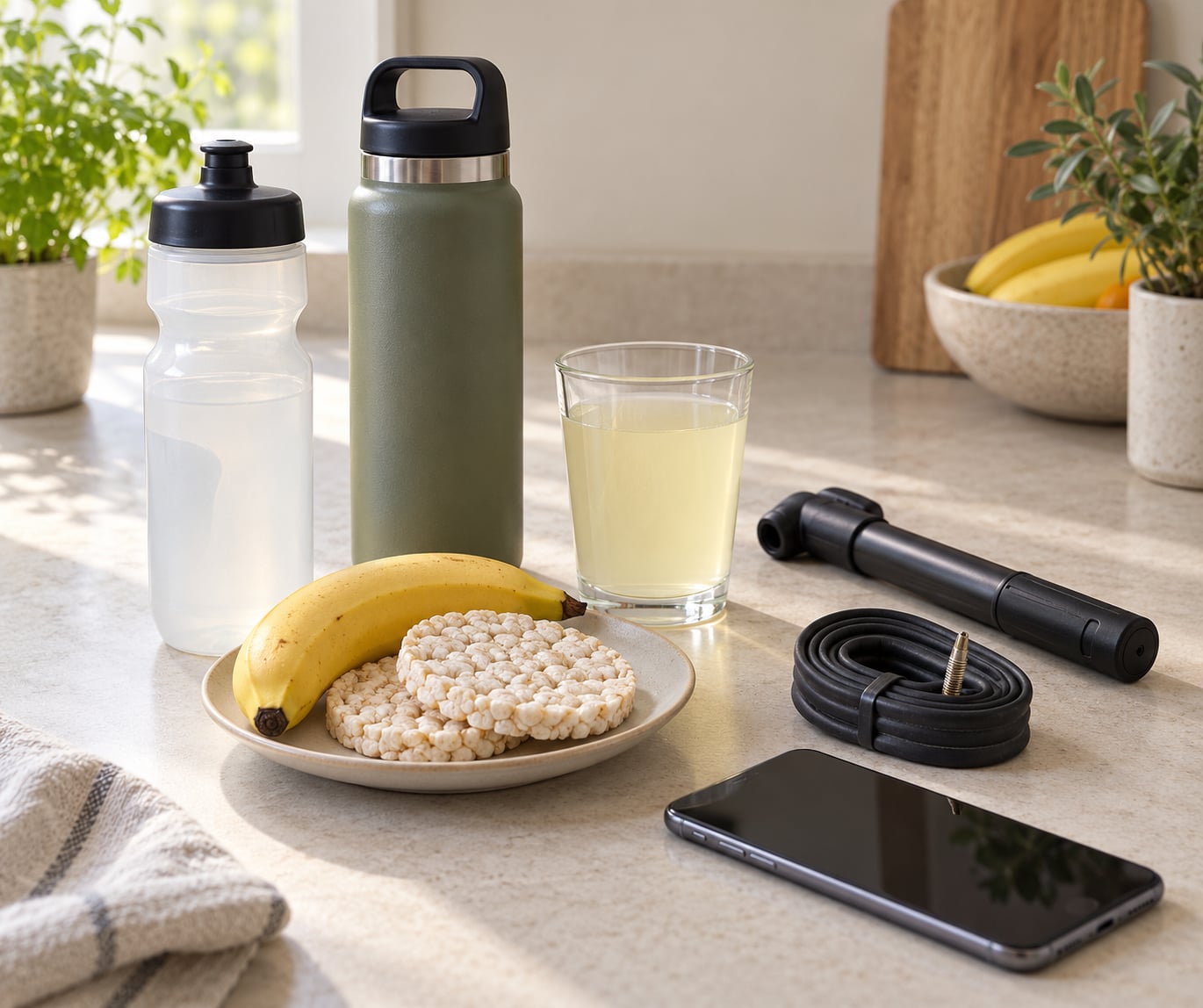
Before the routine matters, the packing matters. Most riders arrive at a long ride with one bottle and a granola bar and then wonder why hour four is a disaster. A modest kit covers most cases.
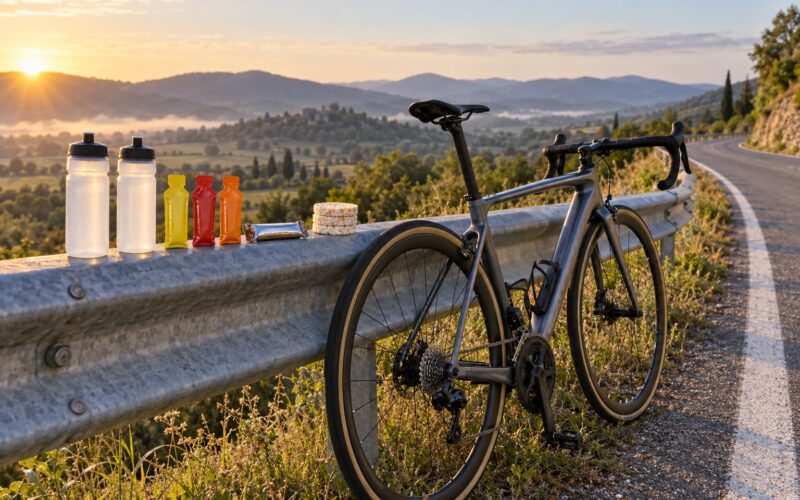
- Liquids. Enough for the planned duration plus a margin. A common starting point is roughly 400 to 800 millilitres an hour depending on heat and effort, so a three-hour ride needs at least one and a half litres, and a summer century needs more. Two or three bottles, or a hydration pack, beats one big bottle you drain in an hour.
- A sodium source if the ride is over about two hours, if it is warm, or if you are a heavy sweater. An electrolyte drink powder, a drink mixed with a small amount of table salt, or salty food such as salted pretzels or a cheese portion all work.
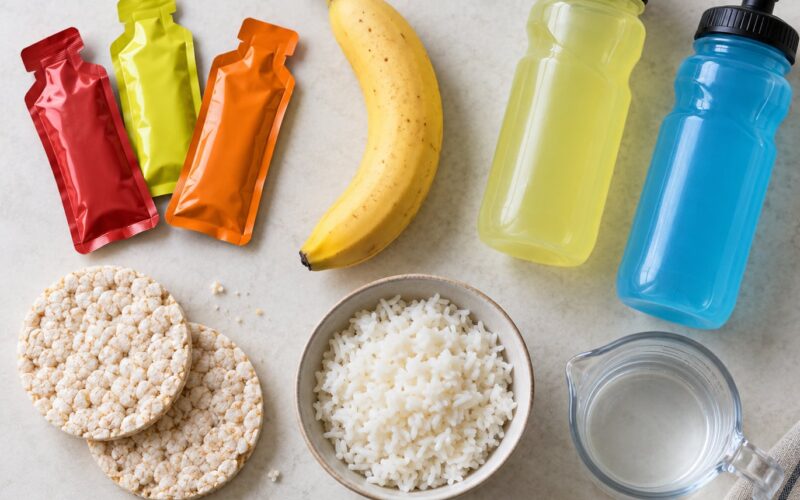
- Real food at a rate. Plan on 60 to 90 grams of carbohydrate an hour, which is roughly 30 to 45 grams every half hour. Gels, chewy bars, bananas, rice cakes, dates, or homemade malt and oats on bread are all fine. The number matters more than the specific item.
- The boring safety kit. Mini pump, spare tube or plug, tire levers, a wind layer, and a phone. A cramp in the middle of a lane with no tube is a much worse afternoon.
- One page of notes. Your ride plan and a short log of how you felt. Three rides of notes will tell you more about your cramps than any forum thread will.
How to Avoid Cramps While Cycling Step by Step
Seven steps, in the order they happen. Each one comes with a way to tell whether it actually worked, because a routine you cannot measure is just a habit.
1. Start With a Reasonable Pre-Ride Plan
Route difficulty, weather, duration and expected effort decide how much food and fluid you need. A flat three-hour spin needs less than a hilly four-hour ride in July heat, and both need more than a coffee-and-bagel commute.
The test is simple: was this ride longer, steeper or faster than your longest or hardest ride in the past two or three weeks? If yes, plan for it. Add a bottle, add two more feedings, and expect to ride more conservatively than you did last weekend.
You can tell the plan worked when the middle of the ride feels ordinary rather than like a slow decline. If you are counting minutes until the end, the plan was too ambitious for your current fitness.
2. Hydrate Before You Start
Arrive normally hydrated, not stuffed. Most of us ride slightly behind after a night of poor drinking, and topping up over breakfast and through the morning is enough.
The pale straw colour of urine in the morning is a useful rough check. Beyond that, do not chug water in the last twenty minutes before rolling out, because the excess simply leaves. There is also a real risk in forcing down far more fluid than you can absorb: on long hot rides, over-drinking without matching sodium can cause hyponatraemia, which is dangerous and easily mistaken for dehydration.
Fix both extremes with the same habit. Drink steadily across the evening and the morning, then stop and let your body settle before you ride.
3. Replace Fluids and Electrolytes During the Ride
On short rides in mild weather, plain water is genuinely enough. Electrolytes earn their place once you are past two hours, once the weather is hot, or once you know you sweat heavily.
Plan sips rather than reactions. Pick a rhythm, such as a few mouthfuls every 15 or 20 minutes, and note how far a bottle is meant to last. Riders who react to thirst usually drink too fast early and cannot keep up later.
Find your own sweat rate once, and it stops being guesswork. Ride in your normal kit, weigh yourself before, ride without drinking for an hour if the conditions allow, weigh yourself again and subtract any fluid you took in. That difference is your hourly sweat loss. Multiply it by your planned hours, add a margin, and that is your fluid target.
On the sodium question, be clear about what is proven. A well-known 2019 study of marathon runners found no sweat rate or sodium threshold that reliably predicted whether someone would cramp, which pushed the field away from the idea that a single magic number of salt stops cramps. What is well supported is replacing what you lose so you recover properly and can keep drinking. A useful self-trial, discussed in detail by sports nutritionists, is to add 1500 to 2000 milligrams of sodium a day for two weeks and see whether cramp-prone rides change. Take sodium advice from a doctor or a registered dietitian if you have blood pressure, kidney or heart conditions.
4. Fuel Early and Consistently
Hunger is a late signal, by which point your energy is already low and your legs are already complaining. Start eating on schedule at the beginning of the ride, not when you first feel hollow.
Aim for 30 to 45 grams of carbohydrate every 30 minutes after the first hour. Train the gut on your easy rides, because a gut that has never handled fuel at pace will not handle it on event day. Most riders who do this for three or four weeks find their fuelling settled.
You can tell it is working when hunger stays in the background. If your pace sags at ninety minutes and a bar fixes it briefly, your rate was too low or too late.
5. Match Your Pace to the Route
Gradual pacing reduces the chance that fatigue gets mistaken for a cramp, or that a developing cramp turns into a tear. Start the ride easier than your ego suggests, hold a conversational effort on the flat, and climb at a rhythm you can hold.
Sudden surges are the trigger riders ignore. Three accelerations to hold the wheel and one attack on the hill after an hour of sitting is a recipe for a hamstring that locks up.
Watch for the warning sign that riders on r/bicycling and road review forums describe again and again: twitching, fluttering or a cold shiver in the muscle before the cramp arrives. Treat it as a real signal. Ease off the power, back the pace off for a minute, take a drink and a few mouthfuls of food, and let the muscle reset. Catching it early is far easier than riding through it.
6. Check Your Position and Bike Setup
Recurring discomfort in the same muscle group, saddle pressure that shifts, or a hamstring that cramps on every descent is a setup problem until proven otherwise. Use the table below to find where to look first.
| Cramp location | What to check first | On-bike stretch |
|---|---|---|
| Calf | Saddle slightly too high, or cleats sitting back with heels down on the pedal | Heel drop on the downstroke, keep the knee soft, hold without bouncing |
| Hamstring | Reach too long at the saddle, low saddle under a long cockpit, aggressive standing sprints | Standing, heel to the seat, gentle hamstring stretch, then sit back down |
| Quad | Saddle too low, high drag from a bent knee while pedalling | Pull the heel to the hip while seated and hold |
| Inner thigh (adductor) | Cramped saddle nose or nose angle, a wide sit bone spread, plus a long ride at high intensity | Unclip, stand with feet apart, open the inner thigh gently, wait it out |
Change anything on your bike in small increments. Half a centimetre of saddle height, a few degrees of cleat rotation, then four rides before you judge it, is a sane rule. Anything larger will make a saddle sore or a knee ache before you know whether the cramp improved.
If the same muscle cramps repeatedly at the same point in the ride, book a bike fit. A good fitter will change a couple of things and send you away, not sell you a saddle.
7. Cool Down and Recover Afterward
Evening and night-time cramps, especially in the inner thighs, are among the most common complaints riders raise and the least often addressed. They usually follow a ride that ran long, hot or harder than usual, and they show up as the body cools and settles.
The protocol is unglamorous and works. Spin or walk easily for ten to fifteen minutes, then stretch the muscles that were working, holding each stretch for around thirty seconds without bouncing. Refuel within the hour with carbohydrate and protein, drink across the evening, and eat normally.
Do not skip the cool-down because you are cold and want to get in the shower. That is the exact situation most riders describe before the evening cramps arrive.
Some things are not a training problem, and stopping to check saves time. Seek medical review if cramps come with swelling, weakness, numbness, dark urine, or signs of heat illness such as confusion or headache. Cramps that wake you at night when you are not training hard, or that keep returning despite steady training and sensible fuelling, deserve a doctor rather than another supplement.
Common Mistakes
Most riders are not short of effort. They are carrying one of these seven mistakes into every long ride.
- Treating water as the whole answer. If you drink plenty and still cramp at hour three, the cause is usually demand or fuelling, not fluid. Check your mileage and your recent hardest ride before you add another bottle.
- Eating late. Fueling after you feel tired is too late to have prevented the fatigue. Move your first feed to 30 minutes in.
- Jumping your mileage. Riders on Stack Exchange and cycling forums consistently point to sudden increases in duration as the trigger. The ten percent guideline is not law, but doubling a long ride in one week is a reliable way to find out where your cramp threshold sits.
- Riding through a cramp. Stop, stretch, and re-start gently. Forcing the pedal stroke is how a cramp becomes a strained muscle, and on a descent it can become a crash.
- Stacking supplements without a protocol. Magnesium, potassium, salt tablets, pickle juice, mustard and bananas all have enthusiastic fans and thin evidence for preventing exercise cramps. Pick one variable, test it for two weeks, keep notes. That is how you learn something; swallowing four things at once teaches you nothing.
- Changing the bike in one jump. A saddle drop of two centimetres is a new problem, not a fix. Half-centimetre increments over several rides.
- Ignoring a recurring pattern. The same cramp in the same muscle at the same point in the ride is data. Write it down, change one thing, and test it again. Persistent or unexplained cramps go to a doctor.
Frequently Asked Questions
Do I need electrolyte drinks to avoid cycling cramps?
Not always. For rides under about two hours in mild weather, plain water and ordinary meals are usually enough. Electrolytes earn their place on longer rides, in heat, or when sweat losses are heavy, because they put back the sodium you lose. The evidence has not shown that electrolytes stop cramps on their own, so treat them as support rather than a fix.
How much water should I drink during a long ride?
A common starting point is 400 to 800 millilitres an hour, adjusted for heat, pace and body size. Drink to a plan rather than to thirst, and note how far each bottle is meant to last. Weigh yourself before and after a long ride to find your own sweat rate, then match fluid to it, and avoid forcing down more than you can absorb.
Can cycling cramps happen even when I am hydrated?
Yes, and it is common. Staying hydrated reduces heat strain but does not remove the main cramp driver, which is a muscle working past what your current fitness supports. Plenty of riders who drink all day still cramp on the one ride that exceeded their recent longest or added a steep climb. Check your mileage, pace and fueling first.
Are salt tablets necessary for preventing cramps?
Salt tablets are optional rather than essential, and the dose matters enough that they are worth discussing with a doctor or registered dietitian first. Some riders get their sodium from an electrolyte drink or from salty food instead. The evidence does not support salt tablets as a cramp cure, though replacing sodium on long, hot rides helps recovery and helps you keep drinking.
What should I do if I get a cramp while riding?
Stop riding out of it. Ease off the pedals, move clear of the traffic, and unclip with the leg that is not cramping. Stretch the affected muscle gently and hold without bouncing until the contraction releases. Re-start slowly, eat and drink, and finish at an easy pace. Riding through a cramp often turns it into a strained muscle or a fall.
When should I see a doctor about recurring cycling cramps?
Book an appointment if cramps keep returning despite steady training and sensible fueling, if they wake you at night when you are not riding hard, or if they come with swelling, weakness, numbness, dark urine or signs of heat illness. A sports medicine physician can review your electrolytes, circulation, nerve and muscle health, and any medication you take. Do not self-treat persistent cramps with supplements.
A Simple First Step for Your Next Ride
Look at the ride you have booked, not at the last one. Was it longer, steeper or faster than anything in the last two or three weeks? If it was, add a bottle, schedule your feeds every 30 minutes, and decide to ride the first hour easier than usual.
That is enough to change a lot of outcomes. The riders who stop cramping are rarely the ones who found a magic drink. They are the ones who made the ride match their training, ate before they were tired, and stopped to stretch when a muscle started twitching instead of pushing on and hoping.
Write down how it went. If the same cramp keeps coming back, or if it arrives with swelling, weakness, numbness or dark urine, take that to a doctor rather than to another forum thread.