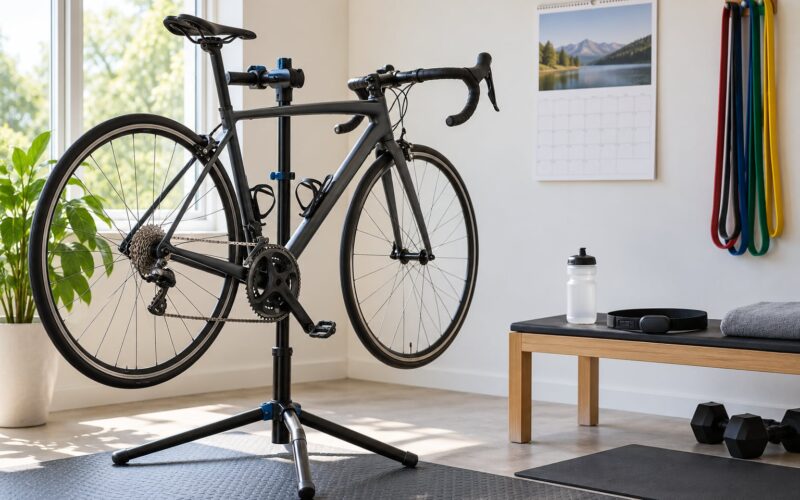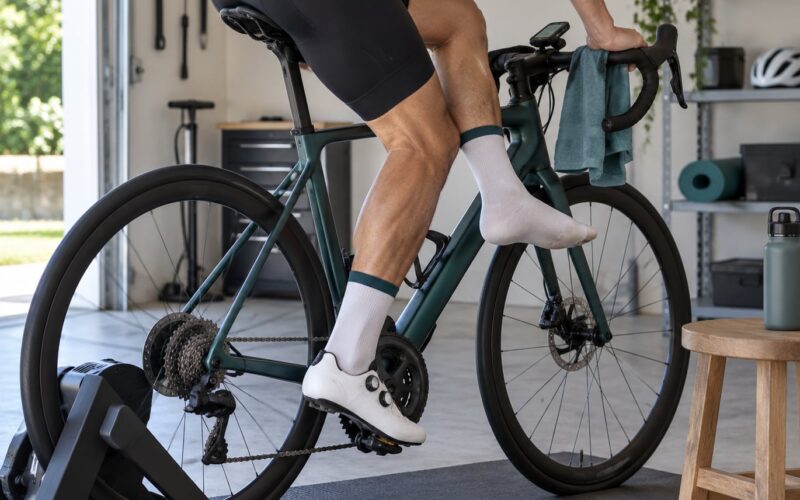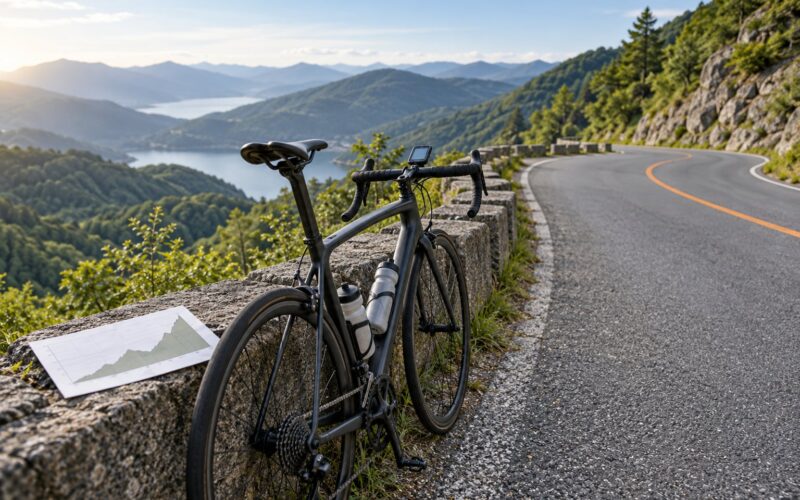
Yoga for cyclists is a targeted mobility practice that counteracts the posture of riding: it lengthens the hip flexors, hamstrings and calves that hours in the saddle shorten, restores rotation through the upper back, and wakes up the core muscles that hold you steady on a long climb. It is not a replacement for riding, strength work or medical care. It is the ten to twenty minutes that keeps the rest of your training comfortable.
Most riders I talk to already stretch, sort of. They hang off the bike in the driveway after a long Saturday, roll a hamstring, get back on. That is a decent cooldown and it is not the same thing as yoga for cyclists, which is built around deliberate movement patterns chosen to reverse a very specific set of postural habits.
Table of Contents
- What Is Yoga for Cyclists and How Does It Help?
- Which Cycling Problems Can Yoga Help?
- Hip flexors that will not switch off
- Hamstrings and calves that stay long after the ride
- A chest and upper back that will not open
- Numb hands, tight neck, aching shoulders
- Lower back discomfort on long rides
- Yoga for Cyclists Explained by Practice Goal
- Which Type of Yoga Is Best for Road Cycling?
- What Are the Best Yoga Poses for Cyclists?
- Props that make the hard versions possible
- Poses worth skipping when you are sore
- How Do You Do Yoga Before and After a Ride?
- How Often Should Cyclists Practice Yoga?
- Is Yoga Safe for Cyclists?
- Frequently Asked Questions
- Should cyclists do yoga before or after riding?
- How long should a yoga session be for cycling?
- Can yoga improve cycling performance?
- Is it normal for yoga stretches to feel uncomfortable?
- Can I do cycling yoga while injured?
- Conclusion
What Is Yoga for Cyclists and How Does It Help?
Yoga for cyclists is any yoga practice chosen because of how much time you spend on a bike. It mixes breath-led, slow movement with holds that lengthen the specific muscles riding shortens, plus a handful of strength shapes that train the trunk and hips to hold position when the legs are tired.
Here is the problem it solves. In the riding position your hips sit flexed around 70 to 80 degrees, your lumbar spine rounds to reach the bars, your thoracic spine stays locked in one plane for hours, and your shoulders roll forward. Thousands of hours in that position is a lot of hours in one shape. Yoga works from the opposite vocabulary: extension, rotation, opening, and controlled loading.
The result is not extra speed. It is a rider who can hold their position when the legs get heavy, who gets off the bike without a grumpy back, and who can turn their head to check a junction without the neck seizing up.
Which Cycling Problems Can Yoga Help?
The useful way to think about it is pattern by pattern rather than benefit by benefit. Each thing riding does to your body has a matching movement pattern, and that is the pattern you practise.
Hip flexors that will not switch off
Long sits in the saddle load the psoas and iliacus in a shortened position for hours. When they stay tight, the pelvis tilts forward and the lower back picks up the slack. Deep lunges, low lunges with the back knee down, and hip flexor stretches address this directly.
Hamstrings and calves that stay long after the ride
The same fixed hip angle shortens the posterior chain. Half splits, standing forward folds, and downward-facing dog lengthen the hamstrings and calves, which also takes pressure off the Achilles and the underside of the foot. Riders using toe cages or cleats notice this more than most.
A chest and upper back that will not open
Drops position and a low head tube mean rounded shoulders and very little thoracic rotation. Thread the needle, open-arm poses, and supported backbends restore the rotation you need to look behind you and to breathe into your ribs rather than your neck.
Numb hands, tight neck, aching shoulders
Handlebar pressure and sustained neck extension travel up the arm into the upper trapezius. Neck mobility work, shoulder rolls, and any opening through the front of the chest usually give the fastest relief here. If the numbness persists between rides, that is a bike fit or medical question, not a stretching one.
Lower back discomfort on long rides
A weak or switched-off core makes the lumbar spine take the load every time you stand up out of the saddle. Plank variations, bird dog, bridge, and side plank build the trunk strength that keeps the load in your legs where it belongs.
One thing to be clear about: yoga helps with comfort, mobility and general control. It is not treatment for an injury. If a pain is sharp, worsening, or showing up every ride, stop stretching it and get it looked at.
Yoga for Cyclists Explained by Practice Goal
Mobility work makes a joint move through more of its available range. It should feel like active range, not like being parked at an edge.
Strength and stability work keeps your trunk switched on so the hips can do their job. This is where chair pose, plank and bridge belong, and it is the part most riders skip.
Relaxation work uses long, supported holds and slow breathing to take you out of the alert state a hard session leaves you in. Restorative and yin styles sit here.
Recovery work fits the day after a big block, a long ride or a travel weekend. It is slow by design and it pairs naturally with sleep.
Which Type of Yoga Is Best for Road Cycling?
Any style works as long as the intensity leaves room for controlled riding afterwards. These four cover most riders.
| Style | Intensity | Main benefit | Best timing | Who it suits |
|---|---|---|---|---|
| Hatha | Low to moderate | Long holds with time to set up each pose properly | Post-ride or rest day | Beginners and riders with tight hips who need time in each shape |
| Restorative | Very low | Supported positions, nervous system downshift, better sleep | Evening after a hard block | Riders who train daily and have no time for a long class |
| Vinyasa | Moderate to high | Cardio, heat, strength through the arms and core | Cross-training days instead of a ride | Riders who like sweat and already have a base |
| Cycling flow | Low to moderate | Sequences sequenced around riding patterns and hip hinge drills | Pre-ride warm-up or post-ride | Anyone who wants the cycling-specific version without guessing |
Gentle hatha is my default suggestion for someone starting out. It is the easiest to modify, the least likely to leave you wrecked before a ride, and it gives you time to learn what your tight spots feel like.
What Are the Best Yoga Poses for Cyclists?
Nine poses cover almost everything a road rider needs. Each one targets a specific thing riding does to your body, and each has an easier version if you are not flexible yet.
| Pose | Main movement | Primary target | Hold time | Easier modification |
|---|---|---|---|---|
| Cat-Cow | Spinal flexion and extension | Warm up the whole spine segment by segment | 8 to 10 slow rounds | Keep it on hands and knees, move one segment at a time |
| Downward-Facing Dog | Hip hinge with long spine | Hamstrings, calves, shoulders, wrist prep | 30 to 60 seconds | Bend the knees deeply and lift the hips high |
| Low Lunge | Hip extension in a split stance | Hip flexors, psoas, iliacus | 30 to 45 seconds each side | Back knee down on the floor or on a folded towel |
| Half Split | Knee straight, hinge forward | Hamstrings and calf | 30 to 45 seconds each side | Straighten the front leg less, hands on blocks |
| Pigeon or Figure Four | External hip rotation | Glutes, piriformis, deep external rotators | 45 to 60 seconds each side | Lie on your back and cross the ankle over the opposite thigh |
| Thread the Needle | Thoracic rotation | Upper back, shoulders, mid spine | 30 to 45 seconds each side | Drop onto forearms instead of shoulder and head |
| Chair Pose | Knee flexion with hips back | Quads, glutes, trunk | 20 to 30 seconds | Stand with feet hip-width, hands on thighs, wall behind you |
| Bridge | Hip extension with feet down | Glutes, hamstrings, trunk stability | 30 seconds, 3 to 5 rounds | Take the block under the sacrum for a supported version |
| Child’s Pose | Hip flexion and low back release | Lower back, hips, nervous system | 60 to 120 seconds | Knees wide with a bolster or stacked cushions under the chest |
Two notes on how to use them. First, most of these are post-ride or rest-day shapes rather than pre-ride ones, with the exception of cat-cow and a bent-knee downward dog as a warm-up.
Second, flexibility without strength is a bit of a trap. A hip that opens nicely but has no strength behind it is an unstable hip, and unstable hips do not pedal well. That is why chair, bridge and plank variants belong in the set even though they feel more like strength work than yoga.
Props that make the hard versions possible
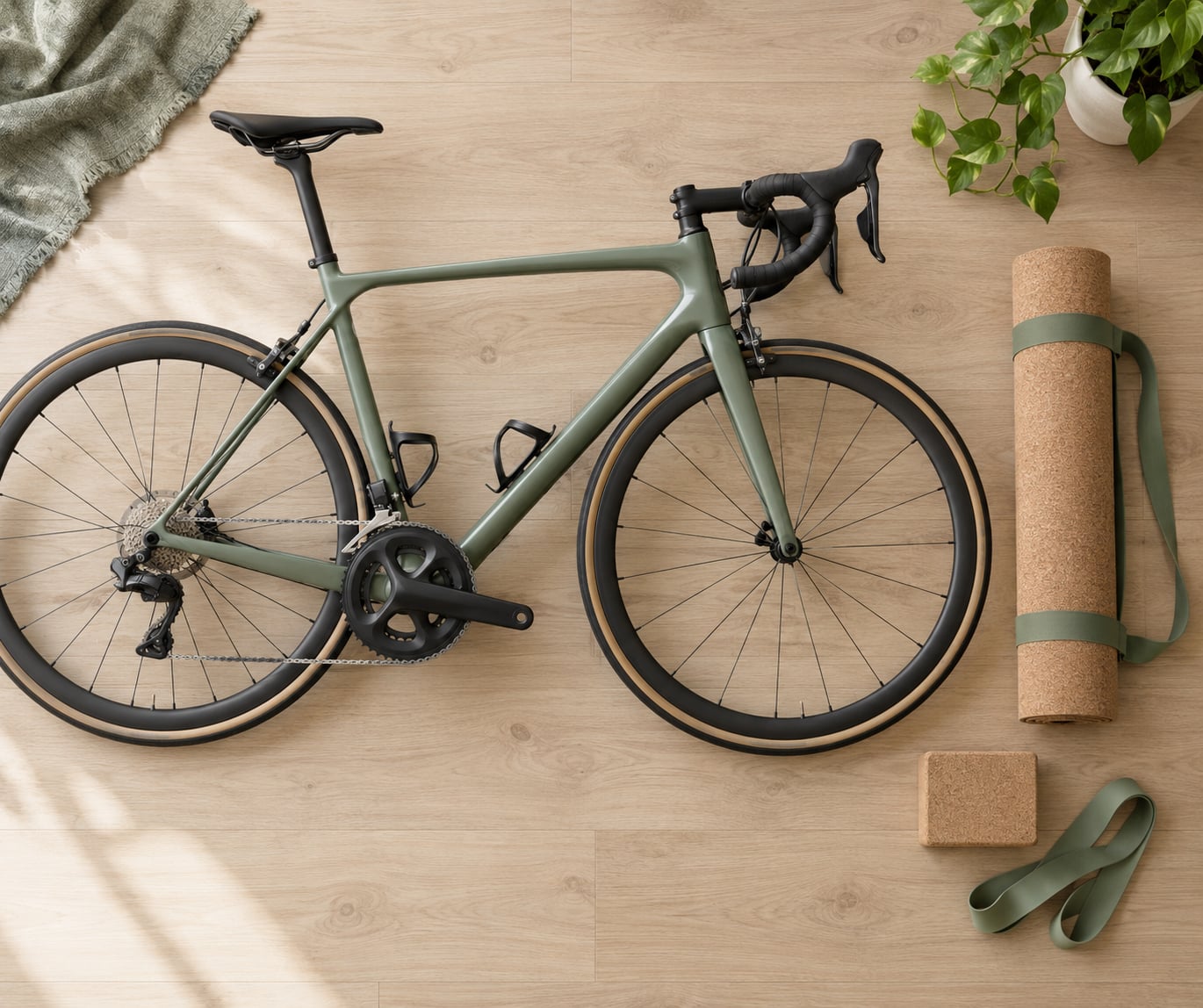
A cork block, a folded towel and a resistance band cover most beginner needs. The block shortens the reach in half split and gives your floor-bound back a handhold in bridge. The towel protects a knee in low lunge. The band is the only one of the three you do not strictly need.
Poses worth skipping when you are sore
Skip deep pigeon, deep end-range forward folds, and anything that loads a wrist or shoulder hard while you are already tender there. A reclined figure four gets you most of the piriformis work with none of the knee risk.
How Do You Do Yoga Before and After a Ride?
Before a ride you want to raise temperature and range, not sit in long stretches. After a ride you want long holds and stillness. Mixing them up is the most common mistake I see.
The pre-ride warm-up runs about five minutes and keeps moving throughout: cat-cow for eight rounds, ten leg swings front to back and side to side per leg, five to eight downward dogs with bent knees, five low lunges with the back knee down per side, and eight body-weight squats with a slow rise. Finish with three rounds of chair pose at twenty seconds each and a few long exhales before you roll away.
The post-ride sequence runs about fifteen minutes and can be mostly still. Downward dog for a minute, half split and low lunge at forty-five seconds a side, reclined figure four at a minute a side, bridge for thirty seconds across three rounds, thread the needle for forty-five seconds a side, then two to five minutes in child’s pose or a supported backbend. That is the whole routine and it is enough.
One rule for new practitioners: do not add an unfamiliar sequence immediately before an important ride. Test it once on a day when a missed warm-up costs you nothing, so you know how your body responds before you depend on it.
How Often Should Cyclists Practice Yoga?
Consistency beats duration. Fifteen minutes three times a week does more for a cyclist than an hour once a month, and the fifteen-minute version survives contact with a normal training week.
| Day | Cycling | Yoga | Notes |
|---|---|---|---|
| Monday | Easy endurance ride | Five-minute pre-ride warm-up | Nothing long before an easy day |
| Tuesday | Intervals | None | Skip static work before hard efforts |
| Wednesday | Rest or easy spin | Fifteen-minute post-ride sequence | The workhorse slot of the week |
| Thursday | Threshold or tempo | None | Breathing drills, if you like, but no stretching |
| Friday | Easy ride | Ten-minute mobility | Good day for hips and ankles |
| Saturday | Long ride | Fifteen to twenty minutes after | Most riders need this most and skip it |
| Sunday | Rest | Thirty to forty-five minutes | Restorative, yin, or beginner hatha |
The off-season version swaps some of the easy days for longer restorative sessions, which is the easiest time to build range of motion because there is no ride to be fresh for. Just keep an eye on total load. Adding yoga on top of an already full week is how riders end up overtrained and blame the yoga instead.
One bike-specific warning: aggressive mobility work changes your position between sessions, and a saddle set up for a stiff hamstring can sit badly once the hamstring lengthens. If your saddle feels different after a few weeks, get a fit before you start blaming your flexibility.
Is Yoga Safe for Cyclists?
Yoga is low impact, but it is not consequence-free. The risks are all about how far you push and how you get in and out of positions.
Distinguish discomfort from pain. A muscle being lengthened, warm and mildly present the next morning, is normal. Sharp pain, joint pain, tingling, or a stretch that takes your breath away is a stop signal. Aggressive end-range stretching, especially bouncing through the end of a range, is what tends to cause problems rather than the pose itself.
Watch the pressure points. Hands, wrists, knees and the front of the foot take a lot of load in some poses, so take those down first if they start to complain. Moving from hands to forearms in thread the needle, padding a knee in low lunge, and turning the toes under or using a blanket in downward dog all take load off quickly.
Keep your neck neutral. Looking up from the floor or twisting the head hard in a twist is a common habit and an unnecessary one, particularly with any neck history. Slow transitions matter too; standing up from a floor position in a rush is how riders turn a calm practice into a tweaked back.
Breathe. If you are holding your breath and straining, the shape is past what you should be doing today. Backing off a little usually fixes it.
Skip yoga entirely as the plan and see a clinician if you have current pain, numbness, tingling, a recent injury or surgery, are pregnant, or have a medical condition affecting balance or joints. Sudden or severe symptoms, and any loss of strength or bladder or bowel control, need prompt medical attention, not a stretch. A physical therapist or sports physiotherapist is also the right referral for persistent ride-related pain, and a bike fit is the right answer for pain that only shows up in one position on the bike.
Frequently Asked Questions
Should cyclists do yoga before or after riding?
Both, but for different reasons. Before a ride, keep it moving: cat-cow, leg swings, downward dog, low lunges and squats for about five minutes to raise temperature and range. After a ride, slow down and hold longer: half split, reclined figure four, bridge, thread the needle and child’s pose for fifteen minutes. Never add an unfamiliar sequence immediately before an important race or big ride.
How long should a yoga session be for cycling?
Fifteen minutes is the sweet spot for most riders, three times a week. Ten minutes on easy days works fine for maintenance. Thirty to forty-five minutes of restorative or yin practice is worth it on a rest day or in the off-season. Longer is not better here, especially before a hard session, when the time cost is what usually kills the habit.
Can yoga improve cycling performance?
Indirectly, and honestly. Yoga for cyclists does not add watts on its own. What it can do is improve hip and thoracic range, keep the trunk switched on so the lower back stops aching on long rides, and open the chest so you breathe into your ribs instead of your neck. Riders often notice the difference as comfort and consistency rather than a faster time trial.
Is it normal for yoga stretches to feel uncomfortable?
Some sensation is normal. A stretch that feels tight, warm and mildly uncomfortable, and leaves you aware of the area for a day, is doing something useful. Sharp pain, tingling, joint ache, or a stretch that makes you hold your breath means back off immediately. Range comes over months, and forcing it on a tight hip flexor is how riders end up at a physiotherapist instead of on the bike.
Can I do cycling yoga while injured?
Only with clearance from the clinician treating the injury. A physio or doctor who knows your history can tell you which movements are safe and which to avoid entirely. Until then, stick to the parts of your body that are pain free, usually the chest, upper back and arms, and skip anything that loads the injured area. Severe or sudden symptoms warrant prompt medical attention.
Conclusion
Pick one low-intensity mobility sequence, use the fifteen-minute post-ride version on three days a week, and run it for a week after an easy ride before you judge it. Add only the movements that stayed comfortable and controlled, and drop the rest.
Yoga for cyclists works best as the quiet companion to your riding: it does not replace training, strength work, rest, professional advice or a decent bike fit. It just keeps you comfortable enough to keep training.