A good pre-hard-ride warm-up takes 15 to 20 minutes: three to five minutes of easy spinning to get blood moving, a steady build from zone 1 through zone 3, two or three 30-second openers just above your threshold, then a few easy minutes so you reach the first climb warm instead of spent. How to warm up before a hard ride is mostly about the order of those pieces, not about extra equipment.
This plan is written for recreational road riders and club riders heading out for a hard group ride, a climbing-focused weekend loop, or a set of intervals. It needs no power meter and no trainer. If you ride on the road with nothing but a heart rate strap, or nothing at all, the numbers below still work.
Twenty minutes sounds like a lot when a club ride is rolling out at 8:05. Once you have done it a few times it becomes automatic, and honestly it is the cheapest speed you will ever buy.
Table of Contents
- What You Need
- Step-by-Step: How to Warm Up Before a Hard Ride
- Step 1: Start with 5 minutes of easy riding
- Step 2: Add 5 minutes of pedal drills
- Step 3: Build through 5 minutes of progressive effort
- Step 4: Finish with 5 minutes of ride-specific preparation
- Common Mistakes
- Frequently Asked Questions
- How long should a warm-up before a hard ride take?
- Should cyclists stretch before riding?
- What are five warm-up exercises I can do before cycling?
- Do older riders need a longer warm-up?
- How do I warm up before a hard ride without a power meter?
- Why do my legs feel heavy for the first 20 minutes of a hard ride?
What You Need
Very little. Here is the honest list.
- Layers you can pedal in for ten minutes without overheating. Most riders overdress for a warm-up and then spend the first hard effort shivering. If you are cold at minute three, add a layer.
- Water. A bottle on the bike and a few mouthfuls before you roll. Warm-up intensity sits high enough that you will sweat even in cool air.
- Food eaten two to four hours earlier. Put a carb-heavy meal in two to four hours out so the stomach is clear when the efforts start. Riding fast on a full stomach is its own problem.
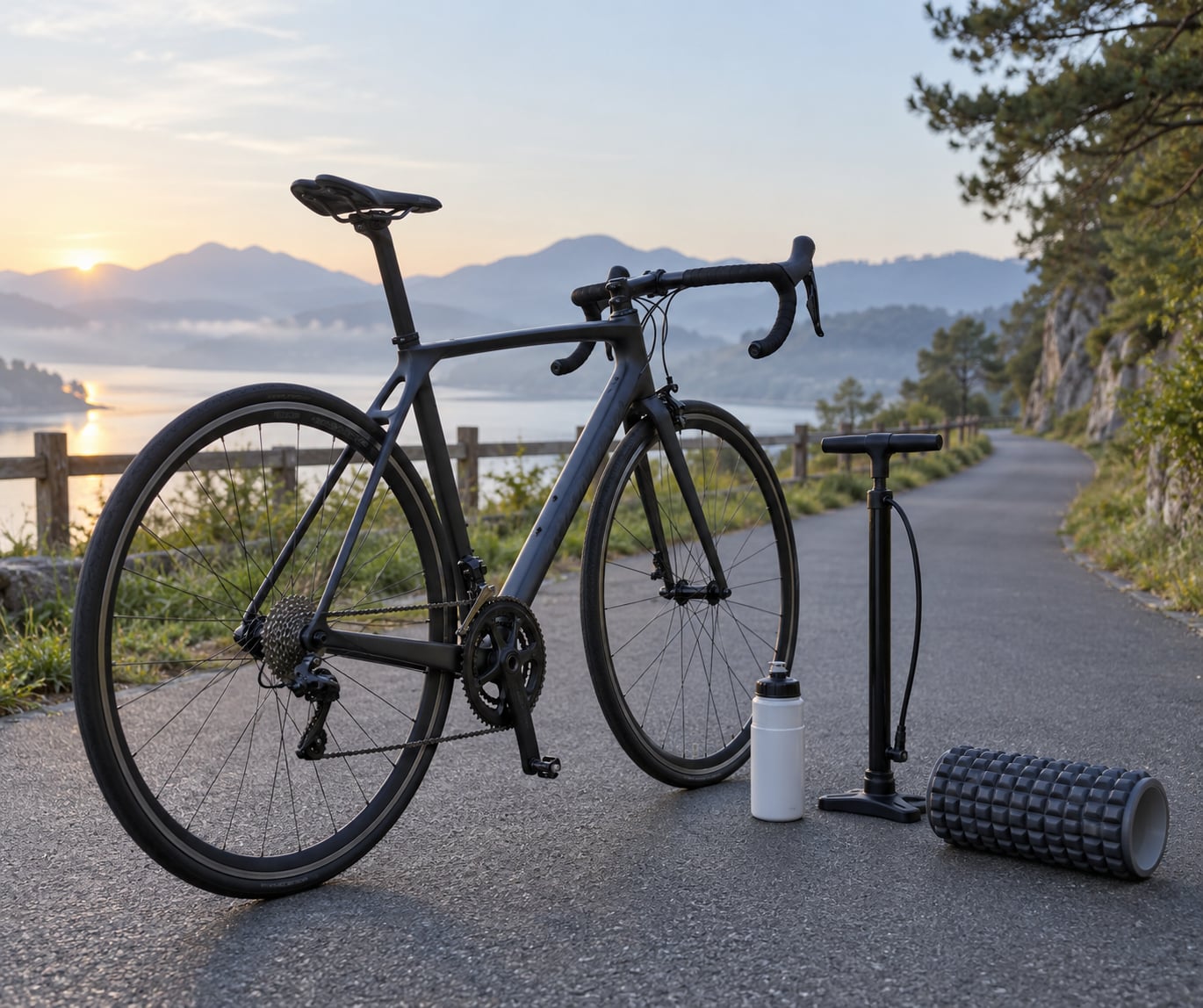
- A quick bike check. Saddle height, cleats, bar tape, both bottles, tyre pressure, and a pump in case something moved in the garage overnight.
- A flat, traffic-free stretch or quiet dead-end street. Openers on a busy junction are how people get hurt. A river path, an empty car park loop or a flat park road is better.
- Optional: a foam roller for 60 to 90 seconds per tender spot. Useful, not essential.
Before you clip in, spend three minutes off the bike moving through a range of motion. This is not stretching, it is activation, and it takes less time than finding your sunglasses.
- Leg swings, 10 each side, front to back. Hold a wall if you need to.
- Hip circles, 8 each side, slow and controlled, torso upright.
- Walking lunges, 6 per leg, short stride, back knee toward the floor.
- Calf raises, 15, slow up and slow down, onto a step if there is one.
- Arm circles and torso twists, 10 arm circles each way, 8 twists each side.
That sequence is aimed at the areas that complain on hard rides: calves, hamstrings, hip flexors from desk work, and a thoracic spine that has been folded over a saddle all week.
Step-by-Step: How to Warm Up Before a Hard Ride
Step 1: Start with 5 minutes of easy riding
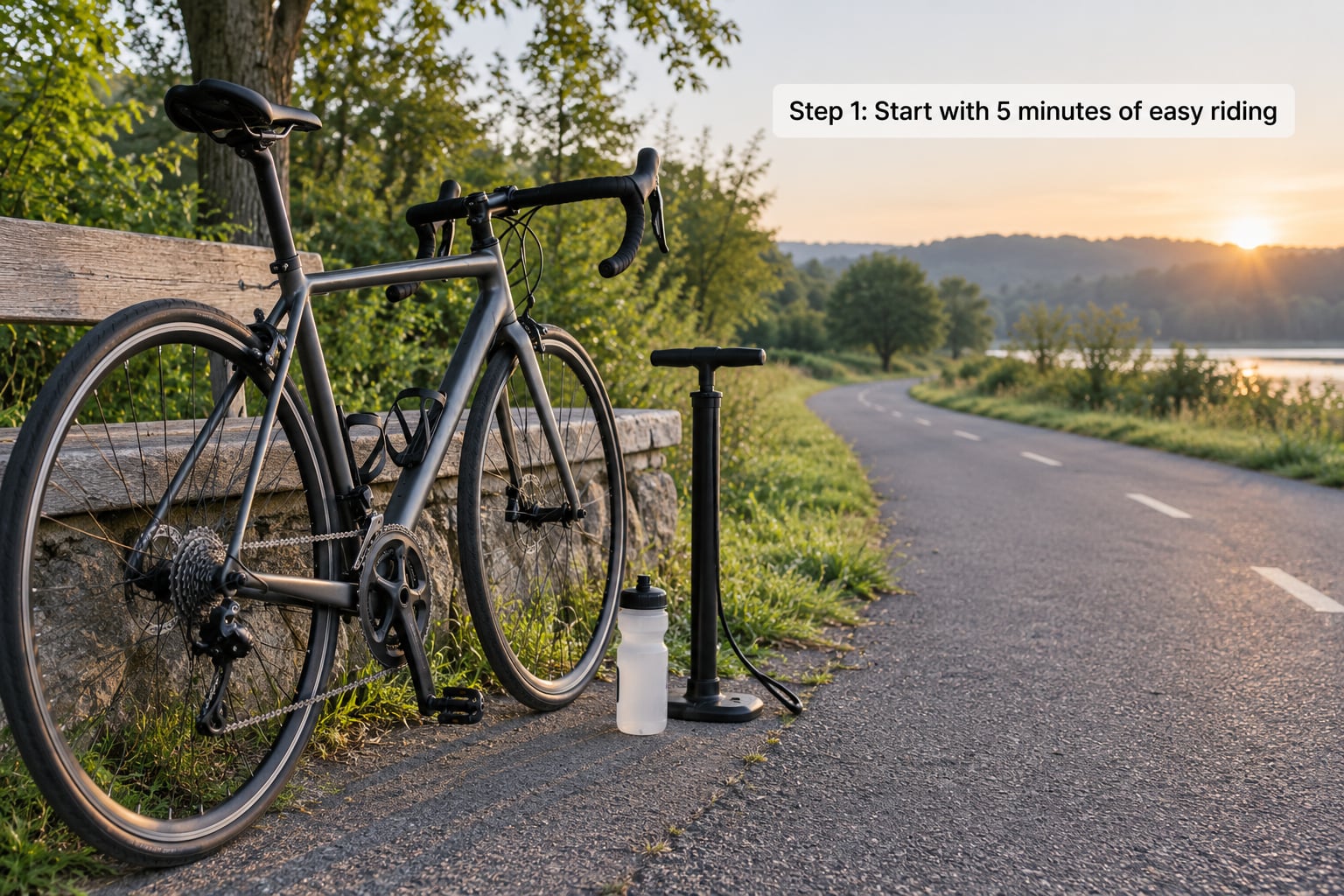
Five minutes at an effort of 2 or 3 out of 10. That is a pace where you could hold a full conversation without gasping, where you breathe through your nose for part of the time, and where your heart rate sits below your zone 2 ceiling. Pick a gear that lets you sit at 85 to 95 RPM with a light, smooth pedal stroke.
The goal here is not fitness, it is circulation. Blood flow to the working muscle climbs, muscle temperature rises, and nerve signals start travelling faster. Five minutes is long enough to feel a difference and short enough that nobody notices you did it.
You will know it is working when your pedal stroke has gone from scratchy to quiet and you can hit a cadence without your legs objecting. If you are breathing hard at minute two, you started too fast, and that is the single most common warm-up error going.
Step 2: Add 5 minutes of pedal drills
Pedal drills loosen the hips and teach the legs to change gear smoothly, which matters a lot when a group ride starts accelerating and nobody is announcing it.
- Cadence ladder, 30 seconds at 60 RPM, 30 seconds at 100 RPM. Repeat three times, staying in one comfortable gear and never forcing it.
- Single-leg work, 30 seconds each side, unloaded. This wakes up the glute medius and tells you which hip is tighter than the other.
- High-cadence spin-ups, two efforts of 20 seconds at 110 to 120 RPM, with 60 easy seconds between them.
- Feather-light circles, one minute, big gear, minimal pressure. Think of scrubbing a table with the crank.
Everything in this stage stays easy. You are raising cadence and range of motion, not load. Any drill where you start straining is too hard, so back it off.
Step 3: Build through 5 minutes of progressive effort
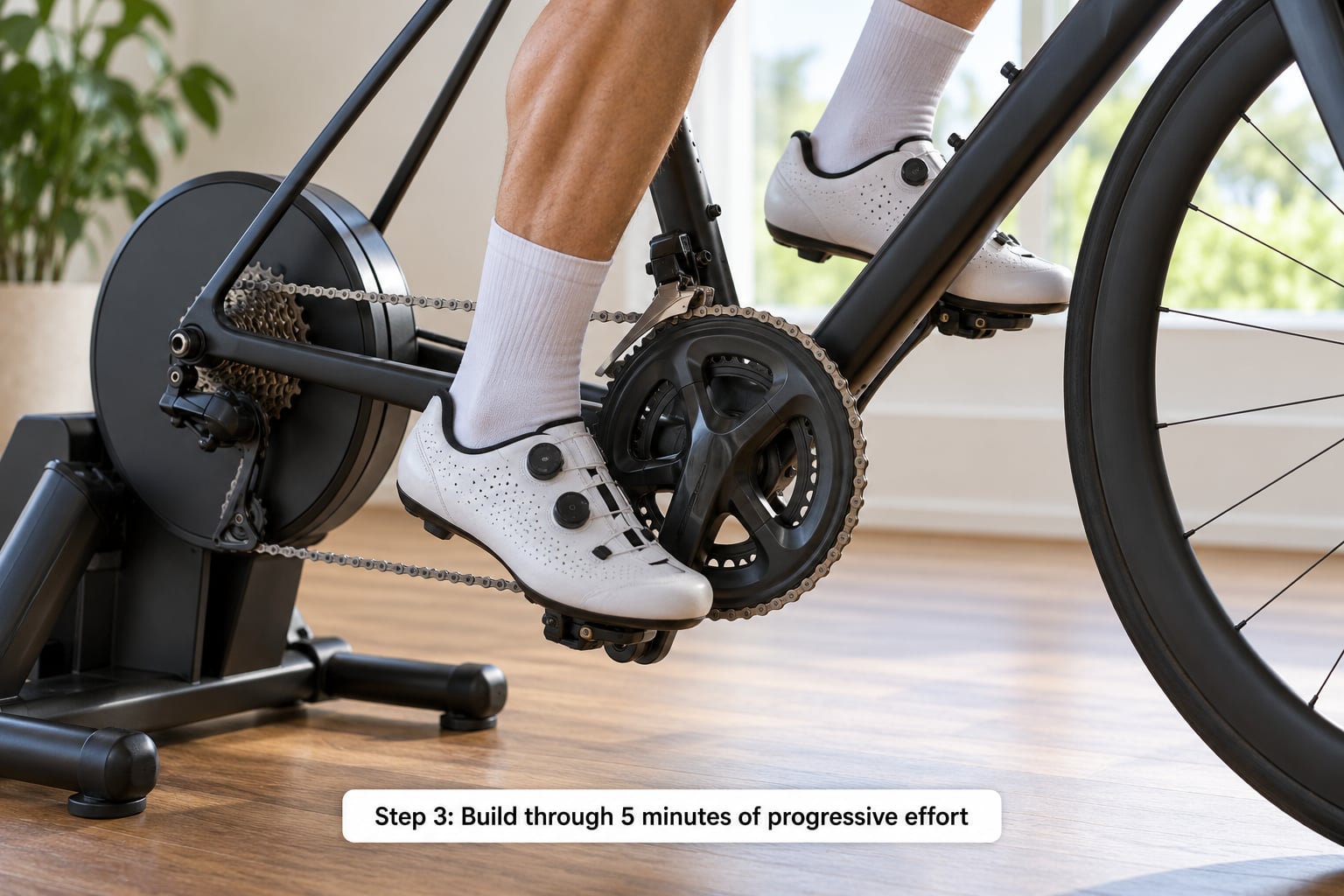
Now the ramp starts, and it should feel like a ramp. Raise the effort in steps rather than jumping straight to hard.
- Minutes 1 and 2: zone 2, steady, about 6 out of 10. Your heart rate should climb and stay.
- Minute 3: settle into zone 3, a tempo effort, roughly 7 out of 10, for a full minute.
- Minute 4: brief push toward threshold, then back off. One minute on, one minute easy.
- Minute 5: your openers. Two to three efforts of 30 seconds at 110 to 120 percent of FTP, with 60 to 90 seconds of easy riding between each.
Those openers are the part riders skip, and they are the part doing the most work. A short effort above threshold raises your heart rate toward its ceiling, starts the fast-twitch fibres, and primes the cardiovascular system so that when the ride actually gets hard, oxygen rises faster instead of trickling in over the first ten minutes. That is the priming effect, and it is why the same ride feels lighter at minute 20 than at minute 5.
Without a power meter, count effort instead. Openers should feel like 8 or 9 out of 10, like you could hold that for another minute but you are choosing not to. On heart rate, aim for somewhere near the top of your range, then let it come back down during the recoveries. Experienced riders tend to describe a similar pattern: easy spinning first, then a controlled ramp toward the top of their heart rate range over five to ten minutes.
Step 4: Finish with 5 minutes of ride-specific preparation
The last block depends on what the ride is about, and this is where most warm-up guides stop being specific. Match the last five minutes to the effort you are about to do.
- Intervals or a time trial: two or three more openers at your target power, then 3 to 4 minutes of easy spinning so you arrive at the start line without a spike still in your legs.
- Climbing: one or two 20-second accelerations at race pace, then spin easy. On a gran fondo that starts with a steep climb, hold back even harder, because climbing at threshold for ten minutes will empty you before the group even settles.
- Sprints and criterium-style work: short accelerations of 5 to 8 seconds with full recovery, so the fast-twitch fibres switch on without leaving you breathless.
- A hard group ride: practice the rotations you will do later. A few 15-second pulls at group pace help you find the gear and the position you will need when the pace goes up.
Finish easy. That final three-minute settle is not wasted time, it is the difference between rolling into the first climb warm and rolling in already faded.
Common Mistakes
Starting too hard. The first two minutes feel free because adrenaline is doing the work, and your muscles are not ready for it. Fix: cap the first five minutes at zone 2 no matter how good you feel. Nobody has ever been injured by warming up too slowly.
Jumping straight to openers. Three hard efforts on a cold engine give you a heart rate spike with none of the priming benefit. Fix: easy riding first, always, then openers.
Long static stretching. Holding a hamstring stretch for a minute before riding can reduce power output for several minutes afterwards. Light dynamic work is different, because it raises tissue temperature rather than sedating it. Fix: swing and move, do not hold. Riders who stretch a lot before hard efforts usually notice their first ten minutes feel worse, not better.
Over-warming. Grinding away 30 minutes at threshold is a workout, not a warm-up, and you will start the ride with nothing left. The forum complaint about finishing a warm-up drenched in sweat is the symptom. Fix: cap the whole thing at 20 minutes and keep three of those minutes genuinely easy.
Neglecting the bike check. A saddle an inch out of place ruins a hard ride in a way no warm-up can compensate for. Fix: saddle height, cleat feel, tyre pressure. It takes 90 seconds.
Ending the warm-up with a hard effort and rolling straight in. You go into the ride with your legs full of blood in the wrong places. Fix: always settle for the final three minutes.
Three shorter versions for the days you are short on time.
- 5 minutes: 3 minutes easy spinning, one 30-second opener, 90 seconds easy. Better than nothing, and enough for a moderate endurance spin. Not enough for a genuine hard ride.
- 10 minutes: 4 minutes easy, 2 minutes building through zones 2 and 3, two 30-second openers with recoveries, 2 minutes settling easy. This is the version to use when a club ride rolls out without you.
- 20 minutes: the full plan above, for intervals, climbing repeats, races and any ride where you want every watt available.
Two adjustments worth knowing. In cold weather, add five easy minutes at the front rather than more intensity; riders on early-morning group rides report feeling worse, not better, when they force the pace to warm up. And if you are over 40 or coming back after a few days off the bike, add five minutes at the easy end and keep the openers short. Tissues that have been idle need longer to come up to temperature, and that is exactly when a hard first effort feels worst.
Frequently Asked Questions
How long should a warm-up before a hard ride take?
Fifteen to twenty minutes is the right target before a genuinely hard ride. Three to five minutes of off-bike activation, five minutes of easy spinning, five minutes of pedal drills and cadence work, five minutes of progressive build with two or three 30-second openers, then a final few minutes settling easy. Ten minutes works when time is short. Five minutes is a compromise, not a substitute, and matters most when the ride is only moderate.
Should cyclists stretch before riding?
Light dynamic mobility is useful. Long static stretches held for 30 to 60 seconds before riding are not, and can reduce power output for several minutes afterwards because they lower muscle stiffness and slow nerve recruitment. Stick to leg swings, hip circles, walking lunges, calf raises and torso twists, done as controlled movement rather than held positions. Save long holds for after the ride, when you are not about to produce power.
What are five warm-up exercises I can do before cycling?
Leg swings for 10 reps each side, hip circles for 8 each side, walking lunges for 6 per leg, slow calf raises for 15 reps, and arm circles with torso twists for 10 each direction. Five minutes of that is plenty, and it targets the areas riders actually feel on hard efforts: calves, hamstrings, hip flexors and a stiff thoracic spine. Do it before you clip in, then start the bike portion with easy spinning.
Do older riders need a longer warm-up?
Most of the time, yes. Muscle temperature rises more slowly with age, and tendon and connective tissue takes longer to become compliant, so the first hard effort feels heavier on a cold engine. The adjustment is simple rather than dramatic: add five extra easy minutes at the front of the routine, keep the progressive build the same, and keep the openers to 30 seconds. The same five extra minutes also help anyone returning after a week or more off the bike.
How do I warm up before a hard ride without a power meter?
Use perceived exertion on a 1 to 10 scale. Easy spinning sits at 2 to 3, zone 2 at 4 to 5, zone 3 at 6 to 7, and openers at 8 to 9. Heart rate helps as a backstop for the easy sections: keep the first five minutes below your zone 2 ceiling so your heart rate climbs gradually rather than spiking. Build the ramp by feel and hold each step for a full minute before moving up.
Why do my legs feel heavy for the first 20 minutes of a hard ride?
Heavy legs at the start usually mean the ride went straight to hard effort before your muscle temperature, blood flow and nerve recruitment were ready. It is the exact sensation a proper warm-up is designed to remove, which is why the easy first five minutes and the settling minutes at the end matter more than the openers in the middle. If the heaviness persists past 30 minutes even after a full warm-up, back off the intensity and consider recovery, hydration and fueling before trying harder.
On your next hard ride, do one thing differently: keep the first five minutes genuinely easy and finish with three minutes of settling before the first real effort. That is the cheapest part of the plan, and it is where most of the benefit comes from. If anything in the routine causes sharp pain rather than general stiffness, stop and get it looked at by a clinician rather than riding through it.