To pace a long climb on a bike, start about 5% below your target average power, hold that number steady through the middle, then spend whatever you have left over the final third. The opening minutes feel easier than they are, which is exactly why most riders overcook a climb and spend the rest of the day paying for it.
A long climb is rarely the first thing you do that day. On a century or a gran fondo it usually arrives after 60 to 90 km of rolling road, and on a big alpine col it can come 20 minutes after you have already emptied the tank on the valley approach. You are not climbing on fresh legs, so the pace that worked on your Sunday coffee loop is not the pace that gets you over the col.
The good news is that climb pacing is a skill, not a talent. It comes down to one idea: hold something sustainable for a long time instead of something maximal for a short time.
Table of Contents
- What You Need
- Step-by-Step: How to Pace a Long Climb on a Bike
- 1. Set a Sustainable Starting Effort
- 2. Check Your Breathing and Cadence
- 3. Adjust Gradually for the Grade
- 4. Fuel and Hydrate Before You Tire
- 5. Manage the Group Without Racing
- 6. Finish Strong Without an Unnecessary Surge
- Common Mistakes
- Frequently Asked Questions
- How do I pace a long climb if I do not have a power meter?
- Should I follow a faster rider or pace the climb by feel?
- How hard should the first 10 minutes of a long climb feel?
- What should I do if I go out too fast on a steep climb?
- How do I maintain pace when the road keeps getting steeper?
- How should I pace a long climb for an event in heat or wind?
What You Need
Before any of this works you need a picture of the climb in your head.
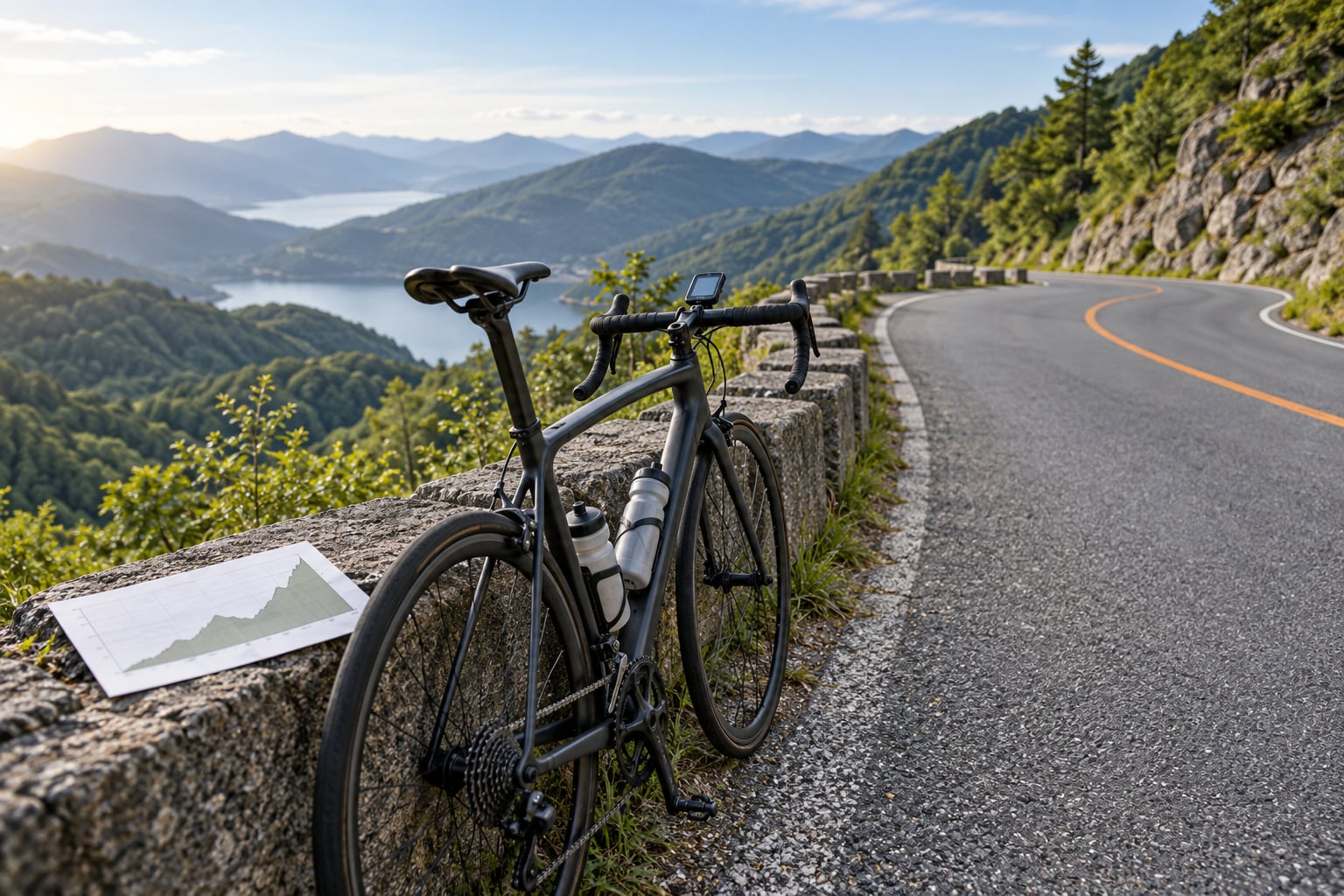
A recent route profile. Load the ride into your navigation app the night before and look at the shape, not just the total gain. You are looking for three things: where the steep pitches sit, where the false flats are, and where you will realistically arrive already tired. A climb that starts flat and gets mean in the middle demands a different plan from one that kicks you straight into 10%.
A bike that is comfortable at your target effort. Nothing wavers more on a long ascent than a saddle that hurts after 40 minutes or a bar that makes you shift your hands every few minutes. Check tire pressure and chain condition, and make sure you have a low enough gear to hold a workable cadence without grinding.
A pacing reference. If you have a power meter and a current FTP number, you have the cleanest tool available. If you do not, you have three substitutes that work almost as well: a 1-10 perceived exertion scale, your breathing pattern, and your cadence. Pick one before the ride so you are not improvising in the first minute of the climb.
Fuel and fluid already in your system. The best time to eat for a long climb was four hours earlier, on a flat, when swallowing was easy. Bring enough for the whole day, not just the climb, because a rider who is under-fueled at the base of the climb cannot pace well regardless of technique.
A group plan. Decide in advance how you handle the fast surge that appears at the bottom of every organized climb, and who you follow if the group breaks. Deciding on the fly is when riders end up abandoned at the roadside.
Step-by-Step: How to Pace a Long Climb on a Bike
Here is the sequence that works, from planning the route to rolling off the top.
1. Set a Sustainable Starting Effort
Pick a target average power for the whole climb, then open about 5% under it. That opening buffer is what absorbs the adrenaline, the gradient surprise, and the group pulling away. You should reach the target number within two to three minutes and hold it from there.
How low you set the target depends on how long the climb lasts and how tired you already are. Riders consistently land between 65% and 85% of FTP on climbs of an hour or more, and the spread is almost entirely about prior fatigue, not fitness. Use the reference points below as starting points rather than rules, and follow the RPE figure when you have no power meter.
- 10-minute climb: hold 100-108% of FTP, open the first three minutes at 95-100%, about RPE 7-8.
- 20-minute climb: hold 92-100%, open at 88-95%, about RPE 6-7.
- 30-minute climb: hold 85-92%, open at 80-88%, about RPE 5-6.
- 45-minute climb: hold 78-85%, open at 74-82%, about RPE 5-6.
- 60 minutes and longer: hold 70-78%, open at 68-75%, about RPE 4-5.
Worked example: a rider with an FTP of 260 watts, two hours into a century, faces a 60-minute climb that averages 6%. Sixty minutes at roughly 12 km/h is about 12 km. The target average is around 190 watts, so they open at about 180, settle at 190 for the first forty minutes, and use the last twenty to push toward 210 watts on the final ramps.
The tell that you started too fast is not in the first minute. It arrives between minute four and minute eight, when heart rate climbs past where it should be and your breathing becomes ragged instead of rhythmic. If that happens, ease off before you are tempted to ease off.
2. Check Your Breathing and Cadence
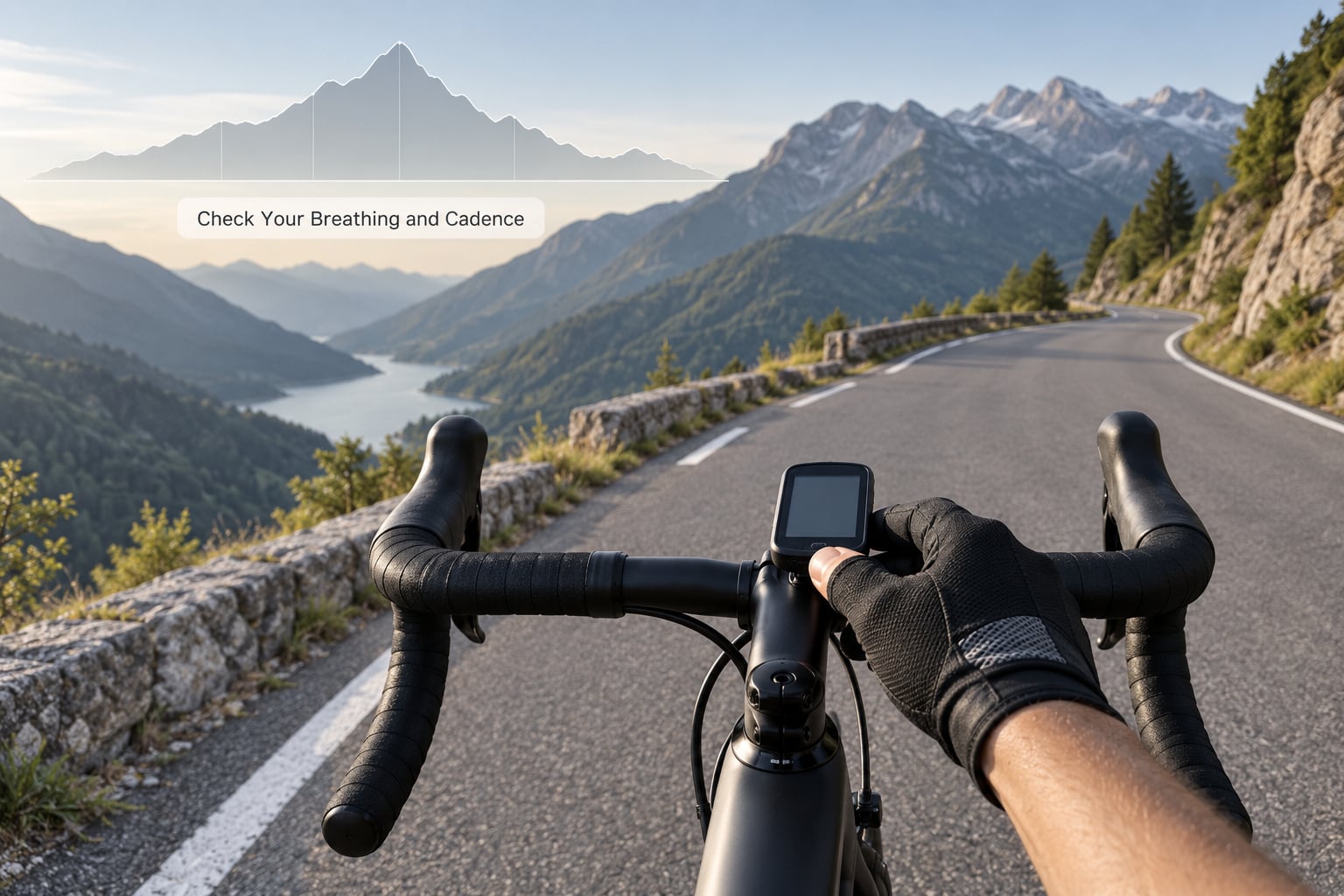
Your eyes should be forward. Check the numbers every three or four minutes, not every thirty seconds, because constant checking makes riders ride with tension.
Breathing is the honest signal. Sustainable climbing breathing is rhythmic and nasal, roughly two to four breaths per pedal revolution depending on gradient. The classic rule riders share is simple: if you are breathing hard in the first three minutes, you are going too hard. By minute ten, hard breathing at a genuinely sustainable effort is normal and expected, because oxygen uptake is still climbing toward its steady state.
Cadence tells you about your gear rather than your fitness. Holding roughly 70 to 85 rpm on a sustained climb keeps the load off your knees and lets each pedal stroke do real work. Below about 60 rpm you start using muscles that fatigue early and your legs will feel cooked long before your heart rate says you should be finished. Above about 95 rpm on a steep pitch you are spinning a gear that is too light and your power will wobble with every loss of traction.
Adjust the gear, not the effort. Shift down to keep the cadence in range while holding the same power.
3. Adjust Gradually for the Grade
Power should change in small steps as the road changes, not in jumps. When the gradient steepens, add 5 to 10 watts. When it eases onto a false flat, take the same amount off and coast briefly if the road allows it. False flats are recovery in disguise, and skilled riders use them deliberately rather than continuing to push.
Use perceived effort to make those adjustments. If the effort creeps from 5 to 6 to 7 while your power has not moved, the road has got steeper, the headwind has picked up, or your glycogen is low. Any of those is a reason to either add a little power or accept a slightly slower speed. The goal is a steady cost per minute, not a steady number on the screen.
Stand up for short pitches of a minute or two when you need to shift position, relieve pressure, or take a drink. Standing burns more and loads muscles that tire early, so treat it as seasoning rather than a default position on a long ascent.
4. Fuel and Hydrate Before You Tire
Fueling is part of pacing, not an afterthought. Your sustainable power is partly a function of how much carbohydrate you have available, which is why the same rider can hold 200 watts on a well-fueled afternoon and 165 watts on an empty one.
Aim for 60 to 90 grams of carbohydrate per hour on a long event, taken in small amounts you can swallow while riding. A gel or a few mouthfuls of drink every 20 minutes covers that without upsetting your stomach. Use fuel you have tested on training rides; a long climb is the worst possible moment to discover a new bar.
Drink to a plan as well: roughly 400 to 800 ml (17 to 27 oz) an hour, more in heat, with electrolytes because a two-hour-plus effort in summer will take more sodium than plain water replaces. Set the first bottle before the climb begins and sip steadily rather than emptying half of it in the first kilometer.
A useful habit is to eat most of your pre-climb calories on the flat approach, where the road is quiet and your breathing is easy, then switch to sipping and small gels on the steeper ramps.
5. Manage the Group Without Racing
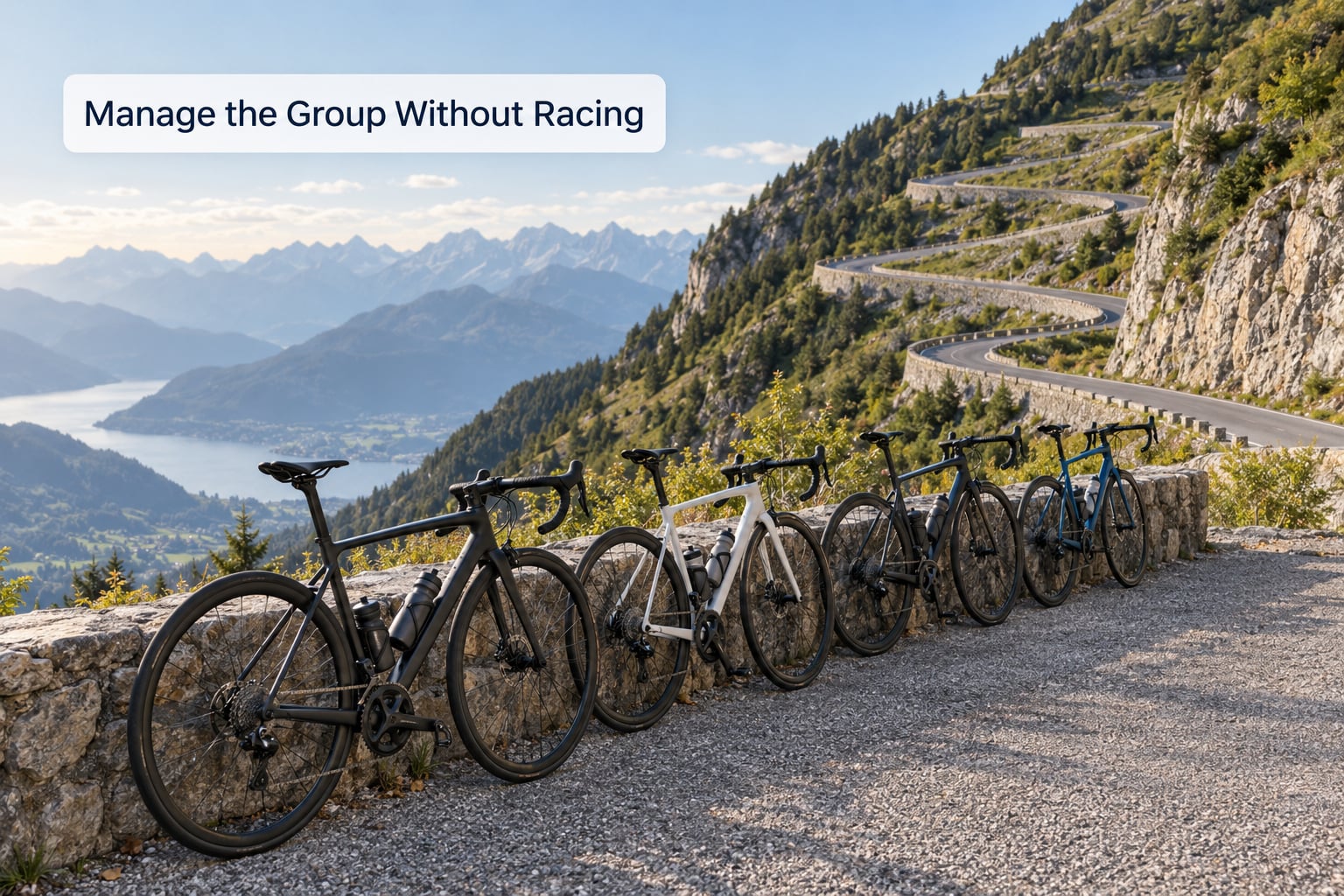
The hardest part of a group climb is not physiological. When the gradient kicks in, the whole bunch surges for two or three minutes because nobody wants to be at the back, and then the pace collapses for everyone.
Avoid the surge deliberately. Sit in for the first minute, let the group stretch, and pick your own number regardless of how many riders pass you. Position yourself near the front before the steep bit so you are not climbing through congested riders, but stay at your target power rather than matching the fastest wheel in front of you.
Rotate pulls if you are riding with riders of similar ability. Do not chase a rider who is clearly stronger and gets caught by the road. If the group splits, agree a regroup point and keep your effort steady until you get there, then rejoin at a controlled pace rather than sprinting to close the gap.
The rule most club riders eventually learn: if you are still with the group at the top, you paced the climb well. If you had to chase your own group back together, you paid for it in the next 50 km.
6. Finish Strong Without an Unnecessary Surge
A long climb is not a hill climb time trial, unless you have specifically trained for one. Most of the benefit comes from arriving at the summit with enough left to ride well afterwards, so hold the pace rather than emptying yourself for a photograph at the col.
Use the final third for a controlled increase. Add 5 to 10% to target power on the last sustained ramps, in the short pitches rather than one long attack, and keep the effort below your VO2max ceiling unless this is a genuine time-trial effort where a hard finish is the point.
Then roll off the top deliberately. Descents reward patience on a long day: stay in the drops only if you are fresh, keep a relaxed grip, and resist the temptation to bomb every corner because it feels good for two minutes. The riders who do well on a century are almost never the ones who were fastest on the descent.
Common Mistakes
Starting too hard because the first two minutes feel easy. Your anaerobic system covers the early gap between effort and oxygen supply, and that borrowed capacity is repaid as lactate debt within a few minutes. Set a power ceiling for the first 1 km, or pick a gear and a cadence and stay in it.
Chasing stronger riders. A surge by a fast group is a stress test disguised as an opportunity. Set a hard rule for yourself: no following a wheel that is going above your target power, regardless of who is on it.
Holding a fixed power number through changing conditions. Heat, altitude, a rising headwind, and accumulated fatigue all reduce what the same wattage costs you. Check effort every few minutes and cut the target when the road or the weather changes, not when the number on the head unit says you have held it long enough.
Grinding in too low a gear. Cadence below 60 rpm recruits fast-tiring muscles and wrecks the legs over an hour. Shift down early and keep the cadence around 70 to 85 rpm.
Ignoring food and water until you feel the drop. By the time hunger shows up on a climb, the performance effect has already started. Eat and drink on the flat before the gradient, then on a fixed every-20-minutes rhythm.
Changing the plan with every wiggle in the road. Small surges cost more than they gain. Make one adjustment per kilometer and then settle.
Stopping abruptly on a climb to take a photo, adjust something, or wait for a dropped rider. A dead stop costs more than thirty seconds of riding. Pull to the side out of the racing line if you must stop, and do it below a steep pitch.
Two habits that help more than anything else: decide your target before the ride, write it on the top tube or in your notes, and check effort every three minutes rather than every thirty seconds.
Frequently Asked Questions
How do I pace a long climb if I do not have a power meter?
Use three substitutes together. First, an RPE number from 1 to 10, where 5 is a long climb you can hold for an hour. Second, your breathing: if you are breathing hard in the first three minutes you have gone too far. Third, cadence, which should stay between about 70 and 85 rpm. Pick a comfortable gear at the bottom and hold it rather than chasing the gradient. Riders often break the climb into 10 km sections and set a rough time target for each, which works well as a ceiling.
Should I follow a faster rider or pace the climb by feel?
Neither, on their own. Follow a faster rider and you inherit their pace, which is usually above what you can hold for an hour. Pace purely by feel and you have nothing to compare today against last month. Pick a target effort before the climb, using feel to stay near it, and use a rider of similar ability as a reference point rather than a pacer. If the group pulls away, let it go and regroup at a controlled pace.
How hard should the first 10 minutes of a long climb feel?
Uncomfortable but controlled, roughly RPE 5 to 6. Breathing should be rhythmic, not ragged, and your cadence should sit in the 70 to 85 rpm range. Hard breathing in the first three minutes is the clearest sign you have started too fast. By minute eight or ten, harder breathing at a steady effort is normal because oxygen uptake is still rising toward its steady state, so do not read late heaviness as a mistake.
What should I do if I go out too fast on a steep climb?
Most of a blown climb is still recoverable. Cut power by 10 to 15% for the next five minutes, get breathing under control, and hold the lower number until breathing comes back to rhythm. Drop to a gear that lets you spin at 70 rpm or more. Drink and take some carbohydrate early rather than later. You will likely lose a minute or two; what you protect is the rest of the ride, which is usually worth far more.
How do I maintain pace when the road keeps getting steeper?
Change power in small steps rather than reacting to each pitch. Add 5 to 10 watts when the gradient increases and take the same off when it eases, shifting gears to keep cadence in the 70 to 85 rpm range. If effort creeps up while power has not changed, treat that as information: a headwind, heat, or low fuel. Accept a slightly slower speed rather than paying for it with a blow-up.
How should I pace a long climb for an event in heat or wind?
Set a lower target than usual and ignore the number you would ride on a cool day. Heat and altitude both raise heart rate at the same power, and a headwind adds resistance on top of that, so your sustainable effort falls without any change in your fitness. Lower the target by roughly 5 to 10% in warm conditions, start even more conservatively than usual, and increase fluid and electrolyte intake to match. Your heart rate will sit higher than normal at the same power, and that is expected.
On your next long climb, decide the target before you leave the house and open 5% under it. Hold steady through the middle, eat and drink on a timer, and save the effort for the last third. That is the whole method, and it works on climbs with no power meter at all.