Starting a cycling club is far less complicated than most people imagine, and the money and paperwork are the easy part. To start a cycling club you need three things: a purpose the riders share, a founding group of five to ten people who agree on the ground rules, and a ride that happens at the same time every week. Ride first, formalize later — almost everything else can wait until riders actually show up twice in a row.
- Purpose: decide whether the club is social, fitness-focused, long-distance training, or a mix. A specific purpose keeps expectations from clashing.
- Founding group: five to ten riders who can commit to the first three months. Fewer than that and a single dropout ends the club.
- Safety: named roles on every ride — leader, pace group leads, and a sweeper — plus a route file and a cancellation policy.
- Schedule: one ride per week at a fixed time and meeting point, published far enough ahead that people can plan their weekend around it.
That last point is the one that separates a club that lasts from a group chat that quietly dies. I have watched plenty of ride announcements go out with no time and no meeting point; nobody shows, and the founder concludes cycling just does not work in their town.
Table of Contents
- What You Need
- Step-by-Step: How to Start a Cycling Club
- 1. Define the Club’s Purpose and Riding Style
- 2. Recruit a Small Founding Group
- 3. Choose a Club Name and Basic Identity
- 4. Set Safety, Pace, and Group-Riding Standards
- 5. Plan the First Ride
- 6. Create a Simple Ride Schedule and Communication System
- 7. Run the First Ride and Collect Feedback
- 8. Grow Without Overloading the Club
- Common Mistakes
- Frequently Asked Questions
- How many people do I need to start a cycling club?
- How do I choose a riding pace for a new club?
- Do I need to register a cycling club or charge membership fees?
- How often should a cycling club ride?
- Do I need insurance to lead an organized group ride?
- How do I attract and keep new riders?
- Conclusion
What You Need
None of the items below require a business licence, a sponsor, or a logo designed by someone. They are the practical prerequisites, and most founders assemble them in an afternoon.
- A clear riding purpose. One sentence you can say out loud without pausing. “Saturday morning rides for people who want to get fitter and make friends” works; “cycling” does not.
- An initial group of interested cyclists. Five to ten people is the realistic floor. A 2004 CyclingForums thread on starting a club was written by someone with 20 riders and no structure — the group existed, the plan did not.
- One communication method. Pick a single channel and use it for everything: confirmations, route changes, weather cancellations, results. The channel matters less than the consistency.
- Basic ride-planning tools. A route file in GPX format, a way to share it, and somewhere to publish the ride calendar. Ride with GPS, Strava groups and Komoot all cover this differently, so test two before committing.
- Insurance and safety information. What your liability exposure looks like, and what the rules are where you ride. Requirements vary by country, state, and whether the ride is open to the public or members only.
- A simple budget. Small, and mostly not about gear: a route planning subscription, a spare tube and pump for the leader’s car, coffee for the first ride, and insurance if you take money or register officially.
- A way to collect feedback. A three-question message after each ride beats any survey you send a month later.
Notice what is missing from that list: a website, officers, membership fees and a club kit. All four come later, and forum consensus is unambiguous about why. One organiser on the TrainerRoad club thread described the club that worked best as having no jerseys, no officers, no dues and no administration — and noted it turned bureaucratic once it grew.
Step-by-Step: How to Start a Cycling Club
1. Define the Club’s Purpose and Riding Style
The first decision determines almost everything else, including how fast you ride and how long. A social ride at 13 to 15 mph and a training block for a century are different clubs with the same name, and mixing them is the most common reason members quit within a month.
Pick one primary style — social, beginner-friendly, fitness, long-distance training, or race-focused — and treat everything else as secondary. Then choose the club’s structure, because that choice carries different obligations.
| Club type | What it is | Time and admin | Insurance and legal side | Who it suits |
|---|---|---|---|---|
| Casual group ride | A fixed-time ride with ground rules, no membership | Low: one organiser, a message channel | Personal exposure; worth checking your cover | Most first-time founders |
| Registered club | A named organisation with officers, dues and by-laws | Medium to high: officers, meetings, records | Organiser liability, registration duties | Groups past roughly 30 regular riders |
| Nonprofit | A mission-led club, often advocacy or youth programmes | High: board, filings, grant or donor work | Formal governance and its own legal duties | Clubs with a cause, not just rides |
| Race team | A licensed competitive squad attached to a parent club | High: coaching, race calendar, budgets | Licensing, often with insurance bundled | Riders already racing seriously |
Two national bodies come up constantly in this conversation. USA Cycling is the governing body in the United States and handles club registration and licensing, and the League of American Bicyclists offers guidance and advocacy resources for clubs of any size. Outside the US, your national federation plays the equivalent role — British Cycling is the one riders search for most. Joining is cheap insurance against picking a structure that fights you later.
2. Recruit a Small Founding Group
Do not start with the whole town. Start with five to ten riders whose pace is genuinely compatible, because one person who cannot hang in week two poisons the ride far longer than one who simply never joins.
Where do the first five come from? The CyclingForums thread on starting a club still holds the best answers: existing riding friends, riders you meet at a local shop, a neighbourhood group, and online communities where rides are posted. One Melbourne organiser described a model worth copying — gender-specific groups, each splitting into a slower and a faster group, meeting at fixed points, with a bike shop as the delivery channel for announcements.
Then invite people individually. Repeated, personal invitations work; a single mass post does not. Something in this shape gets replies:
We are starting a Saturday morning road ride group and you are on the founding list. Pace is 14 to 16 mph, regrouping at every turn, roughly 25 to 30 miles, coffee stop halfway. We meet at the [corner] at 8:00 every week and finish before 11. No one gets dropped, no one has to be fast. Come to the first two rides and tell us afterwards whether it worked for you.
Four details do the work there: a number, a pace band, a time, and the no-drop promise. Leave any of them out and you get replies like “maybe” and then silence.
3. Choose a Club Name and Basic Identity
Name it so a stranger can tell what it is. “Tuesday Dawn Ride” beats “Velocity Collective” because it tells a rider whether to show up at dawn on a Tuesday. Include the day, the time or the activity where you can.
Before you commit, check that no similarly named club already rides in your area — riders do not care about your trademark position, they care about turning up to the wrong ride. A quick search of local club directories and Strava groups settles it in five minutes.
Identity can wait. One colour for the group chat, one emoji or profile photo, done. A logo, a jersey and a brand only pay off once people are already turning up. Club kit is a membership reward, not a launch cost.
4. Set Safety, Pace, and Group-Riding Standards
This is the section that prevents the number one complaint in every club thread: riders dropped at a junction because nobody said how fast the group would actually go. Publish the pace as average finishing speed — the number you expect to average over the whole ride — not the speed on the flat. A group that hits 21 mph on a tailwind and 13 mph into the wind averages around 16, and riders need the 16.
Then assign the roles explicitly. Nobody should be swept up into leadership by default.
| Role | Responsibility | What to brief before rolling | Minimum group |
|---|---|---|---|
| Ride leader | Owns the ride on the day; navigates, calls hazards, decides on cancellations | Route, regroup points, pace target, weather call | Always 1 |
| A group lead | Front group: sets the tempo, holds the line on descents | Target average speed, no-drop rule, hand signals | At least 3 riders |
| B group lead | Slower group: keeps a steady, unthreatening pace | Slower target, frequent regrouping | At least 3 riders |
| Sweeper | Rear guard: nobody finishes behind the sweeper | Never pass the sweeper, report flats immediately | 1, ideally 2 |
Your standards list should cover helmets, a roadworthy bike with brakes and tyres in good condition, spacing, single-file on descents and when the group gets stretched, signalling, regrouping, what happens to a rider with a puncture, and the weather rule. Riders on TrainerRoad’s club threads rate the downloadable route file highly even though most never open it — send it anyway.
Write it in plain language once, so founders can reuse it:
Helmet on every ride. Front and rear lights if there is any dusk. Ride two bike lengths back from the wheel ahead, single file when we hear traffic or go fast. Hand signals are briefed at the start; assume nobody has heard them before. Regroup at every turn and every junction. Mechanicals get announced to the group, and we stop for everyone. We split into a faster and a slower group at the start and regroup at every agreed point. Nobody rides alone behind the group. Weather cancellations are posted by 7:00 am.
That last line matters more than it looks. A cancellation sent at 7:00 am respects people’s mornings; one sent at 8:45 wastes a trip.
5. Plan the First Ride
Keep the first ride short, flat-ish and forgiving. Twenty-five miles with two regroup stops and a cafe finish will tell you more about your club than forty miles of open road.
A realistic structure: flat 22 mph loop, regroup at the park entrance at 8 miles, continue past the reservoir to 16 miles, regroup again, home by 25 miles. Water available at the park. Turn-around points where a tired rider can peel off with a partner and ride home directly.
Plan pace groups on paper before you announce anything, using average finishing speed on flat roads:
| Group | Average speed | Who rides here | Regroup rule |
|---|---|---|---|
| A | 19 to 21 mph (30 to 34 kph) | Confident riders who regularly hold a line | Waits at every agreed point, never rides away |
| B | 16 to 18 mph (26 to 29 kph) | Most social and beginner riders | Rolling regroup, nobody waits more than a minute |
| C | 12 to 14 mph (19 to 22 kph) | New riders, returning riders, e-bike riders | Never dropped, full regroup at every corner |
Two honest notes. Publishing three groups on a first ride can look like a club that cannot make up its mind — a plain “we split into faster and slower at the start” is plenty for week one. And the C group is where your club actually lives; a rider who survives a slow first ride is a rider who comes back.
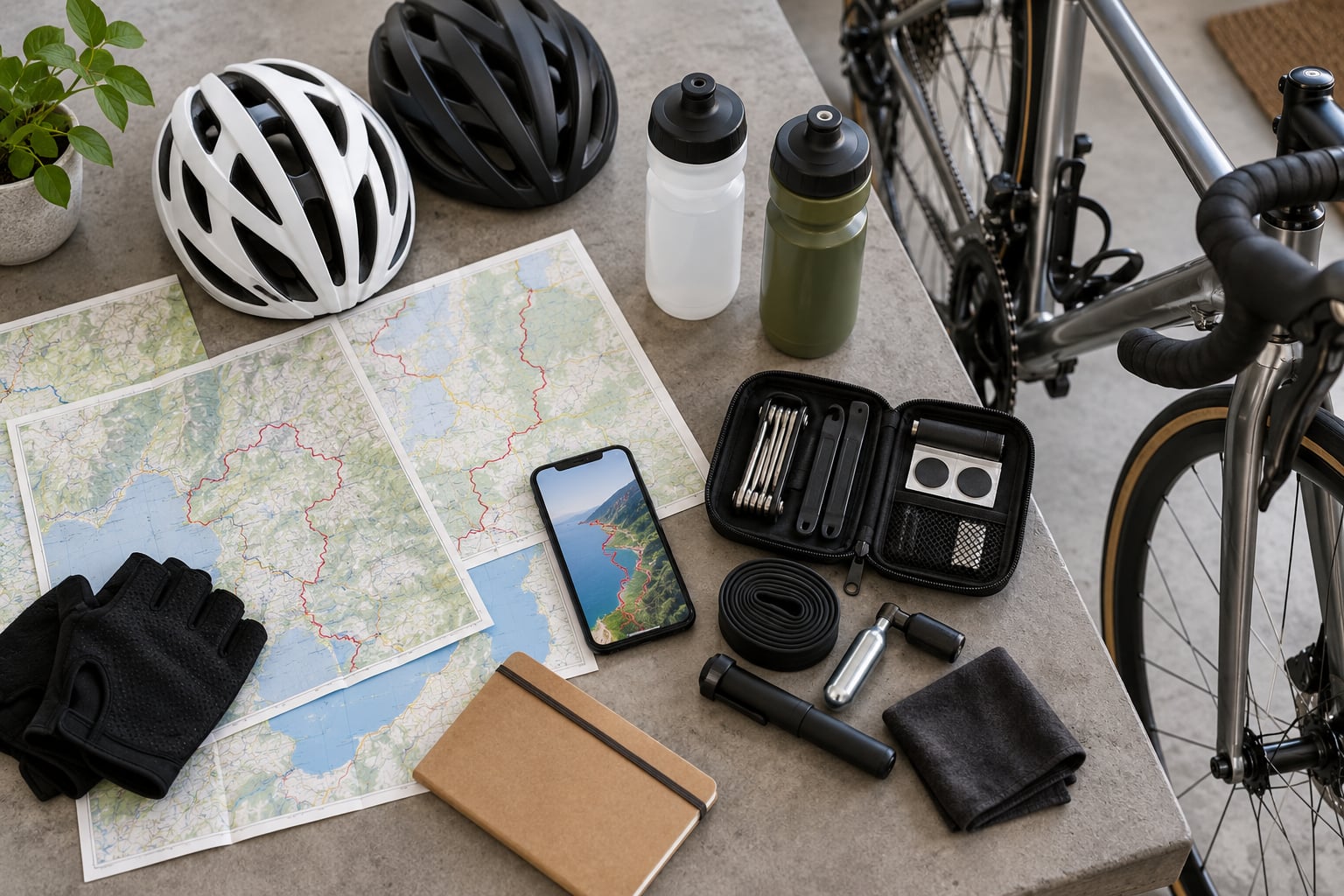
Your pre-ride checklist: route downloaded and tested on the leader’s phone, spare tube and pump, multi-tool, two water bottles, first-aid kit, phone charged, emergency contact for every rider captured in the message thread, and a route card handed out in case someone’s phone dies.
6. Create a Simple Ride Schedule and Communication System
Start with one weekly ride at one fixed time, plus one longer ride a month once the rhythm holds. Riders plan weekends around predictable anchors, and a club that offers three different rides every week splits its attendance three ways and keeps none of them warm.
Publish the schedule far enough ahead to be useful. A monthly calendar showing every ride, with leader names assigned, does more for growth than any social media push, because it lets people decide whether this club fits their life.
Choose one channel and put everything there. Confirmations, the route link, the cancellation call, the post-ride photo. A busy Facebook group with 60 members and two riders actually turning out is the classic failure — membership numbers on a screen tell you nothing about your club. One organiser described exactly that: a group of roughly 60, about 10 truly active, and a weekly ride drawing anywhere from 2 to 12.
Weather policy is one line and saves an argument later:
Rides are cancelled for lightning, ice, flooding or sustained winds that make the route unsafe. The call is posted by 7:00 am on ride day and counts as final. Light rain is a ride — bring a layer you can stash.
Every member needs four things before a ride: where and when, the distance and pace, whether it is no-drop, and who is leading.
7. Run the First Ride and Collect Feedback
Be at the start point fifteen minutes early with the ground rules written on something people can read while they unclip. Welcome newcomers by name and ask two questions: have they ridden in a group before, and do they know how to fix a flat?
That last question is not a formality. One founder recalled a first ride in 2004 where a new member could not change a tyre and had to be rescued at the roadside. Ride leaders keep a spare tube, a pump and a multi-tool for exactly this reason, and asking the question prevents the rescue.
On the ride, do the briefing out loud in thirty seconds, keep the pace honest, and make sure the group stops where it says it will stop. Nothing signals care more than the pauses actually happening.
Then, within a couple of hours, send three questions: Was the pace right? Was anyone uncomfortable or confused at any point? What should change before next week? And finish with a ritual, because this is the single most reliable retention mechanism in cycling clubs: the coffee, the beer, the bakery stop, twenty minutes of sitting down together afterwards. Riders who share the after-ride come back; riders who get dropped on the road do not.
8. Grow Without Overloading the Club
Add ride types only after the current format runs itself for two months. Then add people, not formats. The scaling bottleneck is never interest — it is the number of people willing to lead and sweep.
So recruit leaders deliberately. Every rider who has finished three rides without a drop gets asked personally. Give them the sweeper role first, then A group lead, and pair them with an experienced leader for a ride or two before they run one alone. Keeping one or two spare leaders in reserve protects the club from the founder-burnout problem that closes clubs down after a year.
Membership structure is worth setting up before it feels necessary, as three visible levels. This is the model a 25-year-old club with 200 members, a 35-rider race team and a 2,200-person mailing list uses:
| Level | Who it is for | What they get | How they join |
|---|---|---|---|
| Mailing list | Anyone curious, including non-riders | Ride announcements and route files | Email address only |
| Club member | Riders who come regularly | Vote on routes, club kit access, ride priority | Ask at any ride |
| Race team | Committed competitive riders | Coaching, supported training, entry support | Invite or trial period |
Those riders describe their real club as having no officers, no dues and no administration, and becoming complicated only once it grew past them. That is the pattern to copy: complexity arrives because a specific problem demands it, not because you read about it in advance.
Then grow the outside world, in this order: a page or group in a local club directory, a relationship with one bike shop that posts your shop ride and offers a bundled membership for non-members, a Strava group and weekly social post, and direct invitations every time someone new shows up twice. The bike shop partnership is the underrated one: a university club on the TrainerRoad forum grew its race roster by leading shop rides that the shop advertised.
Realistic benchmarks for your first year, so nobody measures a healthy club against a fantasy: month three, 8 to 12 riders showing most weeks and a mailing list around 60 names; month six, 15 to 25 regular riders with two or three trained leaders; month twelve, a stable 25 to 40 who arrive without being chased. One club went from nothing to more than 40 members in two years by owning a very narrow niche — 5:30 am weekday morning rides. Niche beats vague every time.
Common Mistakes
Launching with too many ride types. Social, beginner, training, racing and a monthly century, all on the calendar from week one. Fix: one weekly ride for the first two months, then one addition.
Being vague about pace. Publishing “social pace” and then riding 19 mph is the fastest way to lose riders permanently. Fix: publish an average finishing speed, split into groups at the start, and hold to the number.
Leaving anyone behind. The single most-cited failure across club threads, going back decades. Fix: a named sweeper every ride, a stated no-drop policy, and regroup points that are actually stops.
Not having one communication channel. Route changes scattered across personal messages, cancellations posted late. Fix: one channel for everything, and a stated deadline for the weather call.
Depending on one person for every role. If you navigate, lead and sweep, the club ends the day you get a flat or a bad week. Fix: recruit two or three leaders early and rotate.
Ignoring mechanicals and weather. No spare tube, no pump, no contingency for a route you have never ridden end to end. Fix: ride the route beforehand, carry kit, and publish a cancellation policy.
Growing faster than you can support. Fifty names on a mailing list does not mean fifty riders, and pushing for a hundred before the format works produces a club that looks successful on paper and rides six people. Fix: measure riders who actually arrive, not sign-ups, and grow the leader bench before the membership.
One more worth naming, because it is the quiet killer: adding administration nobody asked for. Officers, elections and dues imposed on a group of fifteen people who like each other is the fastest way to lose the reason anybody started riding together in the first place.
Frequently Asked Questions
How many people do I need to start a cycling club?
Five to ten committed riders is enough to launch, and more than ten is not better at the beginning. Below five, one dropout ends the ride. Above ten, you need pace groups and multiple leaders immediately. Pick riders whose pace is genuinely compatible rather than whoever answers fastest, and count only people who can make the first three months.
How do I choose a riding pace for a new club?
Publish an average finishing speed rather than a flat-out number, and split into groups at the start. Roughly 19 to 21 mph suits confident riders, 16 to 18 mph fits most social and beginner riders, and 12 to 14 mph keeps new riders comfortable. Tell riders the number before they commit, not on the start line.
Do I need to register a cycling club or charge membership fees?
Not at the start. Ride first, formalize once regular attendance justifies the paperwork. Registration, officers, by-laws and dues make sense past roughly 30 regular riders. If you want help deciding earlier, USA Cycling and the League of American Bicyclists both publish guidance for clubs.
How often should a cycling club ride?
Once a week at a fixed time is the anchor riders plan their weekend around, plus one longer ride a month once the rhythm holds. Consistency mattered more than variety in every club discussion we found. Three different rides each week splits your attendance three ways and leaves none of them warm.
Do I need insurance to lead an organized group ride?
It depends on your country, state and whether the ride is open to the public or members only, so treat this as a question for an insurer rather than a yes-or-no online answer. Personal policies and some memberships offer some cover. Publishing an emergency contact, briefing riders and checking your own policy are worthwhile regardless.
How do I attract and keep new riders?
Ride the same time, from the same corner, every week, and post the calendar far enough ahead to be useful. Then invite people individually when they show up twice, and keep the after-ride coffee stop as a standing ritual. Shop partnerships and club directories bring in strangers; the ritual is what turns them into members.
Conclusion
Start with the five things that matter this week: write one sentence describing what the club is for, message five to ten riders with a real pace number and a real start time, agree the ground rules, plan a short forgiving route for the first ride, and pick the single channel where every update will live. Then run the ride, ask three questions afterwards, and change one thing before the next one.
Everything else — registration, officers, dues, a website, a jersey — can wait months. The clubs that last are the ones that stayed a small group of people who ride together on the same corner at the same time, and let everything else catch up.