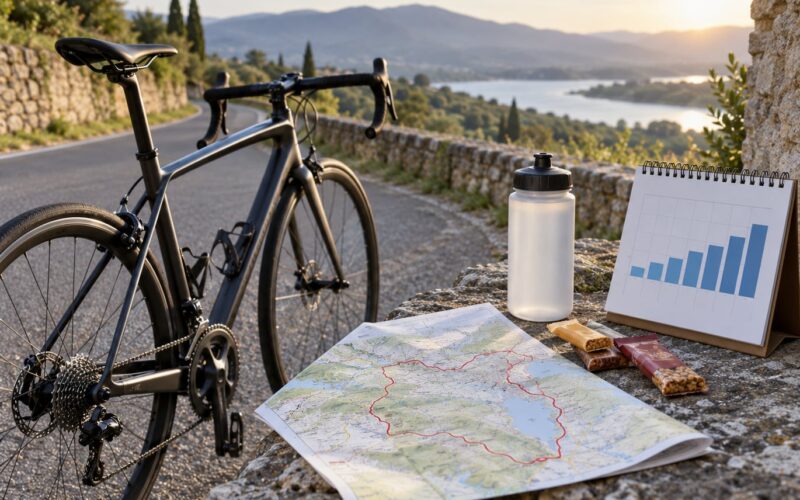
Learning how to ride 50 miles for the first time comes down to three things: build your longest ride gradually, hold a steady conversational pace, and eat and drink on a timer from the first mile. Plan roughly eight weeks for a complete beginner build, and expect the ride itself to take three and a half to five hours at 10-15 mph on rolling terrain.
That range is not a failure. Fifty miles (80.6 km) is a genuine beginner milestone and the gateway to organized rides and the 100-mile century, but it is not an elite feat. Most first-timers are new to distances over 20 miles, and the difference between a rider who finishes strong and a rider who walks off at mile 40 is almost always discipline, not fitness.
One piece of housekeeping first, because it trips up a lot of people: an event branded “50K” is 31.1 miles, not 50. This guide is about 50 actual miles, which is 80.6 km. Check what your event actually measures before you sign up for a training plan.
Table of Contents
- What You Need
- The bike
- Clothing and contact points
- What to carry
- Health check
- Step-by-Step
- Set a Comfortable Starting Point
- Build to 60-75 Miles Before Attempting 50 Miles
- Practice Fueling and Hydration on Long Rides
- Pacing Plan: How to Ride 50 Miles at a Pace You Can Hold
- Choose the Right Route and Conditions
- Finish the Ride and Recover
- Common Mistakes
- Frequently Asked Questions
- How long should I train before riding 50 miles for the first time?
- How fast should I ride when completing my first 50-mile ride?
- Do I need to train for longer than 50 miles before attempting it?
- How often should I stop during a first 50-mile ride?
- What should I eat and drink before and during a 50-mile ride?
- How do I know if I am ready to attempt 50 miles?
- Conclusion
What You Need
A first 50-mile ride needs less equipment than most riders assume, and more of one thing: time on the bike. You do not need a new bike, a power meter or a coach. You need a mechanically sound machine, a saddle you can tolerate for four hours, and eight weekends.
The bike
Any bike that rolls in a straight line will do 50 miles, and the honest difference between types shows up in comfort and effort rather than in whether you finish. A road bike covers the distance fastest and least comfortably. A hybrid or commuter bike is the most forgiving choice for someone new to long days, with a more upright position and wider tyres that soften rough roads.
A mountain bike works too, but wide knobbly tyres and a heavy frame cost you a noticeable amount of speed on pavement. Riders doing this on a mountain bike often start out around 12-14 mph, which is fine. Just know your finish time is set more by the machine and the terrain than by your legs.
Clothing and contact points
Padded cycling shorts are the single biggest comfort upgrade for a long ride. Plain gym shorts work for an hour and then punish you. Add chamois cream before long rides, and reapply it at any stop where you change position. If you have never ridden in cycling shorts, wear them under your normal shorts for the first few training rides so there are no surprises on event day.
Wear a moisture-wicking top, thin gloves if your hands get numb, and sunglasses. Skip the lycra-for-performance mindset; the goal is to be comfortable for four hours, not to look like a racer.
What to carry
- Spare tube, mini pump and a tire lever set
- Multi-tool with a chain breaker
- Two water bottles or a hydration pack, plus one electrolyte tablet or mix
- Phone with the route downloaded for offline use
- Front and rear lights, even for a daytime ride, because breakdowns happen in the shade
- Photo ID, a card or a few dollars, and a phone number for an emergency contact
- Energy gels or bars, plus a normal snack you have tested before
Know how to change a tire before you need to. A ten-minute YouTube walkthrough in your living room is worth more than any amount of extra water in your bottles.
Health check
This is general fitness information, not medical advice. If you have heart or lung conditions, a history of fainting on the bike, or a period of inactivity, talk to a doctor before starting a build. Get medical help immediately for chest pain, severe breathlessness at rest, fainting, confusion, or a fall with head or neck pain. Riders on this topic regularly ask whether chest tightness on a climb is normal; it is not, and that is a stop-and-call-someone symptom rather than something to push through.
Step-by-Step
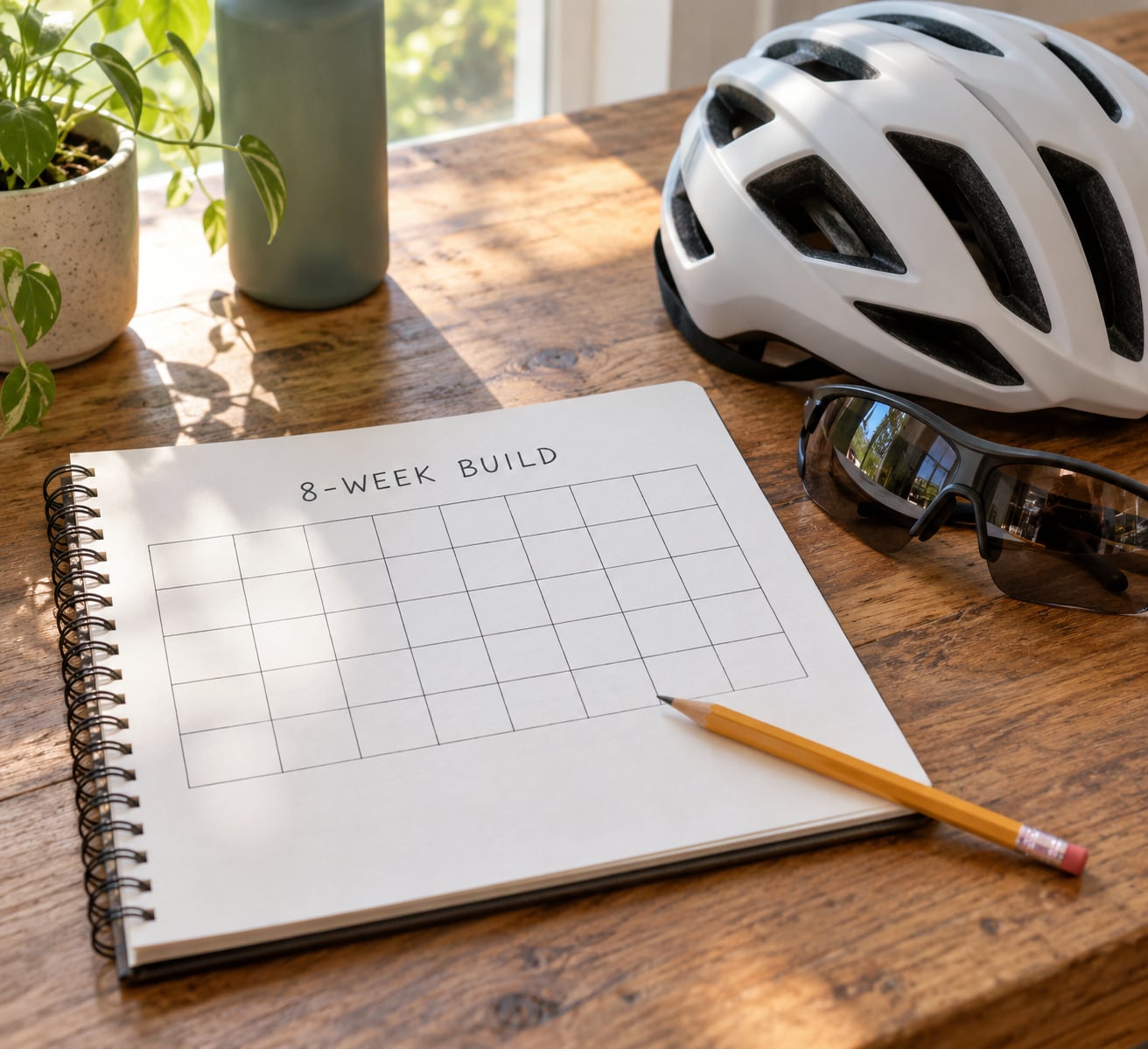
Here is the whole progression, from your first baseline ride to the 50 miles themselves. Each step has a way of telling you it worked, so you are not guessing.
Set a Comfortable Starting Point
Before changing anything, record what you can already do. Ride twice on ordinary routes at an easy pace and write down how far you went and how long it took. A typical starting point for this plan is someone who rides 15-20 miles comfortably two to four times a week. If you can already ride 40 miles without difficulty, skip ahead and use this guide for pacing and fueling only.
Write down three numbers: your longest recent ride, your weekly mileage, and how you felt at the end. That baseline is the only honest way to know your build is working, and it protects you from the classic beginner trap of copying a stranger’s plan off the internet.
Build to 60-75 Miles Before Attempting 50 Miles
Your longest training ride should be longer than the distance you want to ride. Most of the discomfort on a first 50 comes from being in the saddle past the point where the body expects to stop, so get out there once at 60-75 miles and remove that surprise. Duration matters far more than speed: eight hours of easy riding teaches your body something that four hours of hard riding does not.
Use three intensity levels and ignore heart-rate jargon. Talking pace means you could hold a conversation without gasping. Moderate means short sentences only. Hard means you could not talk at all, and belongs in short bursts only.
Most of your build is spent at talking pace. Keep one moderate or hard effort per week so that your easy pace stays genuinely easy, then put the weekend into a long ride that grows by about 10% a week.
| Week | Long ride | Focus |
|---|---|---|
| 1 | 20 miles | Comfort and fit, all talking pace |
| 2 | 25 miles | Introduce one moderate effort mid-week |
| 3 | 30 miles | First long fueling session, real food |
| 4 | 35 miles | Add hills to the weekend ride |
| 5 | 40 miles | Ride with minimal planned stops |
| 6 | 50 miles | Full dress rehearsal, planned route |
| 7 | 60-75 miles | Peak long ride, easy pace only |
| 8 | 25-30 miles | Taper, then the 50 on the weekend |
How do you know a step worked? You finished the long ride and could still ride afterward. If you were wiped out for two days, the jump was too big, so repeat that week instead of pushing forward.
Run one harder effort alongside these long rides, and don’t run only long and slow. Riders who do nothing but easy miles often find their “easy” pace creeping up until it isn’t easy any more. One short moderate block of 15-20 minutes per week keeps the rest of your riding genuinely conversational.
Practice Fueling and Hydration on Long Rides
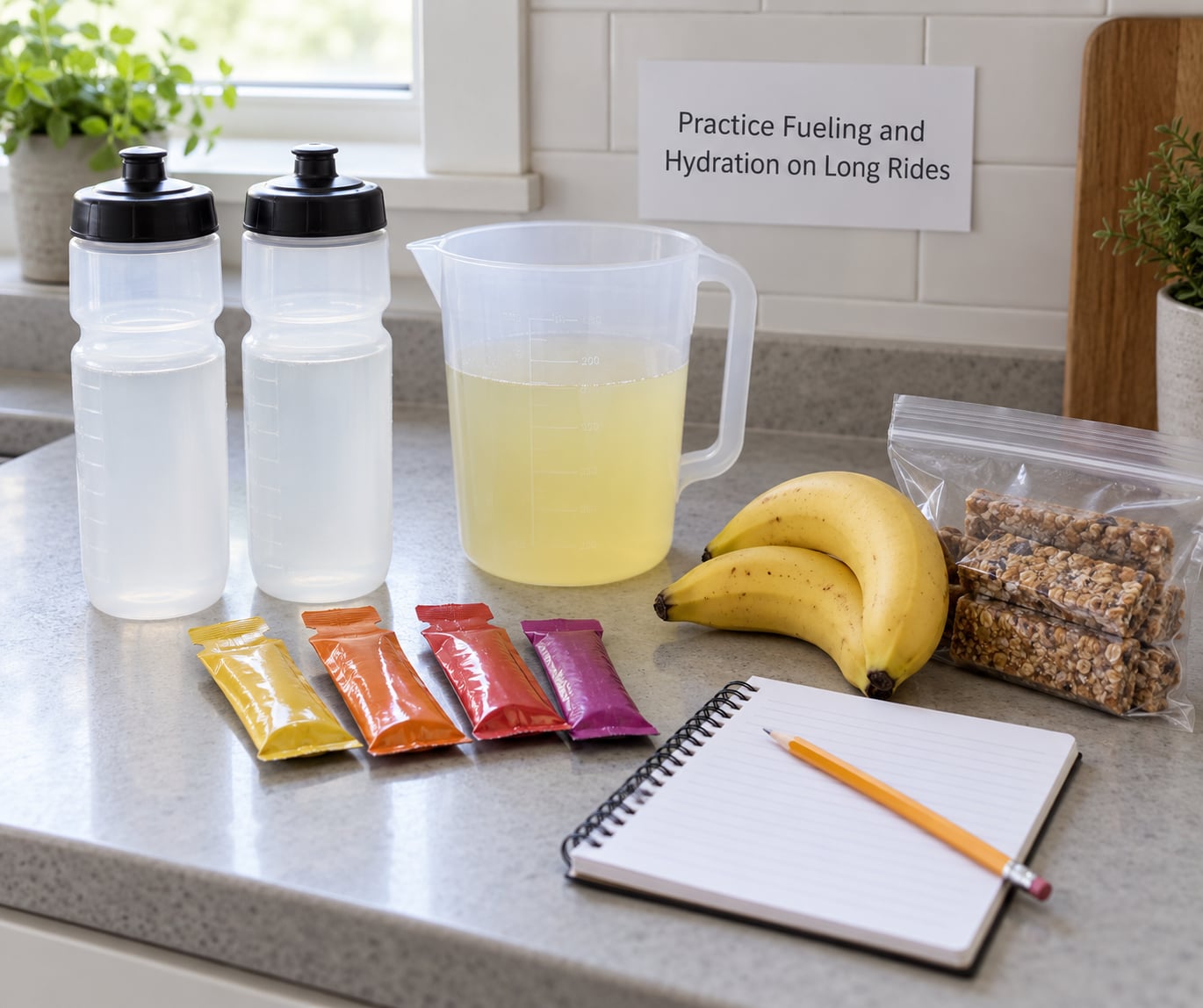
Bonking at mile 40 is a fueling failure, not a fitness failure. Your body cannot manufacture the carbohydrate a four-hour effort needs, and when the supply runs out you get the shaky, hollow, grey feeling riders call bonking. Prevention is boring and simple: eat on a timer, from the first 20 minutes, and drink before you are thirsty.
Aim for 30-60g of carbohydrate per hour, plus 500-750ml of fluid per hour. Add electrolytes if it is hot or you are sweating heavily. In real food terms that is roughly a banana plus a bag of fruit, or a couple of energy bars, or three gels with water, every hour.
Crucially, test your fuel on training rides. The worst day of any long ride is mile 35 of a first attempt, and it is far worse if it is also the first time your stomach meets a specific bar. Stick to foods you have already ridden with.
| Timing | What to do |
|---|---|
| Night before | Normal dinner, plus a carb source you enjoy. Do not experiment. |
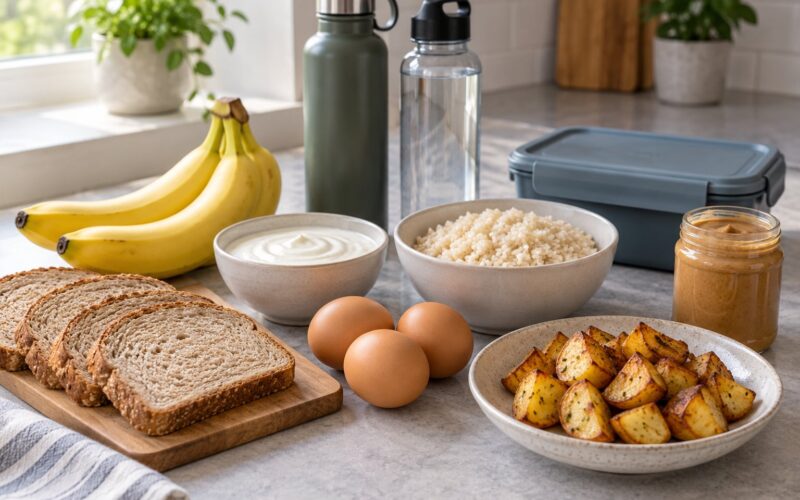
| 2-3 hours before | Breakfast with carbohydrate, low fat, low fiber. Toast, oats, banana, jam. |
| Every 15-20 minutes | Several sips of water from the first mile, not from the first hour. |
| Every 30-40 minutes | One fuel item, set on a timer or by mile marker. |
| At every planned stop | Refill both bottles, eat, check the route and the weather. |
Pacing Plan: How to Ride 50 Miles at a Pace You Can Hold
Start slower than feels necessary. Working out how to ride 50 miles for the first time is mostly a pacing problem, and the most repeated piece of advice on cycling forums for a first 50 is the same: pace yourself, because a blistering start means you will be hurting and probably bonk in the last part of the ride. Your first ten miles should feel almost embarrassingly easy.
- Miles 0-10: Settle in at talking pace. Eat your first fuel item now, not at mile 20. Check that both bottles are full.
- Miles 10-25: Hold the same pace. Climb in a lower gear at a cadence you can maintain rather than grinding in a big ring.
- Miles 25-35: This is your fuel checkpoint. If you skipped an item, take one now. Drink more than feels necessary, especially in wind or heat.
- Miles 35-45: The hard part, and where bonking usually happens. Shorten your intervals between food to every 25-30 minutes. Do not chase anyone.
- Miles 45-50: Whatever you have got. If the legs are gone, sit up, pedal easy and coast the descents. Finishing is the only objective.
Take planned short stops rather than one long one in the middle. Five minutes every 60-75 minutes of riding keeps blood moving, lets you drink properly and stops you from turning into a statue on a roadside. A stop every 90 minutes or so is plenty.
On hills, shift down and stay seated. On descents, relax your grip and let the bike run. Into a headwind, drop your body position to an elbows-and-knees crouch and pedal smoothly; one rider described a 17 mph headwind eating the second half of a 50 until there was no road left, and that is a real risk worth planning for by checking the forecast and picking an out-and-back rather than a point-to-point into the wind.
Two more notes on pace. If you have a bike computer, a heart-rate monitor or a power meter, learn the one metric that tells you you are going too hard before the ride starts. And if you are falling behind schedule at mile 25, do not speed up. Accept a later finish, or use the bail-out points on your route.
Choose the Right Route and Conditions
Pick a route you already half-know, with the elevation profile visible before you go. Flat loops of 12-20 miles are ideal, so you can bail out at any point you have ridden before. A point-to-point route into a headwind or over unfamiliar hills is how good plans go wrong.
Before the day, identify three things: where you can resupply, where you can get picked up, and where the route stops being a good idea. Put those points in your phone with a contact who can come get you. A rider in one forum thread finished a first 50 by being collected by their spouse, and that is a perfectly good outcome.
Check the daylight window. At 12 mph, 50 miles takes just over four hours, so a sunrise start leaves generous margin, while a midday start in winter can leave you riding home in the dark. Bring lights either way.
On weather, be conservative. Riding a first 50 in summer heat with no idea how you handle four hours of it is a bad bet; an overcast day in the 60s F (about 18-20 C) with a light breeze is close to ideal. And the group question: riding with a group is more fun and gives you a safety net, but group pace is usually too fast for a first ride. A supported or organized charity ride is the easiest option of all, since the route, aid stations and mechanical support are handled for you.
Finish the Ride and Recover
Do not turn the last five miles into a sprint. Spin easy, stay seated, keep drinking, and let the finish arrive on its own. The rider who coasts in at 10 mph with something left usually enjoys the next 50 more than the one who empties the tank at mile 49.
Keep moving gently for ten minutes, then refuel with fluids and carbohydrates within about 30-60 minutes of finishing. A normal meal counts, and the window is generous, so there is no need to force a recovery drink you dislike.
Handle the two things that ruin the memory of a first long ride. Chafing: wash, dry properly and apply chamois cream or petroleum jelly the same evening, and again tomorrow morning. Saddle soreness: a warm bath or shower, gentle movement, and no pressure points ignored. Real pain that sharpens, or numbness lasting more than a day, is worth a doctor visit rather than more saddle time.
Take the next day completely off. Most riders feel fine by 48 hours; if the pain in your knees or lower back is still there a week later, cut the mileage back rather than repeating the same jump. Then plan the next step: 60, then 75, then a century.
Common Mistakes
Starting too fast. It feels good and it costs you the last 15 miles. Fix: hold talking pace for the first 10 miles no matter how easy it feels, and treat any urge to speed up in the first third as a mistake.
Jumping mileage too quickly. More than a 10% increase on your longest ride in a week is asking for injury or a ruined weekend. Fix: repeat the week you struggled with instead of pushing on.
Trying new food on the day. A first attempt is the wrong place to test a new bar, a new drink mix or a new gel. Fix: use only what you have eaten on training rides, and add calories with plain, familiar food.
Ignoring the bike fit. A saddle that was fine for an hour is the top cause of a miserable back half. Fix: get padded shorts, use chamois cream, and have the saddle height and tilt checked at a shop before week 6.
Skipping breaks. Riding for three hours without drinking or standing up is a fast route to a cooked-off back half. Fix: short planned stops every 60-90 minutes of riding, every time, even on a good day.
Going out with no bail-out plan. A mechanical 20 miles from home with no spare tube is the scenario riders fear most. Fix: carry a tube, pump and levers, and tell someone the route and your expected finish time.
Training only long and slow. Easy miles build endurance, but if every ride is easy your easy pace creeps up and week 7 hurts. Fix: one moderate effort per week alongside the long ride.
Frequently Asked Questions
How long should I train before riding 50 miles for the first time?
Give yourself eight weeks if you can already ride 15-20 miles comfortably two to four times a week. That build adds roughly 10% to your longest ride each week, peaking at 60-75 miles a week before you back off. If you ride regularly and have already done a 30-40 mile ride, four to six weeks is enough. Coming from nothing, expect closer to 12 weeks rather than a compressed crash plan.
How fast should I ride when completing my first 50-mile ride?
Aim for a steady 12-14 mph on flat roads, which puts you at talking pace the whole way. The effort matters far more than the number: if you cannot speak in full sentences, you are going too hard. A 17 mph headwind or a long climb will drag your average down, and that is fine. Finishing in four to five hours with fuel in the tank beats finishing in three with nothing.
Do I need to train for longer than 50 miles before attempting it?
Yes, if you can. Most of the discomfort on a first 50 comes from sitting in the saddle past the point where your body expects to stop, so one ride at 60-75 miles removes that surprise. Keep that ride at a genuinely easy pace, use a familiar route, and treat it as practice rather than a test. Eight hours of easy riding teaches your body more than four hours of hard riding.
How often should I stop during a first 50-mile ride?
Plan a short stop every 60-75 minutes of riding, so four or five stops across a four-to-five hour day, and a few extra minutes at every 25-mile marker if you want to check food and water. Short frequent stops beat one long break in the middle. Each stop should take five minutes: refill both bottles, eat your scheduled fuel, look at the route and the sky, then roll again while you are still fresh.
What should I eat and drink before and during a 50-mile ride?
Eat a normal carb-focused breakfast two to three hours before: oats, toast, banana, jam, nothing greasy. During the ride, aim for 30-60g of carbohydrate and 500-750ml of fluid every hour, which is a banana and a bag of fruit, a couple of bars, or three gels with water. Start eating in the first 20 minutes rather than waiting until you are hungry, and add electrolytes in hot weather.
How do I know if I am ready to attempt 50 miles?
Four honest checks. You have finished a ride of 60-75 miles at an easy pace and felt okay afterwards. You can eat and drink on a timer without feeling sick. You have a route planned with water, bail-out points and a backup pickup. And you have no unusual pain, dizziness or breathing trouble during training. Missing any of these means another two weeks of easy miles, not another attempt.
Conclusion
Start with the boring part: three easy rides a week and one long ride, growing about 10% each week until you have covered 60-75 miles in a single sitting. Practice eating every 30 minutes and drinking every 15, on real training rides, using food you already know. Then ride the 50 at a pace where you can still chat at mile 40, and refuse to chase speed in the last five.
That is the entire plan. Eight weeks of consistency beats any talent, any bike and any heroics on the day. When you finish, plan 60 miles next month, and you will be a century rider within a year without ever doing anything dramatic.