To increase cycling mileage safely, add roughly 10% to your weekly mileage each week, change only one variable at a time, and follow every three build weeks with a consolidation week that drops volume by 20-30%. Most overuse injuries in cycling come from training load spikes, not from riding too many miles in absolute terms. Twelve weeks of disciplined, boring mileage beats six weeks of heroics followed by six weeks off the bike.
That is the whole idea. The rest is arithmetic, recovery and knowing when to stop.
Table of Contents
- What You Need
- Step-by-Step: Build Mileage Over 12 Weeks
- 1. Establish a One-Week Baseline Before You Increase Cycling Mileage
- 2. Repeat Your Baseline Before Adding More
- 3. Increase One Training Variable at a Time
- 4. Use a Three-Week Build and One-Week Consolidation
- 5. Lengthen the Long Ride Gradually
- 6. Pair Added Mileage With Better Recovery
- 7. Check Progress and Repeat or Back Off
- Common Mistakes
- Frequently Asked Questions
- How many miles should I add to my cycling each week?
- Is it better for beginners to cycle every day to build mileage?
- How do I increase cycling mileage when training for a century?
- How quickly should cycling fitness improve as mileage increases?
- How do I know when I should reduce my cycling mileage?
- Should I increase cycling mileage after taking a long break?
- Conclusion
What You Need
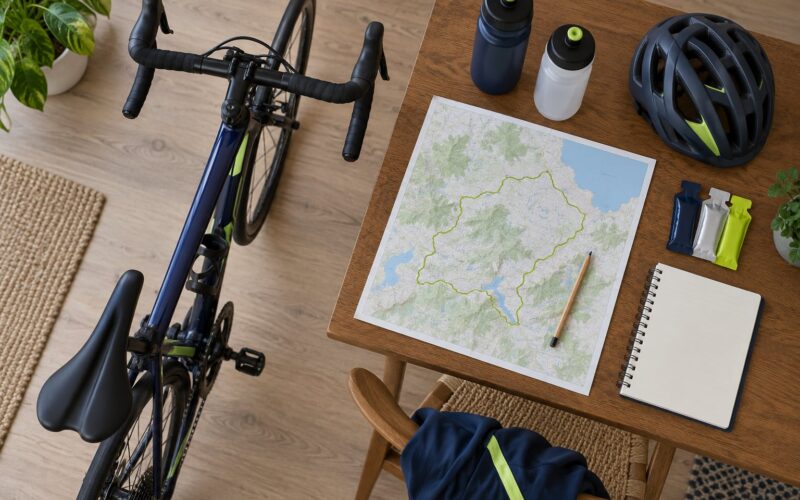
Before you add a single mile, you need an honest baseline, a way to record it, food and water for longer hours, a bike that is comfortable enough to sit on for hours, and time to recover between rides. You also need permission from a qualified clinician if you have a medical concern or are returning after a long break.
A current riding baseline means one real week of normal life, not your best week of the year. Most riders underestimate how much of their week is actually available, and that mistake is where most progressions collapse in week three.
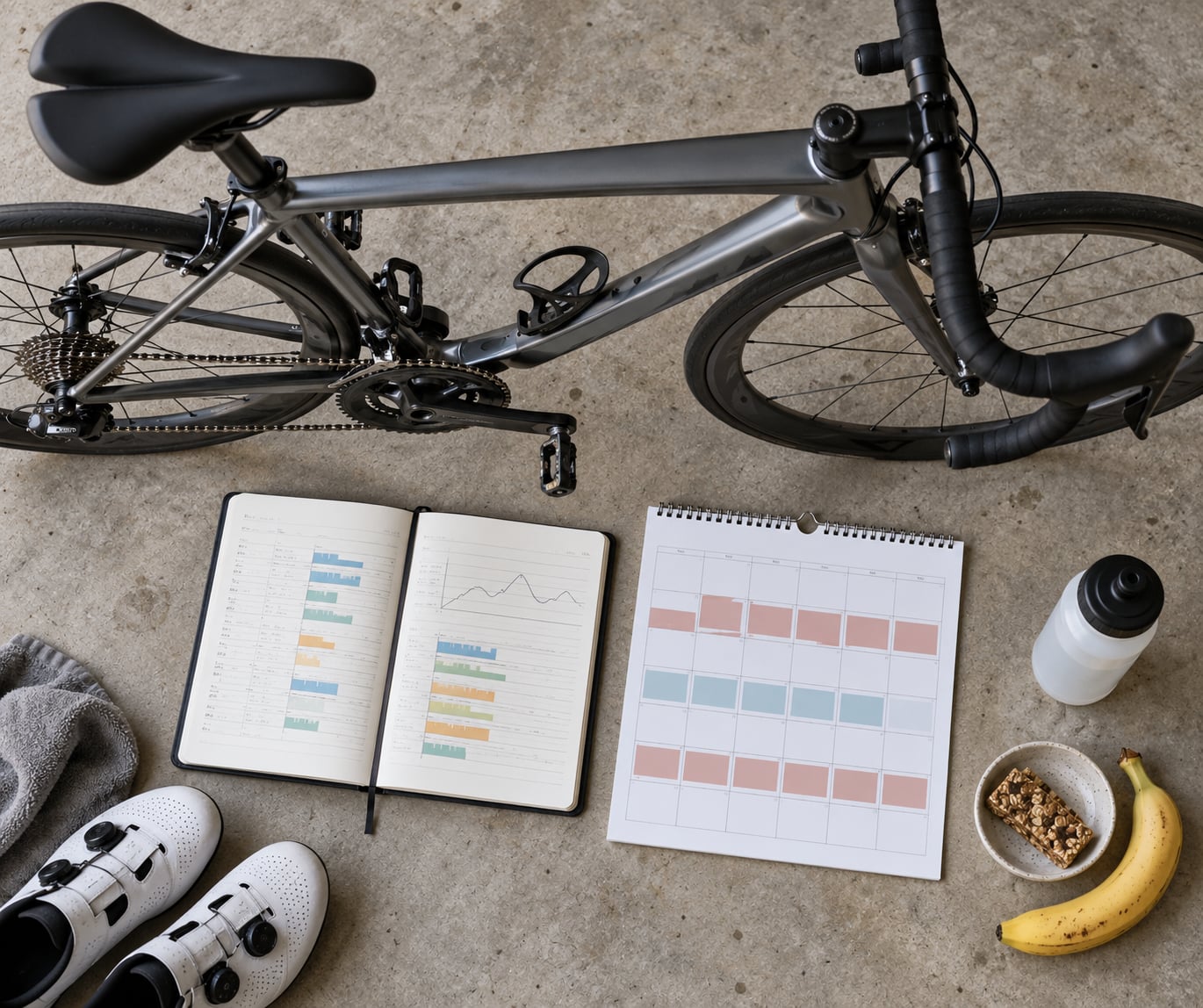
A simple weekly mileage record matters more than expensive software. A notebook, a phone note, or a spreadsheet with four columns — total miles, longest ride, how you felt, and how you slept — is enough. Apps like Strava or TrainingPeaks can hold the history, but the habit of writing it down is what changes behaviour.
Food and hydration are prerequisites, not extras. Riders who add mileage while under-fueling hit a wall well before their tendons do, and they often mistake it for a fitness ceiling. Eat and drink something every 30 minutes from the start of any ride past 90 minutes, not from the first sign of hunger.
Equipment matters more than most people expect. Numb hands, a saddle that moves, and shoes that have flattened out all turn a two-hour ride into a three-hour complaint. If you are adding 10 miles a week for twelve weeks, you will spend a lot of time on the bike, and comfort is what makes that time bearable.
Recovery time is the last prerequisite and the easiest to skip. Plan at least one full day off the bike every week as part of the plan rather than as a failure of the plan.
Step-by-Step: Build Mileage Over 12 Weeks
A safe 12-week build has three phases: establish a baseline you can actually recover from, add recoverable volume on top of it, then consolidate so your body absorbs the stress you have piled on.
The block below shows the shape of the plan. Fill in your own number where it says your baseline and the rest follows.
- Week 1: baseline. Measure only — record total miles, longest ride, typical intensity and terrain.
- Week 2: baseline again, no change. Confirm you recover comfortably from what you already do.
- Week 3: baseline plus 10%, roughly three extra miles on a 30-mile week. First build week, distance only.
- Week 4: another build week at the new level.
- Week 5: consolidation. Drop 20-30% and let the training stress settle.
- Weeks 6-12: repeat the cycle — three build weeks of about 10% each, then one consolidation week.
1. Establish a One-Week Baseline Before You Increase Cycling Mileage
Record one full week of riding exactly as it goes: total miles, the length of your longest ride, how hard you rode, what terrain you covered and how you felt afterwards. That week is your starting number, and it replaces any arbitrary target you found online.
A rider doing 25 miles a week should not adopt a stranger’s 60-mile week as their base. They should treat 25 to 30 miles as a stable base, ride it twice, and only then add.
2. Repeat Your Baseline Before Adding More
Beginners, returning riders and anyone rebuilding after a layoff should hold mileage steady for a second week before progressing.
That second week is not wasted. It tells you whether your current load is genuinely sustainable or whether last week was an unusually good one. Two flat weeks are the cheapest insurance in training: if you cannot recover from your present mileage, adding miles will only dig the hole deeper.
3. Increase One Training Variable at a Time
Add either weekly mileage, ride duration, or intensity. Never two of them in the same week, and never three.
This is where most self-coached progressions go wrong. A rider jumps from 35 to 55 miles, adds an interval session in the same week, and adds a fourth day of riding, then wonders why a knee complaint showed up three weeks later. The cause was almost always the combination, not any single change.
Keep most of your riding easy. Zone 2 — a pace where you can hold a conversation without straining — is where aerobic base actually builds, and it is the character of riding that tolerates volume. Hard efforts are the seasoning, not the meal.
4. Use a Three-Week Build and One-Week Consolidation
Three build weeks followed by one lower week is the pattern to copy, because it gives connective tissue time to catch up with your aerobic gains.
Take a 30-mile baseline. Build to 32, then 34, then 36 miles across three weeks. Then consolidate: drop back toward 32 to 34 miles, keep every ride easy, and let the soreness fade. Resume at 36 or 38 and build again.
You will find that 10% feels slow. That is the point. Ten weeks of steady, repeatable progress beats four weeks of aggressive mileage followed by a month off the bike with a niggle.
5. Lengthen the Long Ride Gradually
Extend your weekend ride by a modest increment that you could repeat next weekend without thinking twice about it.
Keep the route, pace, fueling and recovery controllable. A rider comfortable at a 50-mile long ride can move to 60 over several weeks of weekend additions, then consider 70. The purpose of the long ride is time in the saddle at an easy pace, not a personal best.
For event planning, a useful rule of thumb is that your longest completed ride before an event should be roughly 70-75% of the target distance, and that you should have completed two long rides seven to ten days apart before race day. If your target is 100 miles, that means a longest ride in the low 70s, not a 100-mile test ride the week before.
6. Pair Added Mileage With Better Recovery
Sleep, meals, hydration, rest days and low-intensity riding are what actually convert extra miles into fitness. Without them, extra miles are just extra fatigue.
After a demanding weekend ride, downgrade the next weekday ride rather than trying to hit your number. Swap a planned 90 minutes for 45 easy minutes and get back on schedule a day later.
Two short strength sessions a week and ten minutes of mobility work are cheap insurance for the joints and tendons that carry the extra load. Recovery is not the opposite of training; it is when the training happens.
7. Check Progress and Repeat or Back Off
Review your weekly mileage, energy, soreness, mood and ride performance once a week. If you already track resting heart rate, add it as a trend rather than a single reading.
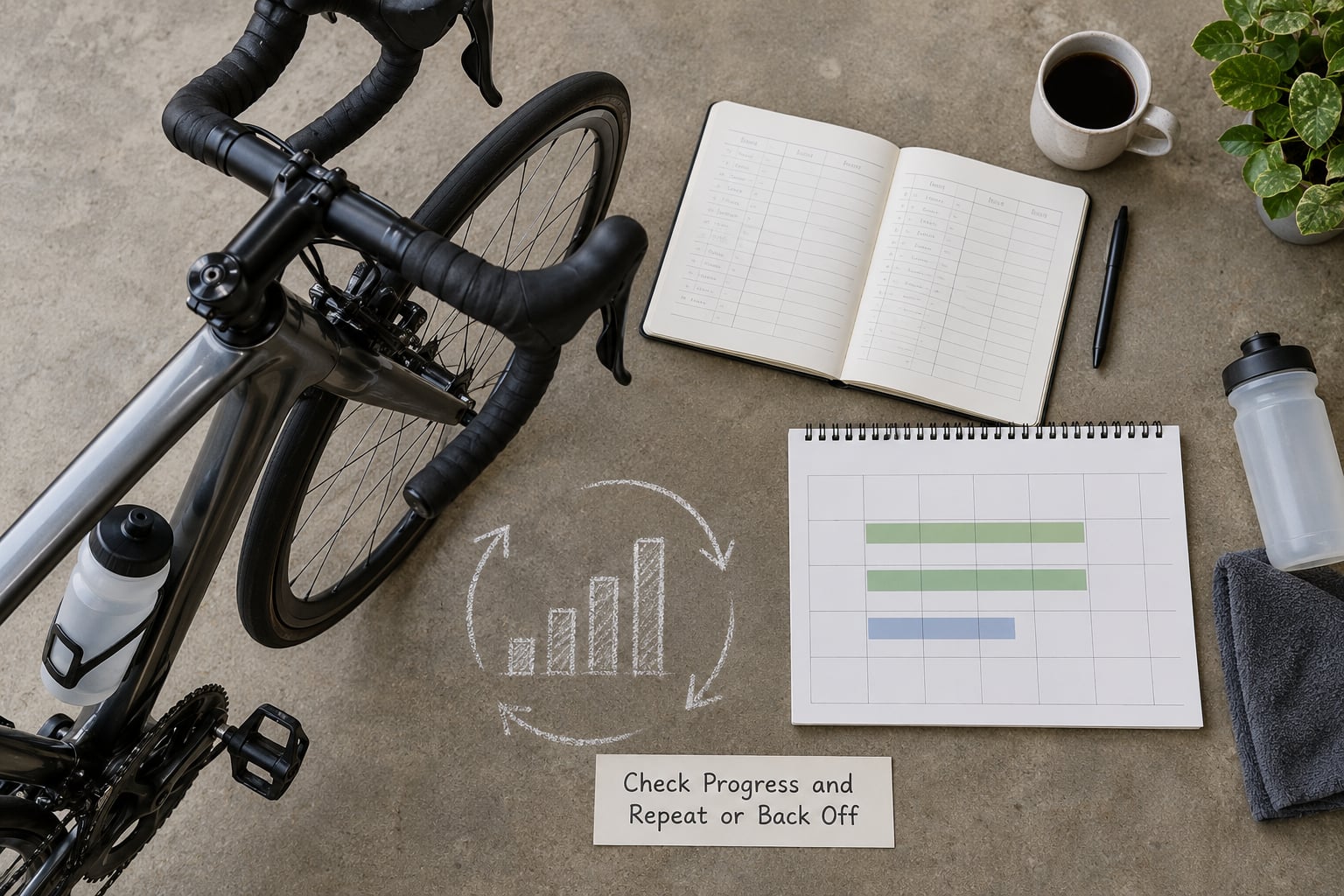
Hold or back off when soreness lasts more than 72 hours, when your usual easy pace feels hard, when sleep suffers for several nights running, or when motivation collapses across two or three sessions. Those are training-load signals, not a character flaw.
See a doctor or physiotherapist for pain that is sharp, gets worse through a ride rather than easing, or comes with swelling, numbness or weakness. Rest until you have an answer, not through one.
Common Mistakes
Chasing a fixed percentage. Ten percent of 100 miles is ten miles; ten percent of 20 miles is two. Percentage rules scale with your life, so pair them with an absolute cap — no more than about five miles added to weekly volume in a single week for most riders.
Adding mileage and intensity in the same week. Fix: add distance for a build week, then place hard efforts in the following week on the existing mileage. Never stack both on one week.
Ignoring terrain and weather. A 45-mile ride with heavy climbing costs far more than 45 flat miles. When elevation, heat or altitude climbs, cut the volume back rather than pushing through the same number.
Progressing from a hard week. Fix: the consolidation week is where you add from. If week four was genuinely rough, repeat week three instead of adding to it.
Changing several variables at once. Fix: if you moved the route, the intensity and the distance, you will not know which one caused the fatigue or the pain.
Treating pain and unusual fatigue as normal. Persistent knee or Achilles discomfort after a mileage jump is not a rite of passage. Two to three weeks of delayed soreness is common; pain that persists needs rest, not more miles.
Restarting at pre-break mileage after time off. Fix: come back at roughly half your previous weekly volume, hold it for two weeks, then rebuild with the same 10% steps.
Frequently Asked Questions
How many miles should I add to my cycling each week?
Add no more than about 10% of your current weekly mileage, and cap the absolute increase at roughly five miles for most riders. Riders starting from a small base often add more than 10% simply by riding a different route. Change only one variable per week — distance, duration or intensity — and follow every three build weeks with a consolidation week that cuts volume by 20-30%.
Is it better for beginners to cycle every day to build mileage?
No. Five days on with no rest day produces more fatigue than it produces fitness, and fatigue is what makes riders quit. Keep at least one full day off the bike, put your longest ride on the weekend, and keep the other rides easy. If you only have four or five days available, four good days with a real long ride beats six unstructured ones.
How do I increase cycling mileage when training for a century?
Build for twelve to sixteen weeks and keep your longest ride near 70-75% of the target distance before the event. Finish with two long rides seven to ten days apart so your longest effort is not the race itself. Back-to-back weekend long rides are the fastest way to raise your long-ride ceiling, but keep the second ride easy and fully fuelled. Taper the final week: cut volume, keep some intensity.
How quickly should cycling fitness improve as mileage increases?
Expect measurable change over months, not weeks. Most riders notice easier climbing and a steadier pace within four to six weeks of consistent volume. Aerobic gains keep arriving for a year or more once you settle into a repeatable weekly pattern. If your easy pace stays hard and your resting heart rate trends upward for several days, that is fatigue, not fitness.
How do I know when I should reduce my cycling mileage?
Reduce volume when soreness lasts more than 72 hours, when your usual easy pace feels hard for several sessions in a row, when your resting heart rate is elevated for three or more mornings, or when you feel flat and irritable. Repeat your baseline week instead of adding to it. Sharp pain that worsens during a ride, plus swelling, numbness or weakness, means stop and see a clinician.
Should I increase cycling mileage after taking a long break?
Restart at roughly half the weekly volume you were riding before the break, hold that number for two weeks, then rebuild with the same 10% steps you used originally. Fitness fades faster than most riders expect, but tendons and joints lose very little, so the risk sits on the muscle and aerobic side rather than the connective tissue side. Rides after a layoff are usually steadier than they used to be.
Conclusion
Record one real week of riding as it happens. Repeat that baseline a second time so you know it is stable. Change one variable, add about 10%, and follow every three build weeks with a lighter one.
Then check how you actually feel before adding anything else. Your first job tonight is simple: write down the miles you rode this week and treat that number as the only target you are allowed to worry about for the next twelve weeks.