To build endurance on a road bike, ride easy for long, often, and consistently, fuel every ride over 90 minutes properly, protect your recovery, and add one small block of hard intensity each week. That is the whole method. Almost everything else is detail about how fast you should go and by how much you should add each month.
Most riders try to fix endurance by adding miles. A few weeks of that works, then it stalls, and the rider concludes they need to try harder. The gap between those two experiences is usually one of three things: the easy rides were not easy, the food was not enough, or the increase was too steep to recover from.
Four things carry the plan, and if you keep them straight the rest becomes easier to decide:
- Volume. Time in the saddle most weeks, spread across five or six days, not crammed into one Saturday.
- Intensity. Roughly 80% of your riding genuinely easy, 20% genuinely hard, following the 80/20 polarised split that riders on r/cycling repeat more than any other rule in this sport.
- Fuelling. 180 to 300 kcal per hour once rides pass 90 minutes, and more carbohydrate per hour the longer the ride.
- Recovery. Sleep, a deload every third or fourth week, and an honest read on fatigue before adding anything.
Table of Contents
- What You Need
- Step-by-Step: Build Endurance Gradually
- Step 1: Establish a Comfortable Baseline
- Step 2: Add Consistent Aerobic Volume
- Step 3: Introduce a Safe Long-Ride Progression
- Step 4: Support the Adaptation With Recovery and Nutrition
- Step 5: Add Intervals Without Jeopardizing Endurance
- Step 6: Test Your Event Readiness
- Common Mistakes
- Frequently Asked Questions
- How often should I ride to build cycling endurance?
- Should endurance rides be hard or easy?
- How long does it take to build endurance for a century ride?
- What should I do after a missed week of training?
- Do I need a power meter to build endurance?
- How do I balance endurance training with speed training?
- Conclusion
What You Need
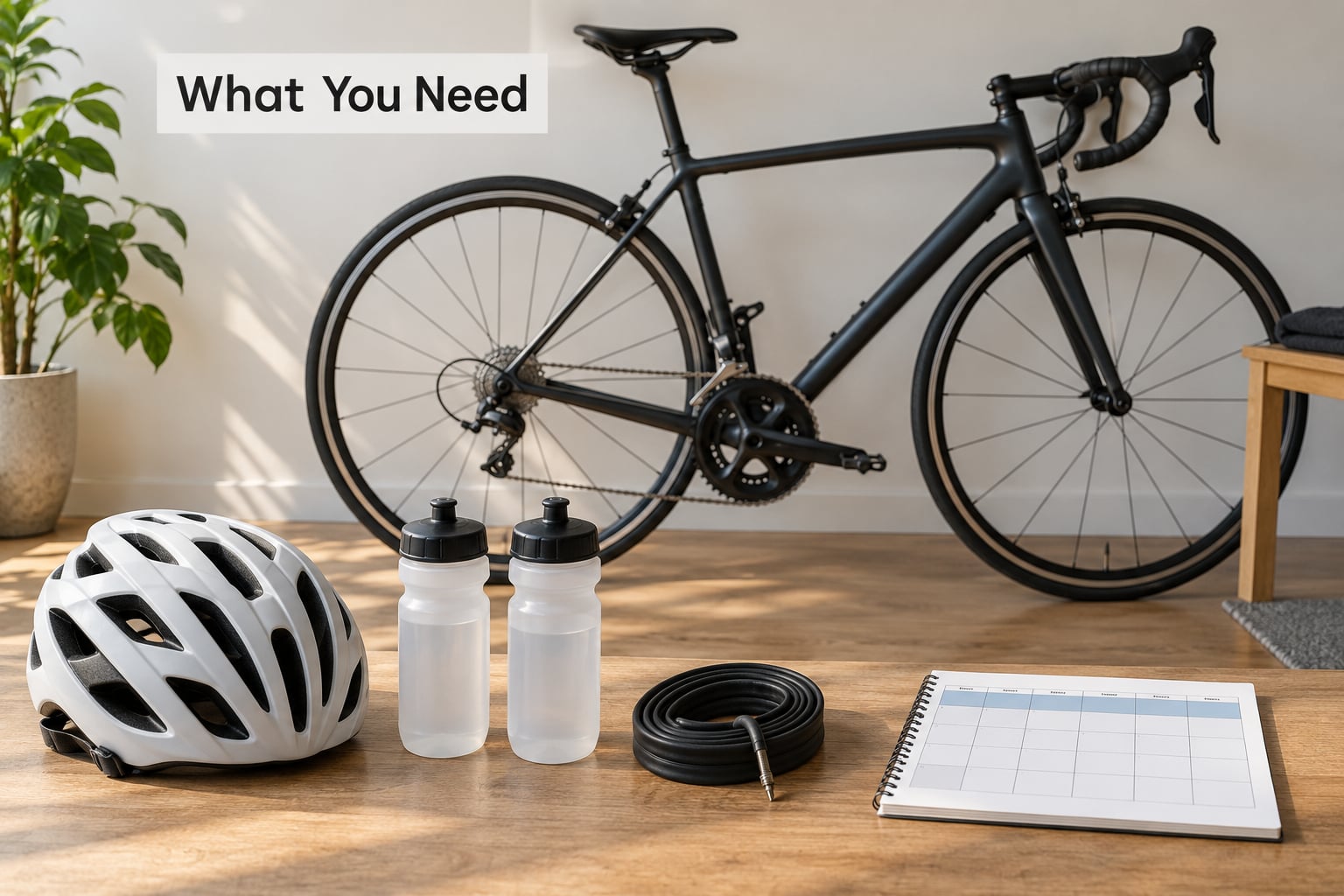
None of this is expensive, and none of it is optional if you plan to sit in a saddle for four hours. You need somewhere to ride, food and water, a way to track what you actually did, and enough recovery capacity to absorb it.
A bike that is comfortable for hours. That means a fit where you can hold your position for three hours without the pain arriving early. If your saddle hurts or your hands go numb before hour two, you will cut rides short and never build anything. A professional fit is worth it once the pain is real; before that, a saddle whose nose is not pressing a nerve is usually enough.
Clothing that solves heat, not just looks good. For summer centuries, thin breathable bib shorts, a light jersey and gloves are the difference between a rider who finishes and a rider who cooks. Chamois cream is unglamorous and it works. Wool socks prevent the hot spots that end more long rides than any saddle does.
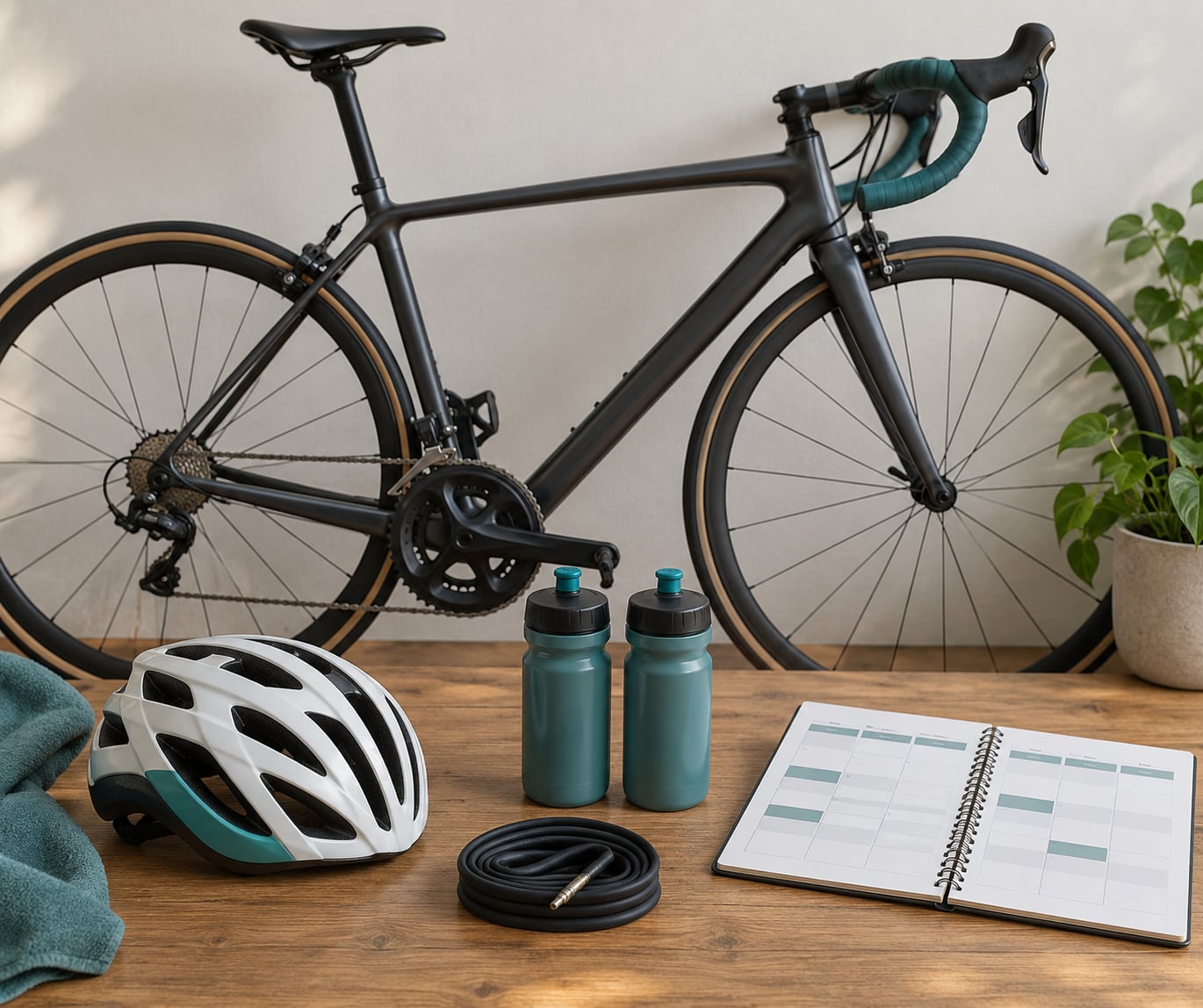
Fueling kit. A stash of gels or chews, a bar or two, real food for anything over two hours, and bottles to match your bottle cage count. You can train your gut, but you cannot train it on a ride you never fuel.
Two bottles and a spare tube. Both, plus a pump and tire levers. Riding out 80 km on one bottle because the second cage is full of junk is a needless limit on exactly the long rides you need.
A training calendar. A paper notebook or a free phone app is fine. It needs four fields: duration, session type, how hard it felt, and how you felt afterwards. Memory is a bad training log because you remember the good rides.
A way to check recovery. A heart rate strap and morning resting heart rate are the cheapest useful version. Even without one, the one-flight-of-stairs test from the TrainerRoad masters riders thread does the job: after a day off, if climbing one flight leaves you noticeably breathless, you are not recovered yet, no matter how the bike felt in the garage.
Step-by-Step: Build Endurance Gradually
Step 1: Establish a Comfortable Baseline
Start with one week where you change nothing and simply record reality. Track total hours in the saddle, your longest single ride, and your general energy across the week. Hours matter more than miles because hours are what event duration is measured in and what your body adapts to.
Write down how you recover: how you sleep, how your legs feel 24 hours after a long ride, whether you feel flat on the easy days. Riders returning from a break often have a large mismatch between what they used to do and what they can do now, and that mismatch is where plans go to die. A baseline of 10 hours a week means something different to someone coming back from injury than to someone already riding 20.
From that baseline, add roughly 5 to 10% on total weekly hours every week for the first month. Ten percent is a guideline rather than law, and past it the practical limit is not your legs but your job, your sleep and your patience.
Step 2: Add Consistent Aerobic Volume
Zone 2 is the engine of the whole plan, and the test for it is embarrassingly simple: you can speak in full sentences, but not comfortably sing. On heart rate that usually lands around 70 to 75% of maximum, which is the number behind the 75% rule cyclists talk about. On perceived effort it is about RPE 3 to 4 out of 10.
Easy riding is where your aerobic capacity comes from: more mitochondria, better fat use as fuel, faster lactate clearance between efforts. It is unglamorous, it is the majority of every good training week, and it is where the century miles get built.
The mistake here is the fear that you are not really training if you can talk. Community riders call it out constantly, and they are right. Long easy rides are not recovery rides, they are the actual workout. If you drift into what feels like a solid medium-hard effort, you get the fatigue of a hard ride and none of the adaptation.
Step 3: Introduce a Safe Long-Ride Progression
Long rides are the session that transfers directly to a century or a double. Extend them slowly: add 30 to 60 minutes every one to two weeks, never more than that in a single step, and follow three building weeks with a deload week where duration drops back 20 to 30%.
Plan by duration, not by distance. A 160 km ride at an easy pace takes as long as your target event will take, and that clock is the number that decides whether you can finish. Distance changes with terrain, wind and rider; time does not.
Keep the long ride easy and start it slower than feels necessary. Riders routinely blow their first hour harder than planned and pay for it in the last hour. For a century, hold the first 60 minutes at the easy end of your range, then settle.
Long rides do not have to be solitary. Back-to-back long days, with two or three in a row followed by a rest day, teach fatigue resistance, the ability to still ride well when you are already tired. Riders report this is the training that makes day two of a two-day event feel ordinary rather than brutal. Keep the second ride shorter and easier.
Step 4: Support the Adaptation With Recovery and Nutrition
On rides under 90 minutes, food is optional. Past that, under-fuelling is the most commonly overlooked reason progress stalls, and it is the one riders can fix this week without buying anything.
Work to these numbers on the bike: 180 to 300 kcal per hour for rides up to about 2.5 hours, and 60g or more of carbohydrate per hour beyond that. Sip fluid every 15 to 20 minutes, roughly 500 to 750 ml per hour, more in heat than in cool air. Add electrolytes when you are riding for hours or sweating heavily.
Practice fueling on training rides, at least three or four times before your event, so your stomach learns the timing. The first hour is where most riders take nothing and then feel the crash at 90 minutes.
Off the bike, aim for 7 to 9 hours of sleep, eat enough overall that you are not living in a deficit, and get carbs and protein back within the hour after a long ride. Track your resting heart rate in the morning; a sustained rise of five or more beats per minute above your normal for several days is a reason to drop a session, not to add one. If sleep and life stress get worse for a couple of weeks, expect fitness gains to pause even while your log stays full.
Step 5: Add Intervals Without Jeopardizing Endurance
Hard sessions raise your ceiling. They are also the fastest way to wreck a base, so they stay rare and they stay short. Most of the 20% hard portion is one session a week, sometimes two.
| Ride type | Intensity | Duration | Weekly frequency | Purpose |
|---|---|---|---|---|
| Recovery spin | Very easy, RPE 1-2 | 30-60 min | 1-2 | Keeps legs ticking without adding fatigue |
| Steady endurance | Zone 2, 70-75% max HR | 60-120 min | 2-4 | Aerobic base, metabolic clearance |
| Long ride | Zone 2, steady start | 3-7 hours by phase | Weekly | Endurance, pacing, fuelling practice, comfort |
| Sweet spot | 88-93% FTP, 20-40 min total | 3×10 min with 10 min easy | Weekly or fortnightly | Raises lactate threshold without big recovery cost |
| Threshold | 95-105% FTP, 3×8-12 min | Under an hour | Every 2-3 weeks | FTP gains, hill climbing specificity |
No power meter is fine for building endurance. Set your zones by heart rate and perceived effort: Zone 2 is conversation pace, threshold is roughly the point where you can speak a few words but not a sentence, and VO2 max work is effort you could hold for about a minute. If you do have a meter, treat FTP and the zones it generates as estimates rather than ground truth, because fitness and freshness move the real numbers around.
Retest FTP when the calendar says so, roughly once every six to eight weeks, not when you feel like having a bad day on the bike.
Step 6: Test Your Event Readiness
Two to three weeks before a century or a double, do one ride at 90 to 100% of the expected event duration, ridden at easy pace, on the actual route or one with similar climbing and similar resupply gaps. Use the same food and the same bottle count.
This ride tests the four things that actually end events: whether your pacing holds, whether your stomach accepts the plan, whether your saddle and feet stay comfortable, and whether you can sit on the bike for the full time without getting fidgety and sloppy. Write down what you change afterwards. Ninety minutes of adjustment afterwards is worth more than a perfect theory beforehand.
If the simulation falls apart at three hours, go back to step three and extend the long ride before adding anything harder. Fitness built in order holds together.
Common Mistakes
1. Jumping volume. Doubling hours from 8 to 16 in one week is the single most common way riders end a build early with sore knees, poor sleep and no gains. Add 5 to 10% and let a deload week absorb the last of it.
2. Riding every long ride too hard. The classic pattern is a Saturday where the group rides at group pace and everybody suffers. Hold conversation pace and the group can wait; the rider who blows up at 80 km has nothing left for 100.
3. Under-fuelling. Riding 3 hours on a bar and a gel feels fine at the time and shows up as a flat, weak finish. Hit 180 to 300 kcal per hour and more carbohydrate the longer you go.
4. Weekend-only riding. Five easy rides a week beat one long Saturday and one hard Sunday every time, because endurance adapts to frequency as much as duration. If your calendar is full, keep the weekend ride and shorten the weekdays.
5. Chasing FTP too early. Testing hard in week two of a base build gives you a number that reflects fatigue rather than fitness. Retest on a schedule, every six to eight weeks, and only after a deload.
6. Confusing fitness with race readiness. Being able to ride 160 km easily says nothing about racing a hilly century at full effort. Race pace is a later addition to a base, not a substitute for it.
7. Ignoring fatigue signals. Persistent soreness, poor sleep, falling resting heart rate tracking upward and low motivation across easy rides are all reasons to cut a week short. The rider who backs off at week three is the one who still rides in September.
One more worth naming, because it is the most common long-tail complaint in forums: riders adding miles every week and getting no faster. The usual answer is that the intensity distribution is wrong, not the mileage. Easy was medium, hard was never hard, or recovery was too short between blocks.
Frequently Asked Questions
How often should I ride to build cycling endurance?
Most riders do best with five or six sessions a week, most of them short and easy, with one long ride at the weekend. Frequency matters more than the length of any single ride, because endurance adapts to repeated time in the saddle. Four days works fine too if the quality of those days is high and one of them is long.
Should endurance rides be hard or easy?
Easy. Somewhere around 70 to 75% of maximum heart rate, which is conversation pace, you can ride for hours and build the aerobic base that everything else depends on. The standard split is roughly 80% of your riding very easy and 20% hard, so the hard sessions stay rare and short and do not wreck the easy weeks.
How long does it take to build endurance for a century ride?
With consistent training, a beginner who rides most weekends is usually ready for a century in about three to four months. Someone with a solid base needs far less, sometimes six to eight weeks. If your longest ride is currently 50 km, expect roughly eight to twelve weeks of steady progression before 100 km feels comfortable.
What should I do after a missed week of training?
Return to where you were two weeks earlier and rebuild from there, rather than jumping back to your previous volume. Skipping a week loses very little fitness, but returning to full volume after time off is what causes the soreness and the lost weeks. Add five to ten percent back and ramp again from the reduced base.
Do I need a power meter to build endurance?
No. Most of endurance building happens at conversation pace, which heart rate and the talk test measure perfectly well. A meter makes your hard sessions and threshold work more precise, and it is worth adding later, but it is not a prerequisite for a strong aerobic base and it does not replace honest pacing.
How do I balance endurance training with speed training?
Keep them in separate weeks rather than in the same ride. Spend most weeks building the base with long easy miles, then add one short hard session for threshold or sweet spot work. Endurance is the foundation, and speed sits on top of it, so if progress on a hard session stalls while easy riding keeps feeling good, the base usually needs more weeks, not more intensity.
Conclusion
Endurance on a road bike is built by time at a genuinely easy pace, added in small predictable steps, with food and sleep treated as part of the training rather than as extras. Volume first, intensity second, and a deload every third or fourth week keeps the whole thing moving in one direction.
Start with one logged week this weekend. Write down your hours, your longest ride and how you recovered, then set three easy rides, one longer ride and one day completely off. Build from that number for a month before adding anything harder, and re-check your stamina and fuel strategy on a ride that matches the length of the event you are aiming at.