Knee pain from cycling usually comes down to three things: how much you are asking the joint to do, how your bike is set up under you, and how you pedal. Fixing knee pain from cycling works best in that order, because load is the easiest thing to change and the hardest thing to give up. Most riders need a few millimetres of saddle adjustment, gentler gearing, and six weeks of specific strength work, not months off the bike.
Here is why small things matter so much. At a 90 RPM cadence you turn the cranks about 5,400 times an hour, so a two-hour ride is roughly 10,800 pedal revolutions. Every one of them loads the same joint through the same range. A few degrees of extra rotation per stroke is invisible on the bike and obvious to the tissue after a few thousand repetitions.
This guide is general information about managing a common cycling complaint. It is not a diagnosis and not a treatment plan. Anyone with sharp pain, a joint that locks or gives way, or swelling that does not settle needs an assessment from a doctor or qualified clinician before riding again.
Last reviewed and updated in October 2026.
Table of Contents
- What You Need to Fix Knee Pain from Cycling
- Step-by-Step: How to Work Through Knee Pain from Cycling
- Step 1: How to Fix Knee Pain from Cycling by Easing the Load
- Step 2: Stop the Ride If the Knee Pain Worsens
- Step 3: Check Your Bike Setup
- Step 4: Review Your Pedaling Technique
- Step 5: Adjust Your Training Load Gradually
- Step 6: Seek Medical Care for Persistent or Red-Flag Symptoms
- Step 7: Return to Normal Riding Carefully
- Common Mistakes
- Frequently Asked Questions
- Should I keep cycling if my knee hurts?
- Why does my knee hurt after cycling but feel better once I stop?
- Is knee pain from cycling usually caused by the bike fit?
- How long should I wait before riding again after knee pain?
- Can cycling knee pain cause swelling?
- What to Do First
What You Need to Fix Knee Pain from Cycling
Before touching a single bolt, gather five things. Without them you will change something, feel different for a day, and have no idea whether the change helped.
A clear note on the pain itself: when it started, which rides triggered it, where on the knee it sits, whether swelling appeared, and what changed in the weeks beforehand. Riders who changed bike, saddle, pedals or shoes in the same season as the pain rarely separate cause from coincidence.
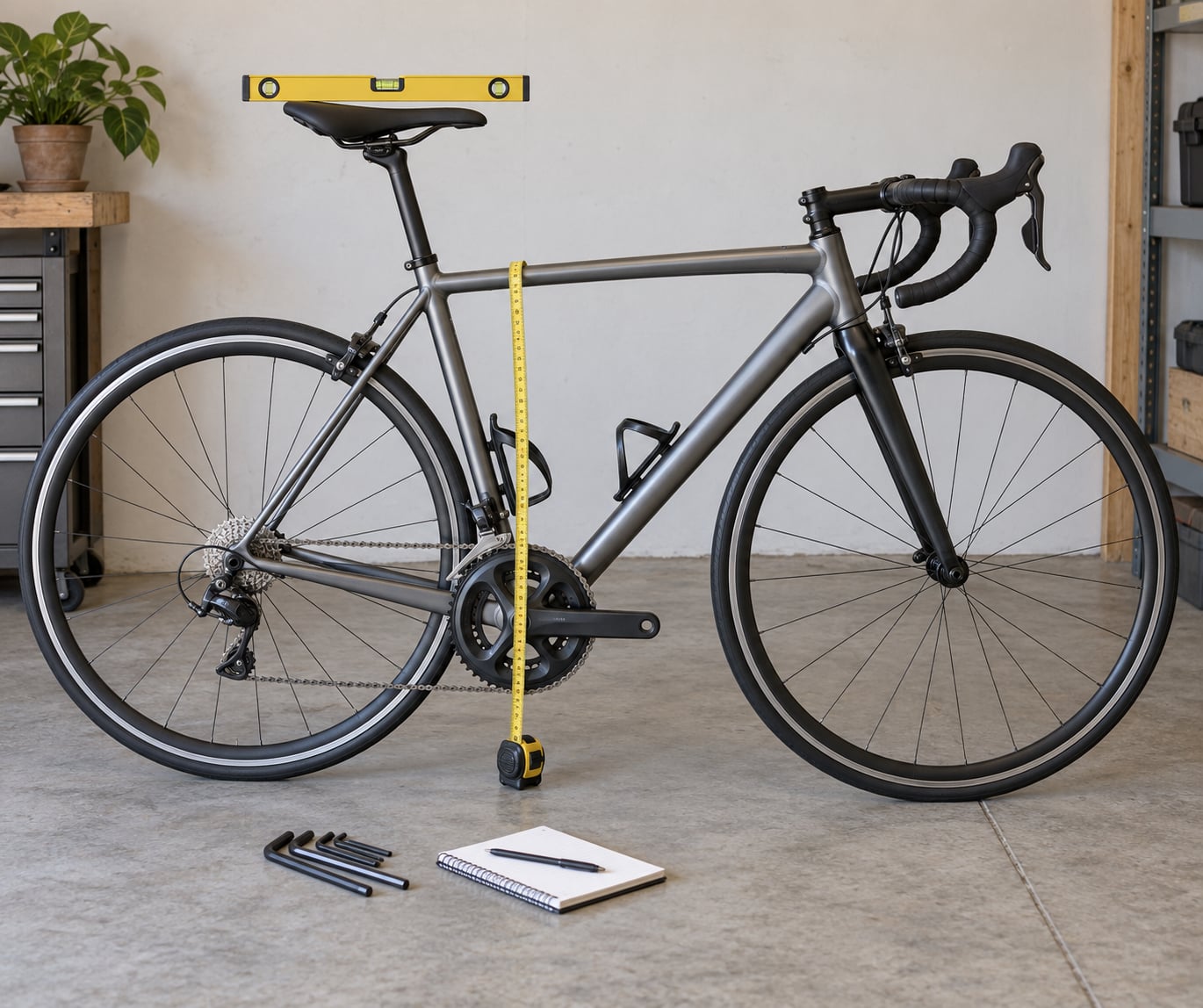
The bike as it actually is, not as it was set up on day one. Saddle height measured from the middle of the top tube to the top of the saddle, along with the saddle fore-aft position and the distance from saddle tip to the front of the handlebar.
A tape measure or ruler, the hex keys that came with the bike, and a torque driver so you can return bolts to the manufacturer’s stated tension. A loose seatpost bolt is a common surprise in the middle of this whole process.
Comfortable cycling shoes, plus a training log. Riders on the TrainerRoad forum credit regular foam rolling and stretching with keeping their knees comfortable for years, and the same riders notice problems return within weeks when that work stops. A written log is what turns a guess into an answer.
Access to a qualified clinician for anything persistent. Some things show up as pain and need to be examined to be understood.
Step-by-Step: How to Work Through Knee Pain from Cycling
The seven steps below run in order for a reason. Easing the load first means you are not chasing symptoms while still provoking them, and each step is small enough that you can tell whether it worked. Do not push through worsening pain. If pain climbs during a ride, stop the ride.
Step 1: How to Fix Knee Pain from Cycling by Easing the Load
Cut duration, intensity, hills and gear resistance in the same week. If a normal ride is 90 minutes at moderate effort with two long climbs, drop to 45 minutes of flat, easy riding. Keep the session, drop the stress.
This step gets skipped because it feels like giving up. In practice it is the cheapest diagnostic test available: if symptoms settle on easy short rides and return on the old schedule, load is at least part of the answer.
You will know it worked when the next three easier rides feel no worse than the one before, and ordinary post-ride stiffness clears by the following morning rather than lingering for two days.
Step 2: Stop the Ride If the Knee Pain Worsens
Stop riding and turn home if pain rises as the ride goes on, if you feel swelling building under the cap or around the joint, if the knee feels unstable or gives way, if it locks during the pedal stroke, or if you cannot produce a normal push-off.
Pain that stays the same or fades as you warm up is a very different situation from pain that escalates, and riders routinely confuse the two. Escalating pain is information. Push through it and the useful signal disappears along with the ride.
Once things have settled, come back with short, controlled pedalling only, and only where movement is comfortable through a full rotation. If you are unsure whether that applies to you, that is the point to get an assessment rather than another opinion from a forum thread.
Step 3: Check Your Bike Setup
Start with saddle height, because it is a single measurement you can check and change on your own. Measure from the middle of the top tube to the top of the saddle with the bike level. Then change it in small steps of about 3mm, re-measuring each time, and give it two easy rides before deciding.
Saddle setback matters as much as height. Moving the saddle back stretches the reach to the pedals and shifts load toward the back of the knee; moving it forward does the opposite. Handlebar reach compounds this, so if your bars sit lower and further forward than the frame was designed for, the saddle position that worked for you on the old bike will not transfer.
Check pedal stance width next. Narrow stance forces the knees inward at the top of the stroke, which riders on the r/bikefit forum repeatedly describe as the fix that finally worked for them. Then look at your footwear: stiff, narrow cycling shoes change ankle range, and ankle dorsiflexion is part of how the knee completes its arc.
Compare all of this against your bike manufacturer’s guidance for your frame and your own proportions rather than adopting a saddle height copied from another rider’s bike. A number that works for a 175cm rider on a compact frame can be several millimetres wrong for you.
Success looks like less pressure at the front of the knee or less ache at the back on the next easy ride, and you should keep the change if you get that. If a position feels unstable to hold, it is not a fit, it is a compromise. Back it out.
Step 4: Review Your Pedaling Technique
Most knee problems show up in the last third of the pedal stroke and the very top. Watch a video of yourself from the front on an easy ride, or have someone film ten pedal strokes. You are looking for the knee collapsing inward as you come over the pedal spindle, and for the bike rocking side to side under you.
Counter that with position rather than effort. Sit slightly back from the nose of the saddle, keep a slight bend in the elbow at the top of the stroke, and let the hips do the work of guiding the leg down rather than the knee swinging across. Pressure belongs in the middle of the pedal under the ball of the foot, not up on the inside edge of the foot.
Cadence is the cheapest technique fix available. Sit in the 85-95 RPM band, which usually means dropping to an easier gear on the same hill you always attack. Grinding a heavy gear at 65 RPM puts far more force through the knee per revolution, and riders often reduce knee pain simply by shifting down and spinning up.
You will know it worked when the movement looks more even from the side and no new ache appears during the following ride.
Step 5: Adjust Your Training Load Gradually
Raise volume in small increments rather than all at once, keep an easy day between hard efforts, and cap hard riding at roughly three sessions a week early on. Riders who build fast in the first weeks of spring and blame spring knee are usually describing exactly this.
Record three things after every ride: pain during the ride, pain two hours later, and any swelling the next morning. Written over four weeks, that log tells you more about your knee than any single test ride, and it is the evidence a clinician will want to see.
The goal is not zero discomfort every session. It is symptoms that stay stable or improve week to week instead of spiking after each harder block.
Step 6: Seek Medical Care for Persistent or Red-Flag Symptoms
Ordinary post-ride soreness is dull, appears after a hard or long ride, and eases within a day or two of rest. The following are different, and they deserve a professional assessment: pain that persists beyond a week of reduced riding, swelling that returns after each ride or does not settle, a knee that locks or gives way, an inability to bear weight, a significant fall or twist, or a hot, red, swollen joint alongside a fever.
Get checked rather than self-managing if you have had surgery on the knee, or if you already know you have a meniscal tear, arthritis or cartilage damage. A doctor or qualified clinician can tell you what cycling is safe in that situation. Only cycling can rebuild lost knee cartilage, so the answer usually involves keeping load low and consistent, but the specifics are individual.
Ask about a sports physiotherapist as well as a general doctor. For patellofemoral pain syndrome, the most common cyclist knee complaint, a physiotherapist can assess hip and quadriceps control directly. Riders also get clear direction from a bike fitter, which matters more than it sounds when several adjustments at once have muddied the picture.
Step 7: Return to Normal Riding Carefully
Restore in layers: comfortable flat riding first for a week or two, then moderate duration, then intensity, then hills, then long distance. Do not reintroduce two layers in the same week.
Keep the symptom log going through the whole progression. Many riders feel fine on the flat, then hit their first long climb back and assume the rehab failed when nothing changed except the demand.
If pain returns as you push back, drop a layer, hold there for a fortnight, and follow whatever advice you were given clinically. Regressing is not losing progress, it is how the progression works.
Common Mistakes
Ignoring the warning signs. Lingering soreness and swelling that repeats are information, not noise. The correction is the two-ride test: if symptoms are back to baseline within 48 hours, keep going; if not, you have been pushing faster than the tissue.
Riding through escalating pain. The number one mistake, because it converts a small annoyance into a bigger one and costs weeks. The correction is the stop criteria in Step 2, decided before the ride rather than during it.
Changing several things at once. Lowering the saddle, moving the cleats and switching shoes in the same week makes the next ride useless as evidence. Change one thing, ride twice, then change the next.
Adding volume or intensity too quickly. The fix is unglamorous: build in small increments, keep an easy day between hard days, and treat a missed week as a reset rather than a debt to repay on the road.
Assuming a structural problem without assessment. One rider on mtbr.com resolved knee pain by moving to flat pedals, which removed a forced cleat angle entirely. Plenty of cases do come down to something that needs imaging, but guessing is how riders spend a season adjusting a bike that was never the problem.
Practical tip: if your pain only shows up on long rides or on climbs, that pattern points at load and gearing first. If it shows up on every ride regardless of length, look harder at the bike setup and at hip strength.
Frequently Asked Questions
Should I keep cycling if my knee hurts?
That depends on how the pain behaves. If it stays at the same level or fades as you warm up, and settles fully within a day or two, short easy rides are usually reasonable. If pain climbs during the ride, swelling appears, or the knee locks or gives way, stop and get an assessment from a doctor or qualified clinician before riding again.
Why does my knee hurt after cycling but feel better once I stop?
Common causes include soreness after loading the knee heavily, an irritated tendon that settles with rest, or a position that only strains the joint once your muscles fatigue and you stop holding your form. Because the pain clears when you stop, it is easy to assume nothing is wrong. Persistent or repeating symptoms still deserve a professional look.
Is knee pain from cycling usually caused by the bike fit?
Not on its own. Bike fit, training load and strength all contribute, and they usually stack together. Riders often change saddle height, move the pain to the back of the knee, and conclude nothing is improving. Change one thing at a time in small steps, and expect load reduction to do at least half of the work in the first fortnight.
How long should I wait before riding again after knee pain?
Wait until you can move the knee comfortably through a full rotation with no swelling and no giving way. Start with short, flat, easy rides and build in stages rather than returning to your previous schedule. Persistent pain, repeated swelling, locking or instability are reasons to wait for professional advice instead of testing it yourself.
Can cycling knee pain cause swelling?
It can, particularly with patellofemoral pain syndrome, tendon irritation or an injury inside the joint, and swelling that does not settle within a day or two is a reason to see a doctor or qualified clinician. A hot, red, swollen joint with a fever needs same-day medical attention. Ordinary post-ride puffiness that disappears overnight is a different matter.
What to Do First
Stop or ease the ride that set the pain off. Short, flat and easy beats another hard session while you are still working out what is wrong.
Then write down what happened: where the knee hurt, when it started, whether it built during the ride, and whether anything about your bike, shoes or schedule changed beforehand. That note is what makes the next appointment useful.
Book the equipment check. Measure saddle height, check setback and reach, look at pedal stance width and cleat position, and change one thing at a time in roughly 3mm steps with two easy rides between changes.
And if the pain persists or any red flag shows up, see a doctor or qualified clinician before you ride again. Knowing how to fix knee pain from cycling starts with easing the load, then checking the setup, then rebuilding strength slowly. The order is the part riders usually skip.