A bicycle will sit happily for a year or more without falling apart, as long as you deal with three things first: moisture, load on the tyres, and tension on the drivetrain. Get those right and the bike rolls out of storage after a ten-minute check. Get them wrong and you are looking at a rusty chain, a cracked sidewall and cables that seize solid.
This is how to store a bike long term, from a one-month gap through to a three-year layoff. Allow about an hour for the full preparation on a road bike, plus drying time. No special equipment, no workshop required.
Table of Contents
- What You Need: How to Store a Bike Long Term
- Step-by-Step
- 1. Inspect the frame and components before storage
- 2. Clean and dry the bicycle thoroughly
- 3. Protect the tires and check pressure
- 4. Lubricate and protect the drivetrain
- 5. Position the bicycle for long-term storage
- 6. Inspect the bicycle before returning to the road
- Common Mistakes
- Frequently Asked Questions
- How long can I store a road bike without riding it?
- Can I store my bike outside during long-term storage?
- Should I inflate bike tires fully before storing the bicycle?
- Do I need to lubricate the chain before long-term storage?
- How do I prevent flat spots on a bike stored for months?
- What should I check before riding after long-term storage?
- Conclusion
What You Need: How to Store a Bike Long Term
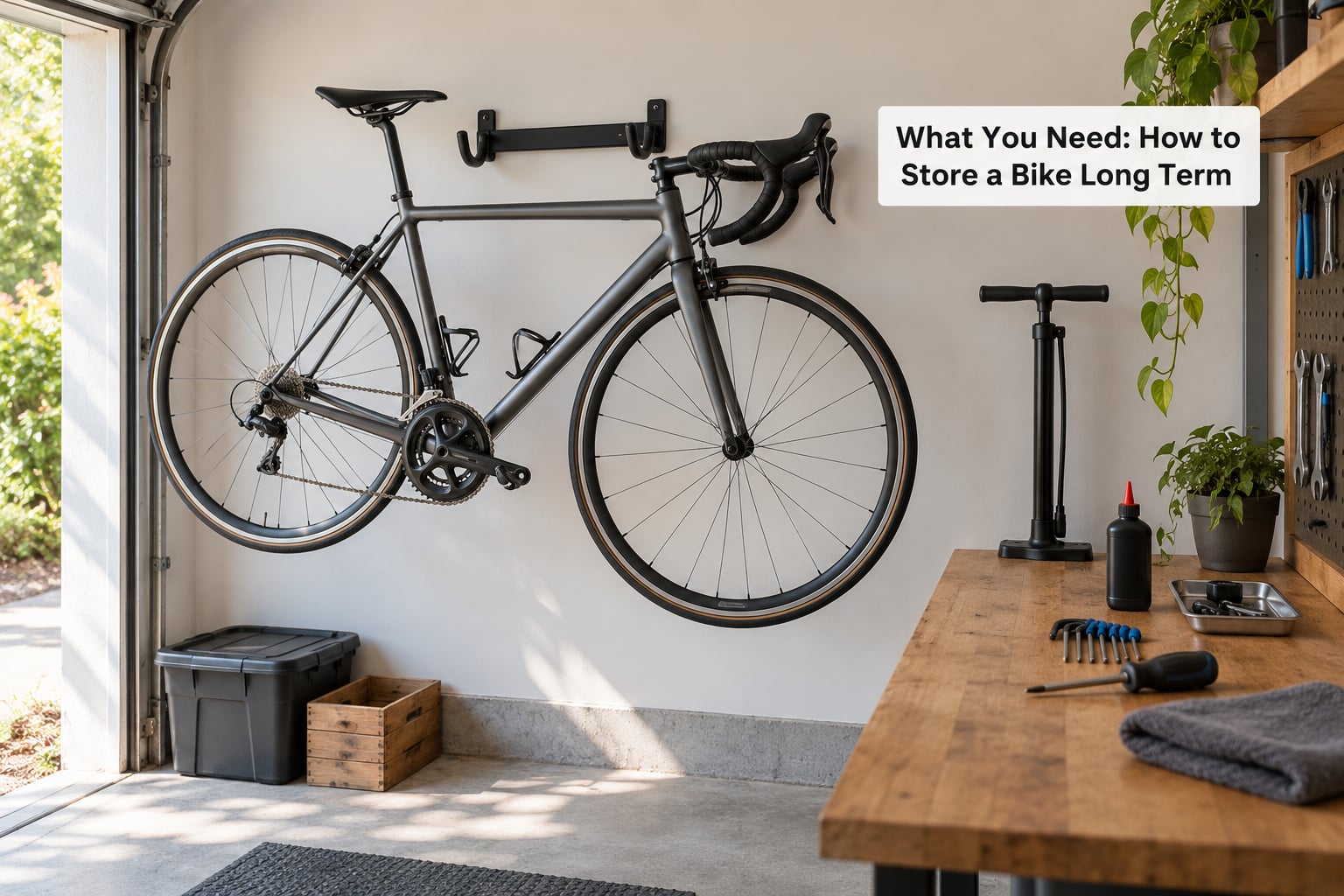
You need very little. A pump with a pressure gauge, a degreaser or plain solvent, a chain lubricant, a clean cloth, and a few basic tools such as hex keys and a torque wrench. That covers the whole job.
Where the bike lives matters as much as what you do to it. Look for somewhere dry, ventilated and out of direct sunlight, with humidity that stays under roughly 60 percent. A heated or dehumidified spare room, an upstairs hallway, a dry garage or a well-sealed shed all work. A damp basement, an unheated lean-to in a wet climate and an exposed balcony do not.
For protection, use a breathable fabric bike cover rather than a plastic tarp or a sealed plastic bag. Both trap condensation against the frame, which is the exact condition you are trying to avoid. If the bike hangs from the wall, a hook or vertical rack is the simplest support; a repair stand or a floor stand works too.
Empty the bags. Panniers, bar bags and hydration bladders left on a stored bike are an open invitation to mice, and mice nest. Take the bottles off as well.
Step-by-Step
1. Inspect the frame and components before storage
Start with a walkaround before you clean anything. Look at the frame for dents, cracks or a clear-coat that has gone chalky and flat. Check the fork for the same. Run a finger along the brake rotors and look for pitting.
Squeeze the brakes. They should feel firm, not spongy, and the levers should not pull all the way to the bar. Spin each wheel and check for wobble, and lift the bike and spin the cranks to listen for anything grinding or rough inside the bottom bracket.
Check tyre sidewalls for cuts, bulges and dry, cracked rubber. Old rubber that has gone chalky and shows parallel cracks will not survive a winter of being pumped up, no matter how well the bike is stored.
Fix anything damaged before the bike goes away. A bent rotor or a cracked tyre is a five-minute fix today and a trip to the shop in six months. A clean, undamaged bike stores safely; a damaged one stores damage and finds more of it.
2. Clean and dry the bicycle thoroughly
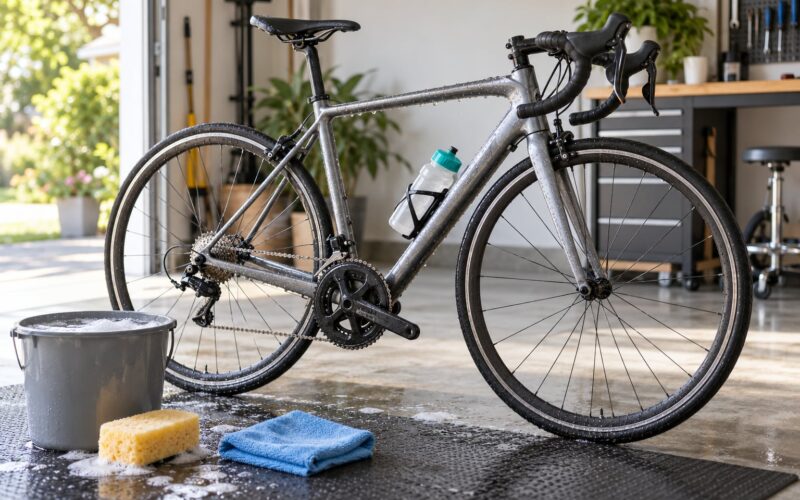
Dirt holds moisture, and moisture held against steel is how rust starts. Wipe the frame down with a damp cloth and a drop of detergent, then rinse sparingly and dry it fully. Road salt is the worst offender: if the bike has been ridden through winter, wash the underside of the chainstay and the inside of the rear triangle properly.
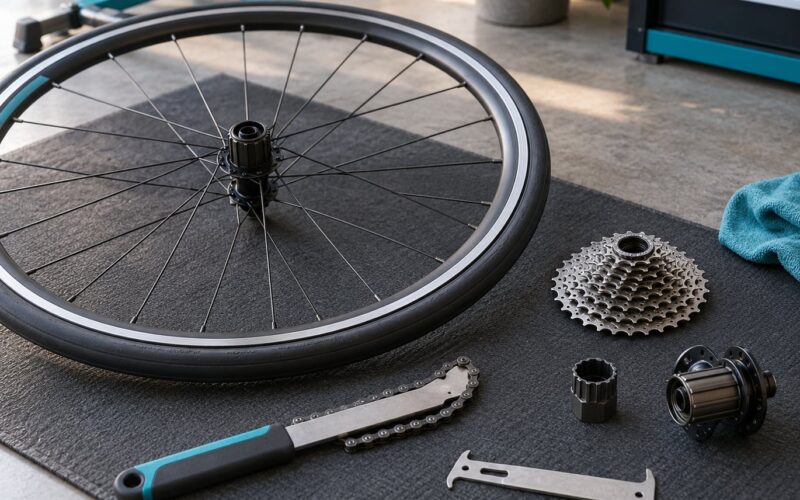
Degrease the drivetrain while it is still on the bike. Run a rag soaked in degreaser around the chain, cassette and chainring, keeping the solvent off the brake pads and rim braking surfaces. Wipe the cassette cog by cog with a separate cloth so you are not re-depositing grime.
Let the bike dry somewhere with moving air before you cover or hang it. Do not shut a damp bike into a cover or a shed at dusk. Pay attention to the places that hide water: bolt heads, the underside of bottle cages, cable stops, the inside of the frame bag pocket and any bag you have left on.
3. Protect the tires and check pressure
Inflate the tyres before storage. This is the single most repeated tip in bike forums and it is right: the weight of the bike presses through the rims when a tyre is soft, distorting the casing and creating a flat spot and a weak sidewall that may not hold air when you pump it back up. A deflated tyre also carries the load across one section of rim rather than spread over the whole thing.
Inflate to the normal riding pressure rather than to the maximum printed on the sidewall. If you are storing through sub-zero temperatures, drop it a little below normal, because air contracts as it cools and an over-inflated tyre is more likely to crack the sidewall. In very cold climates, many riders store tubeless tyres deflated and add sealant right before the first ride instead, since sealant that sits for months can dry out and gum the tyre from the inside.
Do not leave a wheel hanging by the rim for months if you can help it, and never store a bike on flat tyres. If the bike has to hang by the wheel, hang it from the rim hook on a proper hook rather than balancing it on the rim edge.
4. Lubricate and protect the drivetrain
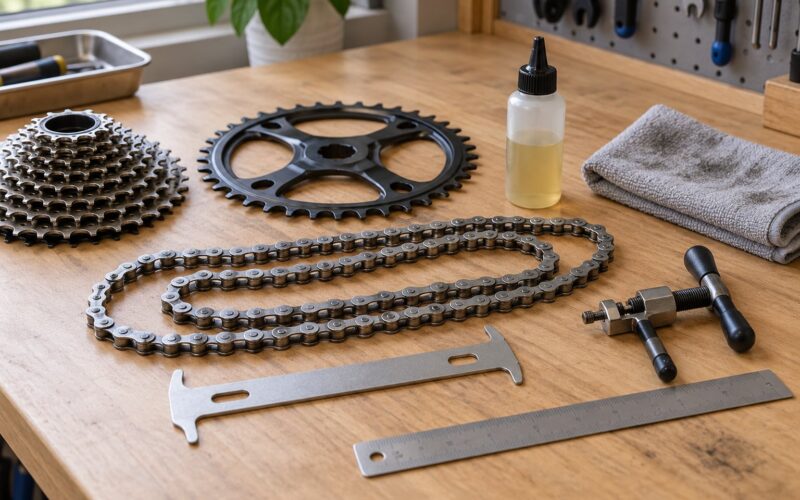
Once the chain is clean and dry, put a light film of lubricant on it. This matters more than the type of lube. A bare, clean steel chain left for months will rust, and rust on a chain means a replacement plus a cassette check.
For a bike stored indoors in a dry room, a dry or wax-style lube suits the job: it does not attract grit and it will not fling road grime onto the chainstay on your first ride back. For a bike stored outdoors, in a damp garage or somewhere salty near the coast, use a wet lube or an anti-corrosion protectant. Riders who store bikes in coastal air repeatedly credit a corrosion-inhibiting chain treatment with keeping the chain and cassette clean through a full off-season, and with removing surface rust that had already started.
Run the chain through the gears, then wipe off the excess so the lube sits on the rollers rather than on the outside of the chain. Squeeze the brake levers a few times and check the pad gap. Spin the cranks backwards and watch the chain move across the cassette without grinding. If the chain was dry and dirty before storage, that noise means it needs another degrease, not more lube.
5. Position the bicycle for long-term storage
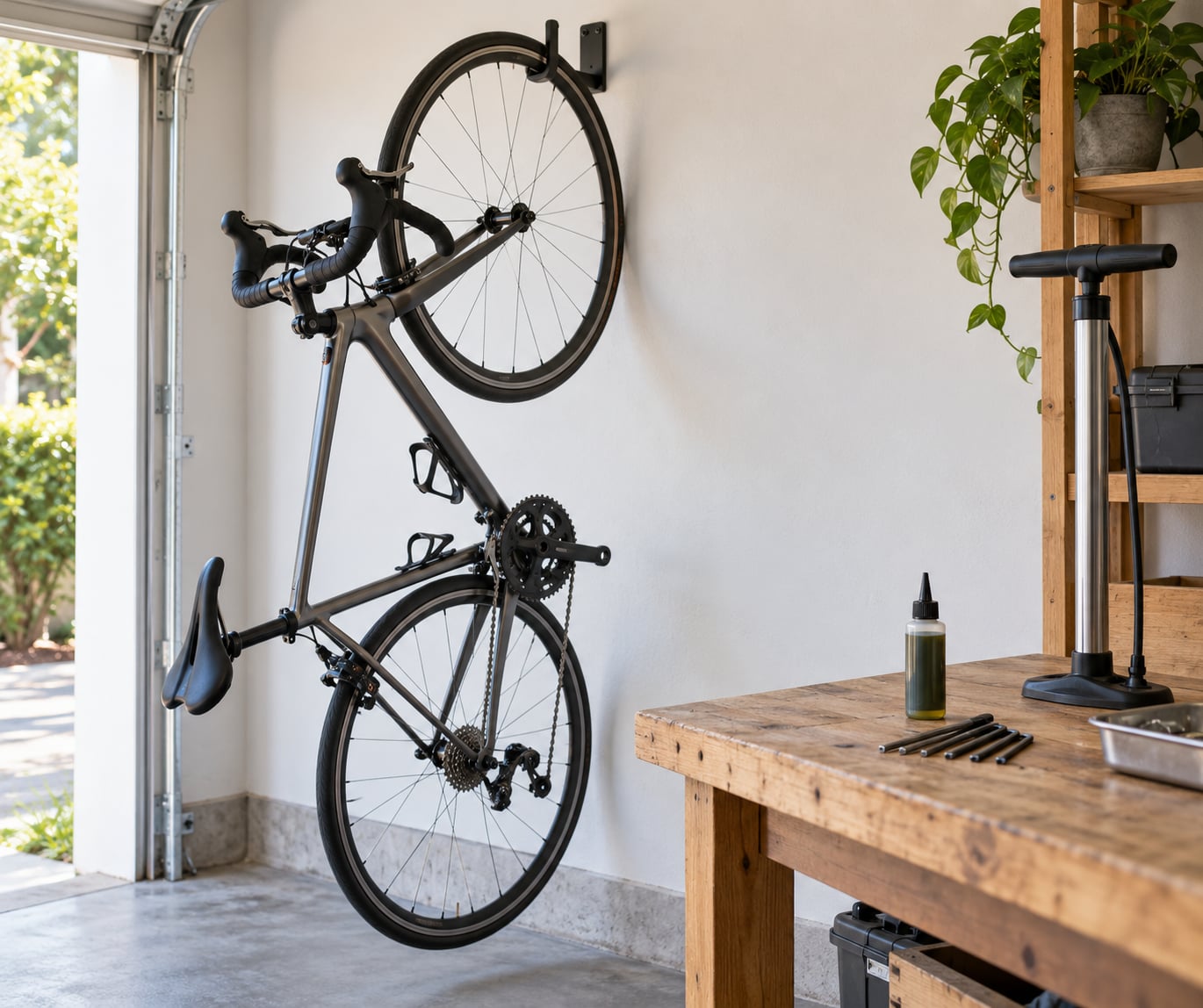
Hang it, or stand it on a proper support. Hanging by the front wheel on a wall hook lifts both tyres off the floor and keeps them out of standing water. Laying the bike on a floor is the worst option: concrete draws moisture through tyres and seals, and grit finds the drivetrain.
If you must stand it, use a stand that pads the frame at the bottle mount or under the saddle rails, so no hard edge presses on the tubes. Check the stand is stable enough that a nudge cannot put the bike on its side, because a bent derailleur or a scuffed bar end undoes most of this work.
Keep the cover loose and breathable. Every guide on this topic lands on the same point: let air move under the cover. A tarp roped tight over a frame traps the damp air that was already in the shed and turns it into surface rust, which is why the community advice is a tarp plus bungee cords with slack, never a sealed wrap.
Avoid a few specific hazards. Do not store a bike in a shed alongside pool chemicals: chlorine vapour corrodes metal. Keep it away from radiators, space heaters and boiler rooms, because heat degrades tyres and plastic bottle cages. Do not cover it in plastic sheeting.
If you ride an e-bike or have an electronic groupset, treat the batteries separately. Lithium-ion packs are best stored around 60 percent charge in a cool, dry room away from direct sun, topped up every couple of months. Gear shifters and lights using small cell batteries come out and go in a drawer with a fresh charge. This is the item most likely to need replacing after a long layoff if you skip it.
Finally, secure it. Lock it to an anchor inside a garage or a cycle locker, and through the frame and a wheel rather than through a wheel alone. For an unattended month, that is usually enough.
6. Inspect the bicycle before returning to the road
Work through these before the first ride rather than the first climb. The list is short.
1. Inflate the tyres to riding pressure and check the sidewalls again in good light.
2. Spin both wheels. Look for a wobble that was not there before, and check the tyres are seated evenly on the rim.
3. Squeeze both brakes hard and hold. The levers should not reach the bar, and the rotor should not wobble. If the lever feels spongy or the pad gap is large, the caliper may need centering or the pads may need bedding in again.
4. Check the chain. Is the lube still there, or has it gone dry and patchy? Is there surface rust on the cassette? Lift the chain off the cog and check for stiff links.
5. Shift through the whole range. If the shifting is slow and gummy, the cables have likely crept, or the barrel adjusters need a few turns back.
6. Check the bolts: stem, handlebars, seatpost, pedals, cranks and axle nuts. Vibration during storage does most of this work for you, and a light tug on each bar end and pedal will show anything loose. Torque-sensitive carbon parts should be checked against the manufacturer’s specification with a torque wrench, not by feel.
7. Look over the frame one more time for cracks, and check that any battery you fitted is fully awake and seated correctly.
If the bike has been stored through a full season or longer, or if it was stored outside, or if anything on the list looks wrong, book a service before riding. A shop check is inexpensive compared with a bent wheel or a cable that let go at 30 km/h.
While the bike sits, nothing needs doing for the first month. After that, a monthly glance is worth it: check the tyres have not gone flat, look for rust on the chain, and confirm the room still smells dry and nothing has leaked onto the frame from a neighbouring item. A bike stored for a year or more deserves the same monthly minute.
Common Mistakes
Storing the bike dirty. Grime holds moisture against steel and hides corrosion until it has spread. Fix: clean and dry the frame and degrease the drivetrain before it goes anywhere near a cover.
Wrapping it in plastic or an airtight cover. This is the mistake that turns a dry shed into a rust machine. The plastic sweats against the frame and the moisture has nowhere to go. Fix: a breathable fabric cover, loose, with air underneath.
Leaving it on the floor. Concrete and damp floors attack tyre sidewalls and seals, and grit gets into the drivetrain. Fix: hang it, or stand it on a padded support.
Storing it outdoors in a humid climate with no plan. Riders near the coast report that an outdoor bike rusts through in no time regardless of the cover. If outdoor storage is your only option, do the prep work twice as carefully, use a corrosion-inhibiting lube on every exposed metal part, keep the bike under a shed or shelter rather than fully open to the sky, and expect a rust removal and re-lube at the start of next season.
Leaving leaks and damp to sit. A weeping water bottle or a roof drip onto the top tube will etch the paint and start rust at the joint. Fix: empty the bottles, wipe the frame, and place the bike where nothing can drip on it.
Over-inflating the tyres. A hard tyre left for months develops micro-cracks in the sidewall and can blow or split when pumped up again. Fix: normal riding pressure, or slightly less in freezing conditions, not the sidewall maximum.
Forgetting the chain. A degreased but unlubricated chain is a rusty chain by spring. Fix: lubricate after degreasing, and wipe the excess off.
Leaving a bike with tubeless sealant and stale tyres. Sealant that sits for a year dries out and can gum the casing from the inside. Fix: either drain the sealant and add fresh before riding again, or top it up just before the first ride.
Leaving bags and bottles on the bike. Rodents will nest in a pannier given a long empty season. Fix: strip the bike bare, including bags, cages and bottles.
Two reminders for while it sits: keep the tyres inflated, and keep the chain coated. Those two things, more than anything else, decide whether you ride away or strip the bike down on the driveway.
Frequently Asked Questions
How long can I store a road bike without riding it?
A road bike can sit for a year or longer without permanent damage, provided you prepare it first. Clean and dry the frame, degrease and lubricate the chain, inflate the tyres to riding pressure and store it indoors somewhere dry and ventilated. Beyond a year, expect the tyres to age, cables to stiffen and brake pads to be near the end of their life anyway, and plan a full service before riding again.
Can I store my bike outside during long-term storage?
You can, but it is a harder job. Outdoor storage exposes the bike to humidity, dew, dust and ultraviolet light, so prepare it more carefully than you would indoors and use a corrosion-inhibiting lubricant on the chain, cassette and exposed metal. Keep it under a shed, shelter or purpose-made cover, never loose plastic, and lift it off any wet surface. Coastal and tropical riders should expect rust and a cleaning and lubrication session before riding again.
Should I inflate bike tires fully before storing the bicycle?
Inflate them, but not to the maximum pressure printed on the sidewall. Normal riding pressure is right, because a soft tyre lets the weight of the bike press through the rim and distort the casing, which causes flat spots and weak sidewalls. In freezing conditions, drop slightly below normal riding pressure, since air contracts as it cools and over-inflated tyres are more prone to cracking while they sit.
Do I need to lubricate the chain before long-term storage?
Yes. A clean, unlubricated chain will rust during storage, and surface rust on the chain usually means replacing it and checking the cassette. Use a dry or wax lube for a bike kept indoors in a dry room, and a wet lube or anti-corrosion protectant for a bike in a damp garage, a shed or salty coastal air. Apply after degreasing and wipe off the excess.
How do I prevent flat spots on a bike stored for months?
Inflating the tyres to normal riding pressure is the main defence. The flat spot comes from the weight of the bike pressing through the rim onto a soft tyre for weeks at a time, which compresses one section of the casing. Where the bike sits also matters, so keep it off a cold floor, and consider moving it a little during a very long storage period if the tyres look deflated when you check on them.
What should I check before riding after long-term storage?
Run a short walkaround first: tyre pressure and sidewall condition, spinning both wheels for wobble, firm brake levers that do not reach the handlebar, a chain that is lubricated and free of rust, and shifting through the full range. Then check the stem, bar, seatpost, pedal and crank bolts for tightness. If the bike sat through a whole season or longer, or outdoors, have a shop check it before you ride hard.
Conclusion
Start with the frame inspection and the chain. Clean, dry, lube and cover the bike, inflate the tyres to riding pressure, and hang it somewhere dry. When the bike comes back out, run the walkaround in step six before you turn the pedals hard, and it will feel like you never put it away.