You do not need to take the chain off the bike to clean it. Wipe off loose mud with a rag, work a chain degreaser into the links while you backpedal the cranks, scrub the rollers with a stiff brush, wipe the grime away, let everything dry, then add a thin coat of chain lube. The whole job takes 20 to 30 minutes and needs no special tools beyond a brush, a rag and a degreaser you already own.
A neglected chain is the cheapest part on your bike to maintain and the most expensive to ignore. Dirt and old lube turn into grinding paste inside the rollers, and that paste cuts into the teeth of your cassette and chainrings before it ever touches the bearings. On a road bike ridden most weekends, a wiped and relubed chain every couple of rides and a proper degrease every 500 to 1000 km keeps a drivetrain alive for years.
I have done this job in a kitchen sink, a garage and once on a park bench outside a bike shop. The method never changes, and neither does the mess, so plan for it.
Table of Contents
- How to Clean a Bike Chain: What You Need
- How to Clean a Bike Chain Step by Step
- 1. Inspect the chain before cleaning
- 2. Position and secure the bicycle
- 3. Wipe away loose dirt first
- 4. Apply chain degreaser and agitate the links
- 5. Remove loosened grime from the chain and cassette
- 6. Dry every part before lubrication
- 7. Apply the correct chain lubricant
- 8. Test the cleaned chain and inspect the result
- Common Mistakes
- Using WD-40 or a similar spray as lubricant
- Leaving degreaser to evaporate instead of wiping it off
- Applying too much lubricant
- Scrubbing with something abrasive
- Soaking the chain in solvent overnight
- Hitting the bike with a pressure washer
- Expecting a clean to fix a worn chain
- Ignoring the cassette and chainrings
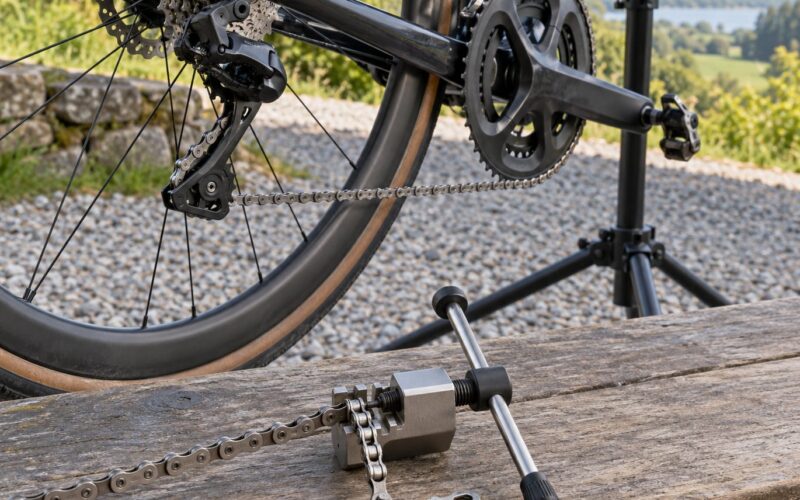
- Taking the chain off for a routine clean
- Frequently Asked Questions
- Can I clean a bike chain with dish soap?
- Do I need to remove the chain to clean it?
- Is WD-40 a good bike chain cleaner?
- Should I let a degreaser dry on the chain?
- How often should I clean and lubricate my bike chain?
- Will cleaning a noisy bike chain fix the noise?
- Conclusion
How to Clean a Bike Chain: What You Need
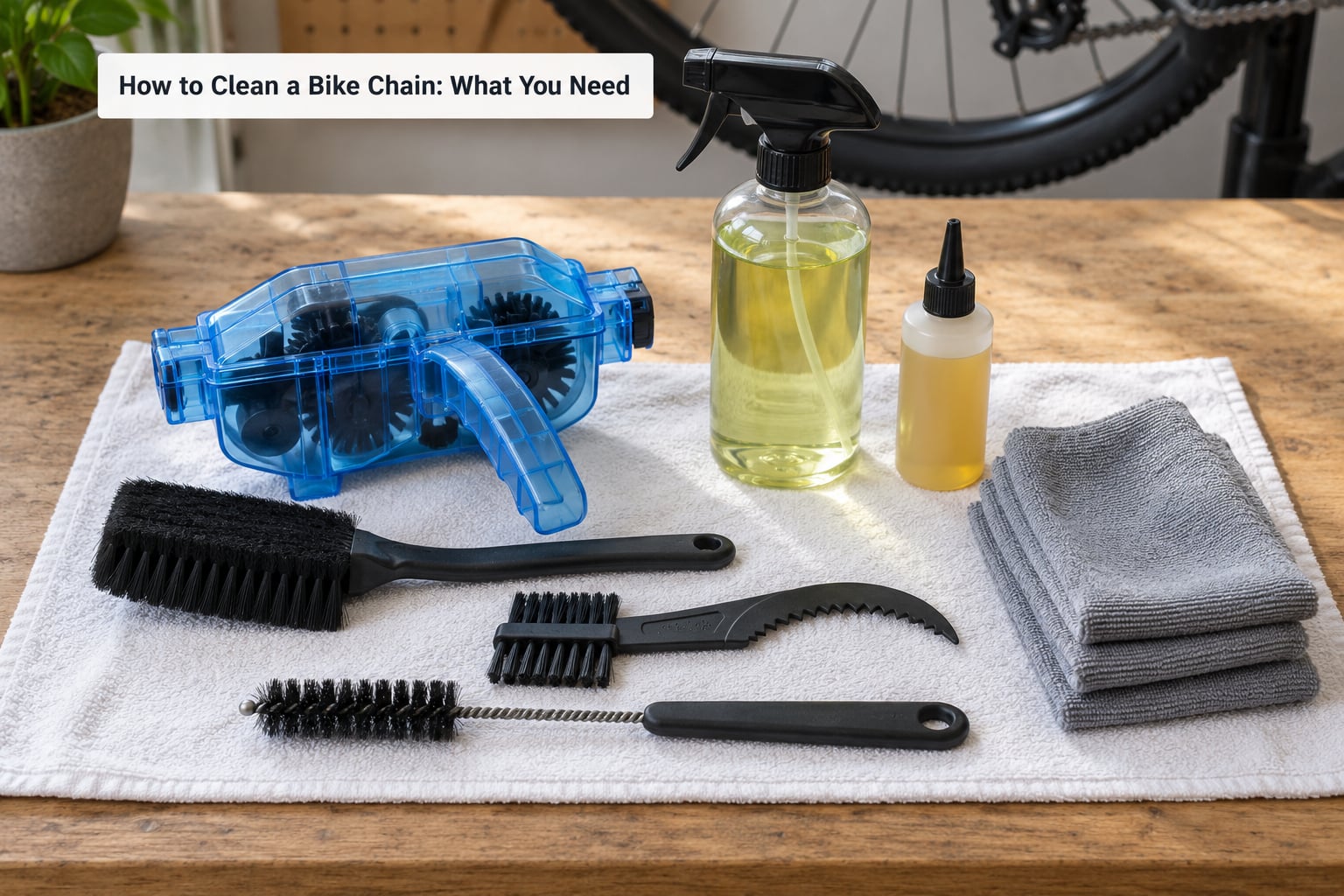
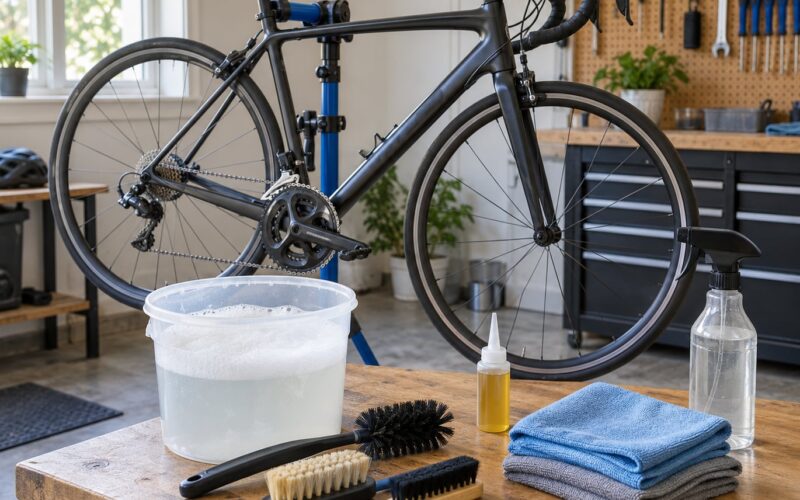
Necessary items:
- A biodegradable chain degreaser. Aerosol or drip, either works. This is the one product worth buying properly.
- A stiff nylon brush. An old toothbrush is fine for a light job. Avoid wire brushes and anything with metal in it.
- Two or three clean rags. One for wiping grime off the chain, one for drying it, one kept clean for lube.
- A bottle of chain lubricant matched to where and how you ride.
- Nitrile gloves. Old chain lube is genuinely nasty on skin, and fresh grease out of a scrubber will land on your worktop.
Optional items:
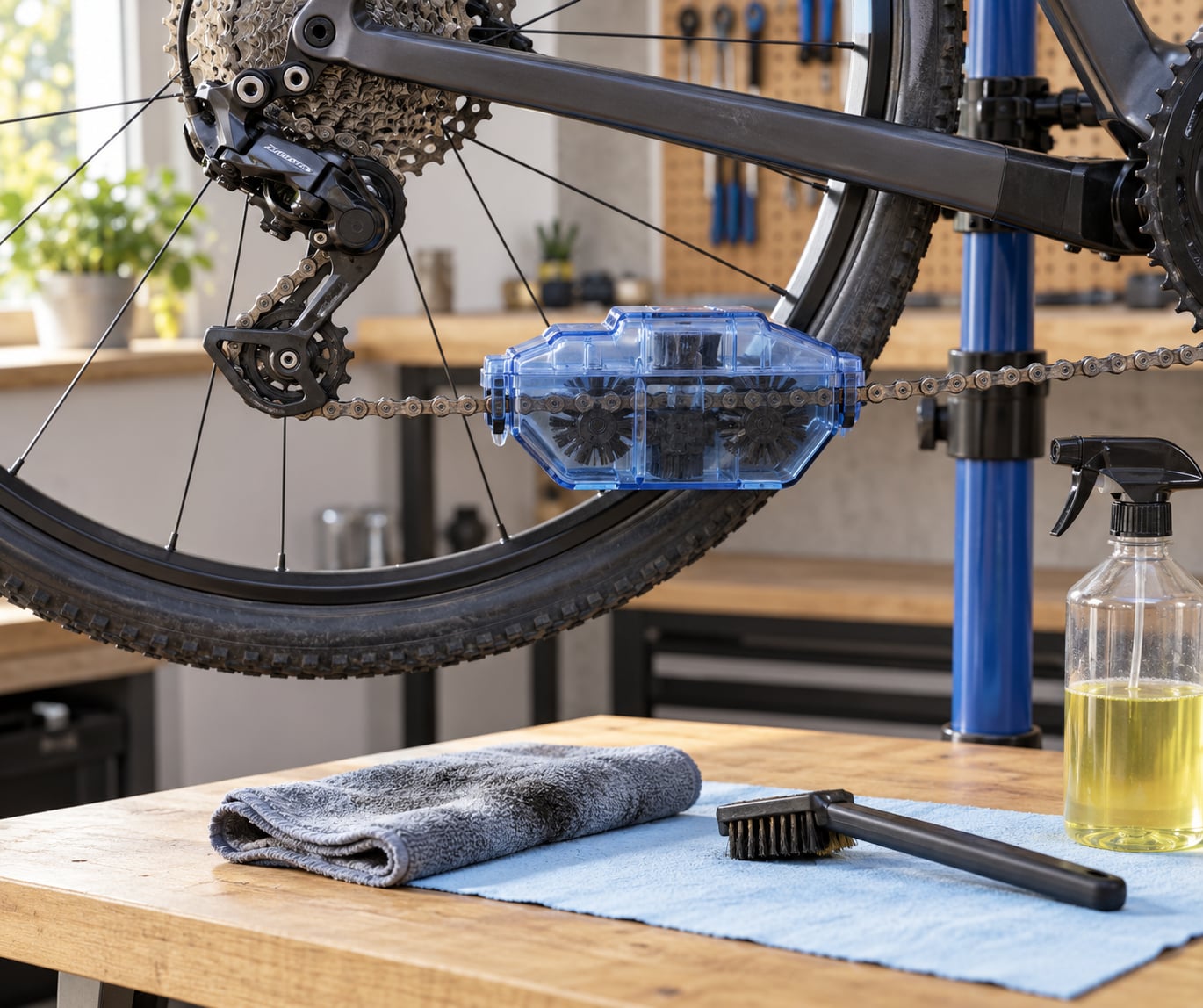
- A chain scrubber, a clamp-on tool with a reservoir and rotating brushes that grips the lower run of the chain. It costs about the same as a decent lunch and cuts the time roughly in half.
- A chain wear checker, a small go/no-go gauge that tells you when a stretched chain has worn the cassette beyond saving.
- A small brush for the cassette, an old toothbrush works, and a cassette block if you ride in mud often.
Work outside or in a well-ventilated garage. Degreaser vapour is unpleasant to breathe, and the runoff from a dirty chain stains concrete and patios, so put a sheet of cardboard or an old newspaper down first.
How to Clean a Bike Chain Step by Step
1. Inspect the chain before cleaning
Spin the cranks by hand and look at the chain before you touch a rag. Black oil, gritty mud packed into the rollers, or rust freckles on the outer plates all mean a full degrease.
Look for stiff links that will not articulate, links that skip when you load the pedals, or a section that hangs loose. Check chain wear while the chain is exposed. A chain checker gives you a straight answer; the ruler method works too. Pull the chain taut on the top run, measure from the centre of one pin to the centre of the pin twelve links away, and compare against 7 1/8 inches. Anything over 7 3/16 inches means the chain is stretched past its useful life and needs replacing, not cleaning. A stretched chain wears cassette cogs and chainring teeth into a shark-fin shape that no amount of scrubbing will fix.
If the chain looks fine, keep going. Everything below happens with the bike on the stand and the chain still threaded through the drivetrain.
2. Position and secure the bicycle
The easiest setup is a repair stand with the bike clamped by the seatpost or a frame tube. If you have no stand, turn the bike upside down on a blanket with the saddle and bar ends on something soft, or rest it on a workbench so the cranks hang free over the edge.
You want the crank arms able to turn backwards easily. On a bike with a thru-axle you can turn the crank arm to hold the wheel, and on a bike with a single cog, put a pedal in and back it out through the frame instead. Never clamp the stand on the seatpost of a suspension bike with the suspension compressed, and never clamp on a carbon seat tube without a proper clamp.
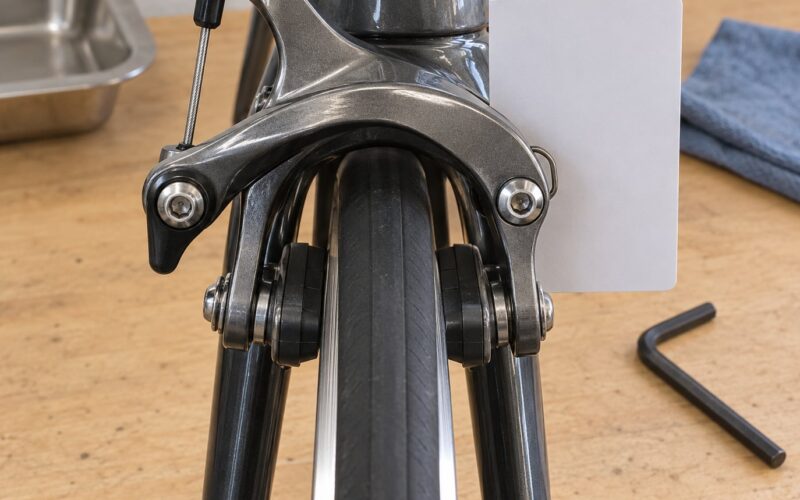
Check the brake pads first. If you are going to spin the cranks hard or touch the wheel, make sure the calipers are open.
3. Wipe away loose dirt first
Grab a dry rag and run it along the top of the chain while you backpedal. This picks up road grime, dried mud and the worst of the old lube before you add any solvent, so your degreaser goes to work on grease instead of carrying dirt around the drivetrain.
Check the cassette, chainrings and the jockey wheels while you are at it. Mud tends to cake into the low gears and into the cage under the rear derailleur, and that is where it will quietly rub itself back onto the clean chain.
If you ride in mud, a plastic scraper or an old credit card held against the chain as you pedal helps lift the thick stuff. Just do not press it against the teeth.
4. Apply chain degreaser and agitate the links
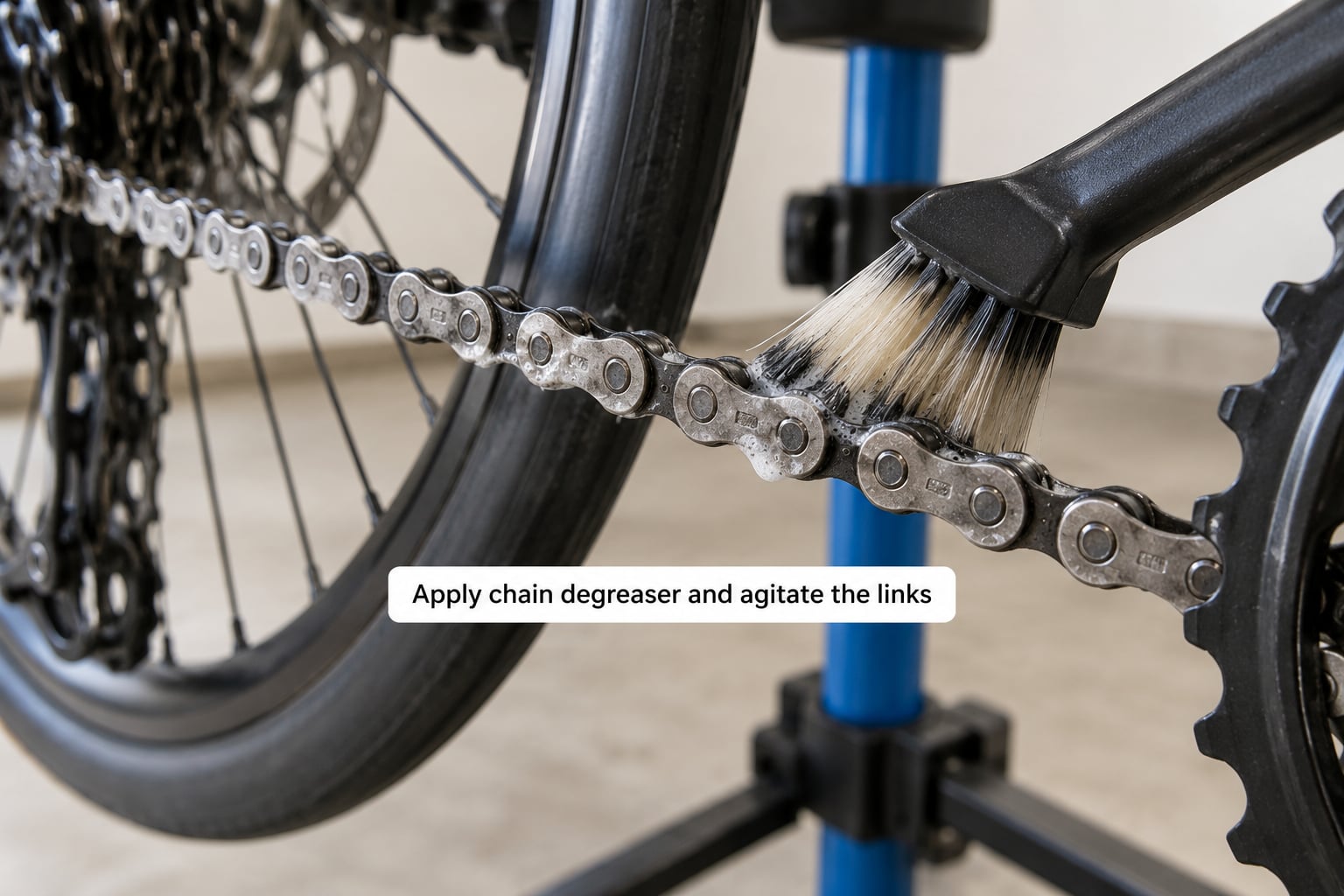
Put a drop of degreaser on each roller as you backpedal, working across the lower run of the chain. Roughly ten drops covers a bicycle chain for a routine clean. A drop every third or fourth link is plenty if the chain is only lightly dirty.
Let it sit for 60 to 90 seconds so the solvent has time to cut through the grease. Do not leave it longer than a few minutes. Then rotate the cranks backwards by hand, not by spinning the pedals hard, and drop more degreaser wherever the grime looks stubborn.
If you have a chain scrubber, clamp it over the lower run and add cleaner to the reservoir instead. Turn the crank slowly and let the rotating brushes do the agitation. A stiff nylon brush works almost as well and costs less, so the scrubber is convenience rather than necessity.
Put a folded rag under the chain while you work. It catches about half the dirt that would otherwise end up on the floor.
5. Remove loosened grime from the chain and cassette
Wipe the chain with a clean rag and turn the crank until fresh, clean chain appears. Repeat, swapping rags when the one in your hand goes black. Three or four passes usually gets a road chain from filthy to clean.
Now work on the rest of the drivetrain while the solvent is still active. Hold a stiff brush against the cassette and spin the cranks to drive the chain through it. Scrub from the inside out so you push dirt toward the open side of the cassette rather than packing it into the tight inner cogs. The same shoe-shine motion works on the chainrings.
Remove the rear wheel or the cassette and give it a proper scrub in the sink if grime has built up between the cogs. Wipe the derailleur cage and both jockey wheels, and check that the chain passes through the cage cleanly and does not skip against the cage plate.
Rinse with warm water only if you used a water-based degreaser. Solvent-based degreasers do not need rinsing and should not be washed down a storm drain.
6. Dry every part before lubrication
Lubricating a damp chain traps water against the steel and gives you surface rust within days. Wipe the chain with a clean lint-free rag, then run it through the drivetrain again while you turn the crank until every link feels dry rather than tacky.
For stubborn solvent, a light burst of compressed air along the chain helps, though keep the pressure low so you do not force lube past the seals and into the hub. A clean rag held against the chain as you pedal removes almost as well and cannot push lubricant anywhere.
Run a fingertip along a link. If it feels oily, keep wiping. You want the steel dry to the touch, with the only lubricant being what you are about to apply on purpose.
7. Apply the correct chain lubricant
Wet lubes stay on the chain through rain and mud and suit road, gravel and commuter riding. Dry lubes leave a dry film that attracts far less dust and suit dry trails and fast road riders, but they need reapplying more often. Wax lubes are sprayed onto a dry chain and last a long time, and they demand a full degrease before each application rather than a quick wipe.
Where it goes matters more than how much. Put one small drop of wet lube on each roller as you backpedal. For dry lube, aim at the chain as it enters the cassette. For wax, follow the can: a thin line along the top run while the chain turns slowly.
For every type, run the crank through three or four full rotations to spread it around the loop. Then take a clean rag, fold it around the chain and pull it through a few times to wipe off the excess. Every lube maker says this and riders skip it anyway, which is how a chain ends up with a thick black coat that collects grit within a day. A thin film on the roller surfaces is all you need.
8. Test the cleaned chain and inspect the result
Spin the cranks and listen. A clean, correctly lubricated chain makes a steady mechanical whir that rises in pitch with speed. Silence is fine on a waxed chain. Grinding, crunching or a rattle means debris is still inside the rollers, so go back and run another rag pass.
Then ride for a few minutes through every gear. Check for skipping under load, rubbing sounds at the jockey wheels, and sluggish shifting that a clogged cable usually explains but a stretched chain sometimes does. Look at the cassette and chainring teeth again in good light. Pointed, hooked or thinned teeth, or a chain that will not sit straight on the chainring, mean it is time for a chain and probably a cassette, not another clean.
Common Mistakes
Using WD-40 or a similar spray as lubricant
WD-40 is a water-displacing solvent and penetrant, not a chain lube. It will make a chain quiet for a ride or two, then it evaporates or gets washed off, leaving the rollers dry and grinding. Use it to free a frozen chain or shift a stuck seatpost, then clean and lube the chain properly.
Leaving degreaser to evaporate instead of wiping it off
Residue from solvent degreasers keeps attacking the lube film and can leave the chain running rough. Wipe it down while it is still wet, then dry.
Applying too much lubricant
Over-lubricated chains pick up grit, smear onto the drivetrain and stain everything they touch. One small drop per roller, then wipe off the excess. Ask the manufacturer how many drops to expect for your chain width if you are unsure.
Scrubbing with something abrasive
Steel wool, a wire wheel or a stiff metal brush will take plating off the chain and can scratch the cassette. Nylon brushes and plastic scrapers clean just as well without the risk.
Soaking the chain in solvent overnight
Household degreasers left on steel for hours can leave the chain brittle and prone to cracking. Either clean it with a bike-specific solvent in minutes or rinse a soaked part thoroughly. Long soak sessions belong to ultrasonic cleaners, not to a bowl in the shed.
Hitting the bike with a pressure washer
High-pressure water forces lube and grit past seals into hub bearings and can loosen bearing preload. Low-pressure rinsing after a water-based clean is fine. Nothing above a gentle spray.
Expecting a clean to fix a worn chain
Cleaning a stretched chain hides the noise, not the wear. If the skipping and grinding come back within a few rides, check chain wear with a gauge and replace the chain before you chew through a cassette.
Ignoring the cassette and chainrings
A sparkling clean chain still drags dirt back over cogs you never cleaned. Scrub the cassette and chainrings in the same session or you will be doing the job twice in a month.
Taking the chain off for a routine clean
Unthreading and refitting a chain is fiddly, and a badly refitted chain will skip no matter how well you cleaned it. A scrubber clamped around the lower run, or a brush worked along the links as you backpedal, removes the same grime while the chain stays exactly where it belongs.
Frequently Asked Questions
Can I clean a bike chain with dish soap?
Yes, for a light clean. Warm water with a drop of dish soap and an old toothbrush will shift road grime off a chain that has not been serviced in a long while. Rinse with clean water and dry thoroughly, because soap residue left on the rollers will gum up any lube you apply afterwards. For a chain with real grease and wax build-up, a bike-specific degreaser works faster and rinses out completely. Never use soapy water near disc brakes or rim brake pads.
Do I need to remove the chain to clean it?
No, not for a normal clean. Clamping a chain scrubber over the lower run, or working a brush along the links while you backpedal, lifts the same grime in a fraction of the time. Remove the chain only when you plan an ultrasonic clean, when you want to soak and rinse a heavily contaminated chain, or when links have gone stiff and need loosening in solvent. Re-fitting a chain incorrectly is far more troublesome than the cleaning itself.
Is WD-40 a good bike chain cleaner?
It is a decent short-term cleaner and a poor lubricant. WD-40 dissolves grease well, so a light application can free a grimy chain for a scrub. But it evaporates quickly and leaves almost no lasting film, so the rollers run dry within days and start wearing. Spray it only on seized parts such as a stuck seatpost or a rusted bolt. Once the part moves, wipe it down and use proper chain lube for anything that keeps turning.
Should I let a degreaser dry on the chain?
Let it sit wet for a minute or two, not dry. Degreasers need time to dissolve grease before you wipe them off. Leaving solvent to evaporate completely leaves a residue that can make the chain feel rough and interferes with the new lube film. Wipe the chain down with clean rags while it is still wet, keep turning the crank until every link looks and feels dry, then lubricate. Longer than a few minutes on household solvents is not helpful.
How often should I clean and lubricate my bike chain?
Lubricate every 100 to 200 km and wipe the chain down at the same time. A full degrease with brushes is needed every 500 to 1000 km on a road bike in dry conditions, after any wet or muddy ride on a mountain bike, and roughly weekly for a commuter bike. Mud riding means clean the same day. If the chain is dark, gritty, or makes any noise under pedalling, clean it now regardless of the distance marker.
Will cleaning a noisy bike chain fix the noise?
Often yes, because most chain noise is grit packed into the rollers or lube that has gone sticky and dirty. A degrease, scrub and re-lube usually silences it within one ride. If the noise returns within a few rides, or it comes with skipping under load, the chain is probably stretched. Measure the wear with a chain checker and replace the chain before it wears the cassette. Rattling that follows every pedal stroke usually means a stiff link or a bent spoke instead.
Conclusion
Start tonight with the dry rag: run it along the chain while you backpedal and see what comes off. If it comes off black, drop degreaser on the rollers, wait a minute, scrub, wipe, dry, add one drop per roller, and wipe the excess off. Then ride a few minutes through every gear and listen. Do that every couple of hundred kilometres and you will keep the same cassette and chainrings well past the point where most riders replace them.