If you ride a road bike in ordinary conditions, a quick wipe-down and chain lube after every ride plus a proper drivetrain clean every two to four weeks keeps things running smoothly. Muddy gravel rides, salted winter roads and wet commutes change that answer completely, and they push the interval down to after every single outing.
Most riders land in one of three camps. Some never touch the bike beyond a lube, some scrub it down weekly with detergent, and some wash it after every ride with a pressure hose and slowly grind their bearings to dust. The honest answer sits between the last two, and it depends far more on conditions than on distance alone.
The version of this question that actually matters is the interval-by-interval routine. Two minutes after a ride, half an hour a week, an hour a month. Here is how often should you clean your bike, broken down by the interval that fits your riding.
Table of Contents
- What You Need
- Step-by-Step: How Often Should You Clean Your Bike?
- After Every Ride: Check, Wipe, and Address Problems
- Weekly: Clean the Chain and Contact Points
- Monthly: Clean the Cassette, Chainrings, and Bottles
- Seasonally: Deep-Clean Brakes, Hubs, and Hard-to-Reach Areas
- Common Mistakes
- Frequently Asked Questions
- How often should I clean my bike chain?
- Do I need to clean my bike after every ride?
- How often should I lubricate my bike chain?
- What is the best way to clean a dirty cassette?
- Can I use a household degreaser or dish soap on my bike?
- How often should a road bike receive professional servicing?
- Conclusion
What You Need
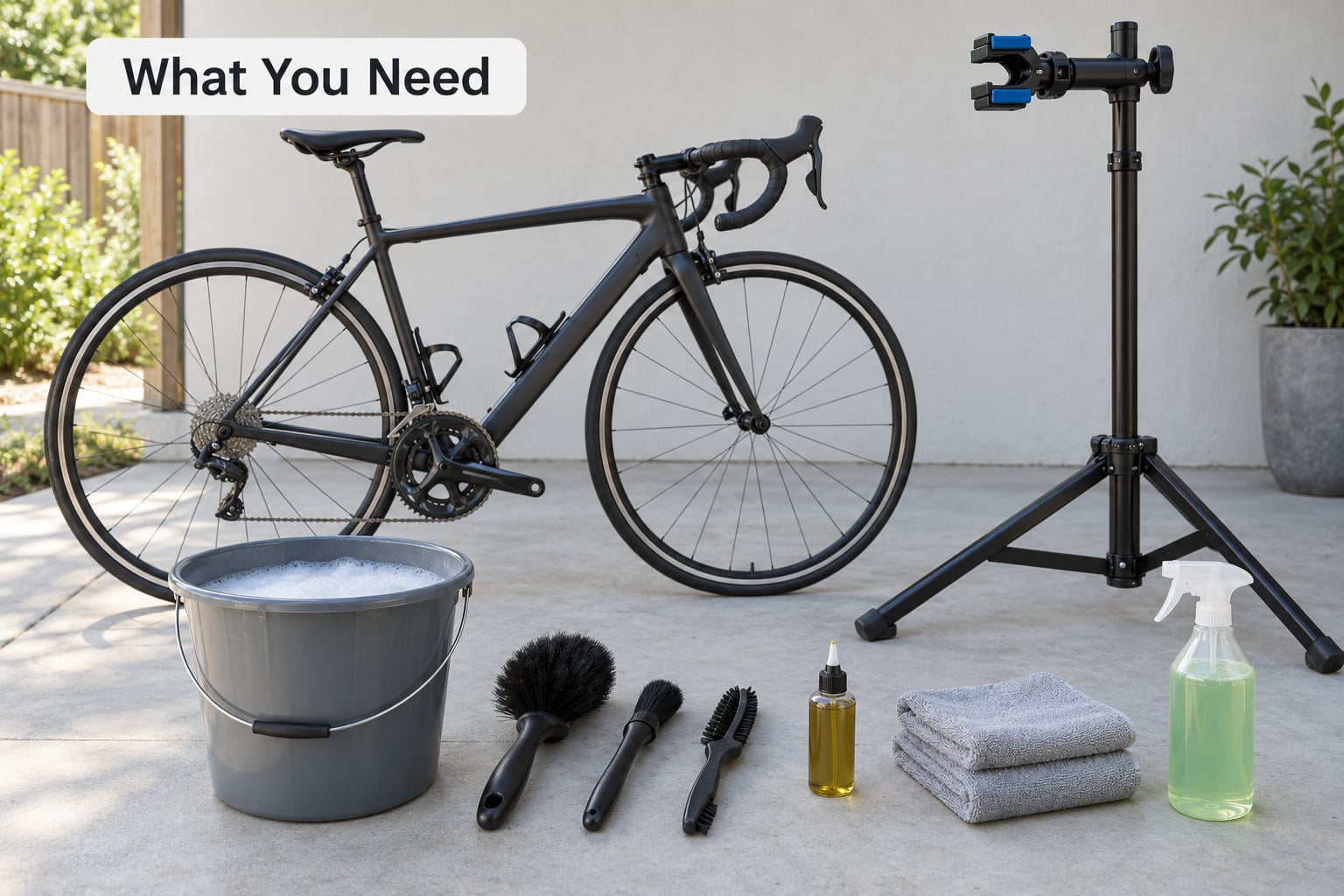
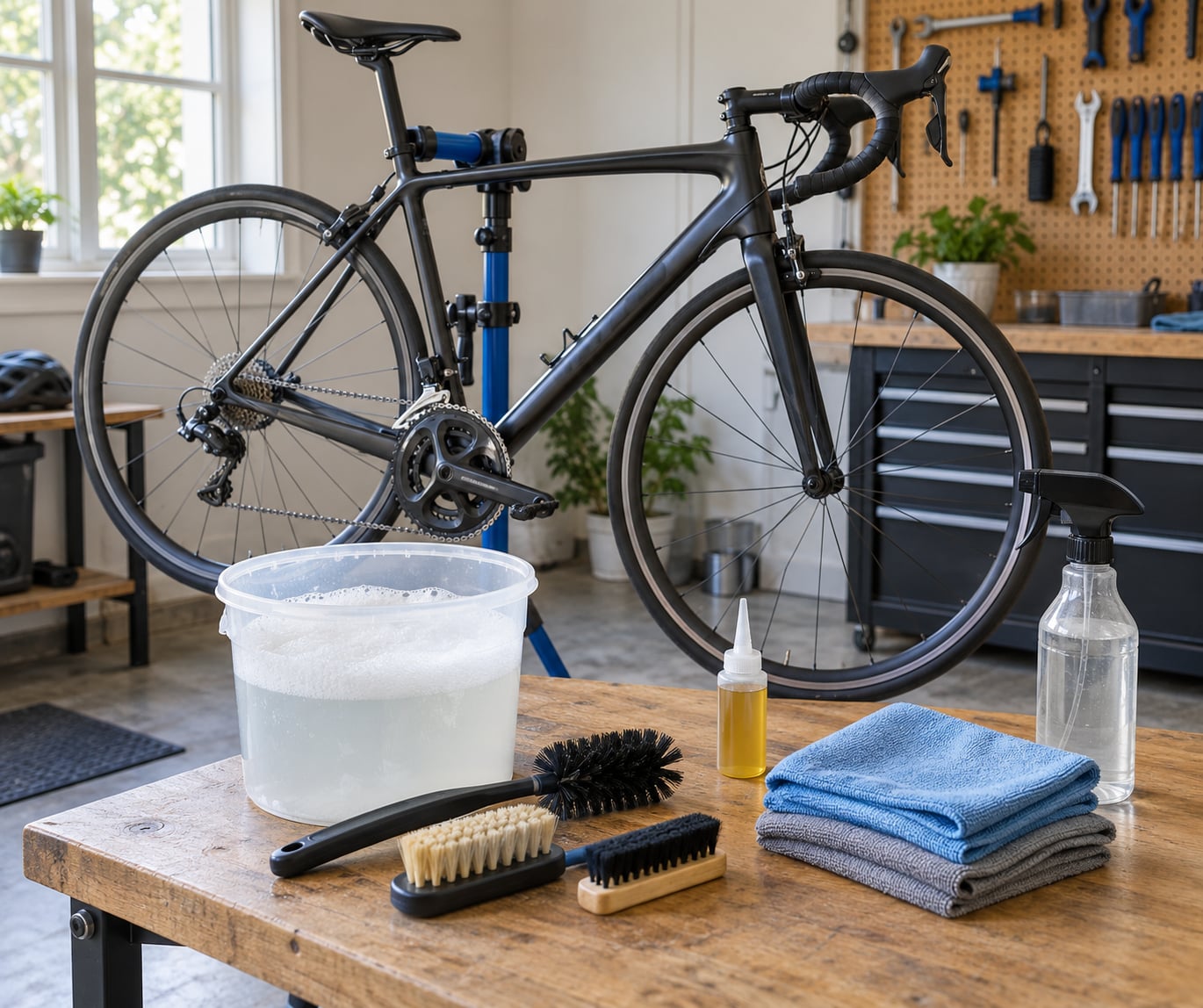
You can get through a road bike clean with a small kit, and most of it fits in a drawer by the back door.
- Biodegradable degreaser — for the chain, cassette and chainrings. This is the one product you should not substitute. Household degreasers and dish soap leave a residue that grabs dust and slowly dulls the chain’s plating.
- A stiff-but-not-bristly brush — a cassette brush, a chain brush with a clip that holds the chain, or stiff nylon bristle brushes in two or three sizes.
- Two or three separate brushes and rags — one set for the drivetrain, one for the frame. Forum riders repeat this point constantly: a brush that touched a grimy chain will smear that grit across your brake calipers and rotor.
- Chain lubricant — wet lube for regular all-weather road riding, dry lube for dry dusty conditions, wax if you want the lowest-maintenance drivetrain of the three.
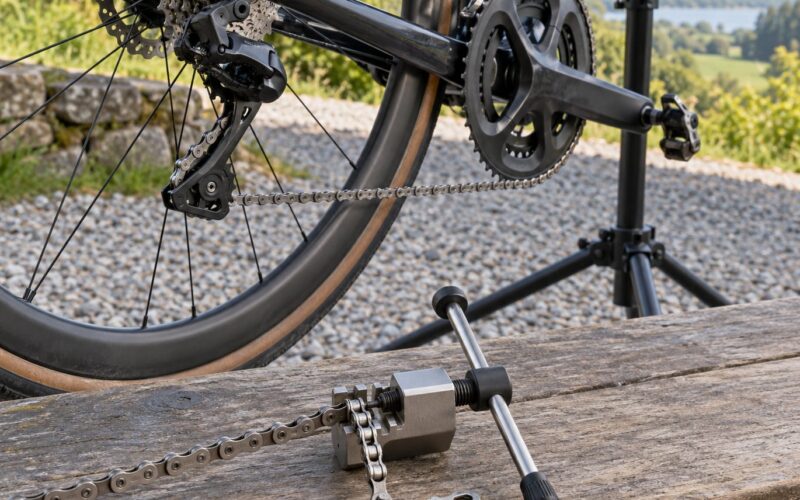
- Chain wear checker — a cheap gauge that tells you when the chain has stretched to the replacement point rather than guessing by noise.
- Brake cleaner — for rotors and pads, and the only thing that should ever touch them.
- Soft microfiber cloths — the kind without loose fibres. Grit trapped in a rough rag scratches paint and carbon.
A work stand makes this dramatically easier, though it is not required. A bicycle held upside down by the saddle and handlebars works fine for a drivetrain clean. A floor pump leaned against a wall or a hook under a shelf is another common solution, as long as the front wheel has something to lean into.
Set up somewhere you can run water, ideally outdoors or in a bathtub. One rule matters more than the others: never point a high-pressure hose at a bike. Pressurised water forces past seals and into headset, hub and bottom bracket bearings, where it sits and turns the grease inside into grinding paste.
Step-by-Step: How Often Should You Clean Your Bike?
After Every Ride: Check, Wipe, and Address Problems
This is the two-minute routine, and it does more for your drivetrain than a monthly deep clean. Grit that sits on a lubricated chain for a week grinds itself in as it works through the cassette. Grit that gets wiped off tonight never does that.
Run a clean rag down the chain and around the cassette. Wipe the chainrings and look at the cassette cogs while the light is behind them — if the teeth have a visible dark line of packed dirt, the chain has already jumped toward the wrong cog under load. Squeeze the brake levers and spin the wheels to check pad rub while the rotors are still warm.
Drop a drop of lube on each roller of the chain, or on the cassette if the chain is dry and silent. Turn the cranks a few times by hand to work it into the links. Wipe off the excess so lube does not end up on your tyre or the road.
Finally, look at the bike while you have it in hand. A loose bottle cage, a slowly unseating tyre and a worn chain all take fifteen seconds to catch now and an evening to chase later.
Weekly: Clean the Chain and Contact Points
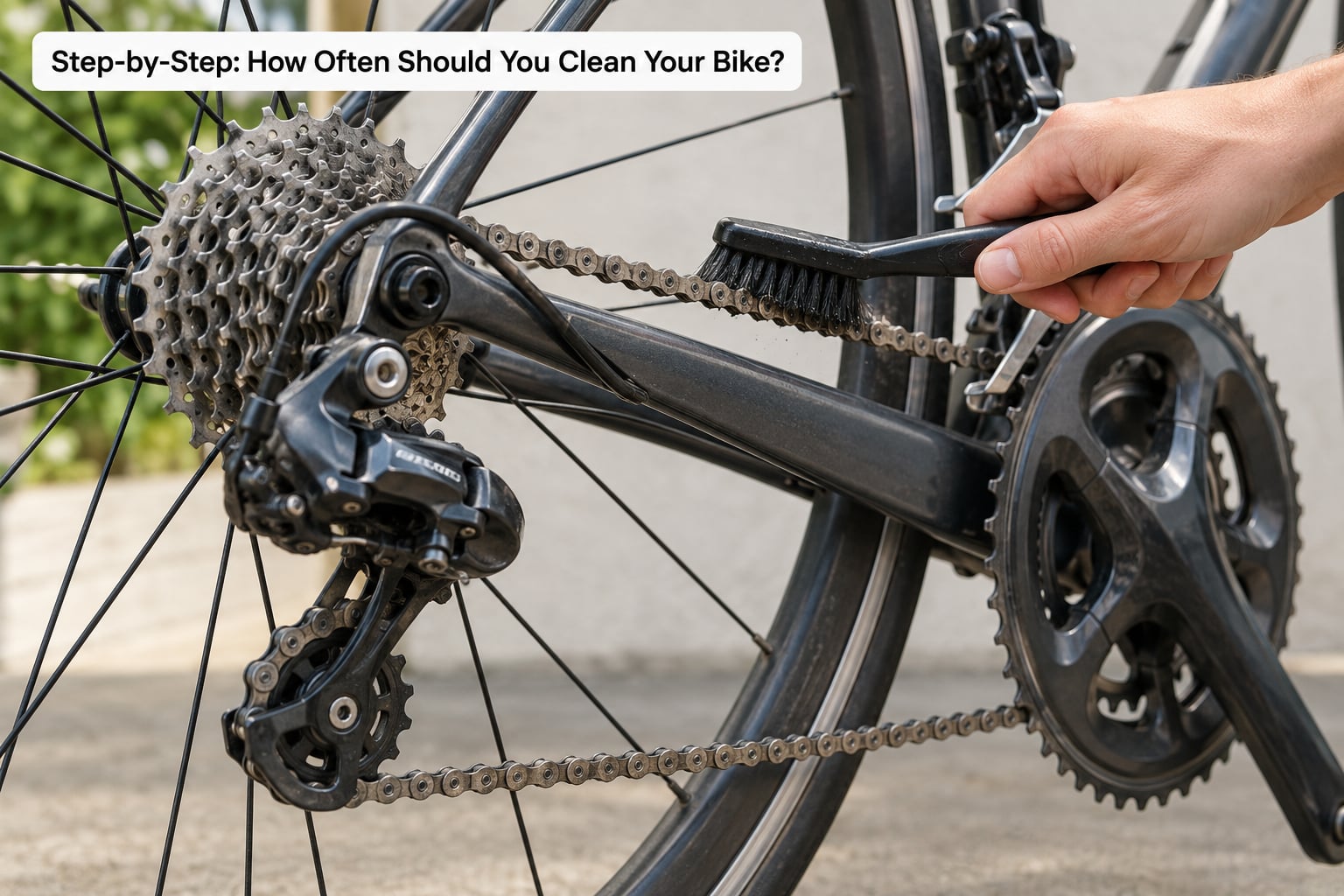
Once a week, put the bike on the stand and clean the chain properly. Back the rear derailleur cage so the chain loosens slightly, then run the chain through a chain-grabbing brush loaded with degreaser. Turn the cranks slowly by hand rather than spinning the wheel — slow, deliberate rotations work the degreaser into every roller.
Hold a shop towel under the lower run of the chain, pull the chain through the towel a section at a time, and repeat until the black grime stops transferring. This is the part people skip, and it is the part that makes the difference.
Work over the chainrings and the exposed cassette cogs with the stiff brush and degreaser too. Wipe everything down, then let it air-dry while you put the tools away. Lube once the chain is dry, using only enough to coat the rollers. Wipe the excess.
If you ride a gravel bike or a mountain bike and your weekly clean leaves black residue no matter how many times you repeat it, that is not a cleaning failure. That is the mud interval, and it calls for a different answer.
Monthly: Clean the Cassette, Chainrings, and Bottles
Once a month, go past the chain and take on the parts that never get cleaned until they are ruined. Take the wheel out, or at minimum shift into the smallest cog so the whole cassette is exposed, and work through the gaps between cogs with a cassette brush. Packings build from the outside in, so clean in the same order and the whole job goes faster.
Wipe the chainrings, look at the teeth in good light and check for shark-fin hooking, which means the chain has worn past safe and is chewing the ramps. Then check chain wear with the gauge. Replace at 0.5 percent, or at 0.75 percent at the very outside limit — a stretched chain destroys a cassette and chainrings far faster than it destroys itself.
Scrub your bottles and lids in hot water with a bottle brush. Riders often clean the drivetrain meticulously and then ride with a biofilm-coated bottle for a season. Check the bottle cages for grit underneath, and look under the down tube and behind the seat tube where mud hides.
Clean the chainrings’ bolt faces too. Everything that gets slightly dirty and then stays wet eventually becomes a rattle you spend a whole ride trying to place.
Seasonally: Deep-Clean Brakes, Hubs, and Hard-to-Reach Areas
Twice a season, or at the start of winter and the start of summer, do the slower work. Clean the rotor with brake cleaner on a soft cloth until the braking track is bright and even, keep cleaner off pads and rims, and check pad thickness against the wear marks moulded into the pad holder.
Wipe the frame down with a damp cloth and mild soapy water, then dry it. Do not soak carbon frames, and never use a brush stiff enough to catch the weave.
For the hubs and bottom bracket, you do not need to remove anything. Wipe around the seals, keep spray nozzles pointed away from them, and check that the axle nuts and through-axle are torqued. Riders who use a chain cleaning machine are usually told to avoid immersing the whole drivetrain for the same reason that pressure washing is a bad idea: contamination and water end up where they are hardest to remove.
If you ride through winter, add a seasonal salt protocol. Rinse the bike with plain low-pressure water the same evening, dry the drivetrain thoroughly, and lube it. Salt is the one contaminant that keeps working after the ride is over, and it eats through aluminium and steel hardware quietly.
A handful of riders use a cheap second chain, cassette and bottom bracket as a winter bike and keep the good drivetrain on the stand all season. It sounds excessive until you see what road salt does to a drivetrain in one winter. That is a reasonable approach for anyone whose good bike is also their only bike.
Common Mistakes
Using dish soap or harsh household degreaser. They clean fine and leave a film that holds dust. Bike-specific biodegradable degreaser rinses clean and does not attack cable housing, seals or the chain’s surface plating. Isopropyl alcohol at 90 percent or higher is fine for brake rotors and for wiping down a chain before waxing.
Reaching for a pressure hose. This is the most common way riders damage a bike while cleaning it. Bearings are sealed, not waterproof against a jet of water aimed directly at them, and once grit and water get inside, the damage continues with every subsequent ride.
Over-lubricating. A thick bead of lube is the reason so many drivetrains never truly get clean. Excess lube picks up grit, spreads it across the cassette, and drips onto the rotor, which kills braking performance until you clean the rotor again. One drop per roller, then wipe. Waxed chains remove the guesswork entirely and hold a drivetrain clean far longer, which is why they come up so often in rider discussions.
Cleaning the cassette with the chain installed and then calling it done. The chain screens the outside cogs, so the buildup underneath never gets touched until it is sealed in by more buildup. Shift to the smallest cog and work between the cogs.
Using the same brush and rag on the drivetrain and the brakes. A dedicated set costs almost nothing and avoids grinding contaminated grit into your rotor. This one habit prevents more problems than any product on the list.
Cleaning a worn chain instead of replacing it. Degreasing a chain that has stretched to 0.75 percent gives you a clean chain that will still skip and chew cogs. Check wear with the gauge before you start.
Cleaning too often and getting into a cycle. Over-cleaning pushes water and cleaner past seals it was never meant to pass, and some riders end up cleaning a genuinely clean bike out of anxiety rather than condition. Bikes are meant to be ridden, and light road grime on the chainstays is not a fault. Mudguards and frame protection cut cleaning time more than any technique; riders who fit both report rarely needing more than a quick rinse.
Riding a wet, salted bike through a week of cold weather. The chain does not need a deep clean, but salt does. A plain low-pressure rinse and a lube the same evening takes ten minutes.
Frequently Asked Questions
How often should I clean my bike chain?
Wipe the chain and add a drop of lube after every ride, and give it a proper degreaser clean every two to four weeks in normal road conditions. After rain, mud or salt, treat the ride itself as the trigger and clean it the same day. Riders using a waxed chain need far less of this, because wax does not attract grit the way oil-based lube does.
Do I need to clean my bike after every ride?
Not a full wash. A wipe of the frame and drivetrain, a look at the chain and brake rotors, and a drop of lube is the right amount, and it takes about two minutes. Full washes are for muddy, salty or properly filthy conditions, or once a month as routine care. Washing every ride adds water to places water should never reach.
How often should I lubricate my bike chain?
Every ride for dry dusty conditions, and every one to three rides in ordinary road weather, or any time the chain sounds dry or the cassette has been cleaned. Wet lube holds up through rain but attracts grit; dry lube stays clean and washes off easily. Add lube to the rollers and wipe off the excess, because lube on the rotor kills braking performance.
What is the best way to clean a dirty cassette?
Shift into the smallest cog, then work between the cogs with a stiff cassette brush and degreaser, cleaning from the outside in so you are not sealing dirt underneath. Pull a shop towel through the lower chain run to strip grime from the chain itself. Repeat until the towel comes away clean, then wipe, dry, and lube. Rotor cleaner never belongs on the cassette.
Can I use a household degreaser or dish soap on my bike?
For the frame in small amounts, mildly, yes. For the drivetrain, no. Household degreasers leave a film that holds dust and grinds into the chain, and dish soap on cables and bearings encourages water in. Use a biodegradable bike degreaser on the drivetrain and mild soapy water only on the frame, then dry it properly.
How often should a road bike receive professional servicing?
Once a year for most riders, and twice a year if you ride through winter, race, or cover long distances. The shop handles what a home clean cannot: cable replacement, bearing service, brake pad and rotor measurement, wheel trueing and drivetrain wear checks. Keep up the interval clean yourself between visits, since servicing intervals assume a bike that has been looked after.
Conclusion
Here is the whole schedule in four lines. Wipe and lube after every ride. Clean the chain and exposed drivetrain weekly. Give the cassette, chainrings and bottles a proper clean monthly. Deep-clean the brakes and hubs twice a season, and rinse and lube immediately after any salted or mud-heavy ride.
Start with the next ride. Give the chain a wipe, look at the cassette teeth in decent light, and check chain wear with a gauge while you are there. That is where a bike that has been ridden hard for years either looks fine or quietly needs a chain, and it takes under two minutes to find out.