Numb toes on a long ride usually come from sustained pressure on a nerve or reduced blood flow while you pedal, and the fix is usually small: loosen what is tight, correct your cleat position, or buy a shoe with more toe room. Work through the seven steps below in order, starting with the free ones. Most riders solve this in a single afternoon, and those who don’t usually need a bike fitter or a clinician, not another pair of shoes.
The important part is doing it in the right sequence. Riders tend to jump straight to buying gear, when the actual cause is usually something they can change in ten minutes at the side of the road.
Table of Contents
- What You Need
- How to Fix Numb Toes on Long Rides: Step-by-Step
- Step 1: Decide When to Stop Instead of Trying to Fix Numb Toes on Long Rides
- Step 2: Check Your Shoes, Socks, and Toe Position
- Step 3: Find and Relieve External Pressure
- Step 4: Inspect Your Feet After the Ride
- Step 5: Treat the Area Gently and Gradually
- Step 6: Retest the Fix on a Shorter Ride
- Step 7: Seek Medical Advice for Persistent or Recurrent Symptoms
- Common Mistakes
- Frequently Asked Questions
- Why do my toes go numb on long bike rides?
- Should I keep riding if only one or two toes feel numb?
- Can tight cycling shoes cause permanent nerve damage?
- Is it better to use thicker socks when your toes feel numb?
- How long should numbness in my toes last after a ride?
- When should a cyclist stop riding and see a doctor?
- Conclusion: What to Do on Your Next Ride
What You Need
Gather these before your next long ride so you’re not diagnosing with your fingers in the dark.
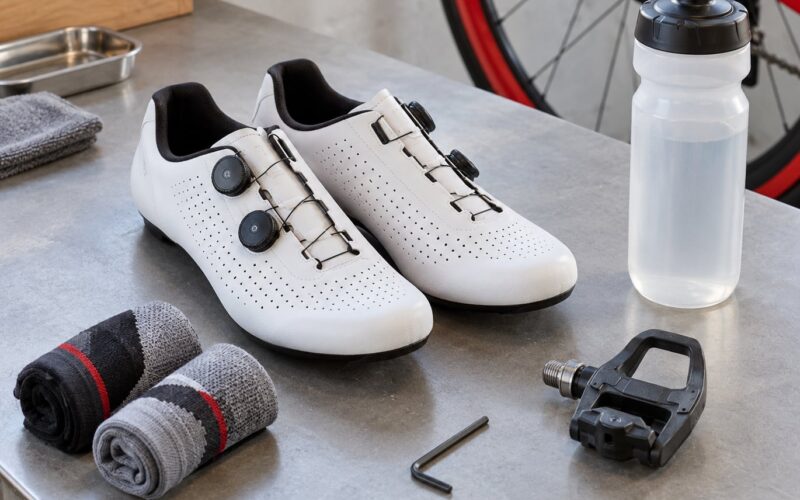
- A pair of well-fitting cycling shoes. Ideally the pair you already ride in, worn enough to be broken in.
- Two thicknesses of moisture-wicking socks. A thin pair and a thicker pair, so you can test whether sock bulk is part of the problem.
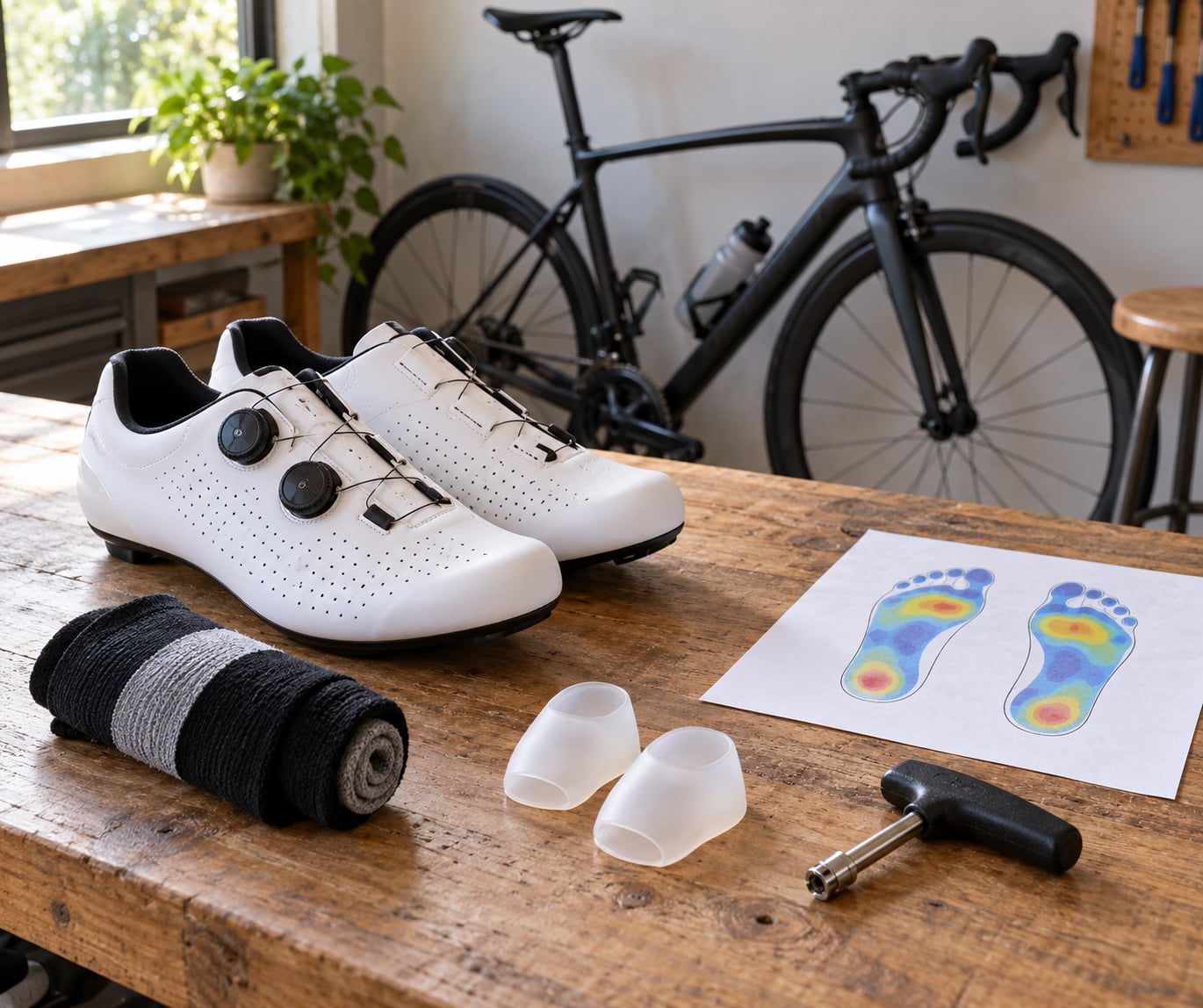
- Toe caps or silicone toe sleeves. These protect an irritated toe without crowding the whole foot.
- A small mirror. For checking under the sole and between the toes, where you cannot easily see.
- Basic cleaning supplies. Warm water, mild soap and a clean towel for looking at your feet properly after the ride.
- A route with safe stopping places. Numb toes reduce your ability to feel the road and your footing, so pulling over somewhere flat and off the traffic lane matters.
How to Fix Numb Toes on Long Rides: Step-by-Step
Step 1: Decide When to Stop Instead of Trying to Fix Numb Toes on Long Rides
Some numbness is a normal, temporary result of pressure. Other numbness is your body telling you to stop, and telling the difference matters before you adjust anything.
Stop riding and seek medical guidance if you have any of the following:
- Numbness that is still present hours after you get off the bike.
- Weakness in the foot, or difficulty gripping the pedal or standing up.
- Swelling, severe pain, or skin that looks bruised, blackened or markedly pale.
- Any change in your balance or coordination.
- Numbness that spreads up the foot or past the ankle rather than staying in the toes.
- Numbness that started without any change to your shoes, cleats, position or training load.
If numbness arrives gradually during the ride and clears once you unclamp and change position, that pattern points to pressure or compression, which is what the rest of these steps address. This article covers general information about cycling comfort and fit, not diagnosis. A qualified healthcare professional can assess your own situation properly.
Step 2: Check Your Shoes, Socks, and Toe Position
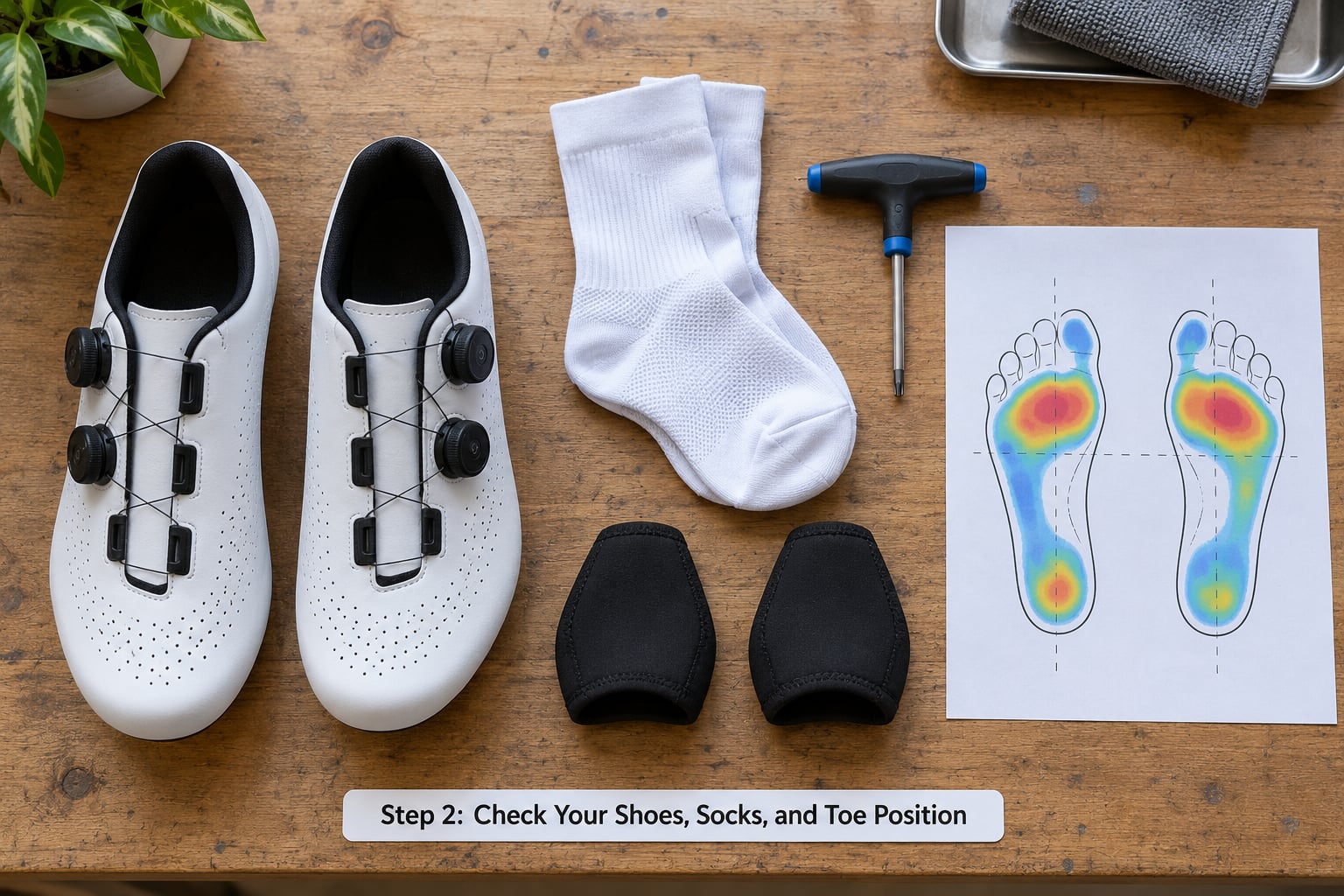
Most toe problems trace back to how much room your toes have once your foot has been working for an hour. Feet swell on a ride. A shoe that feels roomy in the shop at rest can squeeze your toes by the time you reach the far side of a hundred-kilometre loop.
Check these in order:
- Shoe length. You should have roughly a thumb’s width of space between your longest toe and the front of the shoe. If that gap has shrunk or disappeared by mid-ride, the shoe is too small for your working foot.
- Toe box width. Narrow toe boxes squeeze the toes together, especially on long climbs where you stand and rock the bike.
- Strap and buckle placement. A strap sitting across the top of the toes adds direct downward pressure. Straps belong on the widest part of the foot, not over the toe box.
- Overlapping socks. Two pairs of socks look like extra padding but bunch at the toes. Pick one pair of the right thickness.
- Seams inside the shoe. A raised seam across the toe box becomes a pressure ridge over distance.
- Cleat position. A cleat mounted too far forward loads the ball of your foot and drives it into the front of the shoe, pushing the toes back.
A good rule: try shoes on late in the day, ideally after a ride, when your feet are already swollen. You want the shoe to fit your tired foot, not your rested one.
Step 3: Find and Relieve External Pressure
This is the step that resolves most cases, and it costs nothing. The aim is to find what is pressing and take it off.
Release your straps and laces completely while you’re still on the bike, then walk or ride for a minute. Next, look at the skin immediately after removing the shoe: the mark that stays visible for a minute or two tells you exactly where the pressure landed. Compare left and right feet, because a problem that only shows on one side is a strong clue about cleat alignment or foot position rather than shoe size.
Then work through these adjustments one at a time:
- Move the foot slightly back on the pedal and unweight it briefly at a junction.
- Change to a thinner sock, or a thicker one if your toes are rattling loose in a large shoe. One change only, so you know what worked.
- Shift the strap to sit over the midfoot rather than across the toes.
- Roll the cadence slightly higher and avoid grinding at very low revolutions with weight on the ball of the foot.
- Relax your calf and your jaw. Tension makes you grip the pedal harder, which pushes you forward onto the toes.
Did sensation come back within a few minutes of easing the pressure? If yes, you have your cause: something external was pressing. If not, move to Step 7.
Step 4: Inspect Your Feet After the Ride
Look at every toe properly, in good light, including between them and under the toenails. Use the mirror for the sole and the arch.
Note what you see rather than assuming what it means:
- Blisters, broken skin or areas of raw redness
- Persistent red or purple marks matching a strap or seam line
- Swelling in any toe, or a toe that looks different in colour from the others
- Sores, cracks or an ingrown-looking toenail edge
- Skin that feels unusually cold or unusually hot compared with the rest of the foot
Why bother looking? Because reduced sensation means you may not have felt a hot spot develop. A rub you never noticed is how a small blister becomes a wound that takes weeks to heal.
Step 5: Treat the Area Gently and Gradually
Once you’re off the bike, general measures only. Wash and dry your feet thoroughly, including between the toes, then protect any irritated skin with a toe cap or a clean dressing so the next shoe doesn’t rub the same spot.
Warmth helps cold, stiff toes. If the foot feels cold, warm it gradually. If the area is hot, swollen and sore, cool it instead.
When sensation is reduced, avoid anything aggressive: no vigorous massage on a numb area, no heat applied directly to skin you cannot feel properly, no alcohol rubs and no unproven topical remedies. You cannot judge temperature or pressure accurately, which is exactly why those things burn or irritate without you noticing.
Then return to normal activity gradually. A numb foot that recovers in an hour is a different situation from one that stays numb into the next day.
Step 6: Retest the Fix on a Shorter Ride
Do not go straight back to your longest ride to confirm the change. Test it on a ride roughly as long as the point where the problem used to appear, then a little beyond it.
During the retest, check three things:
- Toe box room. Wiggle your toes comfortably around 90 minutes in.
- Circulation. Warmth in the foot, and colour returning quickly after you unclamp.
- Comfort. No building pressure, no tingling creeping in.
If numbness still appears at the same time on the retest, change one variable and repeat. Two changes at once tells you nothing about which one mattered.
Step 7: Seek Medical Advice for Persistent or Recurrent Symptoms
Book an appointment with a qualified healthcare professional if numbness keeps returning ride after ride, lasts longer than a few hours after you stop, or comes back without any change to your equipment or training.
It is also worth getting assessed if you have diabetes, circulation problems in your legs, a history of back or disc trouble, or any existing nerve condition. Those change how seriously reduced sensation should be taken, and only a clinician can weigh it.
A bike fitter is the right first stop for pressure that responds to cleat position, shoe volume or saddle and bar setup. A physical therapist can work on the way you pedal and the tension you hold. A podiatrist or your doctor is the right call when the numbness persists, spreads, or comes with weakness. Knowing which toe goes numb helps all three of them, so note it before the appointment.
Common Mistakes
- Ignoring mild numbness and riding further. Numbness means you are no longer feeling the pedal, and hot spots form faster than you notice them. The safer correction is to pull over and check at the first tingling, not at the halfway point.
- Riding through severe symptoms. Swelling, strong pain, weakness, skin colour changes or loss of coordination are stop signals. Turn around and get the bike home.
- Adding a second pair of socks. Extra bulk bunches at the toes and makes the problem worse. The safer correction is one pair of the correct thickness.
- Buying shoes that are smaller to stop your foot sliding. Foot movement inside a shoe is friction, and friction is what causes blisters. A wide toe box that holds your foot without squeezing beats a tight shoe at any size.
- Using a hot water bottle on a numb foot. With reduced sensation you cannot tell when it is too hot. Warmth helps cold feet, but keep it gentle and check the skin often.
- Assuming every episode has the same cause. Numbness after three hours out of the saddle is a different problem from numbness in cold weather on a recovery spin. Keep a short note of which toes, which ride type and roughly how long in. That log is what makes a fitter’s job quick.
- Adjusting the cleat in a large jump. Moving cleats a long way in one go changes your pedalling as well as your foot position. Small increments, marked before you start, keep the change explainable.
Frequently Asked Questions
Why do my toes go numb on long bike rides?
Toes lose sensation on long rides because sustained pressure and restricted blood flow compress the nerves running through the foot. Your feet swell as you ride, your calf tires and stops supporting the arch, and load concentrates under the ball of the foot and along the outside edge. That pressure pins a nerve against the pedal spindle, cleat or shoe upper until you unclamp and change position.
Should I keep riding if only one or two toes feel numb?
If the numbness arrived gradually and eases when you unclamp, change position or loosen your shoes, pull over briefly and test it rather than pressing on. Loosen everything, unweight the foot and wait a few minutes. If sensation does not return promptly, or it comes with swelling, pain, weakness or skin colour change, finish the ride safely and get the symptom assessed by a healthcare professional.
Can tight cycling shoes cause permanent nerve damage?
Most numbness from tight shoes is temporary and clears once the pressure is released. Repeated episodes where sensation takes hours to return, or does not return at all, are a reason to see a qualified healthcare professional rather than keep riding. Reduced sensation also means you will not feel a blister forming, which is its own reason to check your feet carefully after every long ride.
Is it better to use thicker socks when your toes feel numb?
It depends on the shoe, not the symptom. Thicker socks help when your toes rattle loose in a shoe that is too big. They make things worse when the shoe is already tight, because the extra bulk bunches at the toe box. Test one change at a time and use a pair with moisture-wicking fabric rather than cotton, which holds water and makes swelling worse.
How long should numbness in my toes last after a ride?
Numbness caused by pressure during riding usually fades within minutes to an hour once you unclamp, change position and get the shoes off. If it is still there several hours later, or has not resolved by the next morning, stop treating it as a fit problem and get it assessed. Repeated episodes that take half an hour or more to clear deserve the same attention.
When should a cyclist stop riding and see a doctor?
Stop riding and seek medical advice for numbness that persists for hours, spreads beyond the toes, or comes with weakness, difficulty standing, marked swelling, severe pain, skin colour change or loss of coordination. The same applies to numbness that appears without any change to your shoes, cleats, position or training. Reduced sensation also removes your warning that a hot spot is forming, which makes foot checks non-negotiable.
Conclusion: What to Do on Your Next Ride
How to fix numb toes on long rides comes down to five actions in order. Stop if the numbness is persistent, comes with weakness, swelling or skin changes. Check your shoes, socks and toe position. Find the pressure and take it off. Inspect your feet properly afterwards. Then retest the change on a shorter ride before you go back to distance.
Most cases end at step three. The ones that don’t deserve a conversation with a professional, and there is no harm in having that conversation early.