To prevent hot foot while cycling, you need to unload the ball of the foot: loosen the straps, move the cleat back a few millimetres, pedal a round stroke instead of standing on the pedals, and use socks and footwear that stay dry. Most riders fix it in one ride with a strap adjustment, and the rest get there in two or three tests.
First, the naming is misleading. Hot foot is not hot. It is a burning or tingling sensation in the ball of the foot, and what you feel is nerve compression between the five metatarsal heads, the knuckle-like ends of the long bones in your forefoot. No extra heat is being produced. That matters because the fixes that work are pressure and position fixes, not cooling fixes.
This guide covers the fit, moisture and technique adjustments that stop burning feet on long rides, and the point where discomfort stops being a bike problem and becomes a medical one.
Table of Contents
- What You Need
- How to prevent hot foot while cycling: step by step
- How to identify the source of the heat
- How to prevent hot foot while cycling with the right fit
- How to reduce friction and manage moisture
- How to adjust a long ride when the burning starts
- How to test whether the changes worked
- Common Mistakes
- Frequently Asked Questions
- Are cycling shoes that are too tight causing my hot foot?
- Do thicker socks help hot foot or make it worse?
- Should I move my cleats back to stop hot foot?
- Can cycling cause metatarsalgia?
- When should I stop riding because of hot foot?
- Why do I only get hot foot in one foot?
- Conclusion
What You Need
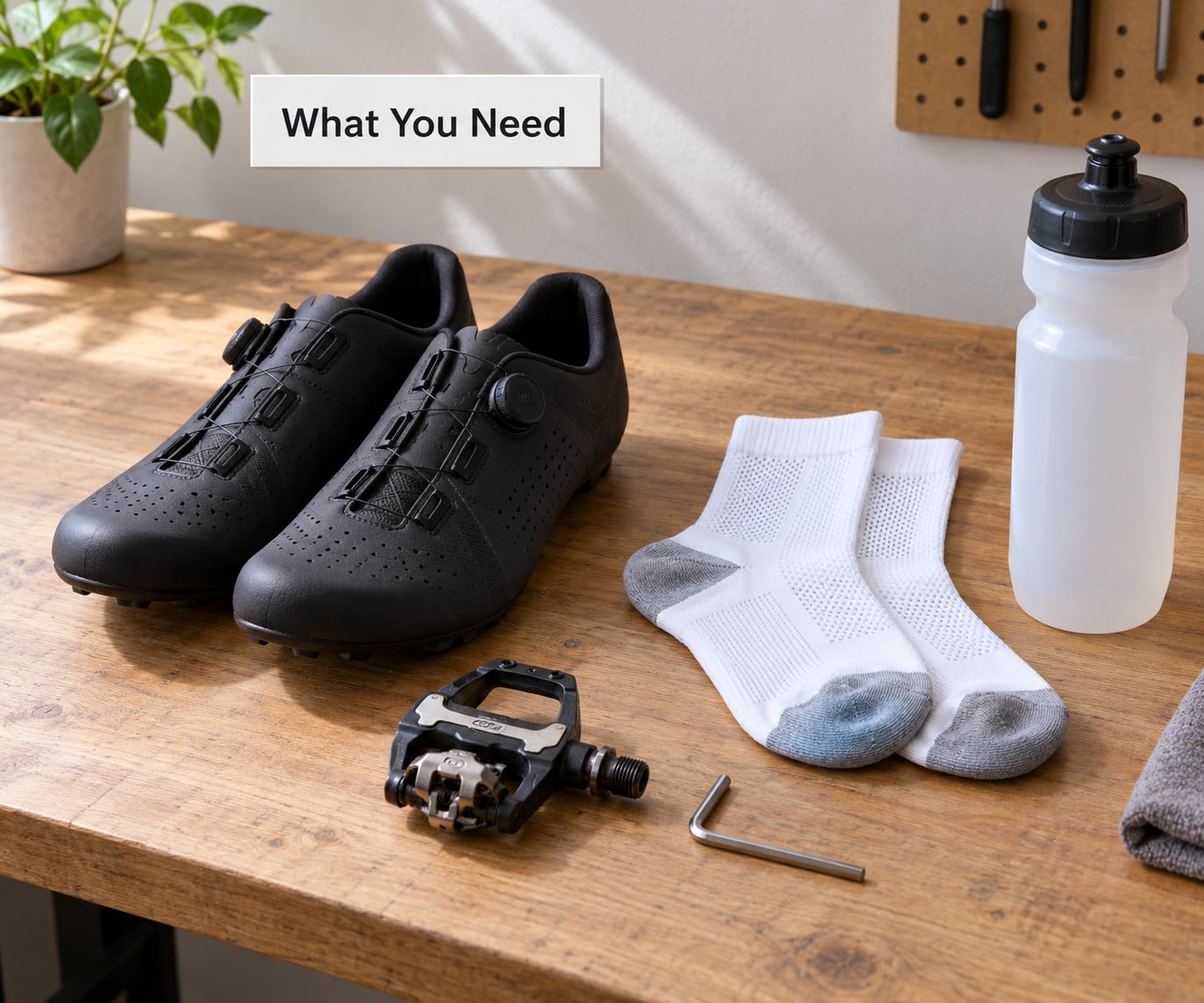
You do not need a workshop to start. Most of the useful changes are made with what you already own.
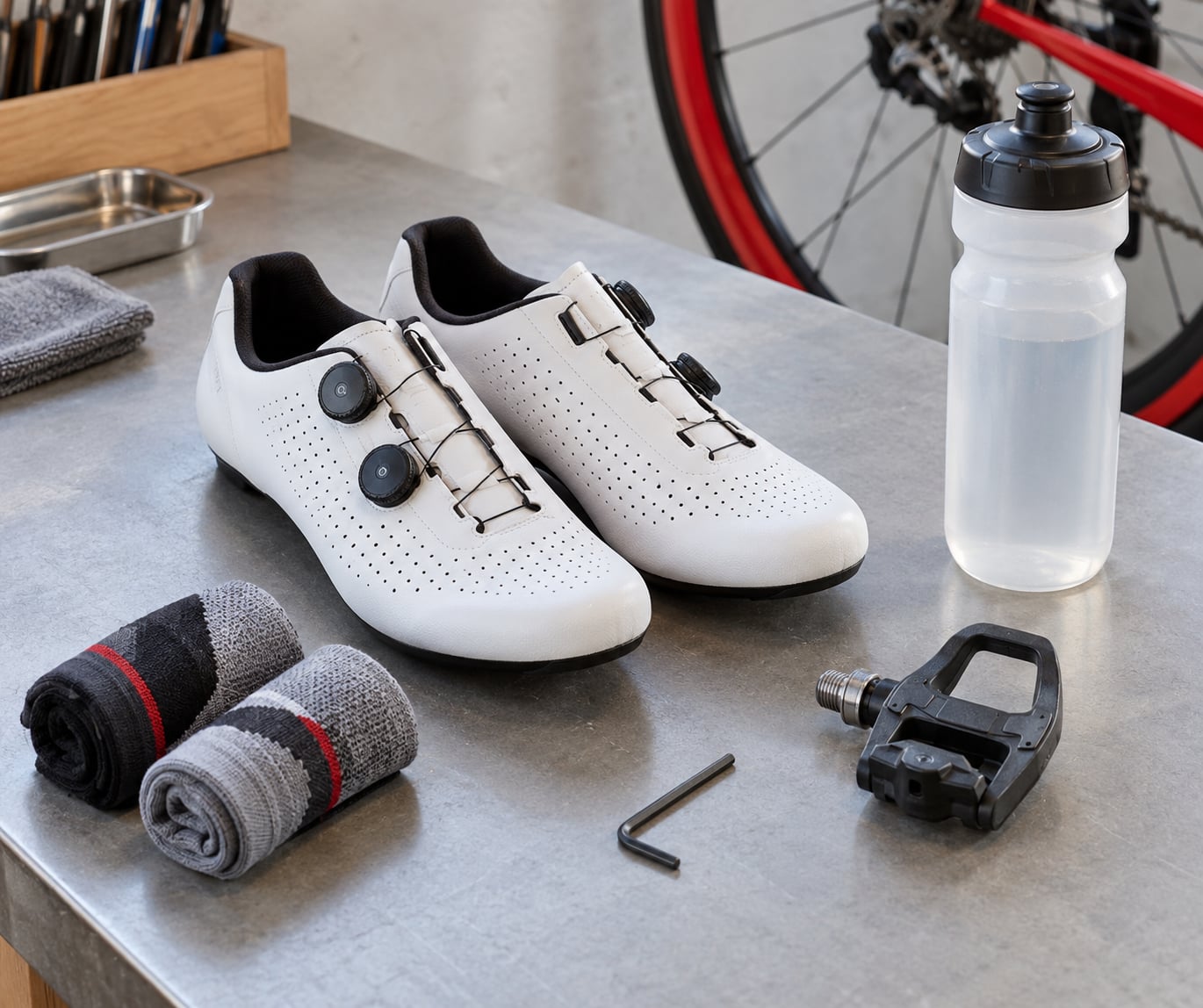
- Cycling shoes that fit now, not shoes that fit in the shop. Feet swell on long rides, so buy for the end of a ride rather than the first five minutes. Many riders land on a half size to a full size up from their street size, and feet often grow with age.
- Moisture-wicking socks in thin and mid-weight versions, so you can change the volume with the weather.
- A hex key or Torx driver if your cleats are adjustable. Move them by 3 to 5 mm at a time.
- A water bottle and electrolytes, because dehydration shows up in the feet first.
- A way to spot a hot spot early, which usually means checking your feet at every stop rather than waiting until you get home.
How to prevent hot foot while cycling: step by step
How to identify the source of the heat
Diagnose before you adjust, because the fix depends entirely on what you are feeling. Burning under the ball of the foot, numbness in the toes and a blister feel different because they come from different places.
- Burning or tingling under the ball of the foot points to nerve compression between the metatarsal heads, often after the foot swells. Look at shoe size, strap tension and cleat position first.
- Numb or tingling toes point to pressure on the toes from a swollen foot in a low-volume toe box. Look at toe room and sock thickness.
- A single tender spot that turns hot, then a patch of raw skin is friction and a forming blister. Look at sock seams, a strap edge or toe shape.
- Sharp pain in one spot, dull ache in the arch or heel is a different problem, usually plantar fasciitis rather than hot foot. Look at saddle height and insole support.
- Symptoms in one foot only point to asymmetry, often a leg-length difference or a cleat angle. Look at heel lift, crank arm length and cleat alignment.
One more clue worth noting: when the problem starts. Burning at about 10 miles usually means the shoes are simply too tight. Burning that only appears at 80 to 150 miles points at sustained pressure and swelling rather than an outright sizing error.
Riders on cycling forums also report hot foot in a single foot, most often one side. That pattern is worth taking seriously instead of buying new shoes, because a shoe will not correct a leg-length difference.
How to prevent hot foot while cycling with the right fit
Fit is where most of the win is. You want the forefoot to be able to spread and the arch to sit supported, not pinched.
Straps first, because it costs nothing. Keep the top strap snug so the heel stays put, and leave the lower strap loose. That lower strap runs right across the ball of the foot, and it is a very common reason a shoe that fitted fine at home starts burning an hour in. If you ride with a dial closure, back the dial off about a quarter turn and retest.
Check toe room standing up. With the shoe laced but not tightened, you should have roughly the width of your thumb between your longest toe and the front of the shoe. Feet swell more in heat, so re-check in July rather than in February.
Then move the cleats. Slide both cleats 3 to 5 mm toward the heel, testing on one shoe first. That shifts where load lands on the foot, taking pressure off the metatarsal heads. Riders who custom-drill for a full centimetre of setback report the extra ride distance is worth a small efficiency cost, but go in small steps rather than jumping straight to a centimetre.
Here is the part most guides leave out: moving the cleat back effectively lengthens your leg. Lower the saddle a touch to compensate, or you will trade burning feet for a sore lower back. Mark your saddle position with tape before you touch anything, and change one variable per ride so you know what worked.
Foot shape matters too. Forefoot varus, where the ball of the foot turns inward relative to the heel, is common enough that most riders have some of it. On a narrow foot it means the shoe’s narrow forefoot pushes the metatarsals together. A wider toe box or a shoe with more volume across the ball solves it without any cleat work.
How to reduce friction and manage moisture
Damp feet cause swelling, swollen feet cause compression, so moisture control is upstream of the whole problem.
- Wicking socks, not cotton. Cotton holds water. A thin wicking sock in hot weather and a mid-weight sock in cold weather keeps volume stable while the temperature changes.
- Do not reach for thicker socks when burning starts. Adding volume to an already tight shoe makes the compression worse. Riders often realise this the hard way mid-ride.
- Change socks at any stop longer than five minutes. Carrying one spare pair is cheap and resolves more mid-ride problems than anything else you can do.
- Check your toe position in the shoe. If the toes are curling under the sole, the toe box is too short and no amount of lacing will fix it.
- Drop your cadence slightly and roll the pedals smooth. A rough, choppy stroke bounces the forefoot and concentrates load.
- Drink and replace electrolytes. Feet are usually the first place mild dehydration shows up on a hot day.
- Let the shoes dry between rides. Damp shoes plus damp socks plus a long day is a reliable route to a hot spot.
A note on pedals: wide road-style platforms spread load far better than small recessed commuter or mountain bike cleats, which concentrate it into a small patch. Recessed cleats are a frequent culprit on long road rides.
How to adjust a long ride when the burning starts
If it builds mid-ride, you have options that do not require finishing.
Get off the pedals and coast, then take your feet out of the shoes at the next safe stop. Walking around in your socks for two or three minutes restores circulation faster than anything you can do while riding. Cool water on the feet helps too, though relief is usually temporary.
Loosen the lower strap or back off the dial for the rest of the ride, and roll your ankles and wiggle your toes at every stop. If you carry a spare pair of dry socks, change them. Riders who soak their feet in a stream mid-ride report immediate but short-lived relief, with symptoms often back within half an hour.
The part most people get wrong is what comes next. Do not push straight back into hard riding to test whether it still hurts. Finish the ride easy, or turn back. Hard efforts on a compressed nerve are how a temporary problem turns into one that lingers for weeks.
How to test whether the changes worked
Judging a fit fix on a five-mile spin tells you almost nothing. Hot foot usually shows up in the last third of a long ride, so your test has to reproduce length.
Repeat one route, one duration, one intensity, one pair of shoes and one sock choice. Ride it the week after each single change and note where the burning started, in miles, and how strong it got out of ten. If the number moves, keep the change. If it does not, revert it and try the next thing.
Two rides on the same route with one variable changed is a fair comparison. Five changes on one ride is a guess.
Common Mistakes
Riding in shoes that are too tight. The instinct is to lace down harder for security, and that is exactly what compresses the forefoot. Lace snug across the instep, loose across the ball.
Switching to thicker socks when the burning starts. More volume in a shoe that is already full makes the pressure worse. Fix the shoe, not the socks.
Ignoring the first tingling. That early warning is the cheapest moment to pull up and loosen a strap. Once the nerve is irritated, the fix takes longer and the ride is gone.
Changing five things on one ride. New socks, new insoles, new cleat position and a new saddle height at once means you learn nothing and go back to square one.
Riding hard through escalating pain. Out-riding a nerve symptom is not toughness, it is a way to turn a two-ride problem into a two-month one.
Assuming every burning sensation is a fit issue. Sharp arch or heel pain, symptoms that continue after you get off the bike, or a foot that is numb rather than burning are different problems.
Treating both feet when only one hurts. One-sided symptoms usually point to asymmetry rather than footwear. A heel lift on the shorter leg is a common starting point, and a fitter may suggest shorter crank arms.
Frequently Asked Questions
Are cycling shoes that are too tight causing my hot foot?
Most often, yes. A shoe sized for the first five minutes of a ride stops fitting once the foot swells under sustained pedal pressure, and the extra volume pushes the metatarsal heads together. Leave roughly a thumb width of room ahead of your longest toe, keep the top strap snug, and leave the lower strap loose.
Do thicker socks help hot foot or make it worse?
They usually make it worse. Thicker socks add volume inside a shoe that is already full, which increases the compression on the ball of the foot. Wicking socks in thin or mid-weight are better, matched to the weather, and swapping to a dry pair at a stop fixes more mid-ride burning than any other quick change.
Should I move my cleats back to stop hot foot?
Moving both cleats 3 to 5 mm toward the heel shifts load off the ball of the foot and is a standard first adjustment. Go in small steps, test on one ride, and lower the saddle slightly to compensate for the effectively longer leg. Riders who custom-drill for a full centimetre often report the extra ride distance outweighs the small efficiency cost.
Can cycling cause metatarsalgia?
Cycling can aggravate metatarsalgia, which is pain in the ball of the foot, because sustained pedal pressure loads the metatarsal heads repeatedly. Many riders mistake it for burning and it overlaps with hot foot. If pain persists after a ride, or at rest, or keeps coming back regardless of footwear changes, see a doctor or podiatrist rather than adjusting more hardware.
When should I stop riding because of hot foot?
Stop and finish easy if burning escalates, and off the bike entirely if you notice persistent numbness. Riding hard on an irritated nerve is what turns a short-lived problem into a long one. If pain continues after the ride, appears at rest, or affects how you walk, that is a reason to see a doctor rather than a reason to adjust your bike again.
Why do I only get hot foot in one foot?
One-sided burning usually points to asymmetry rather than footwear. A leg-length difference, a crank arm that is too short on one side, or an out-of-true cleat angle can load one forefoot more than the other. A fitter can check heel lift and crank length; buying a bigger pair of shoes will not fix a length difference.
Conclusion
Start with the strap, because it is free and takes ten seconds. Leave the lower strap loose, back the cleats back 3 to 5 mm and drop the saddle to match, then repeat one long route with nothing else changed and see whether the burning moves further into the ride.
Keep the socks dry and the pedal stroke round, and let your shoes dry between days. If the pain persists after a ride, appears at rest, or affects how you walk, see a doctor or podiatrist. Updated for 2026.