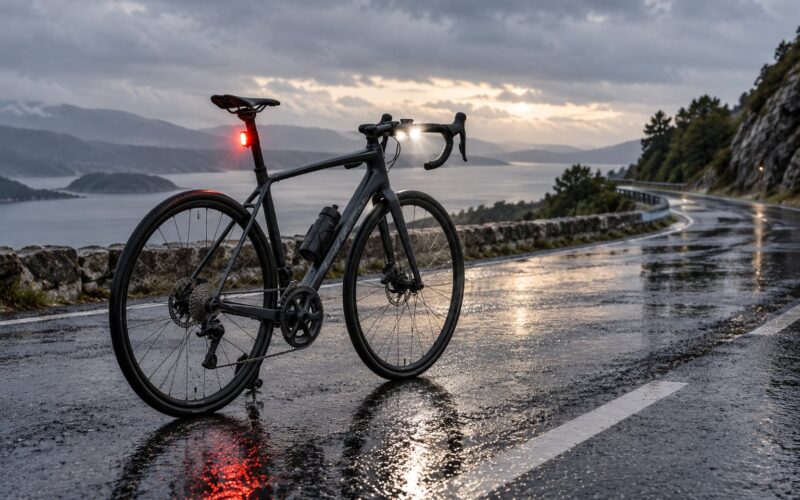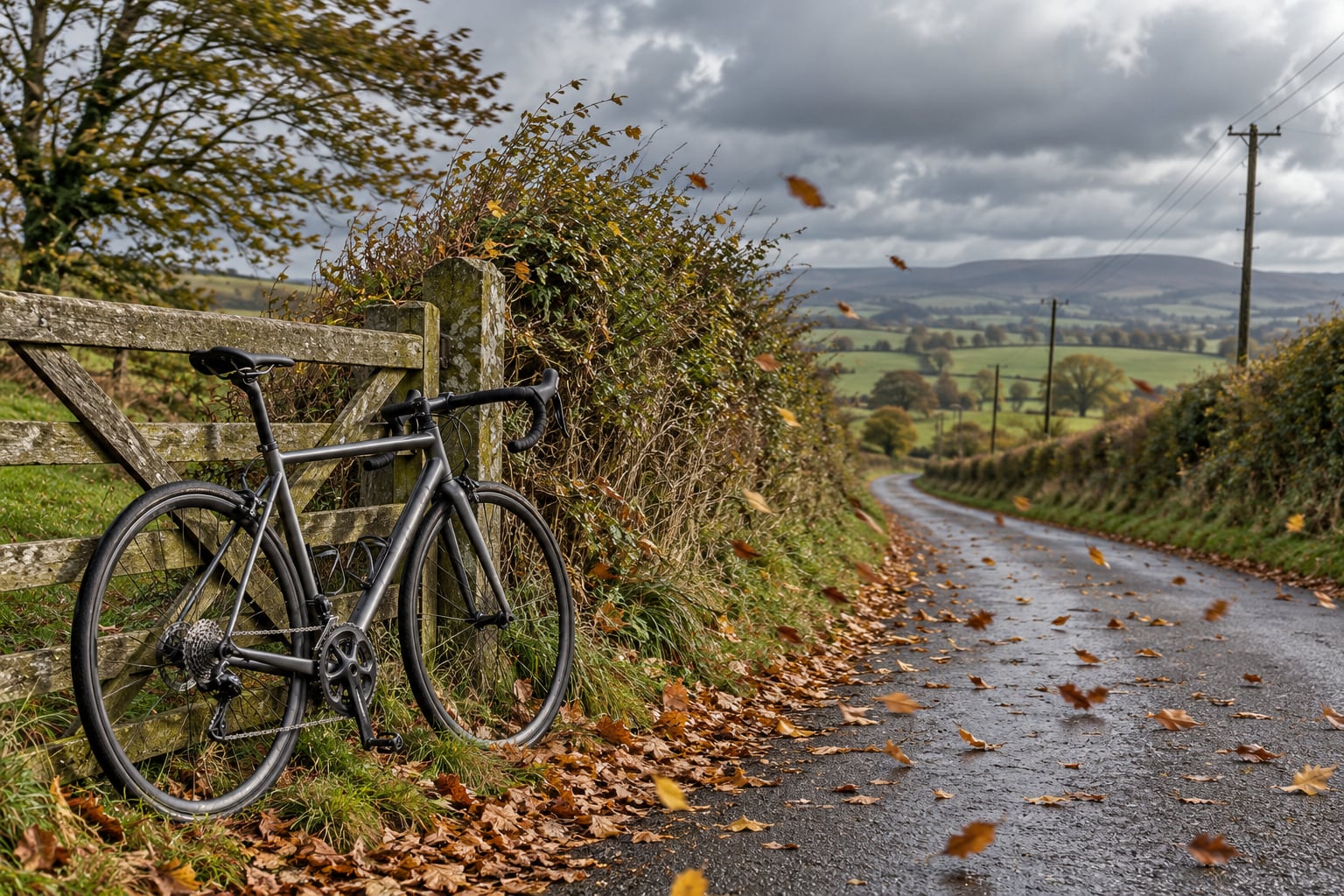
Learning how to ride in the wind comes down to three things: get small, hold a steady effort, and let the route do some of the work. Air drag rises with roughly the cube of your speed relative to the air, so a 10 mph headwind turns a 20 mph ride into a 30 mph airspeed and can triple the power needed to hold that speed. You cannot argue with a gust, but almost everything else is a choice.
Eight tips cover most of it, and each one is expanded below:
- Check the forecast for gusts as well as sustained speed, and read the direction.
- Plan the route so you start into the wind and finish with it behind you.
- Drop your head, flatten your back, and hold a relaxed grip on the drops.
- Keep a steady cadence instead of surging with every gust.
- Hunt out shelter: hedgerows, treelines, embankments, the lee side of a hill.
- Pace by heart rate or power, and accept the slower speed.
- Draft properly, and share the front position in a group.
- Eat and drink more than a normal ride demands, because you finished it harder.
Table of Contents
- What You Need
- Step-by-Step: How to Ride in the Wind
- 1. Read the forecast the way a rider does
- 2. Set up the bike and kit before you roll
- 3. Get low, then hold still
- 4. Ride the line the wind gives you
- 5. Pace by effort, not by speed
- 6. Refuel and recover properly
- How to Ride in the Wind in a Group
- How to Handle Crosswinds, Headwinds, and Gusts
- Common Mistakes
- Frequently Asked Questions
- What gear should I use when riding in the wind?
- Should I stay in the drops when cycling in strong wind?
- Is it safer to draft directly behind another rider in a crosswind?
- How do I ride downhill when the wind makes the bike feel unstable?
- How can a group share the work fairly on a windy road?
- When is a headwind too dangerous or exhausting to continue?
What You Need
Riding in wind is a gear problem before it is a fitness problem. What you carry, how your bike is set up and how much you know about the forecast at 7am decide most of how the morning goes.
On the kit side, close-fitting layers win every time. A baggy windbreaker or a flapping shell costs you more than the wind does, because loose fabric is frontal area you chose to carry. Long cuffs, a snug jersey and thin gloves are enough for most of what UK and US riders face in ordinary gusty conditions. Sunglasses matter more on a crosswind day than a calm one, since spray, insects and road grit all arrive sideways.
For the bike, deep-section and time-trial rims are the main thing to reconsider. Tall rims are stable in a straight line but noticeably twitchier when a gust arrives, which is exactly the moment you need predictable steering. Shallow alloy rims or a pair of lower-profile carbon wheels are the calmer choice in a blow. A couple of psi less tyre pressure than you normally run also softens the harshness of a gusty descent, at a small cost in rolling resistance.
Your forecast data matters as much as the kit. Every wind forecast gives a sustained speed and a gust speed, and it is the gust figure that decides whether a 50 mph gust catches you on an exposed embankment or behind a hedge. Forecasts are also measured well above the road, so riders commonly report feeling closer to a third of the reported speed in tree cover or rolling terrain, and the full force of it on an open plain or a seafront.
Route awareness is free and often decisive. An out-and-back on a windy day is a trap: whichever way you turn, one leg is a headwind. A loop, or a route with hedges, woodland edges and buildings to hide behind, turns the same distance into a far easier ride.
Before you leave, know roughly when the wind picks up and when it drops. A forecast that shows a fresh breeze at 6am and a strong westerly by 10am can turn an easy recovery spin into an exposed slog on the home leg, and it is far better to know that at the start.
| Wind speed | km/h | Beaufort | What it feels like on a road bike | What to do |
|---|---|---|---|---|
| Under 8 mph | Under 13 | 2 to 3 | Barely there. Flags move, nothing else changes. | Ride normally |
| 8 to 12 mph | 13 to 19 | 3 | Noticeable on exposed roads, kit flutters at speed. | Drop your head, keep the group together |
| 13 to 18 mph | 21 to 29 | 4 | Real work into the wind, singles break, descents get busy. | Shelter where you can, pace by effort |
| 19 to 24 mph | 31 to 39 | 5 | Hard going for small or light riders, gusts knock the front wheel. | Choose a sheltered loop, consider going home early |
| 25 to 31 mph | 40 to 50 | 6 | Very strong. Deep rims twitchy, riding straight is a fight. | Experienced riders only, ideally on quiet roads |
| 32 mph and above | 51 and above | 7 and above | Wind advisory to high wind warning territory. Gusts arrive without warning. | Turn back, or wait it out indoors |
For context, US National Weather Service wind advisories begin around 20 to 27 knots sustained, with gusts to 40 knots, and a high wind warning starts at 40 knots sustained. That is a general public-safety scale rather than a cycling rule, but it lines up with what riders report as their own limit.
That personal limit is worth knowing. Most road riders land somewhere between 15 and 20 mph sustained, and a good number switch to gravel or woodland singletrack above that. Smaller, lighter riders tend to bail out at speeds that leave larger riders comfortable, because gusts move a light bike and a light body around more for the same steering input.
Step-by-Step: How to Ride in the Wind
This is the order that works for me: read the wind, set up the bike, get low, find the sheltered line, settle into a pace, then refuel. Each step makes the next one easier.
1. Read the forecast the way a rider does
Look at three things before you commit to a route: the direction, the sustained speed and the gust speed. Direction decides everything about route choice, and gust speed decides whether the day is rideable at all for you.
Pay attention to when the wind shifts too. A south-westerly that backs to the west mid-morning can turn your planned return leg into a headwind just as you thought you were nearly home. Free weather apps all show direction arrows and a gust figure, and a simple day forecast at a named location beats a city-level reading that averages out your route.
You will know you did this well when your route has a plan for the wind rather than a plan for the distance alone.
2. Set up the bike and kit before you roll
Put the deep wheels away if the forecast is ugly. Fit a lower-profile pair, check that your tyres are at a sensible pressure with a little extra give, and make sure your brakes bite cleanly, because in a gust you will be braking one-handed and standing up.
Zip everything down. Loose cuffs, an open jersey pocket and a flapping base layer all add drag. If you are cold before you start, you are dressed for the first ten minutes and stripped for the rest, so make that ten minutes work for you rather than arriving overheated at the first headwind.
3. Get low, then hold still
Drop to the drops and flatten your back. Bend your elbows until your forearms are roughly level with the handlebar, tuck your chin, and look at the road about 10 metres ahead rather than at your front wheel or your handlebars.
Keep a light grip. A tight fist sends tension through the shoulders and makes small corrections larger than they need to be, and a wind gust already gives you more input than you want. Your forearms should be doing the steering, not your arms.
Then stop moving. A rider who fidgets in the drops loses the position repeatedly, and every reset costs the shape you had built. Find the position once, settle your cadence, and hold it.
4. Ride the line the wind gives you
On an open road with a crosswind, ride on the sheltered side. A tall hedge, a line of trees, an embankment or a row of buildings is a windbreak, and staying a couple of metres off it takes the worst off the gusts without costing you much more distance.
With a pure headwind, look for terrain that blocks it rather than narrowing the gap. A road that runs along a hillside, a valley road under a bluff and a tree-lined lane are all doing free work for you. A road that funnels between two buildings or under a bridge accelerates the air, and that is where riders get surprised.
Watch for the places wind hides. Gaps between buildings, the far side of a stand of trees, the lee of a barn and the inside of a cutting can each hold a pocket of still air that feels almost fake after a mile of pushing. It is a fine place to recover a little.
5. Pace by effort, not by speed
Watch heart rate or power rather than the speed readout. In a headwind your speed will sag even when your effort is sensible, and chasing the number is the fastest route to a blown engine on a flat road.
Pick a power or heart rate you could hold for a couple of hours and sit on it. Wind resistance grows steeply, so the temptation is to push hard through a lull and then crawl when the next gust arrives, and that pattern costs far more than riding evenly.
Mentally, treat the headwind as a long climb rather than as an attack. Riders on cycling forums say again and again that a wind is harder than a hill, and the reason is that a hill has a top. A headwind is twenty miles of the same effort with no crest to reward you, so treat it as a steady, boring task rather than something to survive.
6. Refuel and recover properly
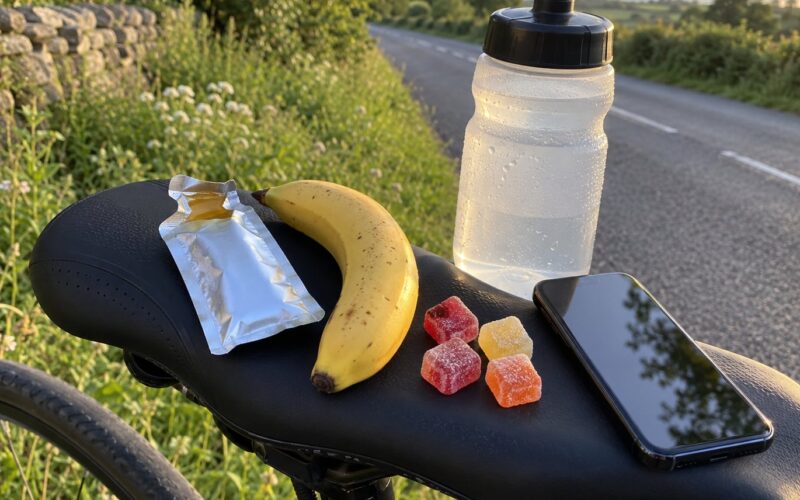
A wind-battered ride is a hard session whatever the distance, because the sustained effort is high and the temperature is low. Drink more than you think, eat earlier than usual, and get carbs in while the ride still has time in it rather than at the end of it.
Take a layer for the ride home if you stripped one off, because you will cool down fast once the headwind turns into a tailwind. A short cool-down and something to eat within the hour matter more after a two-hour slog in a crosswind than they do after an easy spin.
How to Ride in the Wind in a Group
Groups turn an impossible headwind into a manageable one, and the difference is entirely down to the rotation. A group that shares the front properly can hold a pace into a headwind that most of its members could not hold alone.
Rotate in short pulls, around 30 to 60 seconds each, and make the hand-off clean. The rider coming through needs a gap to move into, which means the front rider pulls out and drops back rather than stopping and shoving past. Rotate by ability rather than by order of arrival, so the strong riders are not always the ones doing the hardest 30 seconds against the wind.
Use an echelon when the crosswind pushes everyone toward the same side of the road. Riders line up diagonally, each one tucked into the wind shadow of the rider ahead while still leaving the road space they need. In a group, everyone gets a break from the gusts, and the group also takes less lateral force overall because the front rider is shielding the others.
Communicate. Call the gust before it hits if you can see the tree line bending ahead, and call the turn, the debris and any farm gate that has swung open onto the carriageway. A windy group ride fails far more often from a shouted warning nobody heard than from the wind itself.
Pick the line the group can actually hold. Fighting to stay in a fast paceline on an exposed straight is how groups get strung out and riders end up bridging alone. On a gusty road, a steady echelon or a two-by-two at a sensible speed finishes far more riders than a sprint that nobody can afford.
How to Handle Crosswinds, Headwinds, and Gusts
A headwind blows straight down the road at you, a crosswind pushes across it, and a tailwind works for you. Riders deal with all three, but each one has its own set of adjustments.
With a headwind, everything is about the throttle and the shape. Get low, keep the cadence steady, ride a sheltered line, and accept a lower speed. Drafting is the only real relief, so on a solo ride your plan is fuel and pacing rather than a faster bike.
With a crosswind, the danger is lateral force rather than effort. Your traction is doing a job it was not designed for, and the bike wants to be pushed downwind. Look further into the corner than normal, make your steering inputs early and small, and cross from one side of the road to the other with the handlebars straight, never with a lean. On a descent, sit up and keep a light grip, and stay off the painted lines and off any wet surface where the wind is strongest.
When a gust arrives, absorb it rather than fighting it. Let the bike move underneath you, keep your upper body quiet, and steer into the gust so the front wheel tracks rather than washes. If something loose, a hat or a branch, comes past, tuck low and stay on the bars until it is gone.
A tailwind feels like free speed until it funnels you. The same road that sheltered you on the way out can push you into a corner far faster than you are ready for on the way back, so brake before the turn rather than in it, and expect the crosswind to be worse at road speed than it was at a walking pace.
Common Mistakes
Almost every bad wind ride comes from one of a handful of mistakes, and all of them are fixable once you know to look for them.
Riding upright on the bars. Sitting up in the saddle or on the tops throws away the position that gives you back ten percent or more. Get back in the drops and stay there.
Chasing speed instead of effort. Sprinting down a road that looks flat because the forecast says 12 mph, then crawling through the gusts, is the classic pattern. Settle on a number you can hold and stay there.
Starting too hard into the wind. The first ten minutes feel fine and the rest of the ride falls apart. The wind does not fade, so pace conservatively and use the tailwind to recover.
Ignoring the return leg. An out-and-back in a westerly means a headwind in both directions. Ride a loop, or at least turn early enough to get the wind behind you for the final miles.
Overcorrecting gusts. A big steering input on a gusty road is how riders end up in the hedge. Small, early corrections, and a loose grip on the brakes.
Assuming the road is uniform. Open farmland, seafront, bridges and gaps between buildings all produce wind that the forecast does not describe. Learn the local wind shadows and use them.
Undertaking after a windy effort. Being colder and more depleted than usual is what turns a long ride into a bad afternoon. Eat, drink and layer up for the return.
A few general safety points for strong-wind days. Stay off exposed high ground if you can, and remember that riders have been blown off the road at 12000 feet on Trail Ridge Road with gusts above 50 mph. Choose quiet roads rather than fast ones, because the traffic you meet in a crosswind is the real danger, not the wind on its own. If you are riding with a group, agree a bail-out point before you set off. And if the gusts are stronger than your forecast, turning back early is a good ride, not a failure.
Frequently Asked Questions
What gear should I use when riding in the wind?
For a flat road into a headwind, stay low in the drops and stay in one gear for a long stretch rather than changing constantly. Around 80 to 90 rpm suits most riders and keeps the power smooth. On a hilly route, stay seated and spin rather than standing and grinding, because standing costs you energy for no aerodynamic gain. The gear itself matters less than holding a steady cadence: any gear you can sit in at a high cadence is better than a heavier one you are surging in.
Should I stay in the drops when cycling in strong wind?
Yes, and this is the single biggest saving available on a windy road. Crouching into the drops with bent elbows and a flat back cuts the frontal area you push through the air, and a lower rider position is noticeably calmer in a gust than sitting up on the bars. Two cautions: grip the hoods lightly rather than the tops of the drops if you are nervous, and come up to the hoods for descents or tight urban sections where you need to brake and steer at the same time.
Is it safer to draft directly behind another rider in a crosswind?
Drafting behind a rider still works in a crosswind, but you are now sitting in a blind spot with gusts coming from a direction the rider ahead cannot see. Offset an echelon slightly so everyone has some forward view, and keep enough gap that a gust does not launch you into the wheel in front. Draft as close to directly behind as you can, since a crosswind from the side pushes you out of the shelter. If the road is narrow, or traffic is close, the safety of the gap wins over the saving.
How do I ride downhill when the wind makes the bike feel unstable?
Sit up out of the aerodynamic position, lighten your grip and keep the bike as upright as the corner allows. Feather the brakes rather than clamping them, and look further through the corner so you are not correcting late. On an exposed descent the gusts arrive in patches, often after a hedge or a cutting, so expect the bike to settle and then move again. If it gets genuinely twitchy, take the flat, slower option rather than holding a line you are fighting to keep.
How can a group share the work fairly on a windy road?
Rotate short pulls of 30 to 60 seconds and make the changeover smooth, with the front rider pulling out and dropping back rather than stopping. Order the rotation by ability so the strongest riders are not always the ones pulling hardest, and keep the speed in a range everyone can sustain, because a group that goes too hard in a headwind strands riders one by one. An echelon in a crosswind gives everyone a break from the gusts and lets the group hold a steady, manageable pace.
When is a headwind too dangerous or exhausting to continue?
Turn back when the gusts are stronger than you forecast, when you are being pushed across the road by traffic, or when your effort has crept up without you noticing. Most road riders treat 15 to 20 mph sustained as their personal ceiling, and smaller or lighter riders often cannot hold that. Distance from home matters too: a headwind is easy at ten miles out and miserable at forty. Choosing a sheltered loop or an out-and-back with a planned escape route removes most of the temptation to push on.
Start with the forecast, not the pedals. If the gust figure is high, pick a loop with hedges and buildings to hide behind, leave the deep-section wheels at home, and set a power number you can sit on for two hours. Get in the drops, stay in that position, and let the route work for you. On a good day the wind is just terrain you cannot see.