If you are wondering why do my legs cramp on long rides, the honest answer is that it is rarely one thing. A cramp usually arrives when a muscle that has been working for hours, in heat, at an effort it was not ready for, finally loses the coordination that tells it to relax. Fatigue is the biggest piece, and sweat, sodium loss, position and your own susceptibility stack on top of it.
Plenty of riders fix the wrong problem, drink endless plain water and wonder why nothing changes, or go back to short rides and quietly retire from centuries. This guide breaks the causes down, gives you something to do while the cramp is still happening, and tells you which symptoms belong with a doctor.
Table of Contents
- Why Do My Legs Cramp on Long Rides?
- What Causes Cycling Cramps During Long Rides?
- Muscle Fatigue and Overuse
- Heat, Sweating, Fluids, and Electrolytes
- Bike Fit, Position, and Pedaling Mechanics
- How to Stop a Leg Cramp on a Long Ride
- How to Reduce Your Risk on the Next Ride
- When a Leg Cramp May Need Medical Attention
- Frequently Asked Questions
- How do I stop leg cramps while riding?
- Is a leg cramp a sign of dehydration?
- Do electrolyte drinks actually prevent cramps?
- Does stretching before a long ride help?
- Why do my legs cramp the night after a long ride?
- Should I see a doctor for frequent leg cramps?
- Conclusion: Start With Pace, Position, and Preparation
Why Do My Legs Cramp on Long Rides?
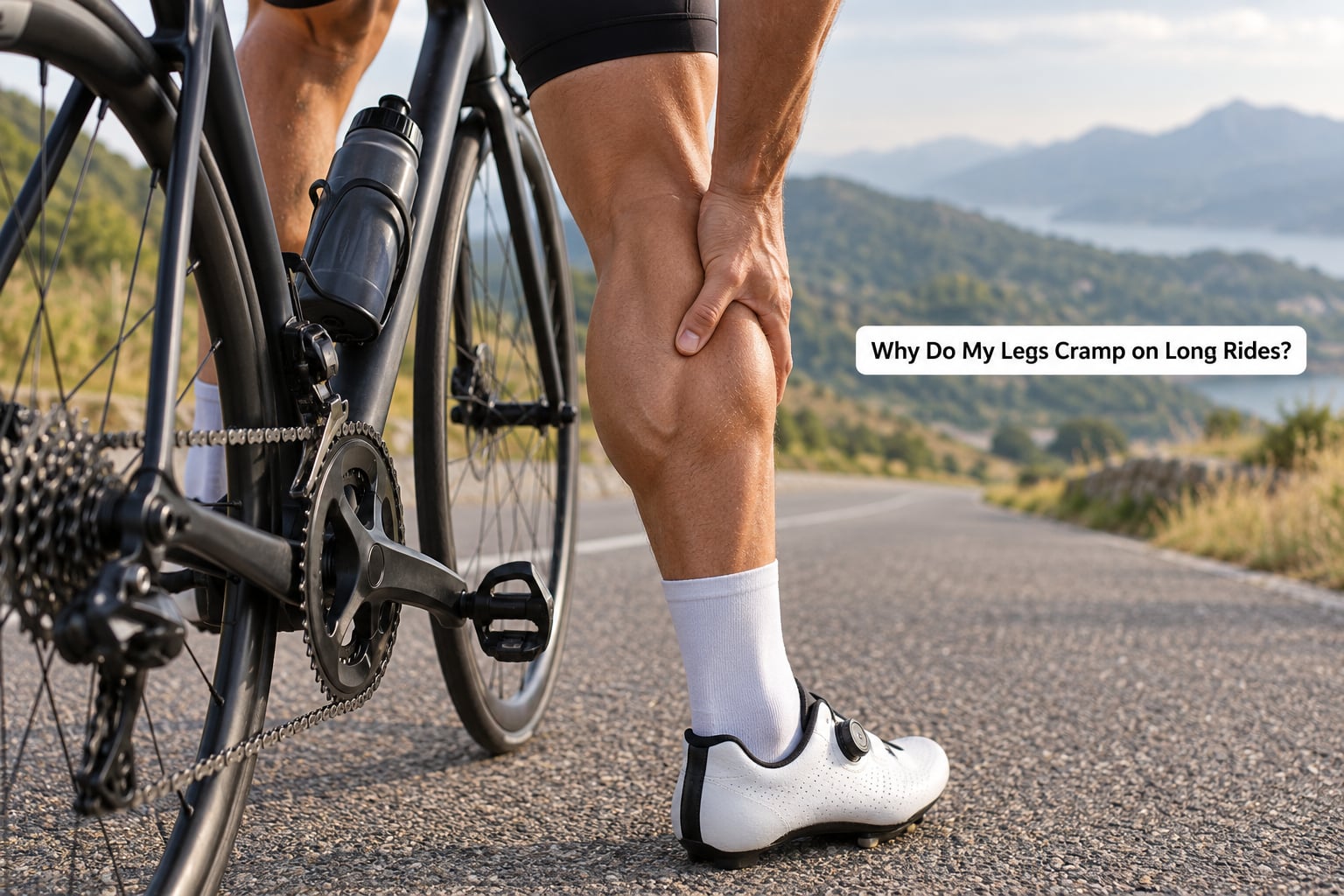
Long-ride cramps usually come from several causes stacked together: muscle fatigue, sustained or excessive effort, heat and sweat loss, an eating or drinking pattern that does not match the ride, awkward positioning on the bike, and your own susceptibility. It is rarely a single mistake like “not drinking enough water.”
It is worth separating two very different sensations. Tightness is a muscle working hard, and it eases when you ease off. A cramp is an involuntary contraction you did not ask for, it is usually painful, and it does not stop just because you want it to.
Exercise-induced muscle cramp is defined as a sudden, involuntary, painful contraction of a skeletal muscle, most often the calf, hamstring or quad. The prevailing explanation is a failure of the nerve-to-muscle signal rather than a simple lack of fluid: the muscle keeps contracting because the signal telling it to let go never arrives.
Why your legs cramp on long rides but not short ones is mostly about time and load. A two-hour spin at an easy pace does not take a muscle anywhere near that threshold. The fourth hour of a century, into a headwind, at a pace you held in the first hour while the temperature climbed, does.
What Causes Cycling Cramps During Long Rides?
Researchers have argued about this for decades and there is no single accepted answer. Most current thinking treats exercise cramp as multifactorial, which means the fix depends on which factors are actually dominating for you. Below are the contributors riders run into most often.
Muscle Fatigue and Overuse
Fatigue is the factor most consistently associated with exercise cramps, and the one riders most often underweight. Muscles that are repeatedly shortened and loaded lose the coordination between the nerve, the junction where nerve meets muscle, and the fibre itself. Once that coordination breaks down, the relax signal gets unreliable.
The pattern is familiar: nothing wrong through the first half, then the calves or hamstrings lock up on the long rise, or during the last hour when you suddenly go harder. Ramping the pace early, holding a stretchy effort uphill, grinding in a low gear, or returning to long rides after weeks off all shorten the distance you can ride before that failure point.
Forums reflect the same split. Riders on bikehub.co.za estimate that the large majority of their own cramping comes from muscles being worked harder than training prepared them for, and a rider on cascadeclimbers.com put fitness ahead of hydration and stretching entirely. That is anecdote rather than evidence, but it matches how the physiology is described.
If your cramps always arrive at roughly the same point in the same ride, the training mismatch is a strong suspect. More electrolytes will not fix a fitness gap.
Heat, Sweating, Fluids, and Electrolytes
Sweat is mostly water, but it carries sodium and smaller amounts of potassium, magnesium and chloride. Riding hot and long means replacing that fluid and some of that sodium, which is why heat turns an ordinary three-hour ride into a cramp ride.
Riders on r/cycling describe self-dosing anywhere from about 250 mg of sodium per hour in mild conditions up to around 750 mg per hour when it is genuinely hot, and say the difference is obvious in summer. That is personal report, not a prescription, and how much you need depends on your own sweat rate and how salty a sweater you are.
The trap here is over-correcting. Drinking large volumes of plain water without replacing sodium can dilute blood sodium further, which is one reason some riders who “fixed” their cramps by drinking more water ended up with the same problem. Hydration drinks exist for a reason, though they are not a cure-all and they do not stop a cramp once it has started.
You do not need to diagnose an electrolyte problem to act on it. Thirst, nausea, dizziness, confusion or unusually dark urine after a long hot ride are all reasons to stop and get help, not reasons to keep drinking from the bottle on autopilot.
Bike Fit, Position, and Pedaling Mechanics
One muscle cramping again and again is a fit and mechanics signal more than a general fatigue signal. A saddle height that is wrong for your proportions, cranks that are too long, cleats set up badly, a locked or floating knee at the top of the stroke, overpronation, or a habit of gripping the pedal can all load one group hard and leave another idle.
Consider the pattern. A cramp that only ever appears in the gastrocnemius and soleus on long climbs, or only in the hamstrings when you are out of the saddle, is telling you something about how that muscle is being used rather than about what you ate for breakfast.
Fit changes are also common triggers, especially after a new saddle, bars or crank. Riders on BikeForums have chased cramps to the bike and found the fix was lowering the saddle by a few millimetres. Change one thing at a time, in small increments, and ride several times before judging it.
How to Stop a Leg Cramp on a Long Ride
A cramp mid-ride is frightening and it rarely ends the ride if you act early. The goal is to take pressure off the muscle, get the blood flowing, and restart gently. Everything below can be done with one hand while keeping the bike rolling or safely stopped.
- Ease off immediately. Back the effort down hard. A cramp in a calf at full power rarely resolves on its own.
- Unweight the pedal. Stop driving that side with force, or coast with the cranks level, and let the muscle lengthen rather than shorten against the load.
- Stretch gently without bouncing. Point the toe toward the shin and hold, or reach for the pedal and pull the heel back slowly. Force makes the muscle guard harder.
- Change position. Stand up, shift your weight, roll the ankle, wiggle the toes. Movement and blood flow help more than anything else.
- Massage the muscle. Firm but not painful pressure along the belly of the calf or thigh works better than gentle stroking.
- Drink and eat something. Fluids plus your usual carb source give you something to work with, though nothing acts instantly.
- Restart slowly. Ease back in at a much lower effort for several minutes before resuming normal pace.
What not to do: do not push hard through a severe cramp in a corner, do not stand up and mash the pedals to shake it out, and do not take supplements, salt or medication on the roadside to fix it. A cramp that keeps returning after a couple of attempts is a signal to turn around.
How to Reduce Your Risk on the Next Ride
Prevention is less about a secret trick and more about removing one variable at a time so you can learn which one is yours. Most riders who cramp reliably past hour three have at least two contributors, and the fastest route is changing one of them for a month at a time.
- Build duration gradually. Step the longest ride up in small increments rather than jumping from a 40 km best to a 200 km event. This is the fix most riders skip, and it is the one that shows up in every forum thread on the subject.
- Ride a sustainable pace. Most cramps appear in the second half, after a first hour ridden harder than planned. Holding back early is unglamorous and it works.
- Warm up before the first climb of the day. Ten easy minutes of spinning and a few mobility reps cost nothing and stop the first-hour tightness that sets the tone.
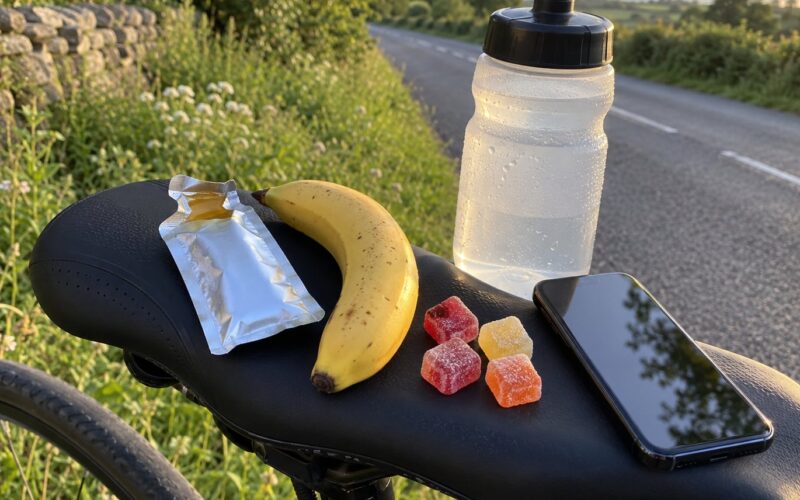
- Fuel at a steady rate. Eating a normal carb source every 30 to 45 minutes beats saving it all for hour four, when your stomach and your legs are both unhappy.
- Drink to thirst and conditions. In cool weather thirst is usually enough. In heat and humidity, plan a drink every 15 to 20 minutes and consider sodium in some form.
- Test the position, not your willpower. If one muscle cramps repeatedly, have a qualified fitter look at saddle height, crank length and cleat setup before you blame your fitness.
- Change one fit variable at a time. Small changes, a few rides apart. Two changes at once tells you nothing.
- Plan for the event, not the training ride. Century and fondo riders who cramp on race day usually cramped in training too, just at a lower intensity.
- Consider strength work. Riders who add calf, hamstring and core work to their week tend to hold up better late in long efforts. This is training, not a quick fix.
- Cool down and refuel after. Post-ride cramps that arrive hours later usually point at a recovery gap rather than the ride itself.
About magnesium and potassium supplements: riders ask constantly, and the honest answer is that the evidence for preventing exercise cramps with them is weak. If you want to take anything, talk to a doctor or a registered dietitian first, especially if you take any regular medication.
When a Leg Cramp May Need Medical Attention
Most ride cramps are a training and pacing problem, and treating them yourself is reasonable. A smaller group of symptoms is not. These deserve a stop and a conversation with a clinician, and some deserve urgent care.
- One calf that is painful, swollen, warm or red. Deep vein thrombosis can look like a cramp in the calf and must be ruled out.
- Cramps that keep happening in the same muscle despite pacing, fueling and fit changes.
- Persistent tightness or contracture that will not release, or a muscle that stays visibly hardened.
- Weakness, numbness or tingling along with the cramp.
- Chest pain, shortness of breath, fainting or confusion during or after a hot ride. These are emergency signs.
- Nausea, headache, chills or very dark urine after long heat exposure, which point to heat illness or a serious fluid and sodium problem.
- Cramps that wake you at night regularly, or cramps that started without any change in your riding.
- Cramps alongside numbness, tingling or balance changes at rest, which can point to nerve or circulation problems.
Some medications are also associated with muscle cramps, including statins, diuretics, some asthma inhalers and osteoporosis treatments. Never stop a prescribed medicine because of a cramp; mention it to your doctor, who can decide whether it matters. A rider on r/cycling who linked chronic cramping to an underactive thyroid is a reminder that the cause can be medical rather than sporting.
This article is general information about cycling and exercise, not medical advice.
Frequently Asked Questions
How do I stop leg cramps while riding?
Ease off the effort, unweight the cramping side and stretch it slowly without bouncing, pointing the toe toward the shin or pulling the heel back to the pedal. Change position, stand up, roll the ankle and massage the muscle firmly. Drink something and eat your usual carb source, then restart at a much lower intensity for several minutes. A cramp that returns after two attempts means turning around, not pushing through.
Is a leg cramp a sign of dehydration?
Not on its own. Dehydration may raise the risk, but the evidence points most consistently at neuromuscular fatigue as the main driver of exercise cramps, and many riders cramp while drinking plenty of fluid. Thirst, dizziness, nausea or unusually dark urine after a hot ride are better signs of a fluid problem than the cramp itself is, and those symptoms mean stopping and getting help.
Do electrolyte drinks actually prevent cramps?
They replace some of the water and sodium you lose in sweat, and many riders find them useful in hot conditions, but no drink has been shown to reliably stop exercise cramps. They work best as one piece of a plan that also includes a sustainable pace and gradual training. Drinking large volumes of plain water without sodium can dilute blood sodium and leave you worse off, so use a mixed drink rather than water alone in heat.
Does stretching before a long ride help?
A few easy minutes of spinning and mobility work can reduce early tightness and help you notice a problem muscle sooner. Static stretching on its own has not been shown to prevent cramps, and a hard stretch before you roll can leave you feeling loose rather than ready. Treat warm-ups as preparation, not as protection, and pair them with pacing and fueling.
Why do my legs cramp the night after a long ride?
Late cramps are usually a different problem from mid-ride cramps. The muscle worked hard for hours and the recovery window may be short, especially if you finished tired and did not refuel. Walk the legs gently, stretch without forcing, take fluids with sodium along with carbs and protein, and keep the legs moving through the evening. If night cramps happen regularly or come with swelling, numbness or weakness, mention that to a doctor.
Should I see a doctor for frequent leg cramps?
Yes, if they are new, frequent, severe, or happening without a change in your riding. A doctor can look at medications, thyroid function, iron and vitamin levels, and circulation, none of which you should self-assess. Definitely seek urgent care for a one-sided swollen, red or warm calf, or for chest pain, breathlessness, fainting or confusion during a ride.
Conclusion: Start With Pace, Position, and Preparation
Slow down the moment a cramp starts, take the weight off that pedal, stretch it slowly and restart easy. Before the next long ride, look hard at three things: the pace you held in the first hour, what you ate and drank, and whether one muscle keeps being the one that gives out.
If cramps are severe, persistent or arriving with swelling, numbness, chest pain or confusion, treat that as a medical question rather than a training one. Everything above is general information, not medical advice.