What to do when you bonk on a ride comes down to four things in this order: get off the racing line, slow way down, take in 30-60g of fast carbohydrate with fluid, and stay very easy until it passes. Most riders recover and finish the ride in 20 to 45 minutes. Some cannot, and knowing which one you are matters more than any gel trick.
A bonk, or hitting the wall, is what happens when the carbohydrate stored in your muscle and liver runs out faster than you are replacing it. Your legs go heavy, your heart rate climbs for the same effort, and the whole thing feels disproportionate to how hard you were working two minutes ago. It usually arrives between 90 minutes and three hours into a ride, though plenty of riders hit it at the same mile every single time.
This guide is general information about fueling and safety, not medical advice. Anyone with chest pain, confusion, fainting, vomiting, or an inability to keep fluids down should stop and get medical help rather than trying to ride it out.
Table of Contents
- What You Need
- Step-by-Step: What to Do When You Bonk on a Ride
- 1. Stop, signal, and assess your symptoms
- 2. Start with fluids and easy carbohydrates
- What to do when you bonk on a ride: adjust the effort
- 4. Decide whether to continue, turn back, or get picked up
- Common Mistakes
- Frequently Asked Questions
- How long does bonking last?
- What to eat when you bonk on a bike ride?
- Can you ride home after bonking?
- How long does it take to replenish glycogen stores after a hard bonk?
- Why do I bonk at the same point on every long ride?
- Conclusion
What You Need
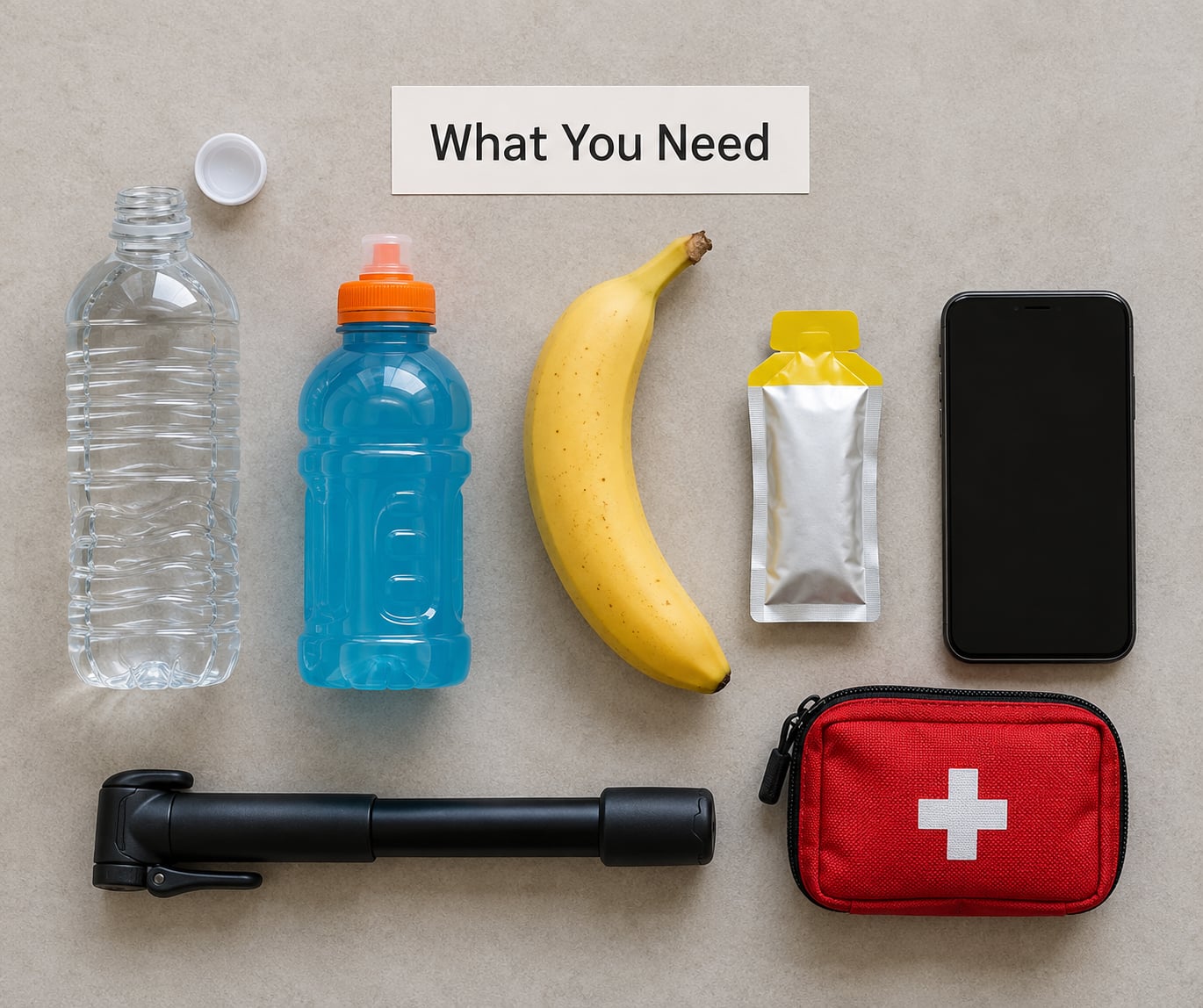
None of this rescue depends on a shop. It depends on what is already in your pockets when things go wrong.
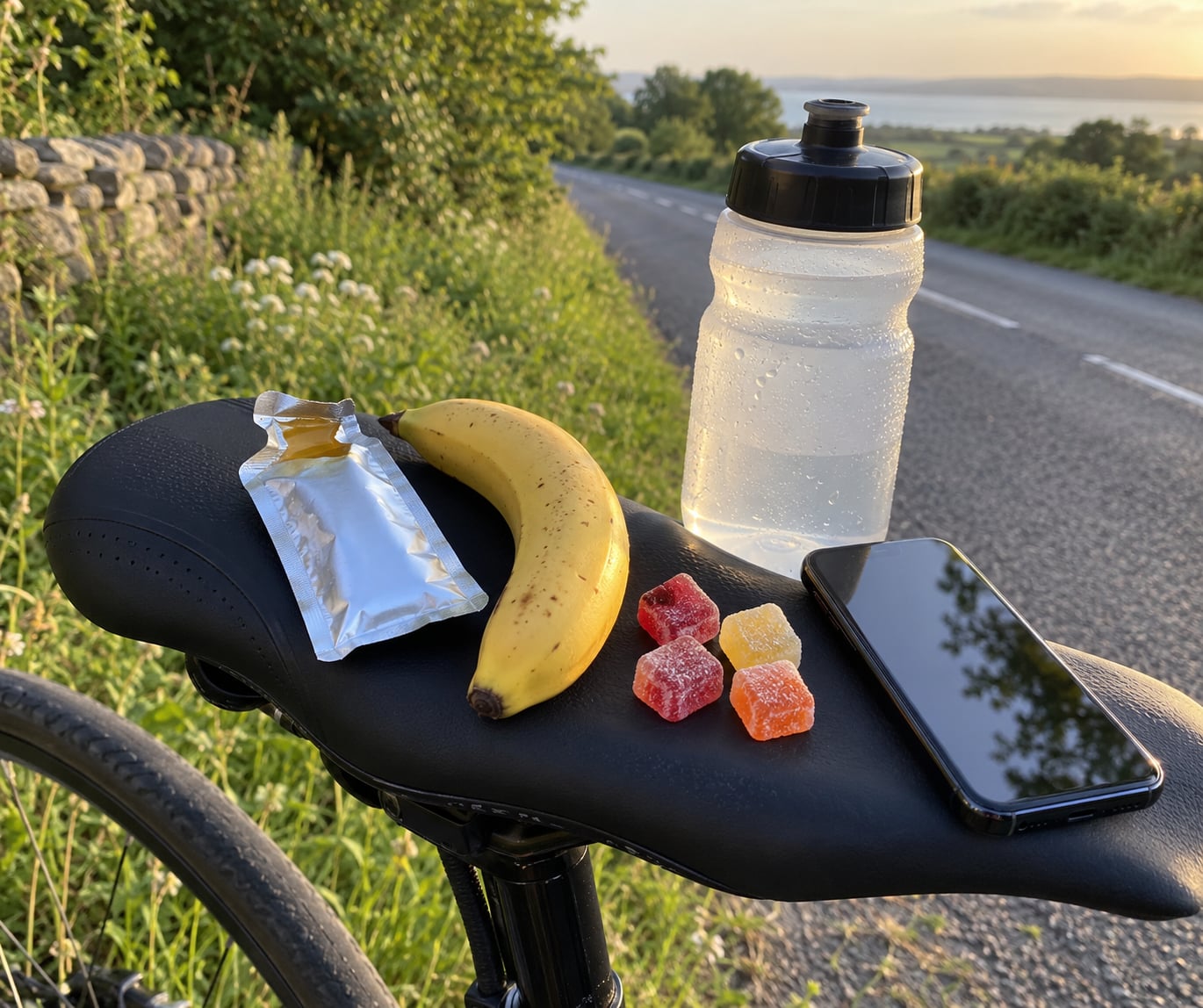
- Fast carbohydrate. A glucose-fructose gel, energy chews, a banana, sports drink, or honestly a bag of gummy sweets. Aim for roughly 30-60g in the first ten minutes, then smaller amounts every 15 to 20 minutes.
- Fluid. One full bottle minimum, more in heat. Drink in small sips rather than gulping.
- A phone with charge and your location shared. The single most useful safety item you carry, and the one riders most often leave flat at home.
- A group contact and a bail-out plan. Know who is behind you, who has a phone, and where the nearest shop, cafe, and house with a phone are.
- Basic tools. A mini pump, tyre levers, and a spare tube, because a mechanical at mile 70 with no fuel is a much worse afternoon.
- ID and a little cash. Enough to buy a bottle of drink and a bag of chips at the corner shop.
Step-by-Step: What to Do When You Bonk on a Ride
1. Stop, signal, and assess your symptoms
Pull fully off the road or onto a verge, out of the sight line of any driver who might not see you. If you are in a group, the group should stop too, or at least wait for you, because a rider quietly dropping off the back is the rider who ends up alone on a dark road.
Then take stock. Ordinary bonking feels like heavy legs, a high heart rate at an easy pace, and an urge to put everything away. Ordinary tiredness does not. The symptoms below are not a bonk, and they mean stop now and get help rather than eating a gel.
- Chest pain or pain spreading to your arm, jaw, or back
- Confusion, blurred vision, slurred speech, or seeming unusually drunk
- Fainting, or a racing heart that does not settle when you sit down
- Vomiting, or being unable to keep water down
- Headache with nausea and dizziness in high heat
- A headache that comes with confusion, which in long hot rides can signal over-drinking rather than not drinking enough
2. Start with fluids and easy carbohydrates
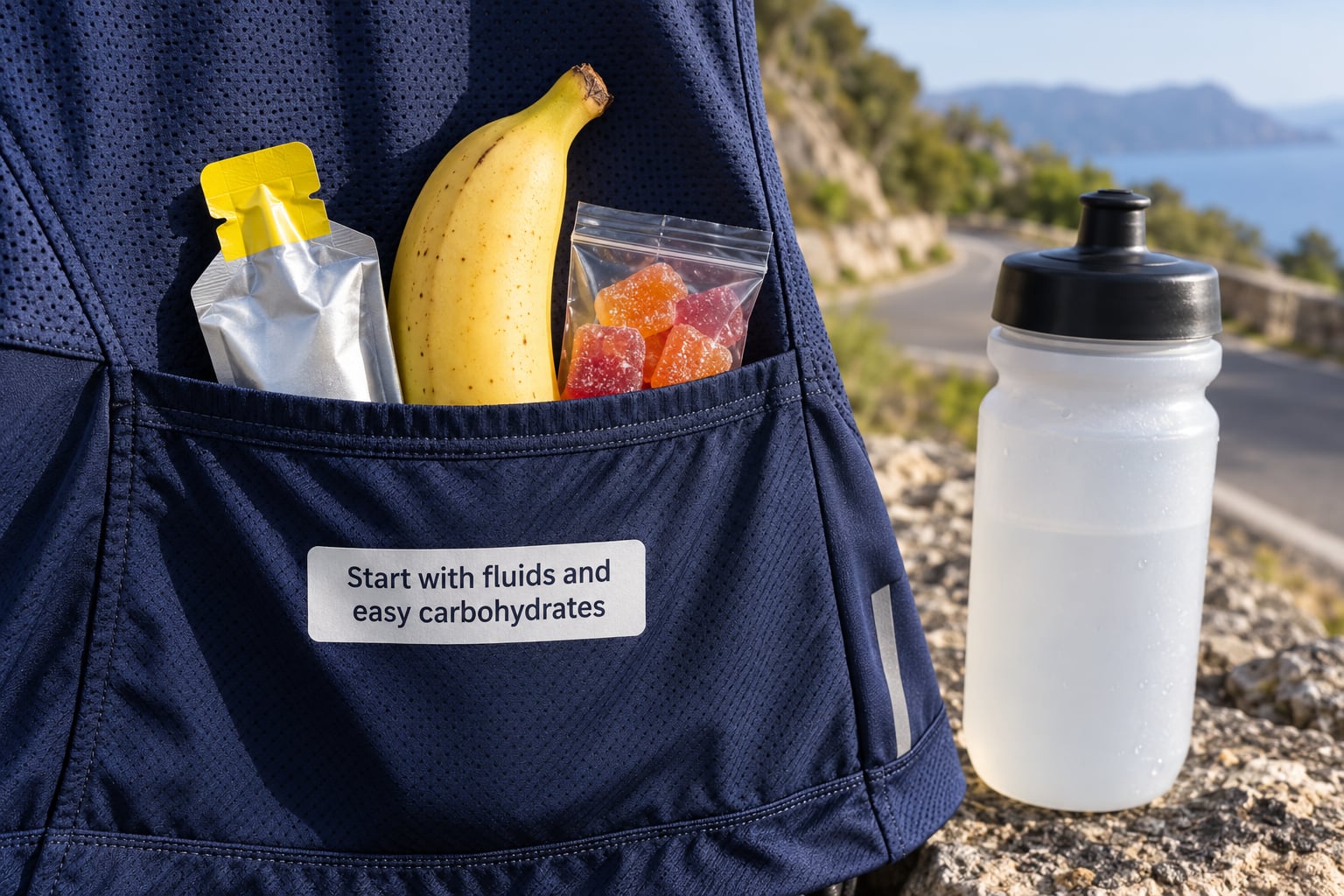
Drink first, in small sips. A few hundred millilitres of water or electrolyte drink settles the stomach and gives the carbohydrate something to travel in. Then start eating, and eat in small pieces rather than one large hit.
Aim for 30-60g of fast-acting carbohydrate in the first ten minutes, then 30g or so every 15 to 20 minutes until you feel normal again. Gels and chews work well because they are small and go down without chewing. So does sports drink, though you have to drink a fair bit of it to get the grams in. A banana is fine. A chocolate or candy bar works, but the fat slows digestion, so pair it with water.
What you will not do is sit down and eat a full sandwich. Heavy food, especially with fat in it, sits in the gut and makes the whole situation worse. Small and often beats big and once.
What to do when you bonk on a ride: adjust the effort
Back the power right off. Ride at a pace you could hold while holding a conversation, drop your cadence, sit up, and stay off the front wheel. No surges, no chasing the group, no attempt to ride it out hard.
Lowering effort is what actually lets the fuel you just took in do its job. Every rider who has gutted out a bonk at pace reports the same thing afterwards: it took far longer than it would have if they had simply sat up and spun for a while.
Most riders start to feel clearly better somewhere in the 20 to 45 minute window, and the last stretch of the window is the dangerous one, because you will feel almost fine and be tempted to rejoin the pace. Do not. Give it another 20 minutes of easy riding before you do anything ambitious.
4. Decide whether to continue, turn back, or get picked up
Somewhere in the recovery window you have to make a call. The questions that decide it are short and practical.
- Can you pedal smoothly and hold a conversational pace without your legs shaking or your vision changing?
- How far are you from home, a shop, or a cafe? And how far from the group or support vehicle?
- Is it hot, or is the weather turning?
- Did your symptoms shift rather than improve, or is there a symptom from the red-flag list above?
If you can ride easy and the symptoms are easing, roll the rest home slowly. If you cannot hold an easy pace, if you are far from anywhere with people in it, or if the weather is against you, call it. Turn back, or ask a support driver or riding partner to sweep you up. Turning back from a 60-mile ride with a bad bonk is a good day, not a failure.
Nobody is ever impressed by a rider who wrecked themselves on an empty road trying to prove something. Send a message to whoever is expecting you, tell them the plan, and then make the safe call.
Common Mistakes
Waiting to see if it passes. The most common one, and the reason the same riders bonk at the same mile every time. A bonk caught in the first five minutes of warning is usually a 20-minute detour. A bonk caught an hour late can end the ride.
Sipping only water. A litre of plain water in a hot ride does not fix anything on its own. You need carbohydrate and salt together, which is what electrolyte drink and salted gels provide.
Drinking too much, too fast. Swallowing a full bottle at once is how riders end up feeling sick and foggy. Small and regular, and if your hands are swollen or your head is pounding, stop drinking for a while and eat something with carbohydrate in it.
Sitting down for a full meal. The fix for a bonk is simple carbohydrate in small amounts, not a large sit-down feed. Fat and bulk both slow things down.
Jumping straight back into the pace. Feeling better is not the same as being recovered. The second half of the recovery window is where most riders undo the first half.
Hiding how bad it is. Quietly peeling off the group to suffer alone is how rides go wrong. Say it out loud, to the group or to one person, and let someone know where you are and when you expect to arrive.
Forgetting that it can happen again. One rider in a group of four bonking at 40 miles is usually a fueling mistake. The same rider bonking on consecutive long rides is often under-fueling across the whole day, or riding the first two hours far too hard.
Frequently Asked Questions
How long does bonking last?
Most riders who catch a bonk early feel clearly better within 20 to 45 minutes of eating and riding easy. The feeling tends to lift gradually rather than all at once, and the last part of that window is where people overdo it. A bonk that hits hard, or that is ignored for a long time, can leave you flat for the rest of the day. If you are not improving steadily, or symptoms are changing rather than fading, stop and get picked up.
What to eat when you bonk on a bike ride?
Fast, simple carbohydrate in small amounts: roughly 30-60g in the first ten minutes, then about 30g every 15 to 20 minutes. Gels, chews, sports drink, a banana, or a candy bar all work. Sip fluid with it rather than drinking a bottle at once. Avoid a large sit-down meal, because fat and bulk slow digestion when you can least afford it.
Can you ride home after bonking?
Often yes, but only if you can hold an easy conversational pace and your symptoms are improving. Ride slowly, keep sipping and eating small amounts, and turn back rather than pushing on if you are far from anywhere. Do not ride home if you have chest pain, confusion, fainting, vomiting, blurred vision, or cannot keep fluids down. Get picked up or call for help instead.
How long does it take to replenish glycogen stores after a hard bonk?
Glycogen takes time to refill and depends on how empty you were. Eating carbohydrate in the hours after the ride helps, and most riders feel close to normal within a day or two. Hard bonks are commonly followed by a day or two of flat legs, so keep the next day’s ride easy. Anyone with ongoing symptoms after a bad bonk should speak to a doctor rather than treating it with more food.
Why do I bonk at the same point on every long ride?
It usually means your fueling rate is slightly too low for the demand, and the shortfall only becomes visible once stores dip below a threshold. Eating later and smaller than feels necessary is the usual culprit. Try taking small amounts earlier, carry more fuel than you think you need, and ride the first two hours more gently. If it keeps happening despite that, mention it to a doctor or registered dietitian.
Conclusion
Get off the road first, then tell someone. Sip fluid, take 30-60g of fast carbohydrate in small portions, and drop your effort to a pace you could hold while talking. Give it 20 to 45 minutes, and stay easy even after it passes.
If you cannot hold an easy pace, if you are a long way from anywhere, or if any of the red-flag symptoms show up, get picked up or turn back. Riding home slowly beats being stranded.