If you get dropped on a group ride, the answer is short: stop somewhere safe first, check the bike and yourself, send the group a message with your location and plan, and then pick the most conservative route to the regroup point or home. Do not chase the group. The gap only widens when you accelerate from a standing start into headwind and fatigue.
Almost every club rider gets dropped at some point. Riders who handle it well are back riding within a week, and most of them close the gap within a season. Riders who spiral, ride home angry, and never return give up the fastest way to get stronger.
What follows is a recovery plan rather than a pep talk: what to carry, an ordered response for the first hour, how to decide between regrouping and turning back, and how to ride the route alone without turning one bad moment into a genuinely dangerous one.
Table of Contents
- What You Need
- Step-by-Step: The First Hour After the Group Rides Away
- 1. Stop in a Safe, Visible Place
- 2. Check Your Bike and Your Body
- 3. Contact the Group Instead of Guessing
- 4. Decide Whether to Regroup, Turn Back, or Continue
- 5. Choose a Conservative Route Home
- Common Mistakes That Turn a Drop Into a Bad Day
- Common Mistakes When You Get Dropped on a Group Ride
- Frequently Asked Questions
- Should I try to catch the group after I get dropped?
- How do I tell my group that I was separated?
- What should I do if I get a flat alone?
- Can I finish a group ride by myself if I feel okay?
- What if there is no cell service on the route?
- When should I call for emergency help after being dropped?
- Conclusion: Stop, Check, Contact, Choose
What You Need
Every item on this list exists because being dropped strips away the two things a group normally supplies: other riders’ eyes and other riders’ help. Pack it before the ride, not after the gap opens.
A charged phone. It is your navigation, your communication and your emergency contact all in one. A phone at 8 percent is a phone you do not have. Airplane mode on a map screen still tracks your position without draining the radio.
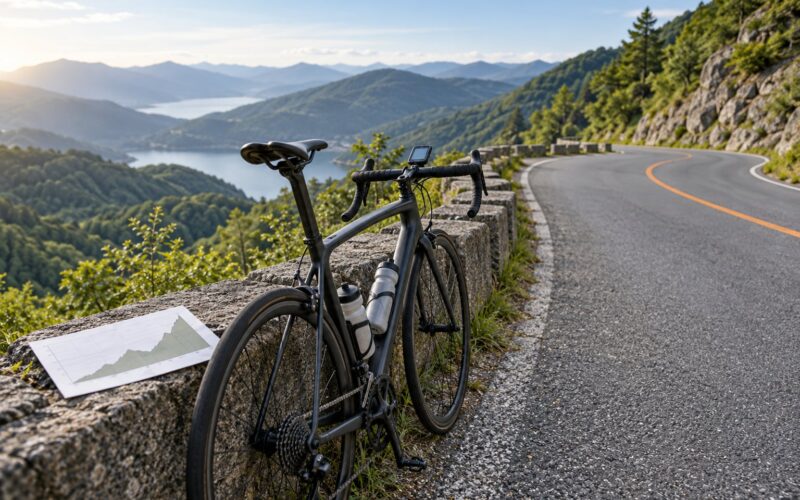
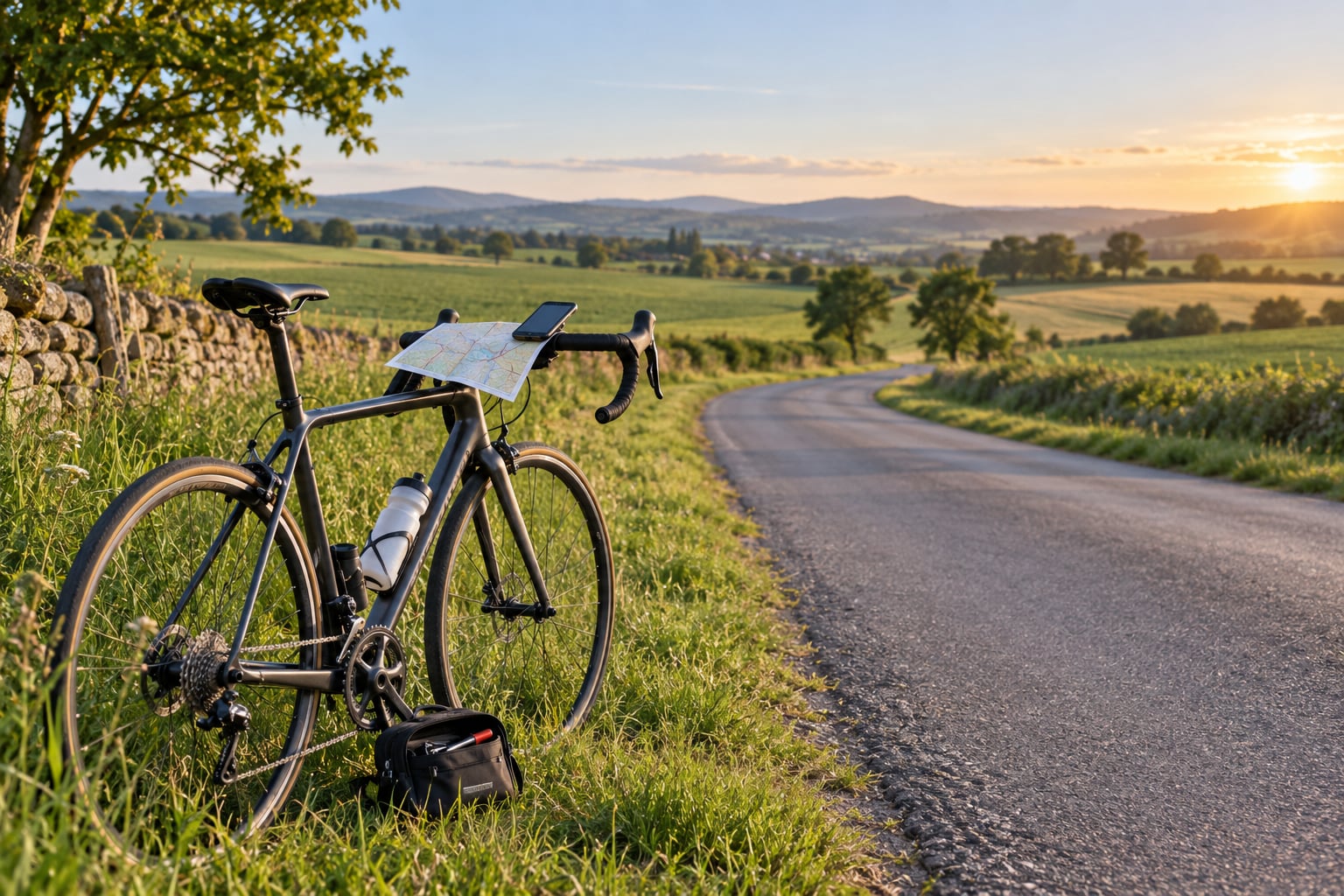
A route you can read without signal. Download the ride file to your phone before you leave, or carry the paper route the club used. Offline maps matter most in exactly the places where riders get separated, because those are the valleys and forest sections with no bars.
Two bottles and food. Dehydration and low blood sugar cause a surprising share of drops, particularly on a long climb. Being alone means nobody notices you have gone quiet and slow.
Spare tube, tyre levers and a pump or cartridges. A quick-release style tubeless setup is even lighter, but the rule is the same: the kit has to be in your saddle bag, not in a jersey pocket on a rider who is 300 metres ahead.
Identification and an emergency contact. A roadside assistance card, a club card, or a card in your wallet with one phone number saves a long conversation with a 911 operator.
The regroup points and the route. Know where the group is supposed to re-form and how far apart those points are. Riders describe losing contact because nobody was quite sure whether the next town was a regroup or a café stop.
The ride leader’s number and a sweeper’s number. If your club has a designated last rider, message them first. If it does not, that is worth raising with the club.
Step-by-Step: The First Hour After the Group Rides Away
The sequence below is deliberate. Stop, check, contact, choose. Doing them in a different order is how a recoverable gap becomes a bad afternoon.
1. Stop in a Safe, Visible Place
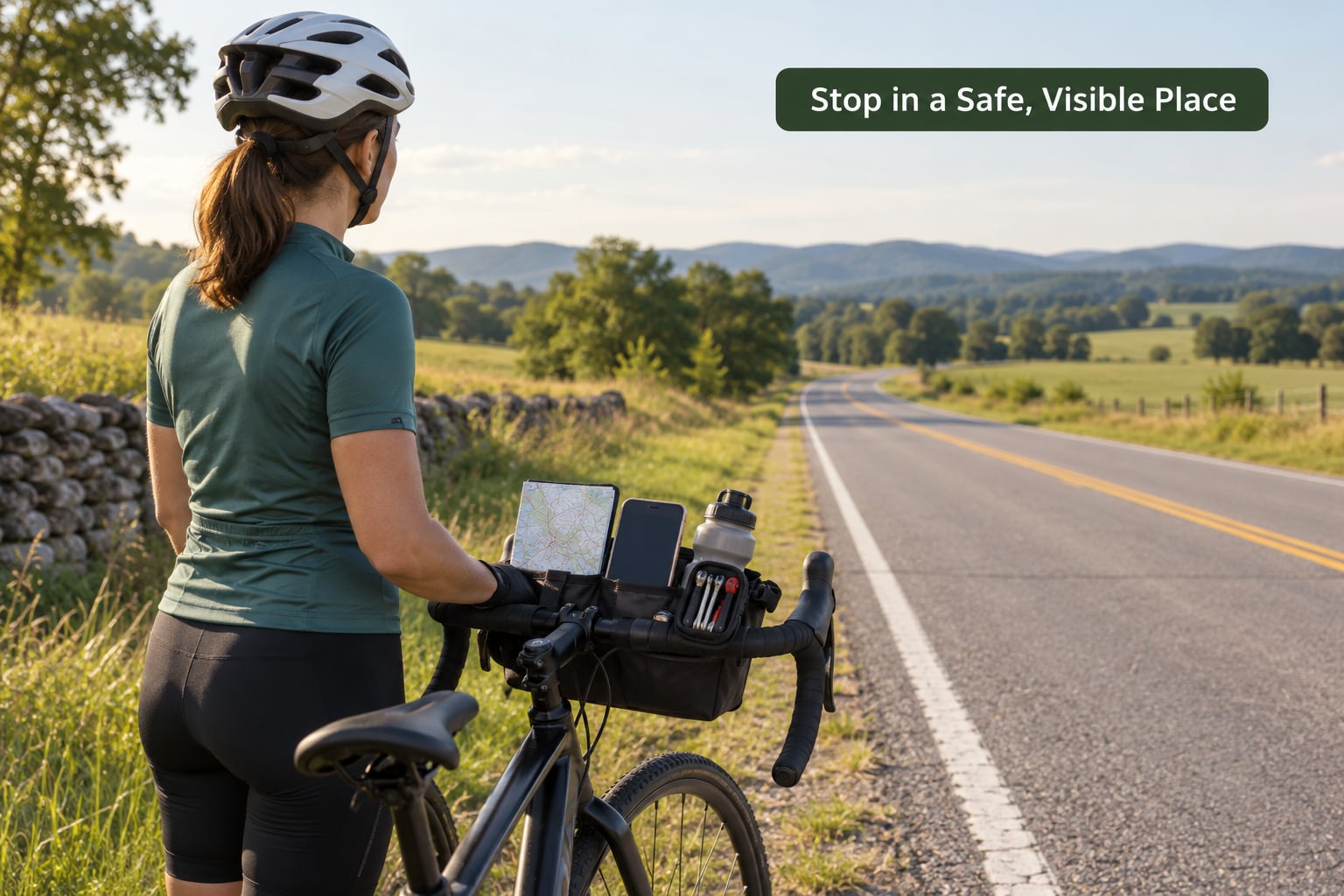
Get fully off the roadway before you do anything else, including reading your phone. On a fast road with no shoulder, the safest option is often the nearest driveway, farm gate, lay-by or side street, even if it means walking the bike the last stretch.
Do not cut across traffic to reach a verge. Signal with an arm, keep the bike between you and the nearest lane where you can, and never sit in a blind corner or just past a crest where a driver would not expect a rider.
Descents and intersections are where riders get hit. If you have to stop on a bend, go as far off the road as physically possible. On roads with no shoulder at all, treat the stop as a short pause to get your bearings, not a place to sit and think.
How do you know the spot is good? You can stand up, look in both directions for 100 metres or more, and be seen by someone approaching from behind. If the answer is no, move.
2. Check Your Bike and Your Body
Before you assess whether you can ride on, assess whether you should. Run through it in this order: did you clip a wheel or crash, and is anything sharp or bent; can you stand, put weight on both legs, and turn your head normally; and does the bike hold air and track straight.
Overheating, dizziness, nausea and a headache that builds on climbs are all signs that you are past a sensible solo effort. If the roadside is quiet and shaded, sit down, drink, eat something with sugar in it, and give it 15 to 20 minutes before deciding.
A puncture does not have to end the ride, but a cracked rim, a loose fork, a broken chain or a buckled derailleur usually does. Trying to ride a damaged wheel on a group route, alone, in the dark, is a bad trade. If you have any doubt about structural damage, call for a pickup.
Anyone with a head knock, chest pain, unusual breathlessness or a deformity should not get back on the bike under any circumstances. Get medical help, and let somebody know where you are. Trust the pain, not the schedule.
3. Contact the Group Instead of Guessing
The single most useful thing you can do in the first five minutes is send a message. A rider who cannot be found is a rider the group is still searching for, and searching takes the whole bunch out of the ride.
Keep it to four things: where you are, which way you are facing or travelling, what the problem is, and what you plan to do next. For example: “Dropped at the bottom of the Col, mile 42, north side of the junction. Puncture, have kit. Taking the coast road back toward town, will aim for the cafe in about 90 minutes. Don’t wait for me.”
Send it to the ride leader, then to the ride text group or chat, then to the sweeper if your club has one. If the leader sent the route to a tracking app, your trace appears there too, which is the most useful signal of all.
Protect the battery. Airplane mode with maps on, screen brightness down, and a low-power charge pack in the saddle bag are worth more than three bars on a phone held at full brightness. Screenshots of the route take seconds and cost nothing.
If nobody replies within about 20 minutes, assume the group is riding on. That is your cue to plan for yourself rather than waiting at a junction for riders who are not coming back.
4. Decide Whether to Regroup, Turn Back, or Continue
Three options exist, and only one of them is right for your situation. Weigh distance behind the group, terrain ahead, weather, remaining daylight, phone signal, the mechanical state of the bike, how you actually feel, and whether you have water and help nearby.
The safest option is often not the fastest one. Being passed by the group at 10 km/h with a flat is not a regroup, it is a near-miss at speed. If you cannot catch them cleanly, turn around instead.
A worked example. It is 11:40, you are 15 km behind the group, 45 km from home, the forecast has rain arriving by 14:00, you have half a bottle of water, and your legs are heavy but steady. Chasing costs you more than 40 minutes of hard riding into building weather with no drink. The right call is to turn, take the mapped back route, message the group, and ride home at an easy pace.
Change that example by one fact: you have 1.5 litres of water, no rain, and the next regroup point is 20 km ahead. Continuing at a conservative pace is reasonable. Same rider, same bike, different circumstances, opposite decision. Context decides, not pride.
5. Choose a Conservative Route Home
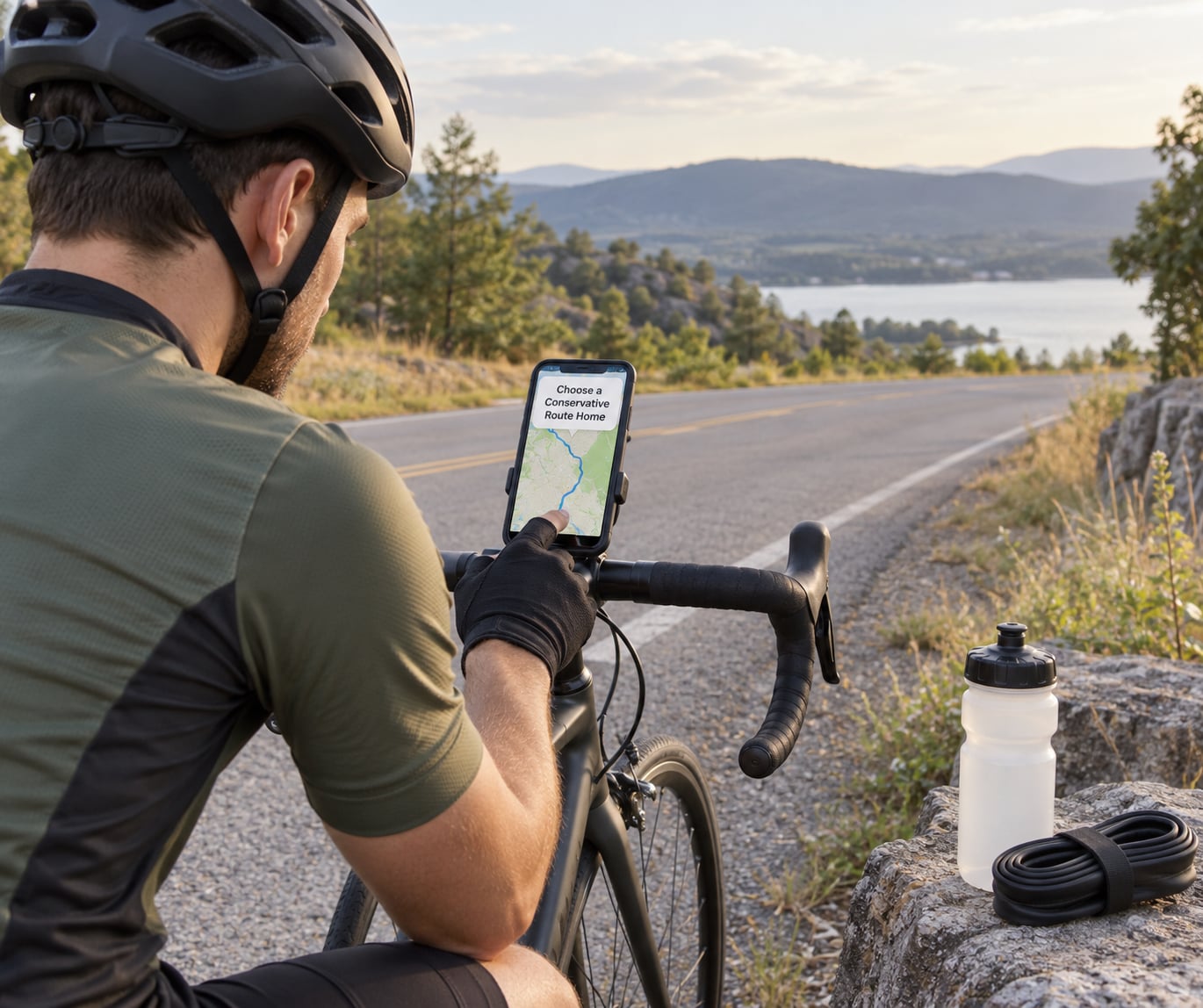
Ride roads you know or roads the map clearly labels. Avoid the shortcut a friend mentioned once. A solo rider who takes an unfamiliar turn at a 90 km/h entry loses the ability to course-correct, and the recovery time is measured in hours.
Share the route before you roll, not after. A single message with your planned turn-off point and expected arrival time lets a partner or the ride leader know when a missing rider is genuinely missing.
Set a stopping rule before fatigue makes the decision for you. Pick a time or a distance checkpoint where you will reassess honestly, and treat that as fixed. Turning back early from a good day beats finishing at dusk with nothing left in the legs.
If the battery dies or the map fails, fall back on paper: stay on the main road, ride toward towns and fuel, and keep the phone switched off so it holds charge for emergency calls. A dead phone cannot call anyone, and a road you can name is still a road you can navigate.
Headlights come out when the light goes, not when it starts to look dim. Most club rides finish after sunset in summer, and a dropped rider is frequently the one still out after dark.
Common Mistakes That Turn a Drop Into a Bad Day
Almost every bad outcome after being dropped traces back to one of five errors. Each has a straightforward correction, and all five are avoidable in the first minute after the gap opens.
Sprinting to catch the group. You are at the back of a line strung out on an open road, in and out of the saddle, with no draft. Chasing burns the exact reserve you need for the next twenty minutes of steady riding. The correction: settle into a smooth seated pace first, and only consider a catch attempt on flat, sheltered road with a real tailwind behind you.
Riding in a direction nobody confirmed. The group went right, you assumed left, and now you are on an unfamiliar route with no plan. The correction: your route file and the messages you sent are the authority, not your memory of a junction you passed at speed.
Continuing through injury or mechanical damage. Riders push on because finishing feels better than aborting. The correction: a bent wheel, a cracked frame area, a head knock, or a brake that pulls to one side is a pickup, not a problem to ride around.
Telling nobody. Silence is the one option that makes the group worry and the road more dangerous at the same time. The correction: one message, four facts, sent immediately.
Depending on a phone until it dies. If your whole plan runs through an app, a flat battery ends the plan. The correction: paper backup, airplane mode for navigation, and a power bank that actually lives in your bag.
Prevention is less dramatic and works better. Ride with a club whose advertised pace matches yours, and remember that advertised average speeds are unreliable because the same group cruises at 25 km/h on the flat and 12 km/h on the climb. Tell the leader at the start that you would like to sit nearer the back, and ask who the sweeper is. Stay within a wheel or two of the wheel ahead rather than trailing by car length, and pick up through corners instead of coasting.
On climbs, ride your own pace and let the group come back to you rather than sprinting to hold the wheel. Half-wheeling, where you accelerate past the rider ahead so they can follow your faster pace, is one of the fastest ways to get dropped and is disliked by everyone except the rider doing it.
Common Mistakes When You Get Dropped on a Group Ride
The errors above are technical. The one that ends most rides is emotional, and it starts before the group is even out of sight.
Being separated triggers shame fast, because riders often assume the failure is personal. A rider posted on r/cycling that it is better to ride with people for a while and then get dropped than to ride alone all day. A poster on r/ladycyclists put it more directly: getting dropped is not a failure, it is part of the process of becoming a better rider.
The pressure is real. If you are two hundred metres back and your instinct is to burn everything to close it, that instinct has produced more roadside incidents than any mechanical. A short phrase keeps you deliberate: stop, assess, contact, choose. Say it to yourself and the panic loses its grip.
Nobody in a well-run club holds a dropped ride against you. The riders who get dropped repeatedly are the ones chasing on the far side of a junction with no light, not the ones who sent a message and rode home safely.
Frequently Asked Questions
Should I try to catch the group after I get dropped?
Usually not. A chase from the back of the road means riding out of the saddle, into wind, without a draft, and it usually widens the gap. Settle into a smooth seated pace first, send the group a message, and only attempt a catch on flat, sheltered road with a tailwind. If you are genuinely still climbing hard and they are just out of sight, staying steady is the best chance you have.
How do I tell my group that I was separated?
Message the ride leader first, then the ride text group, then the sweeper. Include four things: your location, which way you are travelling, the problem, and your next move. A message ending with do not wait for me stops the group from burning time searching. If the club uses a ride-tracking app, your phone trace tells them where you are without you having to describe a junction.
What should I do if I get a flat alone?
Get off the road first, then assess. A simple road puncture with a spare tube and levers is usually fixable in ten minutes. A tubeless setup often just needs top-up air and a plug. A cut sidewall, a cracked rim, a broken spoke in a dangerous place, or a bike that will not hold air ends the ride where it stands. Message the group, then call your pickup or roadside assistance.
Can I finish a group ride by myself if I feel okay?
Yes, plenty of riders do. A conservative self-paced finish is a good outcome and many clubs treat it as expected. Set the pace well below your maximum, choose mapped roads you know, share your route and arrival time, and keep sipping fluids. Carry lights if you might finish after dark. If your energy is fading rather than steady, turning back early is the smarter version of finishing.
What if there is no cell service on the route?
Plan for it before the ride. Download the route file for offline use, know the regroup points, and carry the paper route. If you are already separated with no signal, do not wait by the roadside hoping. Get onto a main road toward fuel and people, ride at an easy pace, and conserve battery in airplane mode with maps on. Signal returns most often near towns and main roads.
When should I call for emergency help after being dropped?
Call immediately after a crash if you have a head knock, chest pain, unusual breathlessness, numbness, a deformity, or a loss of vision. Call if the bike has structural damage that makes riding unsafe, if you are in a remote area with no signal, or if you are too exhausted to continue safely. Calling is never the wrong call. Nobody would rather have you ride a damaged bike home.
Conclusion: Stop, Check, Contact, Choose
When you get dropped on a group ride, the plan is short enough to remember while your heart is going: stop somewhere safe off the road, check the bike and your body, contact the group with your location and plan, then choose the most conservative route to the regroup point or home.
Nobody owes a group ride more than their ability allows, and nobody should hide an injury to protect a reputation. Ride the conservative route, message the leader, then bring the debrief to the next ride: the climb where the pace broke you, the wheel gap that cost you nothing, the section where you had nothing left in the tank. Those notes close a gap faster than any sprint ever will. Updated for October 2026.