Confidence on a bike is not a personality trait you either have or lack. It is a set of repeatable habits you train in a specific order, and most riders who feel nervous today are a handful of good rides away from feeling ordinary. If you are searching how to build cycling confidence as a beginner, the honest answer is that it is mostly a matter of order and repetition rather than talent. This guide, updated for 2026, walks through that order: set the bike up so it is easy to control, drill the handful of skills that actually matter, then ride short familiar routes before you take on traffic or other people.
It helps to know what you are dealing with. Weight and speed of traffic is what makes roads feel lethal, not hills or distance, and that fear is common enough that whole threads on r/cycling are devoted to it. Adult-learners who never touched a bike as a child describe the same thing: the first twenty minutes are pure concentration, then something clicks and the road stops feeling enormous.
Table of Contents
- What You Need: How to Build Cycling Confidence as a Beginner
- Step-by-Step: Seven Stages From Wobble to Group Ride
- 1. Set the bike up for control
- 2. Practice stopping and starting predictably
- 3. Build cornering and descending skills
- 4. Learn shifting, climbing, and pacing
- 5. Ride a short, predictable route
- 6. Practice basic road position and awareness
- 7. Join an easy group ride
- Common Mistakes That Cost Beginners Their Confidence
- Starting too fast
- Holding onto a car
- Riding the pavement out of habit
- Buying a drop-bar bike first
- Comparing week one with someone else’s year five
- Riding when you should stop
- Frequently Asked Questions
- How long does it take to feel confident cycling?
- What is the easiest road-cycling route for a beginner?
- Should beginners ride hills or stay on flat roads?
- How can I feel less nervous in a group ride?
- What should I do if I am afraid of descending a hill?
- How do I regain confidence after falling off my bike?
- Conclusion: The One Thing to Do First
What You Need: How to Build Cycling Confidence as a Beginner

Start with the bicycle. For a nervous rider the best choice is an upright flat-bar bike with wide tires, flat pedals and a saddle low enough that both feet reach the ground while you are stopped. Experienced riders recommend flat pedals on almost any frame while you are learning, and lowering the saddle is the single most repeated setup advice in beginner threads.
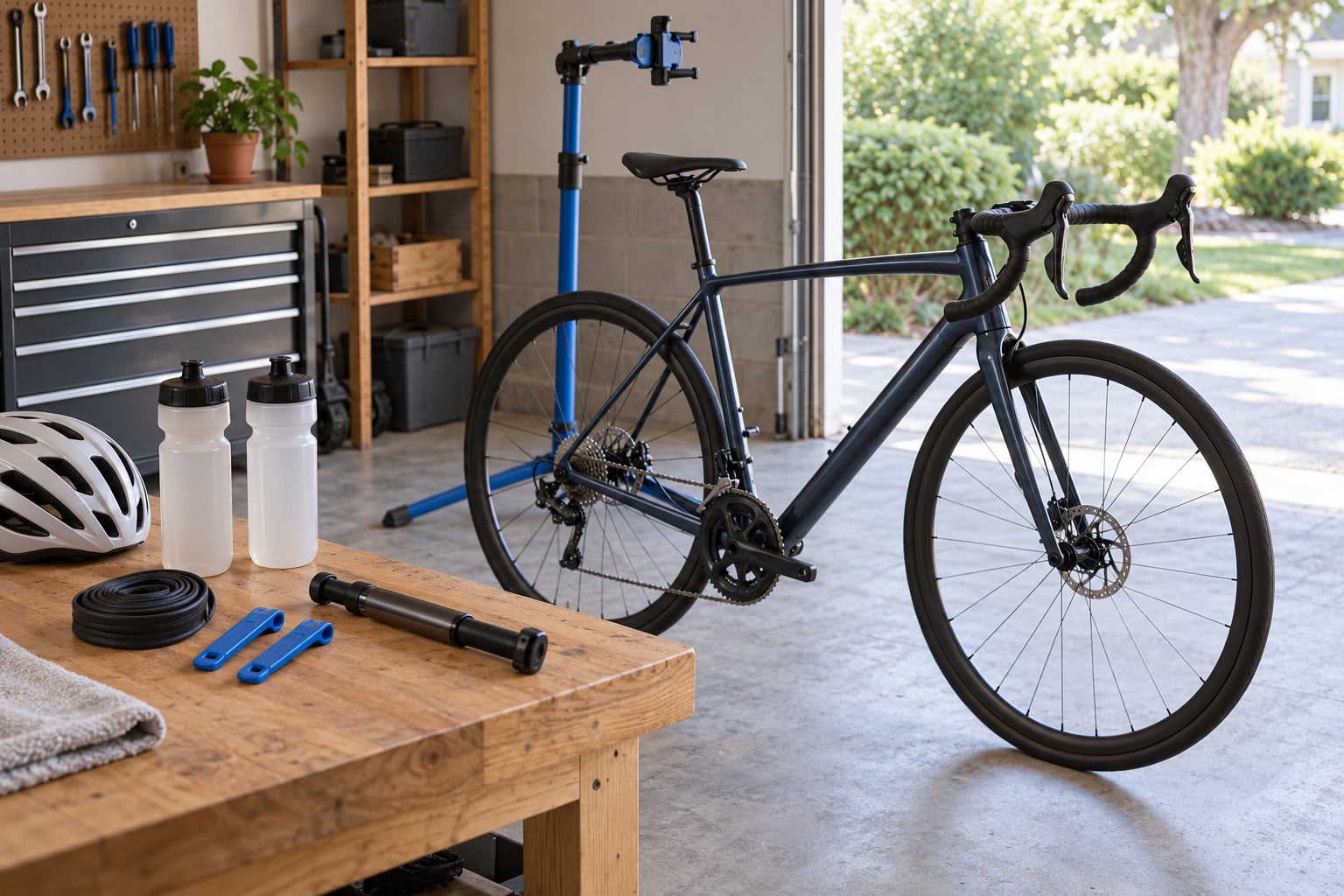
Spend a little money on a tune-up at a local bike shop before your first ride. A worn brake pad, a loose headset or a saddle pointing sideways will wobble underneath you, and your body reads that wobble as fear. Ask the shop to set the saddle so your knee has a slight bend at the bottom of the pedal stroke, and check that the handlebars line up straight with the frame.
Then the small kit. A properly fitted helmet, a bright front light and a flashing rear light, a bell, and a flat repair kit with tire levers and two tubes. Riders on r/cycling single out the rear light as the upgrade that made the biggest difference to how safe they felt; others say a rear light plus early morning or early evening rides solved most of their worry.
What you do not need is an expensive bike or a coach. A local ride leader, a simple loop you have scouted, and twenty minutes of practice in a quiet car park will carry you further in the first month than any upgrade. Ask your shop or club about routes, because experienced riders genuinely enjoy sharing them.
Step-by-Step: Seven Stages From Wobble to Group Ride
1. Set the bike up for control
Check tire pressure, squeeze both brake levers hard, look for a rusty chain, and confirm the saddle sits level with the bike on the ground. Roll the bike forward and make sure the front wheel spins freely with no rub.
You are ready for stage two when you can ride for two minutes in a straight line at walking pace and put a foot down without wobbling. A setup problem feels exactly like a nerves problem from the saddle, so fix the setup first.
2. Practice stopping and starting predictably
Use both brakes smoothly rather than stabbing one. Look ahead, not down at the front wheel, and stop in a controlled straight line with the bike upright rather than weaving or leaning.
Practise starting on a slight incline with the bike in a low gear, which keeps both feet on the ground longer and removes the awkward lurch that most beginners dread. Success looks like stopping ten times in a row at the same imaginary kerb without a wobble.
3. Build cornering and descending skills
Brake before the turn, not in it. Pick a line you can see through the corner, keep the inside pedal up and the outside pedal weighted down, and look past the apex to where you want to exit.
Descents get their reputation from speed, not gradient, so first repeat a short familiar descent on a quiet road in the early morning. Ride the brake levers in short squeezes instead of holding one, and stay behind any vehicle with more room than feels necessary.
4. Learn shifting, climbing, and pacing
Shift one gear at a time and only when the pedals are turning easily, never under heavy strain or while braking. Keep a steady cadence rather than pushing hard in bursts, and stay seated on the steepest part of a hill where beginners tend to wobble.
Pacing is the quiet skill that makes the rest possible: start easier than you think you need to and hold back for the return leg. A rider who finishes a route comfortably today will attempt something harder next week, and a rider who blew up halfway rarely rides again that month.
5. Ride a short, predictable route
Choose a flat-to-moderate loop with low traffic, few turns, a cafe or park bench halfway, and a cut-off point you can reach on foot if you want to bail out. Scout it by car or on foot first, or load it into Ride with GPS, Komoot or Google Maps so you can keep your eyes on the road.
Fifteen to twenty minutes is plenty for a first ride, and adding roughly ten percent to your distance each week is a fast, sustainable rate. You know the stage is working when you stop counting minutes to the destination and start noticing the route.
6. Practice basic road position and awareness
Hold a comfortable line rather than an aggressive one, ride about a bike length behind the vehicle in front for every 5 mph of speed, and keep at least four feet of space from anything passing you. Stay out of the door zone near parked cars and move forward as you pass each one, since an open door reaches about three feet into the lane.
Look over your shoulder before changing position, signal your intentions with an extended arm, and make eye contact with drivers at junctions rather than assuming they saw you. Ride predictably, because a rider who wobbles, hesitates or drifts makes drivers nervous while a steady rider gets more room in return.
The specific fears beginners name deserve direct answers. If five or more cars gather behind you, pull over and let them pass, then merge back when the road is clear. Pedal firmly through junctions rather than coasting. Ride in the lane rather than on the pavement, since drivers do not expect fast-moving cyclists there and turning cars miss them. And if you freeze, stop, get off the bike, breathe, and rejoin when there is a gap.
7. Join an easy group ride
Tell the organiser plainly that you are a beginner and ask which ride is the slowest, flattest option available. Say what you do not want to do yet, and ask what the pace is in km per hour rather than riding a group slogan.
On the ride, stay near the back, keep a wheel’s gap from the rider in front, follow the leader’s line, and signal before moving up. Leave early without apology if the pace or the route stops suiting you. People who can ride slowly in company pick up traffic reading faster than people who practise alone, and a beginner-friendly club removes the guessing from every weekend.
Your readiness for a busier road comes when you can handle a car passing close, a roundabout, and a junction on the same ride without gripping the bars. Progress runs from an empty car park to a quiet residential street, then to a busier local road, and only then to a road with multiple lanes and light traffic. High-speed roads are not a training stage.
The five stages below are the practical version of that progression, and each one has its own sign that you are ready to move up.
- Stage 1, empty car park or driveway: mounting, dismounting, straight-line riding, braking. Ready looks like two minutes straight at walking pace without a wobble.
- Stage 2, quiet residential street: looking over the shoulder, signalling, one-hand riding. Ready looks like riding one-handed briefly to adjust a glove.
- Stage 3, short flat loop in the early morning: shifting, pacing, stopping at kerbside. Ready looks like finishing the loop and knowing roughly how long it takes.
- Stage 4, busier local road with a bike lane: lane position, door zone, reading junctions. Ready looks like a car passes you and your hands stay loose on the bars.
- Stage 5, easy group ride: wheel spacing, group etiquette, pace changes. Ready looks like staying in the bunch without chasing.
Riders who never rode as children need a slightly different first stage, since balance has to be rebuilt as well as road skills. Scooting along with your feet barely lifting off the ground, and practising with one foot on the ground, removes the seat height as a problem. Expect sore legs and sore saddles for a few weeks; that discomfort is normal and it fades.
Everyone gets knocked down eventually, and a fall does not mean you have lost what you learned. Check yourself first, then the bike, then the traffic around you before you lift it. Most punctures need only a wheel change with levers and a spare tube, and any bike shop will patch a tyre while you wait. After a bad fall, ride the same short familiar route again within a few days, at walking pace, and let the body remember the bike is still fine.
Common Mistakes That Cost Beginners Their Confidence
Starting too fast
It is a fair effort, a short ride and it works. Fix: aim for a pace where you could hold a conversation, and add distance rather than speed in the first month.
Holding onto a car
It feels safer and it is not, because the driver may pull out or turn without seeing you. Fix: ride predictably, keep your own line, and let vehicles move at their own pace.
Riding the pavement out of habit
Most beginners start there because of fear, and it usually slows their progress rather than protecting them. Fix: move to the lane when the road is quiet, treating it as a two-week step rather than a leap.
Buying a drop-bar bike first
Aggressive geometry rewards control you do not have yet. Fix: ride an upright bike with wide tires until your handling is automatic.
Comparing week one with someone else’s year five
The gap between you and the fast riders in a club is a selection effect, not a ranking of your ability. Fix: measure your own distance last week, not other people’s pace.
Riding when you should stop
Pushing through a mechanical problem or a bad-weather turn teaches you to distrust the bike. Fix: learn to change a wheel, carry a tube and a pump, and treat calling it a day as part of training.
Frequently Asked Questions
How long does it take to feel confident cycling?
Most riders report a shift somewhere between four and eight weeks of steady, two or three rides a week. The change rarely arrives gradually. Beginners on r/cycling often describe one specific ride where the road suddenly stopped feeling dangerous. Keep the total time low and consistent rather than long and occasional, because skill comes from reps, not from single brave outings.
What is the easiest road-cycling route for a beginner?
A flat loop with low traffic, few turns and a halfway point you can reach on foot is the easiest option. Riding it early on a weekday morning removes most of the stress, since traffic builds later in the day. Scout it by car or on foot first, or load it into Ride with GPS or Komoot with voice prompts so you never look at a phone while moving.
Should beginners ride hills or stay on flat roads?
Stay on flat ground until stopping and starting feel automatic, then meet hills gradually. On a climb, stay seated, shift early into an easy gear, and take short stretches standing if that helps. Short steep pitches are less tiring than long shallow ones, and picking your own line makes the difference. Progress to a hill only on a route you already know how to finish.
How can I feel less nervous in a group ride?
Tell the organiser you are a beginner and ask which ride is the slowest and flattest. Ride near the back where the pace is gentler, keep a wheel’s gap from the rider ahead, and follow the wheel in front rather than picking your own line through corners. Groups are calmer than traffic because the leaders set the speed and call hazards aloud, which is exactly what a nervous rider is missing.
What should I do if I am afraid of descending a hill?
Walk the descent once on foot, note the hazards and the safe speed at the bottom, then ride it early in the morning when the road is empty. Brake in short squeezes on the steepest section rather than holding a lever down, and leave a much bigger gap behind any vehicle than feels necessary. Repeat the same descent several times before trying anything new, since familiarity does most of the work here.
How do I regain confidence after falling off my bike?
Check yourself and the bike before you move, then ride the same short familiar route again within a few days at walking pace. Nearly every fall comes from a mechanical fault or a hazard that was visible beforehand, so re-run the checks that failed: tire pressure, brake feel, chain, bolts. Riding again quickly, on an easy route, rebuilds trust far faster than waiting a month to be sure.
Conclusion: The One Thing to Do First
Book the safety check, choose a fifteen-minute flat loop you can reach without riding anything stressful, and spend the first outing practising starting and stopping in a quiet space. That is the whole answer to how to build cycling confidence as a beginner: one bike check, one short route, and three skills rehearsed until they stop needing thought. Riders who sequence them that way usually report the same thing, somewhere between week four and week eight the road stops being the thing they are thinking about.