A safe left turn comes down to four moves in this order: get into position well before the intersection, signal, check over your left shoulder, then yield and turn. Do them in that order and the turn becomes boring. Get them out of order and you are crossing three lanes of traffic on a guess.
There are two ways to turn left on a bike, and both are legal almost everywhere in the US. You can merge across the lanes and turn like a car, or you can ride straight through the intersection and turn at the far corner in what cycling people call a box turn or two-stage turn. Which one is safer depends almost entirely on the intersection in front of you.
I have watched a lot of riders get their first confident left turn only after a close call, which is the expensive way to learn it. A quiet residential street on a Sunday afternoon costs nothing and teaches the same sequence.
Table of Contents
- What You Need
- Step-by-Step
- Move into the Correct Position
- Check Behind and Signal Clearly
- Choose the Correct Turning Path
- Look, Yield, and Turn Smoothly
- Common Mistakes
- Frequently Asked Questions
- Should I signal before making a left turn?
- How far left should I ride before turning?
- Do I have to stay in the bike lane when turning left?
- How should I make a left turn when cars are alongside me?
- What should I do if a driver does not yield to my left turn?
- Conclusion
What You Need
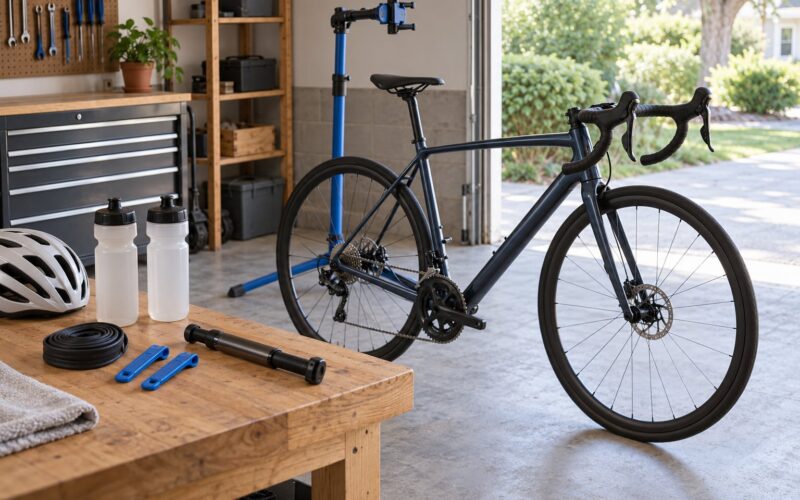
You do not need special equipment for this. You need a bike that behaves predictably and a road you can practise on without pressure.
- Front and rear brakes that bite cleanly. The turn ends with you sometimes unweighting the front wheel over a curb lip or crossing a painted seam, and you want speed control right up to that point.
- Working steering and a straight-tracking front wheel. A wheel with wobble or a loose headset makes a 90 degree turn at speed feel worse than it is.
- A helmet that fits flat and level. Nothing to do with the mechanics of turning, just worth saying once.
- A signalling method. Left arm straight out to the side, palm down, is the one most drivers recognise. A bar-end signal or a blinker works too, and can be combined with the arm.
- A low-stakes practice road. An empty street, a parking lot with no parked cars, or a quiet Sunday morning on a residential loop.
Riders on r/chibike and r/Rochester ask the same question constantly: do I get in the turning lane, or do I loop around? The honest answer is both are valid, and the correct pick changes from one intersection to the next.
Step-by-Step
Think of a left turn as four separate decisions, each made before the next one starts. Rushing any single step is what puts people in the door zone of a turning car.
Move into the Correct Position
Position is where most riders lose confidence, because it happens while you are still in motion and it happens before anyone has told you to go.
Start early. Look back over your left shoulder well before the intersection, usually 50 to 100 metres out on a residential street and further on a fast arterial, then move left one lane at a time. The two-step change is the standard taught method: signal, glide to the far side of your current lane, then re-check and continue into the next lane. Never cross two lanes in one movement.
Where you end up depends on the road. In a shared lane marked for left turns and through traffic, ride on the right half of that lane so cars going straight can pass on your left. In a left-turn-only lane with no room to be passed, ride in the middle. Both of those positions are what drivers expect to see a cyclist doing.
The worst option is staying at the curb. A rider hugging the right edge through an intersection is invisible from inside a car and directly in the path of any vehicle turning left across your lane. That single habit causes more near-misses than anything else on this list.
Check Behind and Signal Clearly

Extend your left arm straight out to the side at shoulder height, palm down, and hold it there until the turn starts. The flat, horizontal arm is the version that drivers actually recognise. A bent-elbow pointing gesture reads to most people as pointing at something, not turning, and it disappears the moment you need a hand on the bar.
Two habits make the signal work. Signal before you move, not while you are already moving left, and signal long enough that a driver has time to react. A signal flashed half a second before the turn is not a signal.
The shoulder check is separate from the signal and people often merge the two. Glance over your left shoulder while keeping the arm extended, so you look back without dropping the signal. Tilt your head far enough that your chin passes over your shoulder; a quick glance over the elbow catches a cyclist coming alongside but misses a car in the blind spot of a large truck.
Signalling while braking is the awkward one. A thread on r/ladycyclists described the reality of doing it on a descent, one hand on the lever and one arm out, and it is genuinely harder than it sounds. Two options make it manageable: brake to a controlled speed first, then extend the arm for a couple of seconds before you move, or signal with a blinker or bar-end device and keep both hands on the bars. The League of American Bicyclists treats checking behind before turning as part of the signal itself, not a separate courtesy.
Choose the Correct Turning Path
Three paths cover nearly every intersection, and the right one depends on traffic speed, lane count, and how much room you have.
The vehicular left turn is what most riders mean when they picture turning left. You merge into position, yield to oncoming traffic and pedestrians, and swing into the cross street. It is the fastest option and the right choice on a wide, slow road, on a street with a dedicated left turn lane, or when you are already established in the lane and the traffic behind you is light.
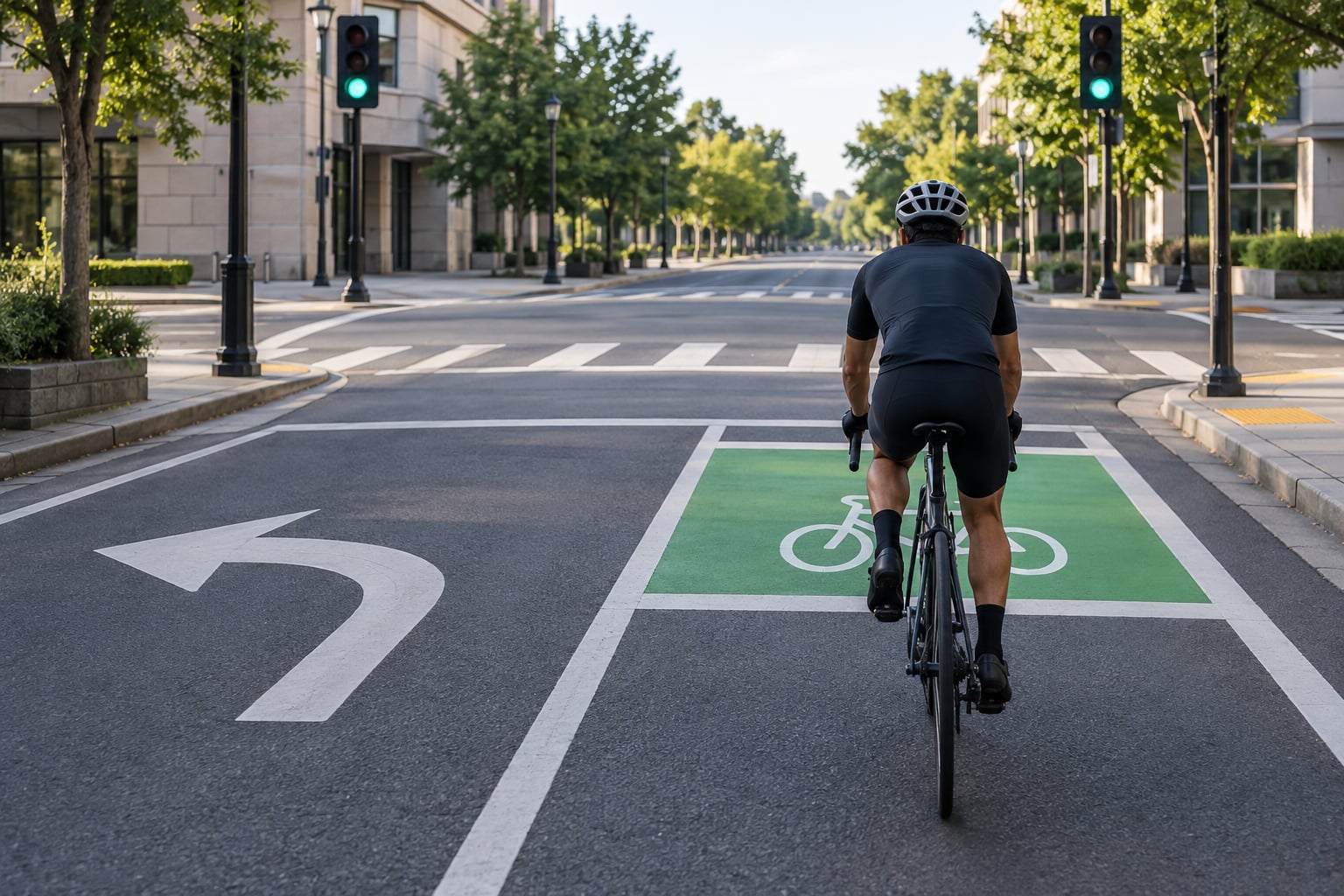
The box turn, also called the two-stage turn or the Copenhagen left, is the alternative. You ride straight through the intersection on green, stay on the right, then stop at the far corner, rotate the bike 90 degrees to face the cross street, and continue when it is clear. You never enter the path of oncoming traffic. Denmark requires it for cyclists; in the US it is optional and legal in every state. Once past the stop line with a clear road, most jurisdictions let you proceed without waiting for a fresh green.
A protected or turn-lane turn is the easiest version when the intersection offers one. If a left turn lane exists and is usable by bikes, or the intersection has protected signal phases, take them.
A simple decision framework:
- If the road is narrow, traffic is slow, and oncoming cars are steady, box turn.
- If the road is wide and fast with several lanes of oncoming traffic, box turn unless there is a turn lane.
- If there is a left turn lane or a protected signal phase, merge and use it.
- If the bike lane runs straight through with a bike box waiting area at the far side, box turn.
- If you are already established left of the bike lane and the car behind you is far back, finish the vehicular turn.
One case deserves its own answer, because it comes up constantly in forum threads: the bike lane that dumps you into a right-turn-only lane before the intersection. Do not ride into the right-turn lane. Merge left into the through lane before you reach it, then decide between a vehicular turn and a box turn on ordinary rules. If the merge feels unsafe, the box turn usually is not available either, so take the through lane early and merge early, rather than late and fast.
Look, Yield, and Turn Smoothly

Now the part riders want to skip. Look at everything before you commit to the turn, not after.
Scan left, then left again, then right. You are checking for oncoming vehicles, a pedestrian stepping off the corner, a car turning right into your path on the far side, and anyone emerging from a driveway on the corner you are turning toward. Eye contact helps more than people expect. A driver who sees your eye on theirs is far more likely to leave you space than one who did not.
Yield properly. Turning left means crossing oncoming traffic, and in every state that traffic has priority unless a signal says otherwise. A driver who has a green light and turns left across your path is the classic left hook, and the only reliable defence is to assume they have not seen you. Never assume eye contact equals an intention to yield.
Turn with a steady, slightly wider arc rather than a sharp jab. Keep both hands on the bars through the turn itself, even if that means your signal comes in a moment early or drops. Unweight the front wheel as you cross any lip or raised seam.
On the far side, straighten up into the bike lane or the right side of the travel lane promptly. Drifting left after the turn is how riders collect a right hook, where a driver behind you assumes you are still turning and comes around your right side. Get your lane sorted first, then look behind.
Common Mistakes
The left hook. A driver ahead turns left across your line because they never checked. The fix is speed control before the turn so you can stop or go around a slow car, and never merging so far left that you sit in the turning driver’s blind spot.
The lane-change squeeze. A fast car closes on you while you are crossing lanes toward turn position. Move earlier and slower, one lane at a time, and accept a box turn instead of a last-second merge. Riders on r/chibike describe this as the moment that taught them the box turn.
Drifting right out of fear. The instinct is to hug the curb through the intersection. That puts you where nobody is looking and in the path of every left-turning car. Confidence in position is safer than caution in the wrong place.
The dropped or mistimed signal. Signalling while already moving left, or flashing the arm right before the turn, gives drivers nothing to react to. Signal, then move.
The diagonal cut. Cutting across an intersection on a red, or turning early so you never actually enter the intersection, is the one part of the box turn that is genuinely unlawful. The box turn requires riding straight through and turning at the far corner.
Riding the wrong side of a shared turn lane. In a lane that mixes left-turning and through traffic, take the right side so the through cars can pass. In a turn-only lane, take the middle.
Two situations need their own adjustment. At night or in rain, assume you are less visible than you think, add extra scan time behind, and consider a box turn even on a road where you would normally merge. On a group ride, the leader takes the turn alone and the group stacks up behind at an offset rather than forming a line, and everyone signals independently, because a group riding through a solid formation means the back riders get no warning at all.
Frequently Asked Questions
Should I signal before making a left turn?
Yes, and signal before you start moving left rather than at the same moment. Extend your left arm straight out to the side, palm down, and hold it until the turn begins. The flat horizontal arm is the signal drivers most reliably recognise. Keep both hands on the bars through the turn itself, which often means the signal ends slightly before the front wheel reaches the corner. A blinker or bar-end device works too if you would rather keep both hands on the bars while braking.
How far left should I ride before turning?
As far left as the lane layout allows without putting you in a turning driver’s blind spot. In a shared left-turn-and-through lane, ride on the right half so through cars can pass you. In a left-turn-only lane, ride in the middle. Never hug the curb through an intersection, because that is both the least visible position and the one most likely to put you in the path of a car turning left. Start the move 50 to 100 metres out on a residential street, further on a fast road.
Do I have to stay in the bike lane when turning left?
No. In most US states you may leave a bike lane and take a turn position in the travel lane, exactly like a car, and you have the same rights and duties once you do. Signal, check over your left shoulder, and merge lane by lane. The exception worth knowing is that many cities have bike boxes at the far side of intersections, which signal a two-stage turn where you ride straight through and turn at the far corner instead. Local rules vary, so check the markings on your own route.
How should I make a left turn when cars are alongside me?
Do not turn until the adjacent lane behind you is clear. Signal early, check over your left shoulder, ease into position while the parallel lane is empty, and hold your line for a moment before swinging across. A driver sitting alongside you at a green light is a driver who may accelerate when the light changes. If the lane behind never opens, the box turn removes the entire problem because you stay on the right and cross straight through.
What should I do if a driver does not yield to my left turn?
Assume they never saw you and stay out of their path. Slow down, keep a straight line rather than turning in front of them, and let them pass if their front bumper is past your wheel. If they turn across your path anyway, do not swerve into the adjacent lane or slam the brakes hard while turned, since either can put you under their wheels. Stay upright, keep both feet on the pedals until you are clear, and report the incident afterwards if it involved unsafe driving.
Conclusion
Get left early, signal with a flat arm, check over your shoulder, scan and yield, then turn smoothly and straighten into your lane on the far side. Run that sequence on a quiet residential street until it feels dull rather than difficult, and only then take it to a road with real traffic. 2026 traffic patterns change, and the intersections you ride through deserve a fresh look every few months.