Short answer: on smooth pavement at the same level of effort, a road bike is usually about 2 to 8 mph faster than a comparable hybrid — roughly 10% to 20% more speed. That gap shrinks on rough roads and in stop-and-go traffic, and it grows the faster you ride. Fitness still matters more than the bike, but the bike sets the ceiling.
The confusing part is that the number swings wildly depending on the rider. A club rider and a first-timer on the same road bike will post averages miles apart. So the honest answer to how much faster is a road bike than a hybrid needs the rider’s own numbers in it. Here is what the gap looks like across rider levels, what physically causes it, and when the slower-looking bike is actually the faster one for the day.
Table of Contents
- How Much Faster Is a Road Bike Than a Hybrid? at a Glance
- How Much Faster Are Road Bikes in Real-World Riding?
- Why the gap grows the faster you go
- Rolling resistance and the hidden drag
- Weight and power transfer
- Why the Speed Difference Changes
- Rider position on the bars
- Tire width and pressure
- Rider fitness
- Terrain, surface and weather
- Stops, drafts and company
- Entry-level versus higher-end models
- Speed on Flats, Hills, and Fast Group Rides
- Flats
- Rolling terrain and climbs
- Descents
- Fast group rides
- Weight, Acceleration, and Climbing
- Comfort, Fit, and Long-Ride Ability
- Saddle pressure and hand position
- Geometry and fit over the saddle
- Tire volume as comfort
- Tires, Gearing, Brakes, and Maintenance
- Which Should You Choose?
- Choose a road bike if
- Choose a hybrid if
- The middle ground
- Before you buy anything, try this on the hybrid you own
- Frequently Asked Questions
- Is 25 mph on a bicycle fast?
- What is a good average speed on a hybrid bike?
- Is 12 mph a good biking speed?
- How much faster is a road bike vs hybrid?
- What is the 75% rule in cycling?
- Is 40 mph on a bike fast?
- Conclusion
How Much Faster Is a Road Bike Than a Hybrid? at a Glance
This table is the short version. Everything below it explains the rows.
| Criterion | Road bike | Hybrid bike | What it means for speed |
|---|---|---|---|
| Typical flat-road average | 18–24 mph for most riders | 15–21 mph for most riders | Typically a 2–4 mph gap at the same effort |
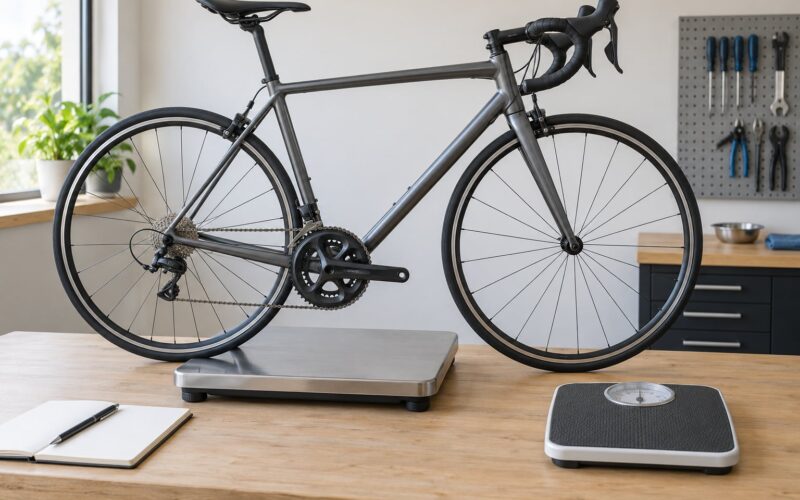
| Typical bike weight | About 15–22 lb | About 24–30 lb | Matters most when accelerating, climbing and out of the saddle |
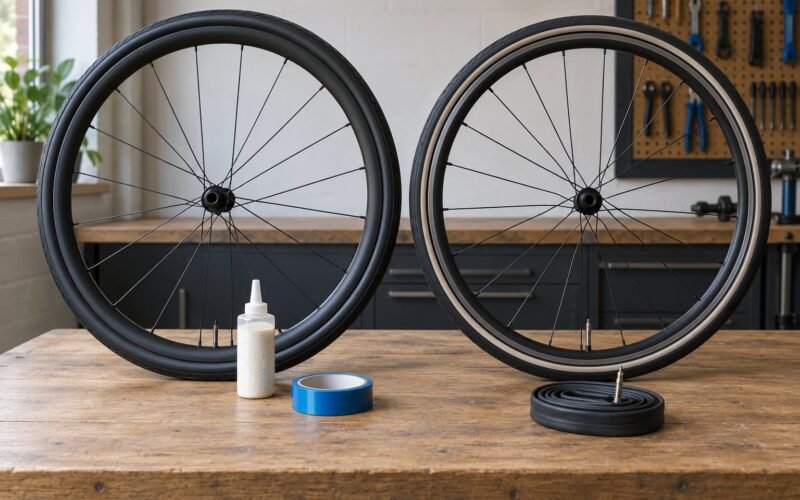
| Tire width and pressure | 23–28 mm at roughly 90–130 psi | 35–42 mm at roughly 50–80 psi | The widest, lowest-pressure tire is usually the biggest hidden drag |
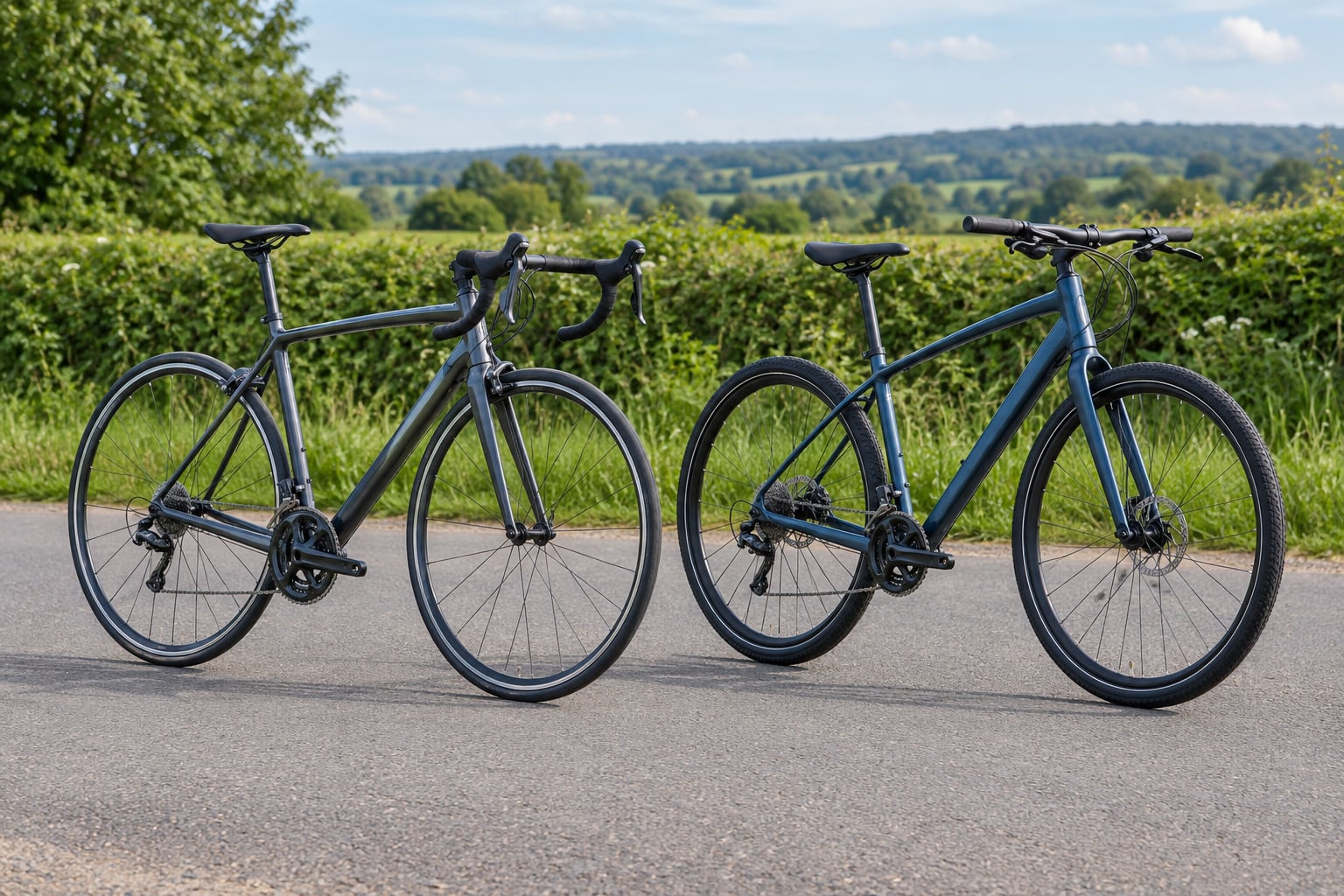
| Handlebar and position | Drop bars, low and narrow | Flat bars, upright | Single largest contributor above 15 mph |
| Riding position | Aero, bent elbows, low torso | Upright, weight on saddle | Determines how much of the bike’s potential you can use |
| Gearing | Close ratio steps, road development | Wide low range for hills and load | Hybrid spins easier uphill; road crosses more speed |
| Best terrain | Smooth pavement, club rides, racing | Mixed pavement, gravel paths, commuting | Rough ground erases the road bike’s advantage |
| Comfort over hours | Fits well: excellent. Fits poorly: rough | Generally comfortable for most body types | A comfortable rider often rides faster than a cramped one |
How Much Faster Are Road Bikes in Real-World Riding?
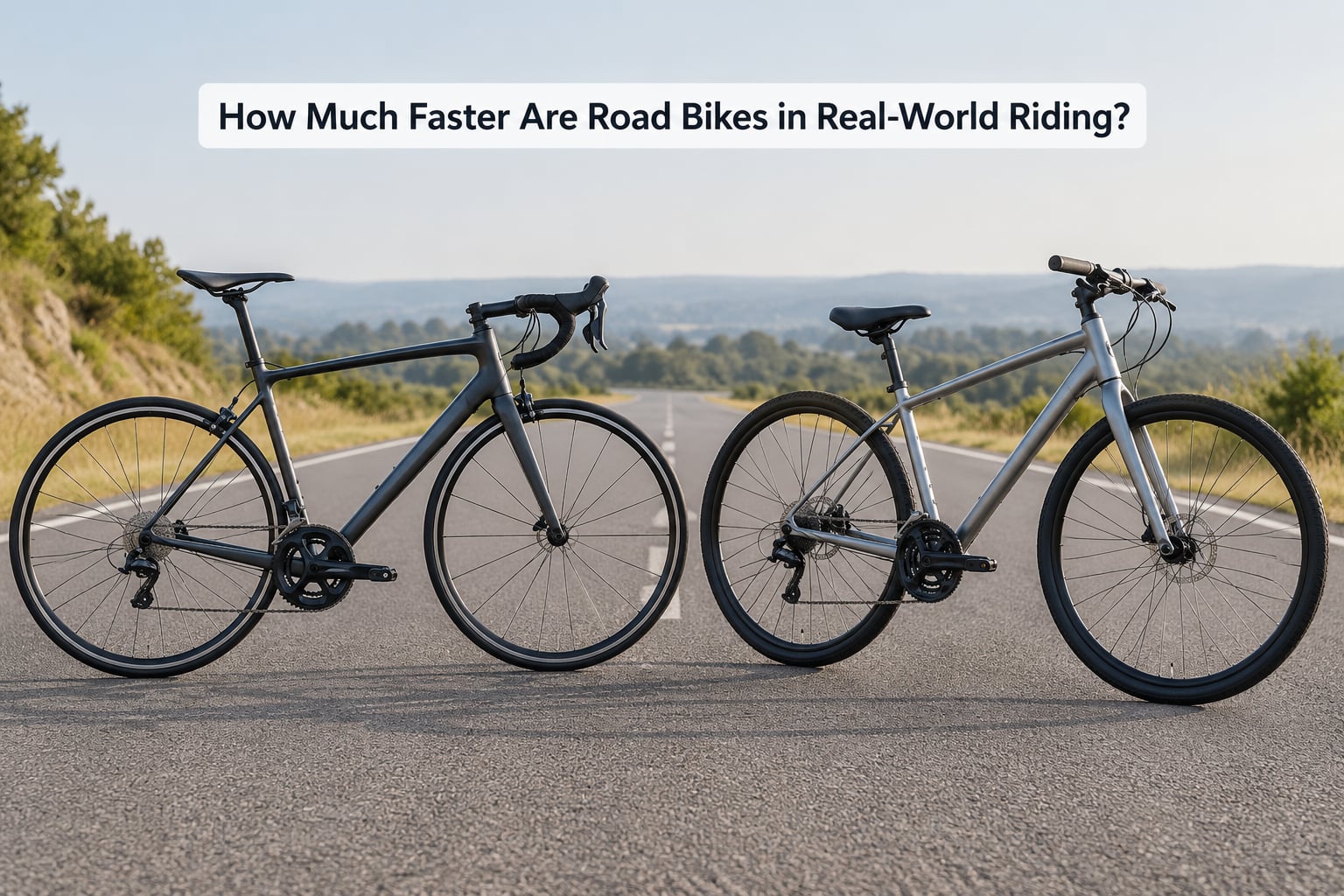
Real riders report anywhere from barely faster to dramatically faster. A rider posting 3–5 mph faster on a road bike on r/bicycling is in the middle of the range. A rider on UKClimbing reported covering the same distance about 4 minutes quicker at an effort level around 10% faster. Those two reports are not in conflict — they describe different rider levels.
| Rider level (solo, flat pavement) | Typical hybrid average | Typical road bike average | Gap |
|---|---|---|---|
| New or returning rider | 11–14 mph | 13–16 mph | 2 mph |
| Casual weekend rider | 14–16 mph | 16–18 mph | 2 mph |
| Regular commuter and fitness rider | 16–18 mph | 18–20 mph | 2–3 mph |
| Century and club pace rider | 18–20 mph | 21–23 mph | 2–3 mph |
| Trained racer and time trialist | 23–25 mph | 26–29 mph | 3–4 mph |
These are broad bands, not promises. A headwind, a detour through traffic lights, or a week of poor sleep will move your average more than the choice of bike.
Why the gap grows the faster you go
Power needed to overcome aerodynamic drag rises with the cube of speed. Double your speed and the air resistance roughly multiplies by eight. That single relationship explains most of what follows: at 12 mph the two bikes are close to the same, and at 24 mph the road bike pulls away.
Roller riders describe it from the other side. Above roughly 10–12 mph, drag is the majority of the resistance you are fighting. At 20 mph it is more than 80% of it. Everything else — weight, gearing, tires — matters mostly below that speed or in the moments before you reach it.
Rolling resistance and the hidden drag
A wide, treaded, soft hybrid tire rolls worse than a narrow slick road tire. This is boring, measurable, and the first thing to check on a hybrid that feels slow. Riders who swap to 28 mm slicks at higher pressure commonly find 1 to 2 mph back without changing anything else.
Weight and power transfer
A road bike commonly saves 4 to 8 lb. Over an hour of climbing that shows up as repeated small accelerations rather than one dramatic moment. Stiffer frames and tighter tolerances in the bottom bracket area also waste less of each stroke, which matters most when you are pushing a hard effort or sprinting.
Why the Speed Difference Changes
The 2–8 mph headline is an average across conditions. Here are the variables that move it most, roughly in order of impact.
Rider position on the bars
This is the one people underrate. As one Road Bike Review forum poster put it, drop bars are the main event in terms of what makes a road bike faster — really it is the rider being lower and narrower. A road biker in a tuck has a far smaller frontal area than a hybrid rider sitting upright, and at speed that is worth several mph.
The catch is that a beginner often cannot hold or tolerate that position for an hour. A rider who cannot get low is riding a road bike at hybrid levels of drag while feeling worse about it.
Tire width and pressure
Roads run narrow and hard: 23–28 mm at high pressure. Hybrids run wide and soft: 35–42 mm at lower pressure, often with tread for gravel paths. Both choices have a cost, but on pavement only the road setup is paying off.
Rider fitness
Fitness dominates. One r/cycling poster described a 28-year-old son who destroys him on the flats and hills while riding a far cheaper hybrid. Power at the pedals is the same regardless of what is holding the pedals up, and a fit rider on a hybrid will beat a struggling rider on a carbon road bike.
It works the other direction too. Plenty of riders find that a position they can hold comfortably for two hours unlocks speed they never had, because the aero posture stops hurting after a few weeks.
Terrain, surface and weather
Smooth, flat, dry pavement maximizes the gap. Broken tarmac, patched streets, gravel spurs, and headwinds shrink it. A hybrid floating over cracks at a lower speed with better control often arrives sooner.
Stops, drafts and company
A commute with four traffic lights is a different test than a closed loop. In a paceline the aero advantage in a tuck grows, and a rider on a hybrid who cannot get comfortable low gets dropped. Solo against a tailwind, the difference can shrink toward nothing.
Entry-level versus higher-end models
An entry-level road bike with an aggressive position and mediocre tires may not beat a well-set-up hybrid. The gap comes from the whole package working together, not from the word on the down tube.
Speed on Flats, Hills, and Fast Group Rides
Flat open road is where the gap is widest in mph. Climbing narrows it in absolute terms but widens it in feel. Descents are close to a tie for anyone riding sensibly. Group rides turn a physics question into a social one.
Flats
On a smooth, windless flat, the drag advantage of a low position compounds every minute. Expect 3 to 5 mph at recreational-to-intermediate pace and less at jogging-pace speeds, where drag has not yet taken over.
Rolling terrain and climbs
Most hybrid drivetrains include a lower gear, so the climb starts at an easier cadence and the difference narrows to 1 to 2 mph in absolute speed. Over a long climb the accumulated time still counts. One BikeForums rider reported 16–18 mph averages on both bike types on the same loop and concluded the aero position was the deciding factor, not the frame.
Switchbacks also reward the wider tire, since a lower pressure grips better and costs you less energy over rough tarmac.
Descents
Here the two bikes are nearly identical, and the lower grip limit of the hybrid tire is the only real difference. Both are limited by cornering confidence rather than by the bike.
Fast group rides
This is where riders actually feel the gap. In a paceline everyone is in a tuck, so drag falls for everyone and the marginal advantage of drop bars is smaller — but if your hands and back cannot get you into that tuck, you are the rider getting dropped. Being the only flat-bar rider in a fast club peloton is a known and much-discussed frustration on cycling forums.
The practical test is not the bike’s top speed. It is whether you can hold the group’s speed for an hour without blowing up.
Weight, Acceleration, and Climbing
A 24–30 lb hybrid needs roughly 3 to 5 lb more mass pushed up a hill than a 15–22 lb road bike. Over a long climb that is the difference between holding a gear and grinding. Acceleration matters most out of the saddle after a corner, in a sprint, and when the road tips upward.
What the hybrid gives back is gearing. Most hybrids pair a compact chainring with a large rear cassette, so the easiest gear is much easier than a road bike’s. A road biker climbing at a grinding cadence is often told to simply turn the gearing down and spin at 90 rpm, which is a real fix but only works once the rider is comfortable in the position.
A well-matched hybrid with a low gear and a fit rider can hold its own on moderate climbs. On steep, repeated climbs the weight shows, and no amount of shifting hides it.
Comfort, Fit, and Long-Ride Ability
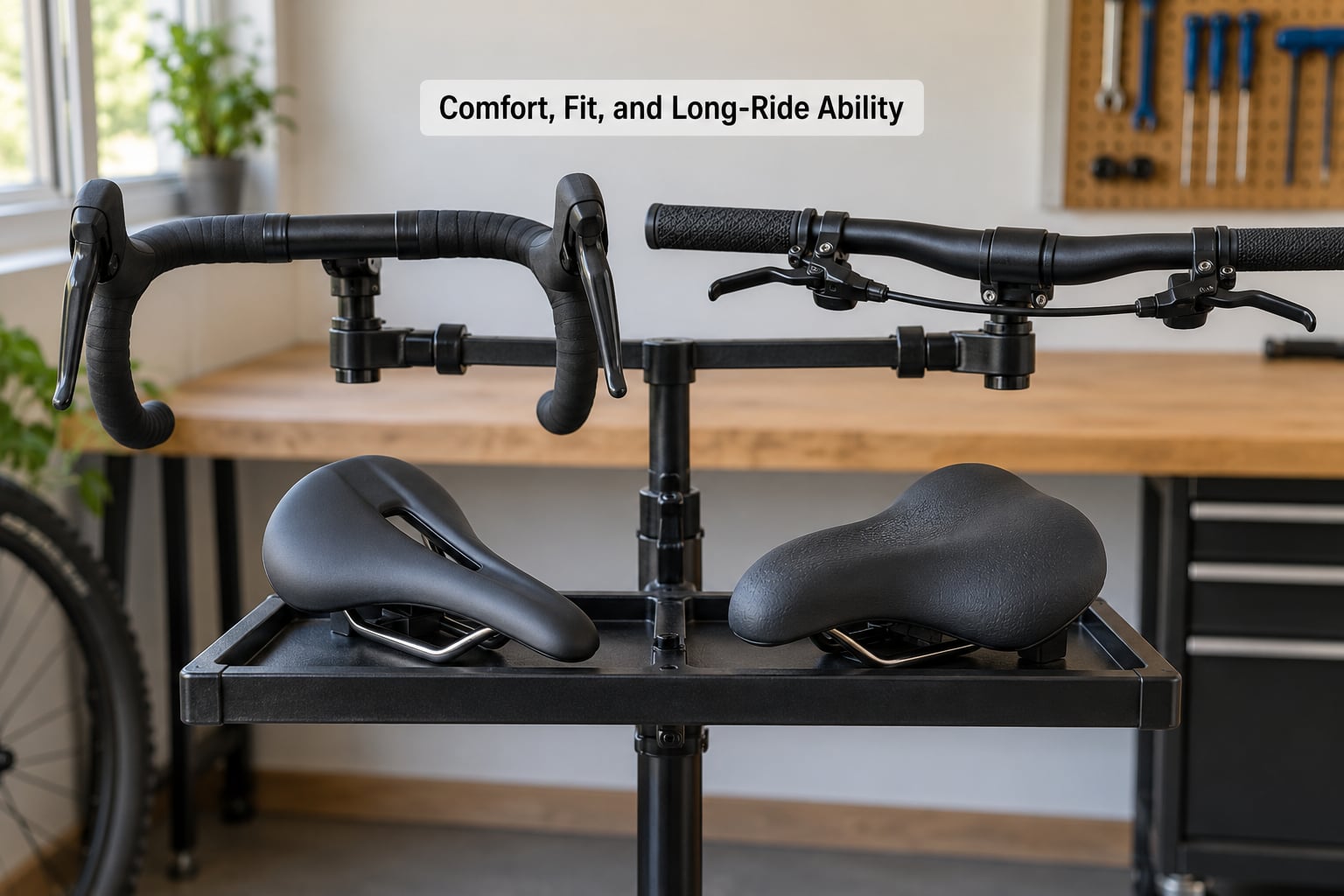
This is where hybrids quietly win more rides than their speed numbers suggest. Comfort is not a soft extra; it is a speed multiplier, because a rider who can stay on the bike for three hours covers far more distance per day than one who has to stop at 90 minutes.
Saddle pressure and hand position
Flat bars put your weight on the saddle and take the wrists out of the load. Drop bars let you rotate through the hoods, the curve, and the drops, spreading pressure across three positions. A rider with wrist, neck or back problems often finds the drop-bar position unusable rather than merely uncomfortable.
Several riders on cycling forums with a history of back surgery describe being pushed toward flat bars specifically for that reason. A bike you can hold is worth more than one you cannot.
Geometry and fit over the saddle
Road bikes are built around a forward-leaning position that many riders need weeks or months to adapt to. Hybrids are upright from the first ride. On a century, a hybrid with a well-fitted saddle and a couple of handlebar spacers often keeps riders fresher than a cramped endurance road bike.
Tire volume as comfort
The wide hybrid tire runs at lower pressure and takes the sting out of broken pavement. That is not a free lunch on smooth roads, where it costs drag, but on chip seal and patched city streets it can be the difference between riding the whole route and turning back at mile 40.
Tires, Gearing, Brakes, and Maintenance
The equipment differences are modest and mostly matter because of how they change the ride, not because one is inherently better.
| Item | Road bike | Hybrid bike | Practical effect |
|---|---|---|---|
| Tires | 23–28 mm slick, high pressure | 35–42 mm, often light tread | Slicks are faster on pavement; tread is safer and quieter on paths |
| Pressure range | Roughly 90–130 psi | Roughly 50–80 psi | Higher pressure cuts rolling resistance and costs comfort |
| Gearing | Close-ratio steps, road development | Wide low range, often 2x or 1x with a large cassette | Road spins harder per gear; hybrid climbs easier |
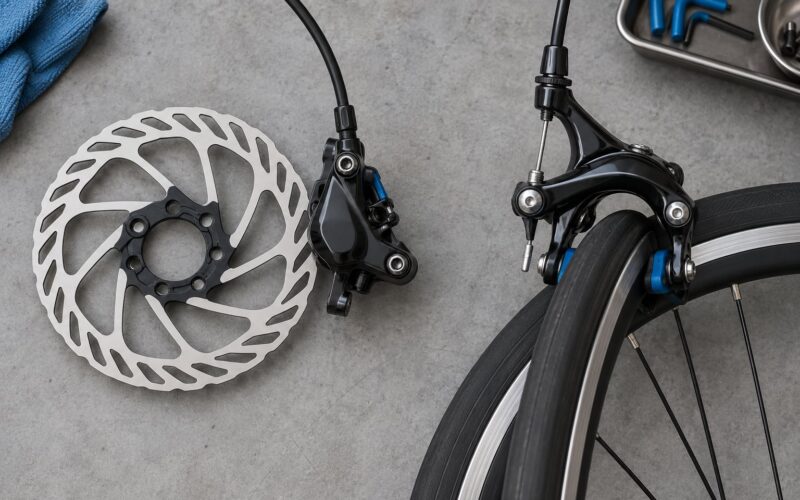
| Brakes | Short, direct lever travel | Longer, more progressive lever | Road brakes need less hand effort; hybrids need one-finger pressure |
| Rack and fender mounts | Usually limited or bolt-on | Standard on most frames | Decides whether panniers and fenders fit without mods |
| Drivetrain servicing | Road chain wear and cable or electronic shifting | Same service, more tolerant of grit | Cleaning after gravel or winter salt matters on both |
| Tire availability | Very common | Very common | Both are easy to service locally |
Rough roads wear tires and drivetrains faster regardless of type. A hybrid ridden through winter grit will need a drivetrain clean far sooner than a road bike kept on clean pavement, which is one more reason the spec sheet does not predict the long-term ownership experience.
Which Should You Choose?
Choose a road bike if
You ride mostly on smooth pavement, you want to keep up with a fast club or group ride, you train for centuries or a triathlon, or you simply like pushing a hard effort at high speed and want the bike to cooperate. You have also confirmed the position feels good in a shop, because that is the part you cannot buy your way out of later.
Choose a hybrid if
You commute across mixed surfaces, you ride gravel paths or towpaths, your route is full of rough patches and traffic lights, you are building fitness from scratch, or you have back, neck or wrist issues that drop bars make worse. Most beginners and most returning riders belong here, honestly.
The middle ground
Endurance road bikes raise the stack and lengthen the wheelbase for comfort without giving up the riding position. Flat-bar road bikes keep a road stance with a more upright handlebar. Gravel bikes cover the mixed-surface case with faster tires. If your objection to a road bike is comfort rather than terrain, one of these is usually the actual answer.
Before you buy anything, try this on the hybrid you own
Riders frequently recover most of the gap without changing bikes at all.
- Swap to 28 mm slicks and run them at the upper end of their pressure range on pavement. Frequently worth 1 to 2 mph.
- Drop the handlebar a few degrees and add spacers to keep the hoods comfortable. A lower, narrower torso is where most of the remaining drag reduction lives.
- Clean and relube the drivetrain every few hundred miles of wet or gritty riding.
- Fit the bike properly before spending on components. Saddle height and bar reach change the result more than any single part.
- Measure your own gap. Ride a familiar loop at a steady effort on each bike and write down both averages. That number beats any table in this article, including this one.
Frequently Asked Questions
Is 25 mph on a bicycle fast?
For a fit recreational rider, 25 mph solo on flat pavement is genuinely quick, and it takes real fitness to hold. Most club riders top out somewhere in the low twenties. At that speed drag is well over 80% of the resistance, which is why position and tires matter so much. Context matters too: a tailwind, a descent, or a short sprint makes 25 mph easy for almost anyone.
What is a good average speed on a hybrid bike?
Most adults riding regularly fall between 12 and 20 mph on flat pavement, with trained riders pushing past 20. A 16 mph average on a 40-mile ride is a solid recreational pace and a good target for most people. Anything under 12 mph on smooth flat roads usually means hills, traffic or headwind rather than a slow bike.
Is 12 mph a good biking speed?
Yes. A steady 12 mph is a perfectly respectable average and covers 100 miles in a little over eight hours. Most riders doing 20 to 40 miles a day sit in this range. If your long-term average is drifting down toward 12 while the route stays flat, check tire pressure and drivetrain cleanliness before blaming your fitness.
How much faster is a road bike vs hybrid?
At the same rider effort on smooth pavement, a road bike is usually 2 to 8 mph faster, roughly 10% to 20%. Recreational and commuting riders see the low end, around 2 mph. Faster riders see more like 3 to 4 mph because aerodynamic drag dominates at higher speeds. On rough surfaces or stop-and-go routes the gap shrinks toward zero.
What is the 75% rule in cycling?
The 75% rule is a training heuristic that roughly 75% of your cycling performance comes from fitness and only 25% from the machine. It explains why riders upgrade bikes and gain a couple of mph instead of a transformation. Equipment changes help most when you have already trained the engine to use what the bike can offer.
Is 40 mph on a bike fast?
40 mph is at or past the practical limit of most road setups and close to the point where a normal descent ends and real danger begins. It is reachable on a steep, smooth descent in a tuck with a tailwind. Coasting downhill is not the same as sustaining it on the flat, and no hybrid or entry road bike holds that speed in ordinary riding.
Conclusion
So how much faster is a road bike than a hybrid? On smooth pavement at the same effort, expect roughly 2 to 8 mph — about 10% to 20% — with the widest gap for faster riders on flat, windless roads. On rough pavement, gravel spurs or a stop-and-go commute, expect almost nothing, and expect the hybrid to be the more pleasant bike the whole way.
Here is what to do first. Ride one familiar loop at a steady effort on each bike and write down both averages. That single measurement beats every table above. If the gap is 2 mph and your routes are rough, buy slick tires and a fit instead of a new bike. If the gap is 3 mph and you ride smooth pavement every weekend, the road bike is worth it. Either way, buy the bike that matches the riding you actually do.