Short answer: how much does weight matter on a bike? Less than most riders assume. On a typical 80 kg rider-plus-bike system the bicycle is only 8 to 10 kg of it, so shedding a kilogram of frame buys you a few seconds on a steep climb and almost nothing on the flat. Weight bites hard on climbing and acceleration, and barely registers once the bike is rolling at a steady speed.
I ride with a group that includes a 58 kg racer and a 96 kg club rider, and they finish within a couple of minutes of each other on most Sunday loops. Same route, same bikes within a few kilograms of each other. The gap is power and pacing, not the 2 kg of frame between their two bikes.
Last updated October 2026.
Table of Contents
- How Much Does Weight Matter on a Bike?
- The Forces a Cyclist Must Overcome
- How Much Does Weight Matter on a Bike in Each Situation?
- How much does weight matter on a bike you already own?
- Rider Weight vs. Bicycle Weight
- Static mass and rotating mass
- Why Climbing Is Where Weight Matters Most
- How Much Does Weight Matter on a Bike on Flat Roads?
- Why Power-to-Weight Is Only Part of the Answer
- Worked Examples for Typical Club Rides
- When Lighter Weight Does Not Buy Much Performance
- What counts as heavy, by discipline
- What you give up for the grams
- How to Reduce Weight Without Hurting Your Ride
- Common Weight-Loss Mistakes Cyclists Make
- Frequently Asked Questions
- Is 1 pound of body weight the same as 1 pound of bike weight?
- How much slower does a heavier cyclist ride uphill?
- Is power-to-weight more important than total bike weight?
- Does a lighter bicycle really matter on flat roads?
- Should cyclists lose weight to improve climbing performance?
- How much bike weight is worth removing for everyday training?
- Bottom Line
How Much Does Weight Matter on a Bike?
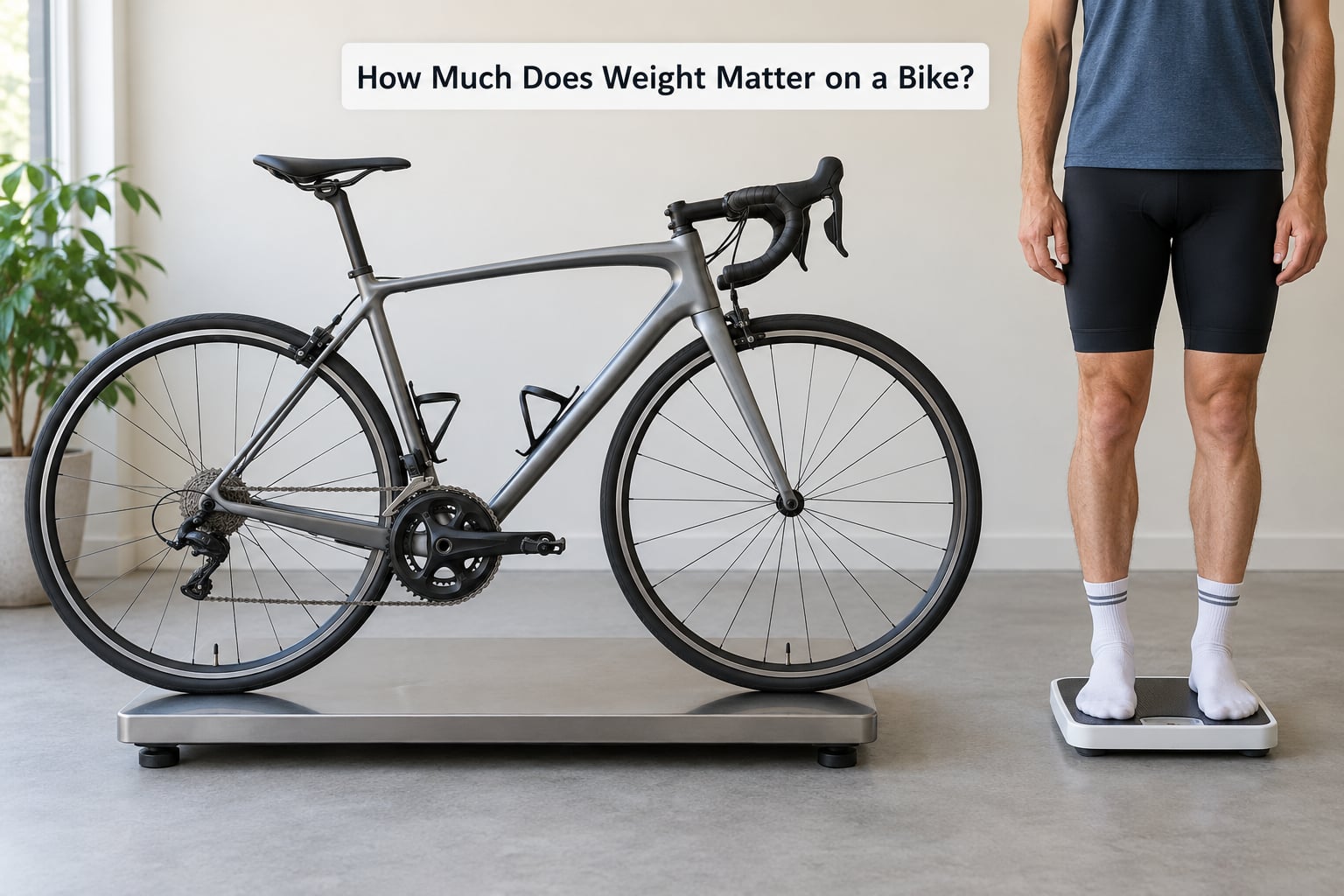
The physics is simple enough to check in your head. Gravity pulls on everything that moves, rider and machine alike, so the number that decides how hard a hill feels is total system weight, not the weight stamped on the bike frame.
Here is what an 80 kg climbing setup actually consists of:
| Component | Typical weight | Share of system |
|---|---|---|
| Rider | 68 to 72 kg | About 88% |
| Kit, shoes, helmet, bottles | 2 to 3 kg | About 3% |
| Bicycle, ready to ride | 7 to 9 kg | About 10% |
| Total system weight | 78 to 84 kg | 100% |
That last column is the whole argument. A road bike that is 500 g lighter than another saves you 500 g of an 80 kg climbing load, which is roughly six tenths of one percent. Physics does not care where the mass came from.
The Forces a Cyclist Must Overcome
Your pedals pay for five things at once. Four of them change when you change mass, and one does not, which is exactly why the terrain decides how much weight is worth talking about.
| Force | What creates it | Does it scale with system weight? |
|---|---|---|
| Gravity | The hill itself | Yes, directly |
| Rolling resistance | Tyres deforming against the road | Yes, roughly in proportion |
| Aerodynamic drag | Pushing air out of the way | No, it depends on speed and shape |
| Drivetrain losses | Chain, bearings, bottom bracket | No, around 2 to 4 percent |
| Acceleration | Getting moving again | Yes, directly |
Gravity and acceleration are the two that punish mass, and both get worse the steeper or faster the start. Drag does not care how heavy you are at all, which is why a heavy rider in an aerodynamic position can be as quick on the flat as a light rider in a bad one.
How Much Does Weight Matter on a Bike in Each Situation?
The same 5 kg makes a big difference on one part of a ride and nothing on another. Roughly like this:
| Situation | How much 5 kg off the system matters |
|---|---|
| Steep climb at threshold | Large, often 8 to 15 percent faster |
| Rolling road with slight gradient | Noticeable, a few percent |
| Flat road at steady speed | Very small, well under 1 percent |
| Repeated sprints and crit racing | Moderate, mostly through acceleration |
| Fast descent | Nothing, and a light bike is marginally slower |
| Long flat century | Almost nothing |
How much does weight matter on a bike you already own?
Here is the useful version of that. The table below assumes a steady 250 W at the pedals, a rider and kit plus bike totalling 80 kg, and 10 km of climbing. Times are for the climb; the last column is what removing 1 kg of total mass buys you.
| Gradient | Speed at 250 W | Time for 10 km | Seconds saved per 1 kg |
|---|---|---|---|
| Flat | About 26 km/h | About 23 min | Under 1 second |
| 3% | About 20 km/h | About 30 min | 3 to 4 seconds |
| 5% | About 18 km/h | About 33 min | About 9 seconds |
| 8% | About 14 km/h | About 43 min | About 16 seconds |
| 12% | About 10 km/h | About 1 hour | About 35 seconds |
Read the flat row slowly. An entire kilogram of weight, removed from the frame, tubes, and components, returns less than a second per ten kilometres when you are already at a steady 26 km/h. The same kilogram is worth 35 seconds on a 12% wall.
These are model numbers, not measurements off a particular bike, so treat them as a shape rather than a promise. Change the rider’s power and every speed in the table moves, but the pattern holds: gravity scales with mass, drag scales with speed squared.
Rider Weight vs. Bicycle Weight
One pound of body weight and one pound of bike weight are identical to the climbing equation. A 75 kg rider on a 10 kg bike and an 80 kg rider on a 5 kg bike are moving 85 kg up a hill, and both climb at the same speed on the same power.
Where the two diverge is practical. You can only remove so much bicycle, and every kilogram you do remove on a road bike is expensive and usually comes with a stiffness or compliance trade. Body weight is a much larger pool, which is why riders chasing a hill segment usually end up working on fitness rather than shopping for a lighter frame.
Static mass and rotating mass
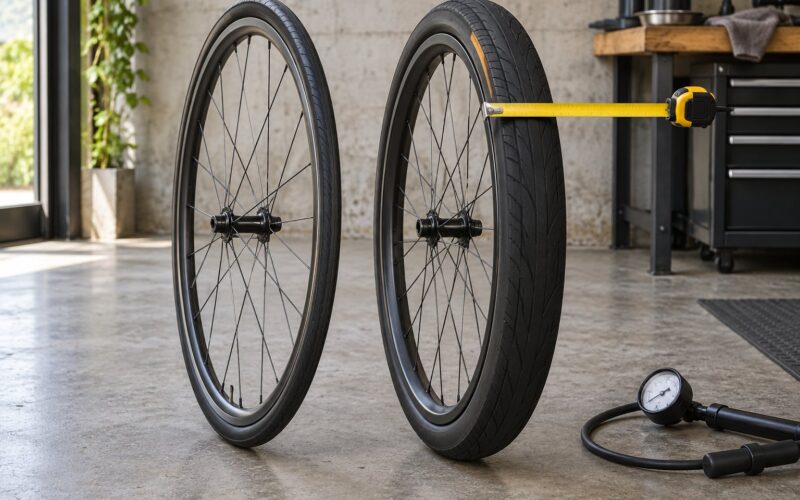
Not all bike weight is equal. Wheels, tyres, and discs spin, and spinning mass has to be accelerated every time you change speed. The community rule of thumb, called the 75% rule, says a gram of rotating weight behaves a bit like 75 grams of static weight during hard acceleration. On steady climbing it behaves like one gram, because it is being lifted and not spun.
The effect is real but small. One analysis discussed in a long-running r/bicycling thread put it at roughly a 1.3 percent difference in acceleration for a 1,000 g difference in rim weight, on a 60 kg rider with a 7 kg bike. That is the number to keep in your pocket when a wheel upgrade is sold as the fastest thing you can buy.
Riders on r/MTB make a related point about mass placement rather than total mass: where the weight sits and how high it is changes how a bike handles on rough ground far more than the total does.
Why Climbing Is Where Weight Matters Most
Steep climbs are the one situation where your power output is fixed and your mass is not. The power needed to hold a speed goes up linearly with total weight and with gradient, so any mass you remove comes straight back as climbing speed.
The relationship is straightforward enough to compute. On a 5% grade, an 80 kg system needs roughly 39 watts of pure gravitational power per metre per second of speed; an 8% grade needs about 63. Double the gradient and the gravity bill more than doubles, while the air bill barely moves. That is the whole reason hills expose weight and flats hide it.
Take a club rider at 250 W on a 6% climb. Gravity takes roughly 47 watts per km/h of speed, rolling resistance adds a few watts, and drag adds a little more at club speeds. Every kilogram removed from that system returns a little under a second per kilometre. Remove five and you gain roughly 4 seconds per kilometre, which is a visible gap on a ten kilometre climb and nothing at all on a coffee stop.
How Much Does Weight Matter on a Bike on Flat Roads?
Very little, once you are holding a steady speed. At that point drag and rolling resistance set the power bill, and neither responds much to shaving grams off the frame.
At 32 km/h on flat road, an 80 kg system on 250 W is spending most of that power pushing air. Drag has taken roughly three quarters of the effort, rolling resistance a small slice, and gravity nothing at all. Take 5 kg off and the rolling resistance saving is about 2 watts, which is under 1 percent of the total.
The counter-case is real, though. If removing weight also means running wider tyres at lower pressure or narrower tyres at higher pressure, you have changed rolling resistance too, and the drag bill is untouched either way. A cheap wheelset that lets you run narrower rubber is often a bigger flat-road gain than a carbon frame that saves 900 g.
Why Power-to-Weight Is Only Part of the Answer
Power-to-weight, measured in watts per kilogram of total system mass, is the standard climber’s metric and it is genuinely useful for comparing two riders on the same hill. It earns its place because it normalises for exactly the thing that matters most up a mountain.
The problem is what it hides. It does not tell you whether the rider’s power is sustainable at that intensity, whether the bike has good tyres and an efficient drivetrain, or whether the gradient is two percent. It also says nothing about drag, so two riders with the same ratio can be several watts apart in real speed on a road with any crosswind.
Here is the comparison that matters most for club riders. An 80 kg rider at 300 W produces 3.75 W/kg. The same rider at 250 W, having lost 5 kg, produces 3.33 W/kg. Fifty watts of fitness took the ratio further than five kilograms of body mass did, and fifty watts is worth roughly five minutes an hour on a moderate climb. Fitness is the cheaper lever by a wide margin.
A measured comparison published by Better Triathlete, testing an 18 lb and a 15 lb tri bike, found about 2.5 seconds saved per pound of bike weight over a 4 km climb, roughly 7.5 seconds for the whole 3 lb difference. That is a careful test on a climbing-focused machine, and it still lands in the same place as the physics above.
Worked Examples for Typical Club Rides
Three numbers on a 250 W rider, an 80 kg system, and club speeds. All assume you hold the same power and the same gradient, and only the mass changes.
| Scenario | Change | Effect on a 10 km climb |
|---|---|---|
| 6% climb, 5 kg off the rider | 80 kg to 75 kg | About 40 seconds faster |
| 6% climb, 5 kg off the bike | 80 kg to 75 kg | About 40 seconds faster |
| 10% climb, 5 kg off the rider | 80 kg to 75 kg | About 1 minute 45 seconds faster |
| 10% climb, 5 kg off the bike | 80 kg to 75 kg | About 1 minute 45 seconds faster |
| Flat ride at 20 mph, 5 kg lighter | 80 kg to 75 kg | Under a minute over 100 km |
| Flat ride at 20 mph, 50 W more power | 250 W to 300 W | Roughly 5 minutes over 100 km |
The rider and bike rows are identical on purpose. Physics does not distinguish them, and any article telling you otherwise is selling something.
For scale, if you added another 5 kg rather than removing it, expect to lose roughly 8 percent of your speed on a 10% climb. On the same ride with a 5 km headwind, expect no change in top speed, just a harder session.
When Lighter Weight Does Not Buy Much Performance
Plenty of riding rewards comfort, durability and quiet confidence more than grams. A lighter frame is a poor trade in these situations:
- Flat group riding. The bunch absorbs wind and the pace is set by the social contract. Nobody notices half a kilo.
- Relaxed touring and commuting. Your saddle, tyres, and brakes decide how the day feels far more than frame mass.
- Rough surfaces. Riders on r/mountainbiking put it plainly: you can have low weight or strength, but rarely both, and a broken drivetrain on a remote road costs more time than any gram ever saved.
- Loaded bikepacking. Here the bike becomes a smaller share of the load, because 10 to 25 kg of gear, food, and water is riding along. Trim the bags before you trim the bike.
- E-bike riding. The motor supplies the watts that a lighter rider would have to produce, and riders on r/ElectricBikeExplorer consistently report that weight stops being the limiting factor once assist takes over.
What counts as heavy, by discipline
The word heavy only means something against a benchmark for the type of bike you ride.
| Bike type | Light for the discipline | Worth worrying about |
|---|---|---|
| Race road | Under 7.5 kg | Over 8.5 kg |
| Endurance road | Under 9 kg | Over 10.5 kg |
| Gravel | Under 10 kg | Over 12 kg |
| MTB hardtail | Under 12 kg | Over 14 kg |
| E-bike | Under 21 kg | Over 25 kg |
| Tri bike with aero bars | Under 9 kg | Over 10.5 kg |
So a 7 kg road bike is heavy for the Tour de France and perfectly ordinary for a first season of club riding. A 13.6 kg bike is a featherweight mountain bike and a perfectly fine gravel bike. Riders asking whether their bike is too heavy usually just picked the wrong comparison group.
What you give up for the grams
Frame material changes more than mass, and experienced riders on BikeForums repeat the same line about carbon: it is not magic. A complete carbon frameset typically comes in one to one and a half kilograms lighter than an equivalent aluminium build, and the real differences are stiffness and compliance, which cut both ways. Carbon absorbs road buzz and feels fast on smooth tarmac. Aluminium is heavier but dead straight under power, which some riders prefer. Steel is comfortable and durable but the heaviest. Titanium sits in between and costs a lot to build.
The honest summary: a lighter bike is a faster bike only in the places a lighter bike is faster, and the rest of the ride it is just a bike.
How to Reduce Weight Without Hurting Your Ride
Work down this list in order, and stop when the ride stops improving. Most riders never get past step two.
- Improve power and position first. Fifty watts of fitness returns more than any component swap, and a lower, calmer riding position cuts drag at the same speed. Neither costs you comfort or reliability.
- Stop carrying things. A full bottle, an extra layer, a multi-tool, three spare tubes and a bag of nuts can add two kilos without ever appearing on a spec sheet. Audit what is in your pockets before you look at the frame.
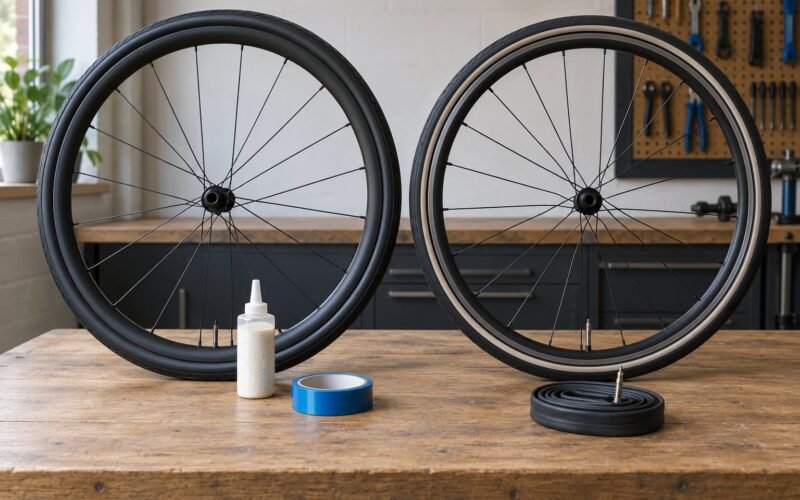
- Look at tyres and pressure. This is the cheapest real saving and often the fastest. Well-inflated, well-chosen tyres beat a lightweight rim on any road that is not perfectly smooth.
- Swap low-risk components. Tubeless sealant, a lighter bottle cage set, and bar tape or a saddle you do not love are quiet wins with no downside.
- Leave the safety parts alone. Brakes, tyres, and a chain in good condition protect the ride you actually care about. Riders on BikeForums make the same point about upgrade priorities: carbon is not magic, and reliability is not a place to save grams.
If you are carrying touring gear, cut gear weight before bike weight. Ten kilos off the panniers is worth more on a climb than the entire bicycle.
Common Weight-Loss Mistakes Cyclists Make
Most of the chasing comes from rules that do not survive contact with physics.
Fixing a weight-to-height ratio. A screening number like 2 kg of body weight per centimetre of height above a healthy reference comes from clinical settings, not from a cycling lab. Fitness and sustained power matter more, and aggressive weight loss on a bike is where injuries start.
Comparing bikes with different wheels and tyres. Two frames built to the same target weight can differ by seconds per hour once the rolling resistance is accounted for, because the wheelsets are not the same.
Trading away safety or durability. Lightweight pads, cheap rotors, and worn-looking chains are how riders end up slower overall, on the day the light alloy cracks.
Expecting ordinary weight loss to produce a large speed gain. Five kilos is a good afternoon’s worth of realistic change and it buys you about 40 seconds on a ten kilometre climb. Expecting it to transform your times leads to bad decisions.
Treating weight as the only lever. Aerodynamics, fit, tyre choice, and training each return multiples of what a lighter frame does. A rider who fixes position and pressure first will rarely feel the need for the lightest bike made.
If weight loss is the goal rather than performance, talk to a doctor or a registered dietitian about a plan that protects muscle mass and energy. Losing weight fast on a bike tends to cost you the power you were trying to build.
Frequently Asked Questions
Is 1 pound of body weight the same as 1 pound of bike weight?
Yes, to climbing physics. Gravity acts on all 80 kg of a rider-plus-bike system regardless of where the mass sits, so a pound removed from your body and a pound removed from the frame return the same climbing speed. Practically they differ: you can shed far more body mass than bike mass, and bike weight competes with stiffness, compliance, and durability choices.
How much slower does a heavier cyclist ride uphill?
On a steady climb at the same power, speed falls almost in direct proportion to total weight. A rider carrying 5 kg more on an 80 kg system is roughly 6 percent slower on a 6 percent grade and about 10 percent slower on a 10 percent grade. On the flat the same 5 kg is worth well under 1 percent, and aerodynamic position matters far more.
Is power-to-weight more important than total bike weight?
Power-to-weight already includes bike weight, because it uses total system mass. It is the right metric for comparing two riders on the same steep hill. It is not a complete answer, because it says nothing about drag, rolling resistance, gradient, or whether the power can be held for the length of the climb.
Does a lighter bicycle really matter on flat roads?
Very little. At a steady speed the power bill is set by aerodynamic drag and rolling resistance, and drag does not scale with mass. Removing 5 kg from a system weighing 80 kg is worth under a second per 10 km on the flat, and under a minute over 100 km. Wider tyres and a lower riding position usually deliver more than the frame weight does.
Should cyclists lose weight to improve climbing performance?
Only within reason, and only as part of a training plan rather than a crash diet. Ordinary, gradual changes of a few kilograms do improve climbing speed, but they rarely transform it. Losing weight fast steals the muscle and the energy you need for the harder efforts that actually raise your power. A doctor or registered dietitian can help you set a sensible target.
How much bike weight is worth removing for everyday training?
For most club riders, the first kilogram is worth more than the fifth, and anything past that barely registers outside steep climbs. Fix what you carry, choose good tyres, and check your position before spending on components. A well-set-up bike that weighs a few hundred grams more will beat a stripped-down one with poor pressure and a bad saddle every week.
Bottom Line
Weight matters most where gravity and acceleration dominate: steep climbs, short sharp efforts, and anything where you have to get moving again. On flats, long rides, and descents it barely registers, and a lighter rider in a poor position will lose to a heavier rider in a good one all day.
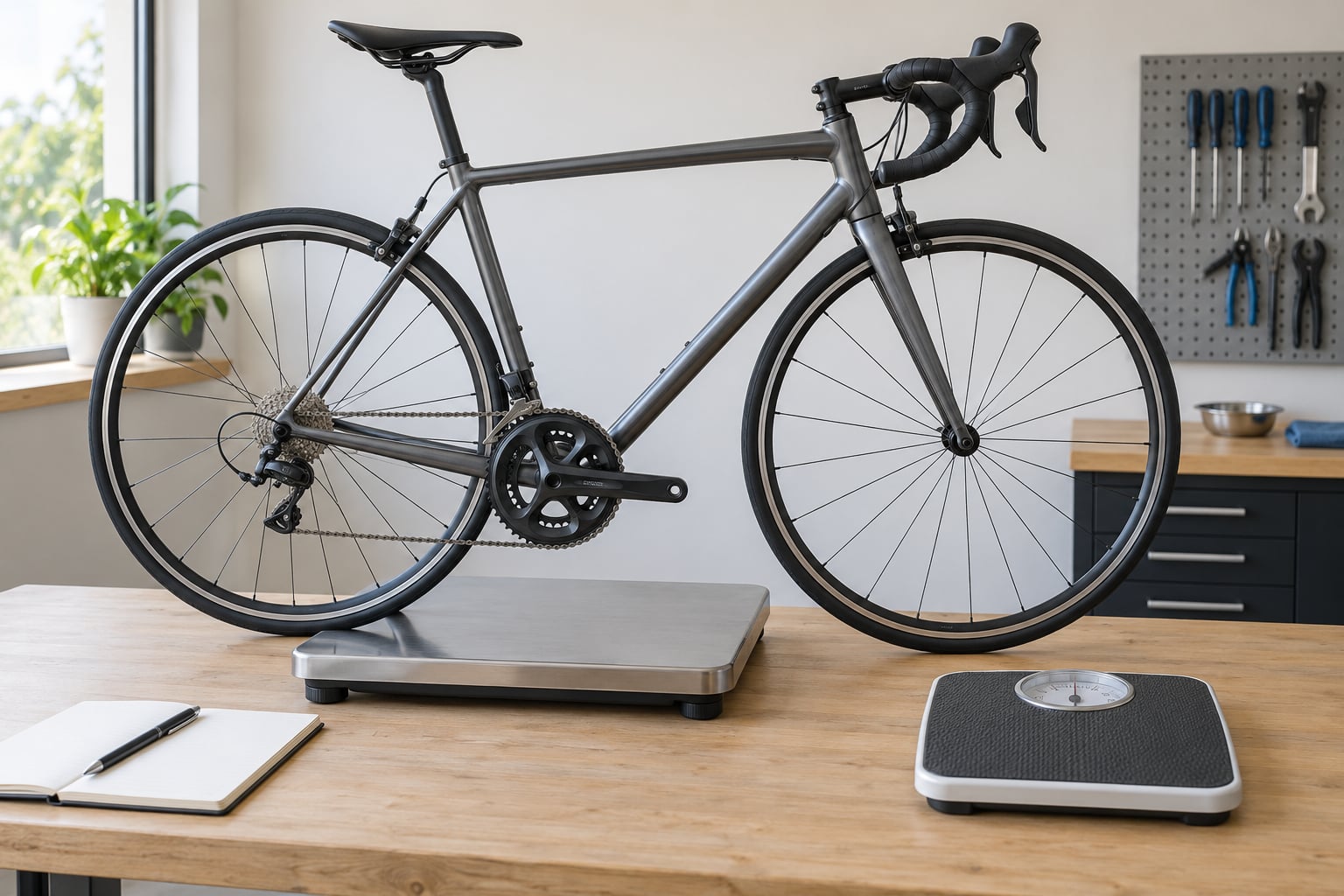
Your first step is not a new bike. Weigh yourself with the kit you ride in, weigh the bike ready to ride, then take a ride up the steepest hill on your route and note the power you can hold. That gives you the three numbers that decide everything: total system weight, gradient, and your sustainable watts.
If bike weight is still bugging you after that, remember the bike is about a tenth of the mass doing the work, and 50 watts of fitness is worth more than any frame most riders will ever buy.