Knowing how to stop saddle soreness comes down to three things at once: the friction, the moisture and the pressure. Most riders change one of them, ride again in three days, and end up with the same sore in a week. Work through the steps below in order and you break the loop instead of restarting it.
This is general riding guidance, not medical advice. Anyone with spreading redness, pus, fever or a sore that will not close should see a clinician rather than reading another forum thread.
A little diagnostic method goes a long way, too. Deciding whether you have plain chafing, a hot spot that needs pressure relief, or genuine numbness changes everything about what you do on the bike.
Table of Contents
- What You Need to Stop Saddle Soreness
- Step-by-Step: How to Stop Saddle Soreness and Keep It Stopped
- 1. Identify Where the Pain or Sore Appears
- 2. Check the Saddle Fit and Pressure Points
- 3. Reduce Friction and Avoid Prolonged Pressure
- 4. Clean, Protect, and Recover the Skin
- 5. Build Saddle Tolerance Gradually
- 6. Recheck the Bike and Riding Position
- Common Mistakes That Keep Sores Coming Back
- Frequently Asked Questions
- How long should saddle soreness last after a long ride?
- Is numbness from saddle pressure dangerous?
- How can I stop chafing between my legs on long rides?
- Will a wider or gel saddle help prevent saddle sores?
- Should I keep riding with saddle pain?
- When should saddle pain be checked by a doctor?
- Conclusion: Where to Start
What You Need to Stop Saddle Soreness
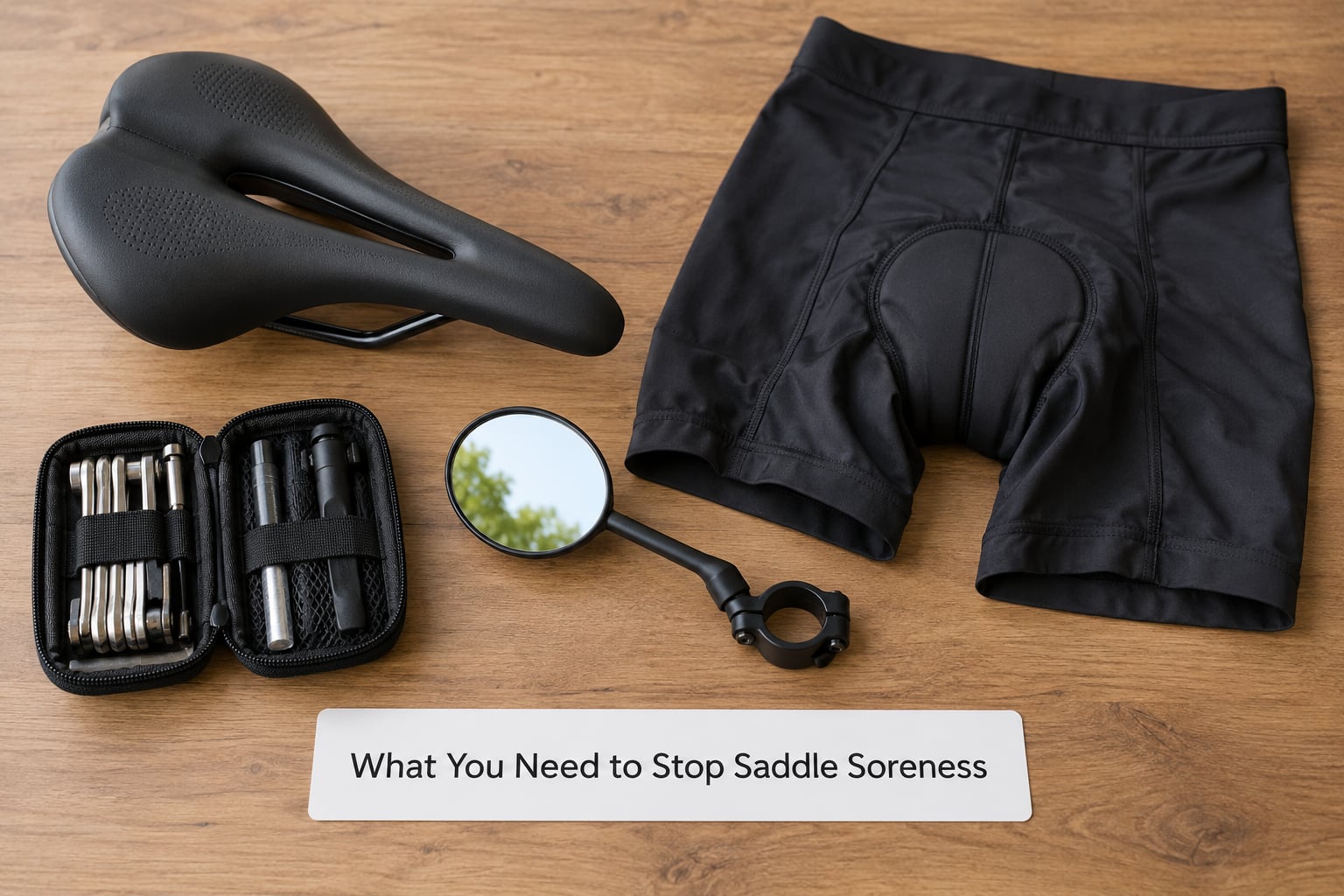
You do not need a workshop. You need to be able to see the contact points and change them.
- A saddle that fits your sit bones. Not the one that came with the bike, unless a fitter has told you it suits you.
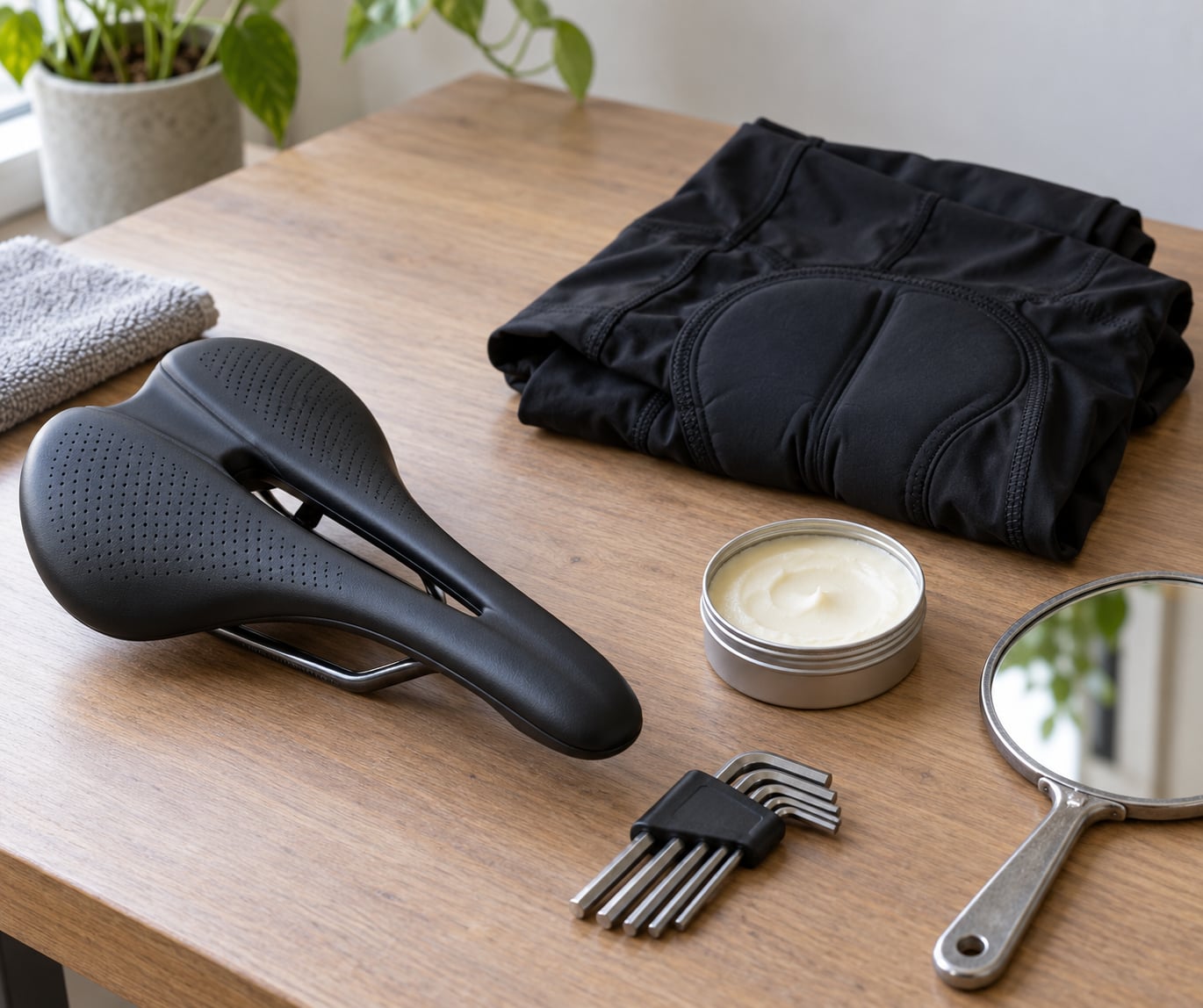
- Correctly sized bib shorts or shorts with a multi-density chamois. Too small pushes the pad and seams into exactly the skin that is already angry.
- A second pair of kit. Rotating stops you ever re-wearing damp bibs, which is the fastest route back to chafing.
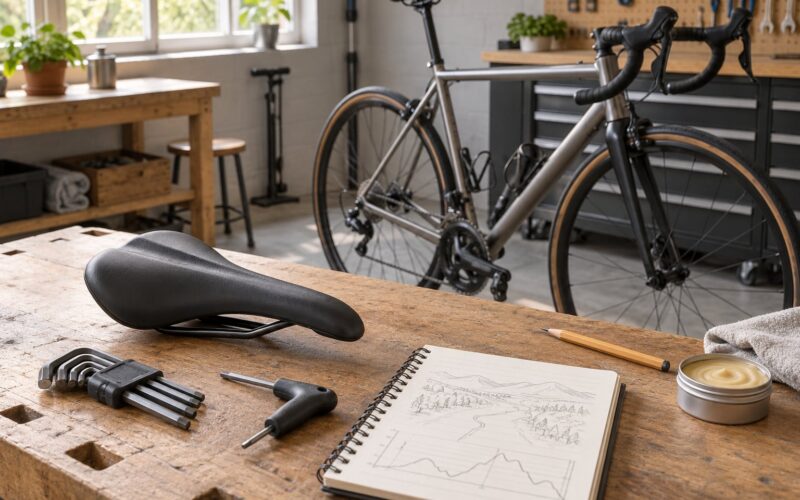
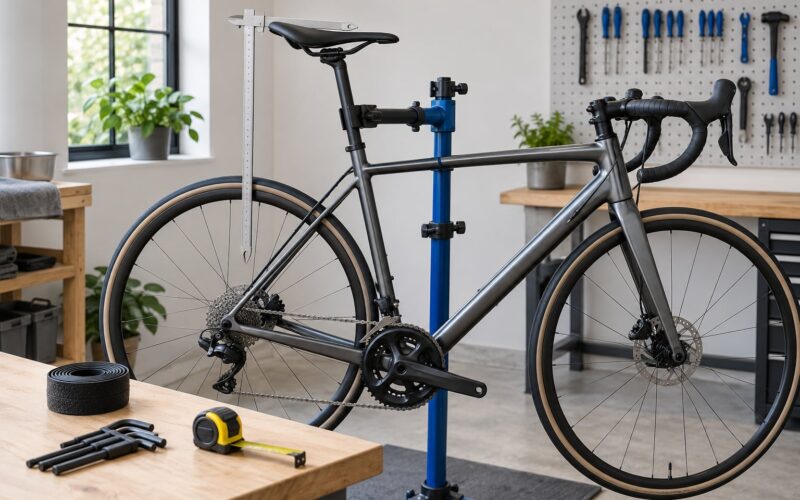
- Basic bike tools — hex keys, an Allen key set, a saddle-area marker or pen, and a way to measure saddle height.
- A mirror or your phone camera, so you can look at the sit-bone area and the saddle nose without contorting yourself mid-ride.
- Chamois cream in your pocket for long rides, plus an unscented barrier cream or zinc oxide product for skin already broken or easily irritated.
- A notebook or your ride log. Record ride duration, saddle, position and symptoms. Pattern-matching across five rides tells you more than anything you can feel in the moment.
Step-by-Step: How to Stop Saddle Soreness and Keep It Stopped
1. Identify Where the Pain or Sore Appears
Where the problem shows up tells you what is causing it. Sit-bone discomfort in two matching places, felt as ache rather than sting, usually means the saddle is too narrow or too wide for your anatomy. One-sided soreness points at a canted saddle, a leg-length difference, or simply sitting crooked out of habit.
A hot, stinging, raw feeling between the legs that builds over the first hour is chafing: friction plus sweat doing what friction plus sweat does. A single pimple-like bump on a hair follicle is usually an ingrown hair turned inflamed, often after shaving.
Numbness is a separate category entirely. If the area goes insensitive rather than sore, that is pressure on the perineal nerves, not skin damage, and no amount of cream will fix it.
You should feel a clear change: after this step you can name the type, and every later adjustment targets that specific problem.
2. Check the Saddle Fit and Pressure Points
Ride for fifteen minutes, then get off and check where you are actually sitting. Your sit bones — the bony points you can feel at the base of your pelvis — should be carrying your weight on the wide rear of the saddle, not on the narrow nose. Put a finger under your sit bone while sitting: if the saddle edge presses into it, the saddle is too narrow. If your legs are forced wide around the saddle or rub as you pedal, it is too wide.
Check height with the heel method. Sit on the bike, put your heel on the pedal at the bottom of the stroke with the crank on the drive side, and your leg should be straight without locking the knee. In that position you should have a slight bend when you switch to the ball of your foot. If you are rocking side to side over the saddle at the top of every pedal stroke, the saddle is too high for you.
Look at the saddle from behind. A tilt where the nose points down concentrates your weight forward, exactly where soft tissue cannot take it. Most saddles should sit level or with the nose very slightly up.
Success feels like a stable base: no rocking, no pressure edge you can trace with a finger afterwards, and no numbness that takes more than a minute to come back.
3. Reduce Friction and Avoid Prolonged Pressure
Friction and sustained pressure are separate problems and you treat them separately. Most of what works in how to stop saddle soreness comes down to handling those two apart. For friction: no underwear under your shorts, ever. Cotton seams and elastic edges rub and hold sweat against skin, which is the classic way riders create a sore and then wonder why it keeps returning. Make sure the shorts sit still when you ride, because a shifting chamois moves the pad across your skin on every stroke.
For pressure: stand out of the saddle every ten to fifteen minutes and stay up for about a minute. Standing shifts your weight off the sit bones, gets air to a damp area and restores blood flow through tissue that has been compressed for an hour. Riders who adopt that rhythm usually report the single biggest drop in discomfort.
Put cream on before you ride, not after the sting starts. Reapply at a stop if you have a long day ahead. Change out of your kit the moment you get home and let it air dry rather than wearing it damp to the shower.
If pain escalates mid-ride, stop. Turning back at 40km is a small loss; finishing a century with a raw patch costs you weeks.
4. Clean, Protect, and Recover the Skin
Gentle cleansing, moisture control and rest do most of the work. Wash the area with lukewarm water and a mild unscented soap, pat dry rather than rubbing, and let the skin air fully before dressing. Sleep in loose cotton or nothing at all if you can.
Where skin is intact but tender, a thin layer of a barrier cream such as zinc oxide or a plain petrolatum-type product protects it from the next round of rubbing. Skip fragranced products and anything with alcohol on broken skin. Do not apply home remedies to open, weeping or blistered areas, and do not use tea tree oil undiluted — it irritates skin that is already compromised.
Warm water soaks and Epsom salt baths are widely reported by riders as easing an existing sore, and the warmth is what helps, not the salt. Treat that as comfort rather than treatment. If there is spreading redness, warmth to the touch, pus, a lump that grows, or a fever, stop self-treating and see a clinician. An abscess is not something to sit on and hope about, and a groin lump that has nothing to do with a sore should be checked rather than assumed to be saddle-related.
You should see the sting settle and the skin look calm within two or three days of rest. Anything beyond that without improvement, or anything that looks like a deep pimple or a hard painful lump, belongs with a clinician.
5. Build Saddle Tolerance Gradually
Coming back after a sore is where riders lose the most time, because the first ride back is usually too long. Start at half your usual duration on familiar flat terrain with the setup you have just corrected. Add time in stages, and hold each stage until a ride is genuinely comfortable rather than merely bearable.
Recheck position as you go. A sore that healed perfectly and comes back at 30km after a few good weeks often means something moved: a new bike, a new saddle, a change in riding position, weight change, or simply months of desk work shrinking your flexibility. Repeat the height, tilt and width checks from step two whenever the bike changes, and at least twice a year regardless.
The real goal is not a pain-free week but a normal riding life again in about a week, and fewer rides per season that end badly.
6. Recheck the Bike and Riding Position
Once the sore has closed, do a final pass on the whole setup: sit-bone support, saddle height, level and nose tilt, cockpit distance so you are not folded too far forward, and how much you move around on the saddle during a hard effort.
A good fit lets you stay still. If you are sliding forward onto the nose on every out-of-the-saddle effort, or if your knees come too high because the saddle is too short, the position is generating movement that no cream can compensate for. A professional bike fit is worth it here, especially if you have changed bike, changed discipline or started noticing symptoms you did not have a year ago.
For persistent numbness or recurring pain that survives every fit and kit change, a sports physiotherapist can often find the cause in a way a saddle swap cannot. Pelvic floor and perineal health work is a real area of practice and worth asking about.
When the fix is right, you should finish a long ride with no mark that lasts more than a few minutes, and no sore appearing the following morning.
Common Mistakes That Keep Sores Coming Back
- Buying a saddle by colour or because it looked comfortable in the shop for two minutes. Sit-bone width is the only reliable guide, and you need it measured while you are in riding position.
- Assuming more padding is more comfort. A very thick or very wide saddle spreads pressure but can force your legs to rub and can pinch sensitive tissue.
- Wearing underwear under the shorts. Extra seams and trapped moisture are behind a large share of repeat chafing.
- Riding in wet kit or re-wearing the same bibs. Damp fabric plus salt plus hours of pressure is the perfect setup for a sore.
- Treating numbness as training pain. Loss of sensation is a nerve-pressure signal, not toughness. Adjust the fit instead.
- Sitting with your weight forward on the saddle nose. If you feel the narrow point rather than the wide rear, the fit is wrong.
- Using a thick product to mask pain. A numb area feels fine because you cannot feel it, and the damage keeps developing underneath.
- Riding through worsening symptoms. A sore that gets worse during a ride is telling you the pressure pattern has not changed.
- Shaving before a long ride. Closely cut hair can curl back into the skin and become an inflamed follicle. Trimming is generally gentler than shaving right before saddle time.
- Fixing everything except the bike. New kit, new cream, same saddle, same position, same sore at the same distance.
Frequently Asked Questions
How long should saddle soreness last after a long ride?
After a long ride, mild skin sensitivity that clears within a minute or two of getting off the bike is normal. Raw chafing usually settles within two to three days if you rest, keep the area clean and dry and avoid further rubbing. An inflamed hair follicle commonly takes five to ten days with topical treatment. A sore that is still raw after five to seven days, or that spreads, weeps pus or comes with a fever, needs a clinician rather than more rest.
Is numbness from saddle pressure dangerous?
Not usually, but it is not something to train through. Temporary numbness after long pressure is common and resolves quickly once you get off the saddle. Persistent numbness, or numbness that starts within the first hour of a ride, points to pressure on the perineal nerves and deserves a fit change. Repeated sessions of that kind of pressure can leave longer-lasting sensitivity, so treat numbness as a fit problem, not a fitness milestone.
How can I stop chafing between my legs on long rides?
The four things that matter most: skip underwear entirely, make sure your shorts fit well enough that the chamois does not shift, apply chamois cream before you set off and reapply at stops, and stand out of the saddle for about a minute every ten to fifteen minutes. Add a standing routine to your long-ride plan and the problem usually disappears. If chafing still appears at the same point every ride, the saddle width or tilt is usually the reason.
Will a wider or gel saddle help prevent saddle sores?
Only if width is genuinely your problem. A saddle whose wide section matches your sit bones stops edge pressure, but extra width forces your legs wider and they can then rub instead. Gel and heavily padded saddles spread pressure over a wider area and can feel soft in a shop while causing more movement on the bike. Find your sit-bone width first, then choose shape and padding from what you now know about how you sit.
Should I keep riding with saddle pain?
That depends entirely on what the pain is. If it is unbroken redness or tenderness with no broken skin, you can often ride: lower the saddle slightly, add barrier cream and stand every ten to fifteen minutes. If the skin is open, raw, weeping, blistered or bleeds, stop riding until it closes. Any hard, painful lump or pimple-like swelling needs checking by a clinician, and you should not sit on it to see whether it improves.
When should saddle pain be checked by a doctor?
Book an appointment if the sore is not improving after five to seven days of rest, if there is pus, spreading redness, increasing swelling or pain out of proportion to the injury, if you feel feverish, or if you develop a hard painful lump. Any lump in the groin that is not clearly on the skin should also be examined rather than assumed to be a saddle sore. For general saddle pain that survives every fit and kit change, a sports physiotherapist is the next step.
Conclusion: Where to Start
Begin by naming what you actually have, because chafing, a follicle infection and numbness need different fixes and only one of them is solved by cream. Then check saddle fit — width, height and nose tilt — before your next ride, fix the kit, and build the standing routine into long rides.
Riders who work through how to stop saddle soreness properly in 2026 usually find the sore heals in a few days and the same ride stops producing one. If it does not heal, or if numbness persists after the fit changes, get it looked at properly rather than adapting around it for another season.