To prepare mentally for a long ride, turn vague nerves into a specific plan: know what the route demands, hold a deliberately conservative pace, rehearse the hard moments, and build a short morning routine you repeat on the day. Riders who do this usually finish stronger and enjoy it more, because the effort after mile 60 is decided by the head, not the legs.
The process is shorter than most people expect. Six steps, spread across the final six to ten weeks, cover it:
- Review the real demands of the ride and name the mental challenges hiding inside them.
- Set a conservative pace plan so you never spend attention on effort you did not intend to spend.
- Practice staying calm under pressure by rehearsing mechanicals, bad weather, missed turns and group separation.
- Rehearse with a long ride that goes further than your last one, with real fueling and real regrouping.
- Build a pre-ride reset routine you can repeat on the morning without thinking.
- Use three or four short mental cues during the ride to bring attention back to the controllable.
One more thing worth saying up front: the goal is composed riding, not a hardened shell. Riders on cycling forums tend to describe the same honest picture. Mental toughness and taking care of yourself are not opposites, and the riders who last the season are the ones who respect both.
Table of Contents
- What You Need
- Step-by-Step: How to Prepare Mentally for a Long Ride
- Review the Demands of the Ride
- Set a Realistic Pace Plan
- Practice Staying Calm Under Pressure
- Rehearse With a Long-Ride Simulation
- Build a Pre-Ride Reset Routine
- Use Simple Mental Cues to Prepare Mentally During the Ride
- Common Mistakes
- Frequently Asked Questions
- How long before a long ride should I start mentally preparing?
- Is it normal to feel anxious before a century or double century?
- Can visualization help me prepare for a long ride?
- What should I do if I become mentally tired during the ride?
- How can I practice focusing while cycling?
- Should I worry about losing motivation halfway through a long ride?
- Conclusion
What You Need
Mental preparation is cheap to set up and easy to skip. Before you start, gather five things. Most riders already own them.
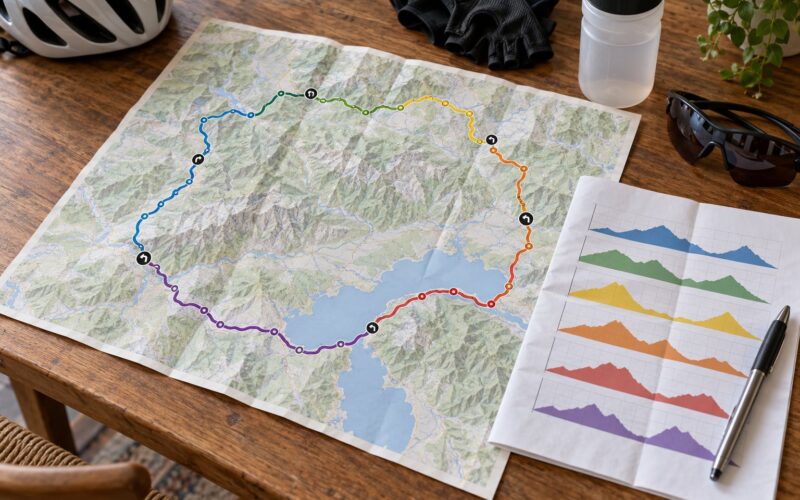
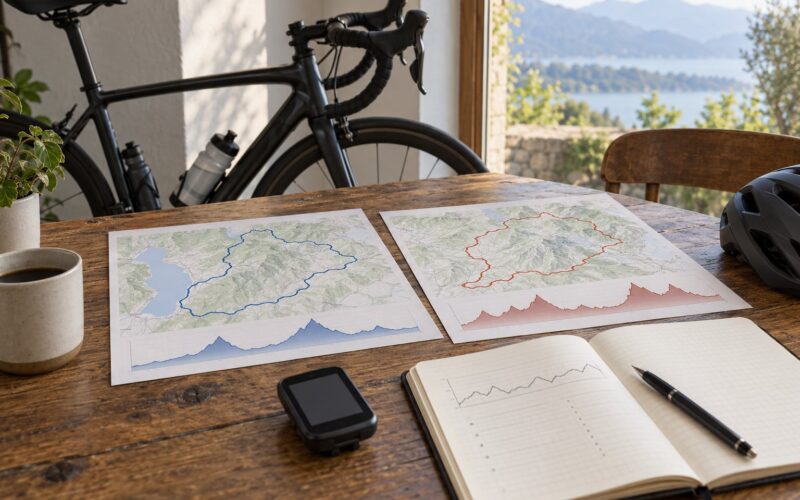
The route plan. Distance, total climbing, the location of the hard climbs, where the fuel stops sit, where the regrouping points are, and where the roads turn rough. If your event publishes a cue sheet, read it twice and mark the three points where the ride will be decided.
Your training history. A list or a log of your last six to eight rides, with distance and how they felt. This is the honest baseline. It tells you which parts of the event are genuinely new to your body and therefore genuinely new to your mind.
A support plan. Who you are riding with, where the aid stations are, and what your plan is if you fall behind the group. Fear of being dropped grows fastest in the space where nobody has decided anything. Deciding in advance shrinks it.
A cue list. Four short phrases, written down and kept somewhere you can read them at a stop. We will build these in the last step below. Written beats remembered, because under fatigue nobody remembers anything.
A time budget for rehearsal. Ten minutes of visualization on three or four days a week, plus one long rehearsal ride a month, is genuinely enough. Mental preparation fails when riders treat it as a project. Keep it small enough that a bad week does not kill it.
If you ride with a club, this is a good moment to sort out who is riding at your pace rather than at the front rider’s pace. Riders in the forums are consistent on this: the fastest way to fix fear of being dropped is to find people who will ride with you at the speed you can actually hold. Impulse surges in a group are mostly a social decision, and it is one you can make in advance.
Step-by-Step: How to Prepare Mentally for a Long Ride
Review the Demands of the Ride
The most common preparation error is rehearsing an abstract idea of being tired. That idea is useless, because the mind cannot rehearse vagueness. Convert each demand of the ride into a specific mental challenge, then practise that challenge.
Distance becomes: what do I do at 40 miles when my attention starts sliding? Climbing becomes: what does my breathing sound like at the top of the third category one, and do I stay smooth or surge? Weather becomes: what do I say to myself when the temperature climbs and the group stops? Traffic becomes: what is my plan at the two junctions where cars pull out in front of the group?
Distance thresholds are worth naming because they move. Riders describe the shift differently at nearly every stage. Gear choice carries you through the first short rides; somewhere around 25 to 40 miles the drivetrain stops mattering much and the mental game takes over, provided you are properly fitted and fueled. Past 50 miles, riders with a solid aerobic base say the head is doing most of the work. Knowing where your next threshold sits tells you which part of you the preparation needs to target.
Regrouping deserves its own line. Riders who get separated at a regroup point often report the same sequence: a small gap, a surge to close it, an unnecessary sprint, then a slow bleed of energy and a bad mood. Write down what you will do instead. Slow down, ride your own line, catch the group at the next stop, refuel and move on.
You will know this step worked when you can describe the ride’s hardest ten minutes in ordinary language. Not the whole day. Ten minutes.
Set a Realistic Pace Plan
Pace is a mental tool before it is a physical one. A rider who knows the effort target for the first hour does not have to spend attention on it later. A rider who has no plan keeps checking their legs, and checking is a form of worry.
Work out a target pace for the flat sections that you could hold while still being able to talk in short sentences. For a first century, riders commonly anchor on finishing somewhere around five hours, and the sub-five goal they write on a card works as a mental handle for the whole day. A number you are not fully sure you will hit does more for the head than an open-ended intention to have a good time.
Then identify your vulnerable points honestly. For most riders it is the second long climb, the point where the group stops regrouping, and the hour after the last fuel stop. Write one instruction for each. On the climb, stay seated and breathe. At the regroup, refuel first, chase second. After the last stop, settle to the planned pace rather than chasing a conversation.
You know the plan is working when the pace feels boringly easy for the first hour. That boredom is the point. Riders who blow up early usually describe wanting to be part of something.
If your event has a time-based goal, treat it as an anchor rather than a forecast. Riders who write something like sub-five hours on a century use it to shape the whole day: they know what the first hour has to look like, and a slow early section stops feeling like failure and starts feeling like the plan. The riders who miss the goal usually explain it as the day being harder than expected, which is a description of weather and pace rather than of fitness.
Practice Staying Calm Under Pressure
Composure under pressure is a practised response, not a personality trait. The good news is you can rehearse it cheaply, because most of the pressure comes from events you can predict.
Run short scenarios, either in training or sitting still before a session. A mechanical goes wrong on a climb, ten minutes from the nearest road. You missed a turn and the group is gone. The temperature jumps eight degrees in an hour and nobody has water. You get separated after a regroup and you are riding alone for twenty minutes. For each one, decide the first three actions, in order.
The usual first three are the same every time: get off the saddle and walk the bike if the road is unsafe, drink, and take the next sensible action rather than the fastest one. Riders who have decided this in advance report far less panic than riders improvising at the roadside.
A useful filter for all of it is the oldest one available. Sort each problem into what you control and what you do not. Your pace, your fuel, your breathing and your response belong in the first column. Other riders’ fitness, the wind and the weather belong in the second, and worrying about the second column is pure waste of attention. Riders who do this sorting on a whiteboard the week before report walking into problems on the day with a plan already in hand.
Add short visualization on top. Ten minutes, eyes closed, riding the route at a comfortable cadence, with the hard parts included rather than edited out. Mental rehearsal of a familiar sequence builds comfort with it. What you are really doing is rehearsing your own response, not admiring the scenery.
You will know it is working when a real problem arrives on ride day and your first thought is a plan rather than a reaction.
Rehearse With a Long-Ride Simulation
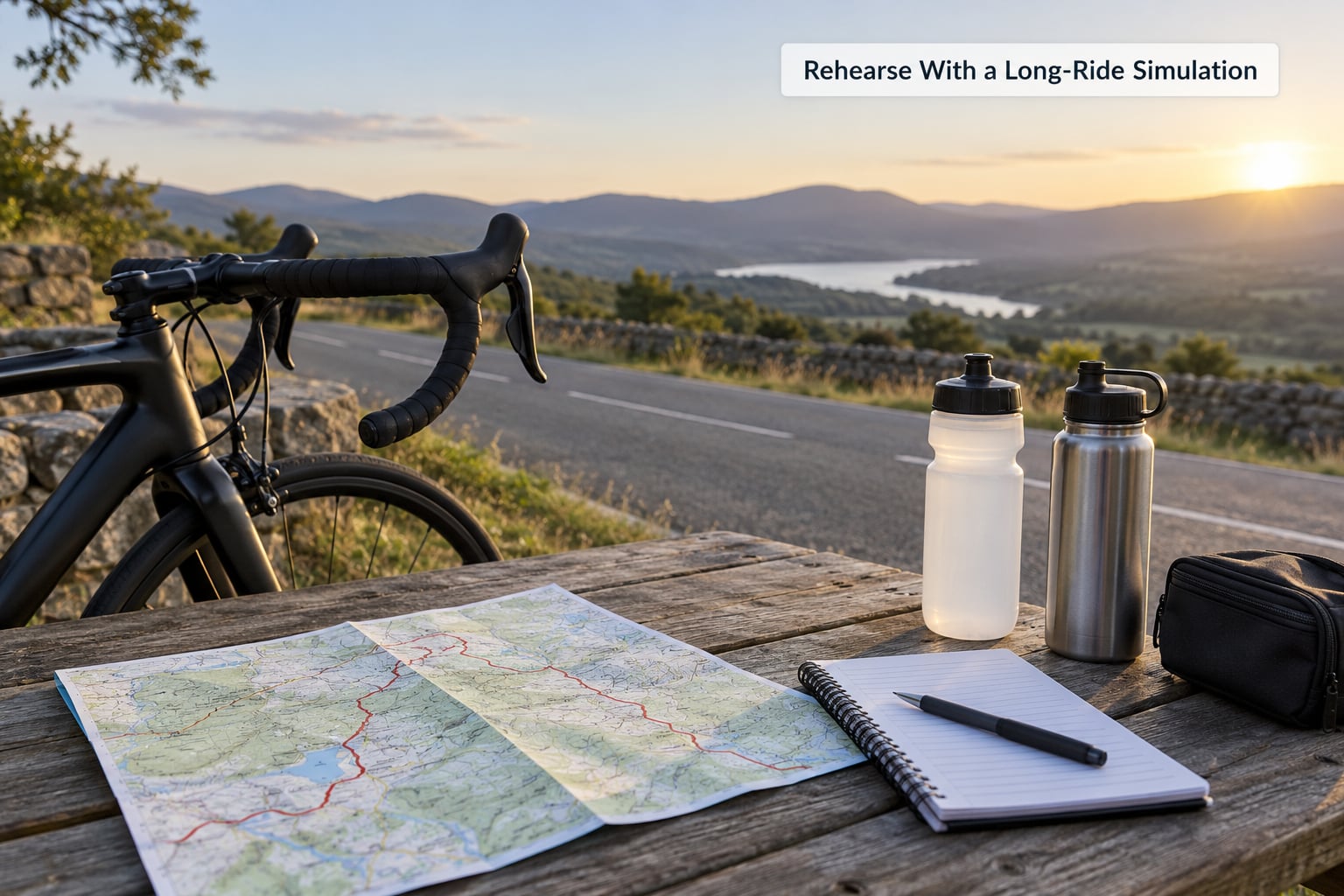
The rehearsal ride is the step riders skip and then wish they had not. A short effort teaches you how to suffer for an hour. A long ride teaches you what your attention does at hour four, and that is the hour where rides are actually decided.
Make it progressive. Your longest ride should reach roughly three quarters of the event distance a couple of weeks out, and every one of these rides should include a deliberate rehearsal of something: the nutrition you plan to use, the pace you plan to hold, a regroup with a group that splits, or the last hour after you have stopped feeling fresh.
Keep it from turning into a punishment. One long ride a month is plenty, and it should sit inside your normal training rather than on top of it. Riders who cram three hard weekend efforts into the month before a century often show up on the day tired in a way no visualization can fix.
Fuel during the rehearsal exactly as you intend to fuel on the day, including timing. Under-fuelling shows up mentally long before it shows up physically: riders describe irritability, loss of motivation and a foggy head at 60 miles, and nutrition mistakes cause more mental crashes than fitness gaps do. Fix the plan while the stakes are low.
Write three lines in a notebook immediately after each rehearsal ride. What held up. What did not. One thing to change next time. Post-ride reflection like this is the cheapest confidence builder there is, because it converts a hard morning into usable information instead of a bad memory.
Build a Pre-Ride Reset Routine
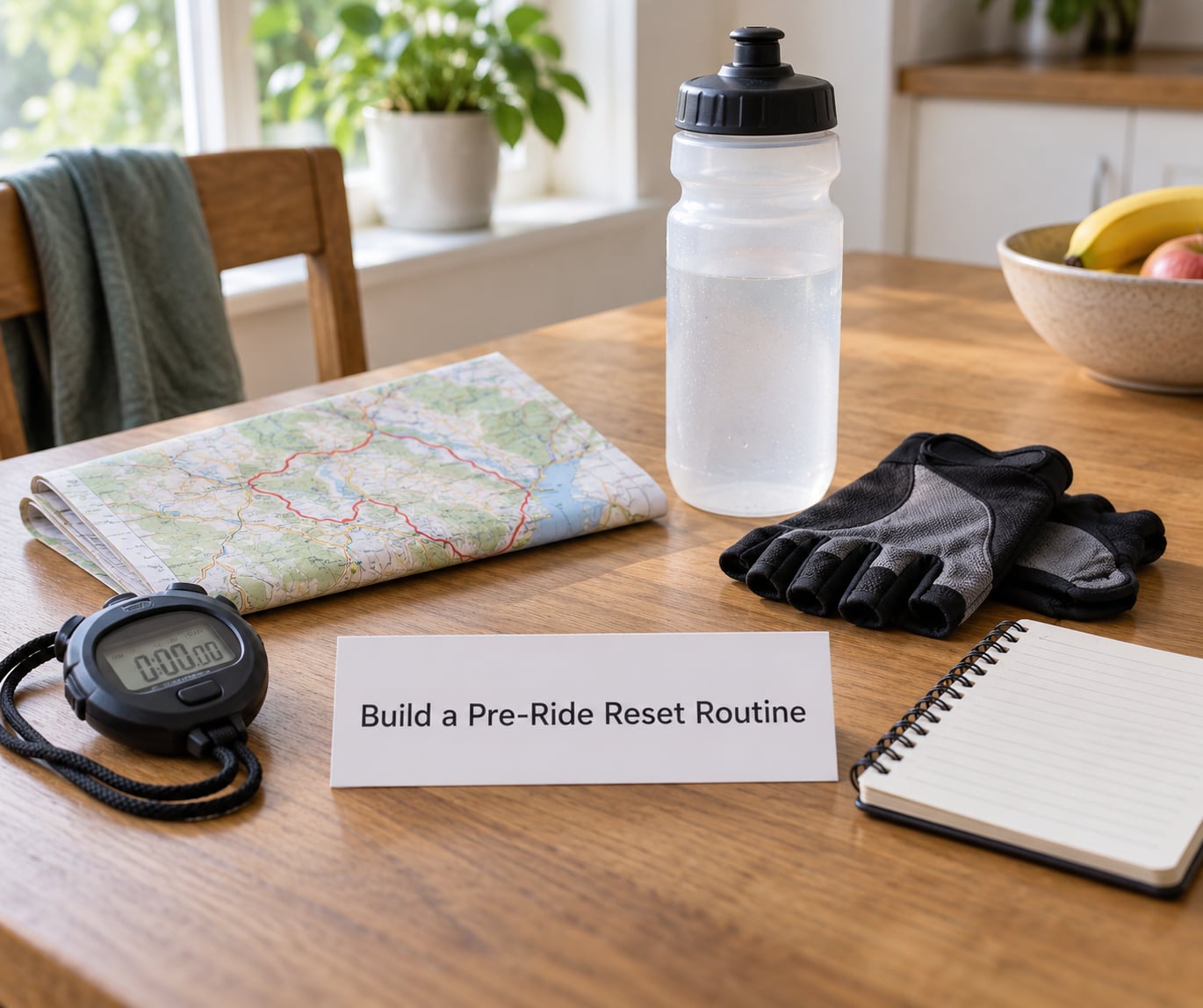
The morning of a long ride is where most of the wasted mental energy goes. Riders wake up anxious, reach for their phone, and spend forty minutes rehearsing every possible disaster. A short repeatable routine replaces that with something you have already done before.
Keep the routine to fifteen minutes and give it five parts. Ten slow breaths where the exhale is longer than the inhale, which slows the heart rate and settles a jumpy start. Then review the route once, marking the two or three points you identified as decisive. Then a short piece of movement such as a handful of squats or a walk to the door and back. Then read your four cues out loud. Then eat, and stop thinking about the ride.
The order matters more than the parts. Breathing first, because it changes the state. Everything after that is easier from a calmer baseline.
Do not vary it. The routine’s value is that it has been done before and requires no decisions. Riders who add new elements on the morning of the event are really adding decisions, which is the opposite of the point.
You know it works when you arrive at the start and feel ordinary rather than electric. Ordinary is the target.
Use Simple Mental Cues to Prepare Mentally During the Ride
Attention on a long ride wanders. That is normal and not a character flaw. What matters is having a short way to bring it back, which is what a cue is.
Write four, no more. An effort cue, such as easy, steady, or under control. A breathing cue, such as long exhale. A posture cue, such as shoulders down. A mood cue, such as next fuel stop, which replaces a vague assessment of how you feel with an action that is yours to take.
Attach them to something that happens automatically. Read them at every regroup. Check them every time you take a drink. Riders who pair a cue with an existing habit report far better results than riders who try to hold a thought on purpose, because holding a thought takes the very attention you are trying to restore.
Handle the bad moments with a two-question rule. Is this about my body or about my mood? If it is the body, check the pace plan and adjust. If it is the mood, change one small thing, such as position, breathing rhythm or the next cue. Riders who spiral usually fall into a story about the whole ride. A single question breaks that, and it takes two seconds.
Accept a rough patch without narrating it. You do not have to feel good to keep riding, you do not have to stay in the group, and you do not have to like the last hour. Riders who treat discomfort as information rather than an emergency simply keep moving through it.
Common Mistakes
Most riders do not fail at long rides for lack of preparation. They fail at preparation habits that work against them.
Overthinking the day. Rehearsing every possible failure in vivid detail creates stress without skill. Visualize the plan and your responses, not the disasters. If a worry is genuinely useful, it belongs in your written plan; if not, leave it.
Setting a pace that only works on a good day. Conservative effort is not timidity. It is the only pace that leaves enough judgement for the hard parts. Fix the correction: start a group of ten percent slower than feels right, and hold it.
Rehearsing only hard efforts. If every training session is a fight, ride day feels like another fight, and the ordinary hours feel like wasted time. Practise steady all-day pacing instead, which is the ability the event actually tests.
Treating a setback as a verdict. A mechanical, a dropped chain or a missed turn is an event, not a character assessment. Write the response down in advance and the event stops being personal.
Relying on motivation alone. Motivation is at its lowest around hour four, which is exactly when it is needed least. Routines, cues, a written pace plan and people riding beside you do the work that willpower cannot.
Ignoring fuel and hydration as mental tools. A rider who eats and drinks on schedule stays steady in a way that motivation cannot reproduce. Schedule the stops in advance so hunger never gets a vote.
Skipping the reflection. Ten minutes of notes after each long ride turns effort into experience. Riders who do this approach their next event calmer, and riders who skip it tend to relive the hard parts instead of learning from them.
One more worth naming: skipping the ride entirely out of nerves. If fear is keeping you off the saddle, talk to your doctor about it, or work with a qualified coach, rather than trying to push through with willpower. That is ordinary, and it is treatable.
Frequently Asked Questions
How long before a long ride should I start mentally preparing?
Start four to six weeks out for a first century, and two to three weeks is enough for an experienced rider on a familiar route. The work is small: ten minutes of visualization on three or four days a week, one review of the route, and one progressive rehearsal ride. Starting later still beats not starting, but the rehearsal ride needs room on the calendar.
Is it normal to feel anxious before a century or double century?
Yes, and experienced riders feel it too. Anxiety before a long ride usually shows up as rehearsing disasters, checking equipment repeatedly or worrying about being dropped. None of those are signs you are weak. Write down what worries you, turn each one into a first action, and your nervous system gets something concrete to hold.
Can visualization help me prepare for a long ride?
It can, if you rehearse responses rather than results. Ten minutes a day of riding the route at a comfortable cadence, including the climbs and the regroup points, builds familiarity with the sequence. Imagining a perfect ride teaches less than imagining a flat tire and walking the bike calmly, because the second one is something you can actually practise.
What should I do if I become mentally tired during the ride?
Change one small thing rather than arguing with yourself. Check the pace plan and ease off, drink and eat something scheduled, change position, or shift attention to the next cue. Ask whether the problem is your body or your mood, then answer one of them. Riders who make a small adjustment usually come back within a few minutes.
How can I practice focusing while cycling?
Train attention on short, boring stretches where nothing happens. Ride an out-and-back or a flat loop and aim to hold one steady effort without checking your computer more than twice. Then add a simple task like counting gear changes or breathing on a pattern. Attention follows the same pattern as fitness, and it improves with the same boring repetitions.
Should I worry about losing motivation halfway through a long ride?
Expect it and plan around it. Motivation dips in the middle of any long effort, and it is not a signal that you chose the wrong ride. Ride on cues and routines rather than feelings, take your scheduled stop even when you feel fine, and pick one small thing to enjoy in each section. Riders who finish are usually the ones who stopped waiting to want it.
Conclusion
Preparing mentally for a long ride comes down to a handful of written, practised things: a clear picture of what the ride demands, a conservative pace plan, rehearsed responses to the hard moments, one longer ride at the right distance, a fifteen-minute morning routine, and four written cues.
Start today, and it takes an evening. Pull up the route and mark the three points where the ride will be decided. Write down the effort target you want to hold for the first hour. Then put one progressively longer ride on the calendar for the next month, and treat it as practice rather than a test.