To train for a 100K bike ride, give yourself 10 to 12 weeks and ride three times a week: two short easy sessions and one long ride that grows by about 30 minutes each week until it reaches three and a half to four hours. Fuel at roughly 60g of carbohydrate an hour, drink a bottle an hour, and spend the final fortnight cutting volume rather than adding it.
That is the whole plan in one breath, and it works because a 100K is a duration event, not a speed event. Four to five hours in the saddle is what breaks people, not the top speed.
For reference, 100K means 100 kilometres, which is about 62 miles. American riders call the same effort a century or a 100-miler, and a 100-miler is 100 miles or 160km. Plenty of people arrive at the start line with the metric number printed on their bib and still mean the imperial one, so check what your event actually is before you plan a single week.
Table of Contents
- What You Need Before You Start
- Step-by-Step: The 10 to 12 Week Build
- Set a Baseline and Choose a Training Start Date
- Build an Aerobic Base
- Add Long Rides and Climb-Specific Practice
- Practice Fueling, Hydration, and Bike Reliability
- Reduce Volume and Race the Final Long Ride
- Taper and Execute the 100K
- What To Do If You Bonk at 85km
- Common Mistakes That Ruin 100K Plans
- Jumping mileage too fast
- Training only on flat roads
- Riding every session hard
- Never practising fueling
- Peaking too early
- Going out too hard on the day
- Frequently Asked Questions
- How long should I train for a 100K bike ride?
- How many miles should I ride each week to prepare for 100K?
- Can a beginner train for a 100K in eight weeks?
- What should I eat and drink during a 100K bike ride?
- How many hours should my longest training ride be?
- Should I train with a cycling club before a 100K?
- Conclusion
What You Need Before You Start
You need five things sorted before week one, and only one of them costs money you might not have budgeted.
- A bike that fits. Nothing about this plan makes a badly set-up bike comfortable. If you have numbness in the saddle area or knee pain that shows up after ninety minutes, sort the position first. A sports physiotherapist or a reputable bike fitter is worth more than any piece of training kit.
- A working flat kit. Two spare tubes, tyre levers, a mini pump or CO2 inflator, a multi-tool, a small chain tool and a rag. Practise changing a tube at home on a cold evening before the season starts, not beside a hedge on the day.
- Somewhere to write things down. A phone note or paper log with three columns: duration, distance and how it felt. It is the cheapest tool in this list and the one riders skip most.
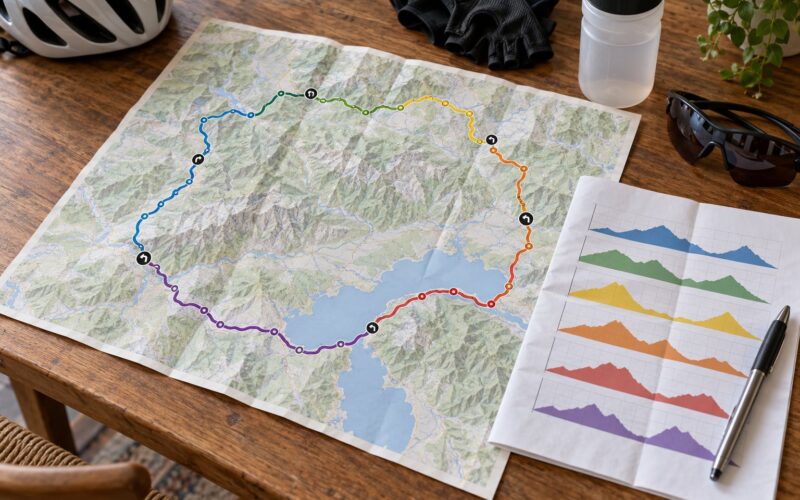
- Route information. Download the course profile. Look at total elevation gain, where the climbs sit, whether aid stations exist, and any cut-off time. Most 100K failures I hear about are not fitness failures, they are fuel and water failures that were predictable from the route profile.
- Fueling and drink supplies for a five-hour worst case. More on this below, but buy it before you need it. Never try a new product on the day.
If you have persistent pain, numbness that lasts after a ride, or any medical condition that affects exercise, talk to a doctor or physiotherapist before adding distance. A training plan is not medical advice.
Step-by-Step: The 10 to 12 Week Build
Work in the order below. Each stage has a job, and doing the next one early is how riders arrive at the start line tired instead of fresh.
Set a Baseline and Choose a Training Start Date

Start by measuring where you actually are, honestly. Write down your longest comfortable ride in the last two months and your typical weekly volume.
You can follow this plan if you can already ride 60 to 90 minutes outdoors and hold a conversation while doing it. If your longest ride is under an hour, add four weeks of base building at the front, or pick an event six months out rather than rushing.
Then work backwards from the event date. Ten weeks is the minimum for a rider already riding 100 to 150km a week. Twelve weeks suits anyone starting lower. Count back from the start line and write the dates down, then leave two spare weeks in your diary for illness, bad weather or a work trip.
A three-rider community consensus that shows up repeatedly on cycling forums is worth repeating: consistency across months beats short intense bursts every time. Three or four rides a week for eight weeks does more for your 100K than a heroic fortnight of five-a-days followed by three weeks off.
Build an Aerobic Base
Weeks one to four are about volume and comfort, nothing else. Most of your riding sits at a conversational pace, which is roughly RPE 3 out of 10, the point where you can speak in full sentences but would not enjoy holding a conversation for an hour.
Add 30 to 60 minutes a week to your total riding time across the whole week, not all in one go. Aim for three rides: two of 60 to 90 minutes at easy pace and one that starts at your current longest distance. Never raise both volume and intensity in the same week.
Keep one full rest day. It feels like lost time and it is the single thing that keeps a build absorbable.
How do you know it is working? Around week three, an easy hour should feel almost disappointingly slow. Your resting heart rate comes down, the saddle stops being interesting after two hours, and hills no longer make your breathing go ragged at low effort.
Add Long Rides and Climb-Specific Practice
Weeks five to eight are where the plan earns its keep. Extend your longest ride by about 30 minutes a week, aiming to reach three and a half hours roughly ten days before the event. Riders with a solid base can push toward 75 to 80km at that peak.
Plan in time, not kilometres. Forums are consistent on this point: the same distance with 1,000 metres of climbing and a headwind is a completely different effort from the same distance on the flat. Hills are the reason to practise climbing, and headwind is the reason to practise pacing.
On climbs, drop to a comfortable gear and keep a cadence near 80 to 90 rpm. Grinding up in a low gear at 55 rpm burns legs for no return. Meter your breathing on the steepest pitches instead of chasing someone else’s speed.
Keep the hard sessions small. The 80/20 rule says roughly 80 percent of your riding should be easy and 20 percent hard; the 75 percent rule from the same family of thinking says three quarters of your rides should be genuinely conversational. Either way, the hard slice is two sessions a week at most, and one of them is usually hills.
Stop while you still feel like you had something left. Every long ride should end with a little in reserve, because the day you will need that reserve is the day itself.
Practice Fueling, Hydration, and Bike Reliability
This stage turns the 100K into a rehearsal. You cannot buy fitness at the aid station, so you have to practise the thing that will get you there.
- Carbohydrate: aim for 60g an hour, roughly 240 kcal. That is one large gel plus a normal drink, or a bar and a handful of dried fruit, or real food if your stomach tolerates it. Some riders get to 90g an hour in training, but 60g is a target most people can actually hit.
- Timing: start eating at 30 minutes, not when you get hungry. Hunger is already a late signal. Set a repeating pattern, something like a gel every 30 minutes, because on a long ride you will not remember the last time you ate.
- Drink: one bottle an hour, about 500 to 750ml, sipping every 10 to 20 minutes rather than taking large swallows. Add electrolytes if the forecast is warm or you are a heavy sweater. Sip more in heat; do not force liquid you cannot hold down.
- Testing: every product you plan to use gets tried on a training ride first. New things on event day are how riders end up with an upset stomach 60km from home.
Run the bike check too: tyres at correct pressure, brakes firm, chain lubricated, bolts checked, quick releases closed properly, and a spare route on your phone in case the phone dies. Carry more than you think you need. One r/cycling rider summed up a first 100km finished in 3:54 at an average of 25.3km/h after bonking at 85km with no food and a single water bottle, and the lesson in that story is not about fitness. It is that he arrived unprepared for the last quarter of the ride.
Reduce Volume and Race the Final Long Ride
Weeks nine and ten are about arriving fresh. Cut your weekly volume by roughly a third, keep one short session with some intensity in it, and hold one proper dress rehearsal 7 to 10 days out.
Run the rehearsal the way the event will run: same start time, same breakfast, same fuel products, same bottle volume. Ride three and a half to four hours, or 75 to 80km if distance comes easier. Practice eating and drinking on the sections you usually ride fast, because that is where mistakes happen.
Then stop. Many riders add one more long ride because it feels productive. It is not. It is the most common way people arrive tired, and tired riders are the ones who finish at walking pace.
Taper and Execute the 100K
Race week is quiet on purpose. Two short easy rides, maybe some light spin and mobility work, no hard efforts, no long rides.
Prioritise sleep, and eat normal meals with extra carbohydrate in the two to three days before. Breakfast on the morning should be familiar and carb-heavy, eaten three hours before the start if you can.
On the bike, the first 50 to 60km should feel too slow. That is the target. Sit at RPE 3 to 4, stay in the group if you are comfortable there but do not chase a wheel, and eat and drink on your schedule rather than on your hunger. Coaches use that same instruction for a reason.
When the course gets hard, drop a gear before your form breaks, keep the cadence up, and breathe. If a headwind appears, tuck in and accept a lower speed rather than burning the group up. If you do hit the wall, stop, take in fluid and carbohydrate, wait ten minutes, and restart at an easy effort. A short stop costs less than twenty minutes of coasting.
What To Do If You Bonk at 85km
Bonking, or hitting the wall, means the glycogen in your muscles and liver ran dry before you finished. Here is the recovery sequence, in order.
- Stop the ride. Do not try to push through at the same effort.
- Drink 200 to 300ml of fluid with carbohydrate and electrolytes.
- Take 25 to 30g of fast carbohydrate, such as a gel or a sugary drink, and give your gut ten minutes to start absorbing it.
- Restart at an easy, flat effort below your normal pace and stay there for 20 minutes.
- Keep eating small amounts every 20 to 30 minutes for the rest of the ride.
Prevention is far simpler than recovery: eat from 30 minutes in, hit the hourly number, and do not let an empty tank meet a headwind with 20km still to go.
Common Mistakes That Ruin 100K Plans
Jumping mileage too fast
The fastest way to break the plan is doubling a long ride because a weekend looked free. Extend by roughly 30 minutes a week, and follow an unplanned week of illness with a reduced one rather than a make-up ride.
Training only on flat roads
If every training ride is flat and fast, the event climbs arrive as a surprise and your legs go within 40km. Add one hill session a week and ride the course profile if you can get it.
Riding every session hard
Hard days belong in the minority. Keep the easy rides genuinely easy, the ones where you could hold a conversation, and they become the aerobic base that everything else rests on.
Never practising fueling
Nutrition is the most common failure mode reported by riders, and it is the one thing you can rehearse perfectly. Eat on long training rides exactly as you intend to on the day.
Peaking too early
Finishing your hardest work a month out and coasting for three weeks produces an underprepared rider. Peak the long ride, then taper.
Going out too hard on the day
The first hour decides the last hour for most people. Ride slower than feels necessary in the first 50km, and bank the effort for the final third, which is where organised events usually decide the result.
Frequently Asked Questions
How long should I train for a 100K bike ride?
Ten to twelve weeks is the standard preparation window for most recreational riders. Ten weeks suits someone already riding 100 to 150km a week. Twelve weeks suits anyone with a smaller base or returning from a layoff. If your longest recent ride is under an hour, add four weeks of base building or move the event to a later date rather than compressing the plan.
How many miles should I ride each week to prepare for 100K?
A rider with a decent base can handle 150 to 250 miles a week in the middle of the build, with the long ride making up most of it. Beginners should start lower and add 30 to 60 minutes a week. Weekly hours matter more than weekly miles, because hills and headwind make equal distances unequally hard. Keep one full rest day every week.
Can a beginner train for a 100K in eight weeks?
Only if the beginner already rides regularly and can handle two and a half to three hours outdoors comfortably. Eight weeks leaves no room for illness or weather, and most riders need twelve. A safer approach for a true beginner is to pick an event four to six months out and build a base first, then follow this plan in the final three months.
What should I eat and drink during a 100K bike ride?
Aim for around 60g of carbohydrate an hour, which is about 240 kcal, and start at 30 minutes rather than waiting for hunger. Drink 500 to 750ml an hour with electrolytes, sipping every 10 to 20 minutes, and take more in hot weather. Try every product on a training ride first. A registered dietitian can help if you have specific dietary needs.
How many hours should my longest training ride be?
Three and a half to four hours, seven to ten days before the event, is the sweet spot for a recreational rider. That teaches time on the bike and fueling under load without leaving you wrecked. Riders with a strong base can do 75 to 80km instead. Do not extend beyond four and a half hours, and finish every long ride with something left in reserve.
Should I train with a cycling club before a 100K?
It helps in two ways: a faster group pulls you into a pace you would not hold alone, and a club ride is the easiest way to get a long weekend session done consistently. Just pick a group that rides at your speed rather than above it. Riding with slower riders on the day is fine, and many riders deliberately choose a comfortable pace for the first half.
Conclusion
Start with three numbers today: your typical weekly volume, your longest comfortable ride, and the date you want to be standing at the start line. Count back ten to twelve weeks from there, keep three rides a week with easy days genuinely easy, grow the long ride by half an hour at a time, practise eating 60g of carbohydrate an hour, then cut the volume for the last two weeks. That is how to train for a 100K bike ride without the abrupt jumps that leave riders stranded at 85km.