Overtraining is not one brutal week of training. It is what happens when your riding stress stays above your recovery capacity for long enough that performance drops and stays down. The way to avoid overtraining on the bike is unglamorous: raise volume slowly, keep most riding genuinely easy, protect sleep and fueling, and treat your easy days as part of the training rather than as lost time. If you ride four hours a week or more, ten honest minutes of record-keeping a week keeps you ahead of this.
Updated for October 2026.
Table of Contents
- What You Need
- Step-by-Step: How to Avoid Overtraining on the Bike
- 1. Build a baseline for how to avoid overtraining on the bike
- 2. Increase duration before intensity
- 3. Use easy days and recovery weeks
- 4. Fuel and hydrate for the workload
- 5. Track performance, recovery, and mood together
- 6. Know when to back off or stop
- Common Mistakes
- Frequently Asked Questions
- How long should I back off if I think I am overtraining?
- Does heavy soreness mean I am overtraining?
- Can I avoid overtraining while training for a century?
- How should I train when work or personal life is stressful?
- When should fatigue after cycling require medical attention?
- Conclusion
What You Need
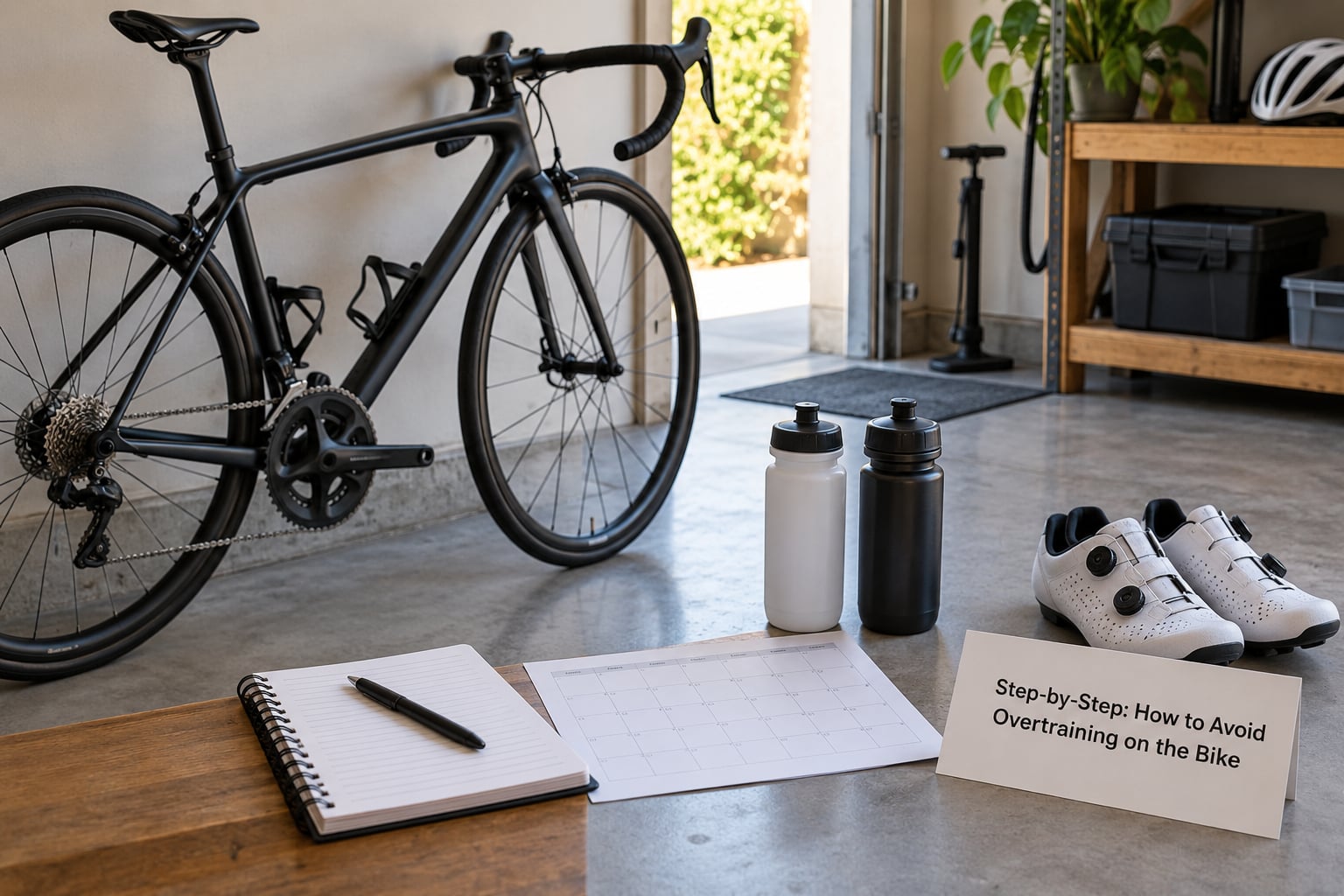
You do not need a coach or a wrist strap full of gadgets to do this properly. You need a record of what normal looks like for you, because overtraining is only visible against your own baseline.
- A current riding log. Ride duration, distance, and how hard it felt. A phone note is fine. The entries that matter most are your weekend long rides and the two hardest sessions of the week.
- A baseline of normal. Two or three weeks of ordinary training where nothing feels unusual. Note your usual long-ride duration, your usual heart rate at a given pace on a familiar climb, and how long a normal hard session takes to shake off.
- A way to record the boring stuff. Sleep hours, morning resting heart rate, general soreness, work stress, mood, motivation to ride. A paper column or a spreadsheet row per day does it.
- One easy intensity reference. A conversation pace, a flat road, or a known climb where you can repeat the same effort and compare. Without a repeatable reference, heart rate drift is just a number.
- A clinician for anything persistent. If fatigue persists after a genuine reduction in training, or if it comes with weight change, fever, chest symptoms, fainting, or months of feeling flat, that is a medical question, not a coaching one.
One honest warning before we start. There is no blood test, scan, or app reading that diagnoses overtraining. Practitioners work it out by ruling out other causes, which is exactly why self-diagnosis goes wrong so often.
Step-by-Step: How to Avoid Overtraining on the Bike
1. Build a baseline for how to avoid overtraining on the bike
You cannot spot a change if you never recorded what normal was. Spend two or three weeks of ordinary riding writing down five things: long-ride duration, perceived exertion on an easy spin, heart rate at a steady pace on a familiar climb, hours of sleep, and how sore you feel the next morning.
That baseline is what makes the rest of this work. A resting heart rate of 54 bpm means nothing in isolation; 54 when your normal is 48 is a signal worth acting on. Riders on r/cycling describe self-diagnosing with the same three numbers, and that is about right: resting heart rate, a rough sense of how an easy session felt, and how long the last hard effort actually took.
The field test nobody argues with: if you finish a genuinely easy ride and it felt hard, that is data. Not proof, but data. It is also the cheapest early warning in the whole plan for anyone trying to avoid overtraining on the bike.
2. Increase duration before intensity
Ramp duration first, and ramp it in small steps. The commonly used guideline is roughly 5 to 10% more weekly volume than the week before, with the occasional larger step built in, and a drop of 20 to 30% every second or third week to let the work land.
Long rides cause more trouble than hard sessions, which surprises people who only watch their intervals. Riders training for centuries, doubles, and ultras describe long-ride ramping as the single biggest trap, and the reason is mechanical: three hours in the saddle costs far more to recover from than forty-five minutes of threshold work, and the cost arrives the next day, not during the ride.
Plan long rides by time, not distance. Wind, hills, and weather distort distance numbers and make week-to-week comparison useless. If you are heading for a six-hour event, your longest training ride should sit well short of that, not match it.
When recovery is poor, cut the next effort. Replace the planned hard session with easy spinning rather than moving it and adding volume later. Piling intensity onto a tired week is how a bad fortnight becomes a bad season.
3. Use easy days and recovery weeks
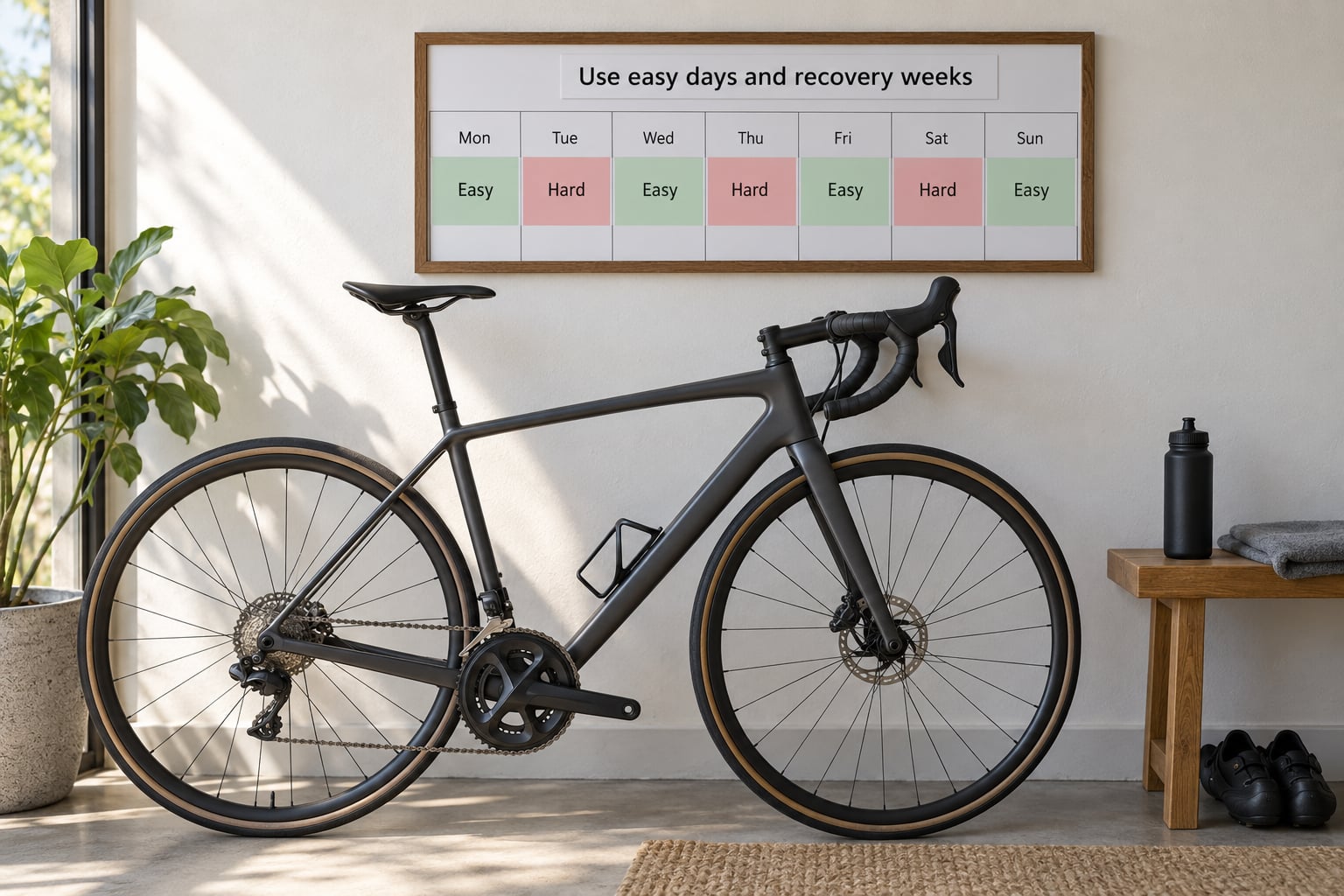
Most of your riding should be easy enough to hold a conversation. The 80/20 rule says roughly 80% of your training time is spent at low intensity and 20% at high, and the older 75/25 variant you will hear from older riders and coaches is the same idea with slightly different numbers. Either one is a useful target. What matters is that the hard minority stays small.
Build the week around three day types: recovery, stimulation, and development. Recovery days are genuinely easy, often under an hour. Stimulation days add a little speed or hills without draining you. Development days are your real work, and one or two a week is the sensible ceiling. Three hard sessions in a week only works for riders who are sleeping well, riding a moderate total volume, and not holding down a demanding job at the same time.
Every third or fourth week, cut volume meaningfully. That deload week is not a wasted week. It is the week the previous three weeks convert into fitness, and skipping it is a common reason riders stall on the same fitness plateau for a season.
Keep at least one full day with no riding at all, and treat it as planned rather than stolen. The forum consensus on r/cycling and on Cycling UK forum threads is consistent on this: back the intensity out, keep easy consistent activity, eat and drink properly. That is a deload, not a full stop.
4. Fuel and hydrate for the workload
Under-fuelling is the quietest cause of stalled progress. Most riders training more than about ninety minutes a day need carbohydrate before, during, and after, and the widely used range is 30 to 60 grams per hour on the bike, more for very long events and hot conditions.
Before a long ride, eat a normal meal containing carbohydrate a few hours out, and top up close to the start if the ride is early. During, take small, frequent amounts rather than a large serving every two hours, and drink to thirst with sodium included on long or warm rides.
After, get carbohydrate and protein into you within a reasonable window. If a session finished a century, the recovery meal is not optional decoration, it is part of the training.
Avoid treating a full stomach or a late heavy dinner as a training variable. Digestive trouble on the bike usually means poor timing, not a fitness problem.
For anything beyond general habits, or if you are managing a medical condition, a registered dietitian is the right person. The numbers above are general guidance, not a personal plan.
5. Track performance, recovery, and mood together
One metric on its own will mislead you. Watch several together, once a week, and look for the pattern rather than the individual reading.
- Power or pace on a repeatable effort. Same climb, same route, similar conditions.
- Heart rate at that effort. A rising heart rate at the same power usually means physical fatigue. A falling heart rate at the same effort, alongside low motivation, points the other way, toward mental fatigue and psychological load.
- Resting heart rate. A change of more than about 5 beats per minute from your normal is the threshold most riders and coaches use as a reason to look closer.
- Heart rate variability (HRV), if you track it. Useful as a trend over weeks, not a verdict for one morning.
- Sleep, soreness, mood, illness, and work stress. All of them draw on the same recovery budget as the bike.
That last row matters more than riders expect. Life stress is training load. A bad week at work, a sick child, or three nights of poor sleep reduces the training you can absorb, and the training plan has no way to see it. A rider in a cyclingforums thread on adding zone 4 work put it plainly: overlooking sleep quality is one of the most common mistakes in overtraining prevention.
A word on data overload, because it shows up constantly on r/Suunto and r/whoop threads. Tracking more is not the goal. If watching your HRV each morning makes you anxious and you then ride badly because you were told you were tired, you have gained nothing. Pick two or three numbers, review weekly, and stop looking at them daily.
6. Know when to back off or stop
Here is the decision rule. If one metric is off, keep riding easy and check again tomorrow. If performance has dropped while your training load is still climbing, or two or more of the warning signs have been present for more than about a week, swap the next hard session for easy riding. If symptoms do not improve after a genuine reduction in training, stop guessing and see a clinician.
On timing, there is a useful boundary. Riders who recover within roughly a month of reduced training were dealing with functional or non-functional overreaching. If a month of genuinely reduced training changes nothing, that is a different problem, and true chronic fatigue can take months rather than weeks. Cycling Weekly, drawing on research from Prof. Samuele Marcora, describes it as a burnout state that the body and brain can take months to recover from.
After illness, do not resume where you left off. Return well below your previous volume, add minutes gradually, and hold intensity back until easy riding feels easy again. Riders on r/cycling report getting sick repeatedly after hard blocks; the repeat illness is usually the signal to back off, not to push through. That applies to the whole framework, not just the post-illness weeks: a plan that survives a bad fortnight is a plan that will help you avoid overtraining on the bike over a season.
Seek prompt medical attention rather than training through fatigue that comes with chest pain, fainting, a racing or irregular heartbeat, unexplained weight change, fever, joint swelling, or fatigue that persists with reduced training. Those are not training-fatigue symptoms, and no forum thread can rule them out for you.
Common Mistakes
- Chasing fitness markers while workload climbs. Performance dropping while volume rises is the strongest single warning sign riders report, and it is the one most often explained away. Fix: hold volume flat for a week and watch whether performance returns.
- Raising volume and intensity in the same week. Two new stresses at once is how a planned build becomes a breakdown. Fix: change one at a time, duration first.
- Ignoring sleep and work stress. Poor sleep raises stress hormones and hurts both training quality and recovery. Fix: treat seven to nine hours as a training parameter, and log stressful weeks in the same column as hard sessions.
- Reading soreness as proof of progress. Some soreness after a hard block is normal. Persistent soreness that does not settle between sessions is not. Fix: judge recovery by how an easy ride felt the next morning, not by how the legs feel at the start of a hard one.
- Training through illness. Fix: rest, and restart below where you left off.
- Relying on one metric. A single HRV reading, a single power test, or a single bad morning says almost nothing. Fix: look for a week-long pattern across performance, heart rate, sleep, and mood.
- Adding threshold or zone 4 work to an already heavy week. This comes up constantly on the cyclingforums zone 4 thread, and the timing is usually the problem. Fix: replace a session rather than adding one, and keep no more than two genuinely hard days a week.
- Feeling guilty about rest days. Riders fear losing fitness and push into chronic fatigue instead. Fix: remember that fitness is built in recovery weeks, and that a week off costs far less than three months of flat performance.
Frequently Asked Questions
How long should I back off if I think I am overtraining?
Cut volume and intensity for one to two weeks and keep the riding easy, then rebuild gradually. If you are not noticeably better after about a month of genuinely reduced training, stop treating it as overreaching and book an appointment with a clinician, because true chronic fatigue takes longer and has other possible causes.
Does heavy soreness mean I am overtraining?
Not on its own. Soreness for a day or two after hill repeats or a long ride is normal training fatigue. What matters is soreness that does not settle, combined with an easy ride that feels hard, a rising resting heart rate, or motivation that has dropped. Judge recovery by the next morning’s easy session, not by how the legs feel before a hard one.
Can I avoid overtraining while training for a century?
Yes, and long-event preparation is where riders most often go wrong. Ramp the longest ride slowly, roughly 5 to 10% per week, and plan by time rather than distance. Keep the longest training ride well short of the full century distance, hold about 80% of your riding easy, and build in a reduced week every third or fourth week before the event.
How should I train when work or personal life is stressful?
Reduce training rather than trying to squeeze it in. A demanding week at work or at home draws on the same recovery systems as a hard block, so treat it as a deload week: keep one or two short easy rides, drop the hard sessions, and protect sleep. Riders who train hard through a stressful month usually need longer to recover than riders who ease off for a week.
When should fatigue after cycling require medical attention?
Get checked promptly if fatigue comes with chest pain, fainting, a racing or irregular heartbeat, unexplained weight change, fever, persistent joint pain, or if it continues through a month of reduced training. There is no medical test for overtraining, so diagnosis works by ruling out other causes, which is a clinician’s job rather than something to self-assess.
Conclusion
If you suspect you are riding too much, the first thing to do is not to plan a comeback. Pull up the last three weeks of your log, line up your long rides and hard sessions, and compare them against your sleep, your resting heart rate, and how your recent performances actually went. Then remove the single most demanding session and replace the rest with easy riding for a week. Riders who work through a four-step routine like this usually find that learning how to avoid overtraining on the bike is less about effort than about noticing early.
That is usually enough. And if a month of reduced training does not change how you feel, that is a question for a doctor, not another training plan.