Most riders hold their winter fitness with four to eight hours a week of deliberate riding: two or three long easy sessions, one short hard session, and at least one full day off, with indoor work standing in whenever the weather or the daylight says no. That is the whole idea behind how to maintain fitness over winter on the bike. Set the week up once and it takes about twenty minutes a week to run.
Winter is also the one window where a genuine fitness gain is realistic, because the base work and strength work that support fast riding are easiest to bank when the calendar is empty. Riders who treat November to March as a hold-and-survive block usually arrive in spring rebuilding from scratch. Riders who train through it, carefully, arrive already sharp.
Here is the plan I would hand a club rider in October: the tools worth having, a week-by-week structure, named sessions with real numbers, a cold-weather decision rule, and how to tell whether it is working or quietly falling apart.
Table of Contents
- What You Need to Maintain Fitness Over Winter on the Bike
- A reliable place to ride
- A timing and load tool
- A fan, and a dry kit
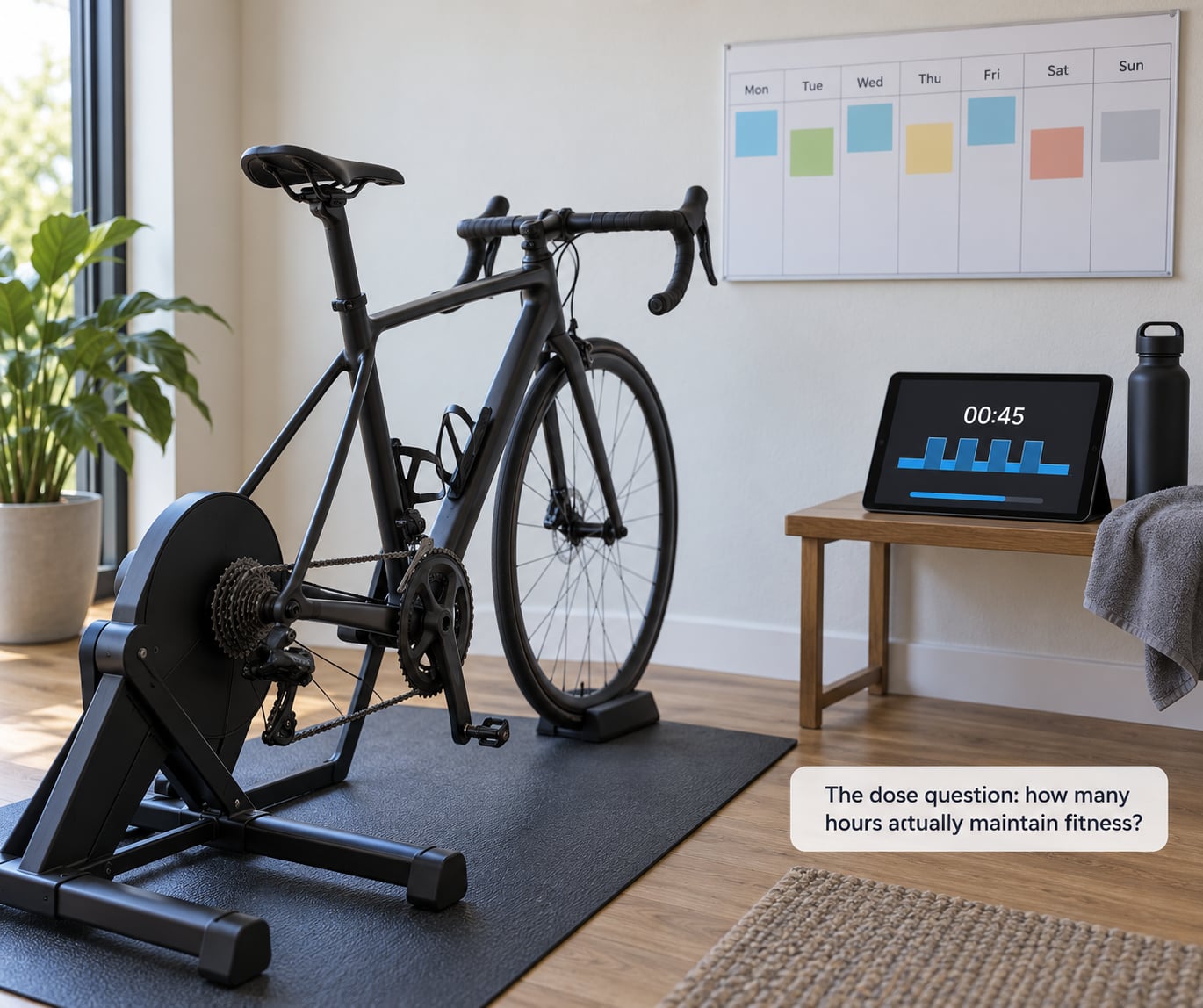
- The dose question: how many hours actually maintain fitness?
- Step-by-Step: A Winter Plan That Holds Your Fitness
- Set a Winter Maintenance Goal
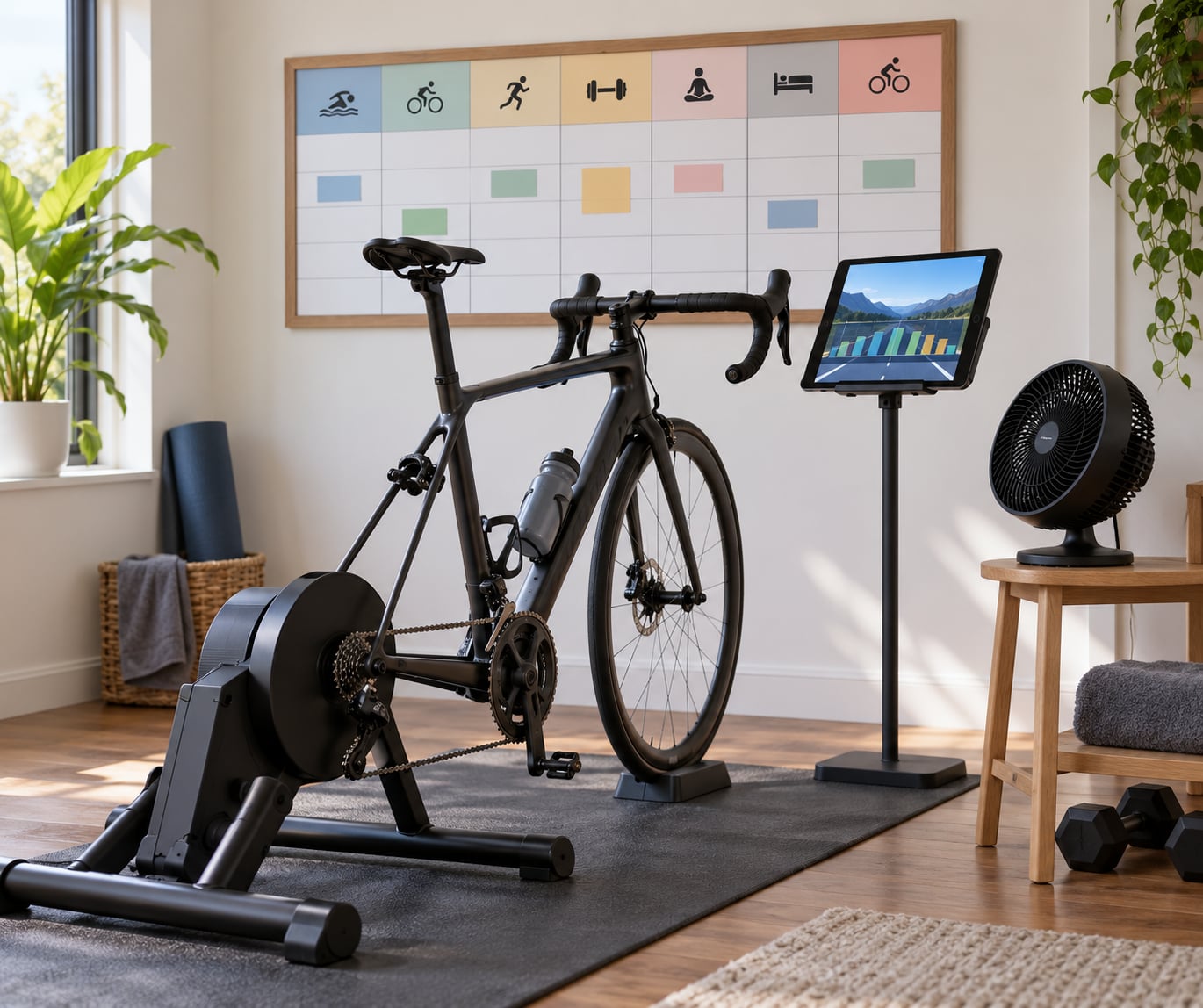
- Build a Flexible Weekly Riding Schedule
- Use Intervals Without Overtraining
- Keep Outdoor Riding Safe and Realistic
- Protect Recovery Between Rides
- Reassess Every Two to Four Weeks
- Common Winter Cycling Mistakes
- Frequently Asked Questions
- Can I maintain cycling fitness indoors during winter?
- How often should I ride indoors to maintain fitness?
- What is the best winter cycling training schedule for a century?
- Should I do intervals every week during winter?
- How do I stay motivated to cycle when it is cold or dark?
- How long should a cyclist take a recovery week in winter?
- Conclusion
What You Need to Maintain Fitness Over Winter on the Bike
You need far less than a catalogue suggests. A dependable trainer or equivalent, a way to time and load sessions, clothing that keeps you dry rather than merely warm, and a written week on the fridge will carry a rider through any winter. Expensive technology is nice; a plan you will actually follow is what produces the result.
A reliable place to ride
For most riders that is a turbo trainer on a basic wheel or a dumbbell unit. Bikehub’s write-up on indoor training makes the case for the format rather than the model: as much as 40 percent of an outdoor ride produces no power, spent coasting, braking at junctions and freewheeling downhill. An indoor session converts travel time into training time, which is why indoor hours are not equal to outdoor hours.
If a trainer is not in your budget, a spin bike, a rower, a ski machine or a set of stairs will hold your aerobic engine. Anything that gets you sweating hard for an hour counts. The stimulus lives in the dose, not the equipment.
A timing and load tool
Some way to set resistance reproducibly is what separates a real session from an hour of flailing. A power meter, a smart trainer in erg mode, or even a heart rate strap and a printed interval structure will do. Interval structure matters more than the number, and the structure can live in a note on your phone.
A fan, and a dry kit
A fan is not optional indoors. Body efficiency sits around 22 to 25 percent, so the rest of the effort leaves as heat with no convective or evaporative escape, and most riders overheat badly without airflow. Layer for the room, not the weather: a base layer, a jersey, and a light jacket you can strip in ten seconds.
Outdoors, the consensus order is wicking base layer, jersey, windproof jacket, plus a helmet liner, gloves with a spare pair in the pocket, bar mitts, and overshoes. Riders in Vancouver, Seattle and New York consistently name the same five items. Waterproof beats thick every time.
The dose question: how many hours actually maintain fitness?
This is the number most winter guides dodge, so here it is in plain terms. Fitness responds to weekly load, not to any particular surface, and roughly 75 to 80 percent of a normal season’s load is enough to hold most of it. Below half, you start giving things back.
| Weekly hours | What it holds well | What you will give back |
|---|---|---|
| 4 hours | Aerobic base, easy endurance, riding habit | Threshold, VO2max, sprint, bike handling |
| 6 hours | Everything above plus threshold with one weekly hard session | VO2max and sprint, if you stop doing them entirely |
| 8 hours | Aerobic base, threshold, FTP and some high-end power | Little, if one interval session stays in the week |
| 10 hours or more | Close to a full maintenance dose for a serious amateur | Nothing meaningful |
Riders on r/Velo report doing this comfortably on six to seven hours a week indoors after a 19-hour season, accepting some loss above threshold while holding threshold and the aerobic base. That matches the table. Do not chase the pro volume question instead; professionals train 15 to 25 hours a week, which is not the same job as keeping a recreational rider’s autumn form in February.
Step-by-Step: A Winter Plan That Holds Your Fitness
Set a Winter Maintenance Goal
Pick one goal before you ride again, because the goal decides the schedule. Most recreational cyclists should choose between four options: maintain weekly duration, preserve threshold fitness, rebuild basic strength, or return gradually after a break. Riders targeting a spring event usually want the first two. Riders coming back from injury or a layoff want the fourth, and a fifth option is worth naming: come out of winter stronger.
Write the goal as a number, not a feeling. “Ride five hours a week through February and keep my threshold session on Wednesdays” is a goal. “Stay fit” is not, because you cannot tell on the last Sunday of February whether you did it.
Build a Flexible Weekly Riding Schedule
Turn the goal into a week with a long endurance session, one or two shorter aerobic sessions, one interval session, and at least one day where the bike is not the point. Short and frequent beats one long weekend block; riders in r/cycling describe the same pattern from the other direction, noting that a single four-hour Saturday session indoors is far harder to keep up than four spread-out rides.
A typical seven-day winter week for a rider who must train indoors:
- Monday – rest, or 20 to 30 minutes of easy spinning and mobility
- Tuesday – 45 to 60 minutes steady, zone 2, conversational
- Wednesday – 60 to 75 minutes with the week’s interval session inside it
- Thursday – rest or 30 minutes of strength work
- Friday – 45 minutes steady with a few short surges for rhythm
- Saturday – the long ride, 2 to 3 hours outdoors if conditions allow, otherwise indoors
- Sunday – full rest
Two definitions help here, because both come up constantly in winter discussions and both get garbled. The 75% rule in cycling means keeping roughly three quarters of your weekly training time below threshold intensity, easy enough that you could hold a conversation. The 80/20 rule in biking, the polarized model, is the stricter version: about 80 percent of your time very easy, 20 percent genuinely hard, with nothing meaningful in between. For winter maintenance the polarized version is the better default, because it cuts the fatigue you would otherwise carry into a short, dark season.
Is 75 percent of maximum heart rate still zone 2? For most riders, no. Zone 2 is normally framed at roughly 60 to 75 percent of maximum heart rate, so 75 percent sits at the very top of it or just above, depending on the rider. If you are at or over 75 percent of max HR, you are working harder than easy, whatever the label says.
Use Intervals Without Overtraining
Intervals keep FTP and high-end power alive, and they are also the easiest thing to overdo indoors. There is nowhere to coast, so effort creeps, and the session that was meant to be a threshold block becomes an all-out effort by the third interval. Cap hard work at about 20 percent of your winter hours and let the rest stay genuinely easy.
Four named sessions cover a winter. Sweet spot work at 88 to 93 percent of FTP, 2 by 10 minutes with 10 minutes easy between sets, is the one most riders should keep all winter. Over-unders hold that sweet spot cadence for three minutes then drop to easy for one, repeated six times. Five by five minutes at 115 to 120 percent of FTP builds top-end power and is the most demanding, so keep it early in the week. For sweet spot intervals specifically, 3 by 12 minutes at 88 to 93 percent of FTP with 8 to 10 minutes of easy riding between is the classic alternative to 2 by 10, and it suits riders who find the shorter sets too abrupt.
One case worth knowing: a published winter trainer block built on 5 by 5 VO2max efforts, over-unders and low-intensity aerobic work moved a rider’s FTP from 195 to 267 watts across the off-season. That is a coached example, not a promise, and it only works with a real base underneath.
Keep Outdoor Riding Safe and Realistic
Not every winter day is rideable, and pretending otherwise is how riders get hurt. The question is not one temperature; it is three separate limits arriving at different moments: traction, exposed skin, and core temperature. The hard stop is ice, not cold.
| Variable | Go | Shorten or go home |
|---|---|---|
| Wind chill and air temperature | Feels manageable in a light windproof shell | Wind above your speed, or reported chill well under your comfort limit |
| Wet or dry | Dry, or drizzle you can stay dry through | Rain that soaks through, because wet plus cold is the real danger |
| Road surface | Clear, with grit swept off the lanes | Black ice, slush under frozen puddles, snow-packed bends |
| Time and distance from home | Under an hour each way, bail-out points identified | Long and remote, where stopping is the dangerous part |
| Clothing | Full winter kit, dry gloves as a spare | Anything missing, or wet kit from the last ride |
The rule of thumb: two ambers means turn around. Water conducts heat away from the body far faster than air does, which is why cold-and-wet beats cold-and-dry as a danger. Dry off wet kit fast, even if it means changing in the car, and cold air on wet skin is a reliable route to a winter illness.
On the physiology of the lungs, the research is reassuring for healthy riders: exercising in cold dry air appears to have minimal to no negative effect (Hartung et al., 1980). If you have asthma or notice throat-tightening on cold mornings, warm up indoors first before heading out.
Protect Recovery Between Rides
Recovery is where the winter plan is usually lost. Sleep is the one people cut first because the evenings are dark, and riders in r/Velo link stretches of sore, weak legs directly to late nights during an indoor block. Treat sleep as a training session, because during short days it is the one that quietly decides whether the next session is good.
Fuel the long Saturday ride properly rather than skipping breakfast because the drive felt cold, and keep fluids warm. A frozen bottle is a bottle you will drink less of. Insulated bottles, warm fluids for the first half of a cold ride, and a small carbohydrate hit every 45 to 60 minutes on anything over 90 minutes covers most riders. Vitamin D is worth a conversation with your doctor, because winter daylight cuts exposure sharply and supplementation guidance varies.
Gentle mobility, a couple of easy days, and dropping one intensity session when fatigue accumulates do more for a winter block than any gadget. Watch for the signs rather than the calendar: elevated resting heart rate, persistent soreness that outlasts a rest day, low motivation, and a flat feeling on sessions that used to be fine.
Reassess Every Two to Four Weeks
Every two to four weeks, look at six things: weekly hours against target, how many sessions you actually finished, perceived effort on the same sessions, resting heart rate if you track it, soreness, and whether you still want to get on the bike. Then make one small change, not three.
Understanding what decays first makes the review less emotional. High-intensity fitness and sprint power fade fastest, generally in a matter of weeks, while the aerobic base and threshold hold far longer through a modest training load. Know that and a missed interval session is a data point, not a collapse.
| Fitness element | How fast it fades | How hard it is to hold |
|---|---|---|
| Sprint and neuromuscular power | Fastest, roughly 2 to 3 weeks | Needs a genuine sprint or VO2max effort each week or two |
| VO2max | Fast, roughly 4 to 6 weeks | Needs the 5 by 5 style work or equivalents |
| Threshold and FTP | Moderate, roughly 6 to 10 weeks | Holds well with one weekly hard session |
| Aerobic base and endurance | Slowest | Cheapest to hold: hours at zone 2 |
| Bike handling and wet-weather skills | Rapid, roughly 2 to 4 weeks | Only practice outdoors fixes this |
If numbers are going the wrong way, cut volume before intensity. If you are fresh but flat, add one long session. Making a single change at a time is what stops a winter from turning into a spiral of small overreaches.
Common Winter Cycling Mistakes
Doing too much too soon. The first hard indoor week is where enthusiasm costs the most. Hold your autumn weekly hours for two weeks before adding anything, and add no more than a quarter of an hour per session.
Riding every session hard. Hard every day is a taper with extra naps. Keep roughly 80 percent of your winter hours easy, and the one hard session will feel hard in a useful way.
Ignoring recovery. The cut-everything plan is the first one to break. Guard sleep, keep the full rest day in the week, and drop an intensity session when fatigue signs stack up rather than pushing through.
Relying only on the stationary bike. Indoor work is efficient and it is also boring, and it under-loads your muscles and your bike-handling. Add two strength sessions a week, and get outside at least when it is dry and clear. Skiers and snowboarders report long steady runs plus hiking holding cycling-specific fitness reasonably well, with one honest caveat: anything hard on snow counts as a hard hour.
Skipping meals before winter sessions. A cold commute and a cold commute on an empty stomach are not the same ride. Eat something, and eat properly before the long weekend session.
Ignoring trainer pain. Shin burn, groin and upper-thigh soreness from dead spots, and lower-back ache are the commonest complaints on the trainer, and they all have fixes: set saddle height to the same number as outdoors, sit tall with a slight forward lean, keep cadence in the 90 to 100 range rather than grinding at 60, and drop the resistance at the top of each revolution. Check the saddle for damage, and use a lumbar support or a stool if your back complains late in a long session.
Continuing through persistent fatigue. Fatigue that lasts more than a couple of days is information, not weakness. Take three to five days off rather than accumulating them into a month.
Wearing one thick jacket instead of layering. Thick traps sweat, and sweat in the cold is the problem, not the solution. Layer, vent, and change out of wet kit immediately.
If you fix one thing first, fix the consistency of your easy hours. Almost every other winter failure traces back to a week that was too short, too hard, or both, in the wrong order.
Frequently Asked Questions
Can I maintain cycling fitness indoors during winter?
Yes. An indoor trainer reproduces the same aerobic and threshold load that keeps winter fitness, and it does it in less time because roughly 40 percent of an outdoor ride produces no power. Most riders hold their autumn form on four to eight hours a week indoors, provided three quarters of that time stays easy. What you lose first is sprint and high-intensity fitness, so keep one hard session in the week.
How often should I ride indoors to maintain fitness?
Three to five sessions a week is the sweet spot, usually spread across the week rather than bunched. Two long easy sessions, one or two shorter aerobic sessions, and one interval session will hold threshold and aerobic base through the winter on a total of four to eight hours. Riders report short and frequent sessions are far more sustainable than one long weekend block indoors.
What is the best winter cycling training schedule for a century?
Work backwards from the event and treat the eight to ten weeks before it as a maintenance build. Start with weekly hours matching your autumn total, keep 80 percent of them easy, and add one sweet spot block of two by ten minutes at 88 to 93 percent of FTP. Finish with a two-week taper of reduced volume. For a 100 mile ride most of the work is sustainable endurance, not intervals.
Should I do intervals every week during winter?
One hard session a week is enough to hold threshold and FTP, and a second only if you are training for a specific goal and recovering well between them. Do not turn every indoor session into intervals, because there is nowhere to coast indoors and effort creeps. Cap hard work at about 20 percent of your weekly hours, and drop the session entirely when fatigue signs build up.
How do I stay motivated to cycle when it is cold or dark?
Ride with people where you can, and set one specific goal for the block rather than a vague intention. Virtual riding and group sessions solve the boredom that ends more winter training than fitness does. Set the room up properly with a fan, ventilation and a screen, and vary session length. Daylight is worth chasing too: a short outdoor ride at lunch breaks up the indoor monotony better than a longer evening one.
How long should a cyclist take a recovery week in winter?
Three to seven days of complete rest is a normal winter recovery week, usually placed after the hardest indoor block or after a festive period of disrupted sleep. Two days is a short break, not a recovery week. If you take one, ease back in at half volume rather than returning to the old number, and keep the interval session out of the first two rides.
Conclusion
How to maintain fitness over winter on the bike comes down to three things: a number you can measure, a week you write down in advance, and a rest day you protect. Four to eight hours a week of riding, with roughly 80 percent of it easy and one honest interval session, holds more than most riders expect through a cold and dark season.
Start this week by choosing your goal in a sentence and putting the week on the fridge. If your indoor setup is the weak link, sort the trainer and the fan first; if your week is the weak link, shorten the sessions rather than skipping them, because a short session you keep beats a long one you abandon in February.