What to do after a bike crash comes down to four things: get out of traffic, check yourself for anything serious, call for help if the warning signs are there, and document the scene before you leave. The hardest part is resisting the urge to ride away, because adrenaline hides pain for minutes or hours at a time.
That impulse is exactly what riders on cycling forums regret most. People describe sliding home after a fall, feeling fine, and discovering days later that a rib was cracked and a lung had partially collapsed. Forty-eight hours is not unusual for those symptoms to show up.
So this is a general safety guide, not medical advice. If you hit your head or took a hard impact, your own clinician should decide what you need, and nobody online including us can tell you whether a symptom is serious. What we can do is walk through the response in the order that keeps you safe and your claim intact.
Table of Contents
- What You Need
- Step-by-Step: What to Do After a Bike Crash
- 1. Move to Safety and Check for Danger
- 2. Check Your Condition and Call for Help
- 3. Protect Injuries Without Continuing to Ride
- 4. Preserve Evidence and Record What Happened
- 5. Assess the Bike Before Moving It
- 6. Arrange a Ride Home and Follow Up
- Common Mistakes
- Frequently Asked Questions
- Should I replace my helmet after a bike crash?
- Can crash symptoms appear hours or days later?
- What should I record for bicycle insurance after a crash?
- When should a damaged road bike be inspected before riding again?
- How should I handle a crash caused by road debris?
- Can I continue riding if I feel bruised but otherwise recovered?
- Start With Safety, Not Another Ride
What You Need
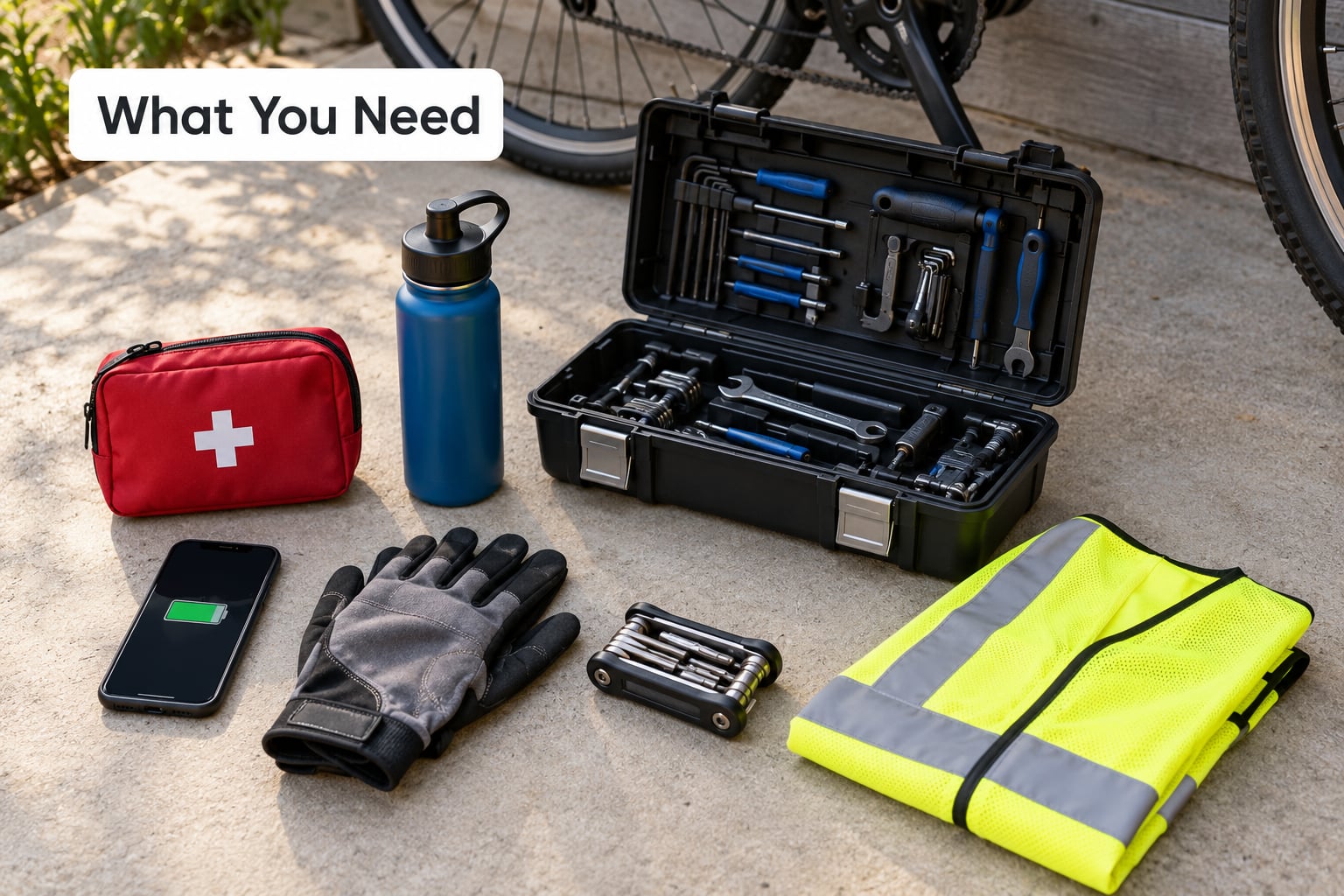
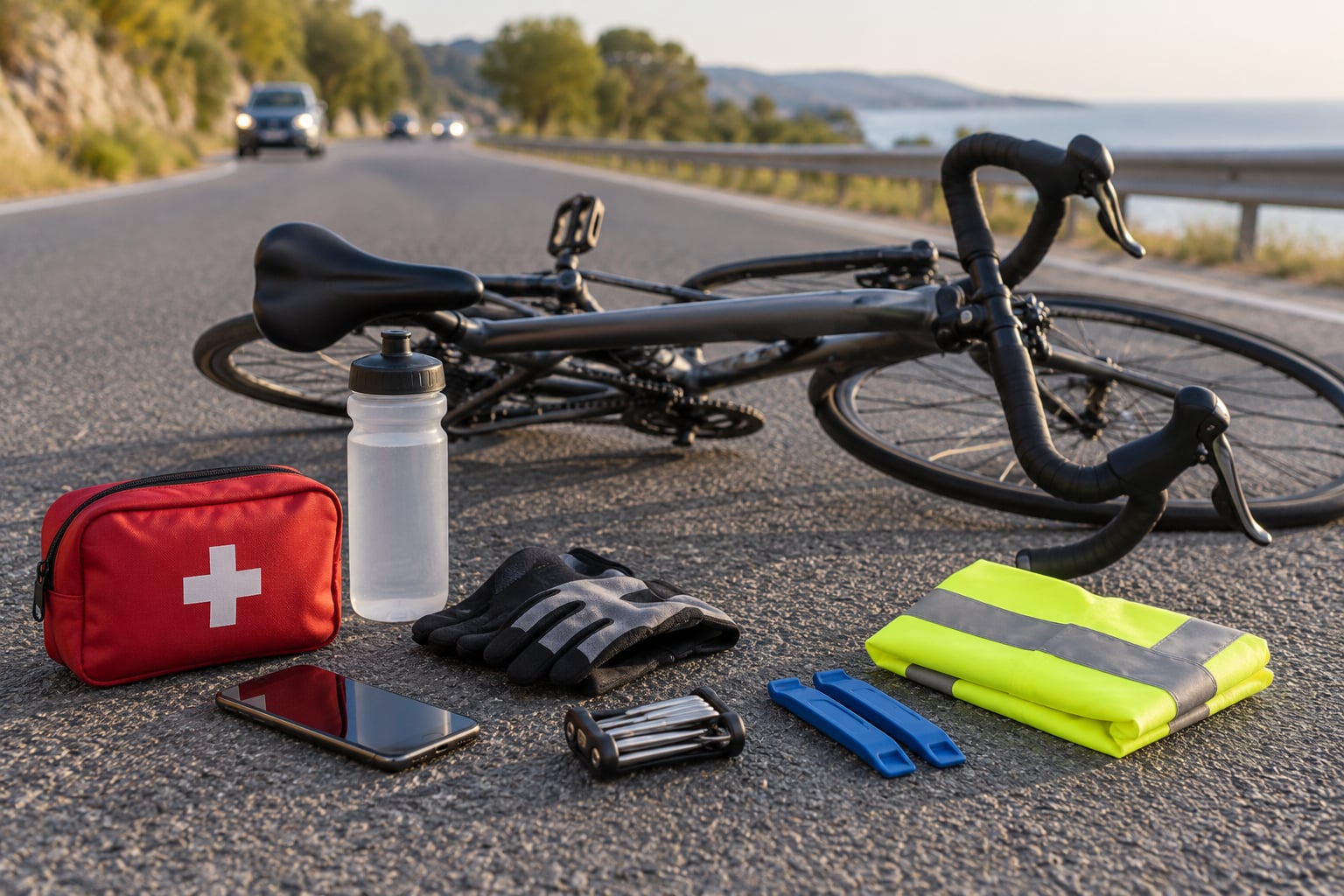
Some of this you carry on every ride. Some of it you wish you had after a crash. Either way, know where it is before you need it.
- A charged phone, ideally with a mount so you can call without fumbling. If you ride solo in places with patchy coverage, a phone that holds its charge is not optional.
- Identification with emergency contacts, plus Road ID or a card in a wallet if your jersey pockets get emptied or you lose your bag.
- A small first-aid kit: gauze, adhesive bandages, an elastic wrap, antiseptic wipes, nitrile gloves, and any medication you personally take.
- Water and a snack, because a long wait for a ride home is much easier when you are not also dehydrated.
- A multitool, tire levers, and a spare tube. This is not about fixing anything damaged, it is about a quick look and a safe walk.
- Work gloves. They protect your hands when you pick up a bent bike, and they keep road grit out of fresh cuts.
- Something to record details: a pen and paper in a pocket, or simply a notes app with the crash time in it.
One rule matters more than the list itself. Do not walk back into moving traffic or cross a road to retrieve a bag, a bottle, or a pair of sunglasses. A second crash while collecting belongings turns a recoverable incident into a much worse one.
Step-by-Step: What to Do After a Bike Crash
The sequence below runs from the first thirty seconds to the days afterward. Do not rush back onto the road, do not ride through pain to get home, and do not move someone with a possible neck or back injury unless they are in immediate danger.
1. Move to Safety and Check for Danger
Stay where you fell for a few seconds and take stock. Are vehicles still coming? Is there fuel, hot asphalt, a downed line, or tram rails near you? Is anyone else hurt, and are they in the path of traffic?
Then get yourself, and anyone you can safely help, off the roadway. Signal your intentions, stay on the side drivers expect you on, and keep the bike with you so you are not walking back into the lane to collect it.
Becoming a second victim is the most common way a survivable crash turns serious. Your own location safety comes before evidence gathering, every time.
2. Check Your Condition and Call for Help
Call 911, or ask a bystander to, if any of these are present: loss of consciousness, confusion or difficulty staying awake, a severe or worsening headache, repeated vomiting, weakness or numbness, trouble breathing, chest pain, bleeding that will not stop, a suspected neck or back injury, or an inability to bear weight.
Do not move a rider with a possible spinal injury unless staying where they are is more dangerous. Leave the helmet on if a head or neck injury is suspected. Removing it can worsen the injury, and a helmet also helps responders protect the head.
Feeling fine right now is not a medical assessment. Adrenaline and endorphins suppress pain, and a concussion can look like mild fog for the first few hours. If something feels off, or you took a hard hit, get checked by a clinician rather than deciding by feel.
A rider on r/bikecommuting described riding home after a fall and being diagnosed the next day with a partially collapsed lung. Another waited more than a day with cracked ribs and ended up in much worse shape. Symptoms that get worse, not better, are the ones to act on.
3. Protect Injuries Without Continuing to Ride
Stay still after a possible head, neck, or back impact. Do not stretch it out by testing whether you can ride, because a short hop can aggravate an injury you have not found yet.
For external bleeding, apply steady light pressure with a clean cloth or gauze from your kit. For a wound with grit in it, cover it rather than picking at it roadside. Rinse road rash with clean water as soon as you get home, pat it dry, cover it with a non-stick dressing, and keep it clean from there.
Watch for infection over the following days: spreading redness, warmth, swelling, pus, a fever, or red streaks running from the wound. Those need a clinician. Ask about tetanus protection if the wound is dirty and you cannot remember when you were last vaccinated, and let your clinician decide what pain relief is right for you rather than taking someone else’s advice. Alcohol or sedatives before an assessment can mask warning signs.
4. Preserve Evidence and Record What Happened
Write it down while it is fresh. Use plain, objective language: what time it was, where it happened, which direction you were travelling, what the surface looked like, what the other vehicle or rider did, and the order of events. No blame, no theories about fault.
Collect from the other party, if there is one: full name, driver’s licence number, licence plate and the state it is issued in, insurance company and policy number, phone number, and the vehicle’s make, model and colour. Take a photo of the plate if you can do it safely.
Get witness names and contact details before they leave, and ask for the responding officer’s name, badge number and the incident report number. Note whether you were given a physical copy or a case number.
Photograph the scene, the road surface, debris, lane markings, signage, your bike and any vehicle damage, and your visible injuries. Take images only from a safe place. Keep the originals, including dashcam or helmet-camera files with intact timestamps, and do not delete anything while a claim may be open.
A police report matters even when nobody is hurt and nothing is damaged. Riders who pushed for one have described getting a citation for the driver; a rider who skipped it found her symptoms disbelieved days later.
5. Assess the Bike Before Moving It
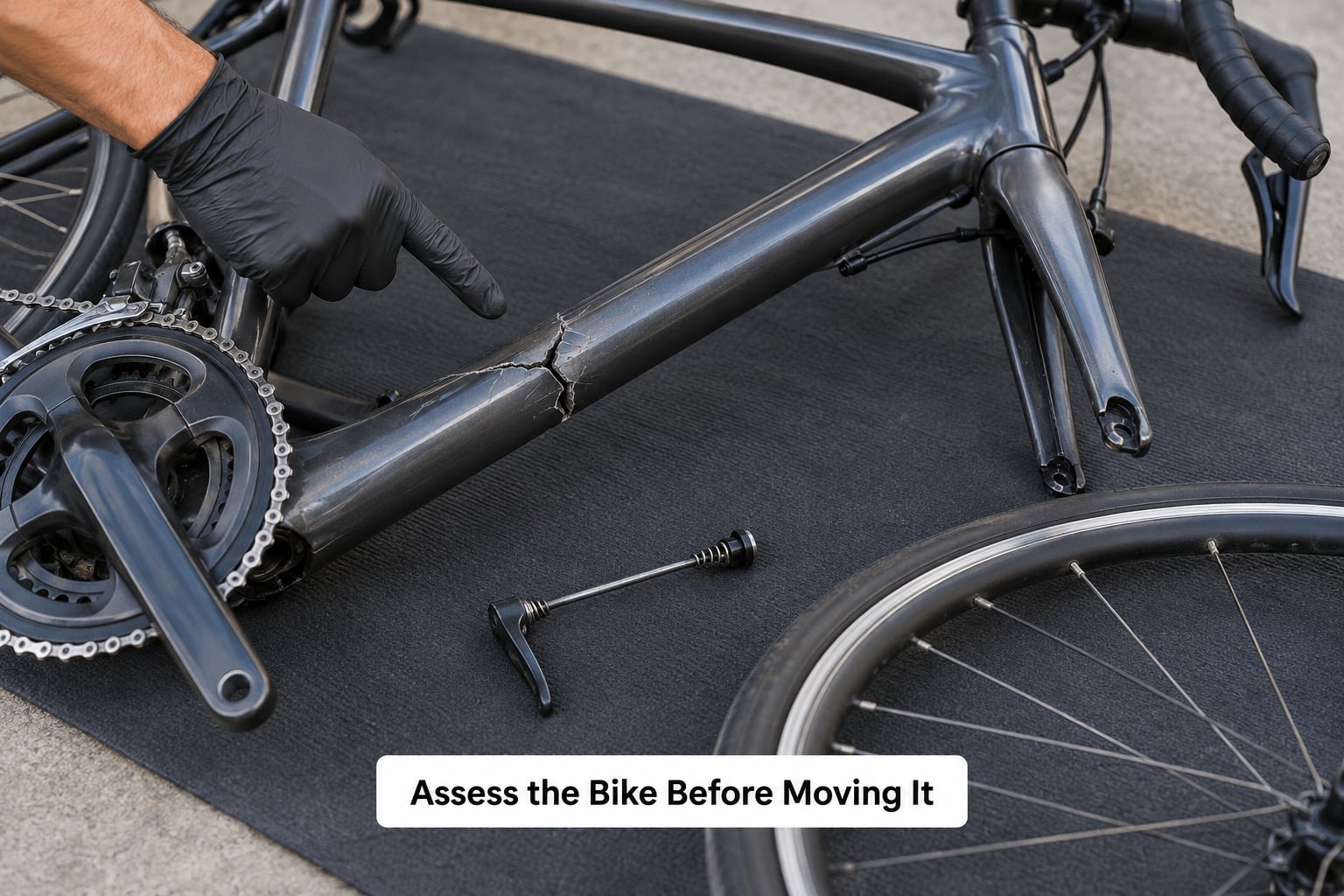
Look, do not ride. Start with the frame and fork for cracks or dents, especially near the head tube, bottom bracket and chainstay. Check that both wheels spin true and sit straight in the dropouts, and look at tires for cuts, bulges and exposed casing.
Squeeze both brake levers. They should feel firm, not spongy or pulling to one side. Check the handlebar and stem for bends, and make sure the bars are still aligned with the front wheel.
Look at the chain and drivetrain for a bent derailleur hanger or a chain that will not seat, and confirm that pedals and any accessories are still attached and not sharp-edged where your leg sits.
If any part is damaged or you are simply unsure, do not ride it, do not tighten something that looks loose at the roadside, and do not attempt a field repair. A bent wheel or wheel that will not sit true is a trailer and a shop visit, not a ride home. A written inspection from a bike shop also gives you a repair estimate you can use with an insurer.
6. Arrange a Ride Home and Follow Up
Sitting on a verge waiting for someone is the part riders complain about most, so plan the extraction early. Text a riding partner, call the person who knows your check-in time, or ask a bystander or shop for help. If you are stranded and cannot move, call 911 again and say so plainly.
Once you are home, keep the receipts: medical bills, prescriptions, a bike shop estimate, and any towing or transport cost. Keep damaged gear and unwashed clothing, since insurers may ask to see them. Save the report number and the names of everyone who gave you information.
Track how you feel over the next 48 hours and reassess anything that worsens, especially breathing, abdominal pain, deep rib pain, neck pain, headaches, confusion, or vision changes. Feeling able to pedal does not rule out an injury, and a graded return to riding is a conversation for your clinician, not a date you pick.
Common Mistakes
- Riding away to shake it off. Adrenaline is the reason it feels fine. The safer move is to stop, assess, and get transported.
- Removing the helmet before anyone has looked. Leave it on unless a trained responder removes it, and never if a head or neck injury is suspected.
- Skipping the photos and the report. Invisible injuries are hard to substantiate later, and a report number anchors the whole claim.
- Saying “sorry, my fault.” A polite apology gets quoted back as an admission. Stay calm, stay factual, and let the report determine fault.
- Drinking alcohol or taking medication before being assessed. Both mask symptoms a clinician needs to see.
- Fixing the bike in the road. A roadside repair turns into a bent derailleur or a second injury. Photograph it and move it later.
- Waiting it out at home. If symptoms appear or worsen in the hours after, do not assume they are unrelated to the crash.
One final habit pays off next time, before any crash happens: leave a check-in time and route with someone when you ride solo, carry emergency contacts, and use live tracking if your watch or phone supports it. Riders who have crashed and come back say the plan they wished they’d had was written down before the emergency.
Frequently Asked Questions
Should I replace my helmet after a bike crash?
Treat any impact as a reason to replace it. Most helmets are designed for a single significant hit, and a helmet that looks intact can still have a compressed liner underneath. Even a low-speed fall onto a hard surface counts. Replace it regardless of whether you remember hitting the ground, and replace any helmet involved in a crash rather than trying to inspect the foam yourself.
Can crash symptoms appear hours or days later?
Yes, and riders on cycling forums describe it often. Headache, nausea, confusion, dizziness, sensitivity to light, neck pain, and pain that gets deeper when you breathe can all show up 24 to 48 hours after the crash. Because of that, do not judge a fall by how you felt in the first ten minutes. Track symptoms and let a clinician decide what needs checking, especially after a head impact.
What should I record for bicycle insurance after a crash?
Start with the incident report number, the responding officer’s name and badge number, and the date and location of the crash. Then add photographs of your bike and any vehicle, a written repair estimate from a bike shop, medical bills and receipts, witness contact details, and the other party’s licence, plate and insurance information. Keep original camera and dashcam files. Riders who document at the scene have a far easier time proving injuries that are not visible.
When should a damaged road bike be inspected before riding again?
Before riding, always, if the frame, fork, wheels, brakes, bars, or drivetrain took a hit. Any crack, dent, buckled wheel, rubbing tire, or spongy brake means trailer, not ride. Even if the bike looks fine, a shop inspection is worth it after a hard impact because it gives you a written condition report and a repair estimate you can use with an insurer or in a claim.
How should I handle a crash caused by road debris?
Do not clear the debris before it has been photographed, and never by standing in a live lane. From a safe position, photograph the object where it lies, note the exact location, direction and time, the surface conditions, and your speed and line. Ask for witnesses and get an incident report filed, since debris claims often depend on establishing that the hazard was there before you reached it. Keep the object if it is practical and safe.
Can I continue riding if I feel bruised but otherwise recovered?
Feeling recovered on the outside is not the same as being cleared, especially in the first 48 hours after an impact. Bruising can hide fractures, and a head hit can leave symptoms that come and go. If you took a hard fall, had a head or neck impact, or feel anything change during the ride, stop and get assessed. A clinician should tell you when riding is safe, not your adrenaline.
Start With Safety, Not Another Ride
Most of what to do after a bike crash fits in one paragraph: get out of traffic, check yourself, call 911 for any of the warning signs listed above, and do not ride away. Photograph the scene, write down the details while they are fresh, and get the incident report number before you leave.
Then arrange a ride home instead of limping, keep your receipts and damaged gear, and keep watching how you feel for the next two days. If you took a hard hit or a head impact, follow your own clinician’s advice about when riding is safe. No corner will wait for you, and the bike you crashed is not worth a second injury.